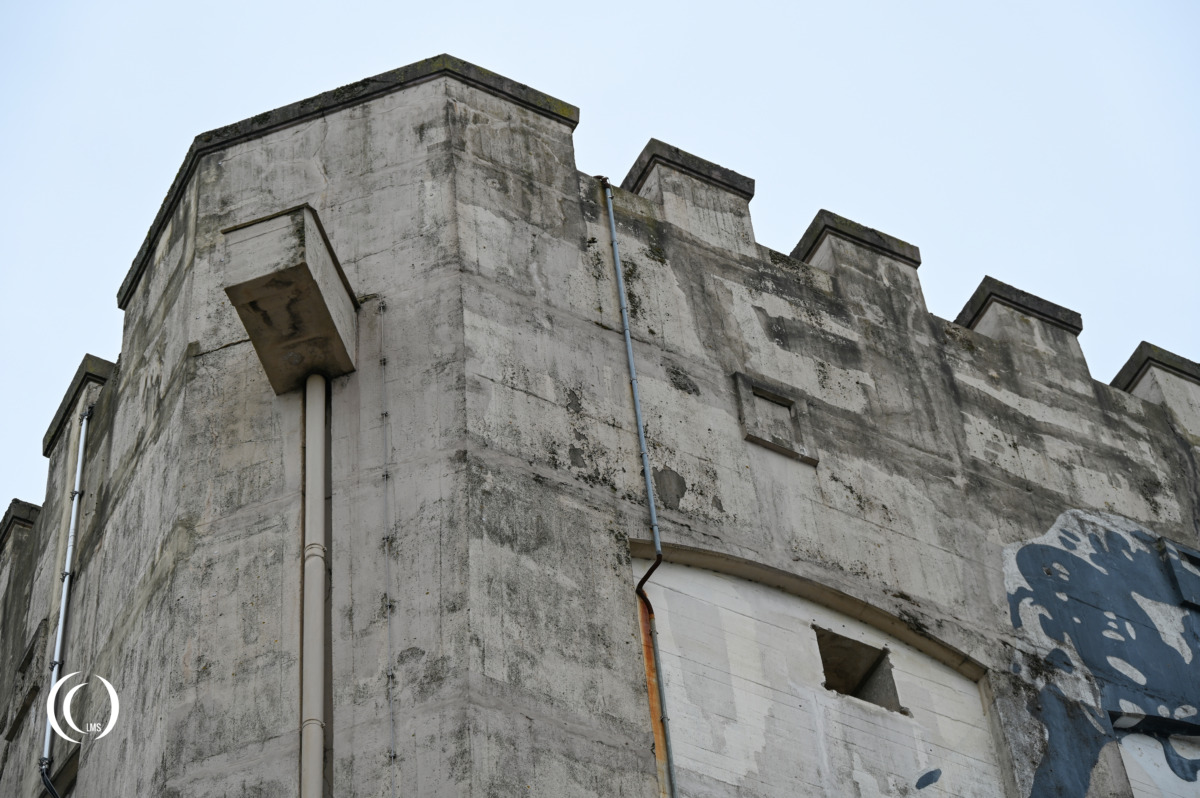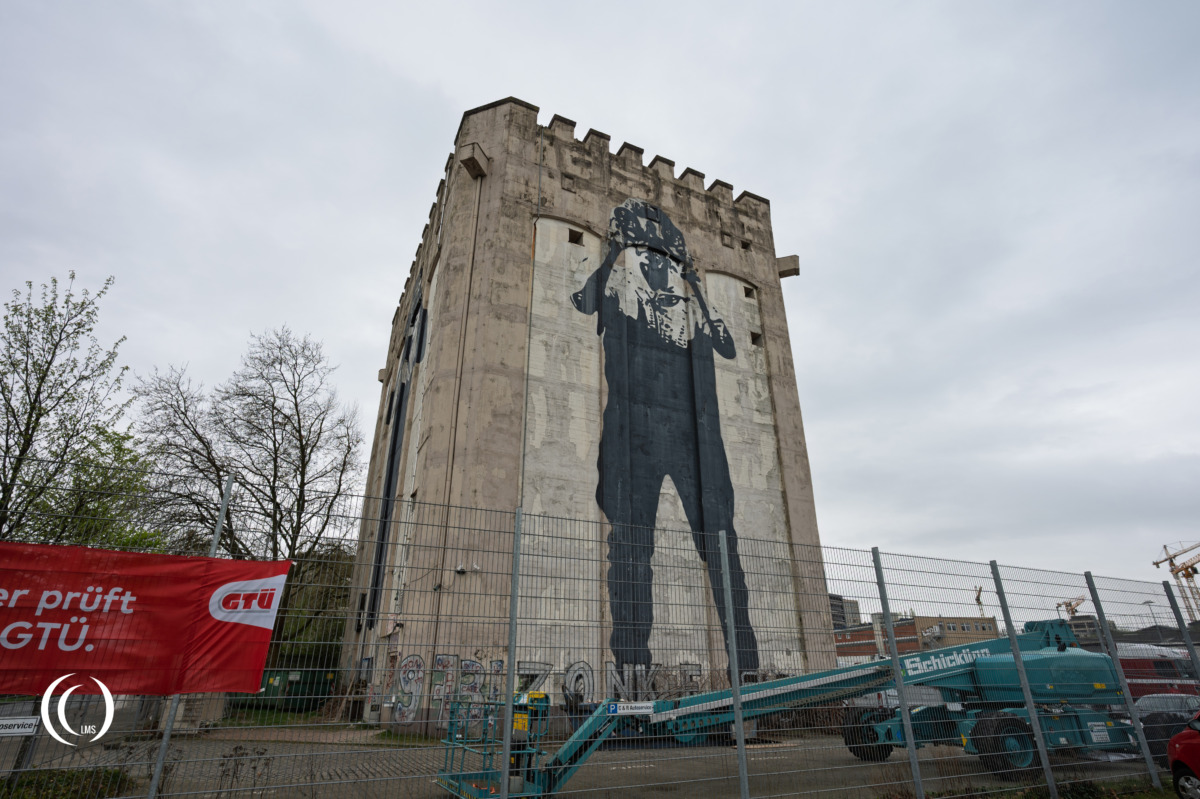
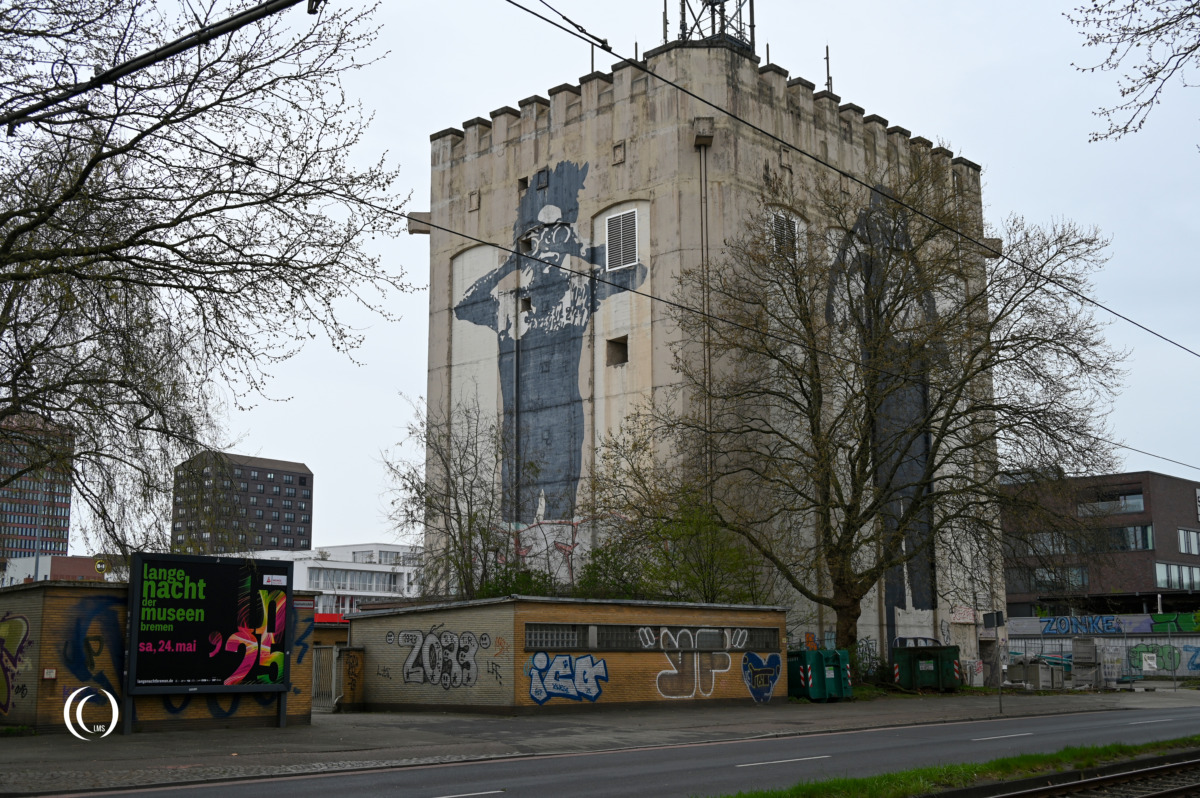
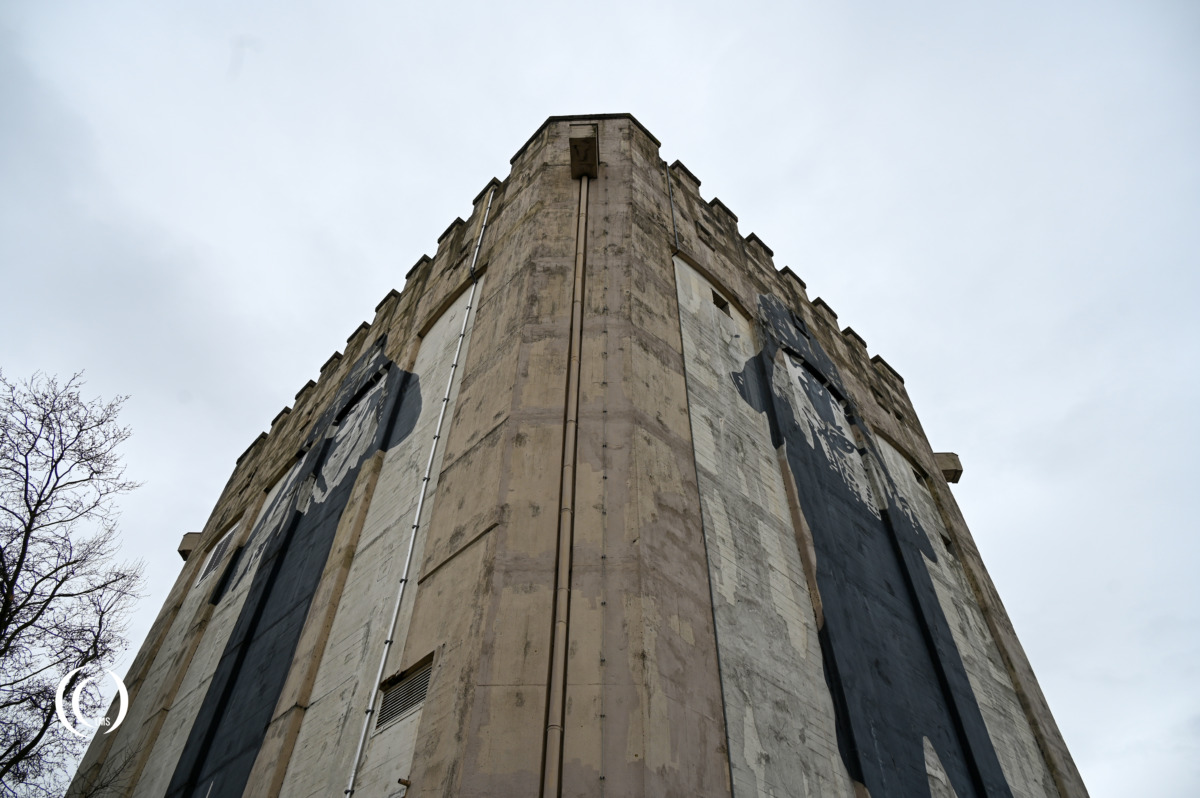
This Hochbunker in the Walle district of Bremen was built in 1942 as an air raid shelter and emergency hospital for the nearby Diakonesse Hospital. During air raids the patients and staff, together with the local residents from this area, sought shelter inside the bunker.
The eight-storey bunker was designed for a total capacity of 1500 people, but in practice it is said that in the later stages of the war that number was more than tripled during air raids. Its walls were more than 2 meters thick. Gas detectors were installed on the interior walls to monitor oxygen levels.
Bremen during WWII
During World War Two Bremen was one of the heaviest raided cities of Germany because of its large military-industry for the Luftwaffe and the Kriegsmarine and its important harbour. Starting from as early as 1940 more than 170 Allied air raids were mounted, killing more than 4,000 residents and destroying 62 percent of the city’s houses in a little more than five years time. The districts Walle and Gröpelingen, situated close to the harbour in the west of the city, were hit the hardest.
Firestorm
On the night of 18 to 19 August 1944, Bremen was to endure its heaviest air raid of the war, when in a little more than a half an hour 274 aircraft dropped 1,120 tons of bombs on the western part of the city, creating a firestorm. The people sheltering inside the Diakonissenbunker survived, but back outside they found nothing but ash and rubble. The hospital, together with the entire district of Walle, and the harbour area were destroyed. The attack claimed more than thousand dead, left more than 8,000 residential buildings in ruins and 50,000 people homeless.
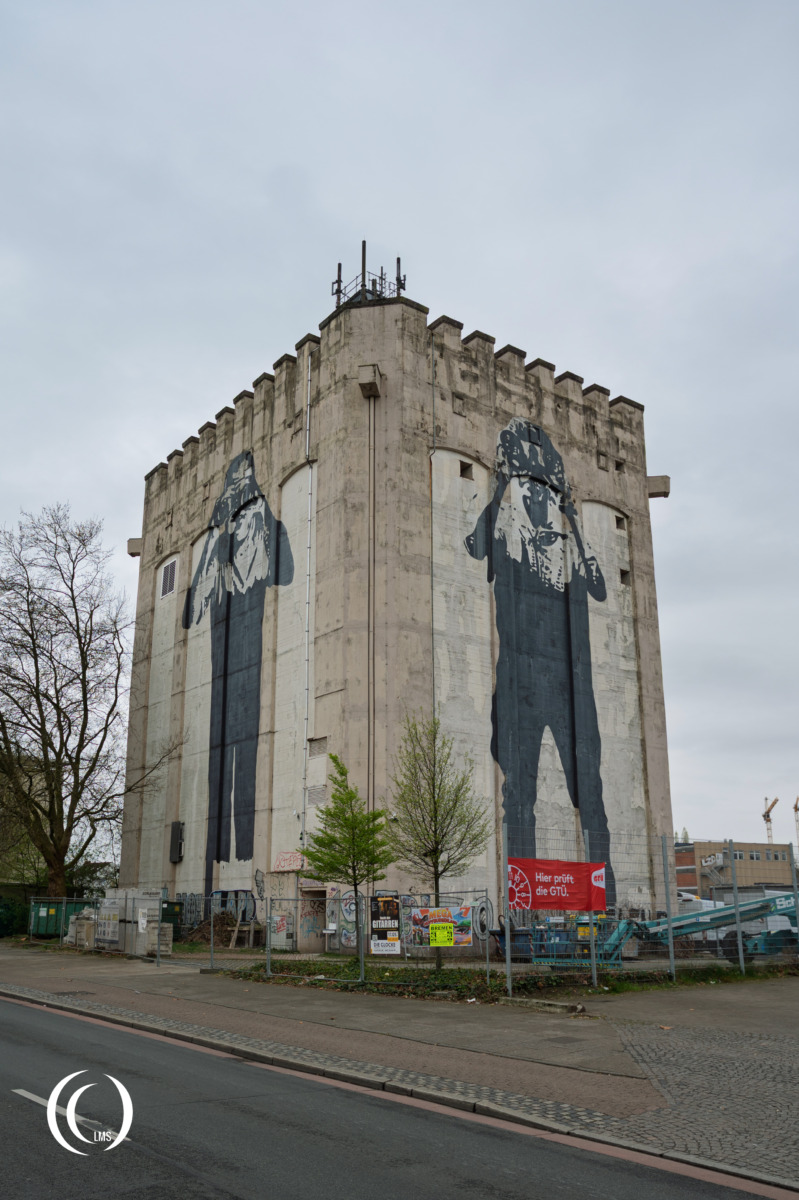
After the hospital was destroyed, its operations were partly continued in temporary quarters inside the bunker.
Post war
After the Second World War the bunker was used as a hospital, then converted into a nuclear fallout shelter in the 1960s, and later made available for civil defence. Today the structure is planned to provide room for art and culture.
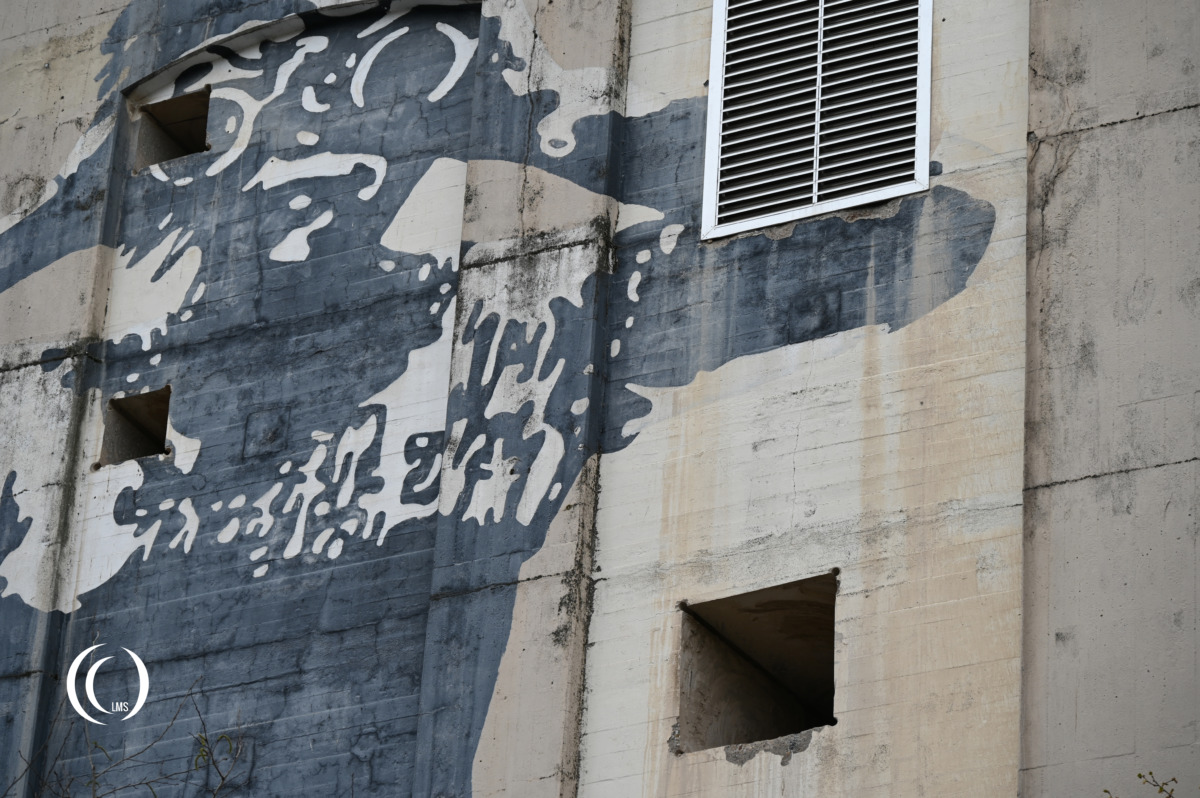
There are also plans to host a permanent exhibition on the history of the bunker and the Nazi-era.
Visit
The bunker is not opened to the general public. When we were there in 2025, work was being done on the bunker.