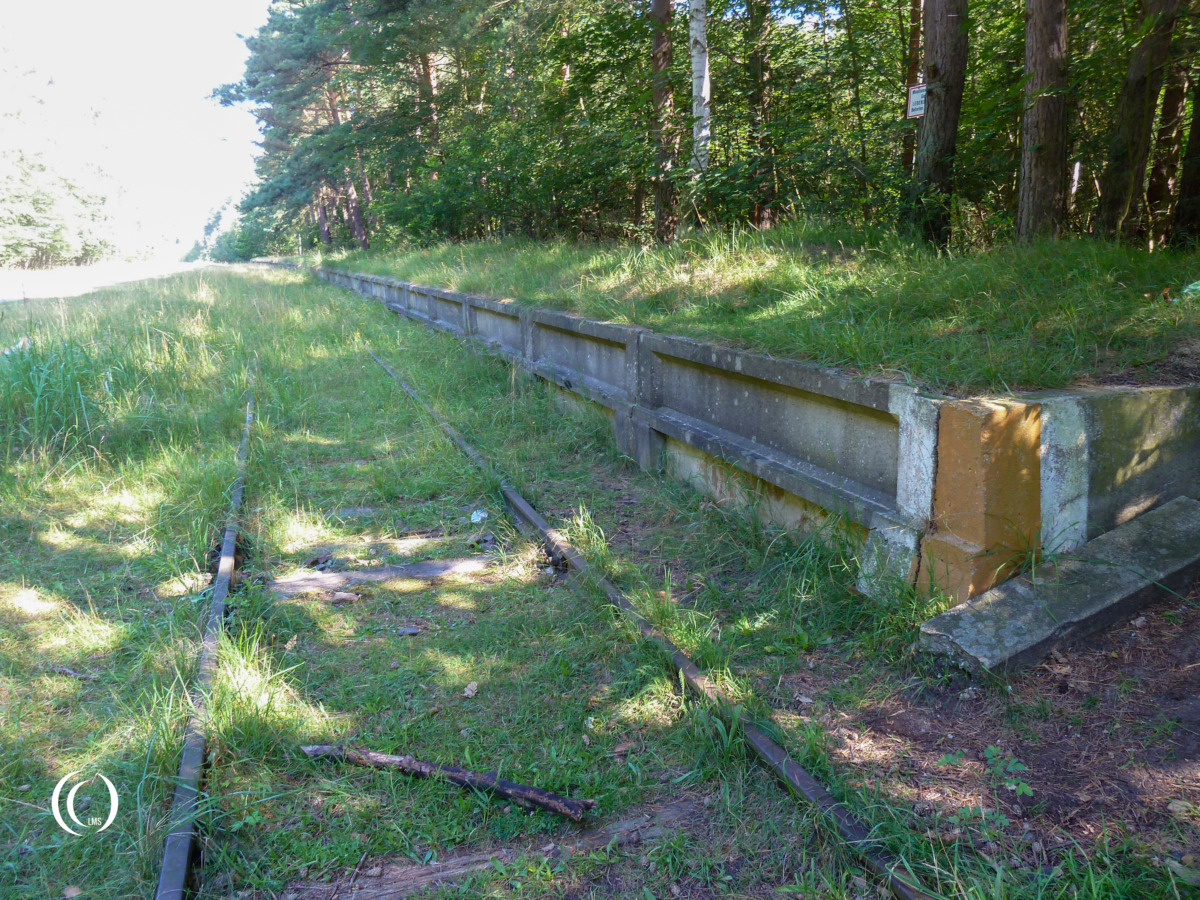
One of the earliest construction projects at the Peenemünde research facilities was the establishment of the works railway. Officially commissioned on 28 July 1937, it ran between Zinnowitz and Werk West, as well as the area of Werk Ost. Over the following years, the network was continually expanded to serve additional parts of the complex, eventually reaching a total length of 106 kilometres. The railway connected Peenemünde with Berlin and Hamburg, the only two cities with S-Bahn systems at the time.
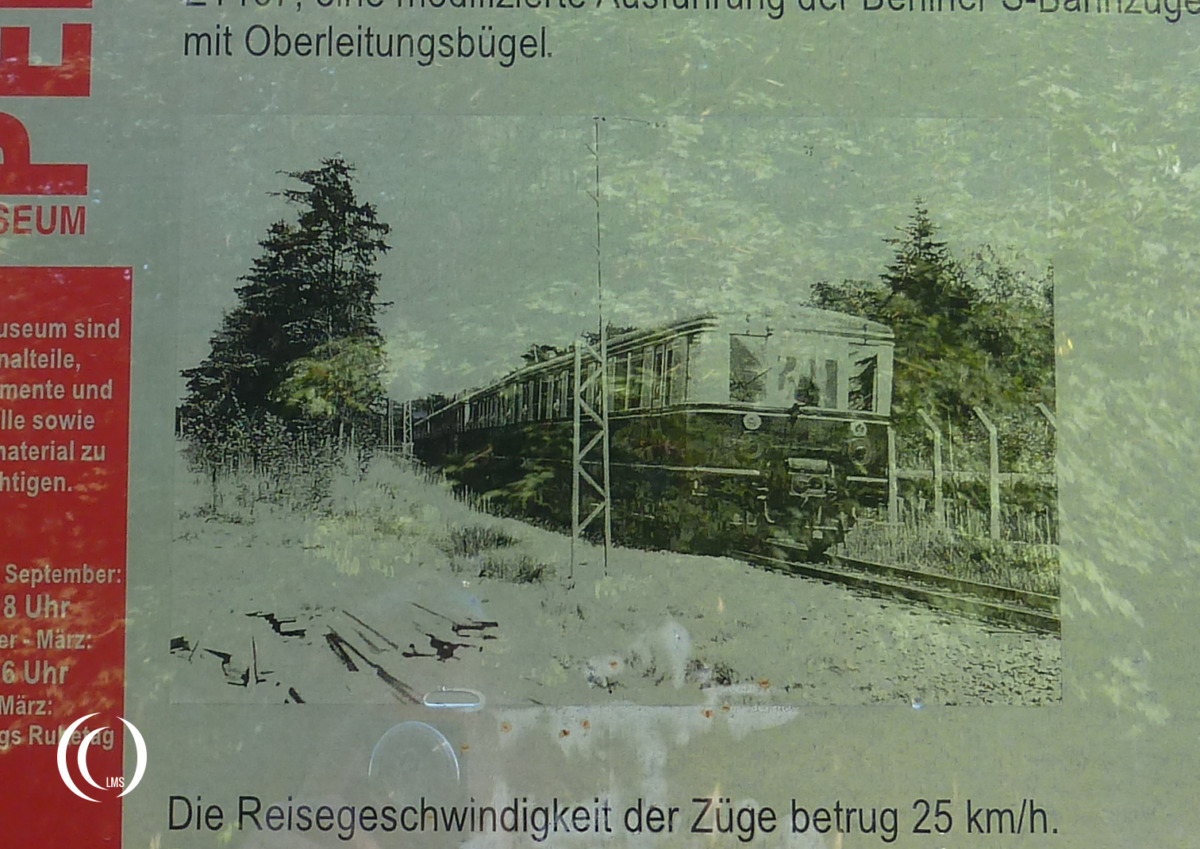
Passenger transport initially relied on steam locomotives with passenger carriages, but later transitioned to electric railcars. Fully electric train operations began on 15 April 1943, for which electric trains of the ET 167 series were used. These were modified versions of the Berlin S-Bahn trains equipped with overhead power collectors and had a travel speed of 25 km/h.
The Werk Ost station was used by employees of the development plant. Residents of the communal camp on the opposite side of the road also used this platform. Since the Karlshagen I labor camp was located there, the rail transport of prisoners also began or ended at this platform.
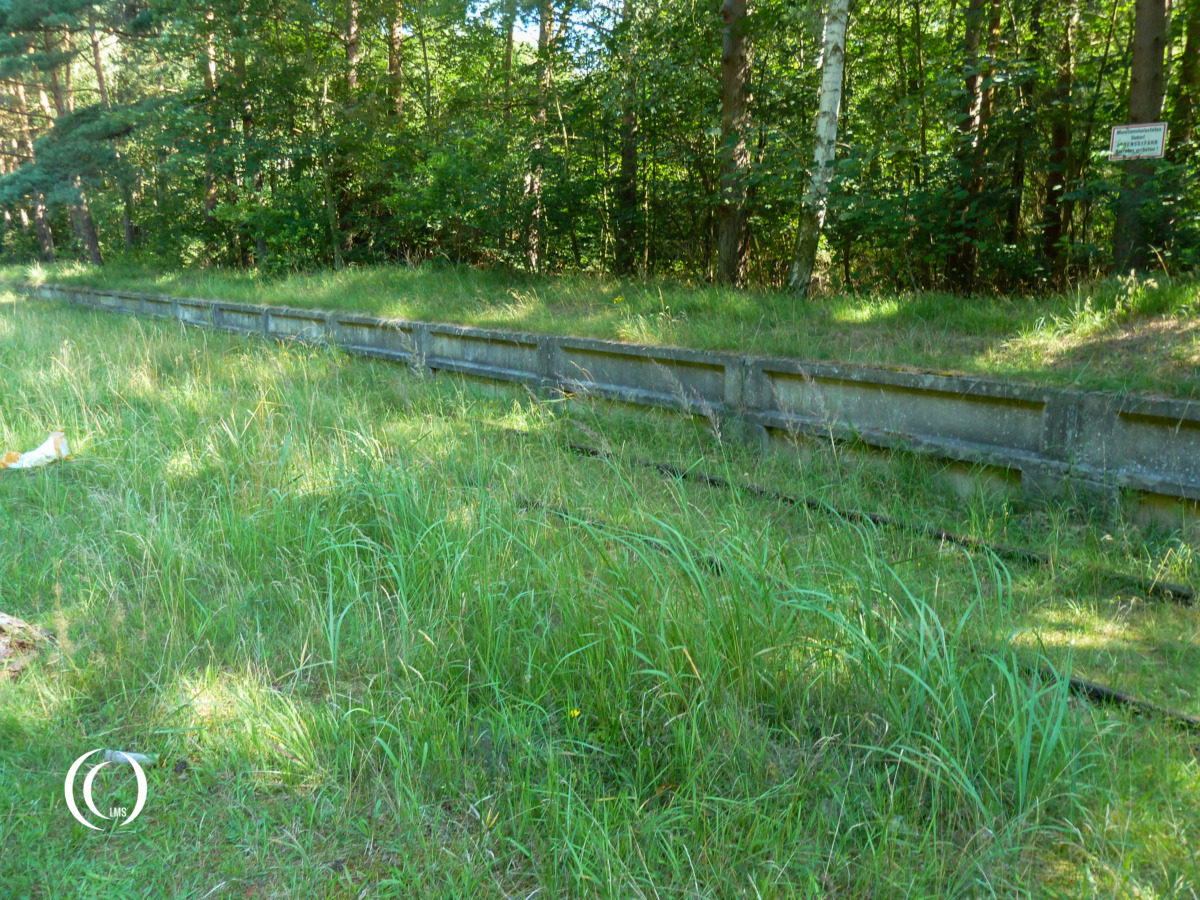
Today, the Werk Ost platform is the only easily accessible station on the former research grounds that has been preserved in its original condition. Built from prefabricated concrete elements and measuring approximately 180 metres in length, it was designed with level boarding to allow easy access to the trains. One original train from the Peenemünde industrial railway is exhibited on the grounds of the Historical Technical Museum Peenemünde.
Visit
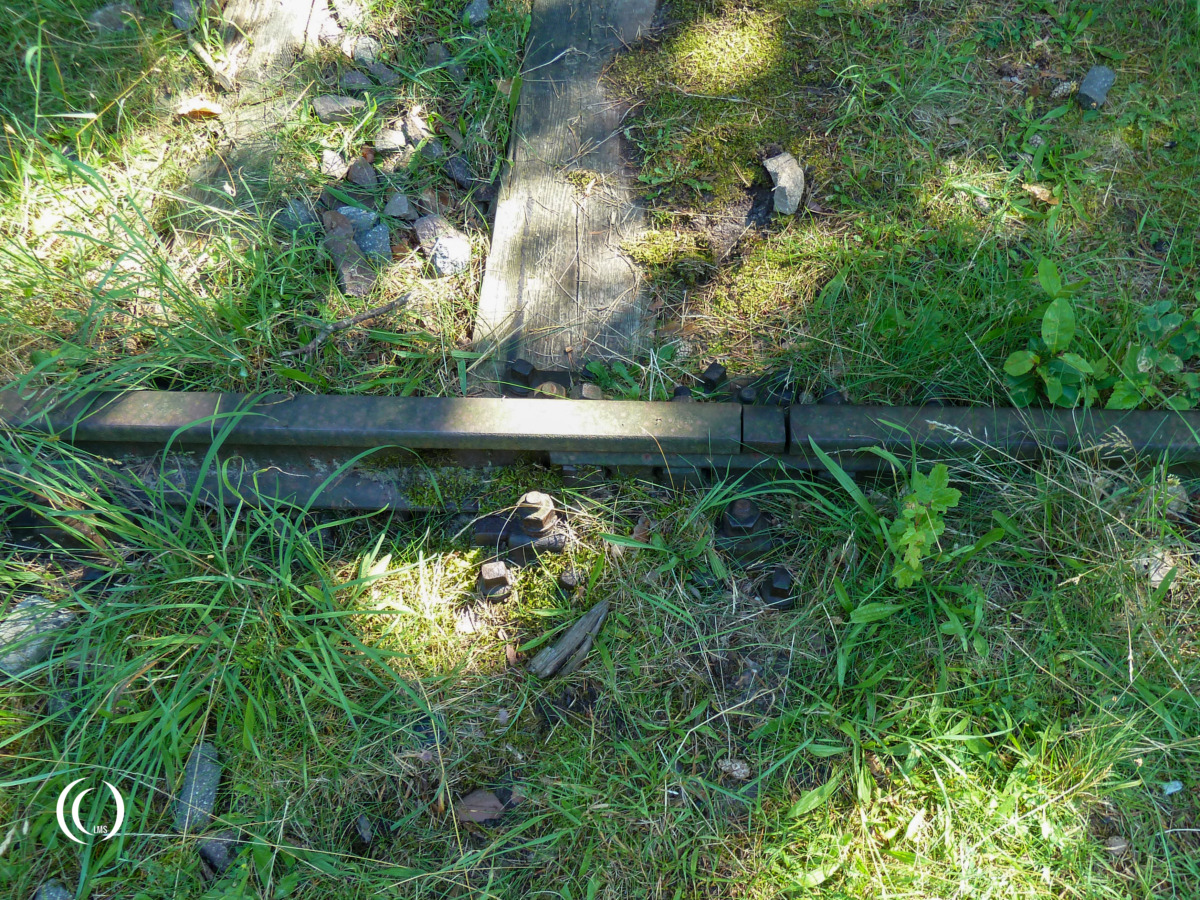
The remnants of the station are freely visitable along the “Flughafenring” road. The pictures above show about all there is left of the station.
