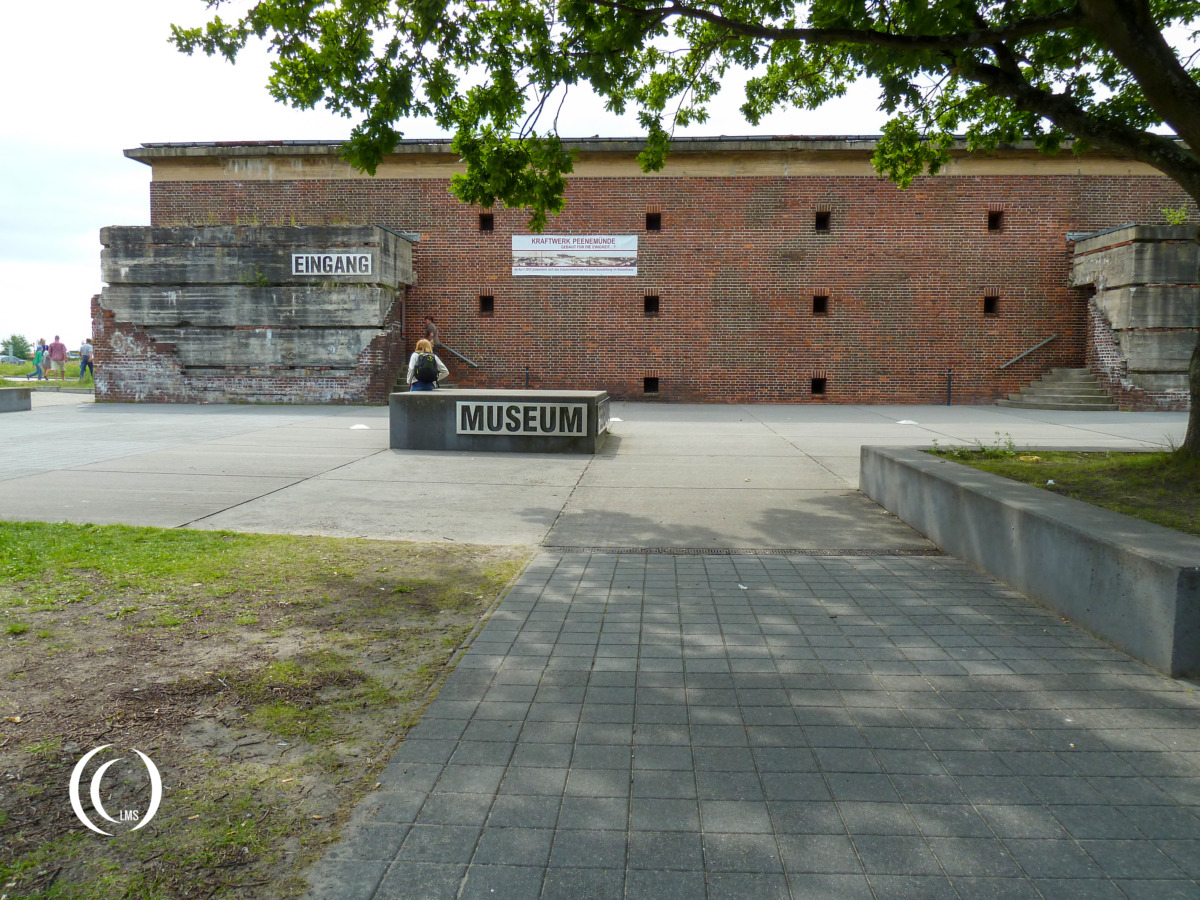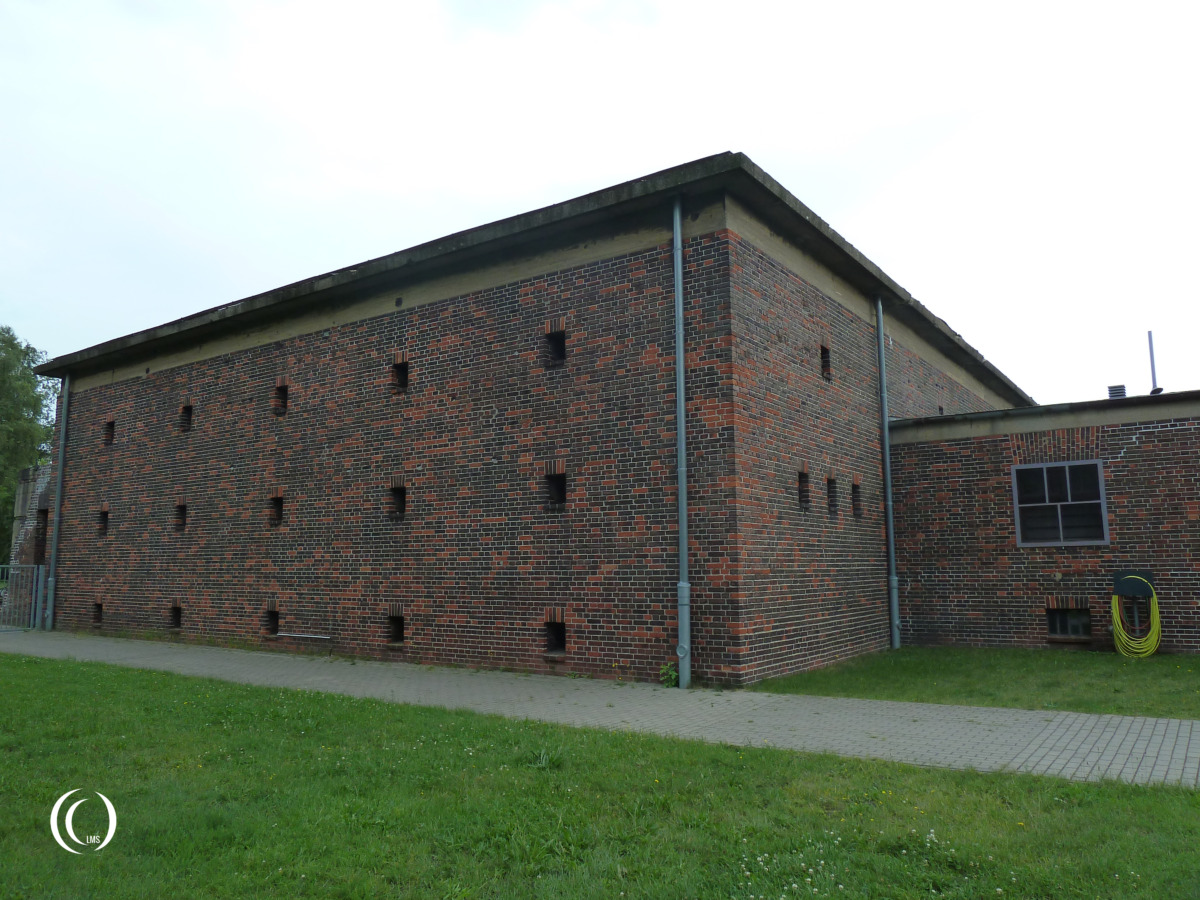
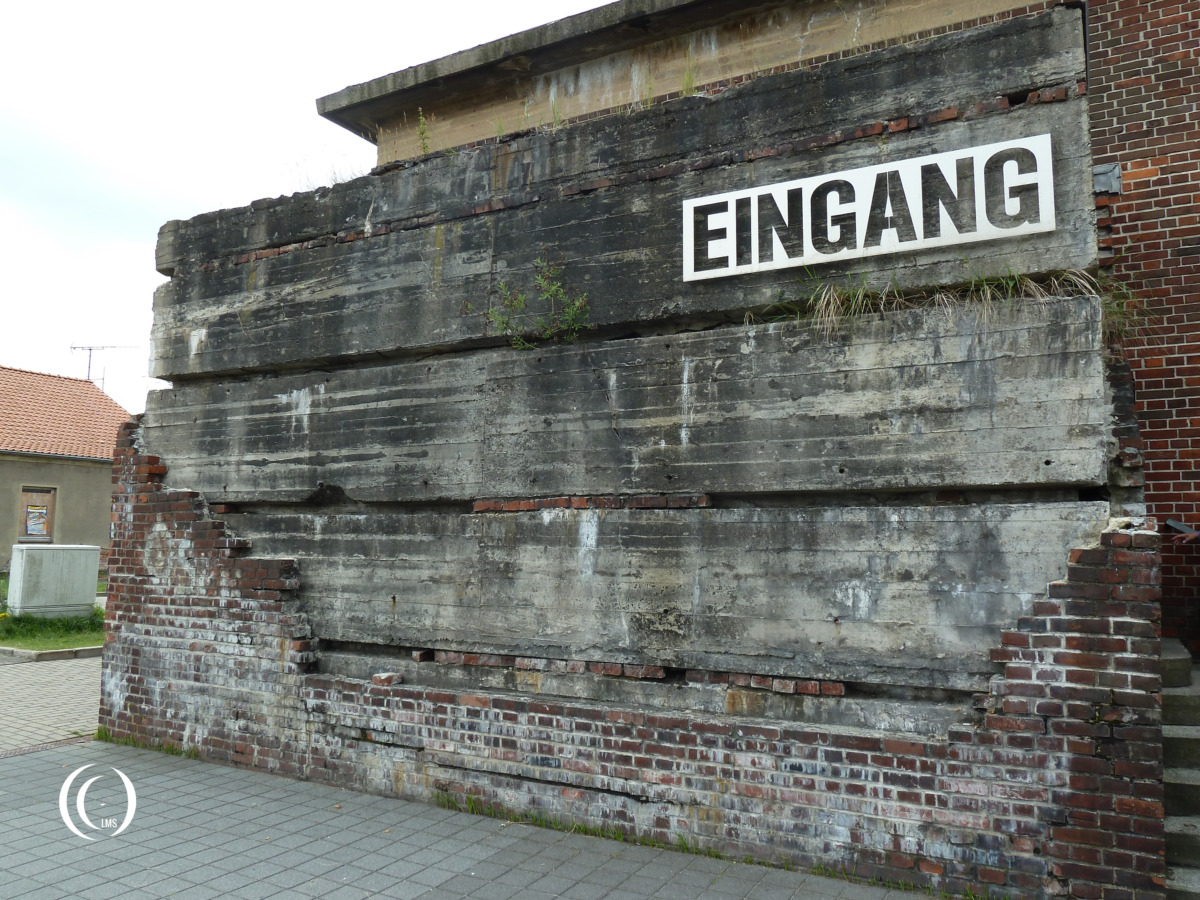
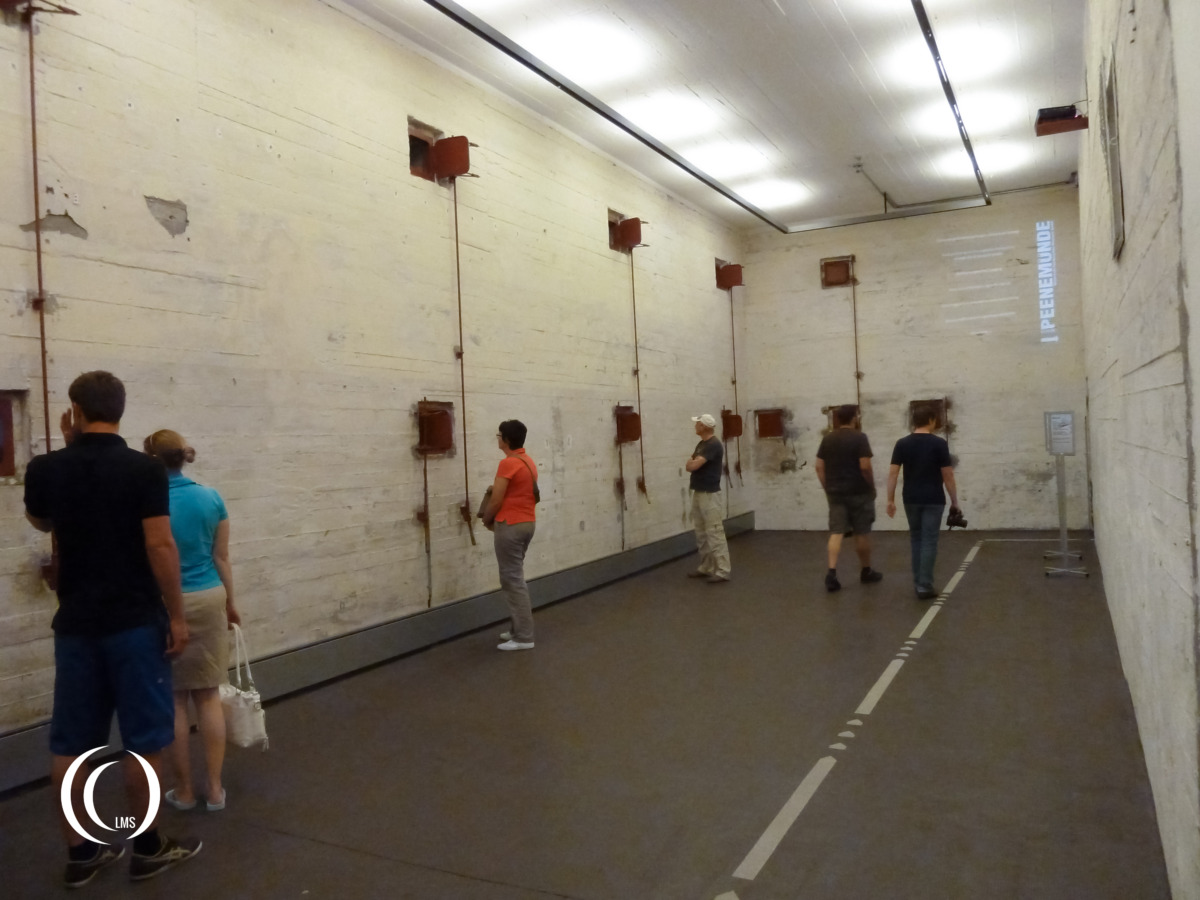
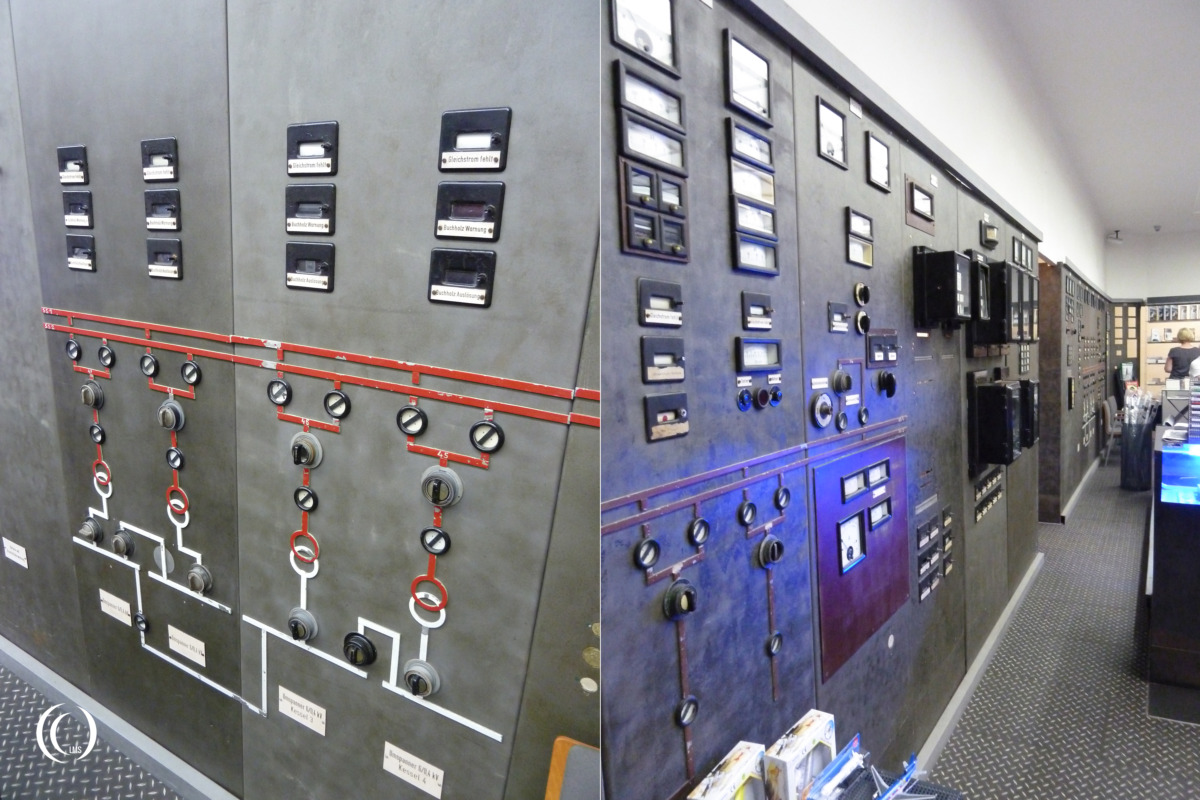
The Bunkerwarte control room has served as the entrance to the Historical Technical Museum of Peenemünde since 2004. Built alongside the power plant, the heavily reinforced bunker with walls up to 2 metres thick functioned during the Second World War both as an air raid shelter for power plant staff and as the central control room from which most technical processes were remotely managed.
In the 1950s, its role diminished when the control functions were relocated into the main power plant building.
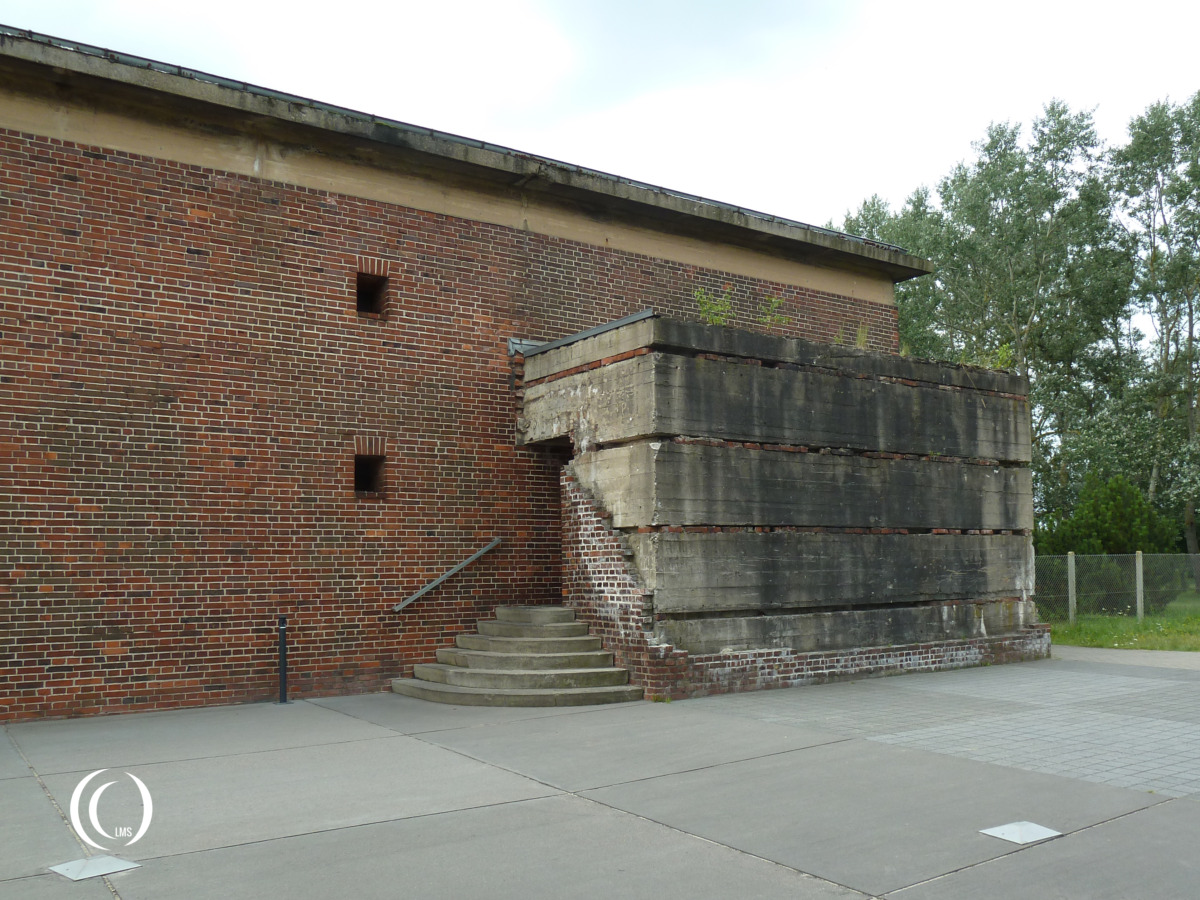
Planning and construction of the Peenemünde harbour power plant began in late 1939 under Siemens-Schuckert AG, with the facility gradually becoming operational by 1943. Fueled by Silesian coal, it was designed to generate 33 megawatts of electricity, with plans for a second identical block that was never realized. Architecturally, the power plant reflects the monumental and functional industrial style of the 1920s, characterized by cubic forms and dark brick façades, a design language that shaped much of Peenemünde’s military and industrial architecture.
The plant’s strategic location on the Peenestrom strait allowed for efficient coal delivery directly from ships and enabled the use of cold river water for cooling, while warm discharge water helped keep the harbour ice-free during winter. At the time, it ranked among Germany’s most advanced coal-fired power plants, involving numerous prominent engineering firms.
Visit
You can visit the Bunkerwarte and its interior as part of a visit to the Historical Technical Museum Peenemünde.