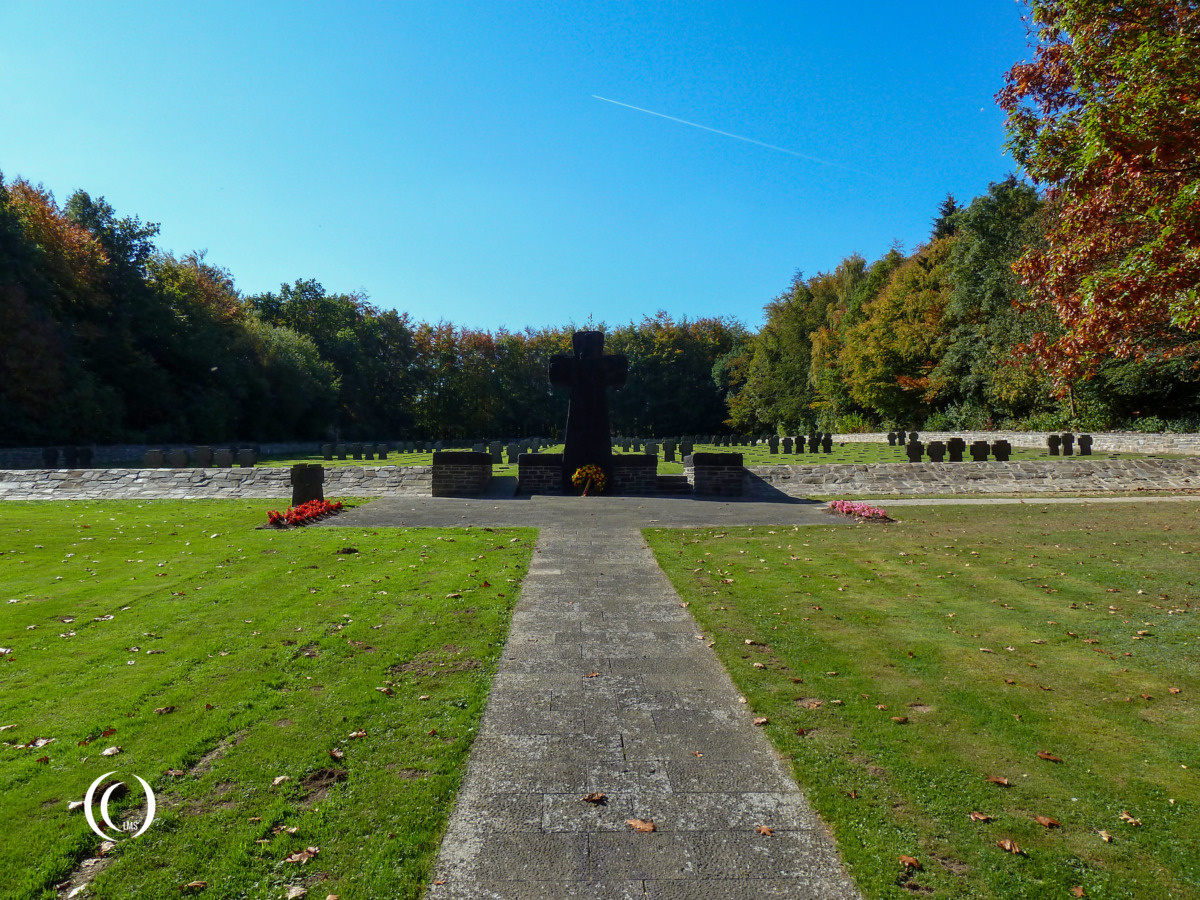
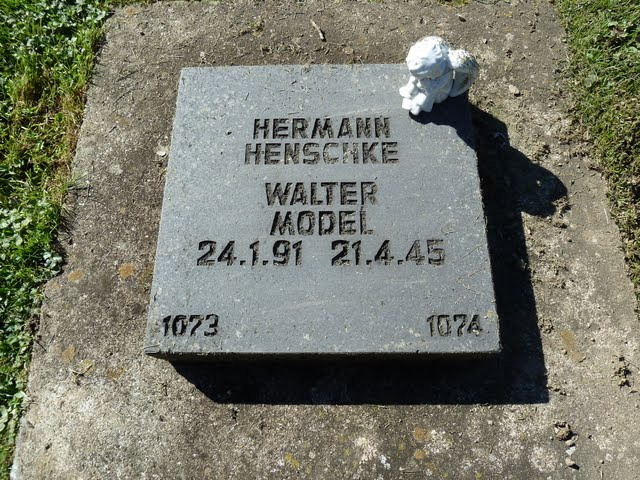
The German War Cemetery Vossenack / Eifel or Ehrenfriedhof Vossenack (in German) was constructed on a strategic site, known as Hill 470, between 1949 and 1952. Today it contains 2355 war dead, of whom 35 are post-war victims who lost their lives during cleanup operations as members of the “Ammunition Search and Removal Team”. This is also the final resting place of Field Marshal Walter Model.

A monument at the entrance of the cemetery, placed here in May 2005, commemorates Julius Erasmus (1895 – 1971), a German Engineer Captain who fought in the Battle of Hürtgen Forest himself and returned to Vossenack in 1945 after the war. Erasmus personally recovered and buried the remains of 1569 fallen comrades from Hürtgen Forest, risking his own life. After burying the first 120 soldiers on the edge of the forest, the local community gave him this plot of land on Hill 470 to continue his work. Erasmus is basically seen as the founder of the Vossenack cemetery.

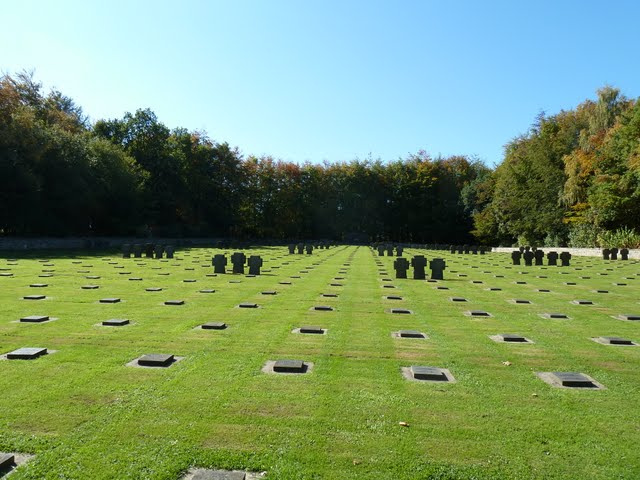
Generalfeldmarschall Marshall Walter Model
Walter Model (1891–1945) was a German field marshal during World War II, known for his skill in defensive warfare. A veteran of World War I, he rose rapidly in the Wehrmacht and earned a reputation as a “fireman” of the Eastern Front, often sent to stabilize collapsing fronts. Model commanded major formations, including Army Group Center and later forces in the West, where he led German defenses during the Allied advance after D-Day. Loyal to Adolf Hitler and effective at delaying enemy offensives, he nonetheless faced overwhelming Allied strength. In April 1945, encircled in the Ruhr and refusing surrender, Model took his own life. His legacy remains controversial, balancing military competence against unwavering service to the Nazi regime. More on Generalfeldmarschall Walter Model.

Visit
The cemetery is open during daytime hours
