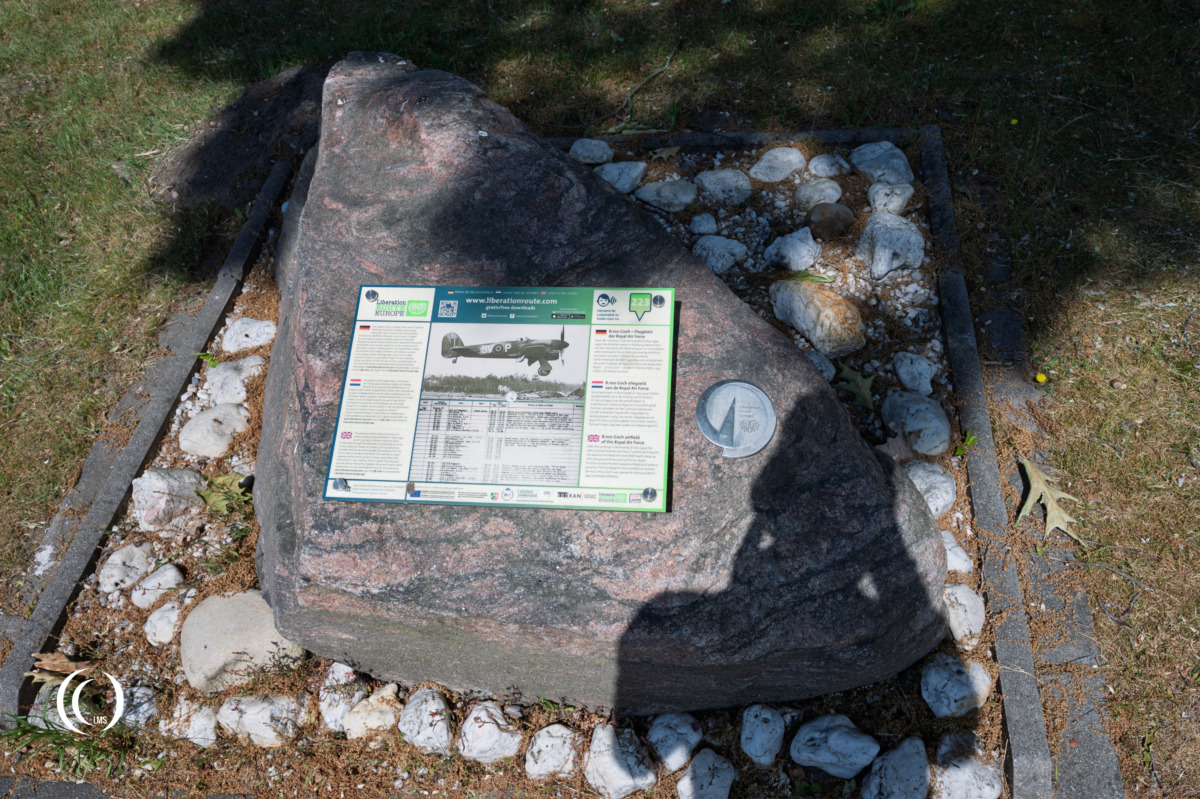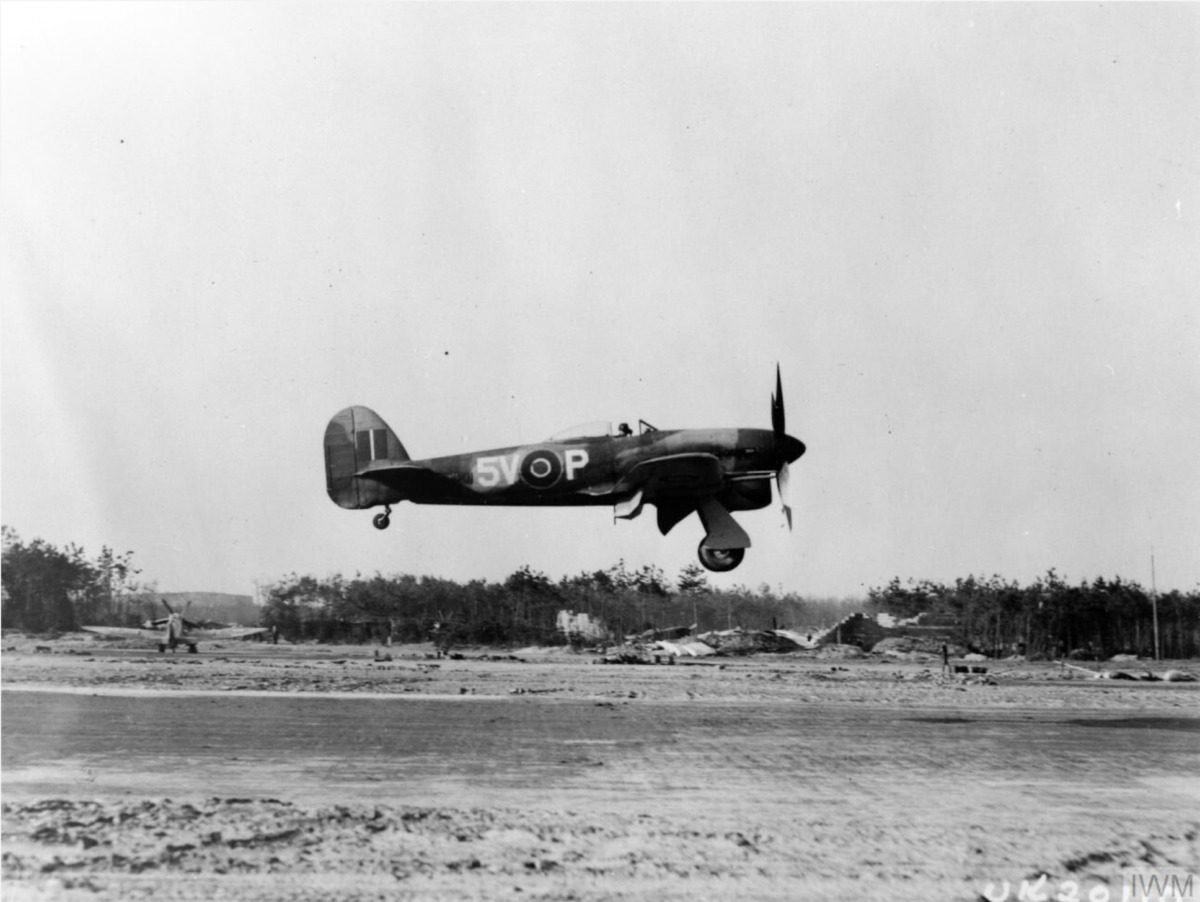
Advanced Landing Ground B-100 Goch was a temporary airfield built by the 2nd Tactical Air Force’s (TAF) Airfield Construction Service for the RAF near the end of World War Two. It was the first airfield constructed on German soil by the 2nd TAF. Between 4 March and late April of 1945 the airfield was used to support the advancing Allied troops across the Rhine and into Germany by carrying out air attacks on German troops east of the river.
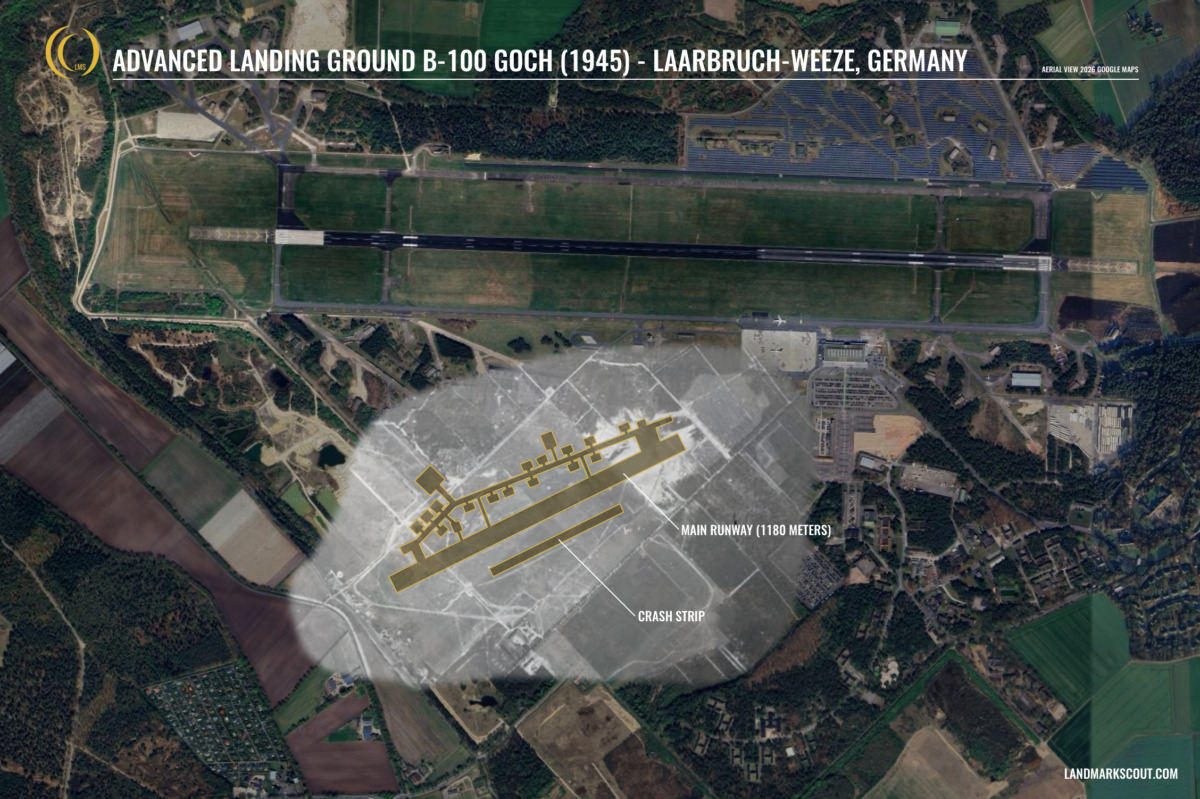
The airfield had the capacity to house two RAF Wings. The main runway was constructed of perforated steel plates (PSP) and was 1,180 meters (3600ft) long. There was also a grass emergency strip running parallel to it. To the northwest was another grass runway of 983 meters (3000ft) for transport aircraft and emergency landings.
The first aircraft of No. 121 (Typhoon) Wing arrived in Goch on March the 20th 1945. The Canadian squadron No. 143 joined them at the end of March. In mid-April, the Hawker Typhoons of No. 121 Wing were replaced by Supermarine Spitfires of the Canadian No. 127 Wing. When these were withdrawn at the end of that same month, WWII operations from ALG B-100 Goch ceased and the site was abandoned.
Visit
During the Cold War, the former airfield was taken into use by the RAF between 1954 and 1999 as RAF Laarbruch Air Base. Starting from 2003 it became Airport Weeze for commercial flights.
Although all remnants of ALG B-100 Goch have disappeared over the years, you can still visit the Royal Air Force Museum Laarbruch-Weeze on the Airport grounds. They have a small exhibition about the subject.