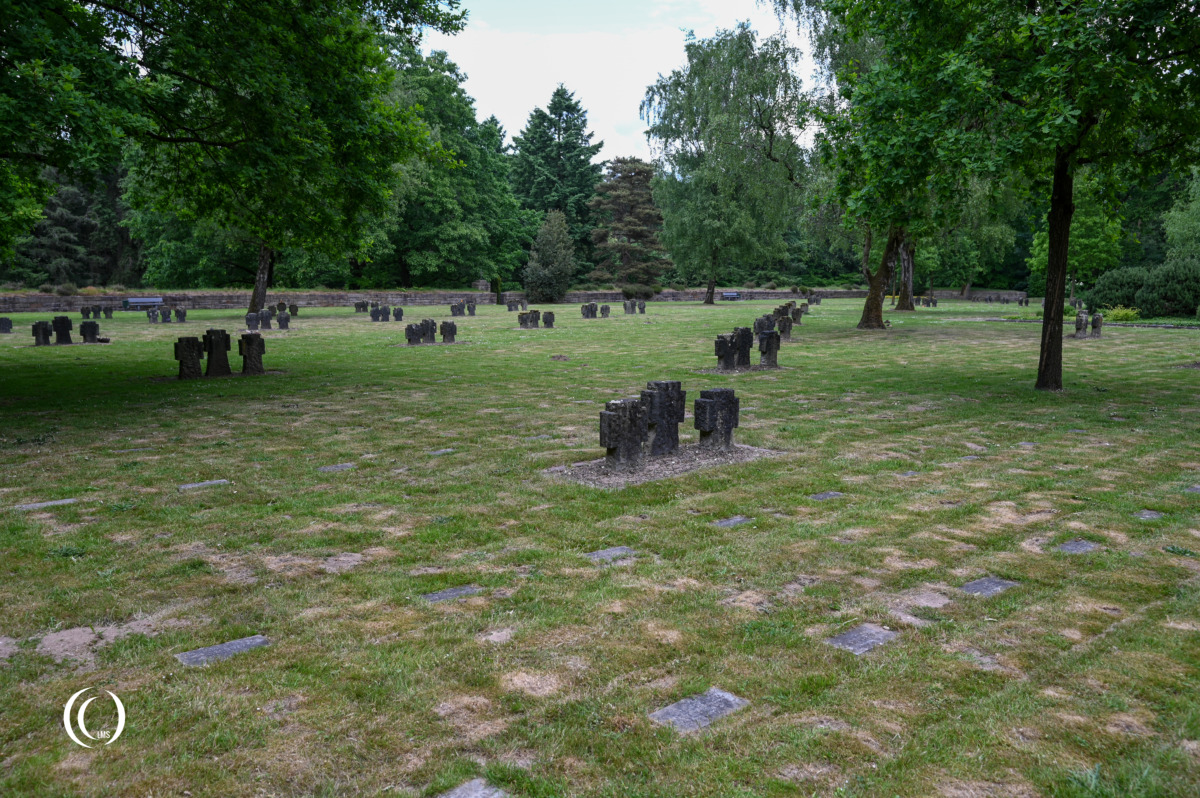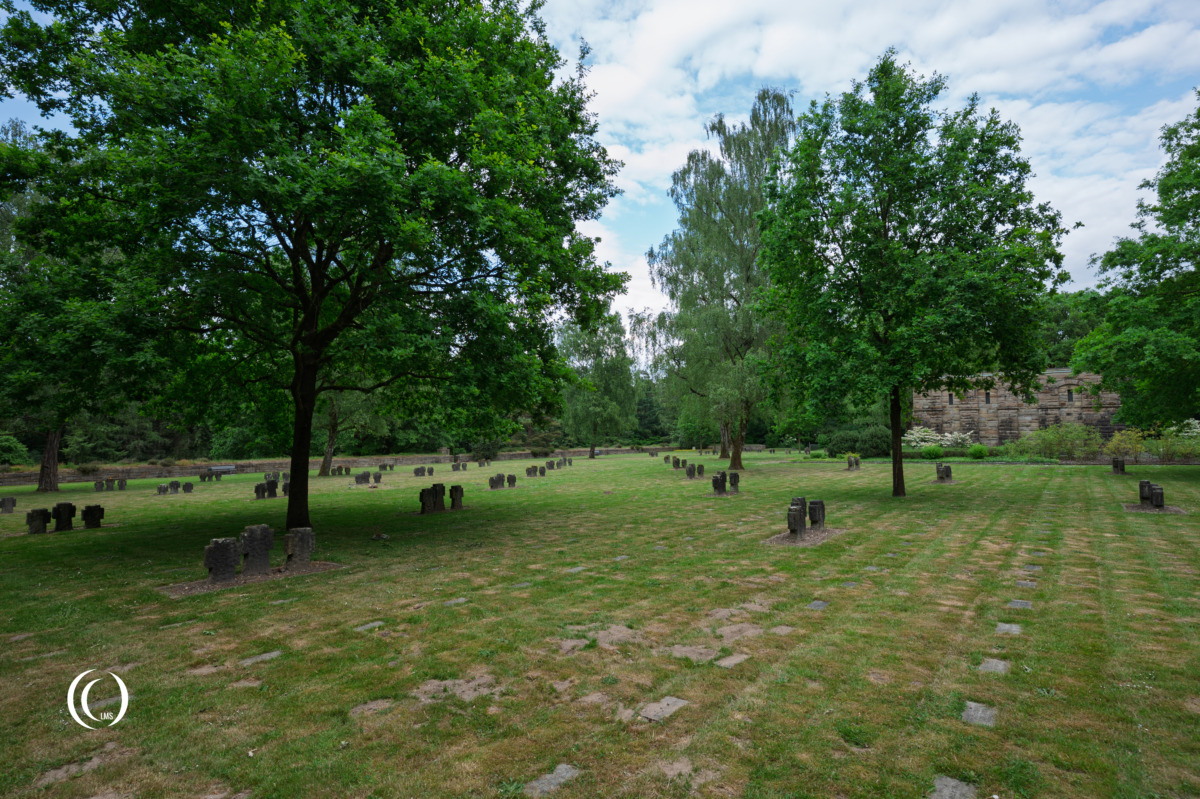
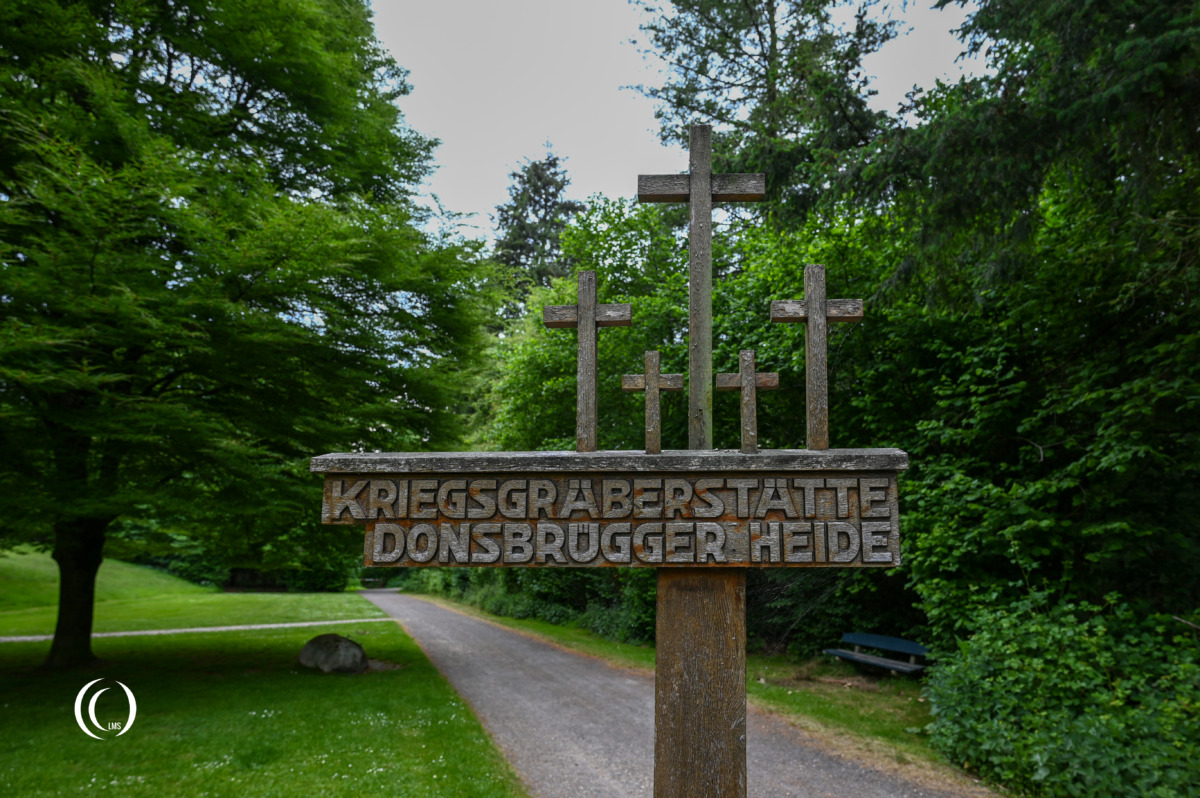
A total of 2,718 fallen of the Second World War are buried here at War Cemetery Kleve-Donsbrüggen of whom 2,421 in individual graves and 297 unknown persons in a collective grave. They include soldiers who were killed in action or died in military hospitals in Kleve and who came from all regions of the former German Reich, as well as victims of the devastating bombing raid on Kleve on 7 October 1944 (approx. 400 dead) and forced laborers of various nationalities who lost their lives during their deployment on the so-called Westwall (approx. 200 dead).
Operation Veritable
In February 1945, heavy fighting began on the Lower Rhine, marking the start of the final phase of the war on German soil. On 8 February 1945, the 1st Canadian Army launched a major offensive west of Kleve. After fierce German resistance in the Reichswald area, the Canadians advanced further to the southeast. The battle claimed many dead on both sides. The Canadian fallen were buried at Groesbeek in The Netherlands, the British and other soldiers of the Commonwealth fallen were buried largely in the Reichswald Cemetery (7,647 dead) nearby, while the German fallen were buried here in Donsbrüggen.
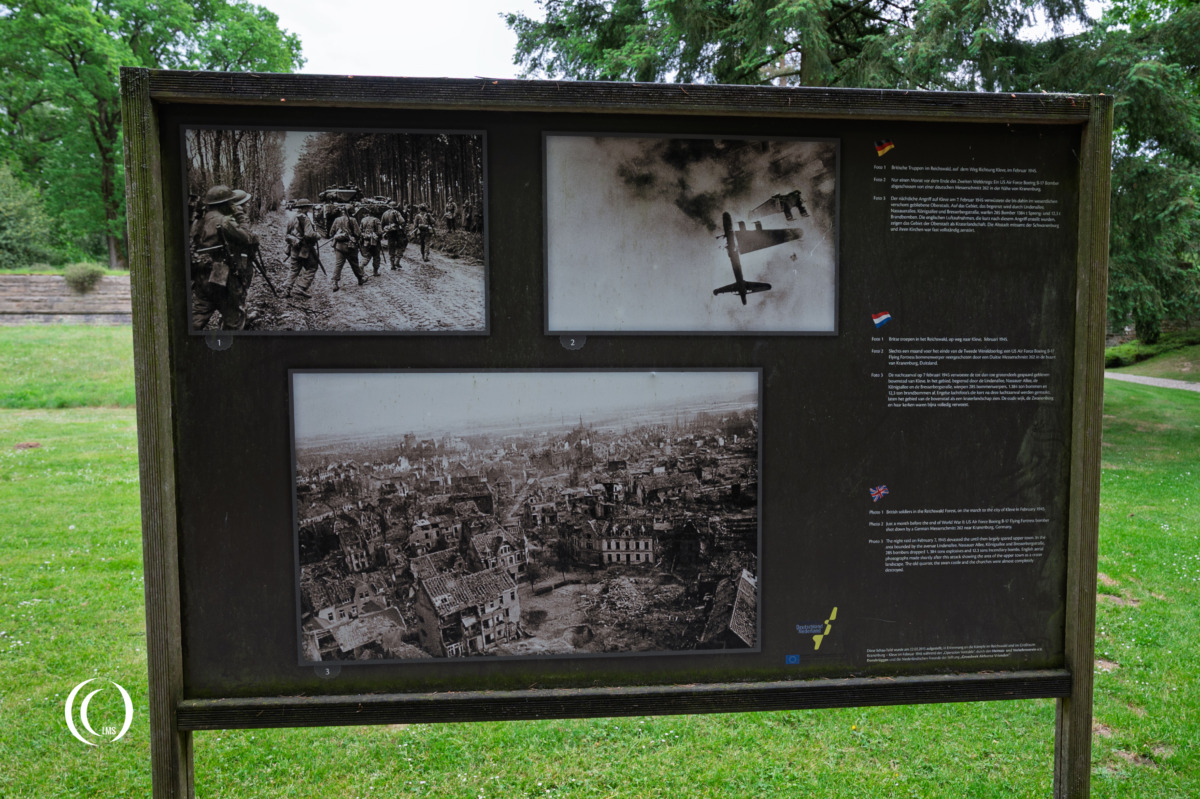
When the population returned, they found the graves of the fallen along roadsides, railway tracks, in meadows, fields, and gardens, as well as numerous dead who could no longer be recovered and buried.
Final resting place
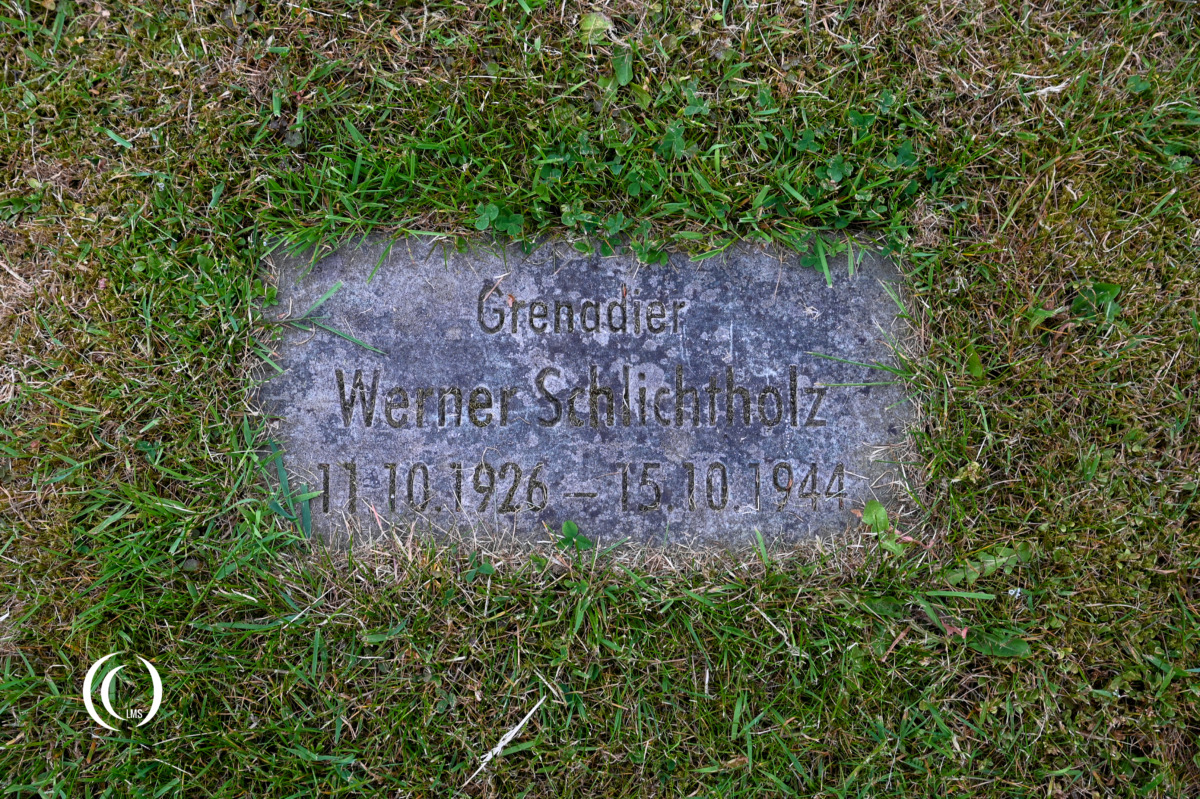
The German War Graves Commission (Volksbund Deutsche Kriegsgräberfürsorge) had already begun searching for scattered graves in this region in 1946. In 1948, they began constructing the war cemetery on the Donsbrüggen Heath, on the northern edge of the Reichswald.
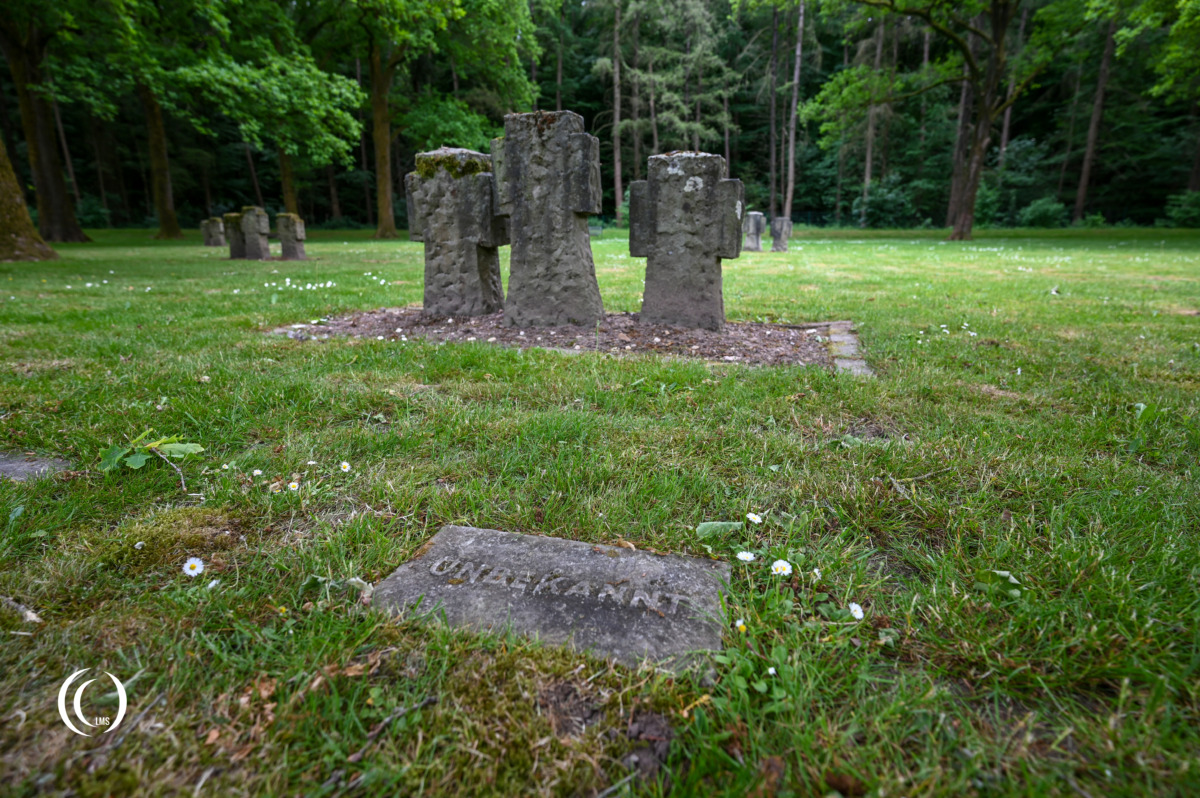
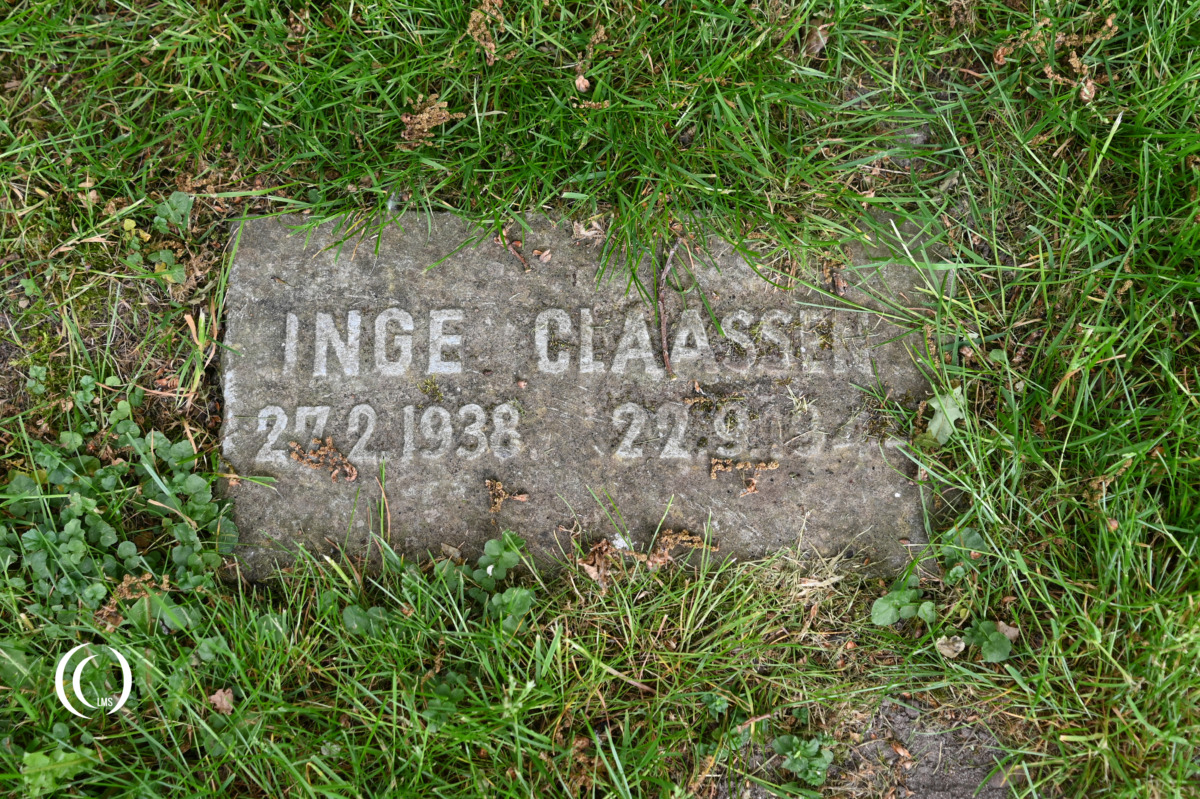
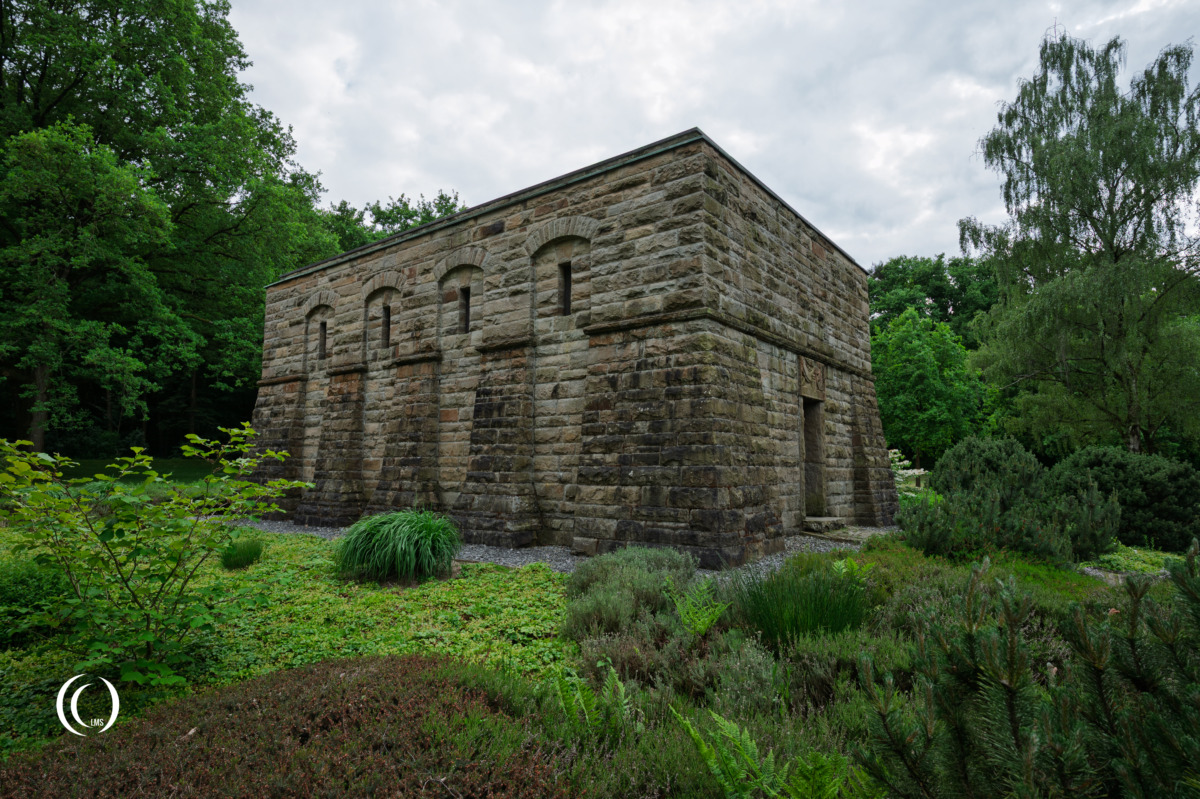
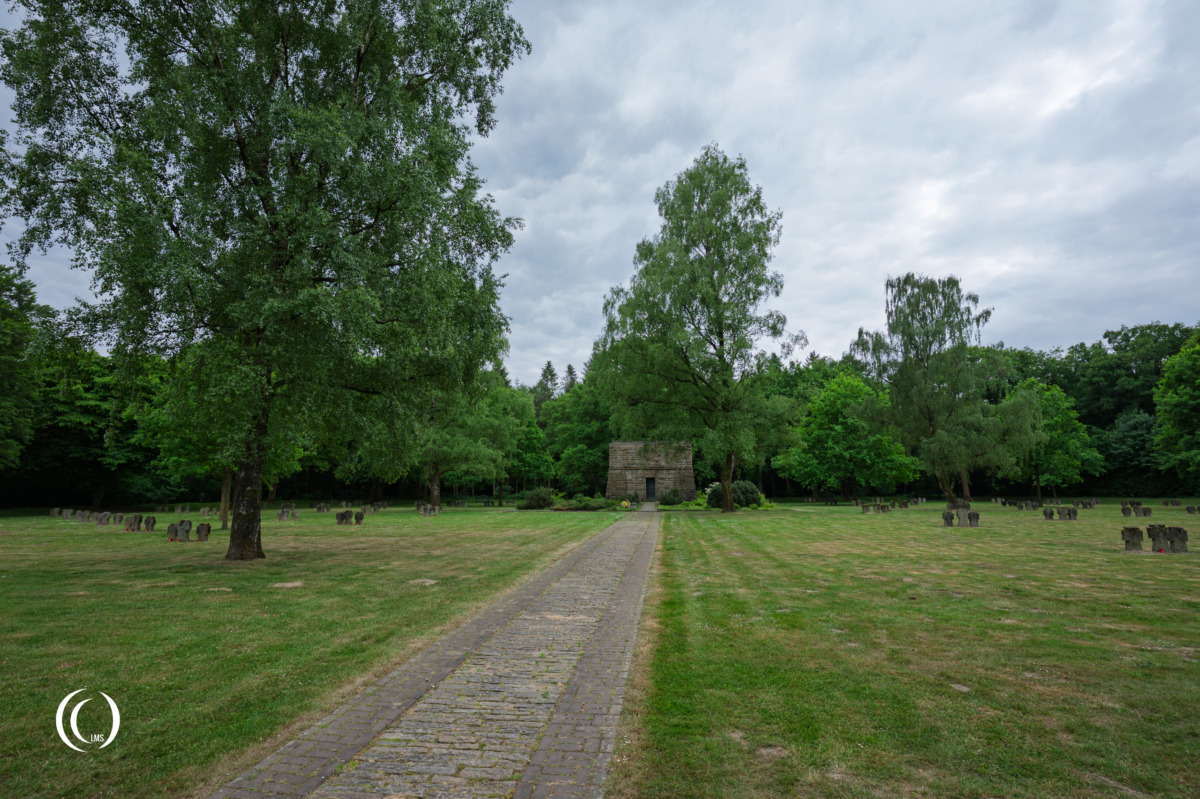
In Donsbrüggen, the dead from the towns of Asperden, Donsbrüggen, Griethausen, Warbeyen, Hassum, Hommersum, Keeken, Kleve, Kranenburg, Luisendorf, Mehr, Niel, Pfalzdorf, Rindern, Till, and Hasselt were reburied together. The graves are laid out in double rows, intersected by grass paths. In the center of the Cemetery is a 6 meters high crypt covering the remains of 40 unknown fallen. The walls are lined with stone tablets with the names of fallen whose graves could not be recovered.
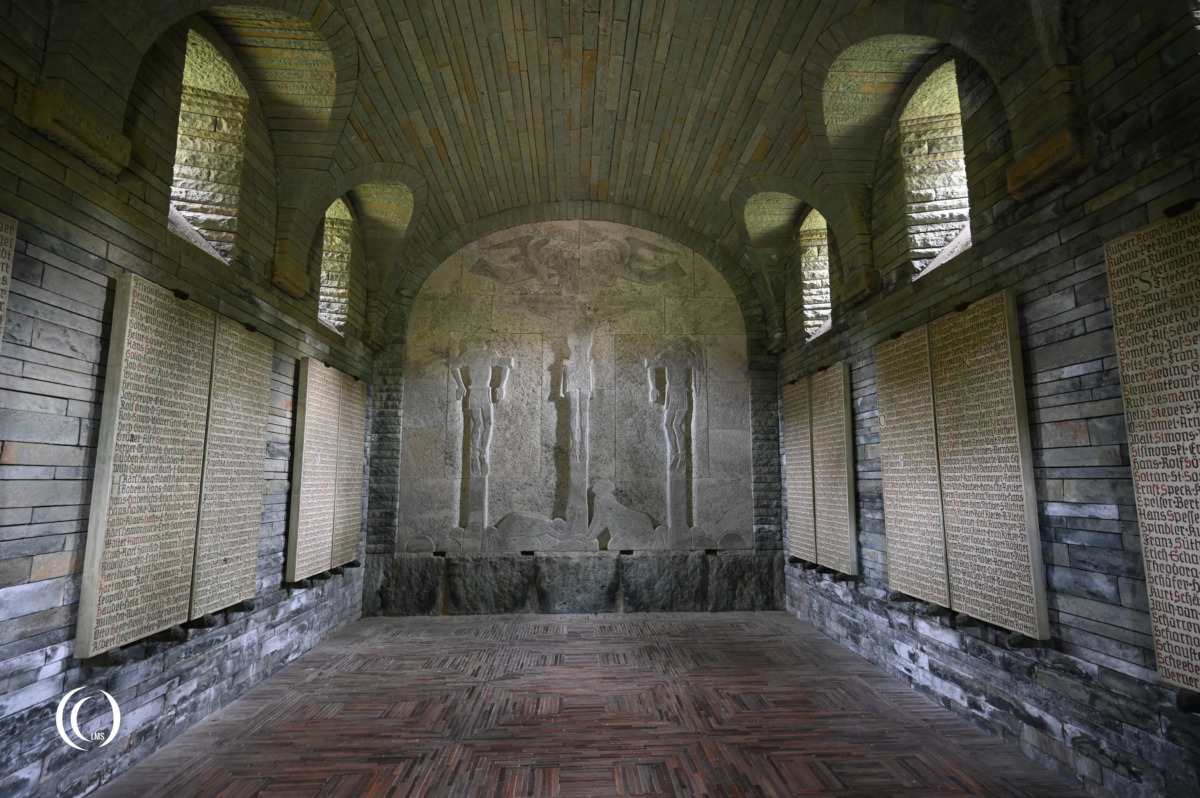
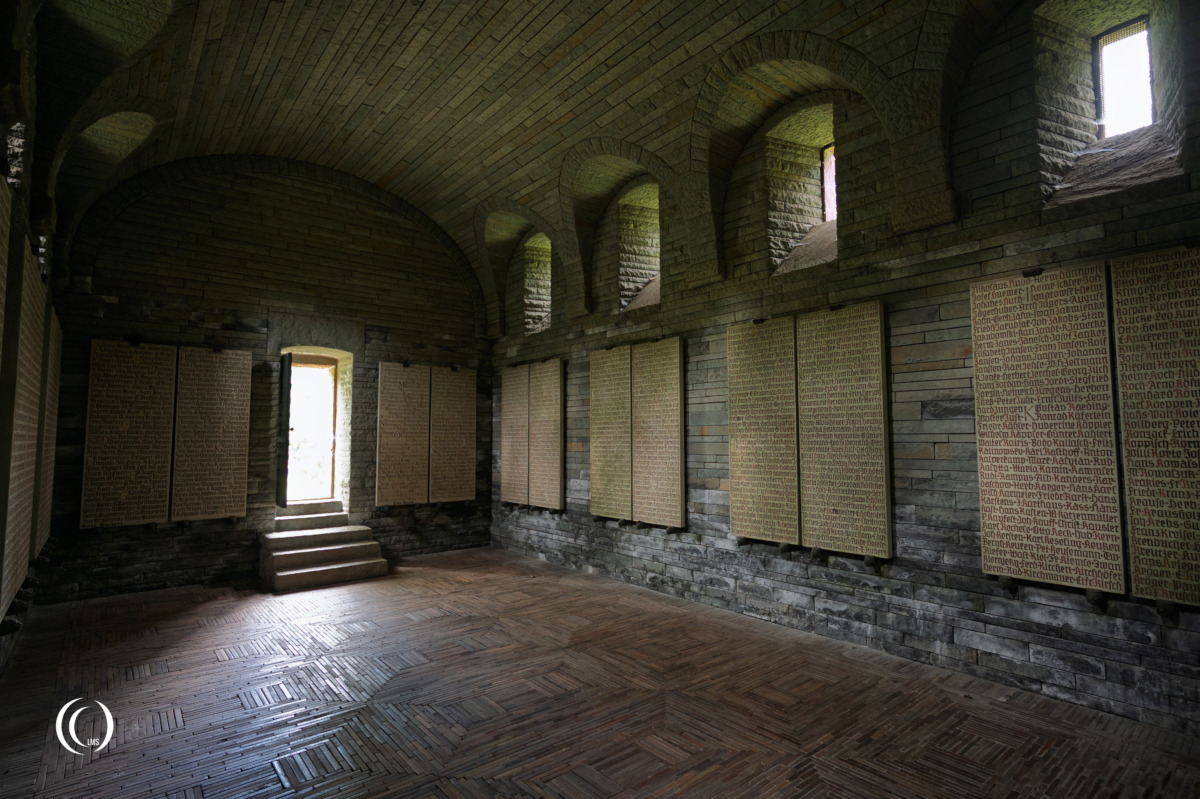
The cemetery was opened on 10 September 1950.
Visit
You can visit the cemetery in the Reichswald freely.