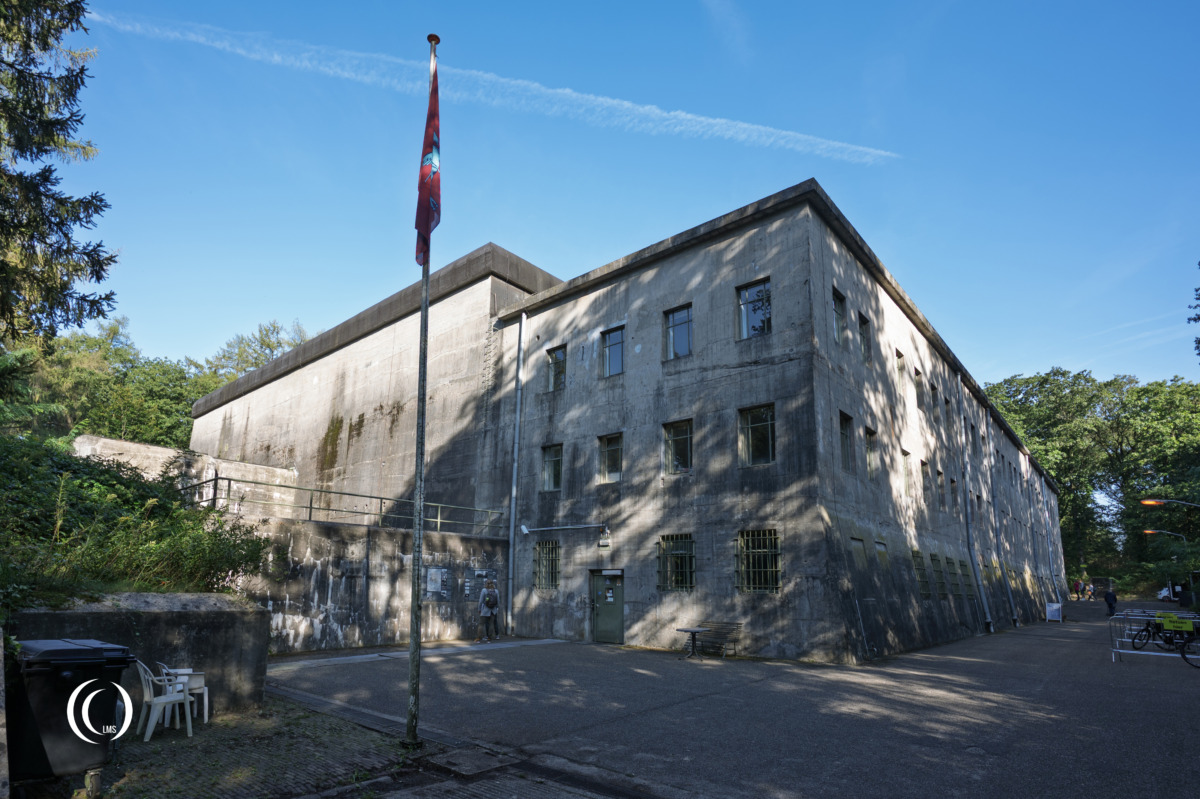
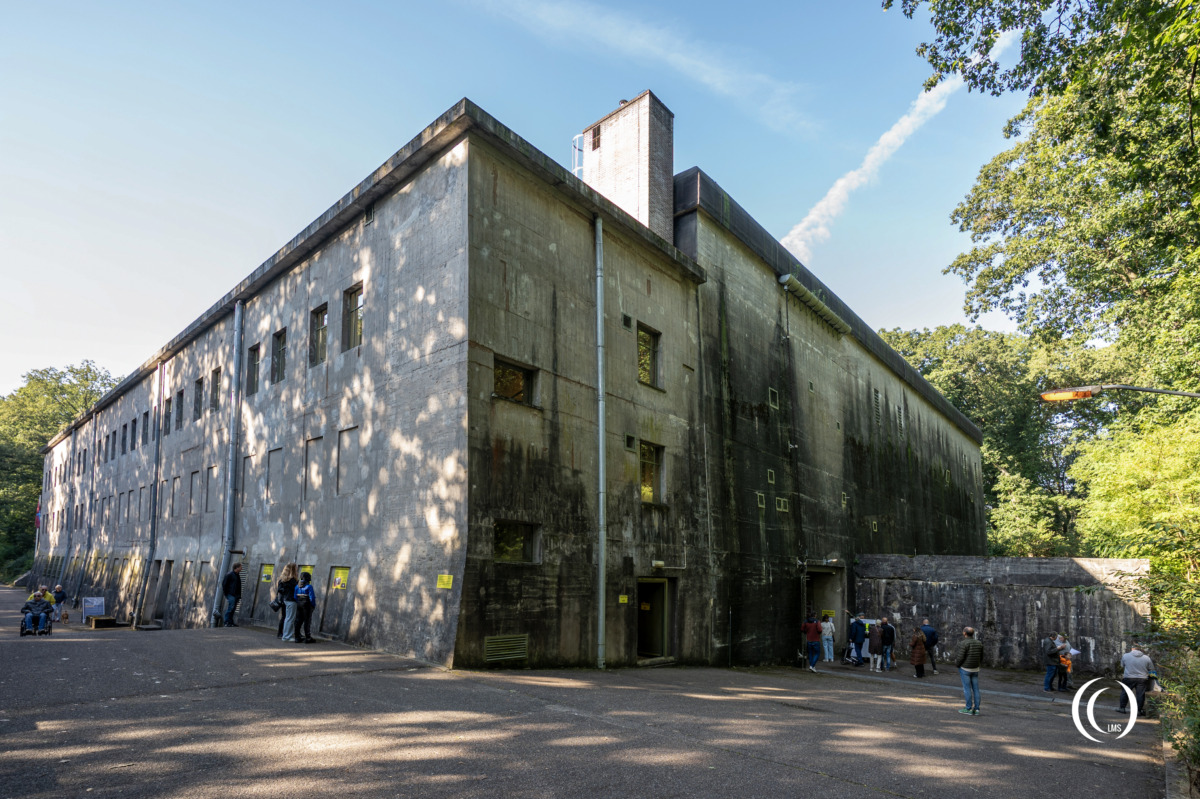
The Diogenes II Bunker, located along the Koningsweg in Schaarsbergen near Arnhem, is one of the largest German World War Two bunkers in the Netherlands. Constructed by the German Luftwaffe near Fliegerhorst (Eng: Airfield) Deelen, the bunker served as the command center for the 3rd Fighter Division (3. Jagddivision) and 1st Night Fighter Division (1. Nachtjagddivision), coordinating air defense operations or in German “Reichs Luft Verteidigung (RLV)” over the Netherlands, northern Belgium, the Ruhr area, and northwestern parts of Germany.
Grossraum Gefechtsstand
The Luftwaffe created several of these command centers named “Gefechtsstand” (or short GefStd) that acted as a nerve center within a certain air-space and stood in direct contact with the Luftwaffe headquarters (Oberkommando der Luftwaffe or OKL) in Berlin.
Bunker Diogenes II is a so called “Grossraum Gefechtsstand“, which indicates that it is the large variant of this type. Only five bunkers of this type were constructed, their codenames all referring to Greek mythology:
- GefStd. Gyges – Grove, Denmark
- GefStd. Diogenes – Schaarsbergen/Deelen, the Netherlands
- GefStd. Sokrates – Stade (near Hamburg), Germany
- GefStd. Minotaurus – Münschen/Schleissheim, Germany
- GefStd. Dädalus – Döberitz, Germany
Construction
Construction of Diogenes II began in December 1942 and was completed by July 1943. A few months later the internal command center was finished and the bunker became fully operational.
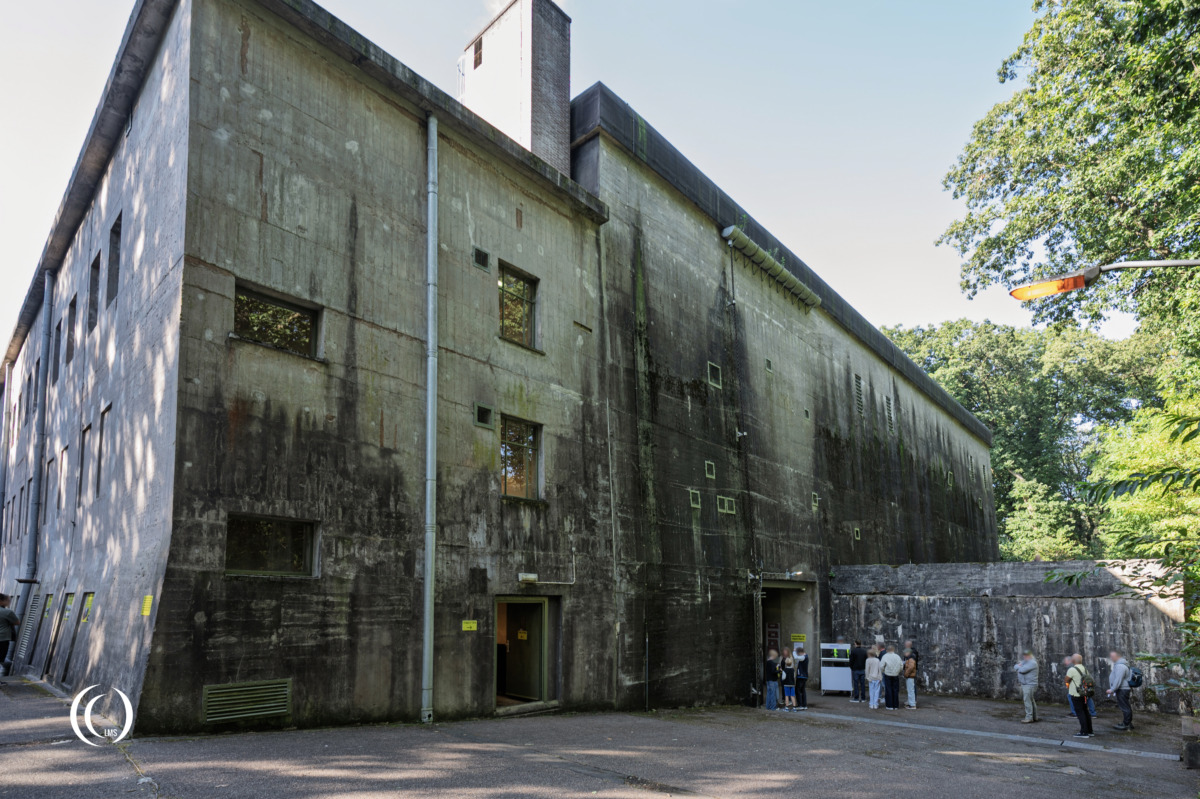
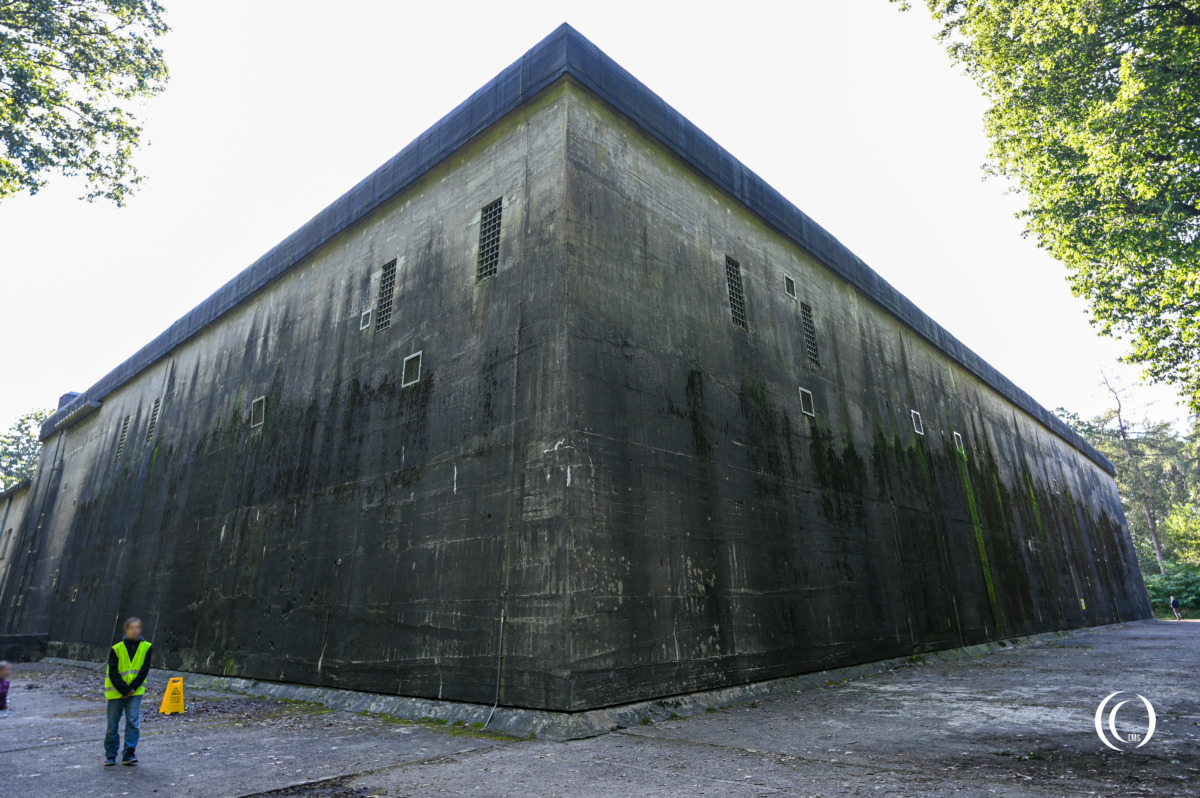
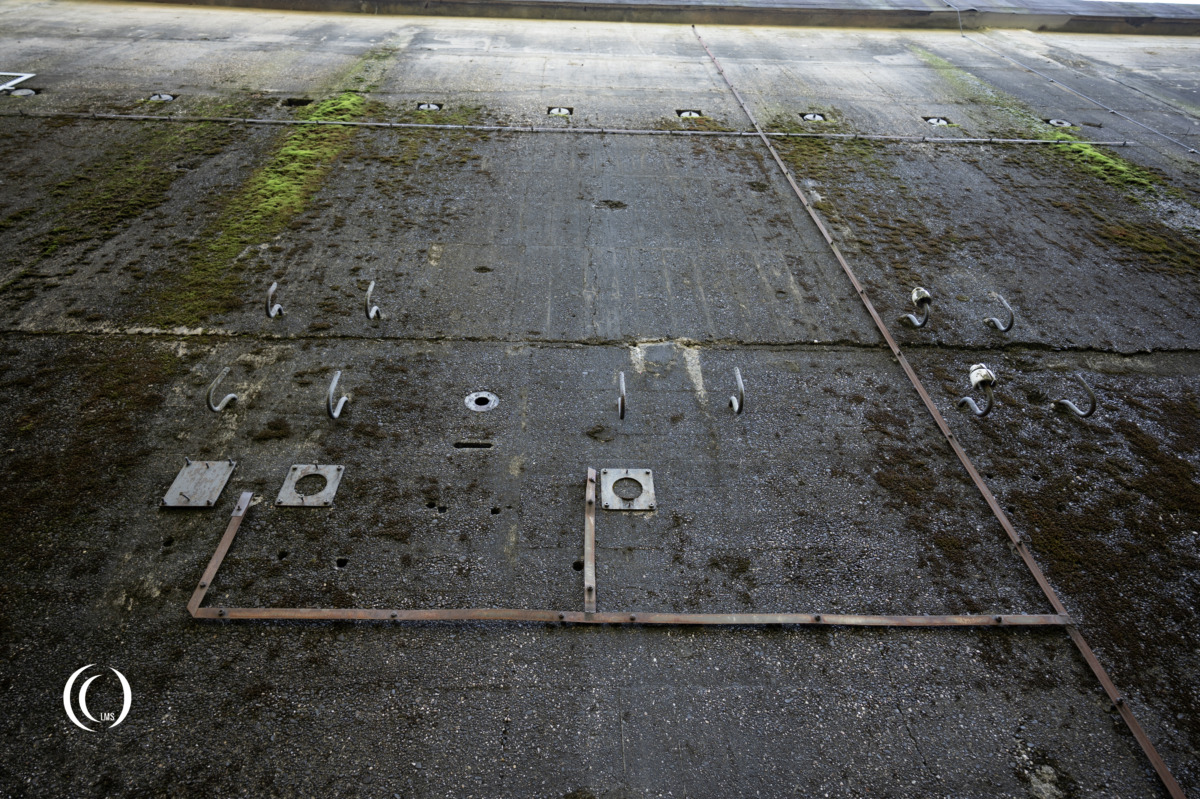
The massive structure measures approximately 60 meters in length, 40 meters in width, and 16 meters in height, with walls between 3 to 4 meters thick, requiring around 39,000 m³ of concrete. Materials were transported via a specially constructed railway branch from Wolfheze station to Fliegerhorst Deelen.
The bunker was designed to provide protection against bombings and gas attacks. The average wall thickness is 3.5 meters, while the roof is only 2.8 meters thick. To reinforce the roof, 21 steel crossbeams were installed.
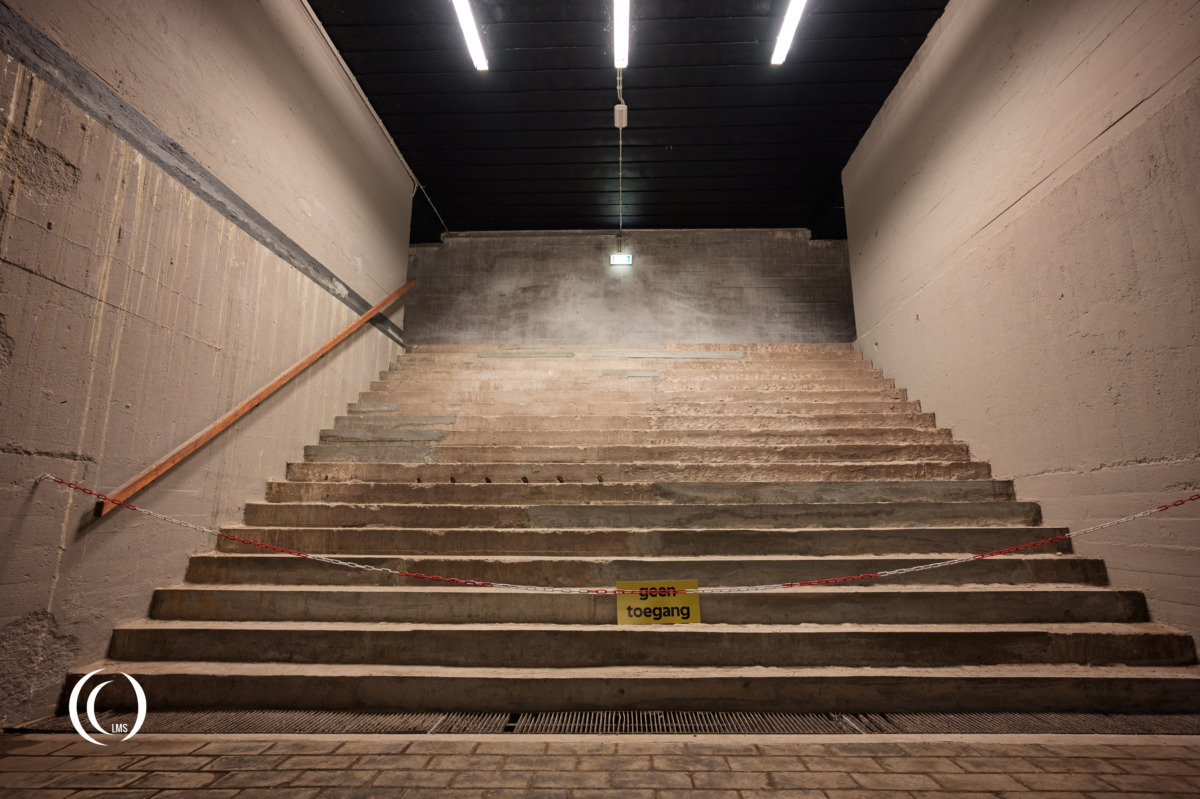
Diogenes II was constructed around the main command room (Kampfraum), which had a height of 13.5 meters, a width of 15 meters, and a length of 31 meters. Around the large hall, approximately 14 rooms for supporting functions were built on each of the three floors. The structure consists of two parts: the bunker itself and the administrative building attached to its eastern side. The walls of the latter are only half a meter thick.
For camouflage, the bunker was painted brown and covered with camouflage netting. Water supply was ensured through several private wells. On the second floor, a 100 m³ water reservoir was built, functioning as a kind of “water tower” for distribution throughout the building. The basement housed the heating installations and the emergency power generator with transformer rooms.
Interior
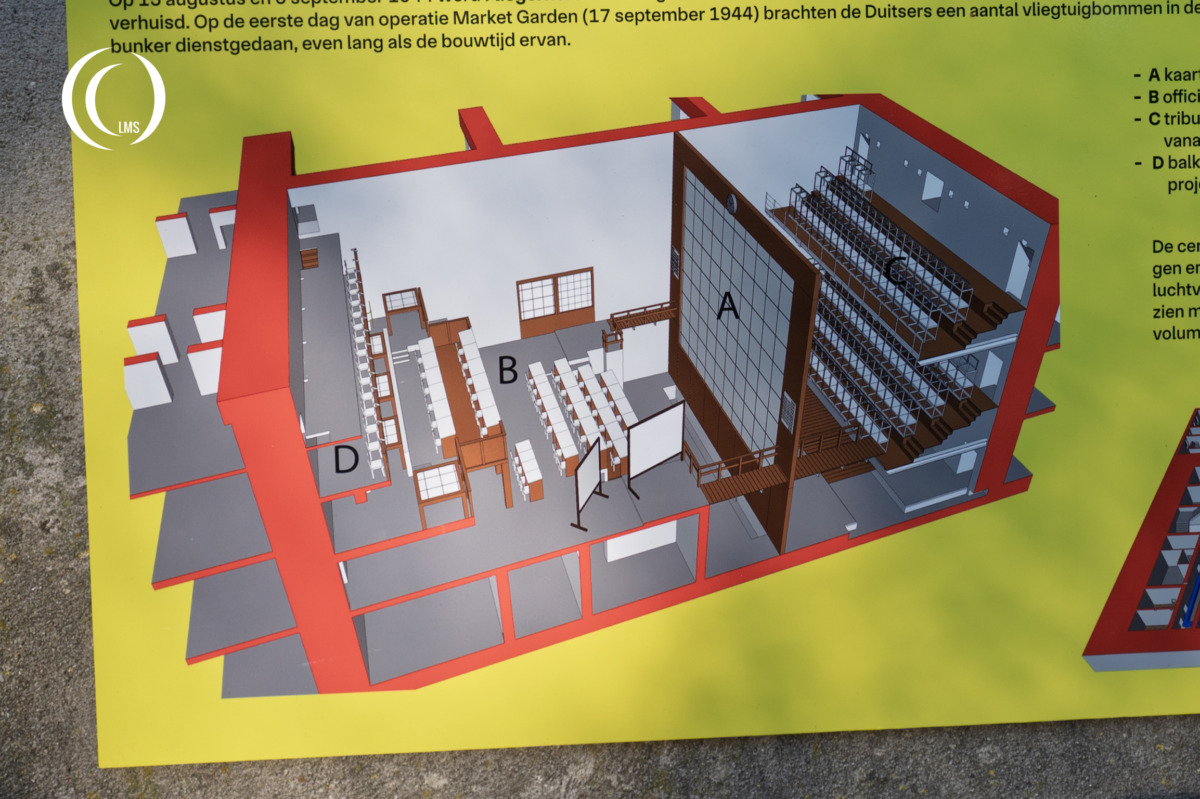
The interior featured a central operations room divided in two by a large transparent map, displaying the airspace under its control. The space allowed up to 400 personnel working together to track and coordinate aircraft movements.
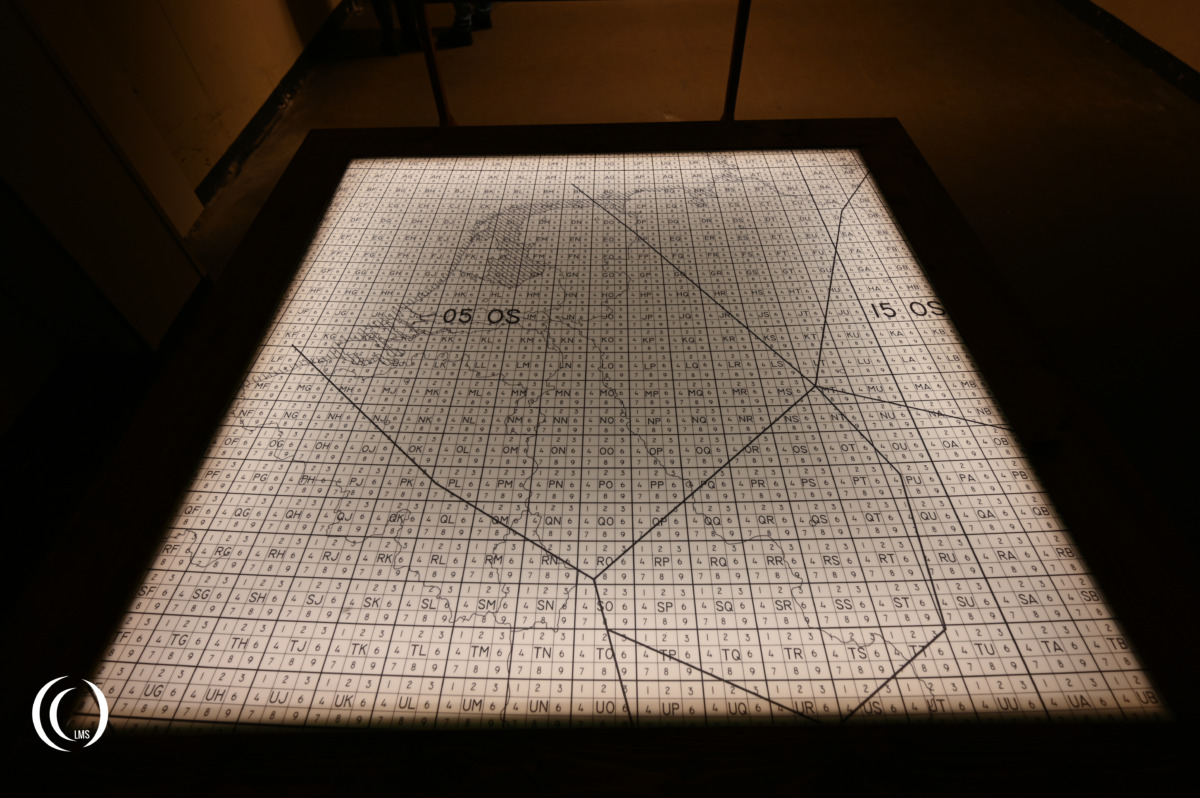
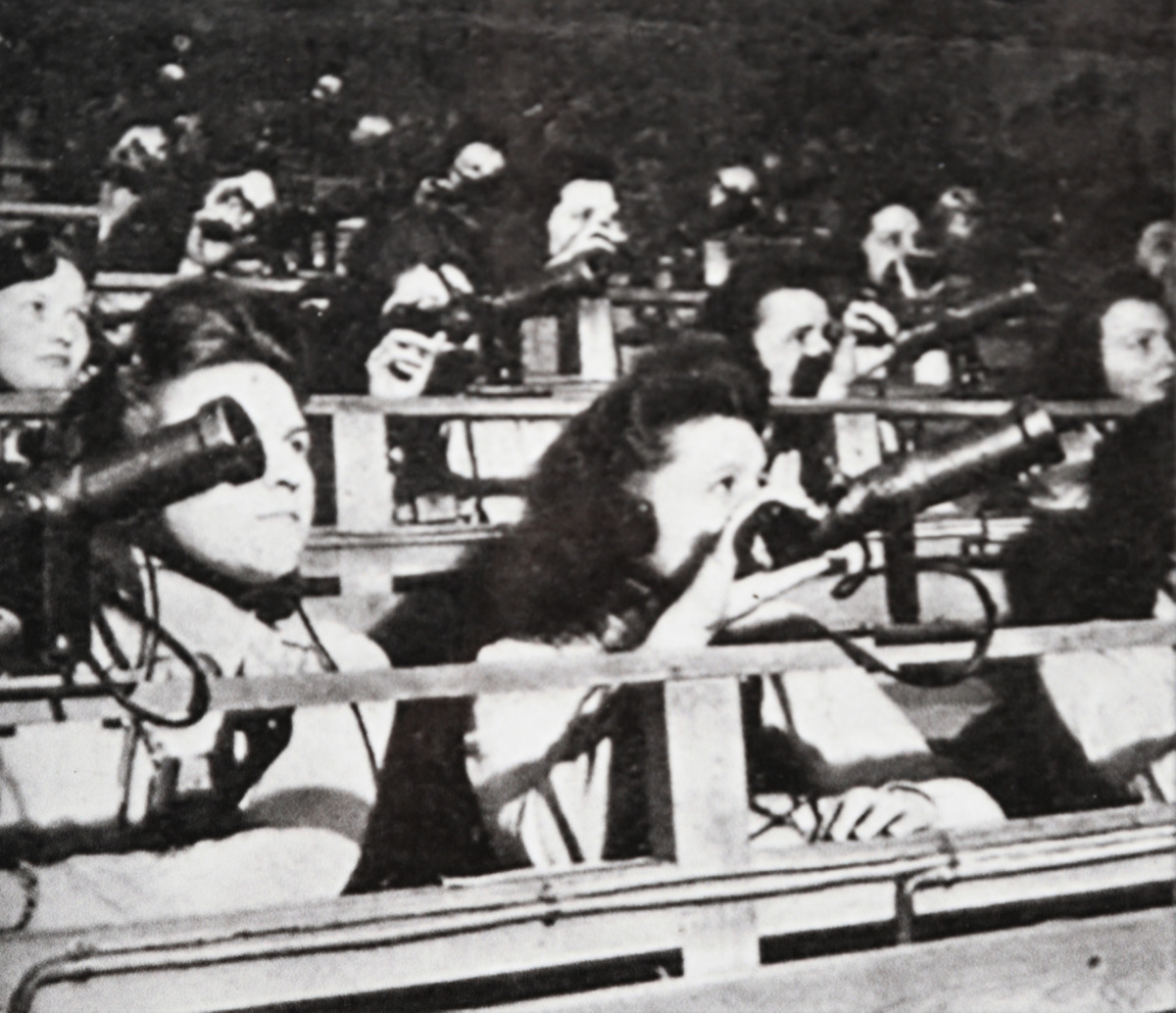
On either side of the map were balconies with seating areas from where “Luftnachrichtenhelferinnen”, female personnel also known as Blitzmädel, projected the positions of both enemy- and Luftwaffe aircraft with “Lichtpunktwerfer”. On the other side of the map at the lower levels sat the officers, who used the projected information to direct their “Geschwader” (Eng: squadrons) and anti-aircraft (Flak) defences toward the enemy.
Essentially, the central room functioned as a giant monitor display.
The illustration below shows the interior of the impressive “Kampfraum” (Eng: War Room) at the center of Diogenes II, where A indicates the map (9 x 12 meters), B the area where the FlaK and Geschwader (Eng: Squadrons) commands were seated, C the stand from where the “Ln Helferinnen” projected the locations of enemy aircraft and D the stand from where another group of Ln Helferinnen projected the German aircraft positions.
The Luftnachrichtenlager, located east of Diogenes II, was built specifically to house the Blitzmädel. Today, this Ln-Lager has been transformed into a creative residential and work environment under the name ‘Buitenplaats Koningsweg.’
Market Garden
After heavy Allied bombings of the nearby Fliegerhorst Deelen on 15 August and 3 September 1944, the German Luftwaffe squadrons left the airbase and the division command was moved to Duisburg-Kaiserberg in Germany (Diogenes III).
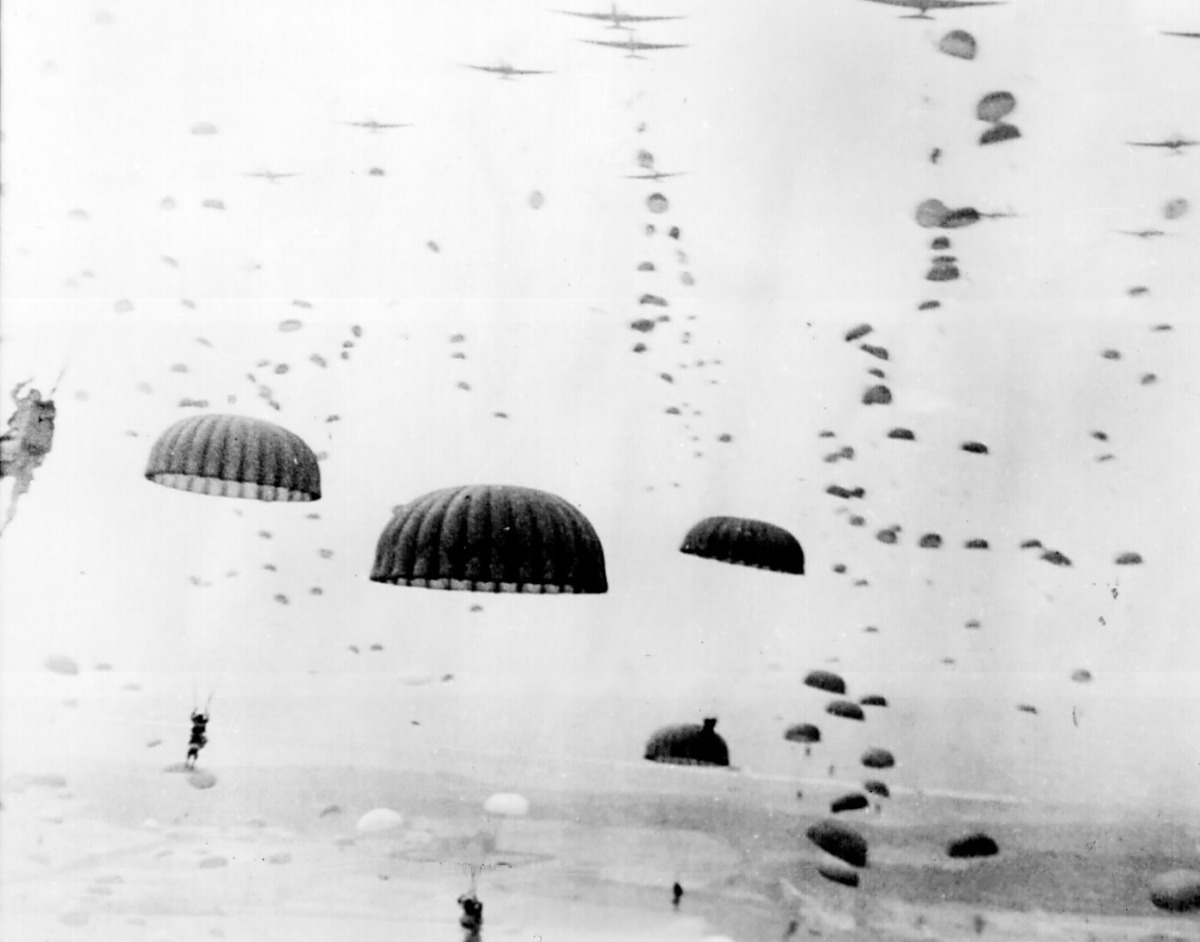
At the start of Operation Market Garden in September 1944, German forces attempted to demolish the bunker interior with aircraft bombs on the 17th to prevent the capture of its equipment, only nine months after it was first taken into use. While the interior was heavily damaged, the robust concrete structure largely withstood the explosions.
Post war
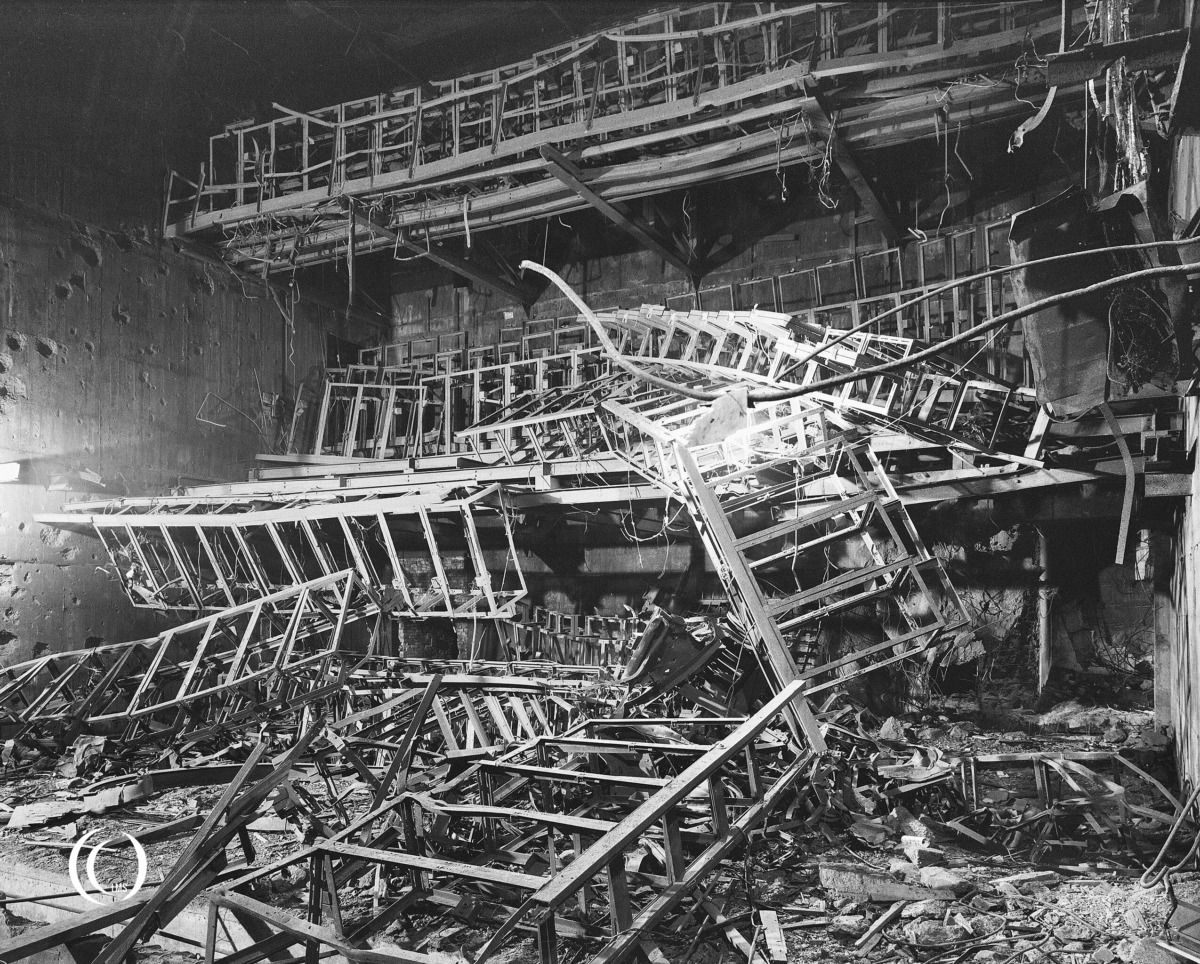
After the war the Diogenes II bunker was used for the dismantling of unexploded ordnance. On the 8th of June 1948 terror struck, when a large explosion killed five people. The pictures below, taken in 1962, show the de devastation inside the former “Kampfraum”. Interesting to see is that until that time a large part of the original interior had still been in place.
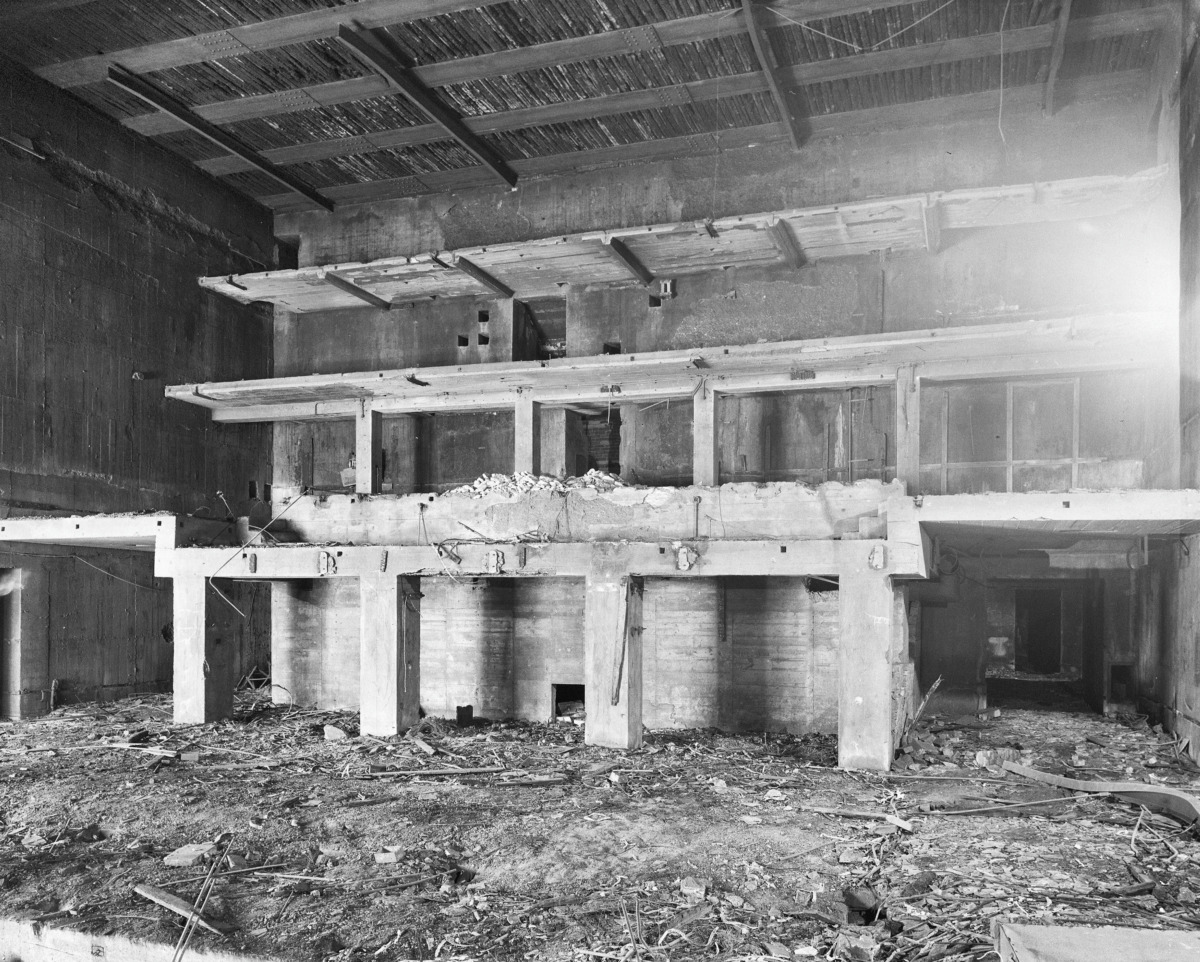
From 1952 the bunker was used as an auxiliary storage facility for the Dutch National Archives. For the expansion of the building’s storage capacity, an extra floor was created in the former War Room in 1974. In 2021 the bunker lost its function as an archive.
Visit
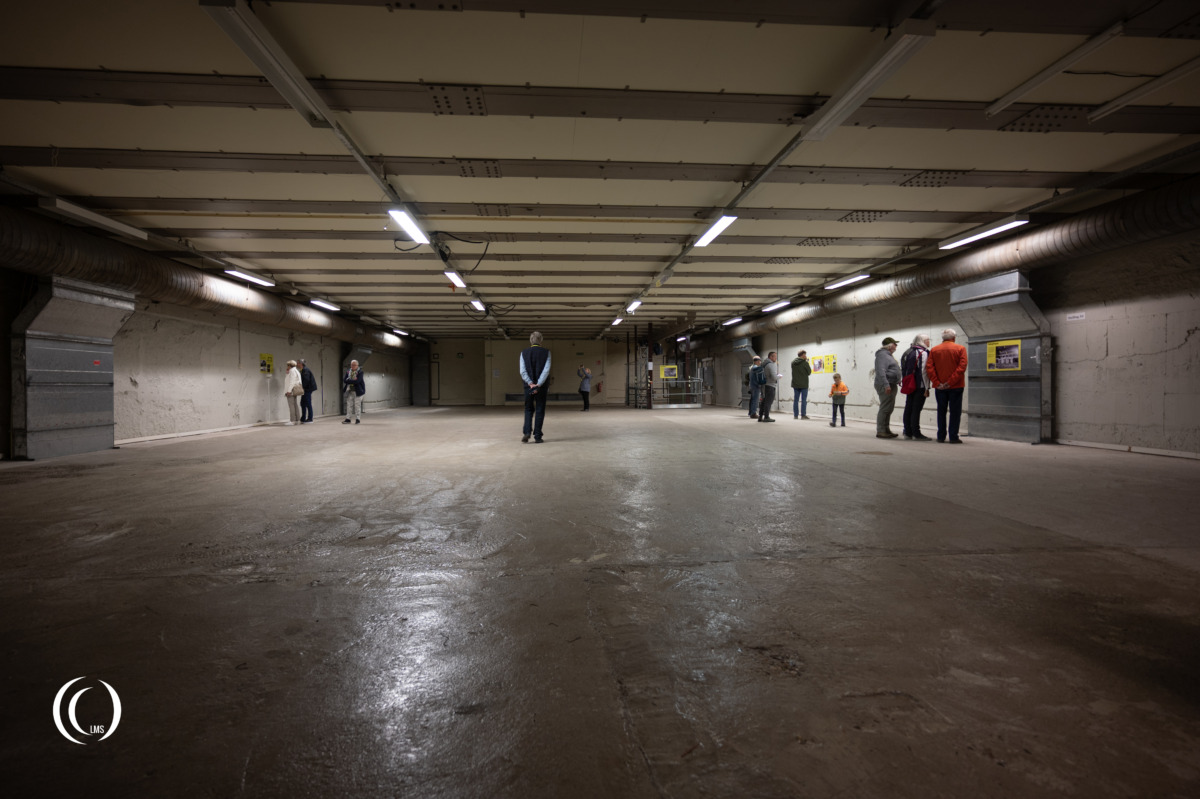
Today, the Diogenes Bunker is registered as a cultural heritage monument, occasionally open for guided tours. Check the website (in Dutch) for more information.
Keep in mind that the two large explosions and the bunker’s new purpose as an archive have taken their toll on the original interior.
Sources
