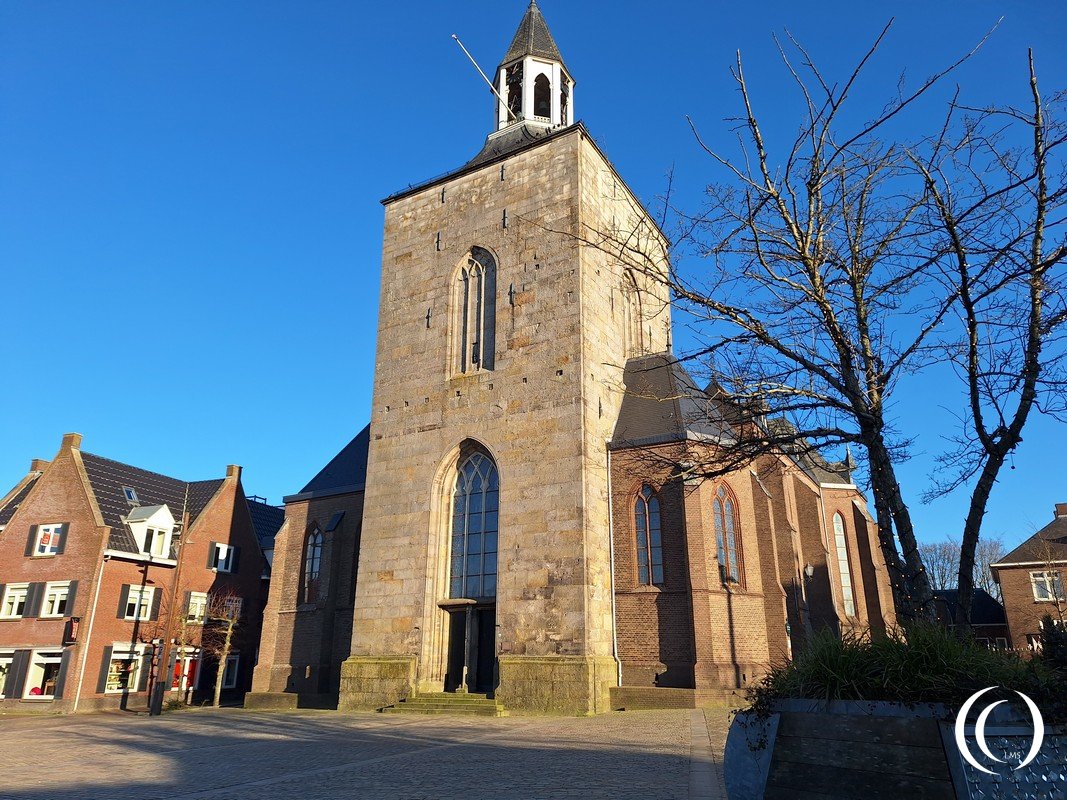
The Roman Catholic Cemetery in Tubbergen, in the Dutch province of Overijssel, is an important local site of Second World War remembrance. Several Allied airmen, from both RAF and RCAF bomber crews shot down over the region, are buried there. The graves are carefully maintained and regularly commemorated by the local community, reflecting enduring gratitude for their sacrifice.
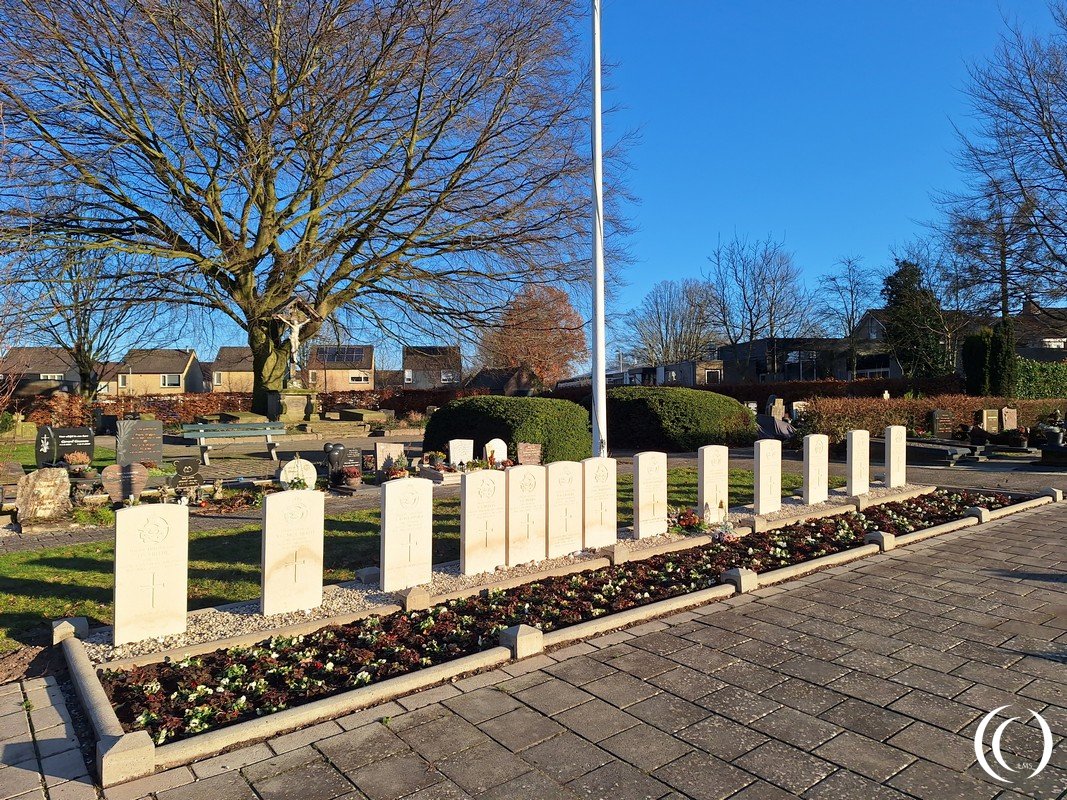
Lancaster ND641
Avro Lancaster Mk III ND641 (code CF-T) was a Royal Air Force heavy bomber that served during the Second World War. Built as part of the Lancaster Mk III series, it was powered by four Packard-built Merlin engines and formed part of Britain’s main strategic bombing force. ND641 was operated by No. 625 Squadron RAF, a unit within Bomber Command that became operational in late 1943 and flew night bombing missions against targets in Germany.
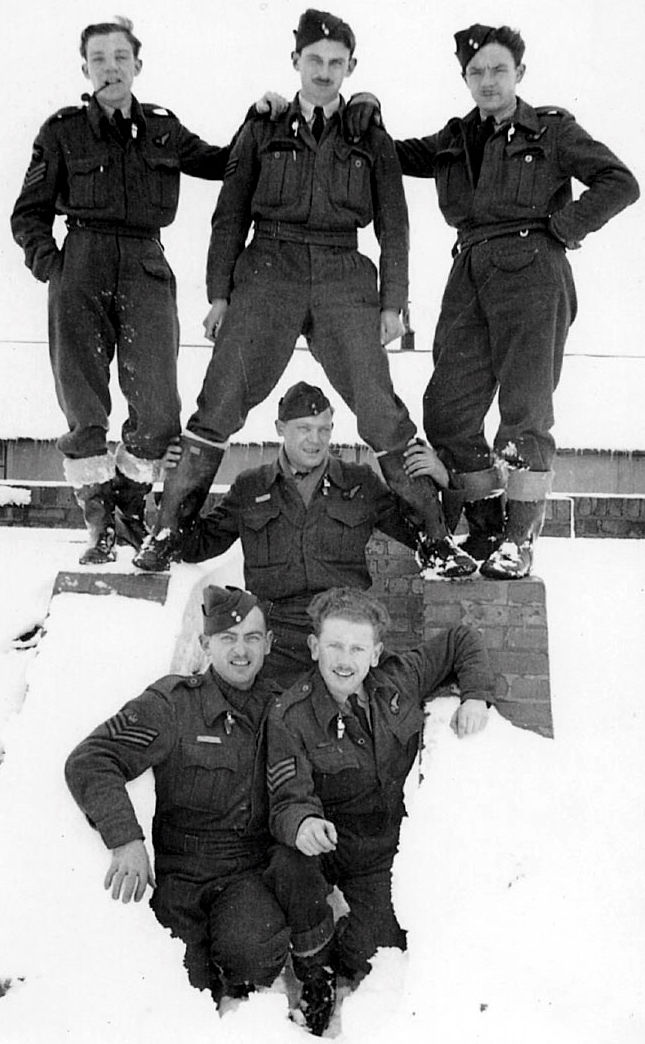
On the night of 24–25 March 1944, ND641 took part in a major raid on Berlin, a mission later remembered for exceptionally strong winds that scattered formations and complicated navigation (also known as the night of strong winds). During the return flight, the aircraft was intercepted and badly damaged, most likely by German night fighters or anti-aircraft fire. Unable to remain airborne, Lancaster ND641 crashed near Tubbergen, in the province of Overijssel, the Netherlands, in the early hours of 25 March 1944.
The seven-man crew suffered heavy losses. Six airmen were killed in the crash, while one crew member, bomb aimer F.B. Magee, survived by bailing out and was later helped by local Dutch civilians. The fallen crew members were buried locally at the Roman Catholic Cemetery and are still commemorated today.
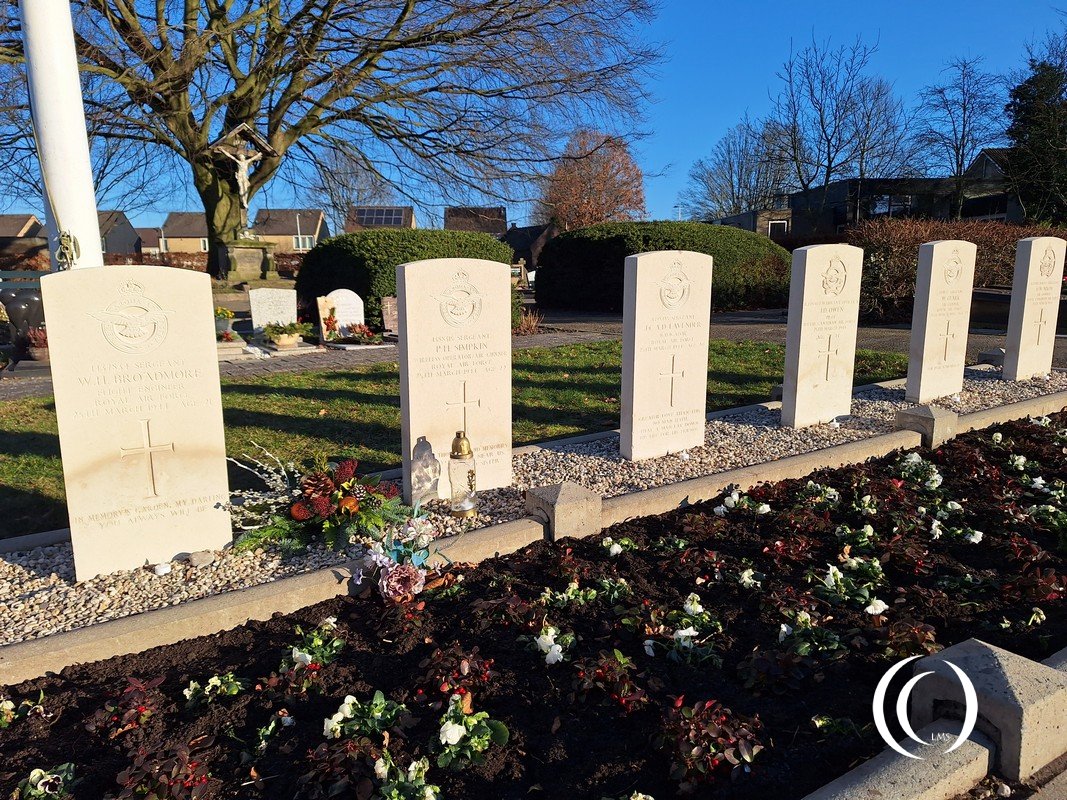

Crew of Avro Lancaster ND641
Pilot: J.D Owen, Warrant Officer Class ll, RCAF
Flight Engineer: W.H. Broadmore, Sergeant, RAF
Navigator: J.C.A.D. Lavender, Sergeant, RAF
Bomb Aimer: F.B. Magee, Warrant Officer Class ll, RCAF (sole survivor)
Wireless Operator/ Air Gunner: P.H. Simpkin, Sergeant RAF
Mid Upper Gunner: H.W. Nixon, Flight Sergeant, RCAF
Rear Gunner: W. Clark, Sergeant, RAF
Lancaster PB174
Avro Lancaster Mk III PB174 (code LQ-P) was a Royal Canadian Air Force heavy bomber of 405 (Vancouver) Squadron that was lost on the night of 20–21 July 1944 during Operation on Bottrop in World War II. It was based at RAF Gransden Lodge in England and formed part of Bomber Command’s Pathfinder Force targeting the German industrial Ruhr area.
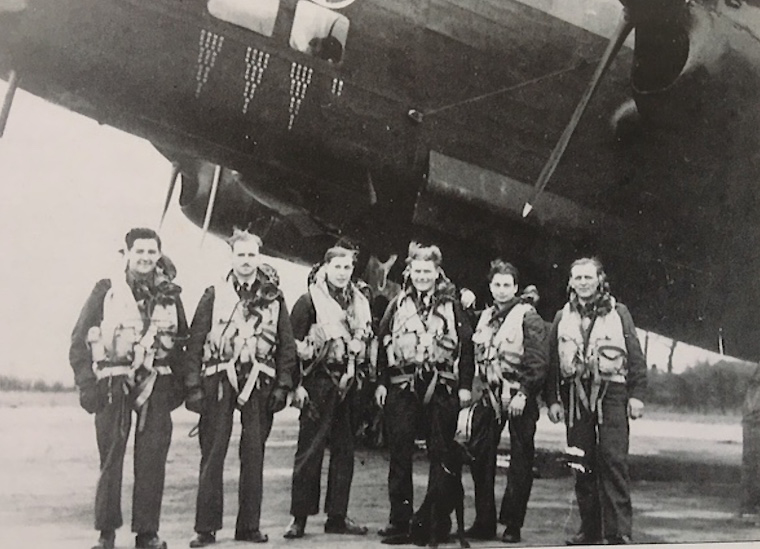
On 21 July 1944 at about 01:20 local time, PB174 was intercepted on its return from the Bottrop raid by a German Bf 110 G-4 night fighter of NJG 1 flown by Hauptmann Martin Drewes. The Lancaster was hit, exploded in flight, and crashed near Reutum in Overijssel, the Netherlands. Flight Lieutenant James Denholm Virtue (RCAF), the pilot, and six of his eight crew members were killed in the explosion and crash. The sole survivor, Rear Gunner Sgt. Michael Stanley Stoyko, managed to extricate himself from the turret and parachute to safety.
The fallen airmen, including F/L Virtue, are buried at the Roman Catholic Cemetery in Tubbergen, Netherlands. PB174’s loss exemplifies the severe risks faced by Bomber Command crews during strategic night operations over Nazi-occupied Europe.
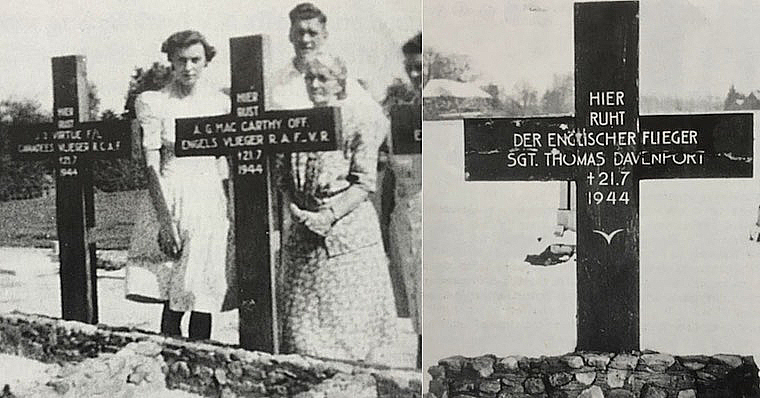
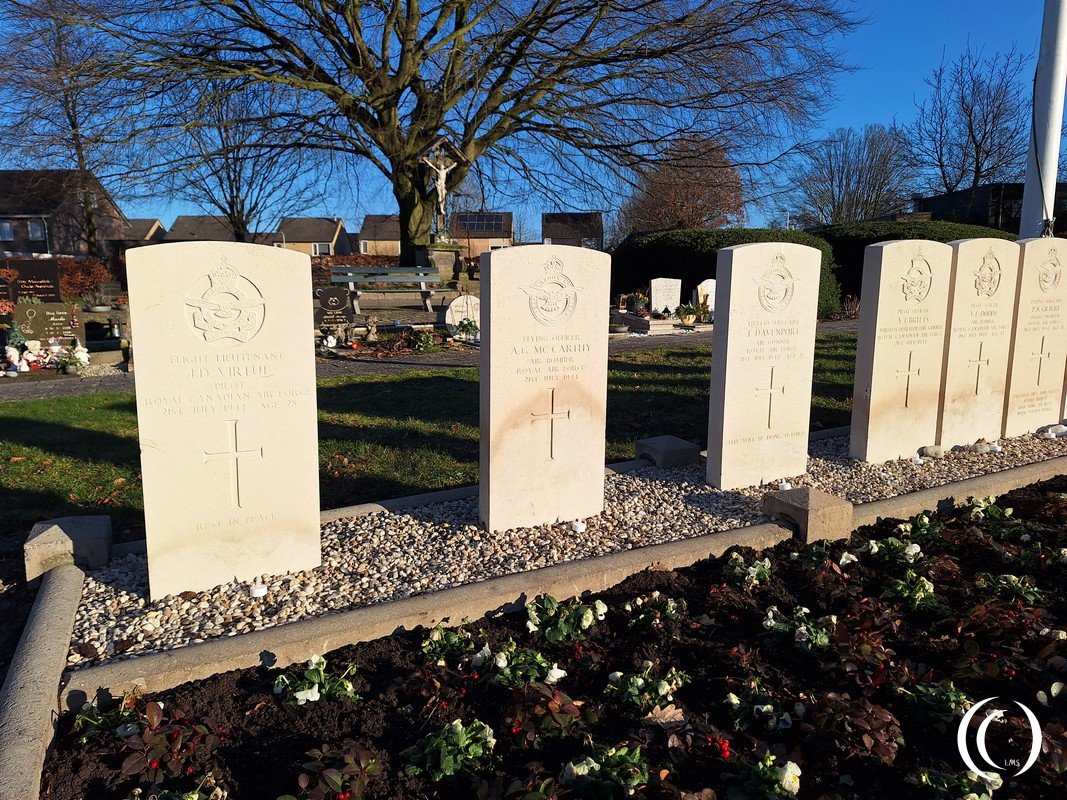
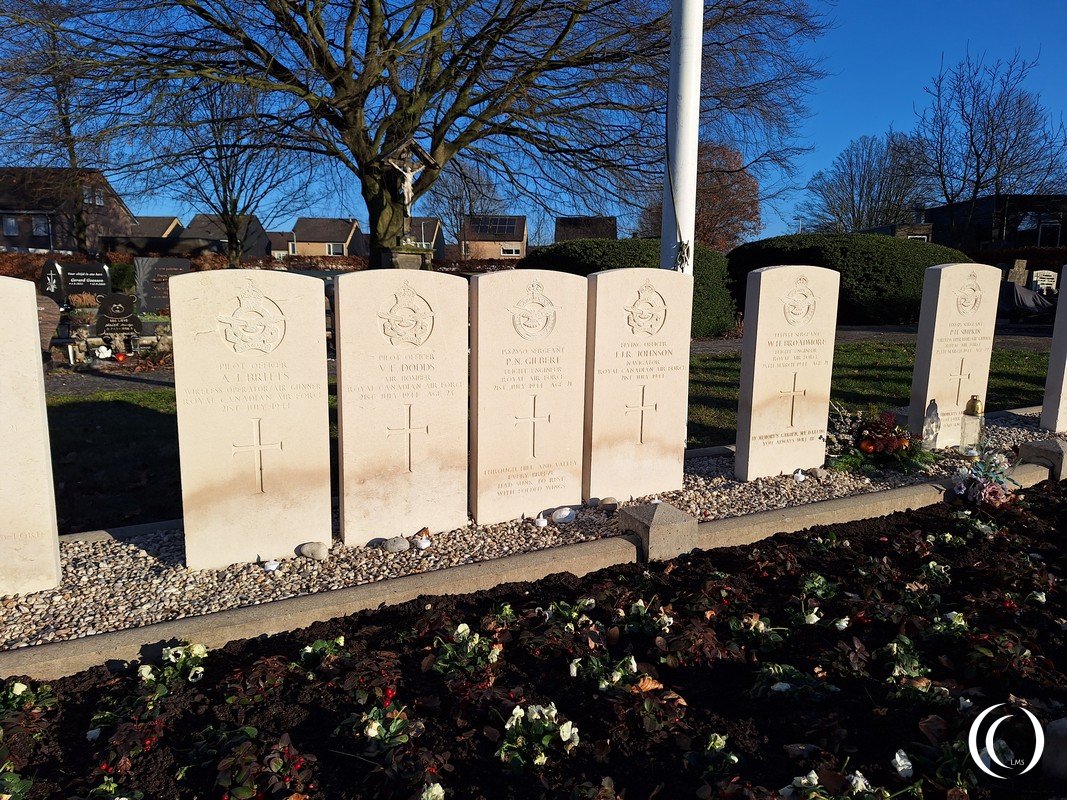
Crew of Avro Lancaster PB174
Pilot: J.D Virtue, Flight Lieutenant, RCAF
Flight Engineer: P.N. Gilbert, Sergeant, RAF
Navigator: J.J.R. Johnson, Flying Officer, RCAF
Bomb Aimer: V.F. Dodds, Pilot Officer, RCAF
Bomb Aimer: A.G. McCarthy, Flying Officer, RAF
Wireless Operator/ Air Gunner: A.J. Britts, Pilot Officer, RCAF
Mid Upper Gunner: T. Davenport, Sergeant, RCAF
Rear Gunner: M.S. Stoyko, Flight Sergeant, RCAF (sole survivor)
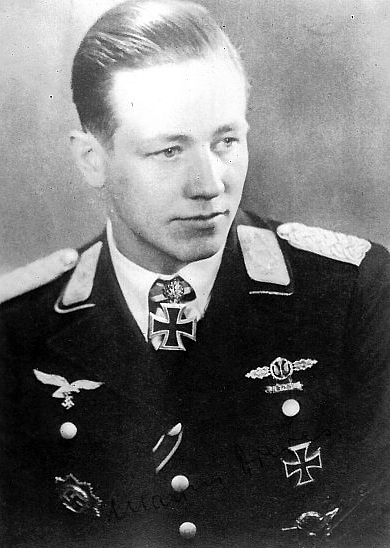
Luftwaffe Night Fighter ace Martin Drewes
Hauptmann (later Major) Martin Drewes was a German Luftwaffe night fighter ace during World War II, credited with 52 aerial victories, of which 43 were achieved at night against Allied bombers, mainly over the Western Front during Defence of the Reich operations (numbers vary on the internet).
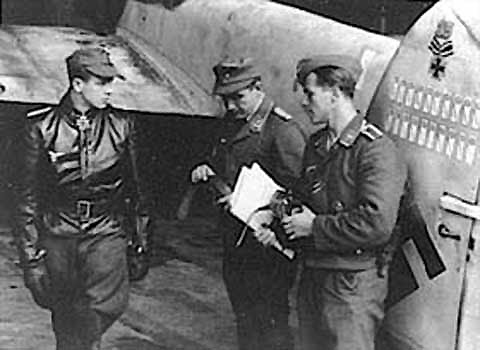
Born on 20 October 1918 in Lobmachtersen (now part of Salzgitter), Germany, Drewes joined the military in 1937, initially serving in the Army before transferring to the Luftwaffe in 1939. He flew his first combat missions in early 1941, including deployment in the Anglo-Iraqi War, and later converted to night fighter duty in late 1941. Drewes became a skilled night interceptor in the Messerschmitt Bf 110, a twin-engine heavy fighter adapted for nocturnal operations, flying with units such as Nachtjagdgeschwader 3 (NJG 3) and later NJG 1. He rose through the ranks to Staffelkapitän and eventually Gruppenkommandeur of III./NJG 1, flying hundreds of missions attacking RAF Bomber Command stream formations.
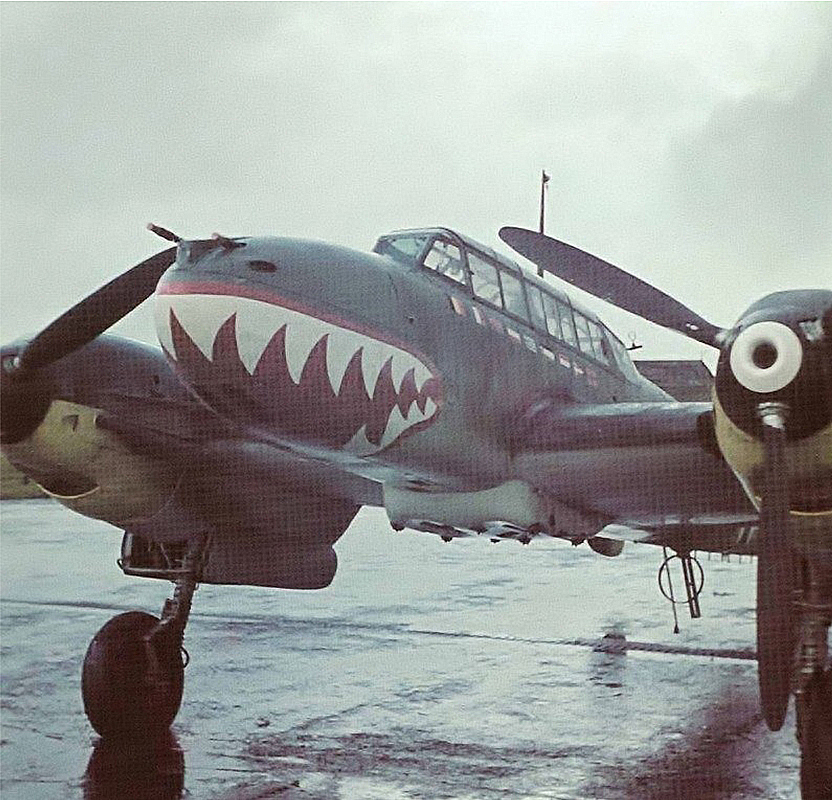
For his combat achievements, Drewes was awarded high German military honors, including the Knight’s Cross of the Iron Cross with Oak Leaves. After the war, he was held as a prisoner until 1947 and later emigrated to Brazil, where he lived as a pilot and businessman. He died on 13 October 2013 at the age of 94.
German Luftwaffe in Iraq
Fliegerführer Irak (“Air Commander Iraq”) was a short-lived Luftwaffe formation created in May 1941 during the Anglo-Iraqi War. Its purpose was to support the nationalist Iraqi government of Rashid Ali al-Gaylani, which had revolted against British influence and control of key military bases and oil routes. Germany hoped that limited air support might help destabilize British power in the Middle East and encourage wider anti-British uprisings.
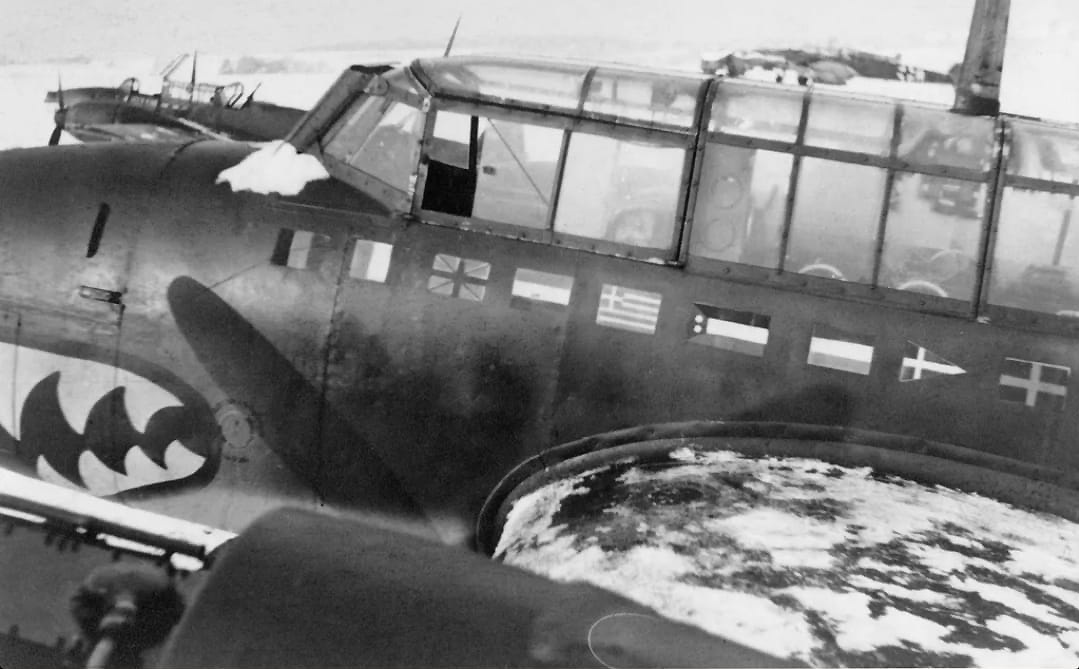
The unit was commanded by Oberst Werner Junck and operated mainly from Mosul, using airfields in Vichy-controlled Syria as staging points. Fliegerführer Irak was a small and improvised force, equipped with a handful of Messerschmitt Bf 110 heavy fighters, Heinkel He 111 bombers, and Junkers Ju 52 transport aircraft. To conceal German involvement, many aircraft carried Iraqi markings rather than Luftwaffe insignia. Operationally, the force carried out limited bombing and strafing attacks against British positions, including targets around RAF Habbaniya. However, severe logistical difficulties, lack of spare parts, long supply lines, and strong British air opposition sharply restricted its effectiveness. When British forces defeated the Iraqi revolt in late May 1941, Fliegerführer Irak was withdrawn and disbanded.
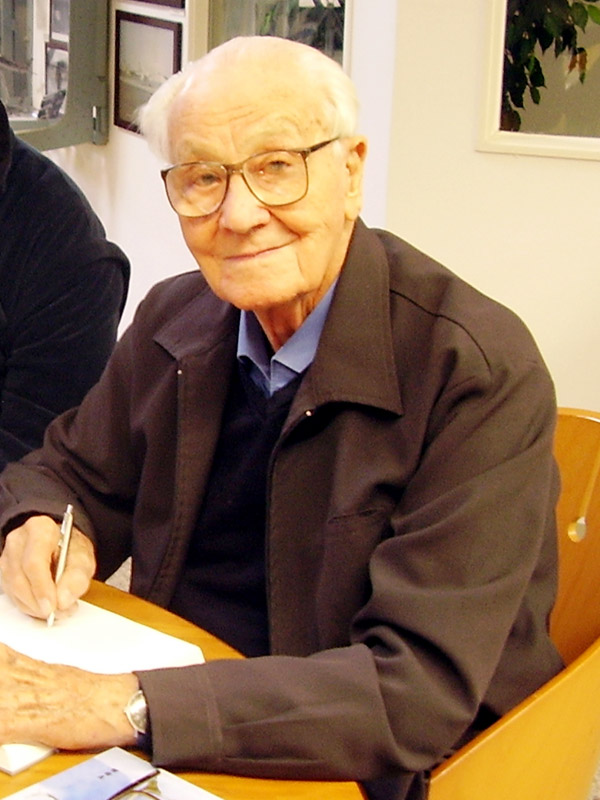
Jacobus (Jep) Hubertus Lamberts
Jep was born on February 10, 1922, in Utrecht. He attended the maritime academy in Delfzijl and in 1942 traveled to Norway as a trainee on a ship under German command. Upon returning home, he declared he never wanted to do that again. From that moment on, he devoted himself to resistance work. He joined the LO (National Organization for Assistance to People in Hiding) and the KP (Resistance Squad) in Twente. He assisted with the arms drops, made false identity documents, and participated in a robbery in Geesteren.
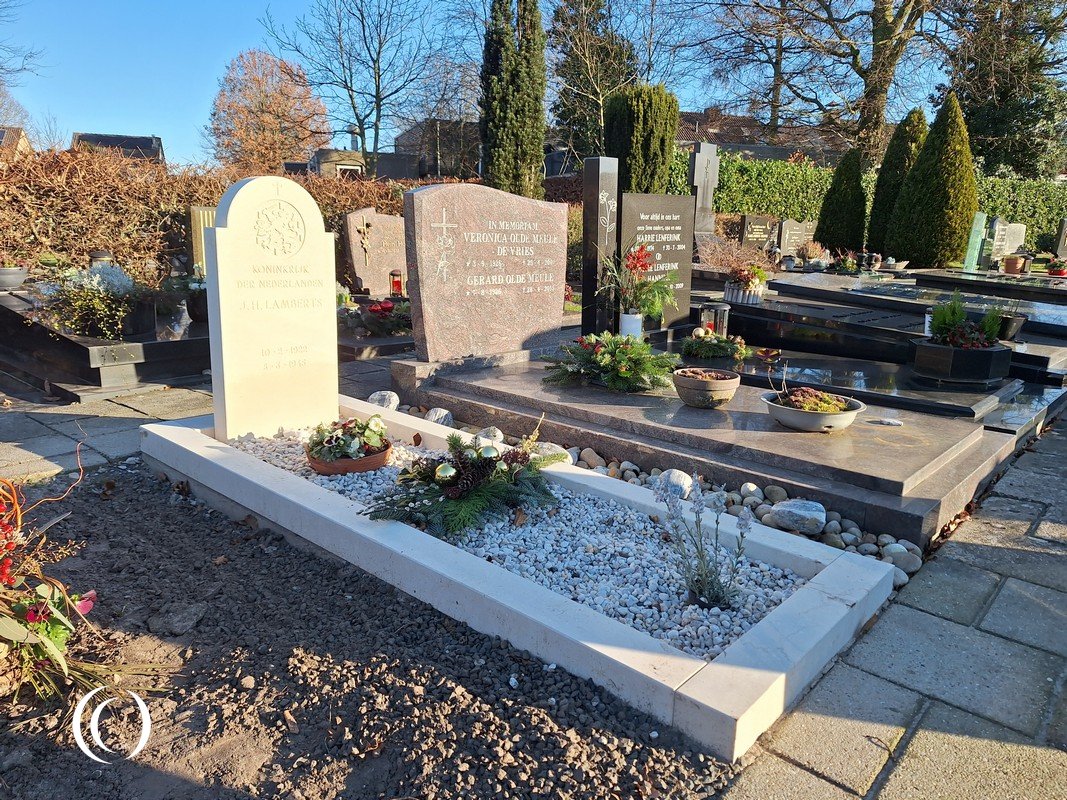
In mid-February 1945, Jep was arrested and imprisoned in the Almelo detention center. On the day of the execution, Jep was 23 years old and unmarried.
Visit
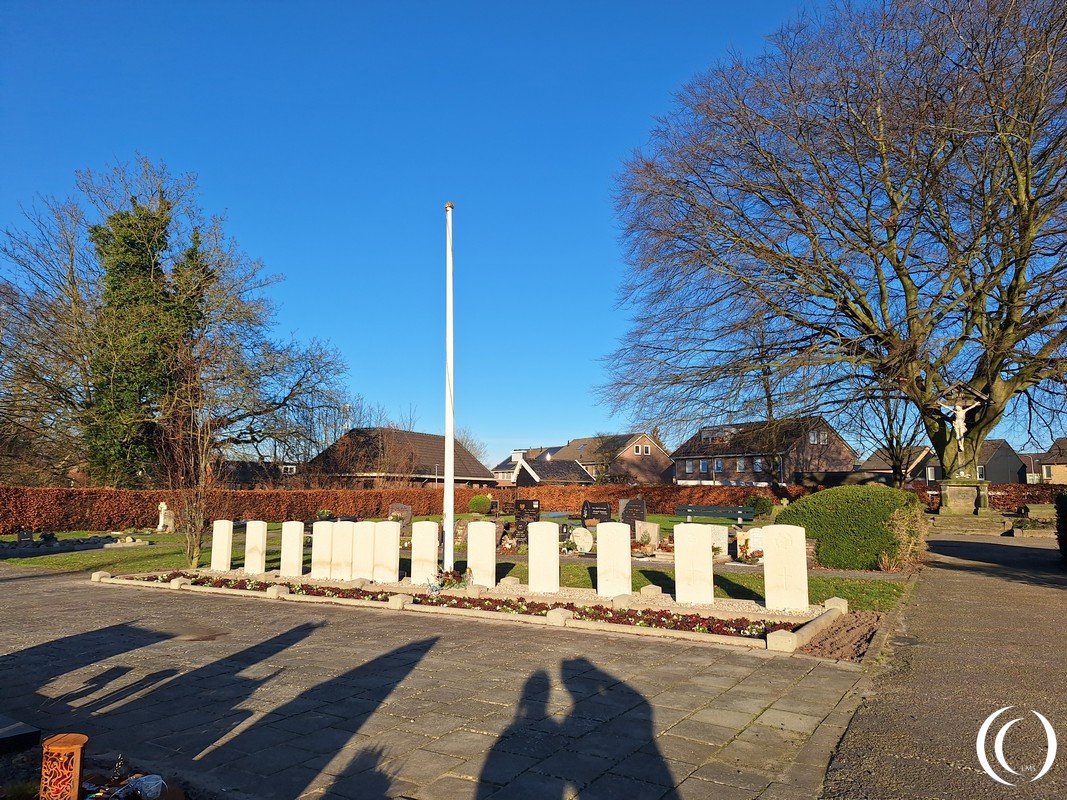
The cemetery with the Roman Catholic Cemetery in Tubbergen is freely admissible during daytime hours. It is not too large, from the main gate follow the path straight onto the cemetery and withing a few minutes you find the graves of both Avro Lancaster crews. Towards the right of the main path lies a resistance fighter and near the air crews to the right of the path you find the grave of the Dutch Soldier.
Sources:
https://en.wikipedia.org
https://aircrewremembered.com
https://www.monumentwoestehoeve.nl
http://www.cieldegloire.fr
