The construction of u-boat assembly bunker Valentin during World War Two demanded enormous numbers of men and building material. During the course of the project, one million tons of stale and sand, 132,000 tons of cement and 20,000 tons of steel were used. An estimated 10,000 to 12,000 forced labourers from the occupied territories and the Neuengamme concentration camp were brought in and made to work round the clock in 10 to 12 hour shifts. Many of them died of malnutrition or physical fatigue.
Baustelle Nord
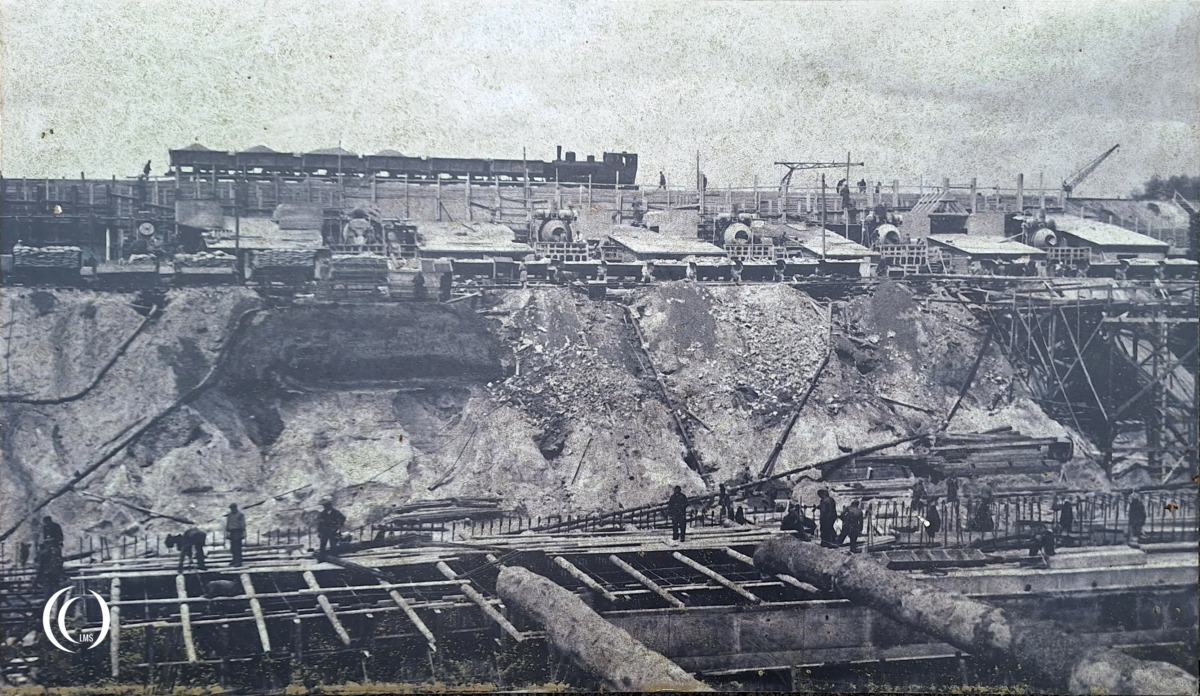
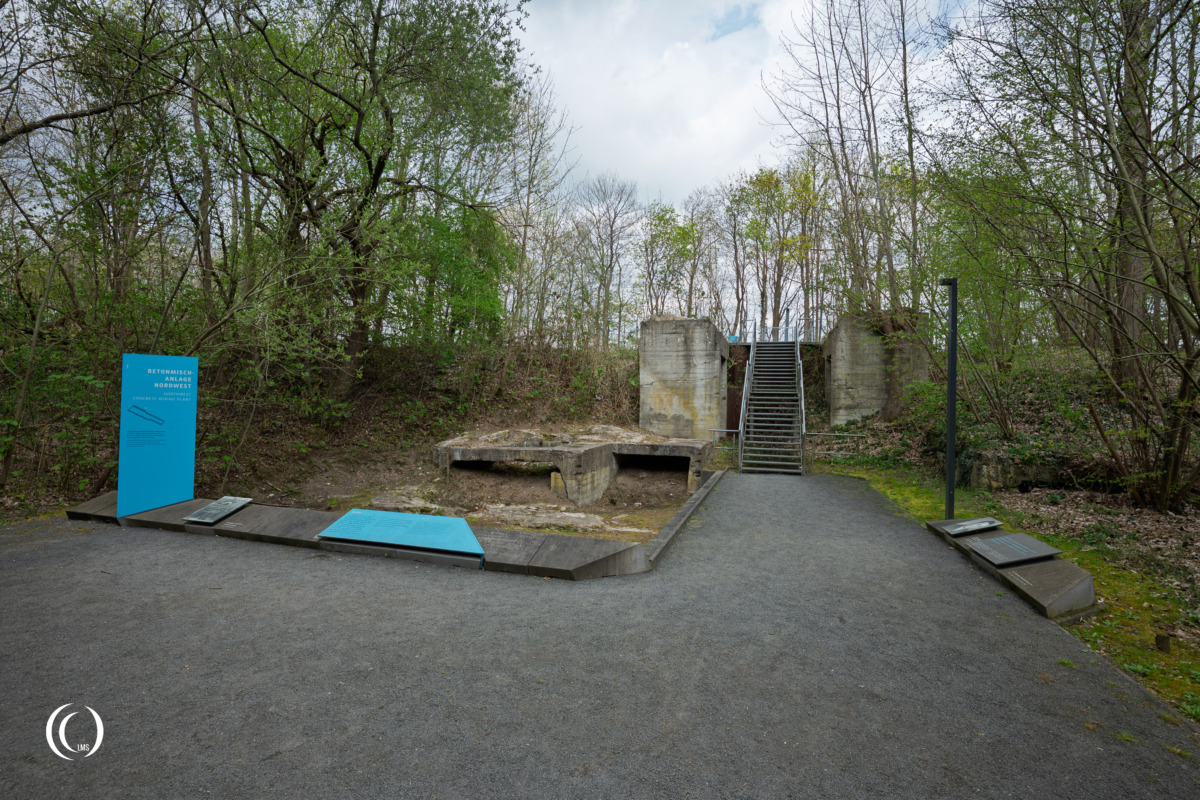
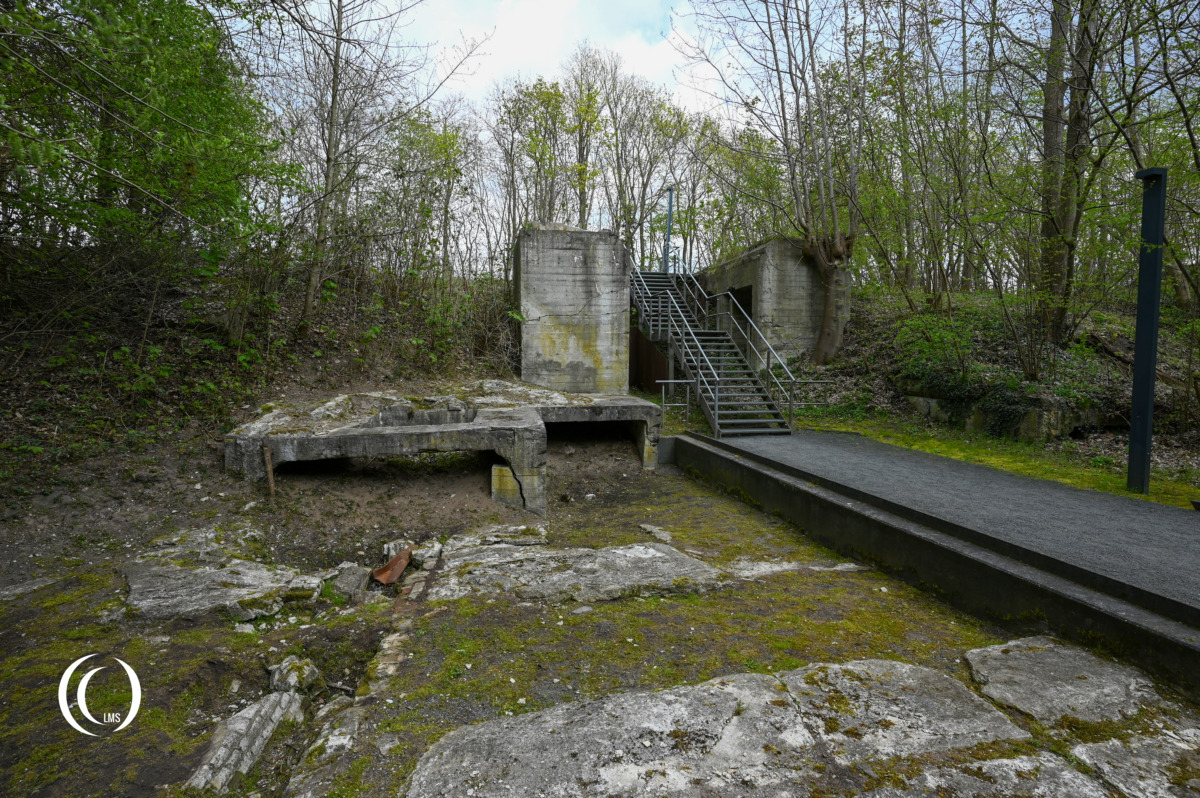
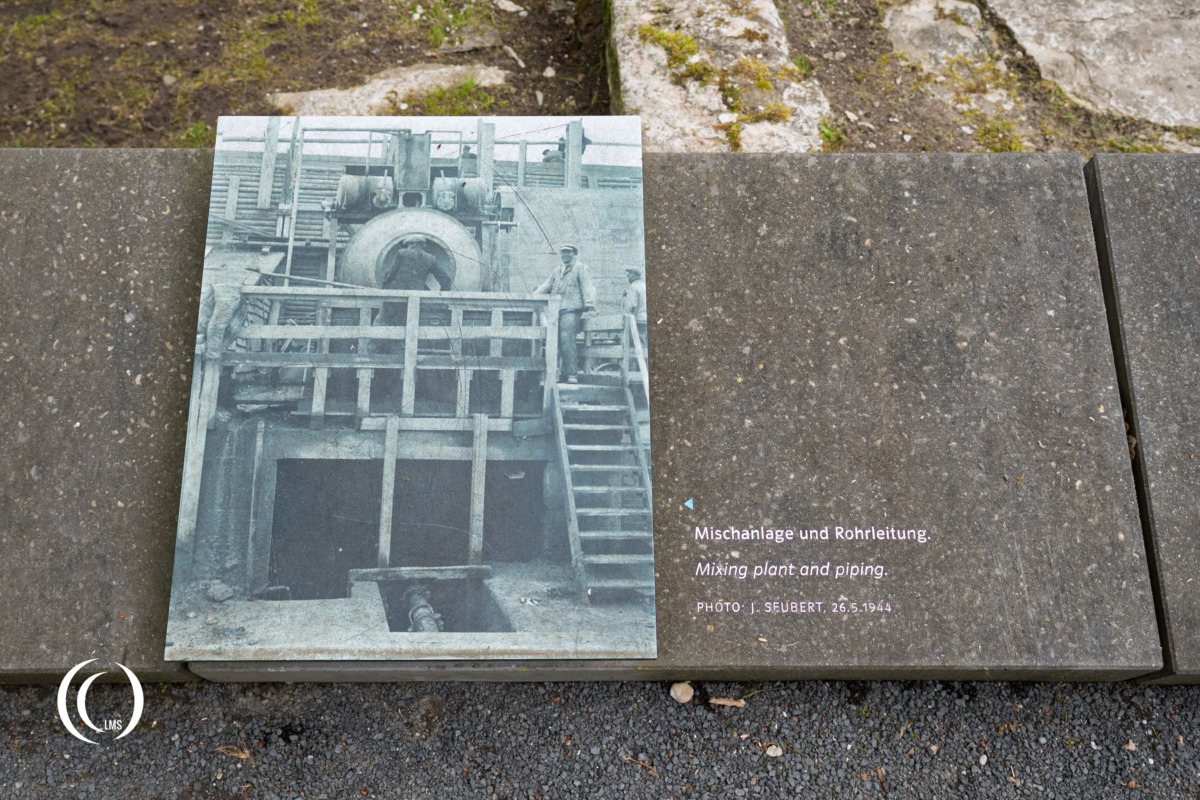
From October 1943 a vast network of building installations and work camps arose in and around the area of the construction site. To provide in the enormous amounts of concrete, four concrete mixing plants (Ger: “Betonmischanlagen”) were operating at the northern part of the construction site named; West, Northwest, Northeast and East. The mixing plants were initially outdoors, but later heated shelters were built to ensure the concrete could be manufactured in sub-zero temperatures.
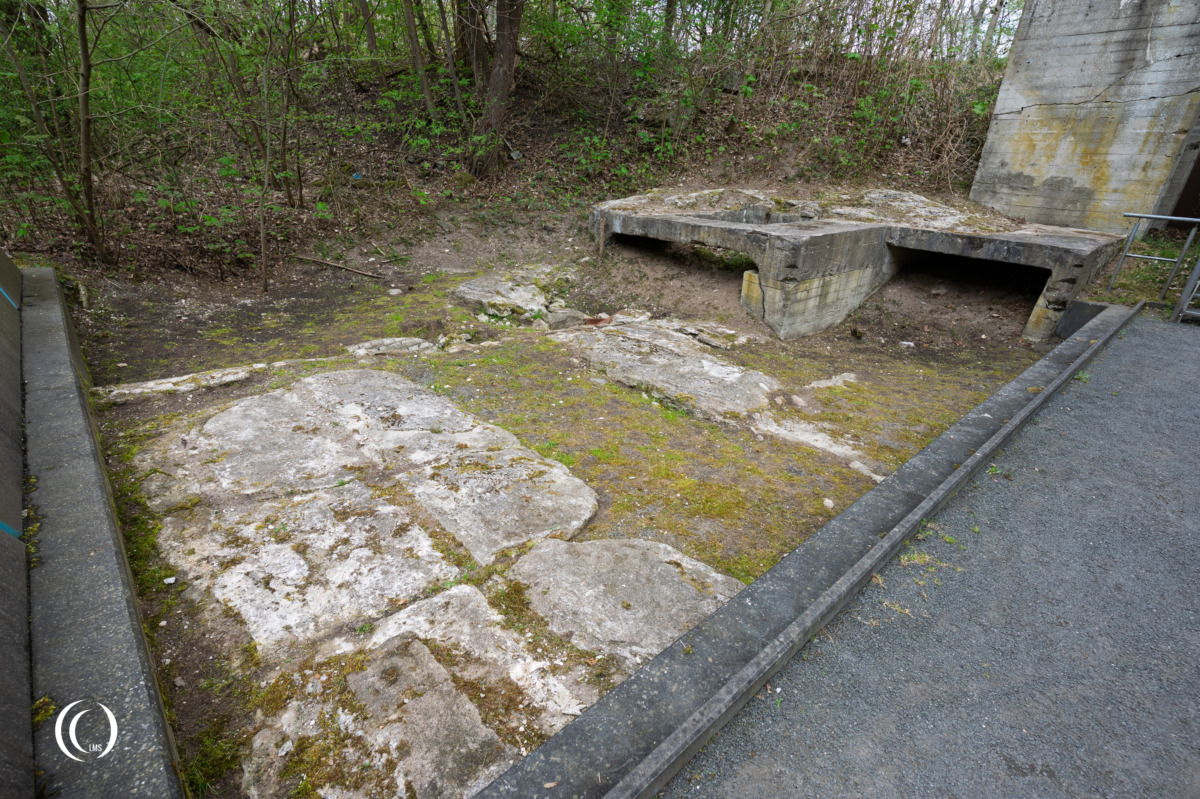
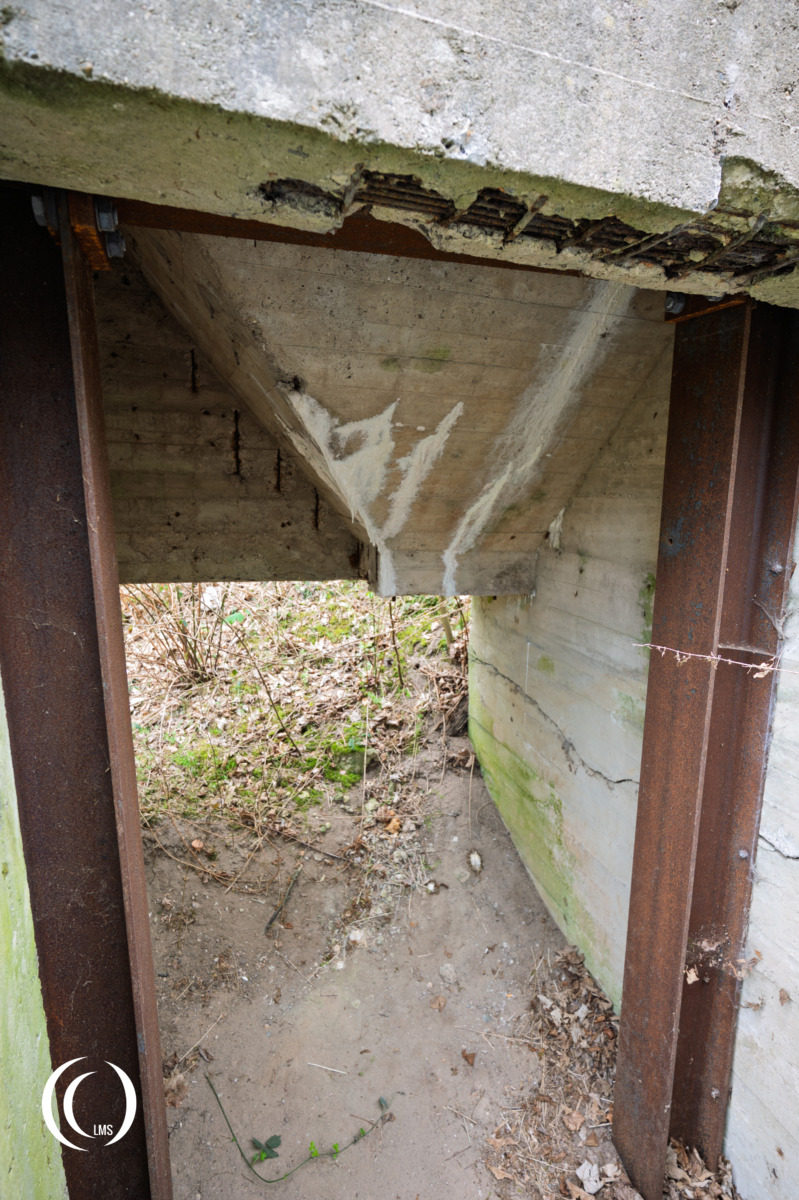
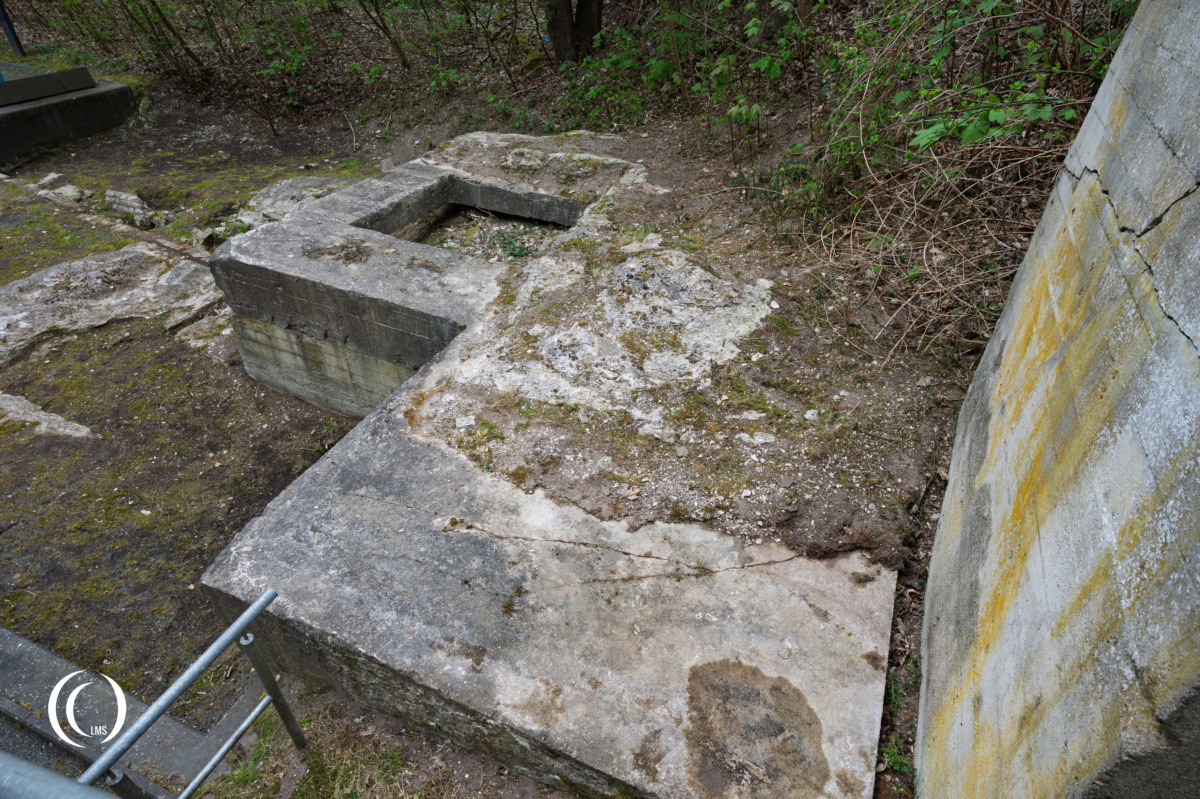
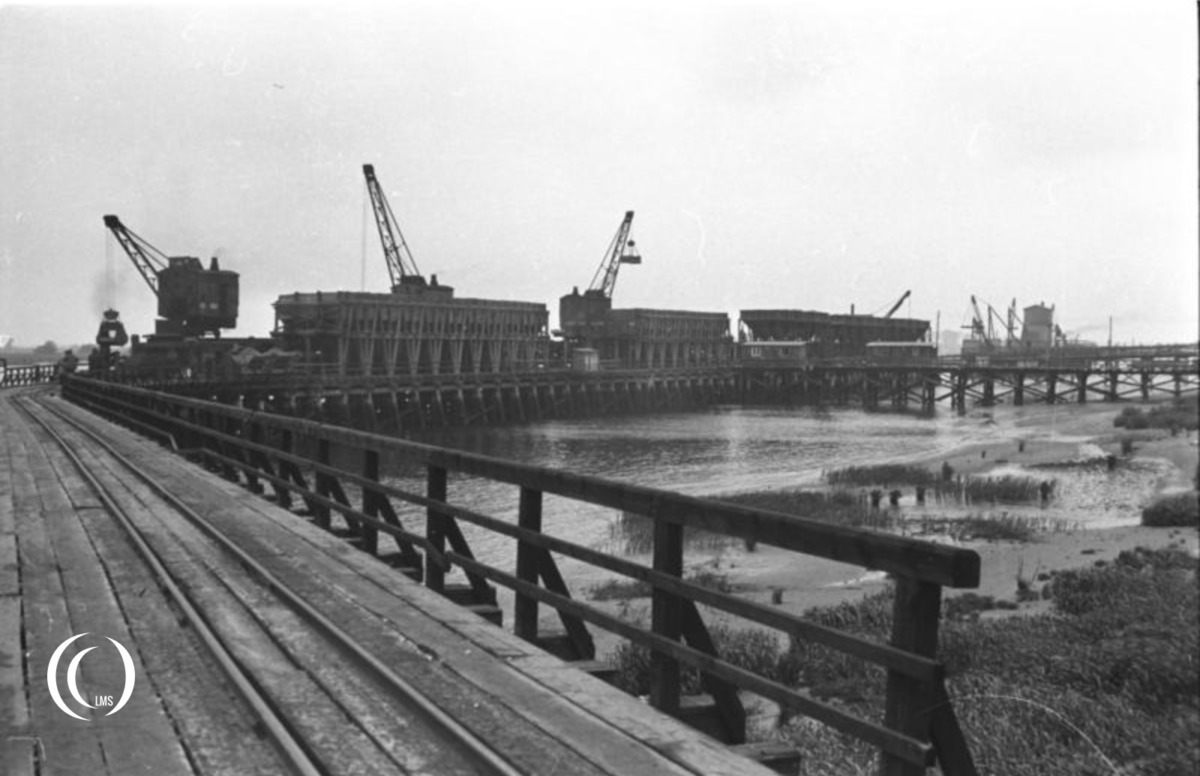
To provide the mixing plants with enough sand and cement, a pier was created along the Weser river for freight ships to be unloaded. From here a train track ran from the pier to the mixing plants.
Sabotage
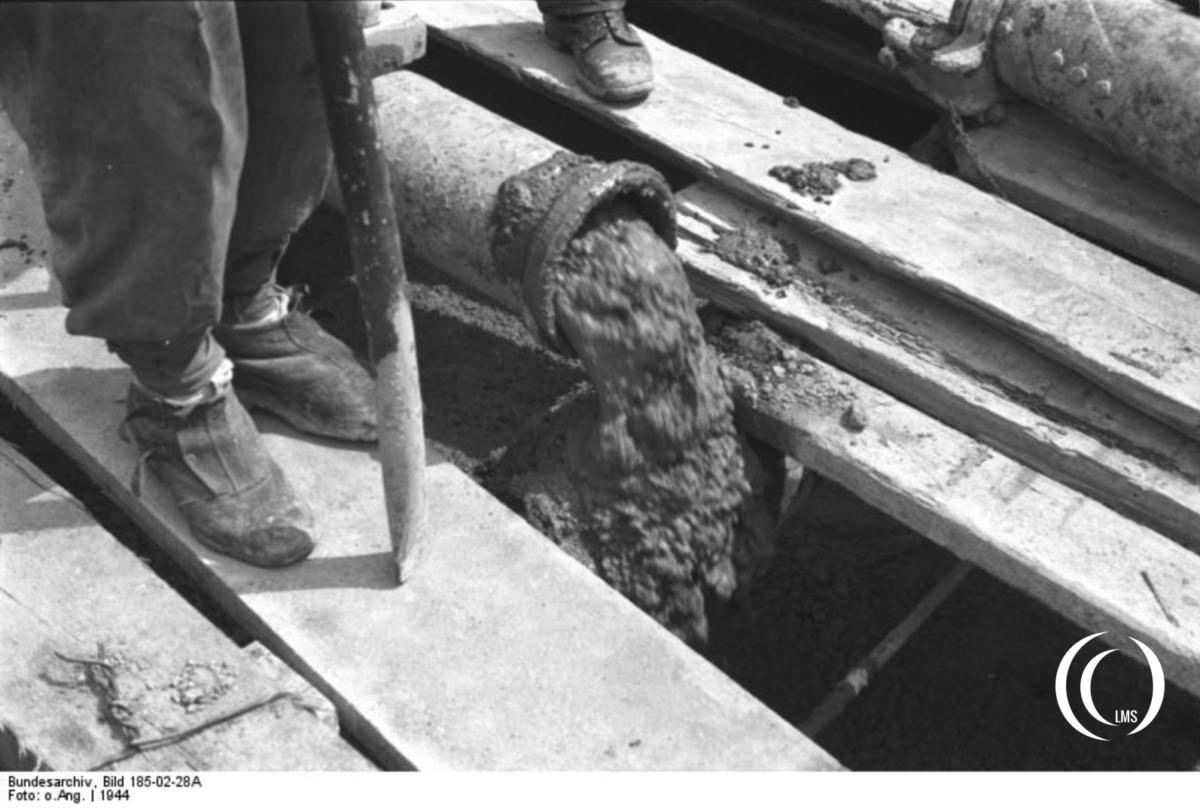
The ready-made concrete was pumped through pipes into the construction pit or plank partitions. To keep it liquid long enough, yellow clay had to be added. Sometimes this clay was left out on purpose, causing the pipes to block and burst. This forced the mixing plants to stop and gave the exhausted labourers a brief break. Although this was not without danger, while any real or suspected sabotage was severely punished.
Visit
You can visit the remnants of concrete mixing plant Northwest when you follow the experience and memorial path around the Valentin bunker.
