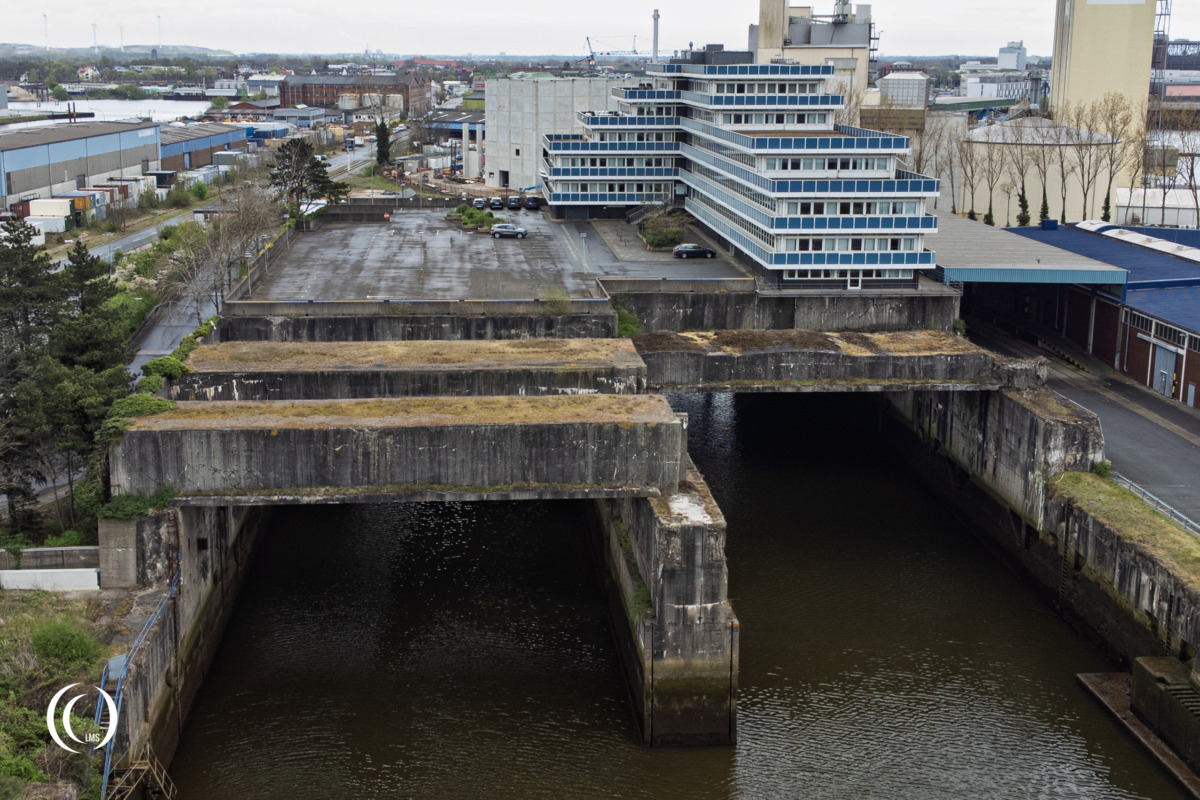
U-boat bunker Hornisse in Bremen was a reinforced concrete naval facility built during the final phase of the Second World War as part of Germany’s effort to protect submarine production and maintenance from Allied air attacks. Constructed in 1944 near the Deschimag AG Weser shipyard, Hornisse was intended primarily as a covered fitting-out and repair bunker for U-boats, shielding them during final assembly and servicing.
Sectional U-boat construction
After the Allied air raids on German shipyards increased and the production of submarines was severely restricted, bomb-proof shipyards in the form of bunkers were planned. The idea was to produce new submarines under the protection of massive bunkers using a sectional construction method, like American shipyards at the time. The sections would be produced at various shipyards in Bremen, Wilhemshaven and Hamburg and then shipped to a central production line for its final assembly.
Weser I
For this purpose the construction of several large projects were commissioned by Albert Speer along the Weser river near the end of 1942. At Bremen-Farge the construction of the enormous “Valentin” bunker was started, where the final assembly of u-boats was to take place. For the AG Weser shipyard in Bremen to fulfil its production role, the construction of a submarine section bunker “Weser I” was planned.
Although at first the plan was focussed on the construction of a new bunker in port F of the Weser shipyard grounds, in mid-1944 this shifted towards the reutilisation of an uncompleted dry-dock constructed earlier between 1940 and 1942. Finally it was decided that the dock, which had been almost completed, would be provided with a protective cover and converted into a bunker facility. The project “Weser I” was renamed to “Hornisse”.
Construction
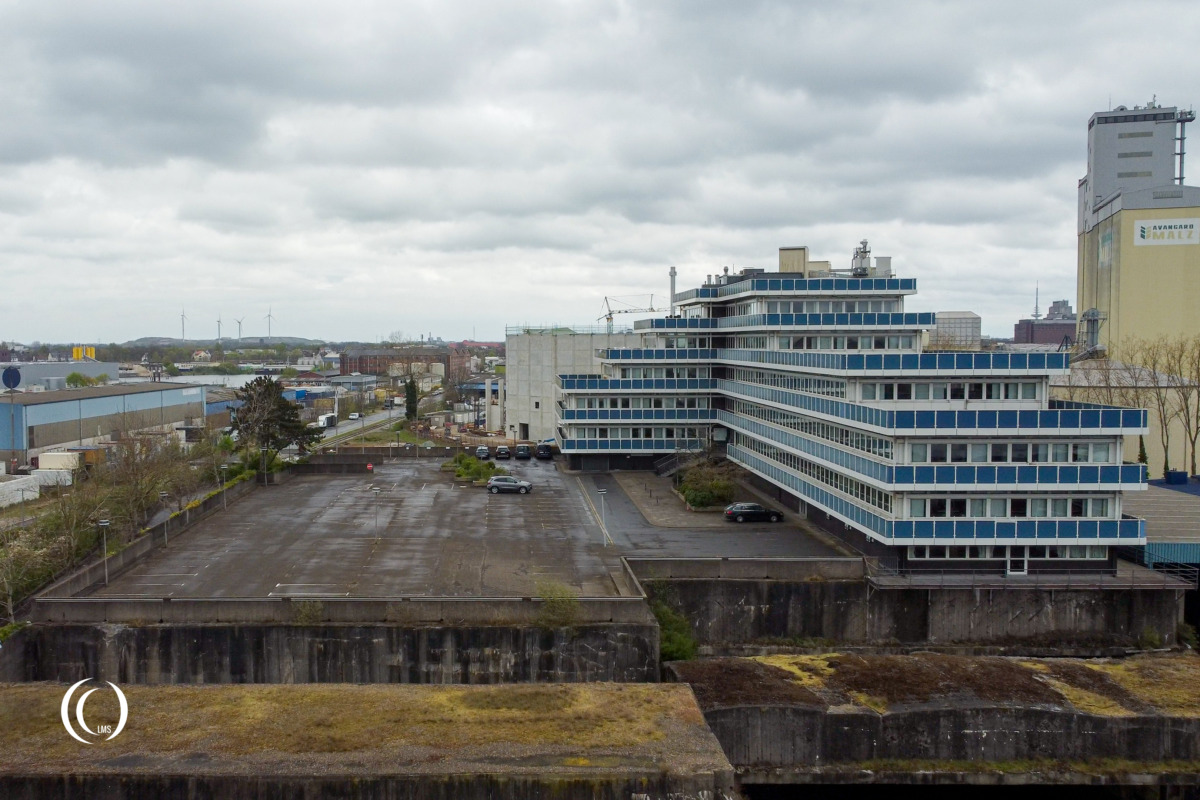
Hornisse would have to perform a multi-role as u-boat production and repair yard. The production would focus on three sections of the new class XXI u-boats. To achieve this the bunker would consist of 4 parts with a length of 370 meters and a width of 65 meters. A center wall was constructed along the length of the bunker to support the 4.5 meters thick reinforced concrete roof, dividing it into two chambers connected by openings in the middle wall. A lock would provide access to and from the Weser river.
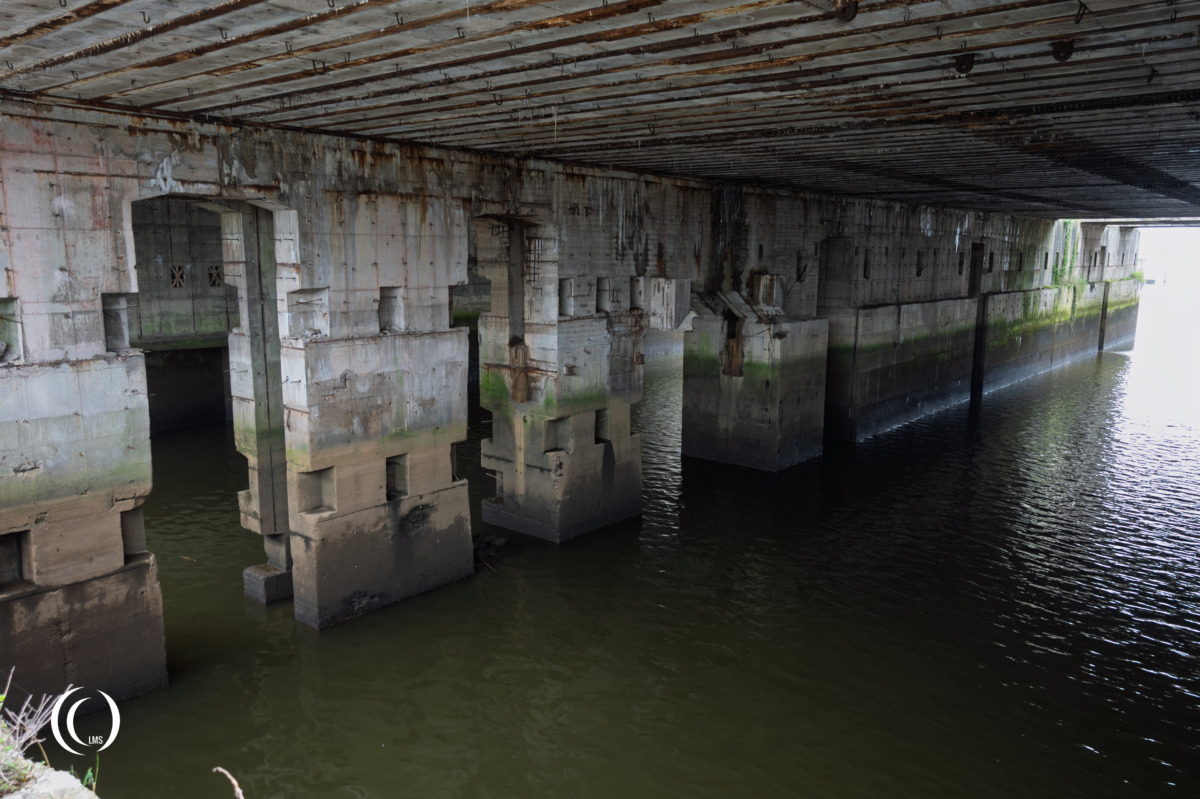
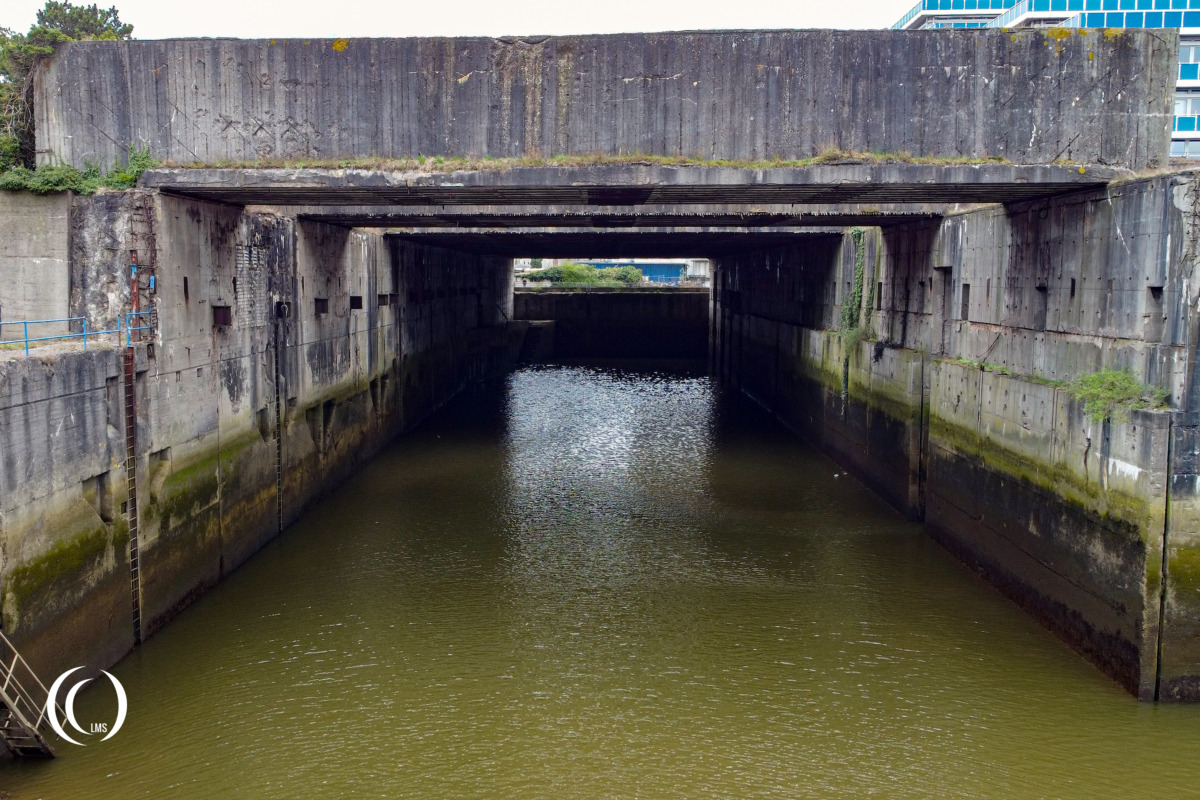
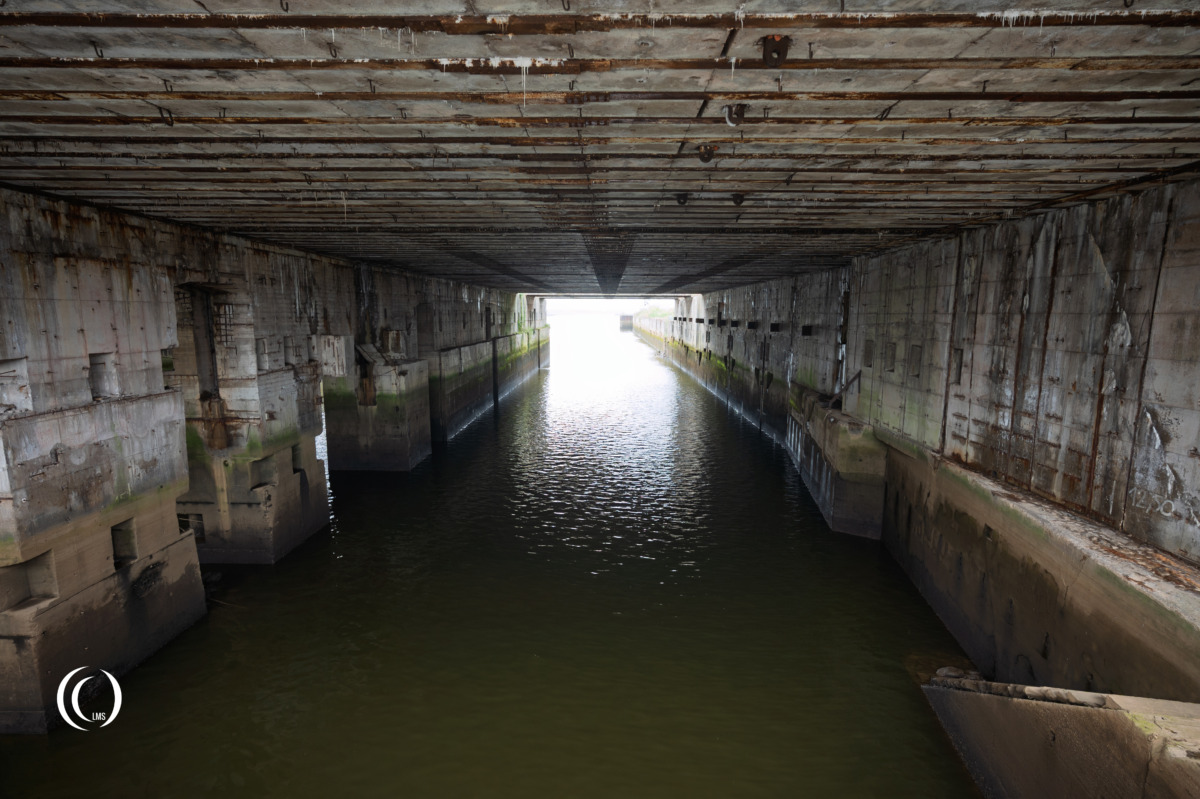
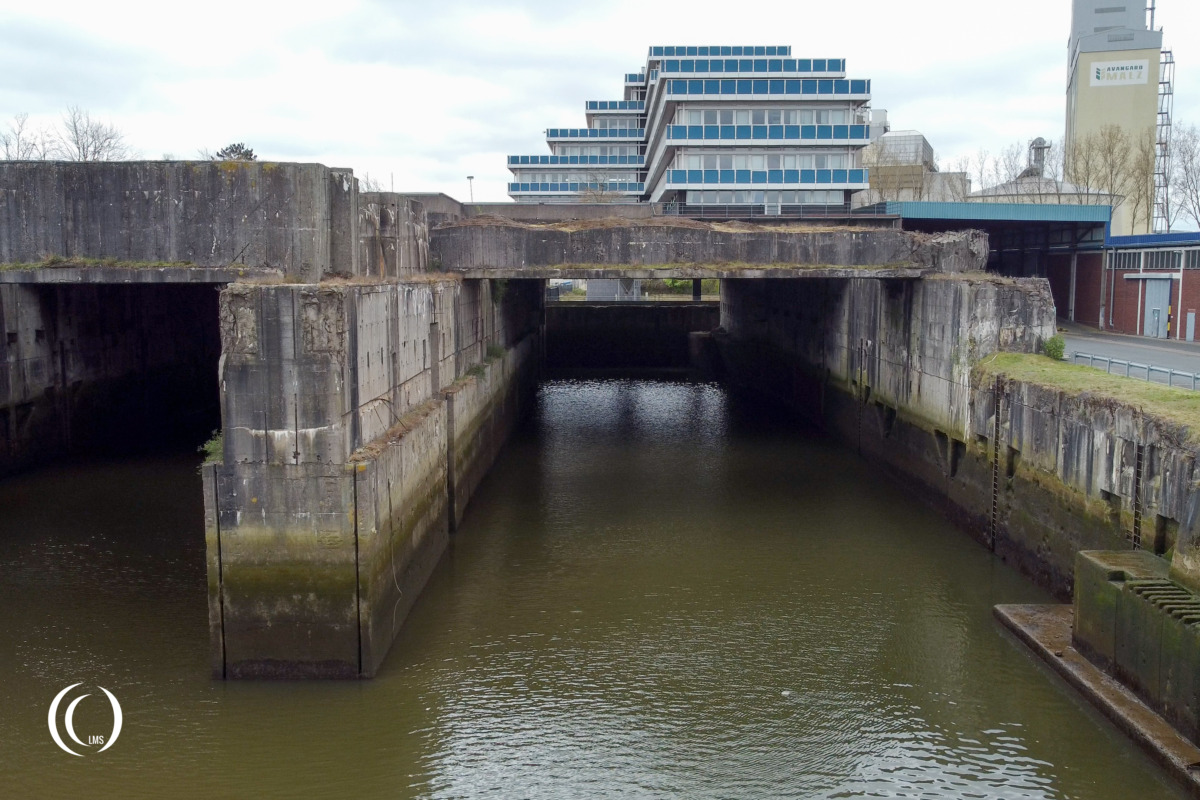
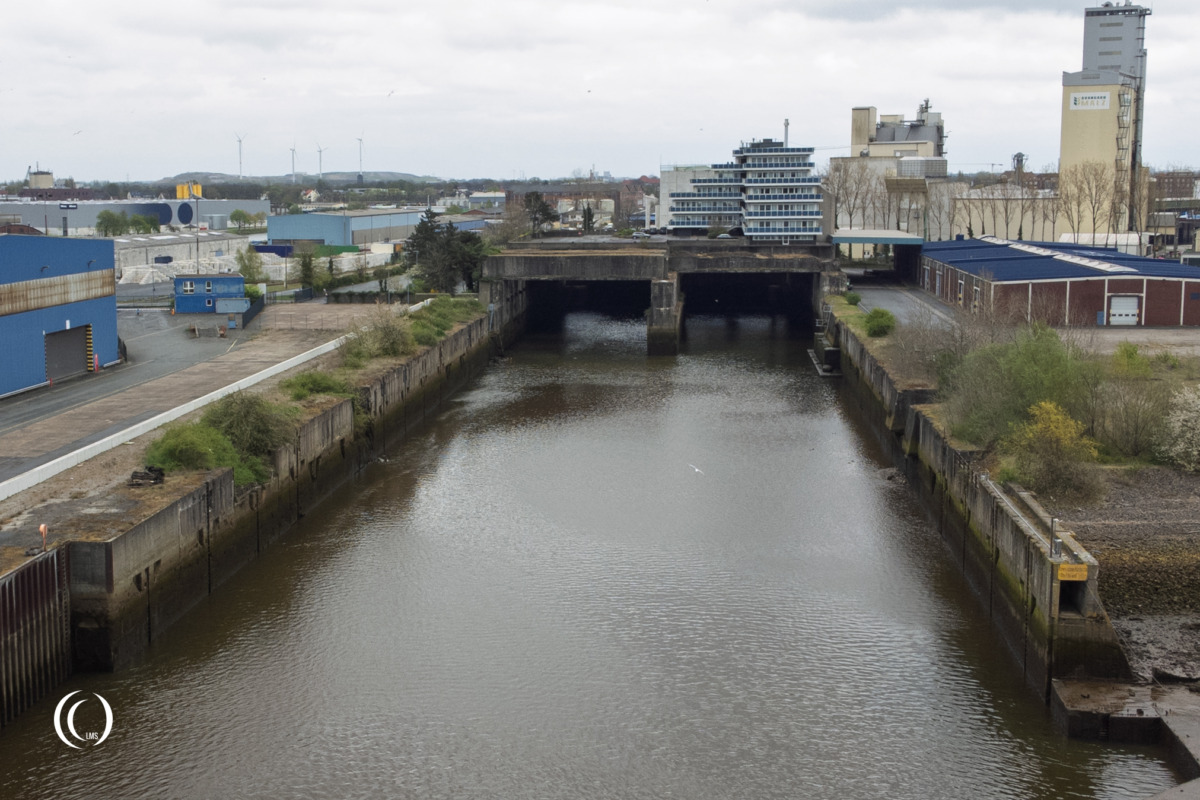
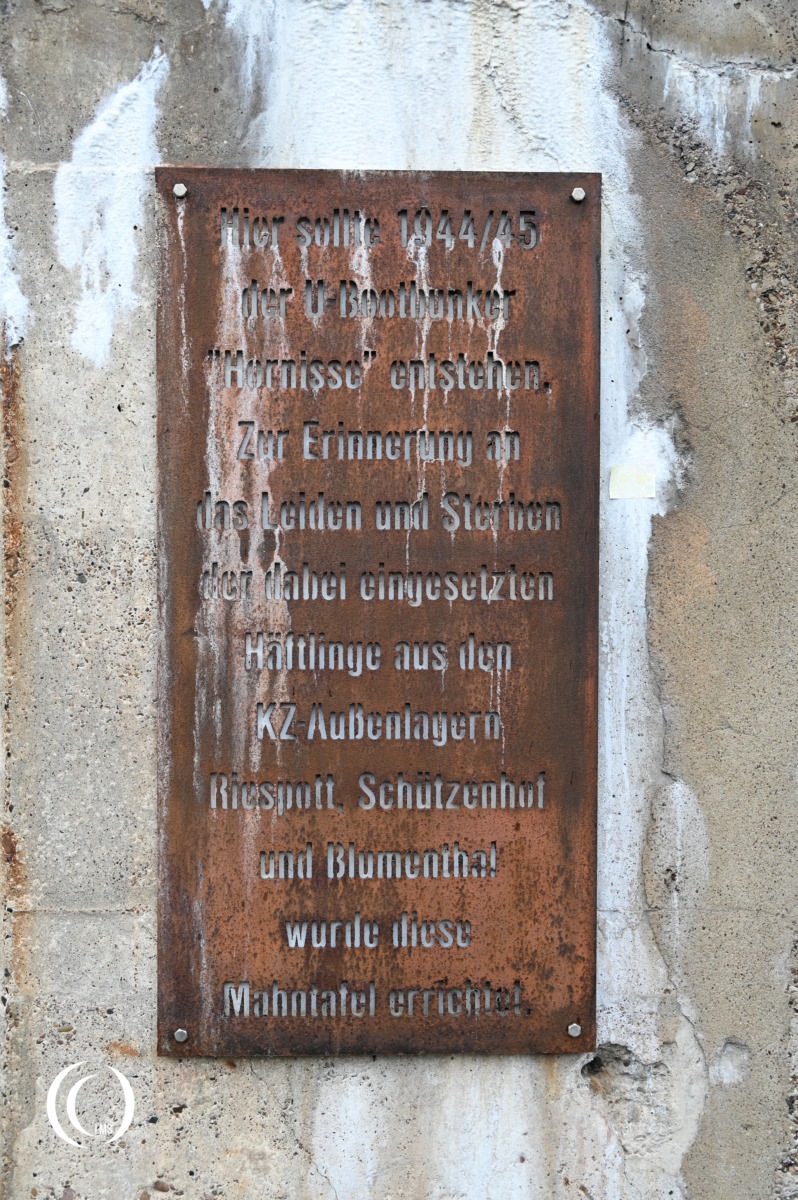
Construction work began in the spring of 1944, using an estimated 1,200 forced labourers, many of whom died under the poor working conditions. Most of these labourers were drafted from the nearby satellite camps Riespott, Schützenhof and Blumenthal.
Allied bombings
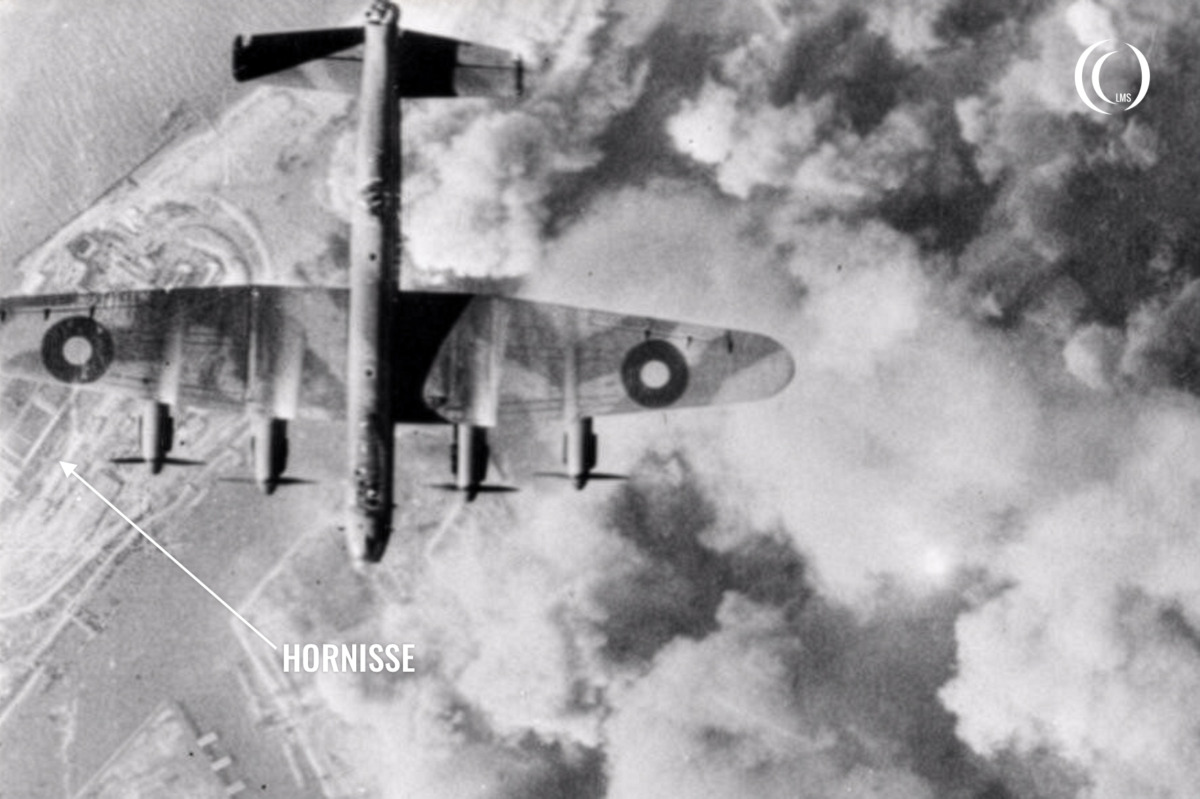
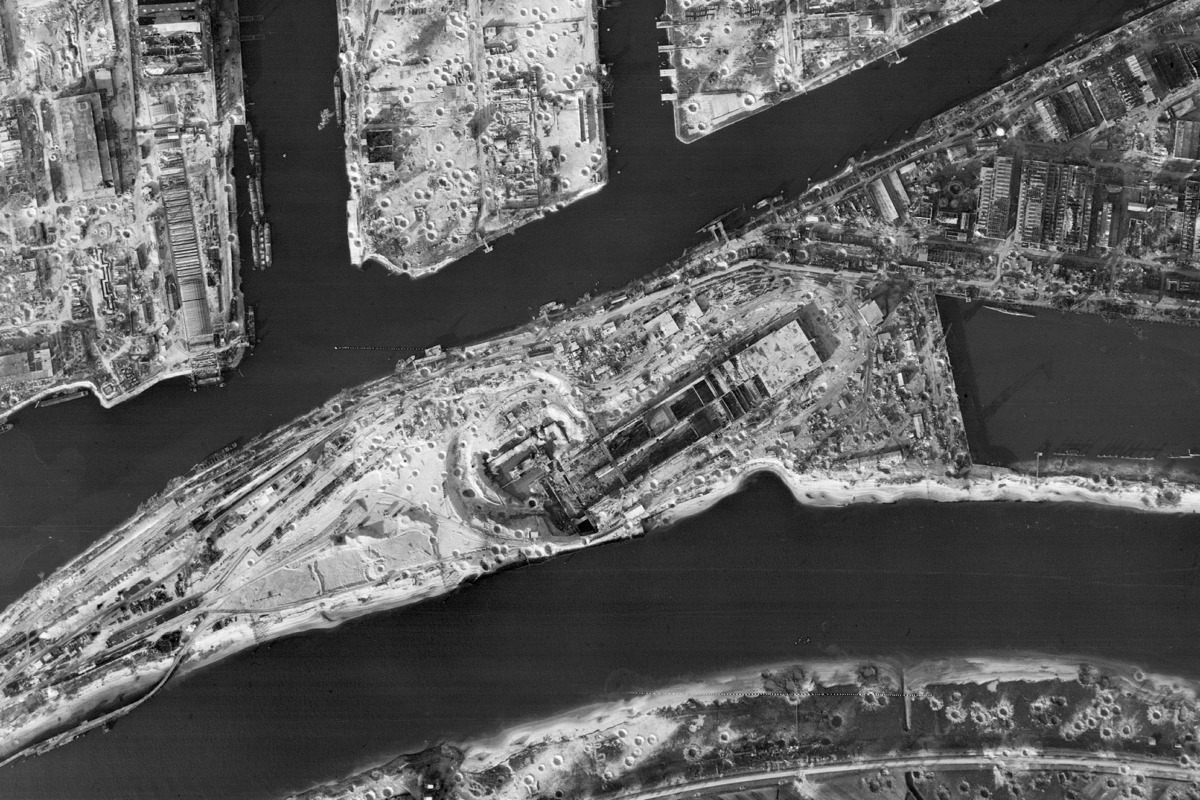
In March 1945 the port area in the west of Bremen became the target of the last heavy air raids on the city. During the daylight attack of 21 March 1945 the Hornisse construction site barely escaped the bomb carpet (picture above). But a week later on the 30th several bombs detonated on the bunker roof of Hornisse, which severely damaged it. A huge piece of the bunker roof on the south wall was blown off.
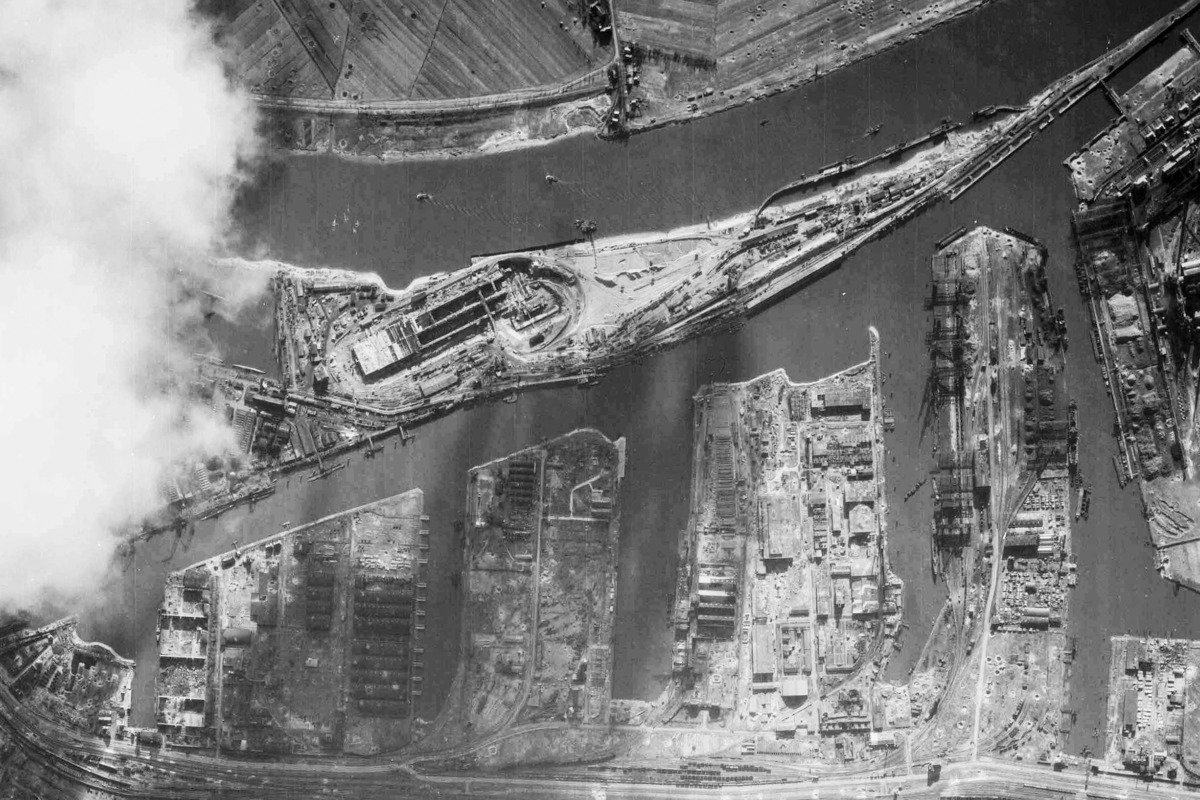
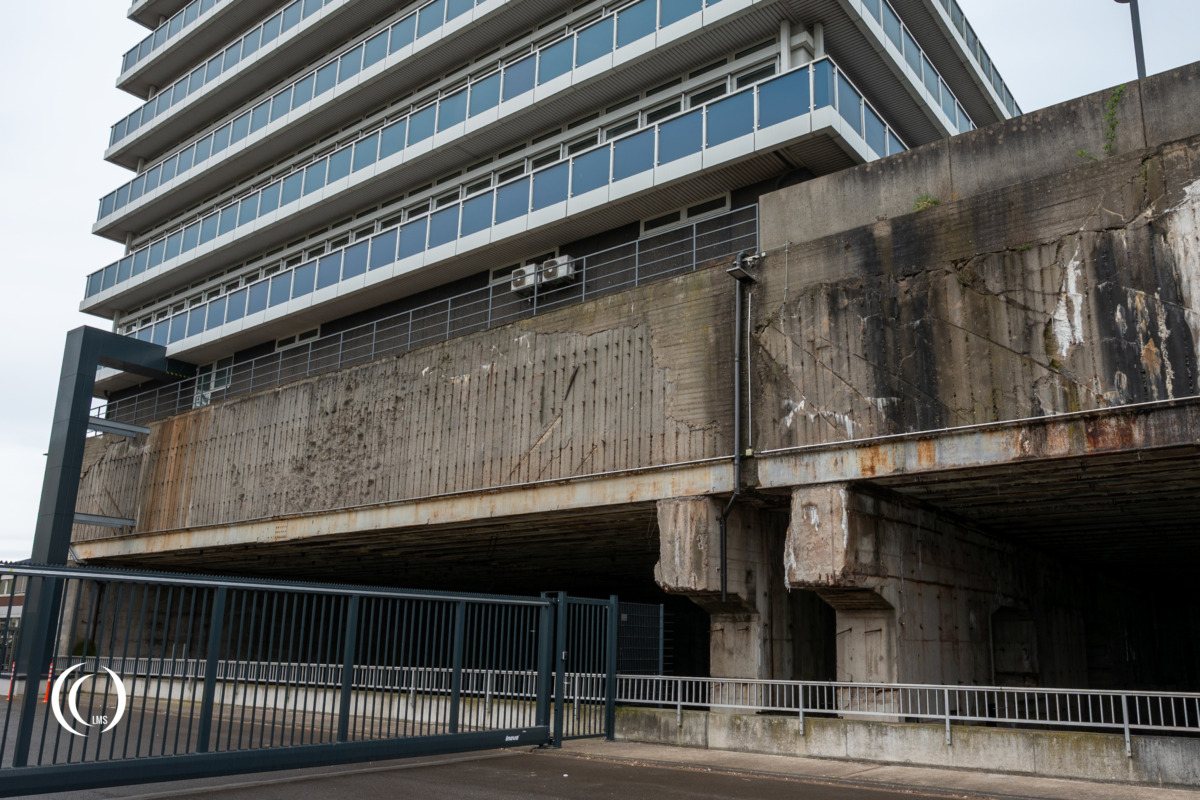
When the British Army approached Bremen in April 1945, the construction work on Hornisse was abandoned on the 6th, with about a quarter of the bunker completed at that time.
Post war
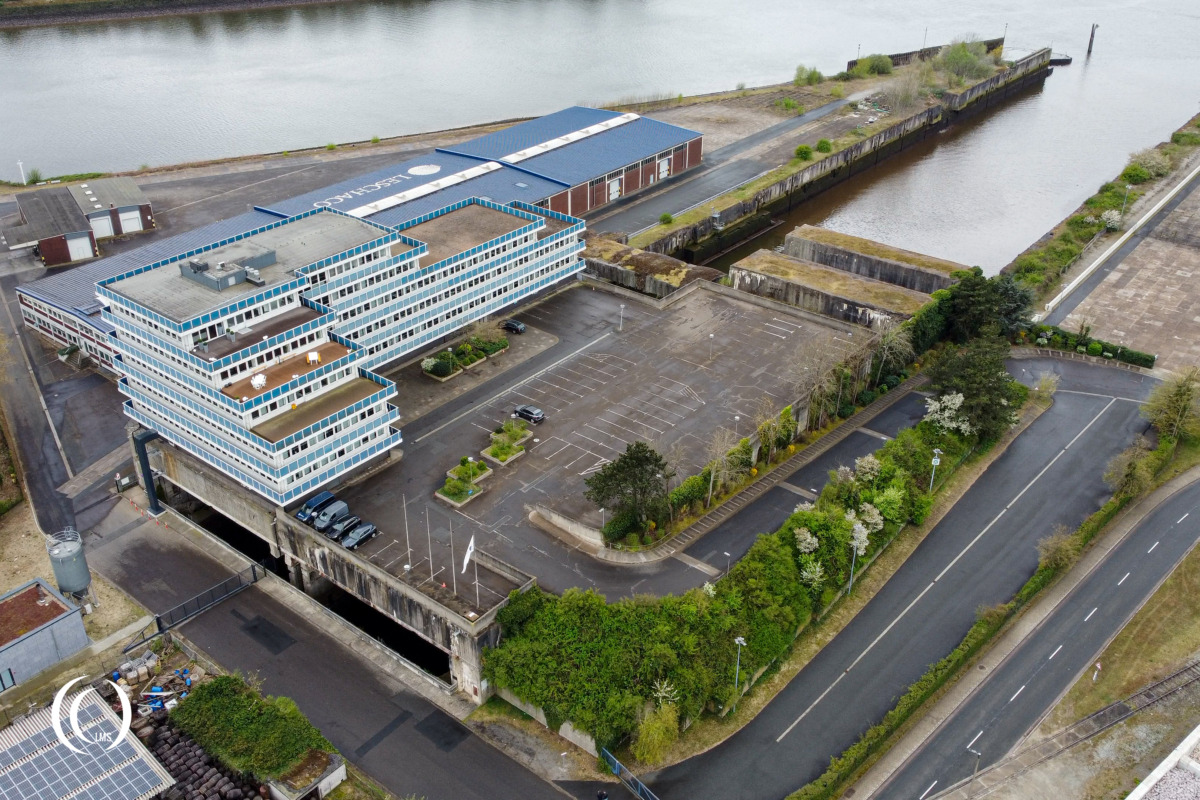
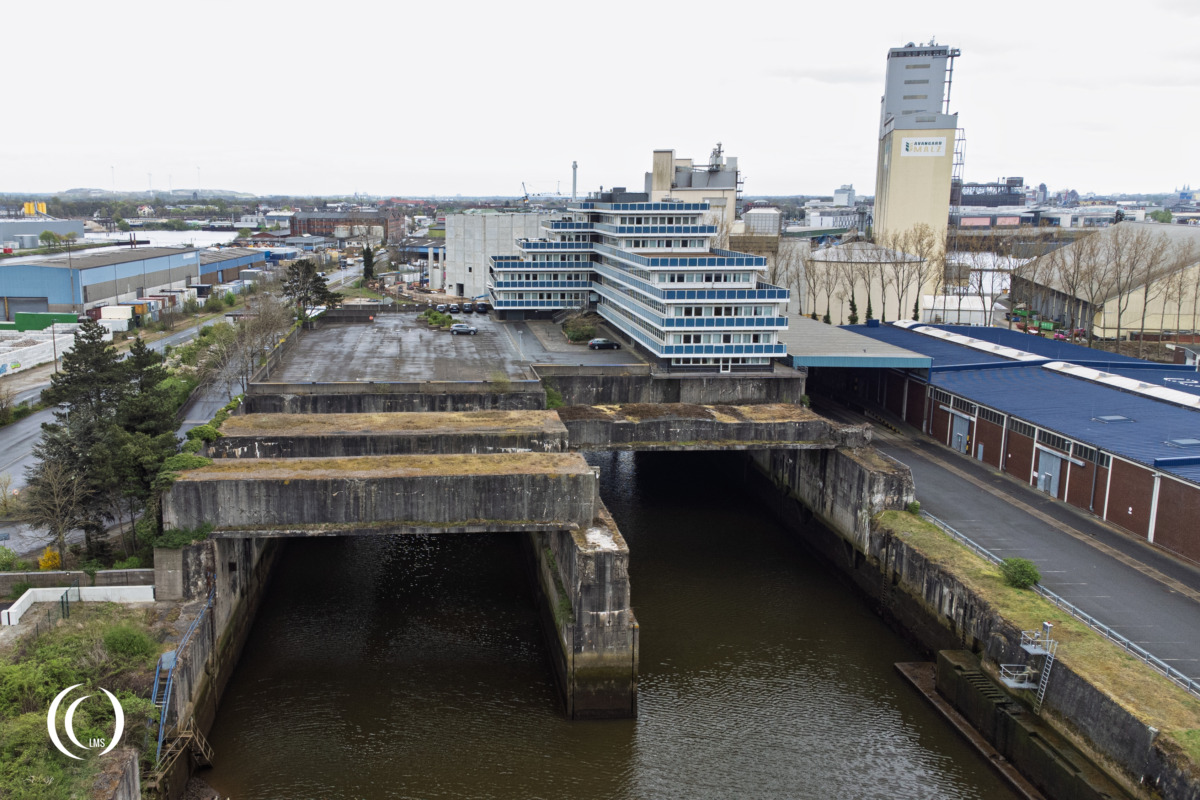
After World War Two the bunker was given back into the possession of Bremen. When demolishing it turned out too expensive, the city developed plans to convert the uncovered part of Hornisse to a harbour basin. For this purpose renovation works were carried out in the 1950s. The central wall was removed and the side walls were levelled to the height of the new quays. A connection to the Weser was dug for access to the basin.
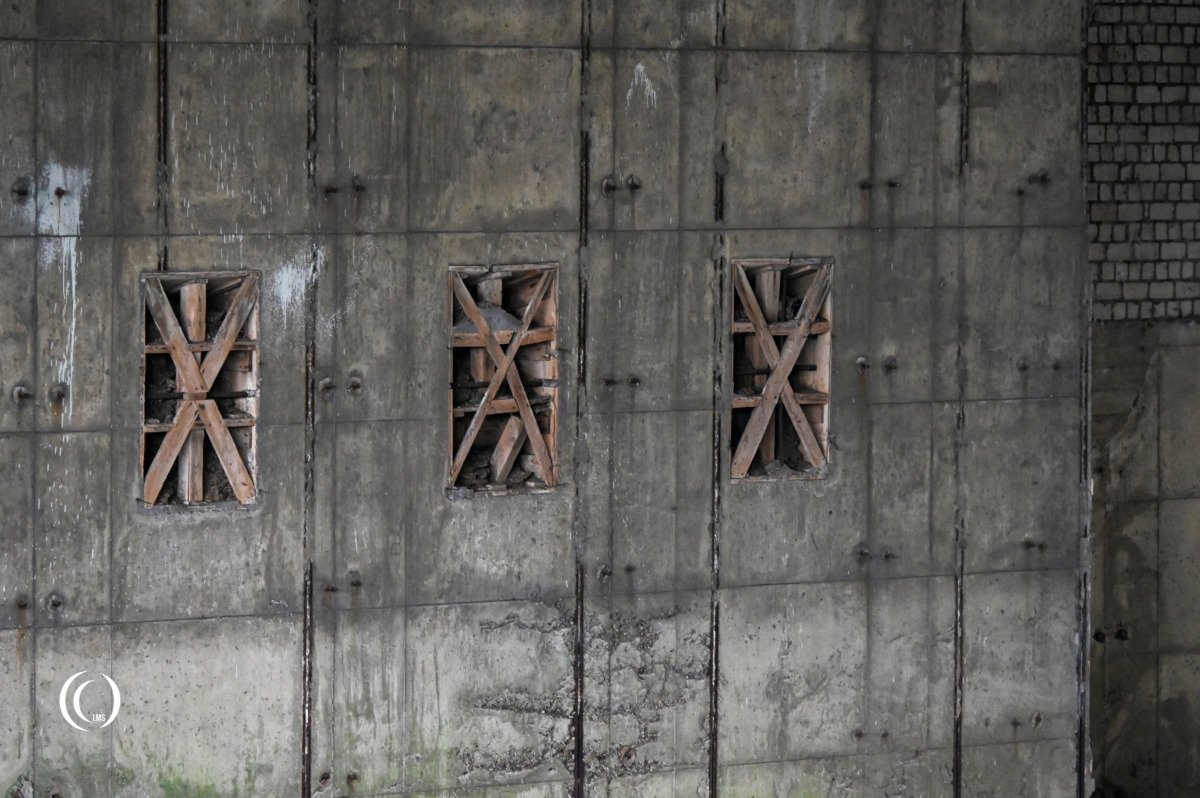
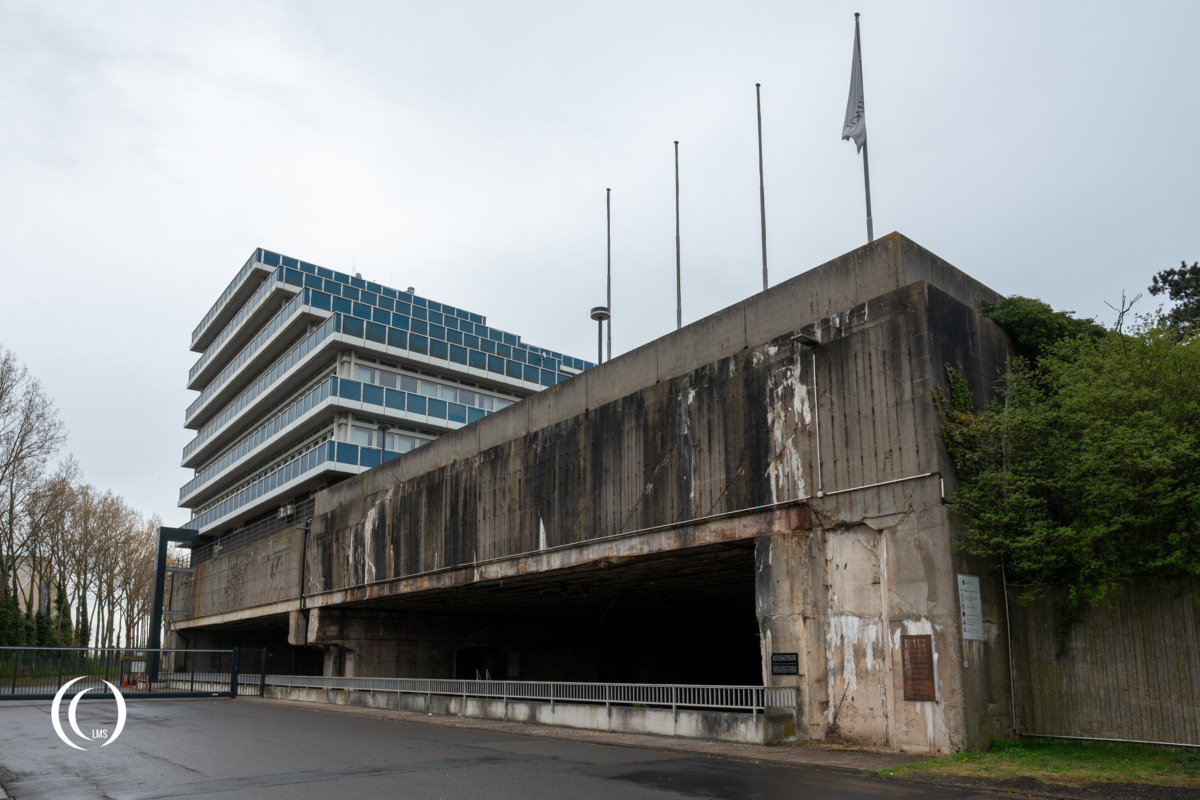
Between 1968 and 1969 an office building was constructed on the east side of the existing bunker roof together with a parking lot. The business property is still in use today.
Visit
You can view the bunker freely from the road on its northeastern side. The rest of the bunker grounds is in use by various businesses and not accessible. Sometimes there are guided tours that can take you on the premises and show you the south side of the bunker.
