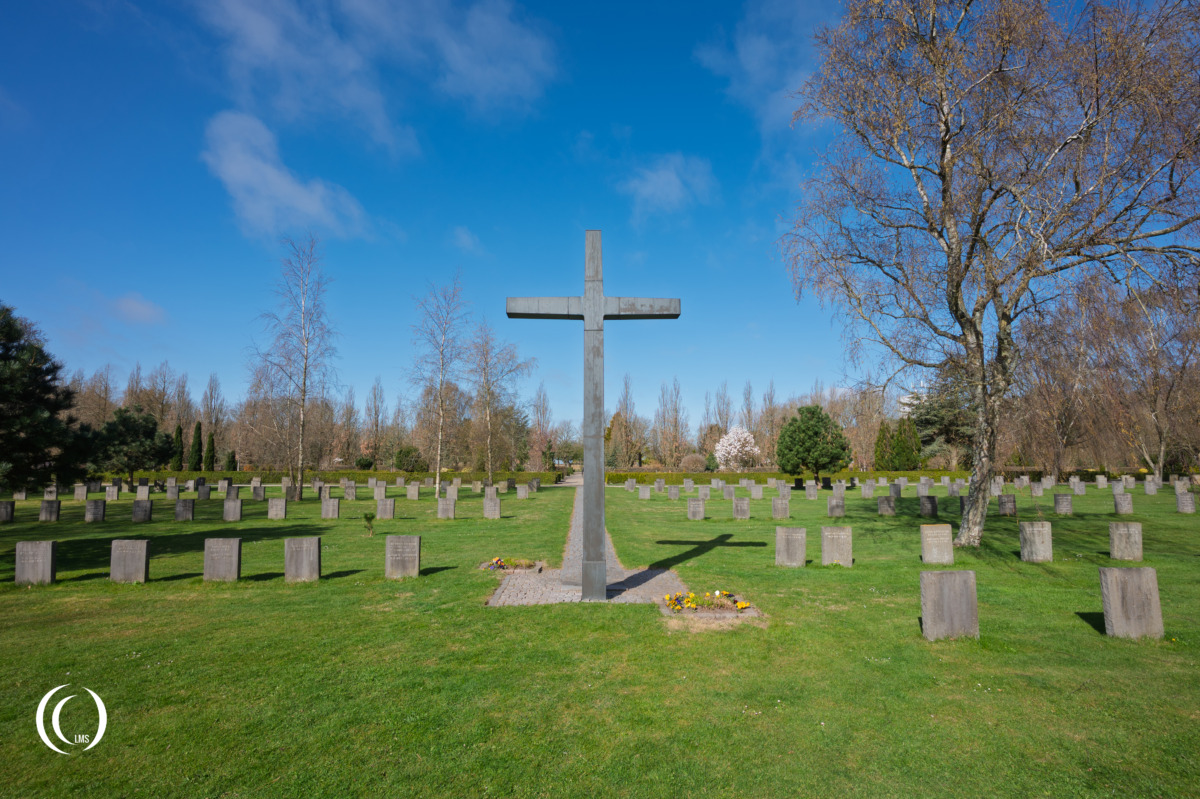
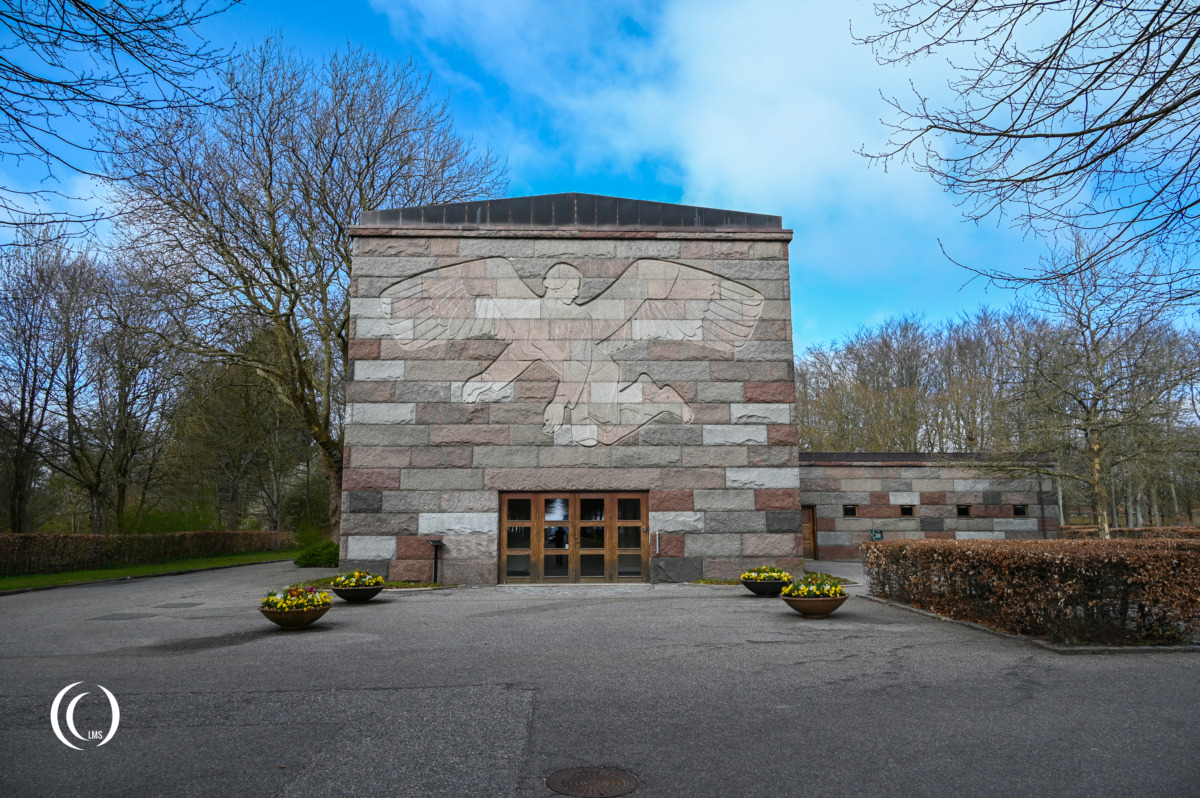
Søndre Cemetery is one of Aalborg’s three municipal cemeteries. The cemetery covers a park-like area of 10 hectares and is characterised by many trees and hedges.
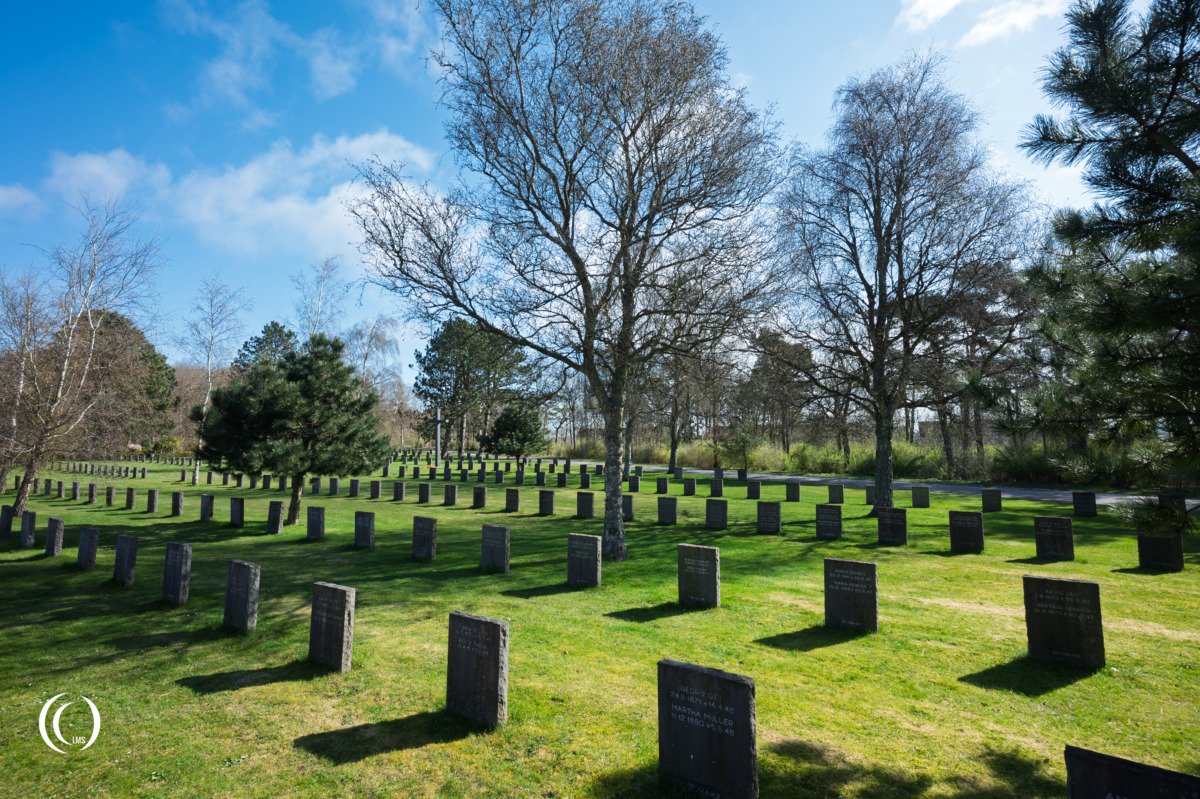
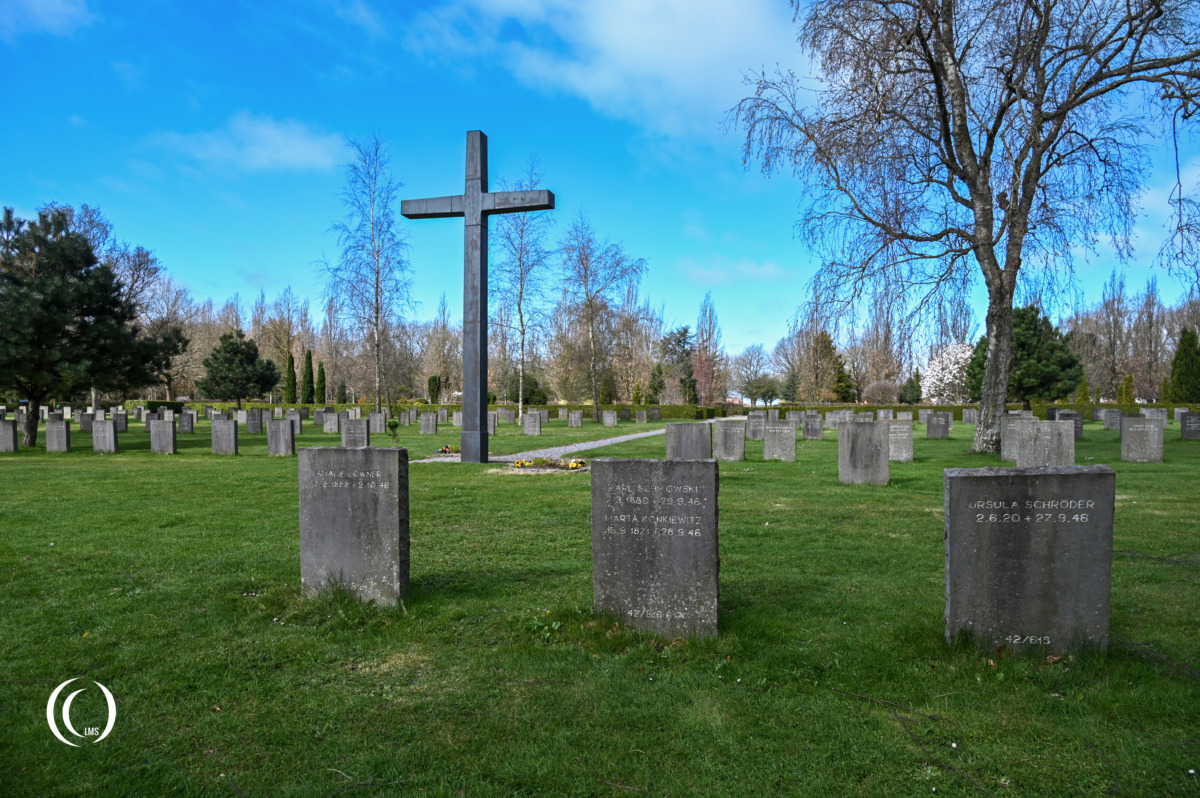
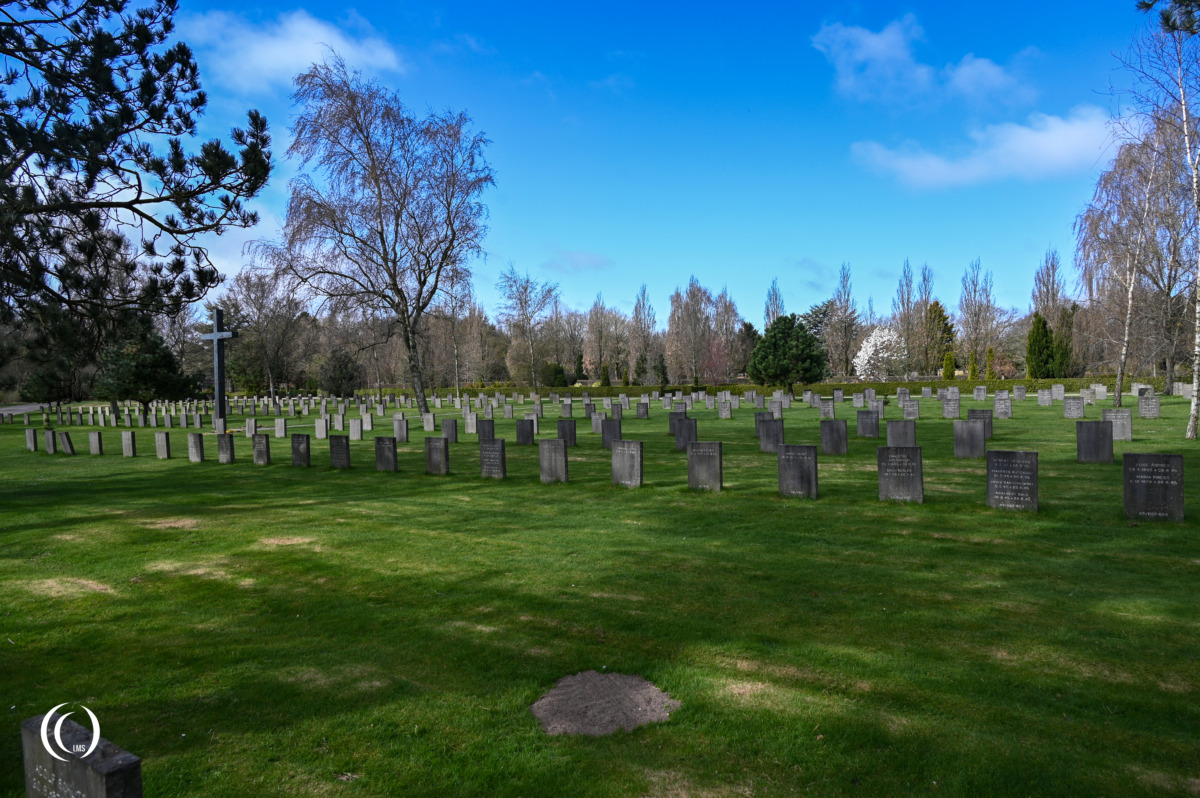
During and after the war, the cemetery became the burial site for German soldiers and refugees after the municipality of Aalborg refused to allow German burials at Aalborg Cemetery. Today, a prominent memorial area with a large cross and several hundred identical gravestones commemorate 254 German soldiers and 1,096 German refugees who died during this period.
German refugees
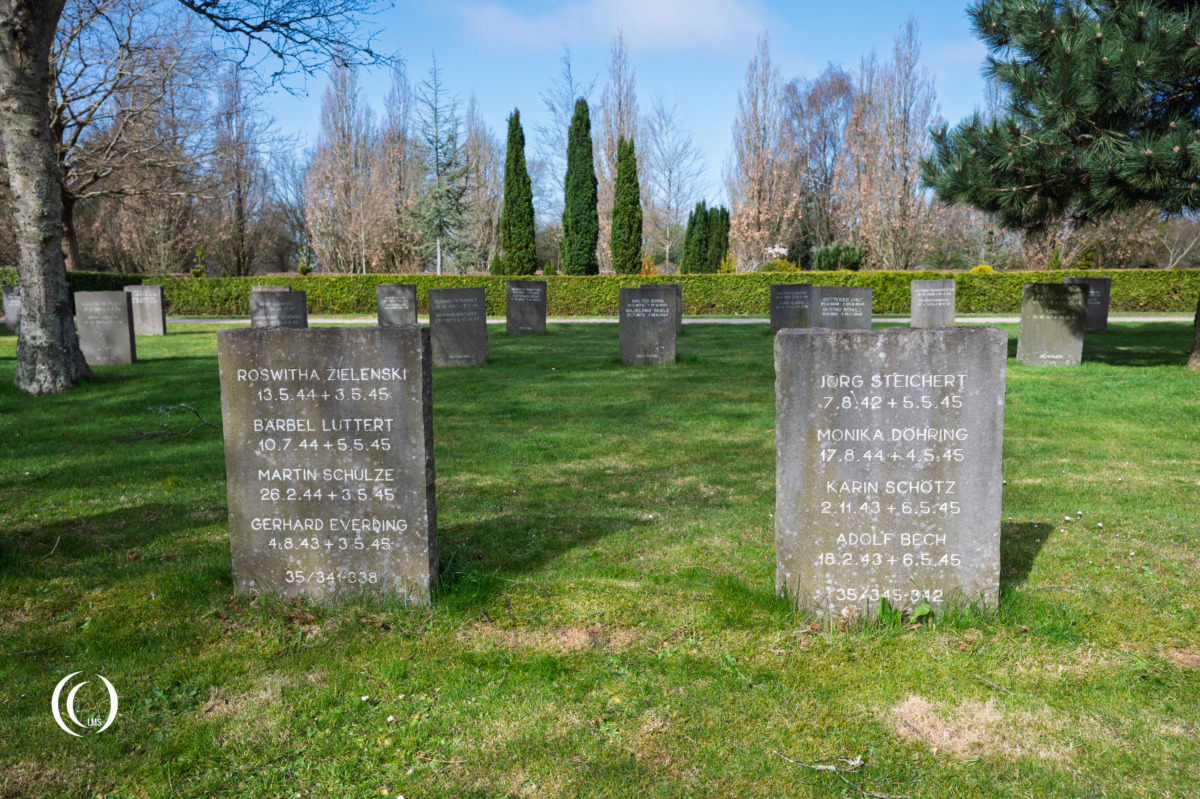
Between February and the 5th of May 1945, as the Soviet forces were making their rapid advance in the northeast of Germany, about 238,000 Germans were evacuated to occupied Denmark via the Baltic Sea. After Denmark was liberated, the Allied High Command announced that the refugees would remain in Denmark for the time being due to the chaos in Germany. Under the strain of a 5 percent increase in population and the hostile sentiment towards the Germans after five years of occupation, suppression and destruction by the Nazi Regime, the fugitives were interned into camps and barred from society by the Danish authorities.
Initially, the refugees did not receive help from Danish doctors or access to Danish hospitals. Because of this, there was a high mortality rate among the refugees, mainly among children and the elderly.
Of the 1,096 German refugees buried at Søndre Cemetery, 426 are children under 15 years.
Seefliegerhorst Aalborg
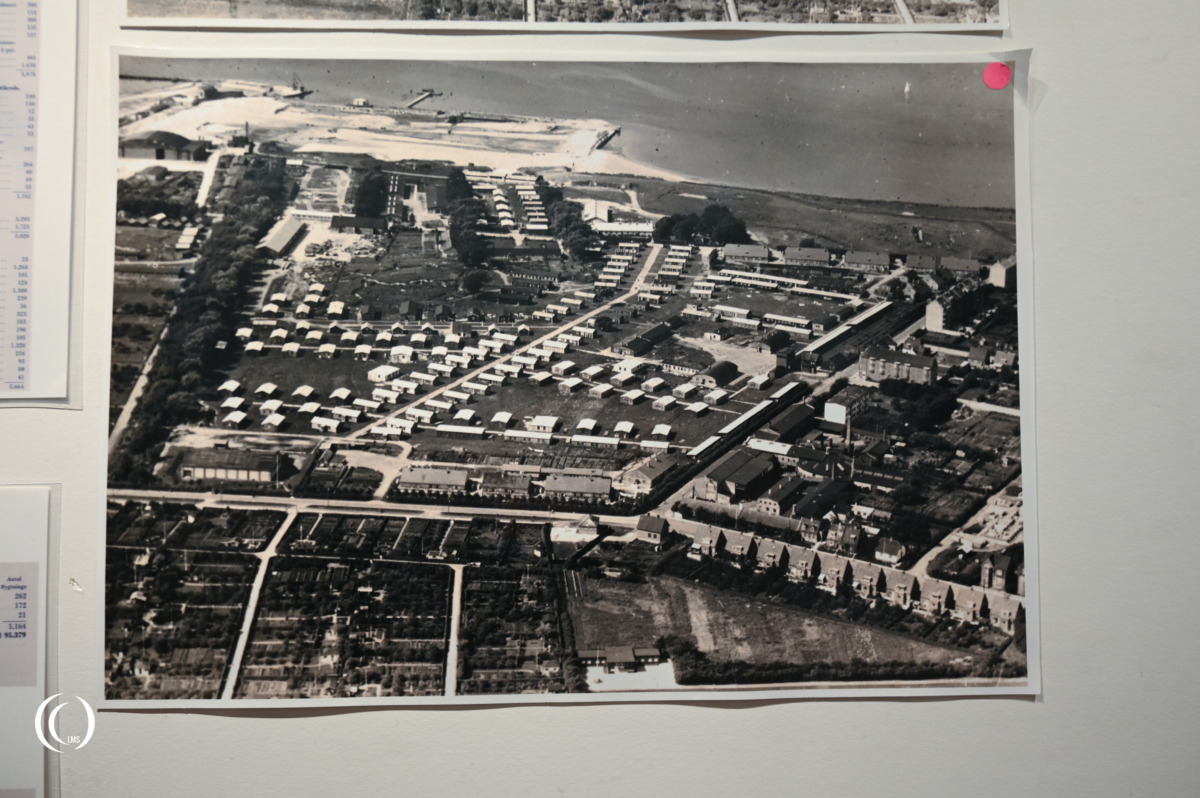
Soon after the Germans invaded Denmark in April 1940, the Luftwaffe established a seaplane air base or in German “Seefliegerhorst Aalborg” in the area of Skydebanevej, on the western outskirts of Aalborg. During the war the air base was expanded with barracks, office buildings, an infirmary, workshops and ammunition depots. A large “Junkershalle” hangar was constructed during the winter of 1940-1941.
At the end of the war, refugee camp “Flyveplads Vest” was established at the former Seaplane Base Aalborg and additional barracks were erected. In June 1946 it housed 6,555 refugees¹. The camp was closed in 1947 following the repatriation of the refugees back to Germany.
Today the Aalborg Defence and Garrison Museum is located on the former Seefliegerhorst and refugee camp grounds.
5 May park
In memory of the freedom fighters and others who lost their lives during the Second World War, the 5 May Park was established at the cemetery in 1985, on the 40th anniversary of the Danish liberation. The memorial park is located in the southeastern part of the cemetery. A large granite sculpture, created by Edgar Funck, is surrounded by 141 name plaques in granite placed in the grass.
Recent burial
In 2017 the remains of German pilot Hans Wunderlich² (I/JG 102) were laid to rest here. The pilot and parts of his Messerschmitt Bf 109 G-6 aircraft were found west of Birkelse in North Jutland in the same year.
Visit
The Søndre cemetery is opened to the public during the daytime.
¹ Statens Civile Luftværn: Flygtningeadministrationen, Flygtninge i Danmark 1945-1949
² https://cphpost.dk/2017-03-24/news/dead-wwii-german-pilot-identified/
