When it comes to an interest in history and more specifically in World War Two, visiting certain sites in Germany should be high on the list. Of the countless events that took place during the war, many of these had their root from inside Nazi Germany. A lot of sites today, sometimes preserved, restored, eradicated or abandoned and forgotten, still bear witness to the military, political or technological events and developments that shaped these dark times.
We know from experience, that by visiting these sites yourself, it can bring the reality of the events that took place there much closer. The realisation of standing at the exact spot where key figures of World War Two once stood, or where a historic event took place can be very gripping. It reminds us that they are not just stories from a book.
So if you are interested in World War Two and you plan to see some of these places you read about in the history books for yourself, we thought it might be interesting to share our Top 5 of WW2 Sites in Germany:
Nazi Party Rally Grounds, Nuremberg
The Rise to Power
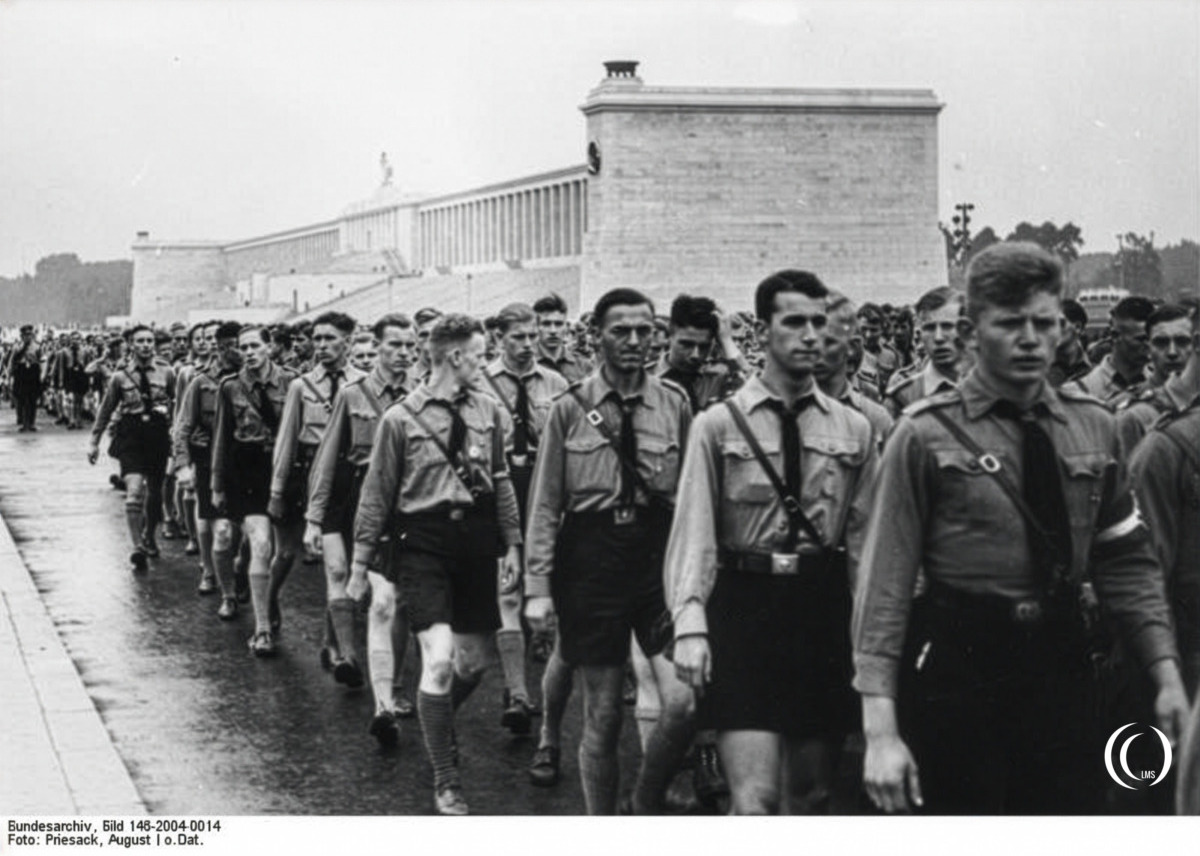
Nuremberg played a key role in the rise of the Nazi Party (NSDAP). Starting from as early as 1923, the party organised it’s annual National Socialist Party rallies here and, with Hitler’s appointment as Chancellor in 1933, Nuremberg was declared the city of the Reich Party Congress on August 30th of that year. The party rallies were an annual display of power and unity for the movement and a popular source to feed Nazi propaganda.
The NSDAP Reichsparteitagsgelände (Reich Party Congress Grounds) covered around 11 square kilometers with different buildings and memorials for parades, ceremonies and gatherings. The designs, supervised by primary architect Albert Speer, expressed the ambition and vision of the Nazi Regime.
The last party rally was held here in 1938. Although another was planned for September 2nd 1939, this was cancelled due to the Invasion of Poland on the 1st of September.
The site today
Today, the preserved rally grounds and documentation centers serve as important sites for understanding how the NSDAP rose to power, and as reminders of how mass mobilization, propaganda, and authoritarian politics can undermine democratic institutions. Even though 90 percent of the city was destroyed by Allied bombings, much of this site survived the war relatively unscathed.
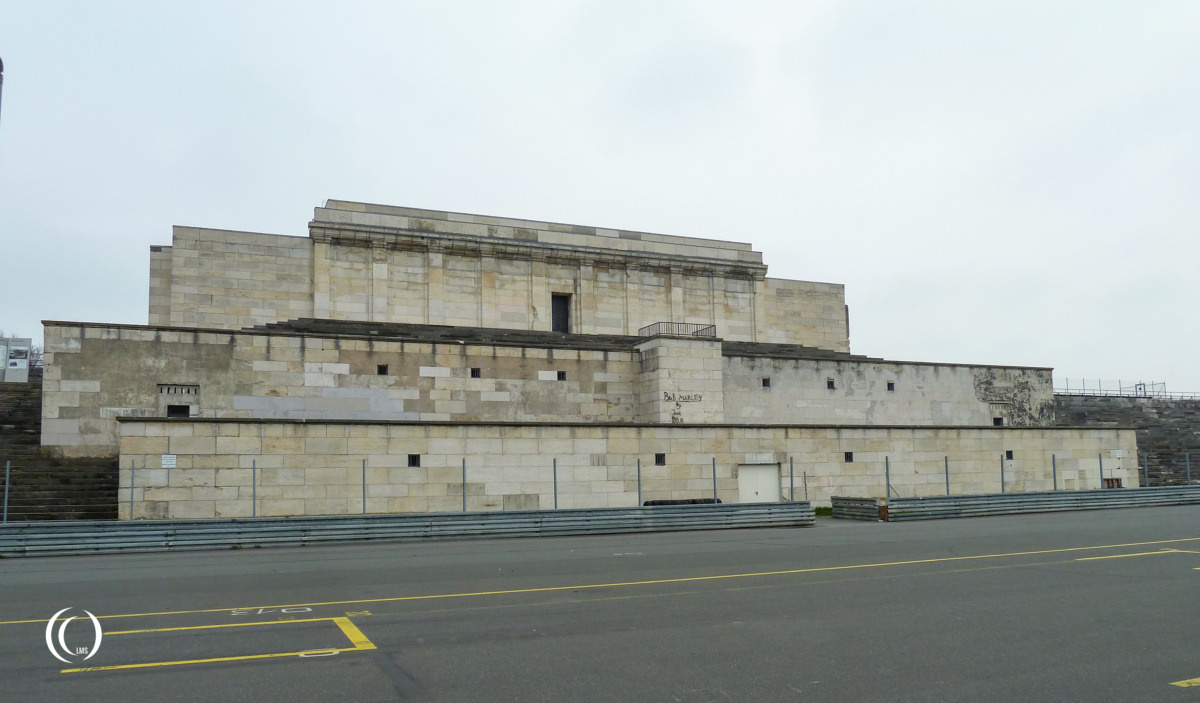
Most iconic is without a doubt the Grandstand at Zeppelin Field. The structure of 360 meters long was one of Speer’s first projects for the Third Reich. Much of the Nazi propaganda material was created here, with Hitler and other party members addressing the crowd from the speakers platform.
NOTE: the Grandstand is currently undergoing renovations until 2030.
Looking across the water of the Grosser Dutzendteich to the Northwest you can see the Congress Hall, a building of enormous proportions, with the purpose to house the congress of the Nazi Party on rally days. It was designed to seat 50,000 people and is the largest remaining building of the Third Reich today.
Across the street to the North are the Luitpold Arena and Luitpold Hall. The hall was built to commemorate the 9,855 Nuremberger soldiers that were killed in the First World War. The first rallies were held here in the 1920s to attract new followers into the Nazi Party and strengthen the bonds with existing members.
Returning South past the Congress Hall you can follow the Große straße (Eng: “Big Street”), which was intended for military parades. Designed by Speer, the street was planned to run for 2 kilometers in a straight line towards the former Märzfeld (Marching field), but 1,5 kilometers were constructed.
Use this Google Maps link to open a 1h 23m walk at the former Party Rally Ground in Nuremberg.
Peenemunde Army Research Center
Technological Innovations
Although after World War One, Germany’s military was severely restricted by the Treaty of Versailles, it secretly pursued rearmament and training as soon as Hitler came to power. With the ambition to create more “Lebensraum” for his Third Reich, the Nazis largely invested in new technological developments and innovations to gain the upper hand in what was to come. Various sites were used for research, development and testing purposes, like Kummersdorf, Rechlin and Peenemünde. The developments that were done at the latter, would shape the future far beyond that of the short-lived Third Reich.
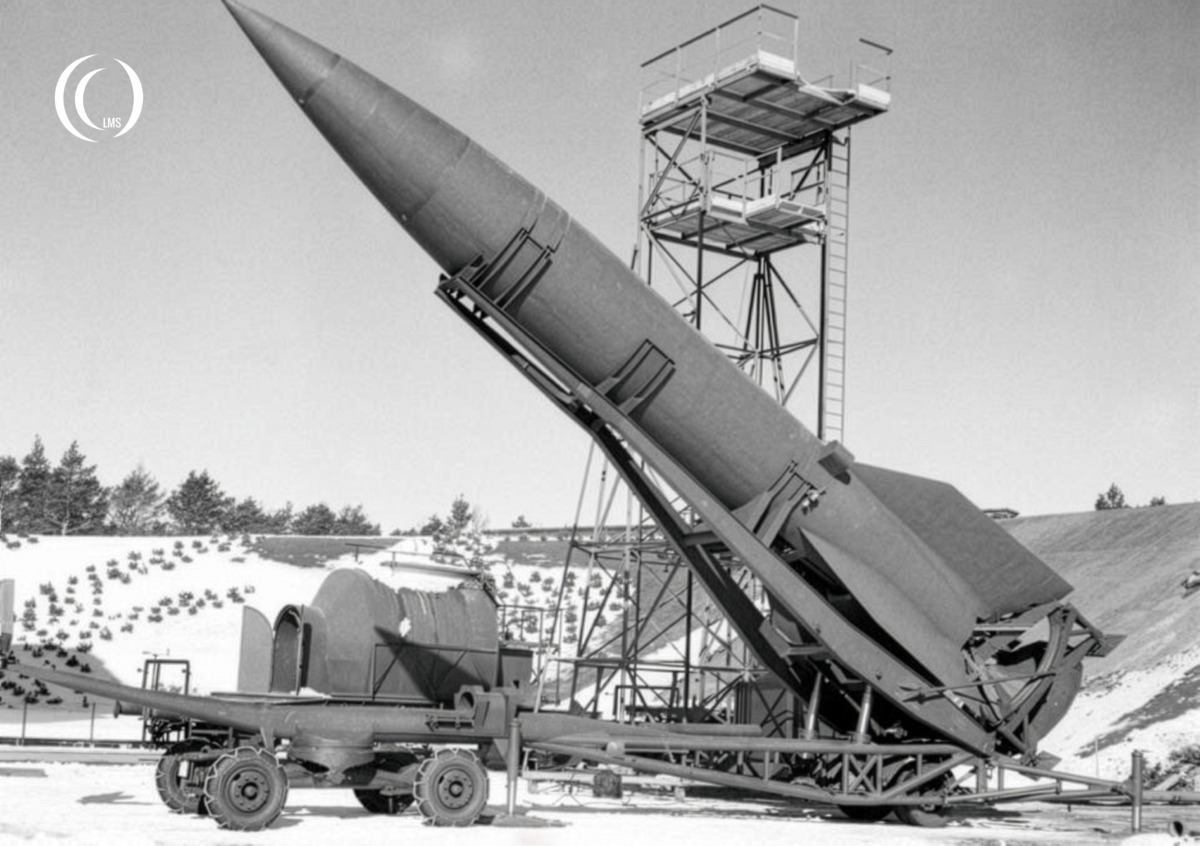
The Peenemünde Army Research Center was established in 1936 on the Baltic coast of Germany as a secret military facility dedicated to the development of advanced rocket technology. Under the direction of Wernher von Braun and the German Army Weapons Office, it became the primary site for the design and testing of the V-2 rocket, the world’s first long-range guided ballistic missile. This development represented a major leap in military and aerospace engineering. After the war both the United States and the Soviet Union recruited German scientists and incorporated the captured technology into their early missile and space programs. Wernher von Braun would end up leading the space program for NASA.
The site today
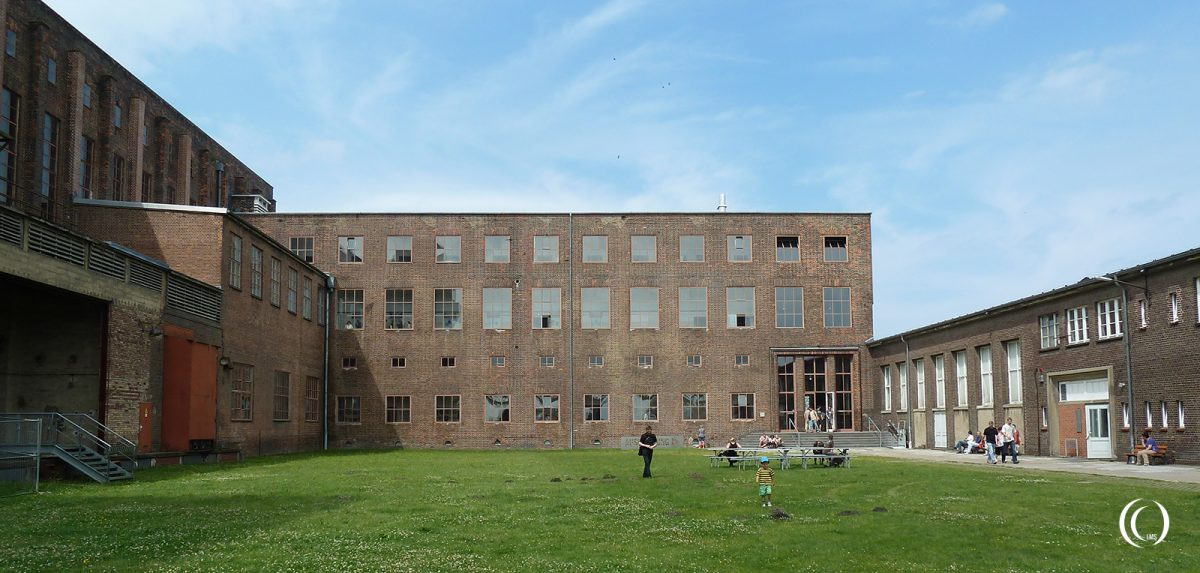
In terms of visiting Peenemünde, as the whole northern part of the peninsula belonged to the research center, you can spend more than a full day here if you want. We recommend starting at Historisches Technisches Museum Peenemünde, the former energy plant. It shows a lot of information about the people and the developments at Peenemünde. After this the things you find in the area make a lot more sense.
For many people a visit to the V1 and V2 launch sites is a must. But beware; most of these sites are off limits and not without reason. The area was used for military purposes until the 1990’s and left abandoned since.
Apart from this, remnants can be found everywhere. Notable places to visit are former slave-labour camp KZ-Arbeitslager Karlshagen I, the former oxygen-plant, and the Karlshagen Cemetery and Memorial.
Dachau Concentration Camp

Mass Extermination and Genocide
Dachau Concentration Camp was the first regular concentration camp established by the Nazi regime, opened in March 1933 near Munich, Germany. Initially intended to imprison political opponents, it soon became a model for the entire camp system and expanded to hold Jews, Roma, clergy, homosexuals, and other groups persecuted by the Nazis. Prisoners were subjected to forced labor, brutal discipline, medical experiments, and severe living conditions, leading to the deaths of thousands.
Dachau was liberated by American forces on April 29th 1945.
The site today
Today, the site serves as a memorial and educational center, preserving the memory of the victims and a warning against the dangers of dictatorship, racism, and dehumanization.
We chose Dachau to be in this list, because it is the blueprint of many of the Concentration Camps the Nazi’s would set up in Germany. Camps like Bergen-Belsen, Ravensbrück or Sachsenhausen will leave an equal impression.
Obersalzberg

Second Center of Power
The Obersalzberg in the Bavarian Alps was not only Hitler’s private country retreat, but also served as the second center of power of the German Reich alongside the official capital Berlin. Hitler spent more than a third of his time in power here. At his Berghof residence, he received foreign leaders, discussed military strategy, and cultivated an image of a reflective statesman surrounded by Alpine calm, even as major decisions of war and persecution were made.
Leading figures of the Nazi regime like Hermann Göring, Albert Speer and Martin Bormann also lived nearby on the Obersalzberg. Bormann, Hitler’s private secretary, effectively controlled the Obersalzberg complex and oversaw its expansion in the late 1930s, turning it into a heavily secured Nazi party enclave.
The site today
Today, the site is documented as a place that illustrates how everyday life, power, and ideology were intertwined at the heart of the Nazi leadership.
The only thing left of Hitler’s Berghof is the retaining wall that stood behind it. The house was damaged in a British air raid on the 25th of April, 1945 and set on fire by the Obersalzberg SS after Hitler’s suicide. The US military government ordered the ruin to be blown up in 1952 and the last remnants were cleared in the 90s when the site was handed back to the Bavarian authorities.
Just a stones throw further is Hotel Zum Turken, which served as the SS Security Headquarters for the Obersalzberg. The hotel provides access into the tunnel system beneath the Obersalzberg.
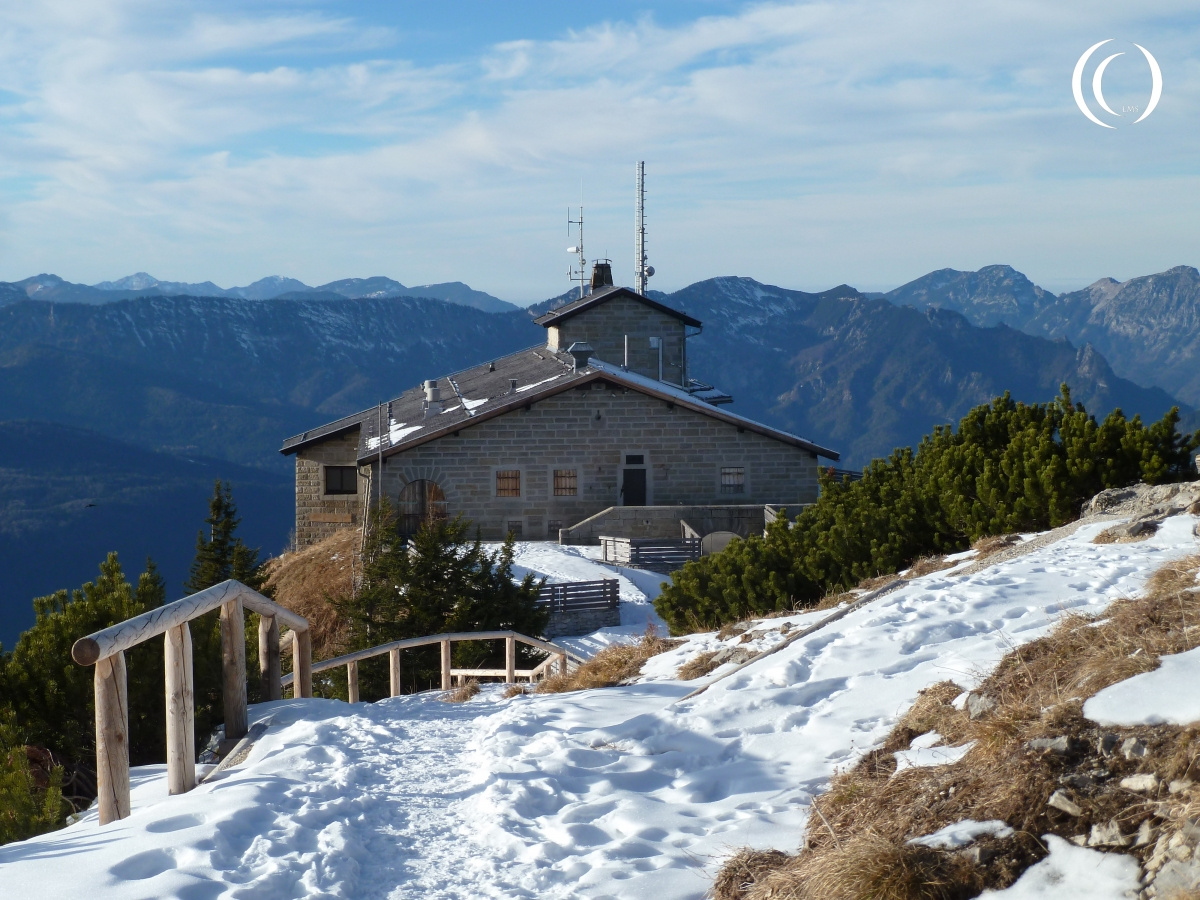
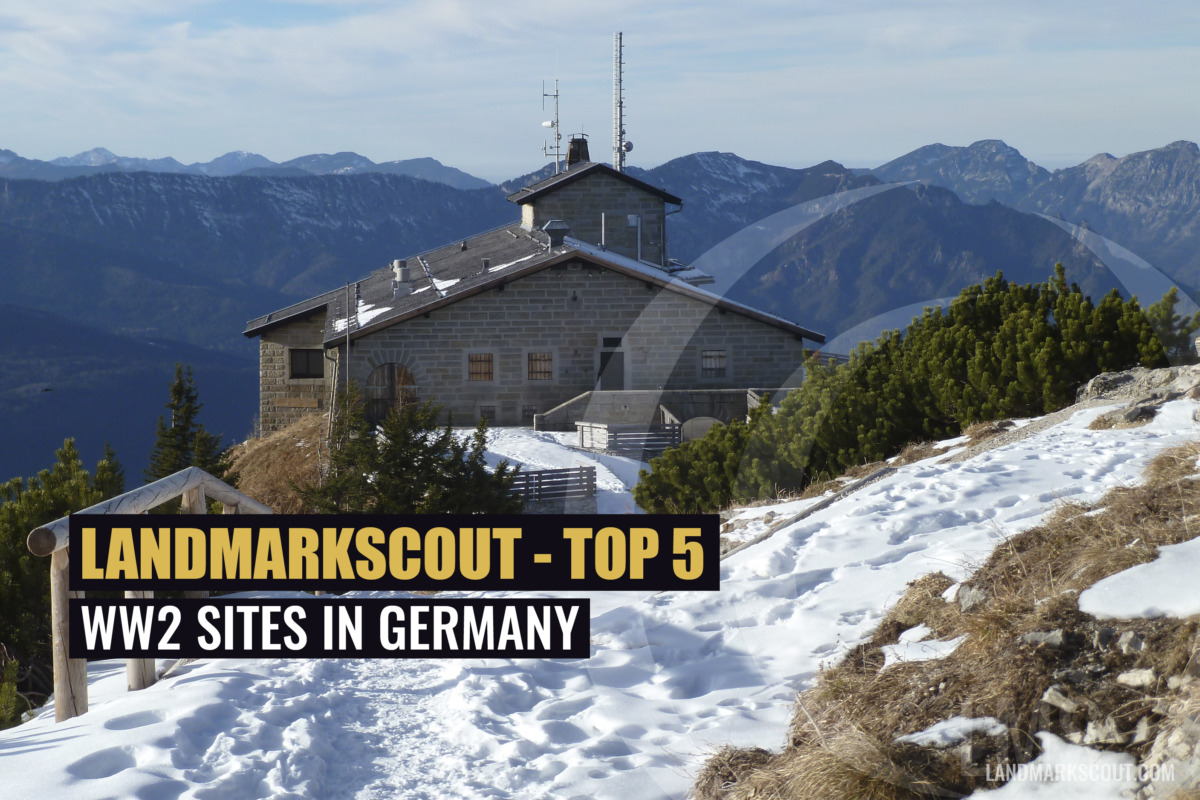
The Kehlsteinhaus, better known as Hitler’s Eagles Nest is the most iconic place to visit. The tea house was presented to Adolf Hitler on his 50th Birthday in 1938 as a gift from the Nazi party. At a height of 1834 meters, the tea house is one of the few Nazi structures to survive the demolitions in the 50s.
The former tea house on the Mooslahnerkopf mountain side was Hitler’s favourite. It was of his own design and finished in 1937. Almost every day after lunch Hitler and his entourage walked across the small path to this place, about a half hour walk from “the Berghof“. He and his entourage would spend hours on the terras overlooking the valley below. The building was demolished in the 50’s, but the terras is still there. The fence was restored for a movie.
Further notable places of interest are for example Albert Speer’s former house* and Martin Bormann’s Gutshof. The Obersalzberg Documentation Center provides more extensive information about the area.
Use this Google Maps link for a 1hr walk across the Obersalzberg site. To reach the Kehlsteinhaus, we recommend taking a (tour)bus.
*This house is private property, please keep your distance and respect the privacy of the current owners.
The Führerbunker in Berlin

Downfall
The Führerbunker, located beneath the Reich Chancellery in Berlin, was Adolf Hitler’s final headquarters during the closing months of the Second World War. As Soviet forces encircled the city in April 1945, Hitler retreated into the underground bunker with Eva Braun, Joseph Goebbels, and his senior military staff. Cut off from reality and facing inevitable defeat, he continued to issue orders to non-existent or collapsing units while Berlin was reduced to ruins.
On 29 April 1945, Hitler married Eva Braun in a brief civil ceremony and committed suicide the day after. The following day, Goebbels and his wife committed suicide, after having poisoned their six children with a cyanide compound. According to witness accounts, the bodies were burned in the courtyard of the Reichs Chancellery. Their deaths symbolized the final collapse of the Nazi regime.
The site today

We realise that this is an anti-climax, because there is nothing here anymore except for an information sign. It is hard to believe that the former epicenter of Nazi Germany is now a parking space surrounded by Communist style apartment blocks. But this really is the location of the former Reich’s Chancellery, with hidden underneath it the Führerbunker where Hitler decided to make his last stand and finally took his own life. While the bunker remnants above ground were demolished in the 1950s, it took until far into the 1980s to remove the underground complex completely.
Still, we think that the site belongs to the list, because it was here that the regime ceased to exist and the subsequent surrender of Germany marked the end of the war.
Of course Berlin has much more World War Two related sites than the Führerbunker alone. Notable visits are the Reichstag building, Flakturm III Humboldthain, the former Gestapo and SS Headquarters and the site of the former Action T4 office.
More WW2 sites in Germany
The sites listed here are our recommendation if you want to see the sites where key events of the Second World War took place. Of course there are many more sites in Germany that are worth checking out. Use our map to look for WW2 sites in Germany near you or your travel destination.