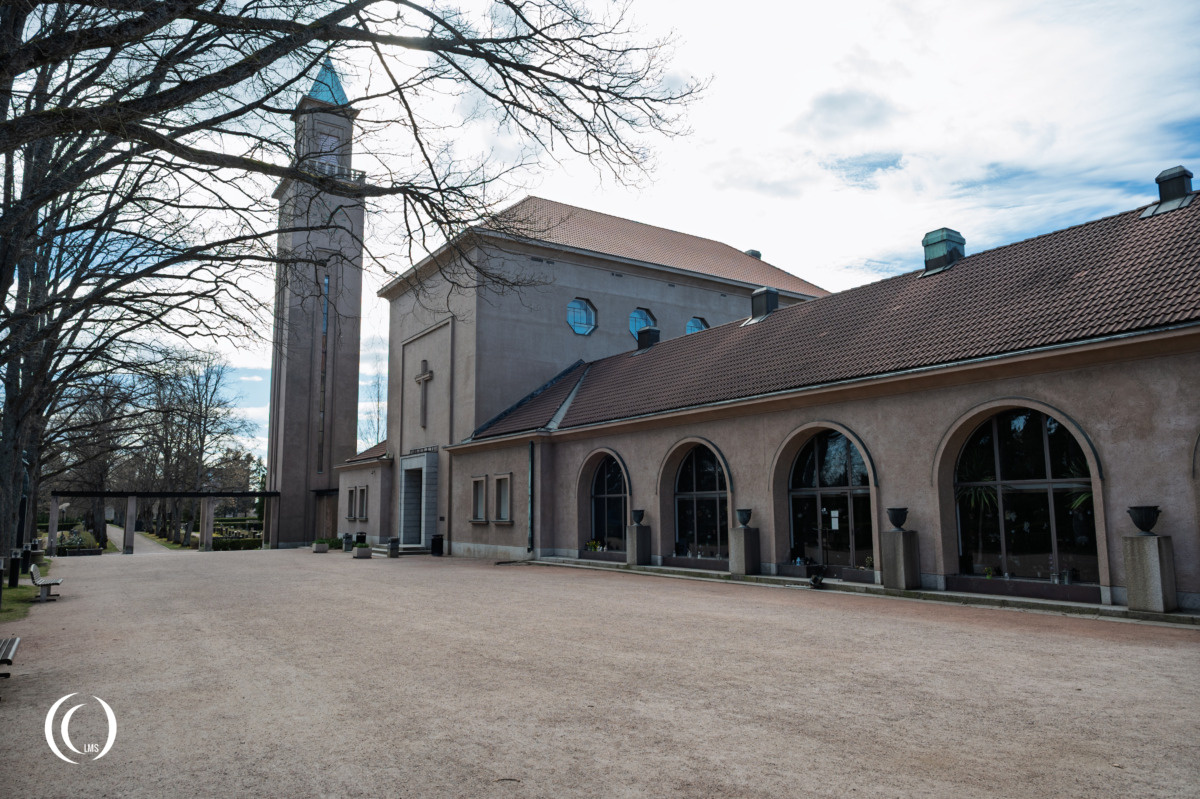
Hietaniemi Cemetery in Helsinki, established in 1829, is Finland’s most significant cemetery, serving as the final resting place of many national leaders, dignitaries, and notable figures. Located on the western edge of the Helsinki peninsula, it reflects the history and cultural development of Finland through its five distinct areas: the Old Cemetery, New Cemetery, Hietaniemi Area, Urn Grove, and the Cemetery of the Guard of Finland.
The cemetery includes Artists’ Hill, where many renowned Finnish artists and their spouses are buried, as well as the Heroes’ Place, a stadium shaped memorial square honoring soldiers who died in Finland’s wars and symbolizing national unity and remembrance.
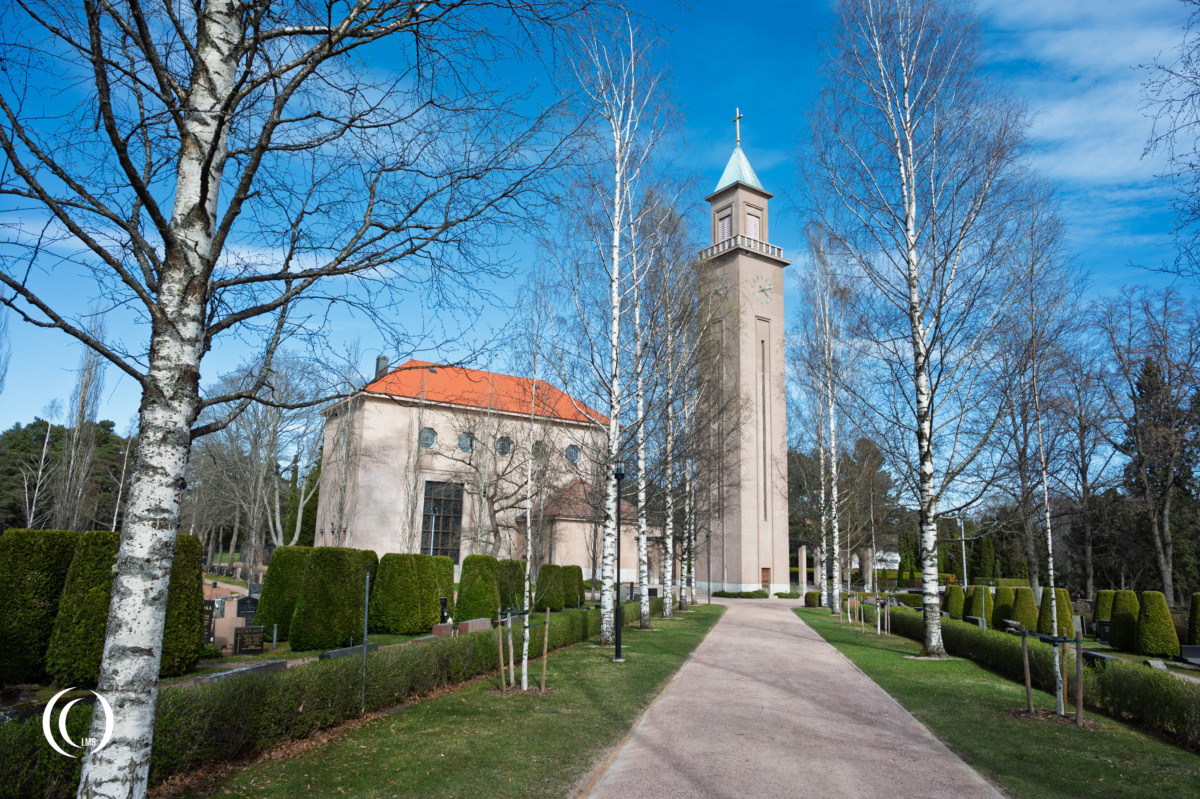
Hietaniemi contains several historically significant buildings, including the Old Chapel from 1873 designed by Theodor Höijer, the Porter’s House from 1901, and the New Chapel from 1933 designed by Albert Nyberg, which includes a columbarium for urns. The cemetery’s buildings and memorial areas, together with its notable graves, make Hietaniemi an important cultural and historical landmark in Finland.
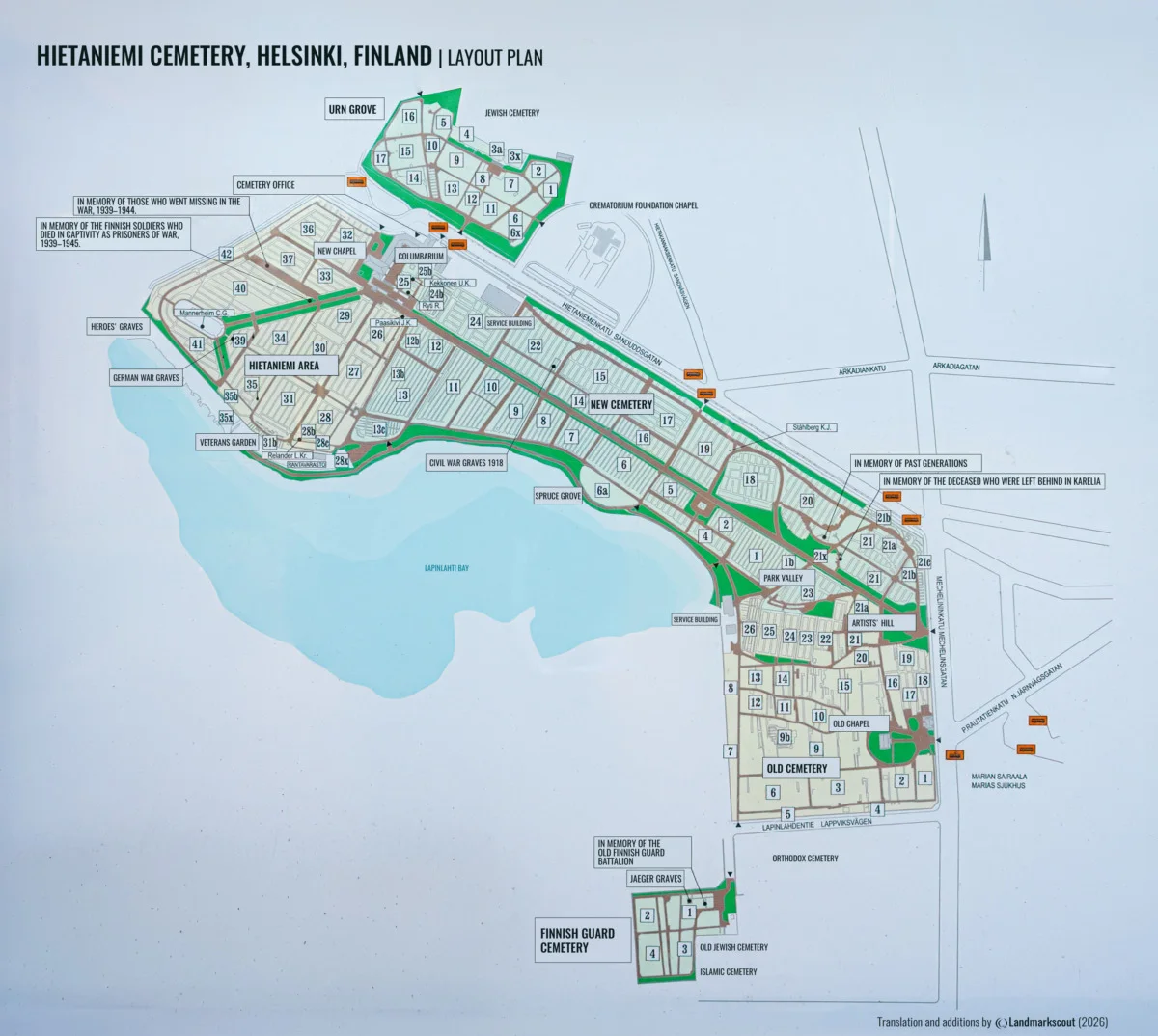
You can use the map below (click for pdf version) to navigate your way across the 31.3 acres large Hietaniemi Cemetery grounds.
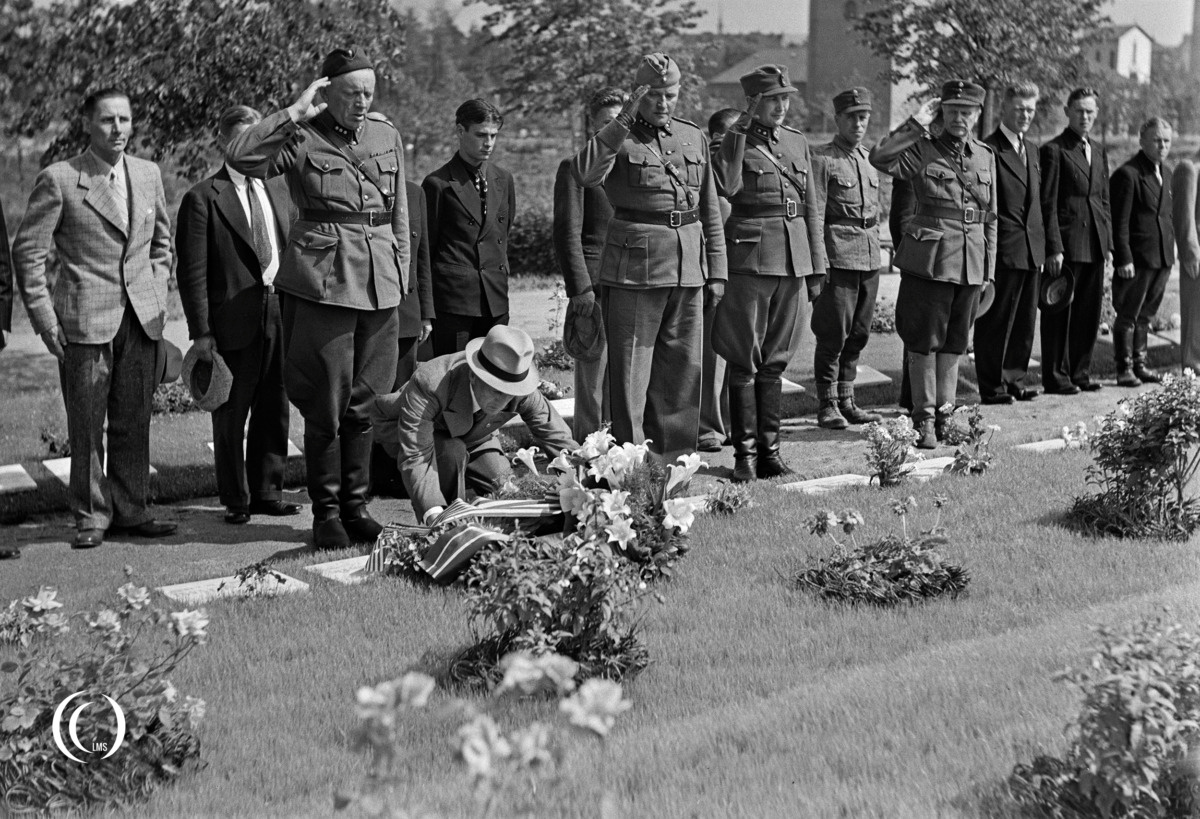
During WWII
During the Second World War, Hietaniemi Cemetery in Helsinki became Finland’s principal place of national remembrance. Thousands of soldiers who died in the Winter War (1939–1940), the Continuation War (1941–1944), and the Lapland War (1944–1945) were honored here, although most were buried in their home parishes according to Finnish tradition.
Hietaniemi’s Heroes’ Cemetery and Heroes’ Cross became powerful symbols of sacrifice, mourning, and national unity. Throughout the war years it hosted many state funerals, ceremonies and commemorations, often attended by international representatives of the Finnish Allies.
The Finnish American Legion, or in Finnish: Amerikan Suomalainen Legioona, was a foreign volunteer unit that volunteered to fight for Finland during the Winter War. With a total of 378 men, it included volunteers from the United States, Canada, the United Kingdom, and the Netherlands. (source Wikipedia)
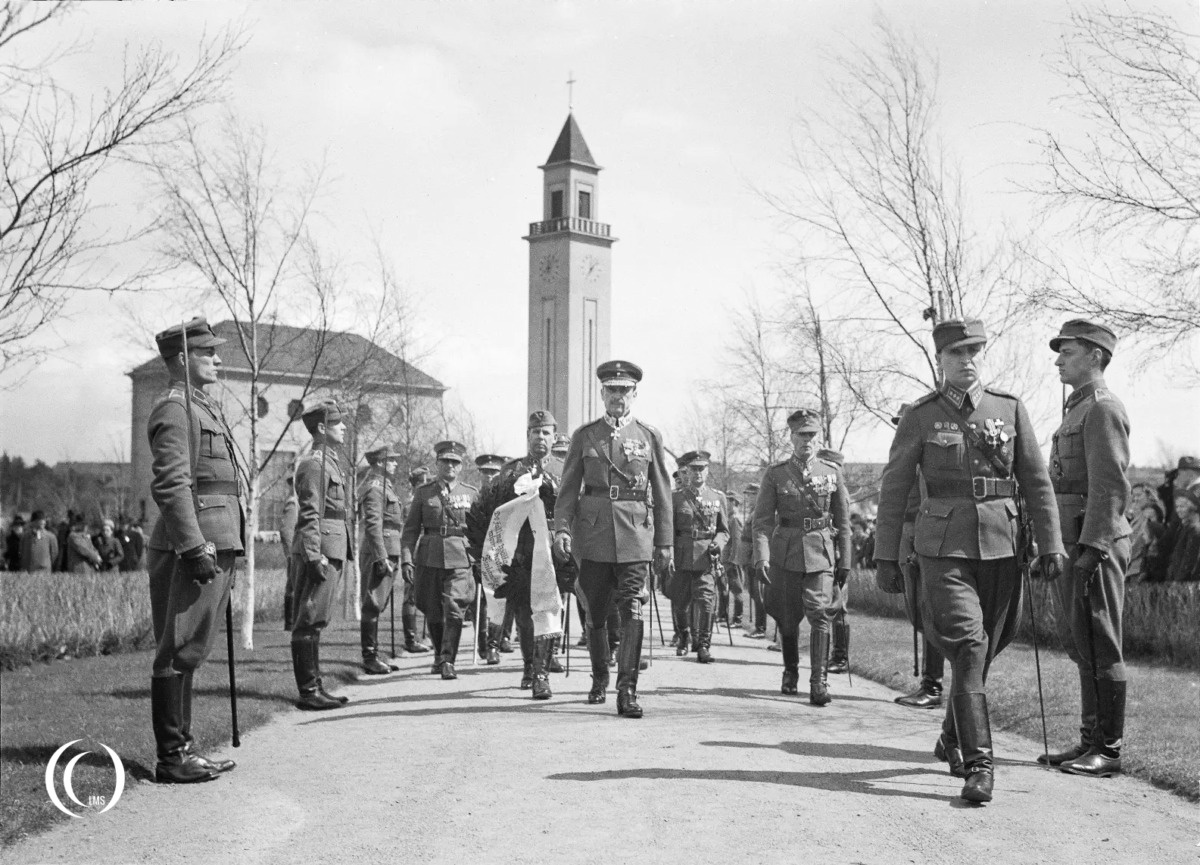
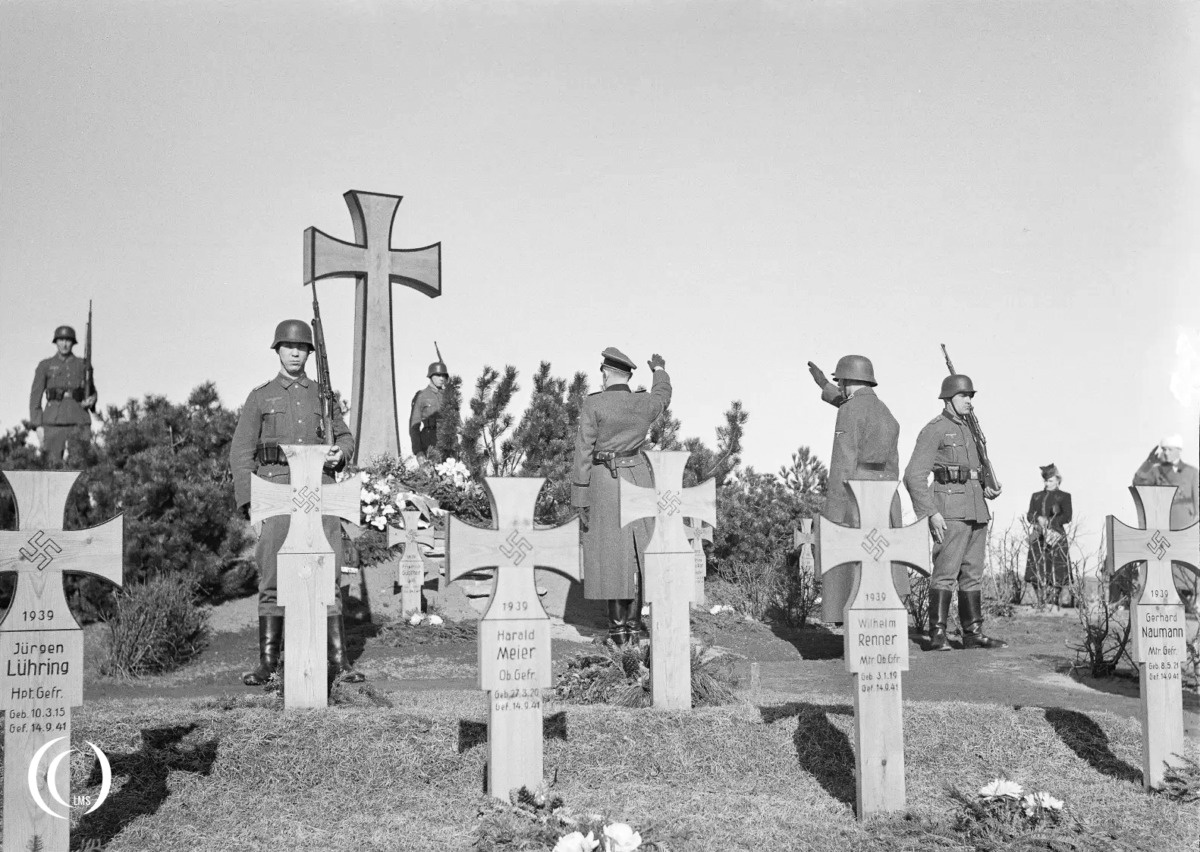
During the German-Finnish Alliance between 1941 and 1944, the ceremonies at Hietaniemi Cemetery were an important factor to mark their relation. In those days the German war graves were located on the eastern part of the Heroes’ Place square with a larger elevated ceremonial Iron Cross and wooden crosses marking individual graves.
Today the names on the graves in the picture above appear on the memorial stone for the German fallen.
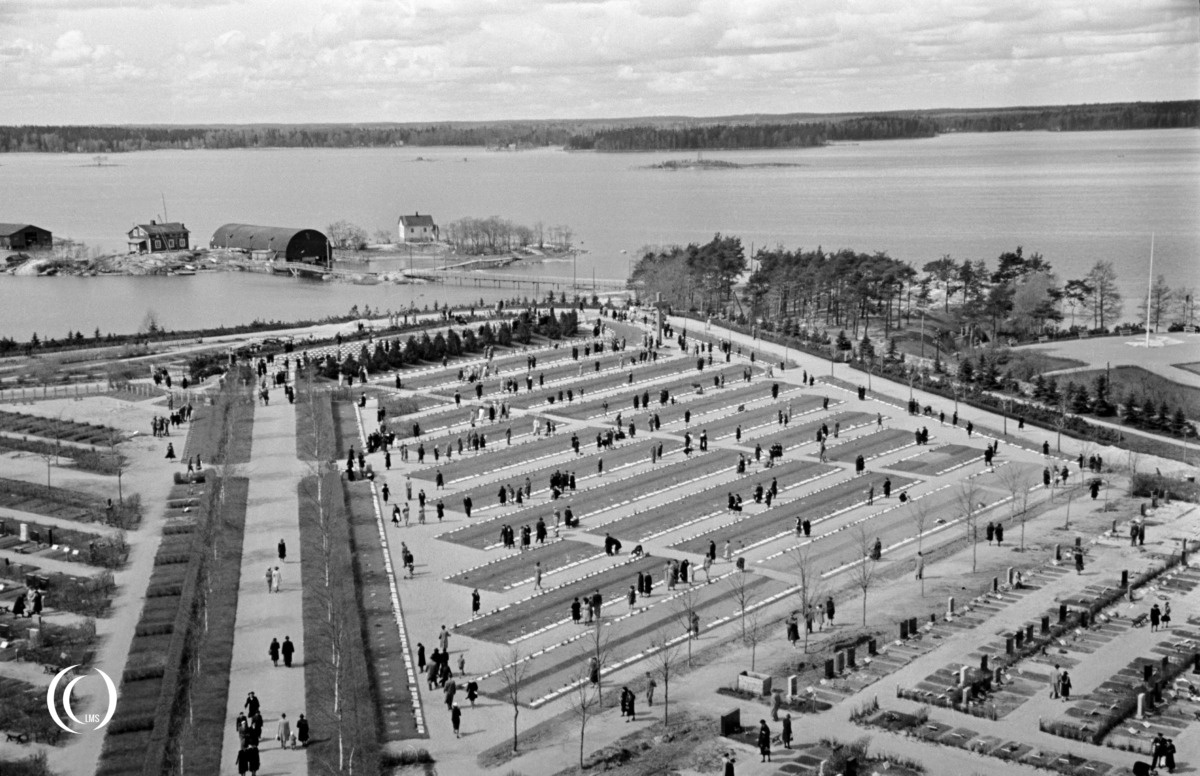
Hietaniemi Area
Inaugurated in 1931, this is the youngest addition to the cemetery. Here you can find the Military War Cemetery, the Veterans Garden and a section (25) with former Finnish presidents and other statesmen.
War Cemetery
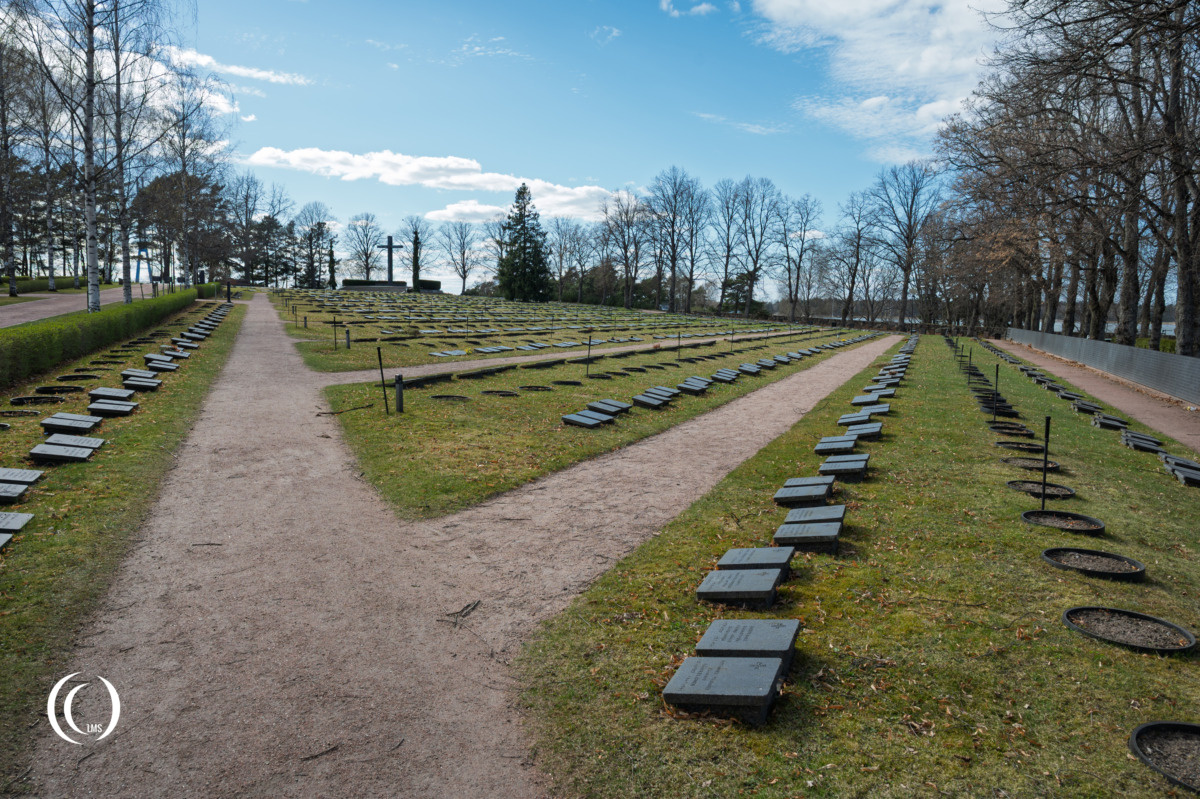
Located at the most western part of the Hietaniemi Area is the War Cemetery with the graves of soldiers from the Helsinki region, who fell during the Winter War (1939–1940), the Continuation War (1941–1944) and the Lapland War (1944–1945). A Memorial Wall contains the names of 730 Helsinki-born fallen soldiers whose remains were never found. From here the faintly sloped cemetery grounds lead you up to the Heroes’ Place, a large square with the Heroes’ Cross and the tombs of the unknown soldier and Field Marshal C. G. E. Mannerheim, Commander-in-chief of the Finnish Defence Forces during World War Two.
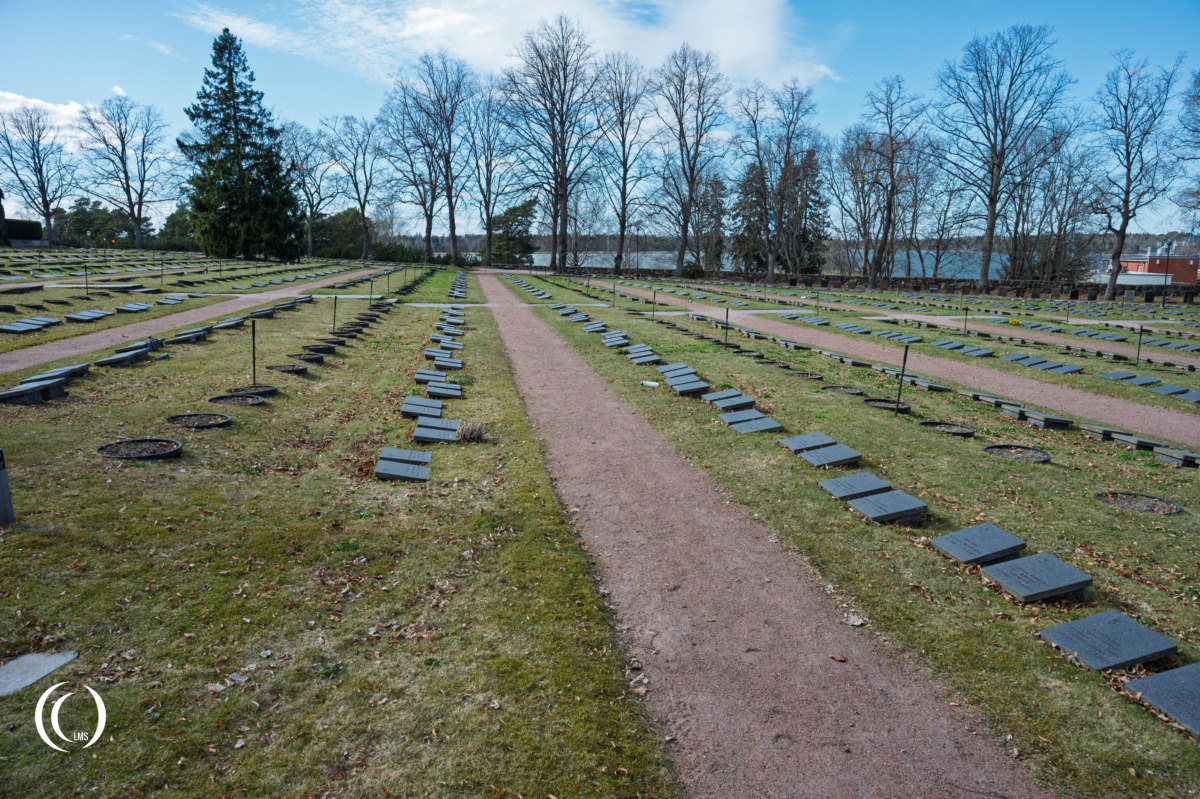
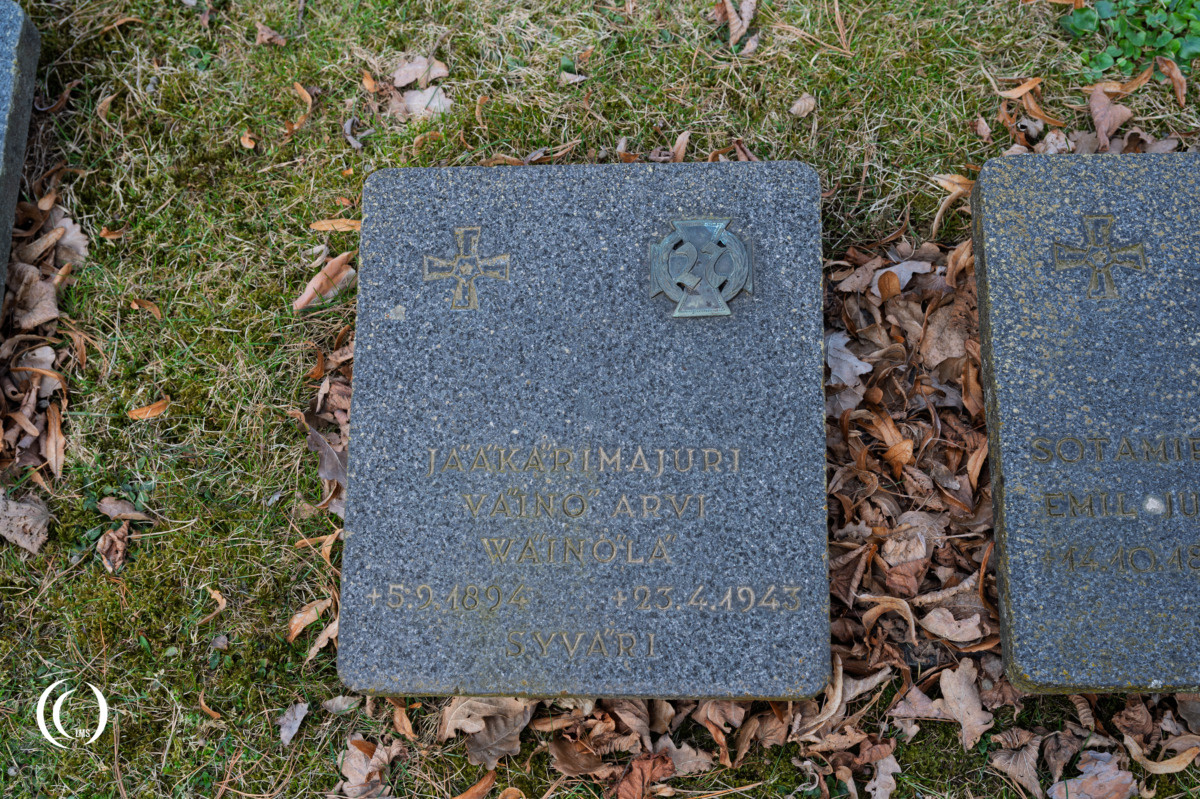
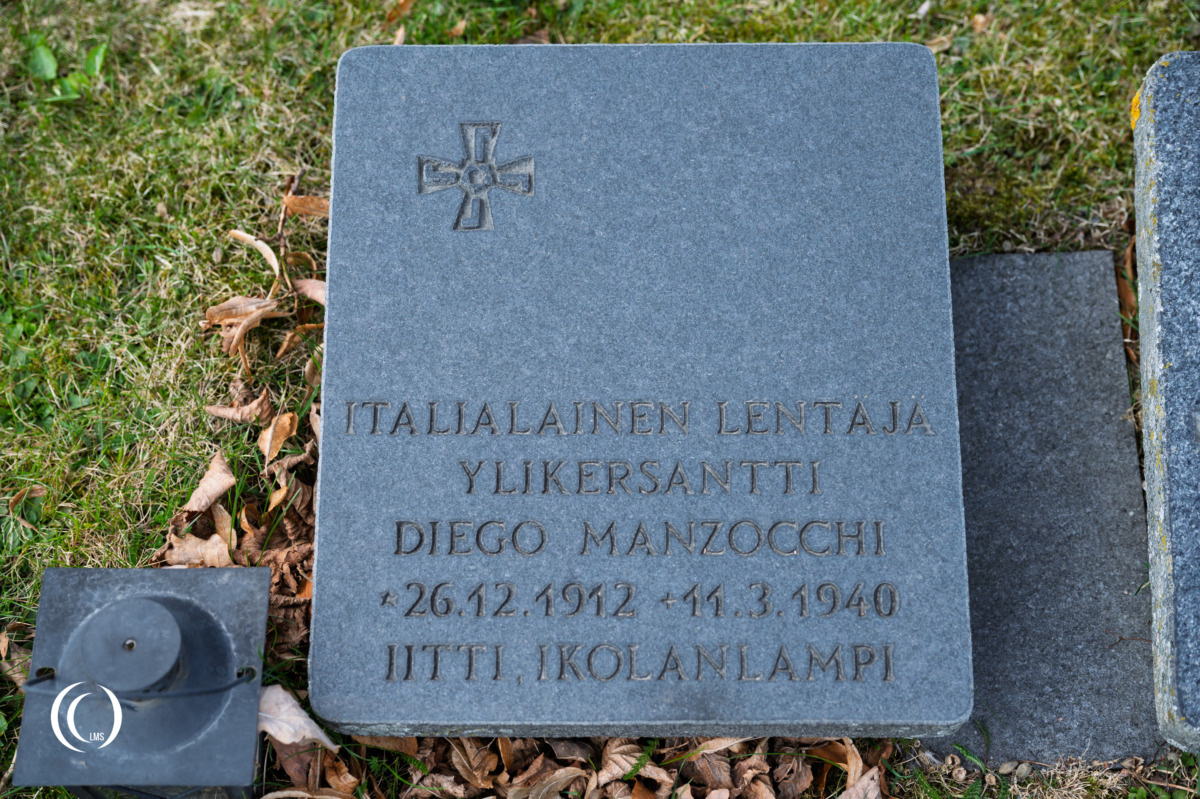
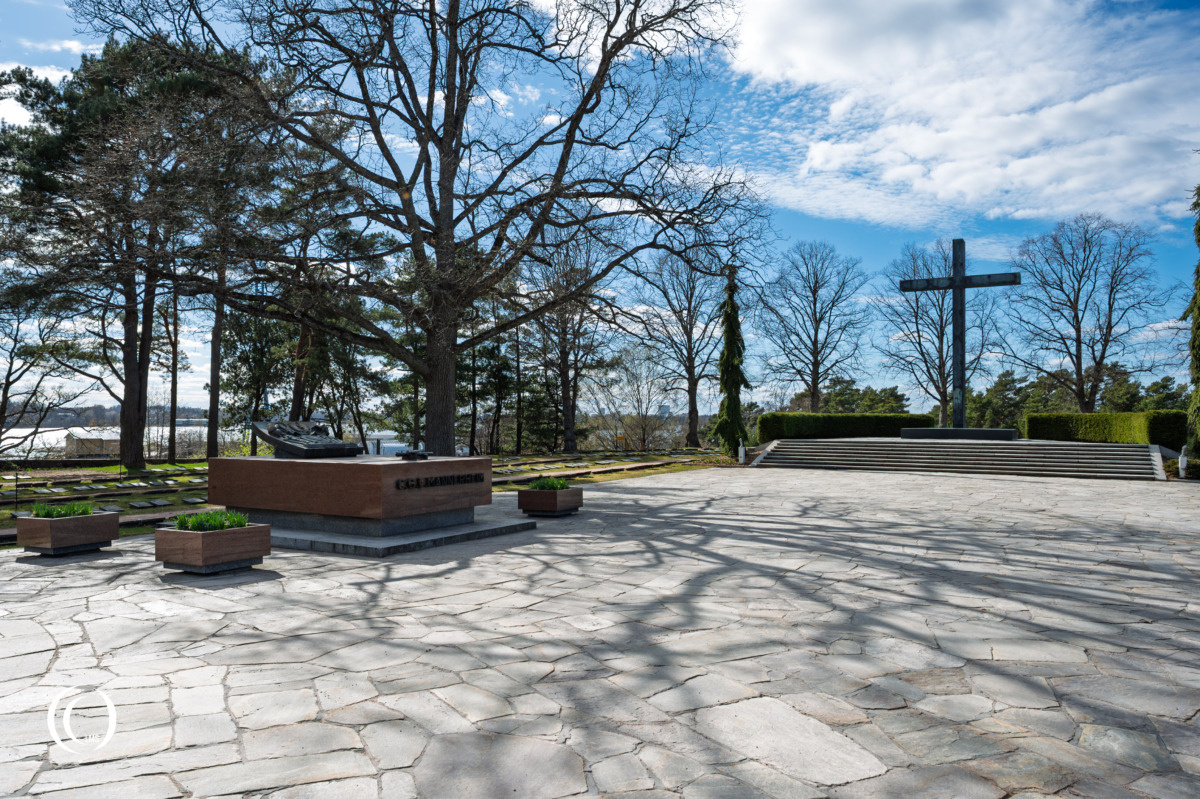
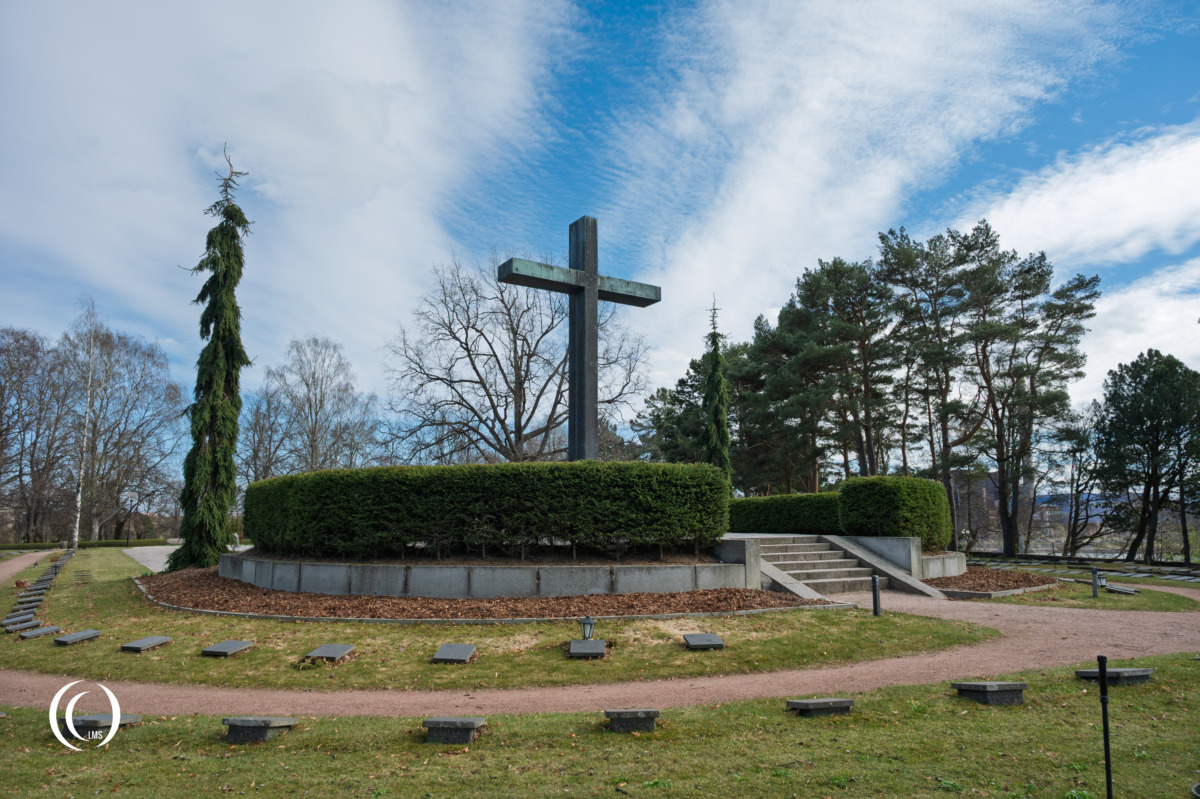
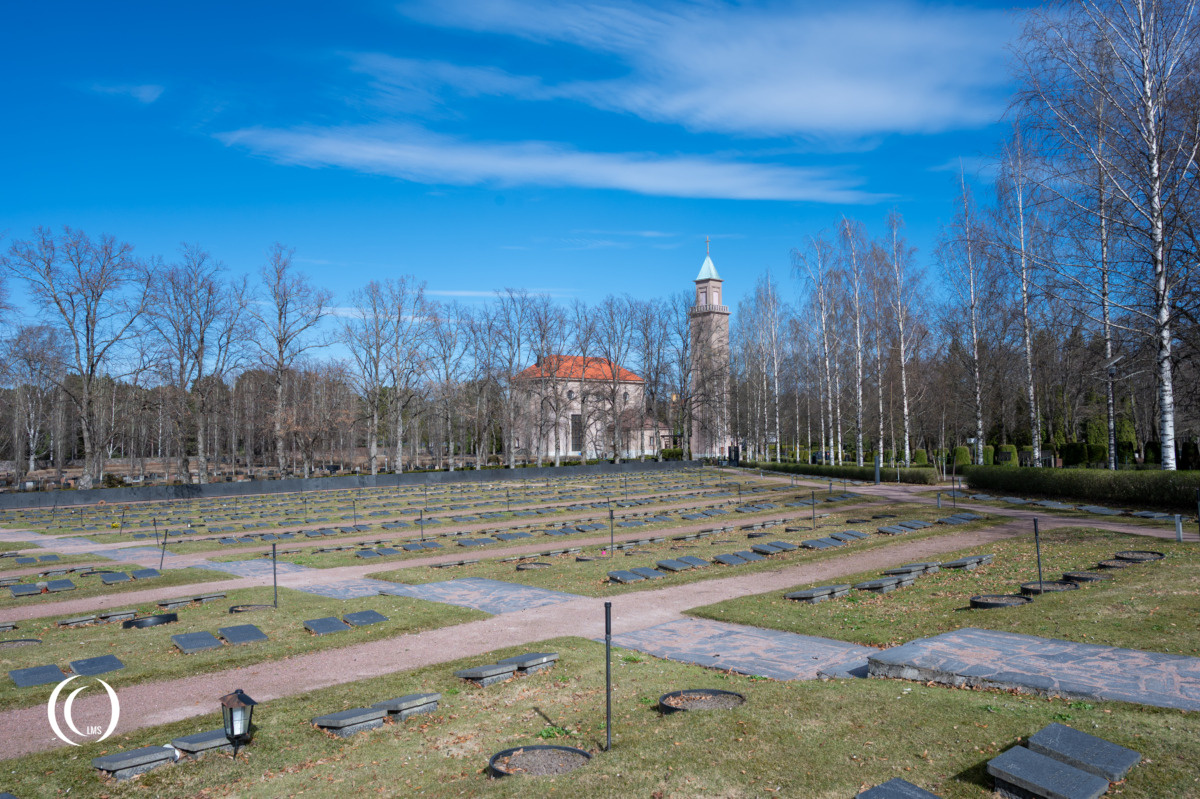
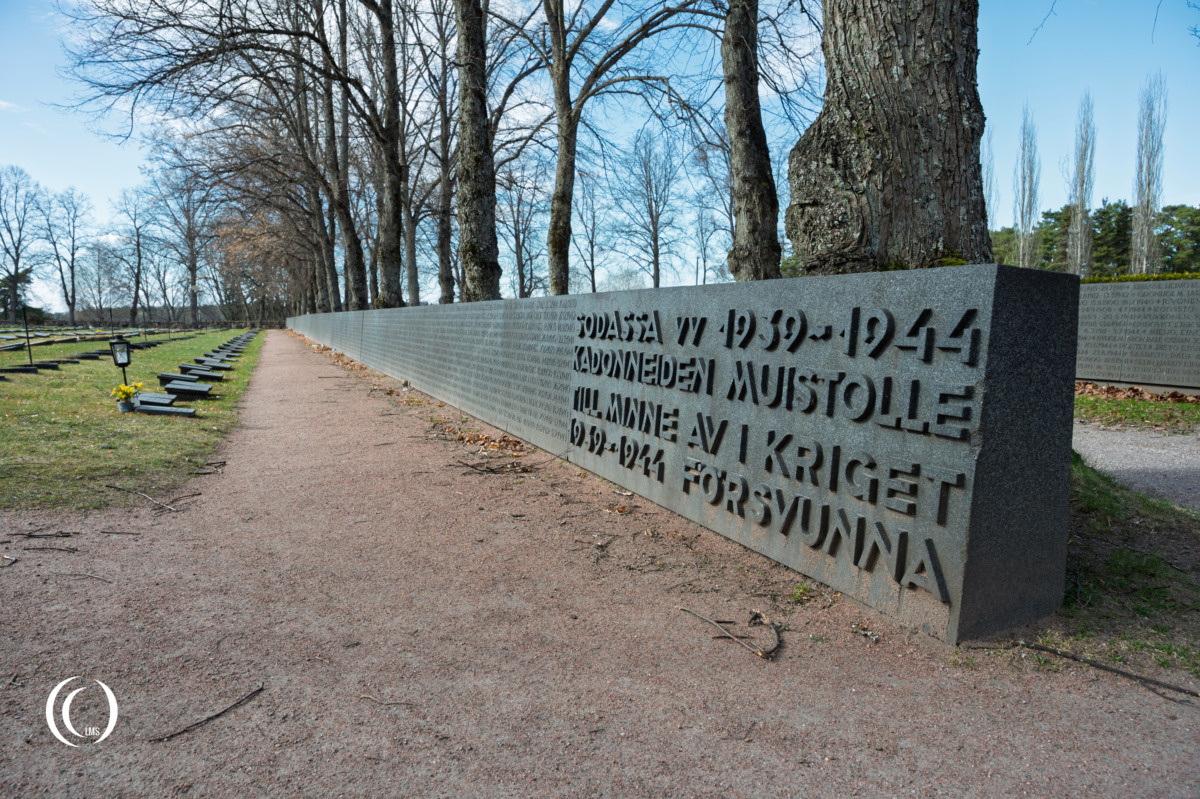
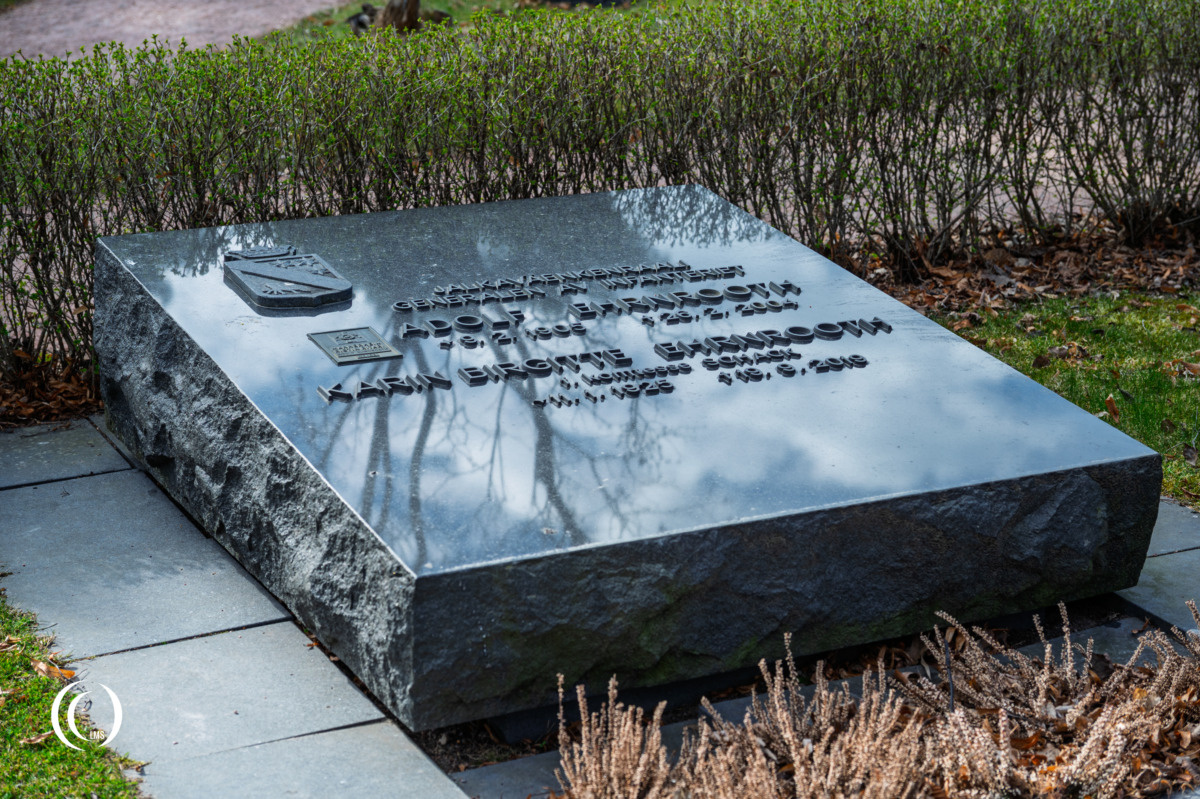
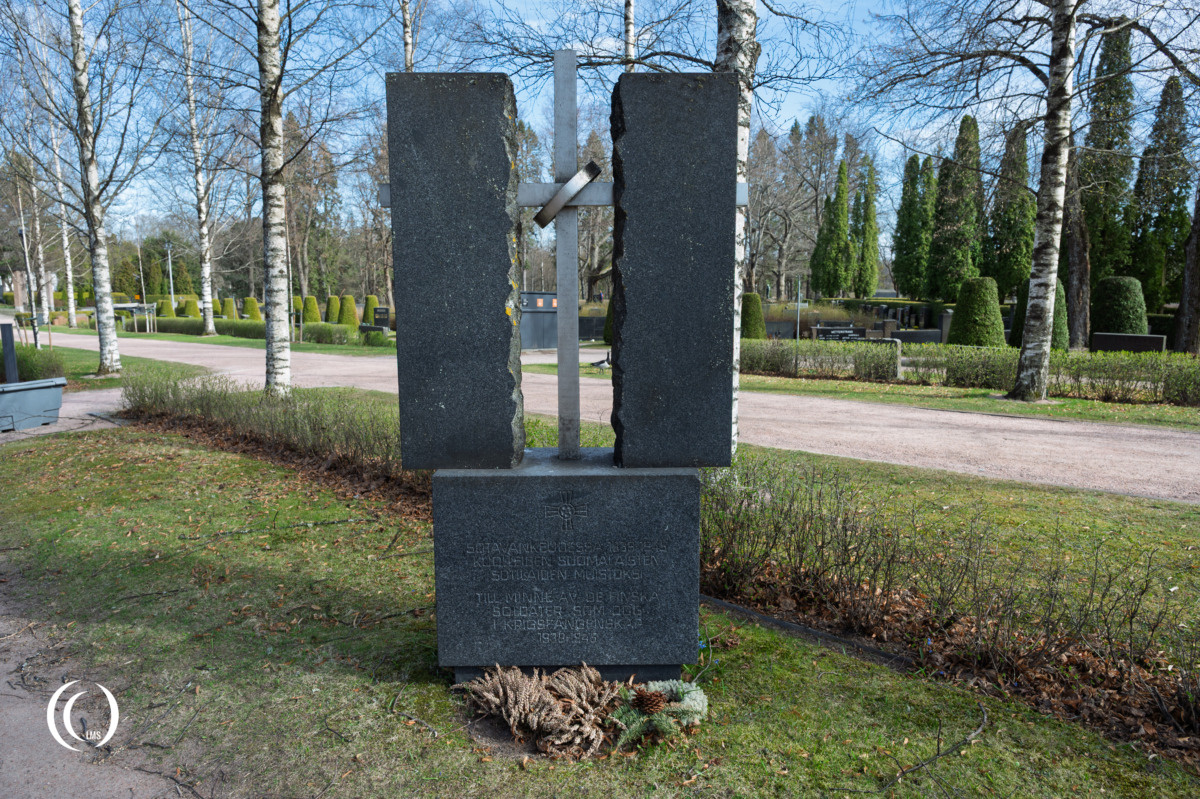
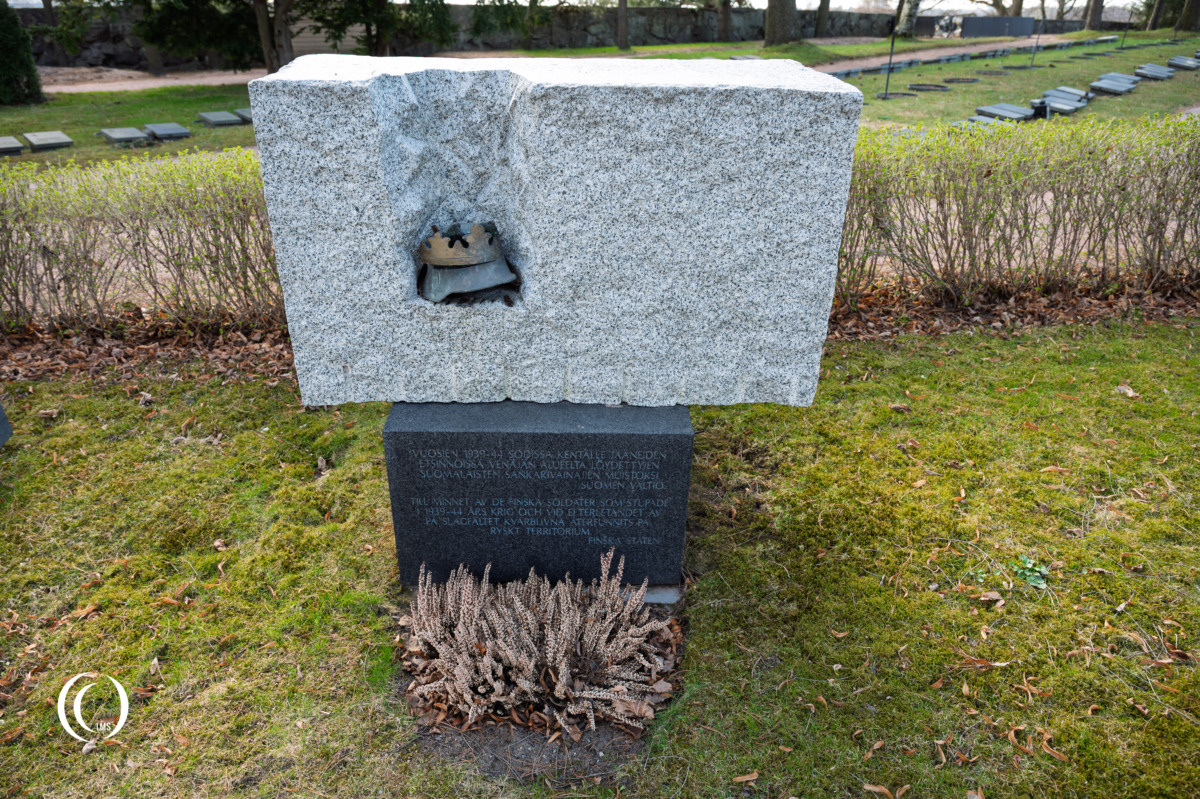
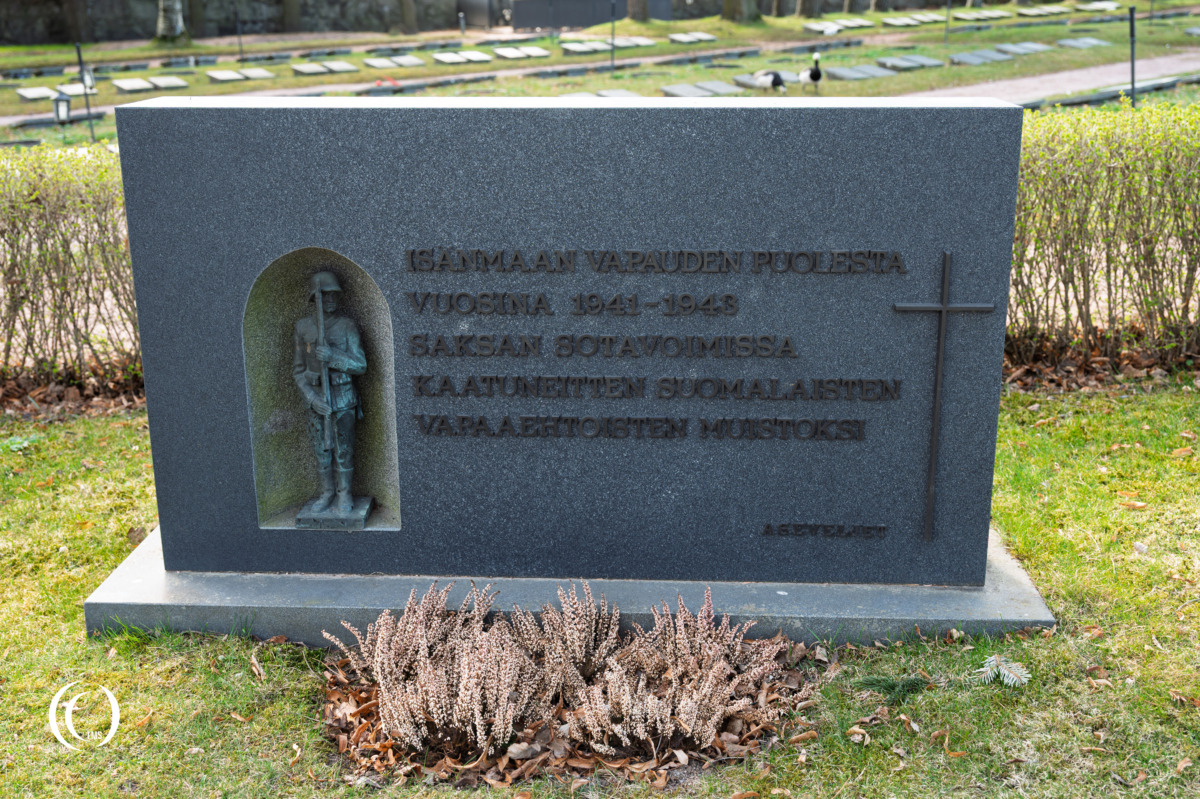
In the surrounding area various monuments can be found to commemorate the fallen.
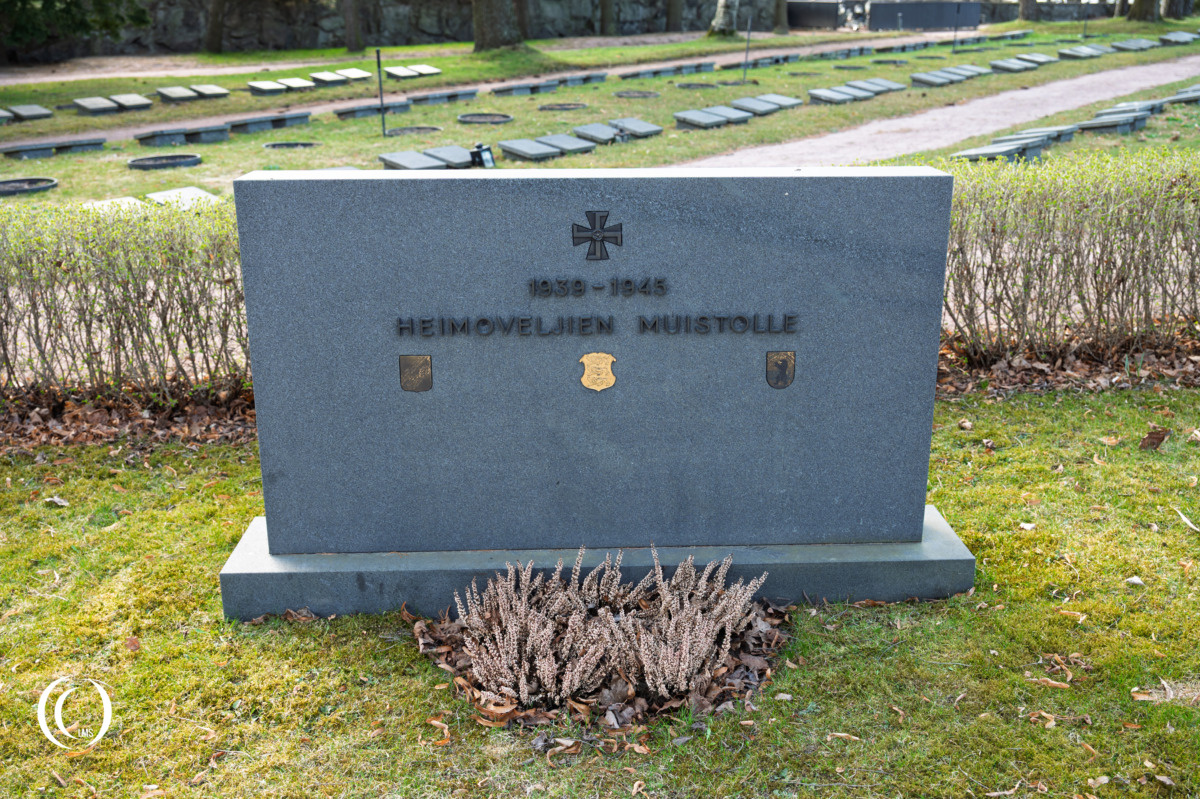
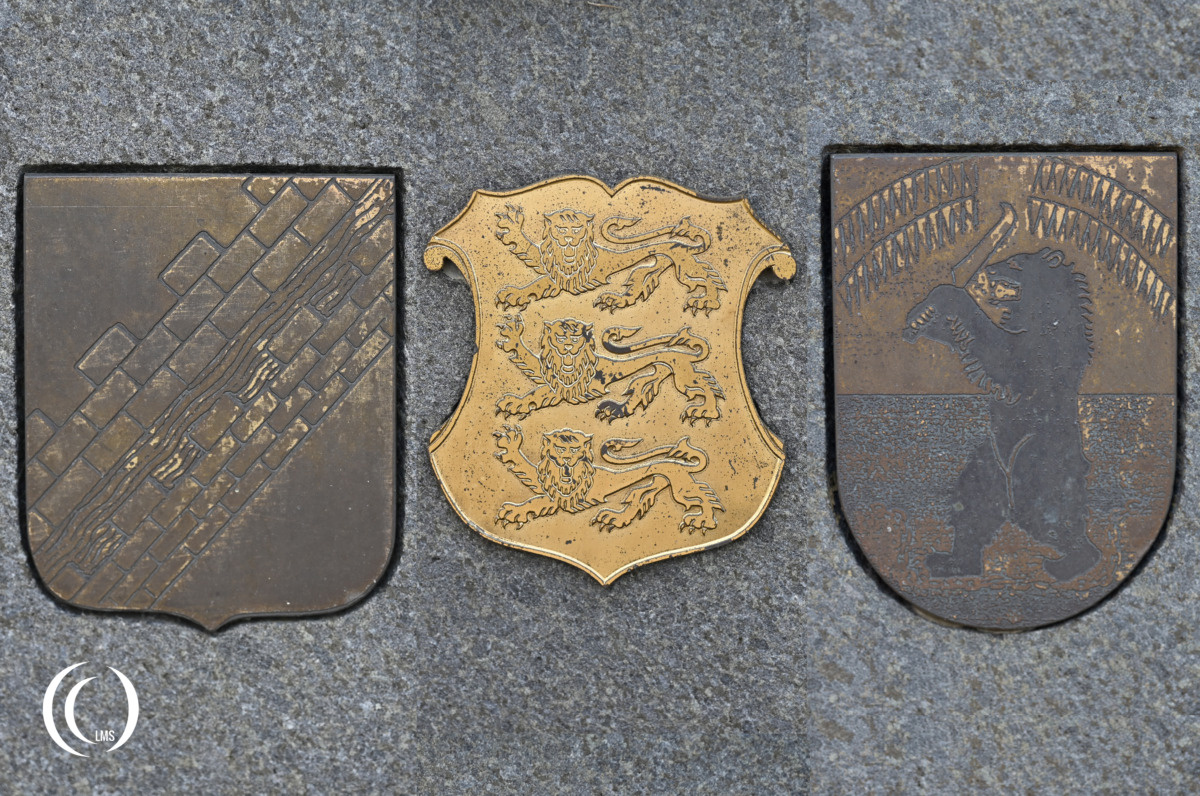
The Brothers-in-Arms Memorial commemorates the volunteers from Finland, Estonia, and Karelia who fought together during the Second World War, reflecting the idea of heimoveljet (“kindred brothers”); closely related Finnic peoples united in a common struggle. From left to right the three coats-of-arms represent the Cross of Liberty (Estonia’s highest military decoration and symbol of Estonia’s fight for independence and of the Estonian volunteers who served in Finland), the Coat of Arms of Finland and the Coat of Arms of Karelia (representing the Karelian volunteers and the Finno-Karelian kindred peoples (heimokansat) who fought with Finland).
German War Graves
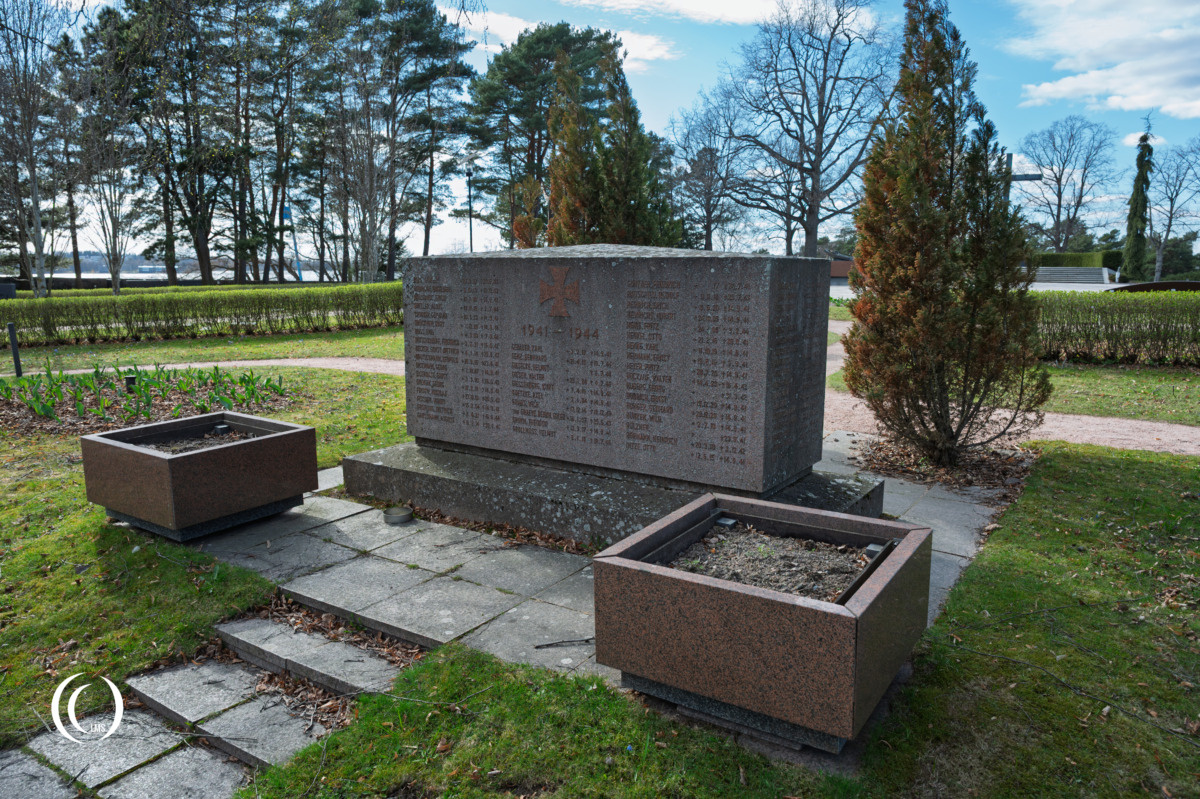
Opposite the Heroes’ Cross bordering the Heroes’ Place to the east is a small German War Graves section. A large memorial stone contains the names of 121 German soldiers fallen between 1941 and 1944.
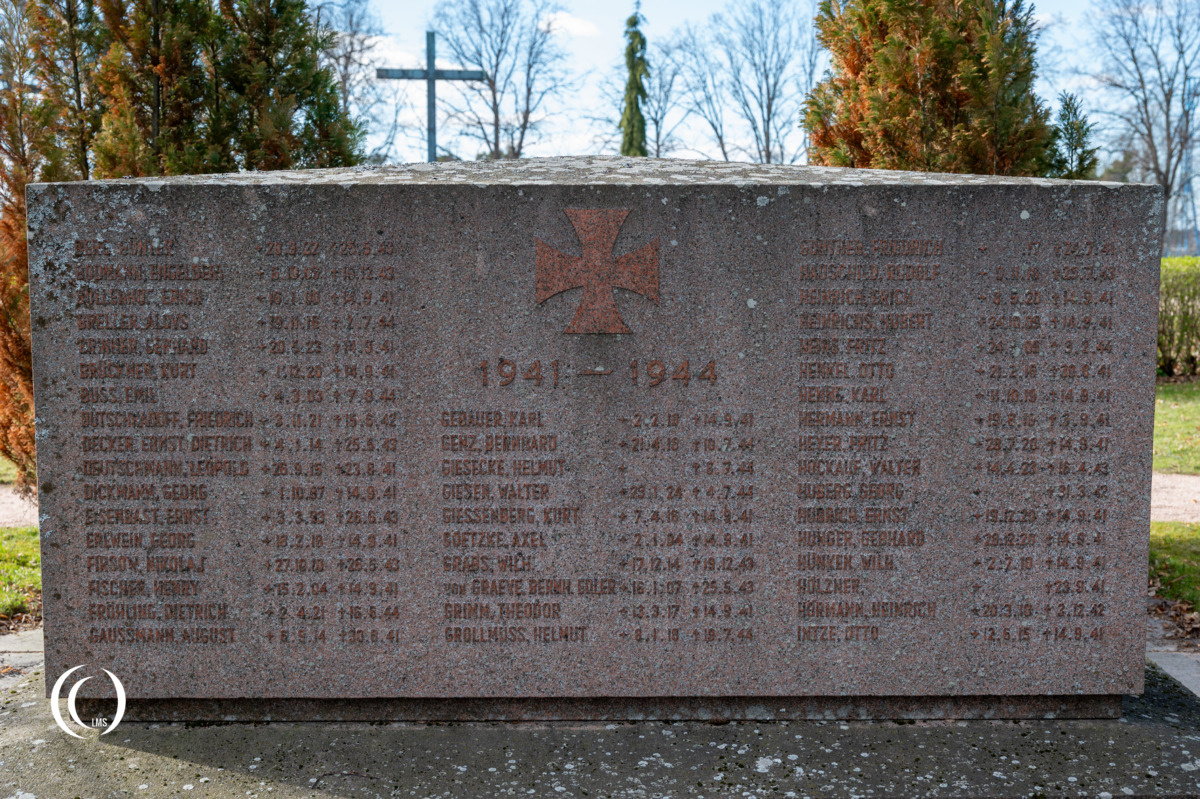
At the bottom of the center column in the picture above is the name of German Fighter Ace and Knights Cross recipient Helmut Grollmuss. During World War Two Grollmuss was credited with 75 aerial victories. He was killed in action over Viipuri, Finland, during a dogfight in his Focke-Wulf Fw 190 A-6 on July 19th 1944.
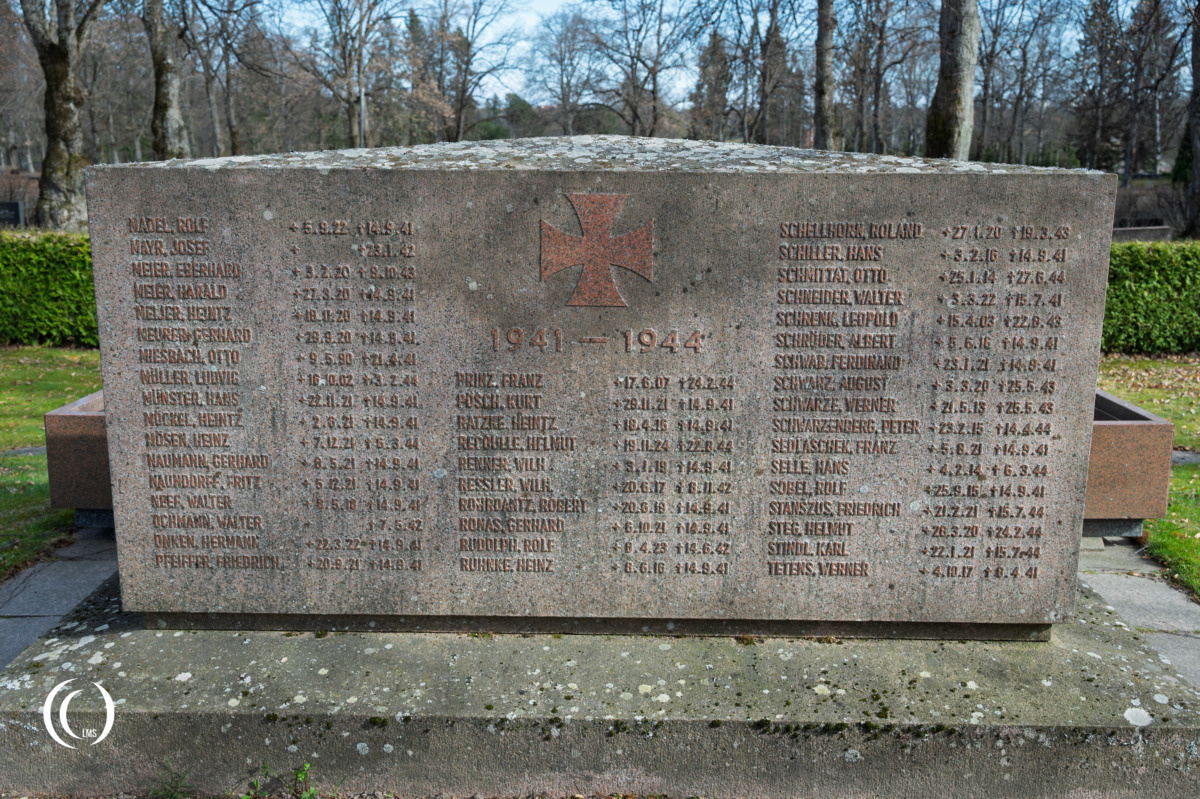
Next to this is a memorial to commemorate 50 fallen members of the German Kriegsmarine who stayed at sea.
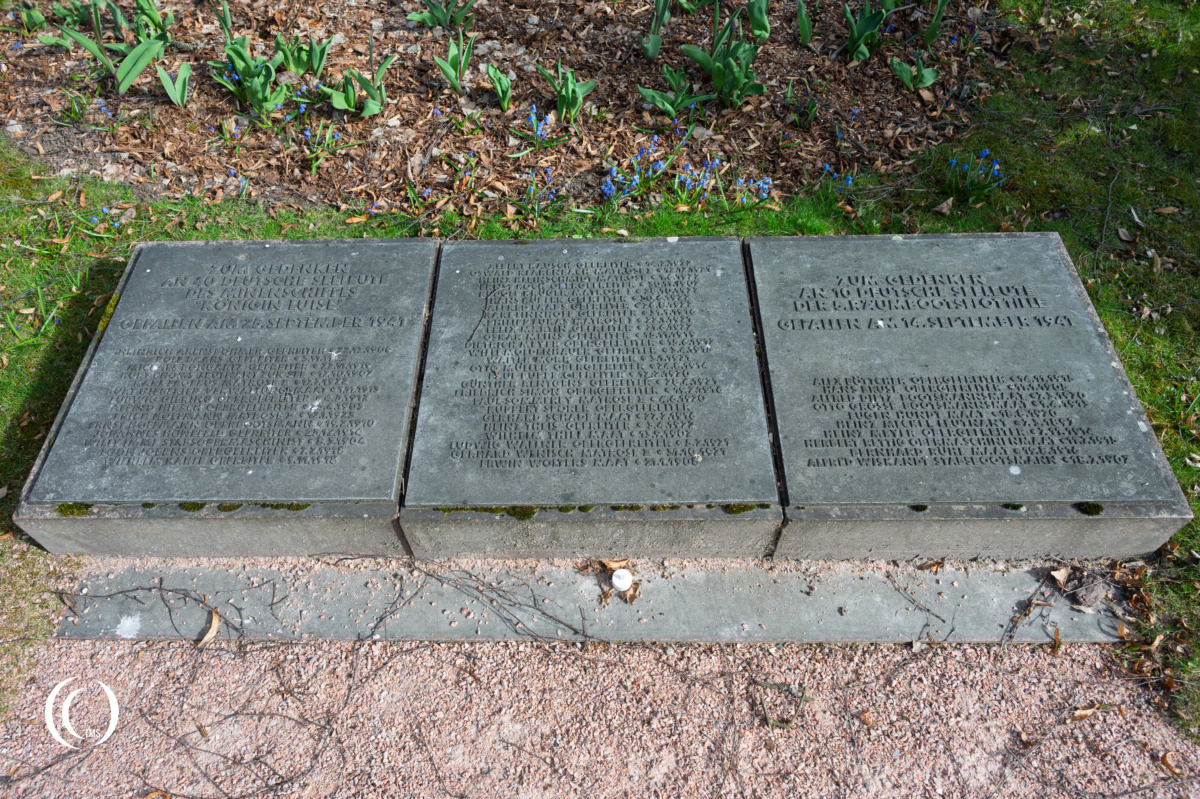
The translated texts on the memorial stones reads:
Left: In memory of the 40 German seamen of Minelayer “Königin Luise”. Fallen on 25 September 1941.
Right: In memory of the 10 German seamen of the 5th Minesweeper Flotilla. Fallen on 14 September 1941.
Veterans garden
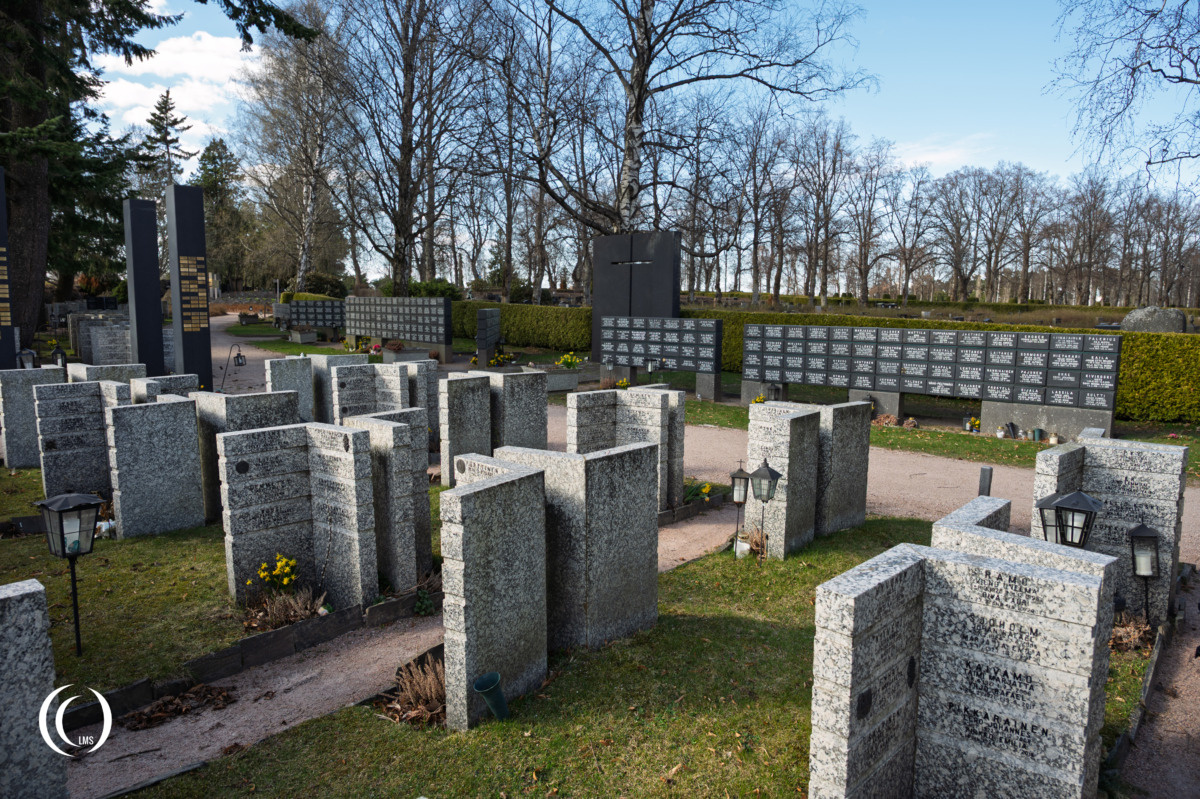
This section holds the remains of Finnish Army veterans from past to present, many of whom fought during World War Two.
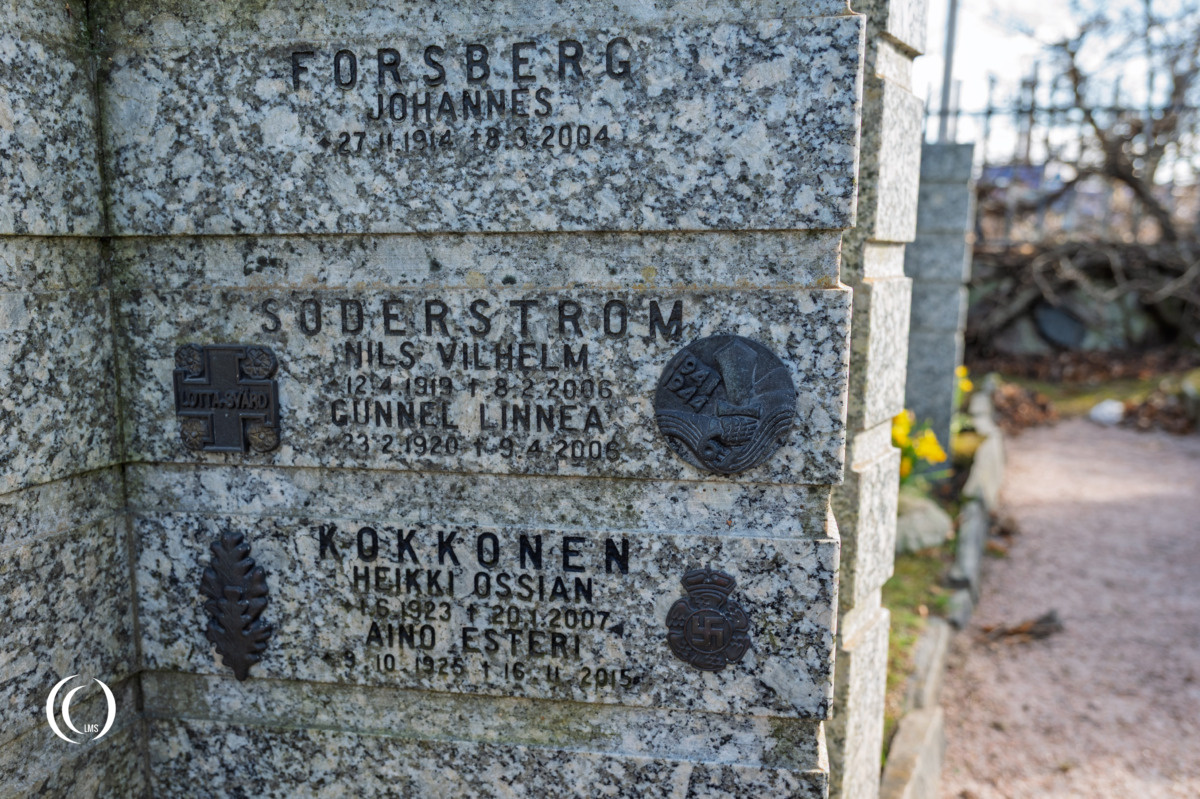
The Lotta-Svärd insignia seen in the picture above marks a member of this Finnish voluntary auxiliary paramilitary organisation for women. Originally formed in 1918 to support the White Guard, it was also active during the Second World War to replace men conscripted into the Finnish Army. The women, called “Lottas” served in various auxiliary tasks in close cooperation with the army and grew to as much as 242.000 in 1944. The organisation was eventually disbanded by the government on 23 November 1944 as part of the peace treaty demands of the Soviet Union.
You can find the insignia on many graves in all the sections of the Hietaniemi Cemetery.
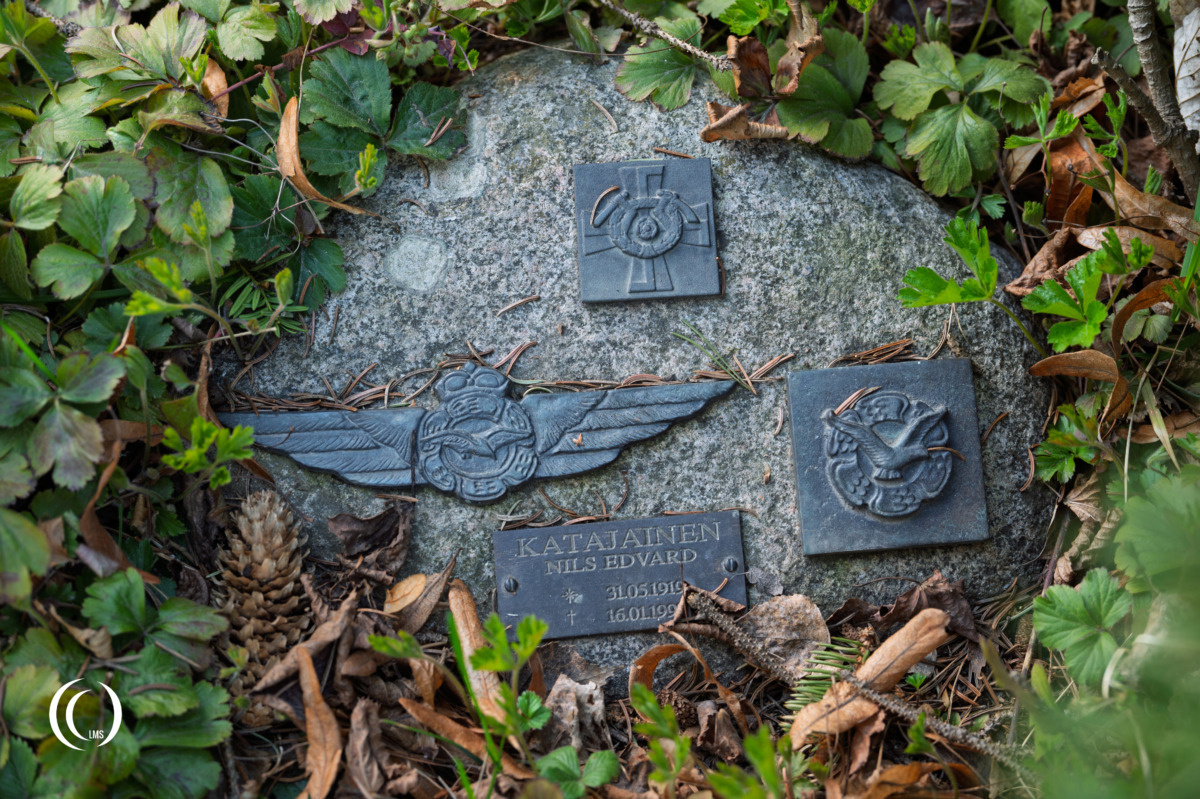
Above: The grave stone of Finnish Fighter Ace and Knight of the Mannerheim Cross Sergeant-Major Nils Edvard Katajainen, who shot down 35 enemy aircraft.
Section 25: Statesmen Graves
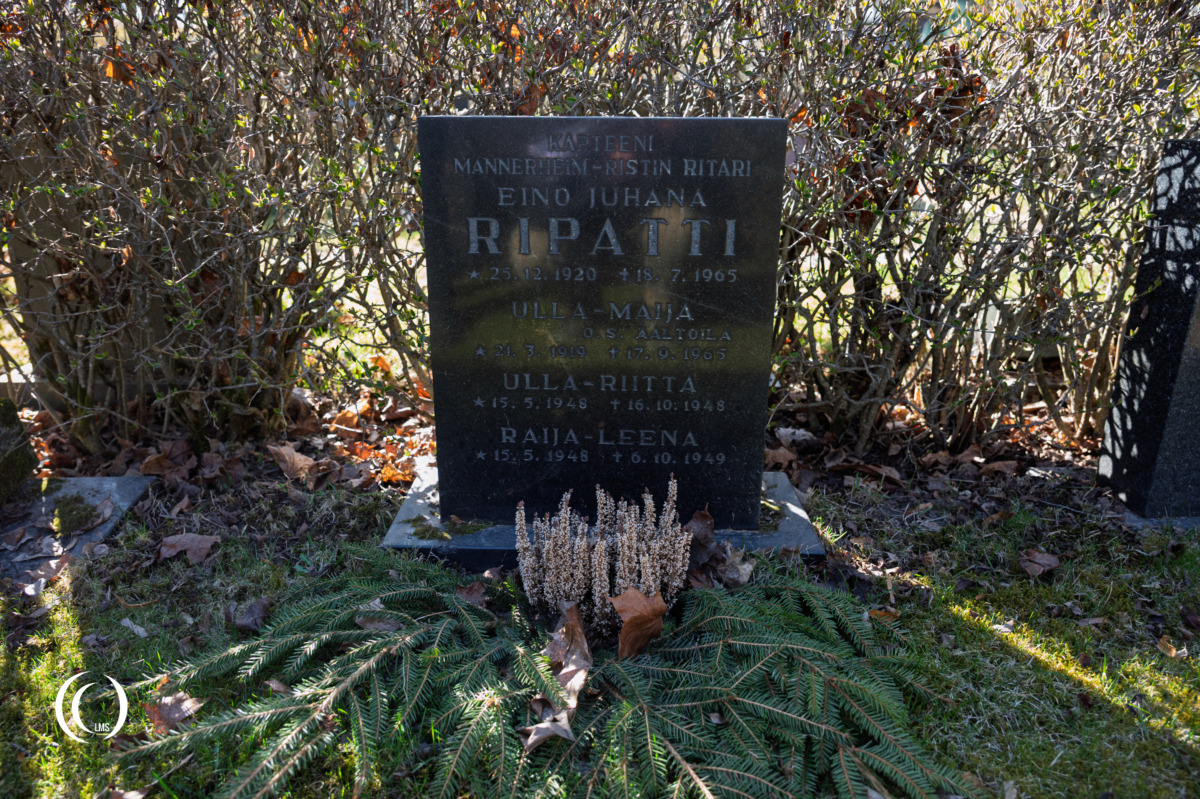
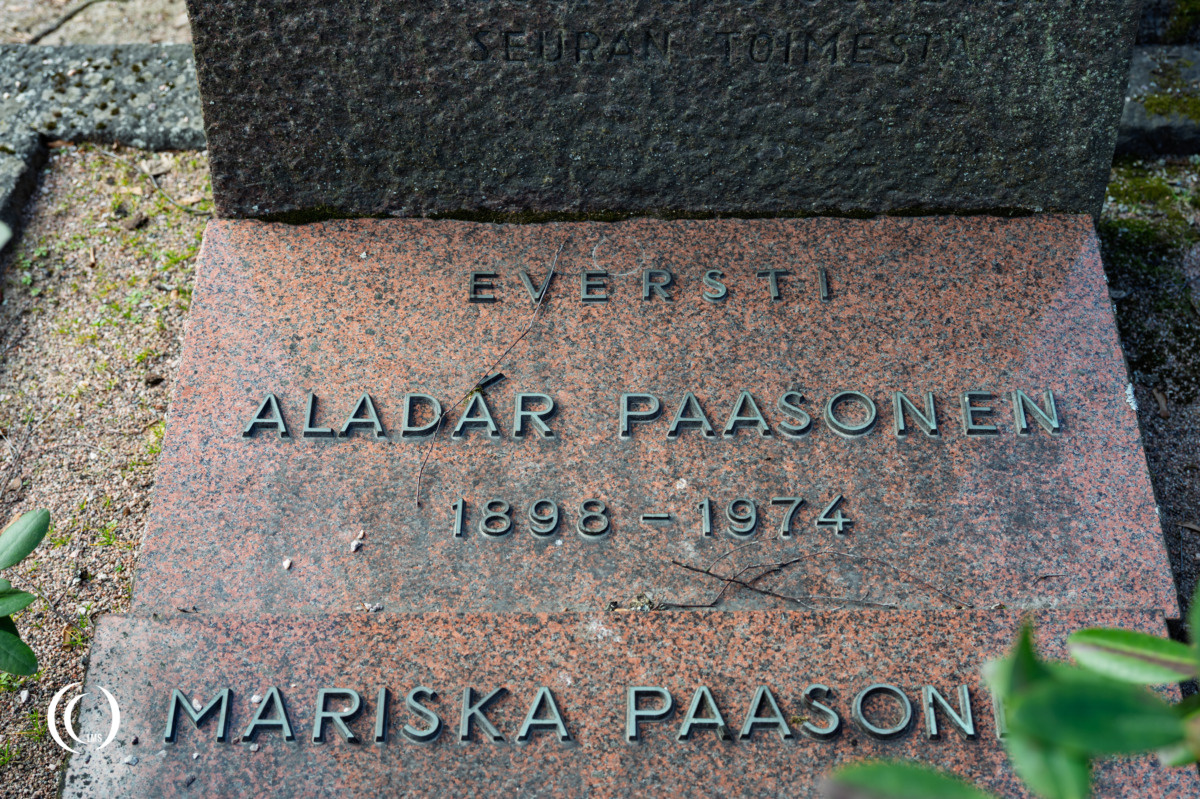
Although section 25 of the Hietaniemi Area is not officially named, it holds most of the graves of former Finnish presidents. The plot is opposite of the New Chapel, right at the entrance.
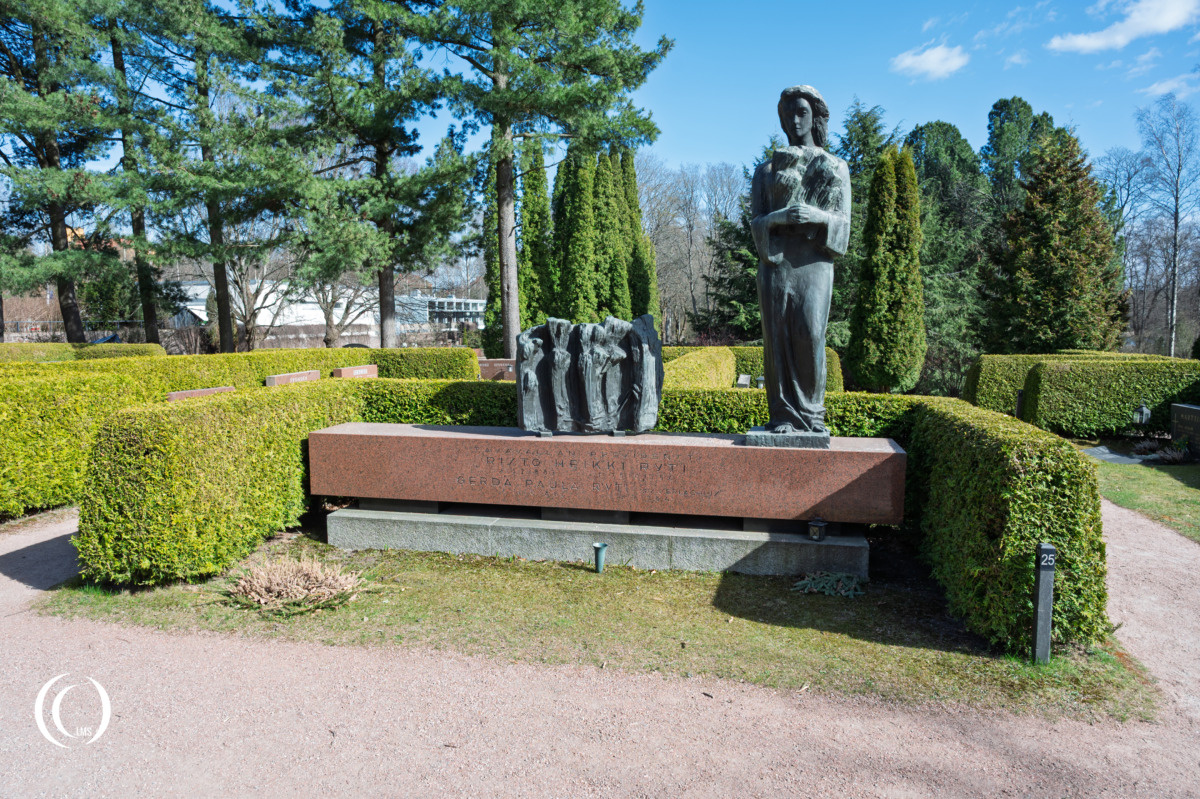
A notable grave in relation to World War Two is that of Risto Heikki Ryti, who was the president of Finland during the Continuation War between 1940 and 1944.
This area also holds the grave of Artillery General Vilho Petter Nenonen, who played a large role in developing the Finnish artillery’s training, equipment, and tactics.
New Cemetery
When it became clear during the 1850s that the cemetery needed to expand, the caretakers of the Parish petitioned the city to use the land next to the Old Cemetery, which was granted in 1858. This extension area, called the New Cemetery, was inaugurated on 4 September 1864.
Civil War Graves 1918
In section 22 of the New Cemetery is a small plot with graves of fallen victims of the Finnish Civil War in 1918.
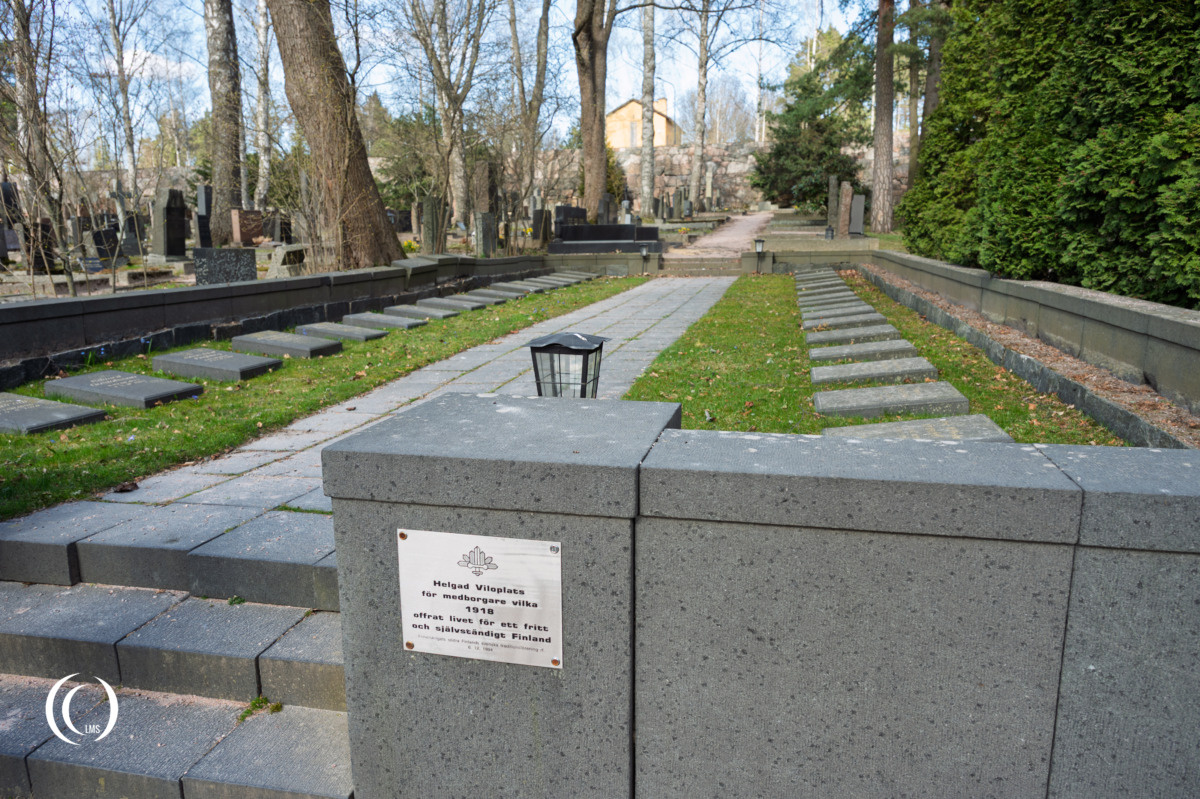
The site serves as a place of burial and memorial, showing the following inscriptions: Burial Area of the Heroes Who Gave Their Lives for Finland’s Freedom and Independence in 1918. In Memory of Those Who Fell in the Civil War of 1918.
Old Cemetery
As the name already suggests, this is the oldest part of the cemetery, from when it was inaugurated on 22 October 1829. Originally it was called Lapinlahti Cemetery, but this changed when the cemetery was expanded in the 1850s and later the 1920s. This section also houses Artists’ Hill with graves of prominent Finnish artists.
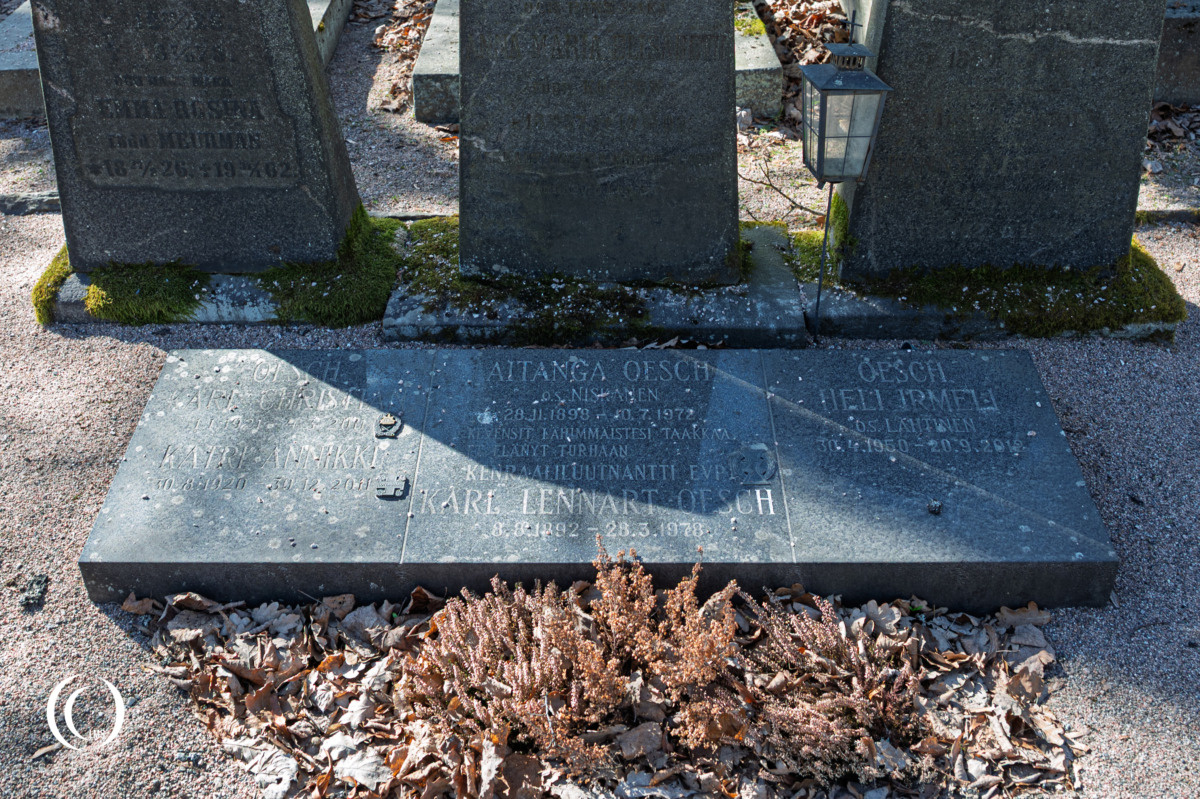
A highly notable grave in this section is that of Lieutenant-General Karl Lennart Oesch (1892-1978), one of Finland’s leading commanders during World War Two and by many seen as the savior of Finland during the 1944 defensive campaign against the Soviet Union. Under his command the Finnish Forces managed to stop the advancing Soviet Red Army at Tali-Ihantala and break off their final offensive, which earned him the Mannerheim Cross.
Despite his achievements, Oesch also became a scapegoat under Soviet pressure to surrender him as a war criminal. In 1946 he was sentenced to prison for having encouraged the killings of 17 Soviet prisoners of war. In later years Oesch was dropped from the list of invitees for the annual Finnish independence ceremonies and even denied a state funeral when he died in 1978.
Finnish Guard Cemetery
Located on the Lapinlahti side, at the south side of the Old Cemetery and west of the Orthodox and Islamic Cemeteries, is the Cemetery of the Finnish Guard, or in Finnish Suomen Kaartin Hautausmaa. Founded by the Guard’s own parish, it was inaugurated in 1833 as the final resting place for members of the Finnish Guard and the Naval Battalion. Today the historic cemetery is part of the Hietaniemi Cemetery and reserved for the descendants of members of the Guard parish and the White Guard Regiment.
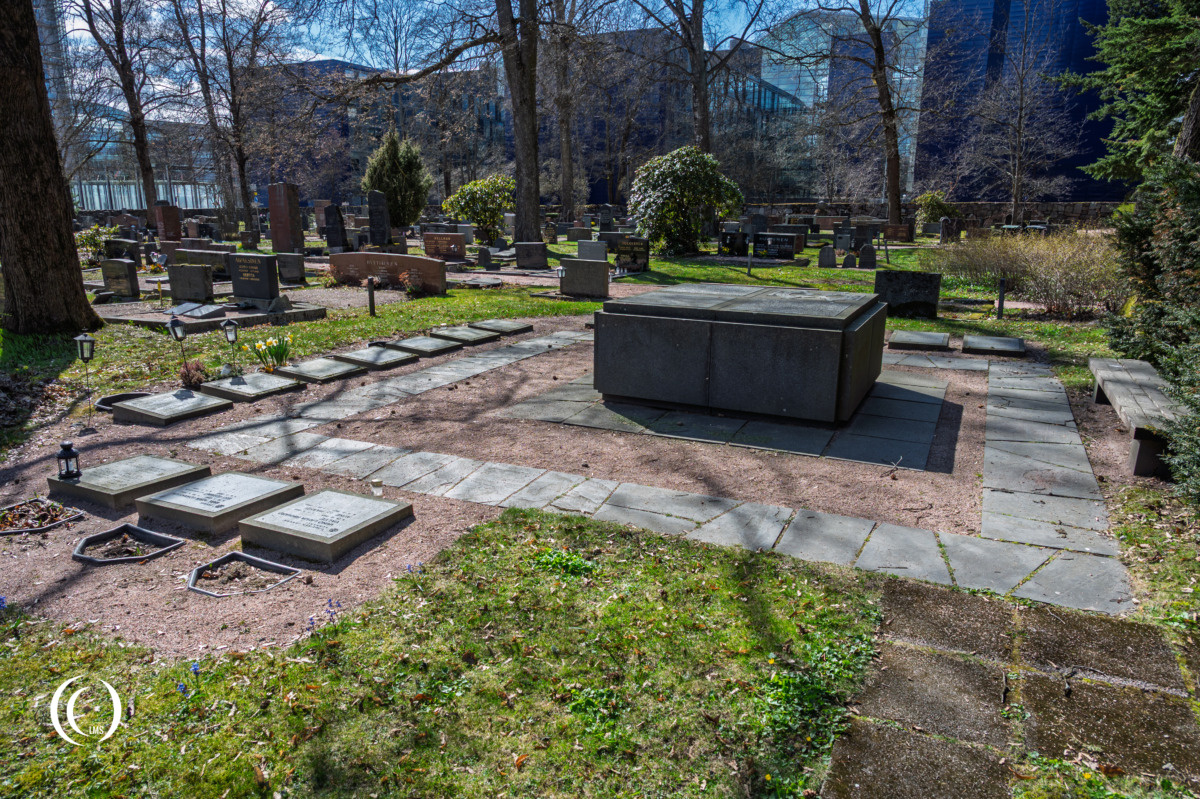
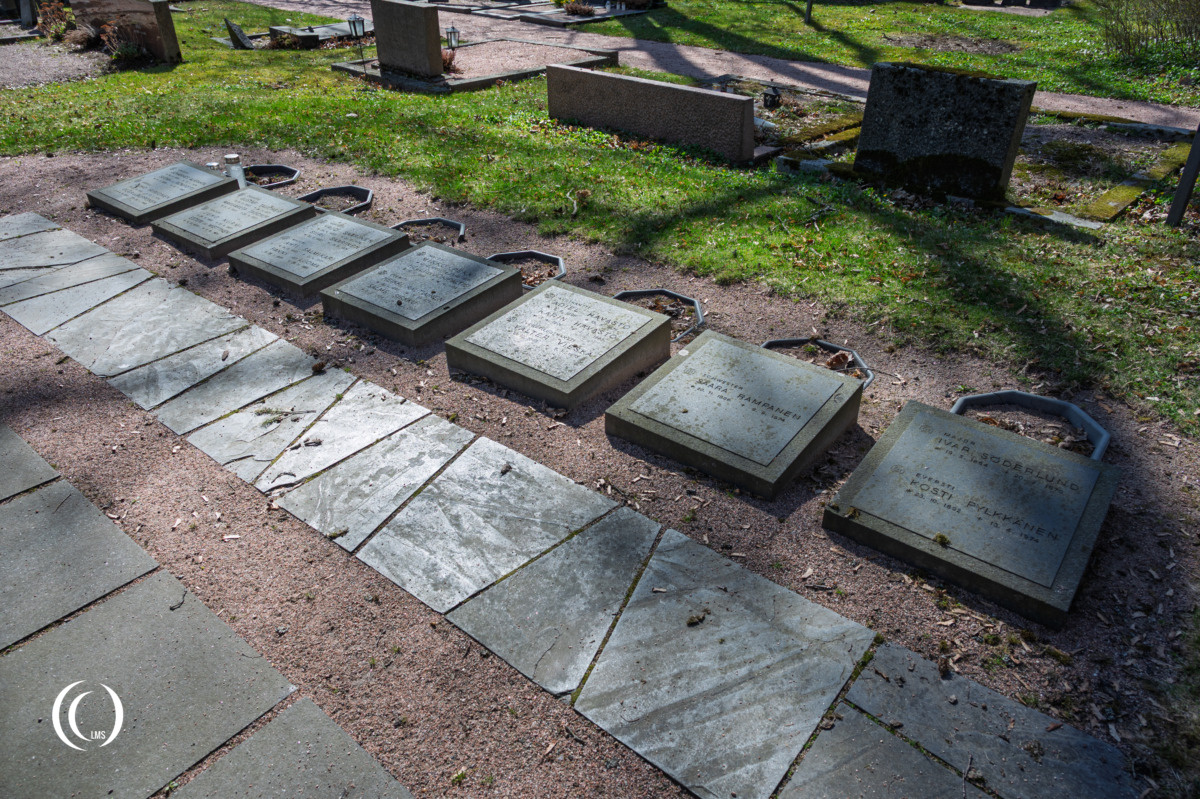
There is also a small section with graves of members of the 27th Jaeger Battalion and a Jaeger Memorial. This unit, that was officially called the Royal Prussian 27th Jäger Battalion (German: Königlich Preussisches Jägerbataillon Nr. 27, Finnish: Kuninkaallinen preussilainen jääkäripataljoona 27), was a Finnish volunteer Jäger Battalion of the German Imperial Army during the first World War. As Finland was under Russian Imperial rule, these men were secretly trained from as early as February 1915 and saw action on the German Eastern front between 1916 and 1918.
The experienced men of the Jaeger Battalion who joined the ranks of the White Guard Regiment, would play a decisive role during the Finnish Civil War in 1918 to secure the country’s independence.
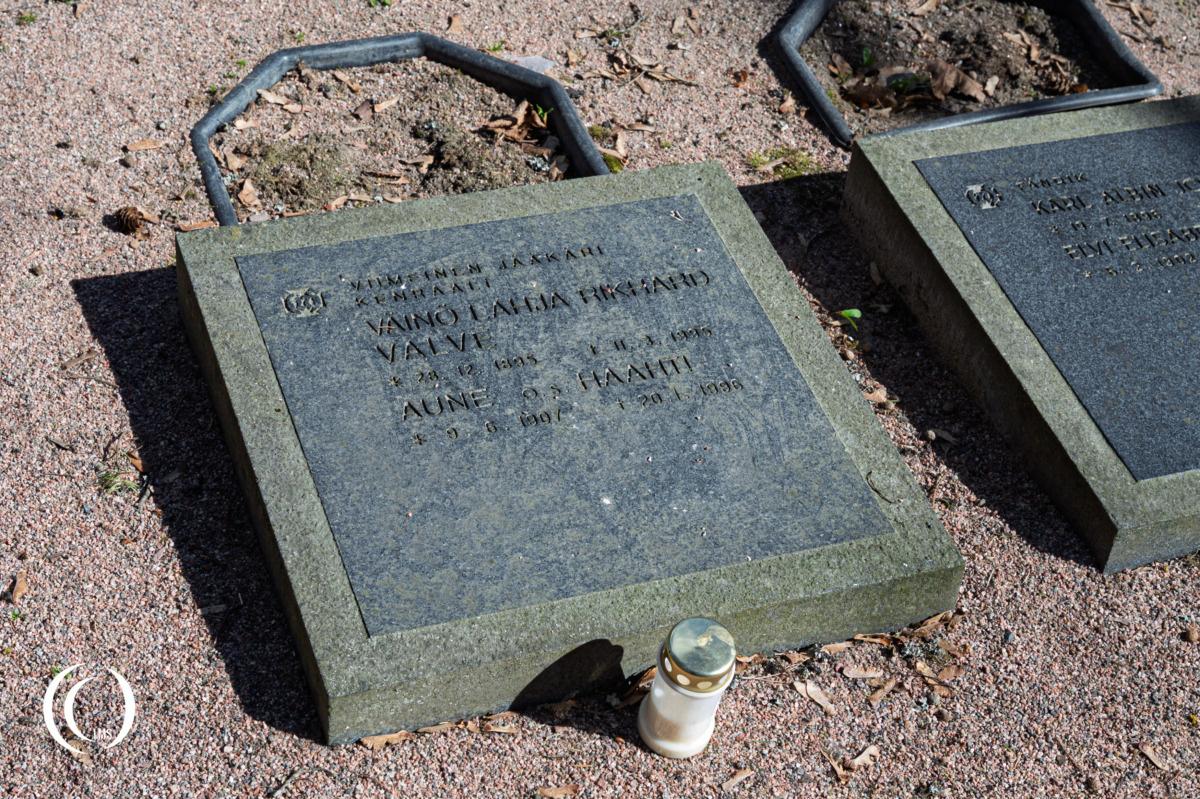
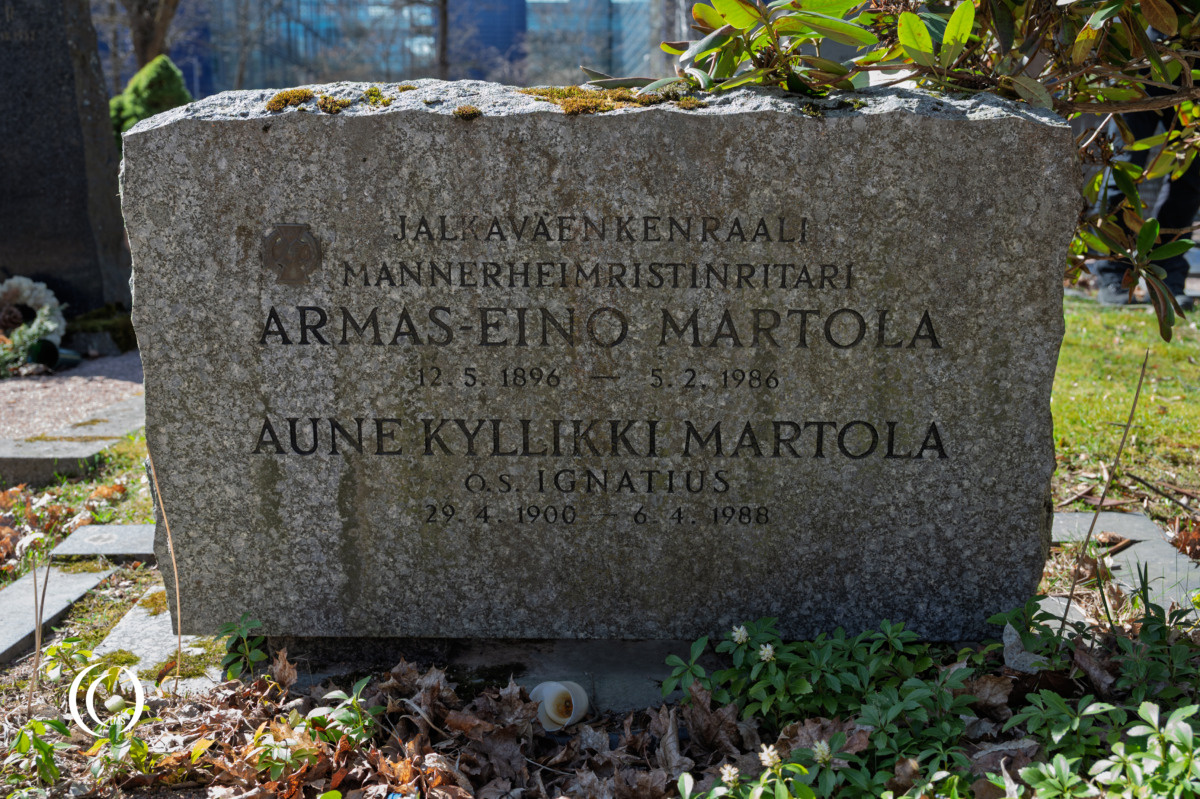
General Väinö Lahja Rikhard Valve was the last living member of the original Royal Prussian 27th Jäger Battalion.
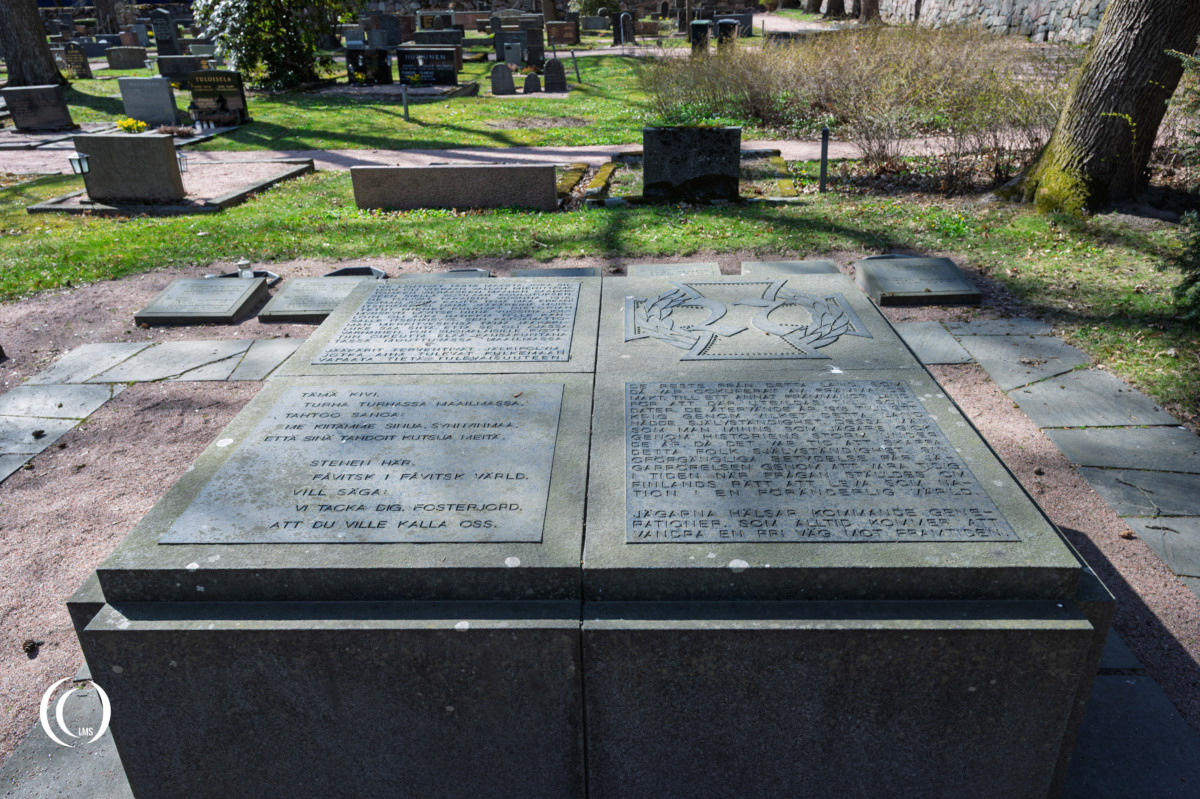
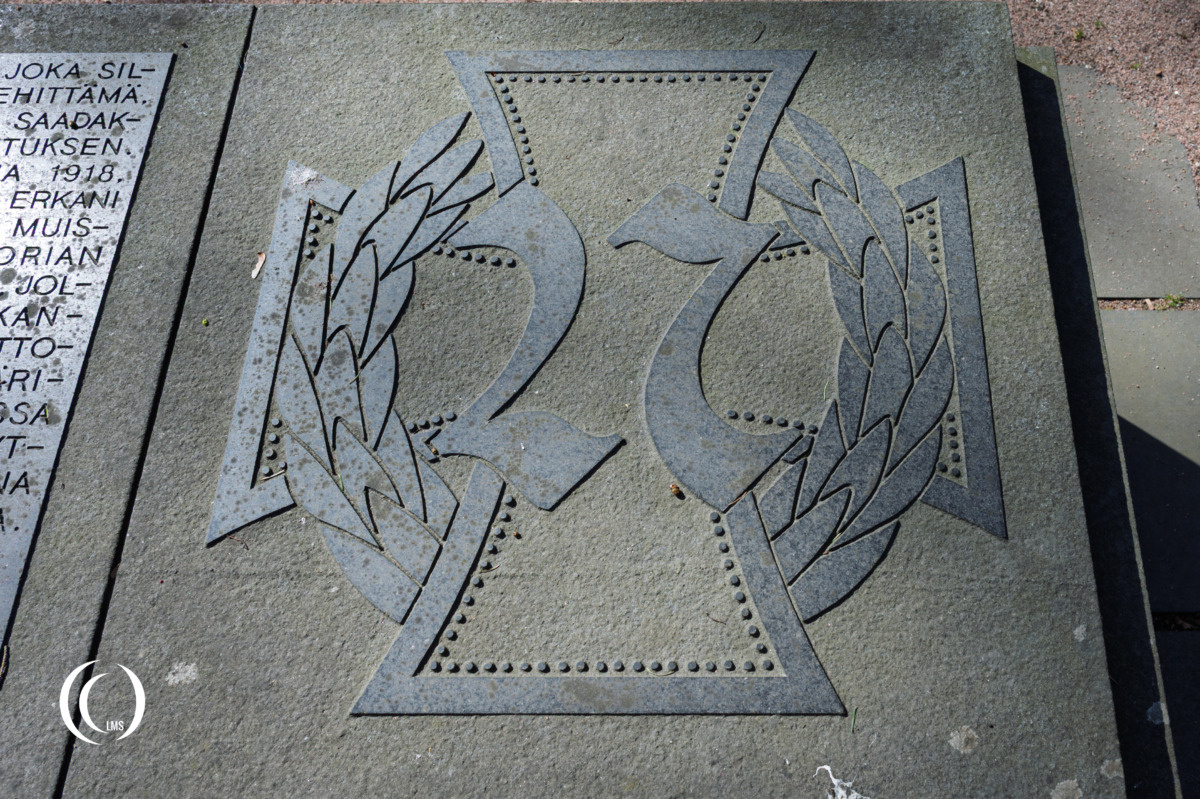
The memorial has inscriptions in both Finnish and Swedish and shows the Jäger cross (Finnish: Jääkäriristi) insignia of the 27th Jaeger Battalion. The inscriptions in the memorial read:
They departed from this land when it was occupied by a foreign power, to another foreign land in order to receive military training there. They returned in 1918 to the war through which this country gained its independence.
The men remembered as Jaegers have followed the storms of history over the years. At times when independence seemed to have lost its significance for this nation, the Jaeger movement reminded us that it had begun at the earliest moment when the Finnish people were asked whether they had the right to live as an independent nation in a changing world.
The Jaegers greet the generations to come, who will always walk the path of freedom toward the future.
This stone, in vain in a futile world, wishes to say:
“We thank you, our native land, that you chose to call upon us.”
Visit
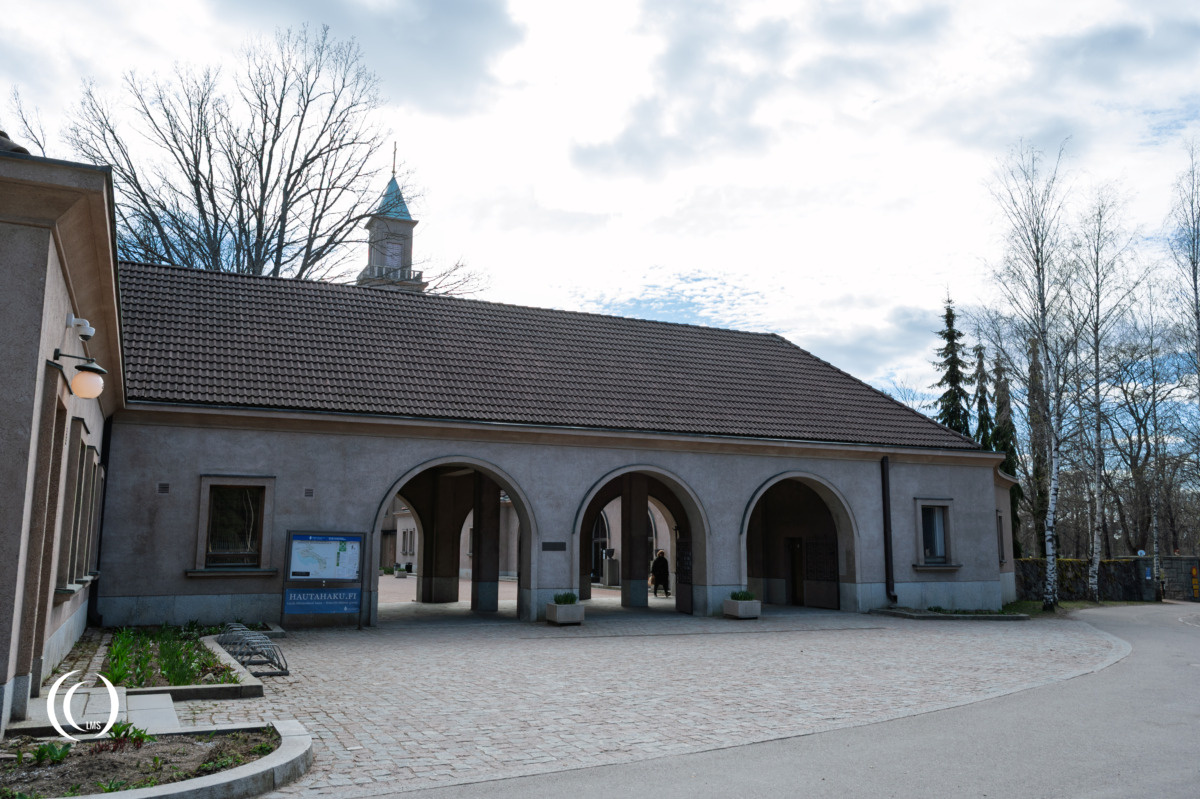
You can visit the Hietaniemi Cemetery freely from Monday to Sunday between 07:00h and 22:00h.
Sources
- www.sa-kuva.fi
- maavoimat.fi
- hautahaku.fi
- forum.axishistory.com
- wikipedia.org
- www.helsinginseurakunnat.fi
- Finnish Aces of World War 2 | 1998 Osprey Publishing | ISBN 84-8372-437-5
- The Luftwaffe War Diaries – The German Air Force in World War II, Cajus Bekker | Da Capo Press Inc. | ISBN 0-306-80604-5
