Located within the larger Hietaniemi Cemetery in Helsinki are two Jewish cemeteries; the Old Jewish Cemetery dating from the 1840s, which is next to the Finnish Guard Cemetery at the south end of the Hietaniemi grounds and this one, the Jewish Cemetery or New Jewish Cemetery inaugurated in 1895 at the north end in the Taivallahti area. Both serve as a profound historical record of the Finnish-Jewish community.
Hietaniemi is the final resting place for many of Finland’s most notable figures, but the Jewish Cemetery holds a specific and moving significance regarding the nation’s turbulent years during World War II. Although the Finnish-Jewish community is relatively small, its history during World War Two is unique compared to many other European nations. While Finland was a co-belligerent with Germany against the Soviet Union during the Continuation War (1941–1944), the Finnish government maintained its sovereignty and, crucially, refused to implement the racial laws being enacted by Nazi Germany, protecting its Jewish citizens from the Holocaust.
Finnish-Jewish soldiers
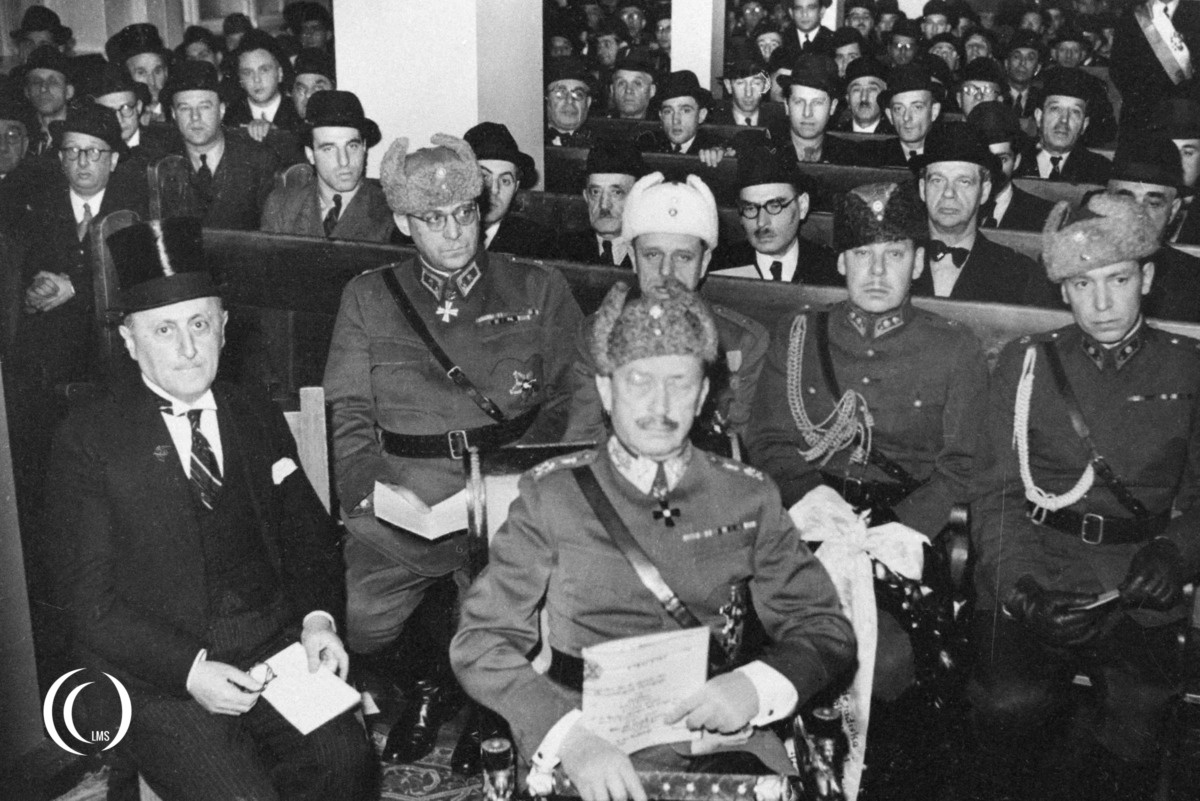
The Finnish-Jewish community in their turn, actively took part in defending Finland’s territory during World War Two by joining the Finnish Defence Forces, which also put them in a complicated position where they were fighting side-by-side with the German Army. Of the estimated 2000 Jewish citizens in Finland at that time, 327 served in the Defence Forces of which 23 were killed in action.
Finnish-Jewish soldiers maintained their religious identity, often being granted leave for holidays, even as they fought alongside German forces. Their bravery was recognised by their German brothers-in-arms by awarding war decorations. There are three Jewish members of the Finnish Army who were nominated for the German Iron Cross, all of whom refused to accept the award.
But the Finnish loyalty to the Jewish community took a wrong turn in November 1942, when the government made the distinction between Finnish citizens and foreign refugees and deported eight Jewish Austrian refugees to Nazi Germany. The deportation caused a national scandal in Finland, leading to ministerial resignations and ensuring that no further foreign refugees were extradited. On 6 December 1944 Marshal Mannerheim, then President of Finland, made a national effort to honor the fallen by attending the memorial service for Jewish soldiers in the synagogue in Helsinki.
In 2000, the Finnish government officially apologized for the tragedy of the eight refugees.
Heroes’ graves
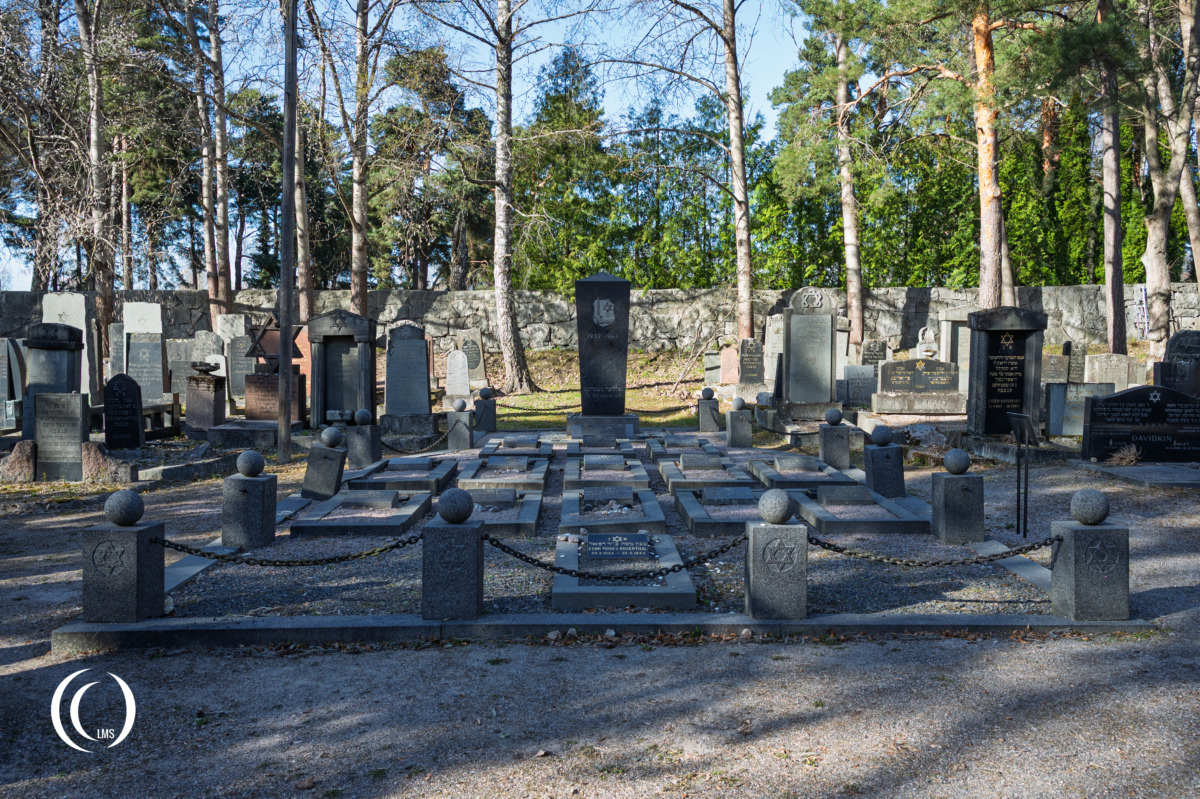
A small Heroes’ Graves or Sankarihauta section within the Jewish Cemetery is dedicated to the Jewish-Finnish soldiers who fell in the Finnish wars between 1939 and 1944. The burials tell a story distinct from the Jewish experiences in occupied Europe, as these Finnish Jews were not subjects of an occupying force but citizens of a sovereign nation fighting for its survival. Many who are interred here served honorably in the Finnish Defense Forces, representing a community that stood shoulder-to-shoulder with their fellow citizens in the trenches, fulfilling their civic duty to a nation that, in turn, protected them.
The headstones serve as a reminder of the dual identity held by many: deeply rooted in Jewish tradition and equally committed to the Finnish state and its independence.
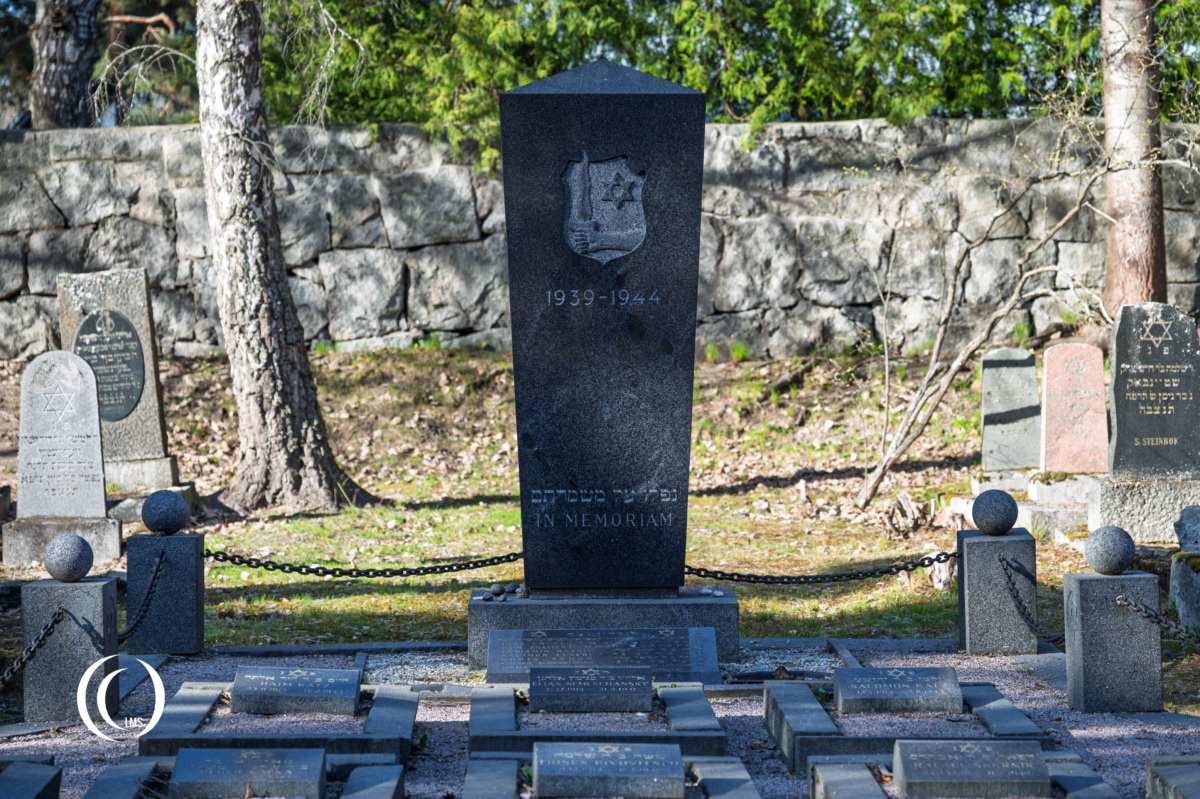
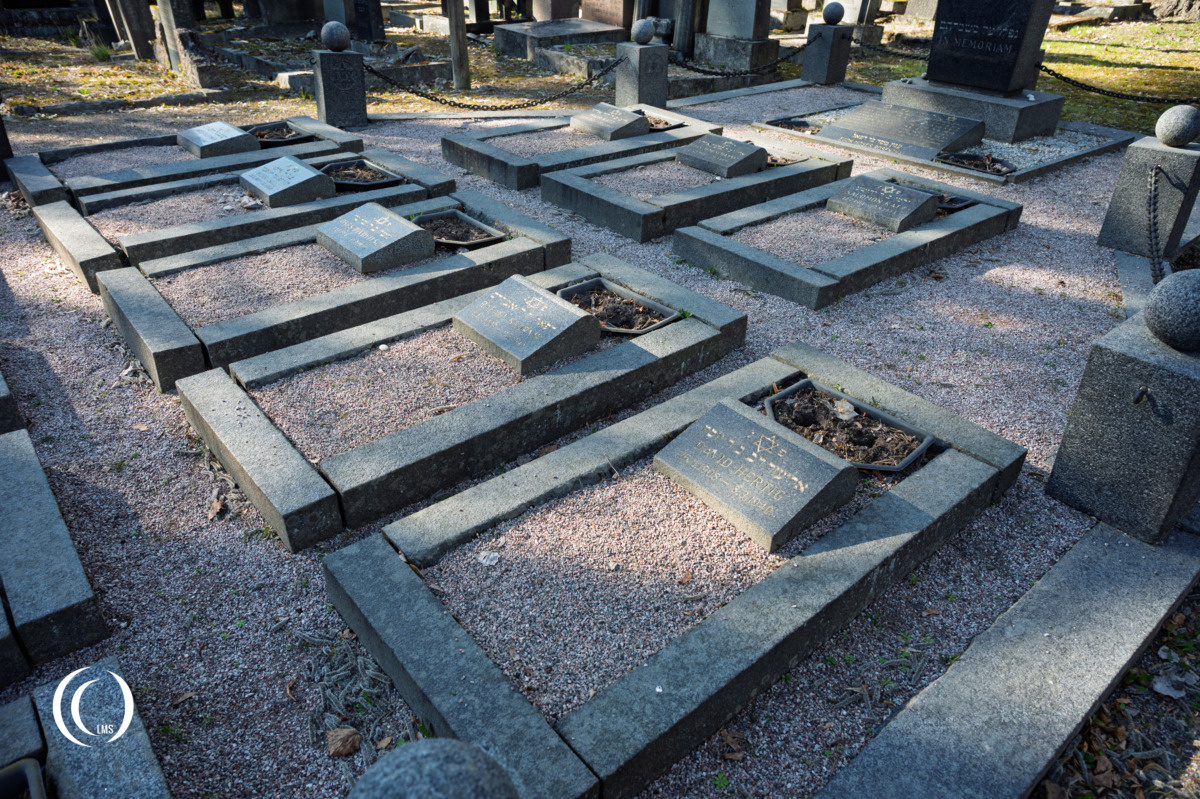
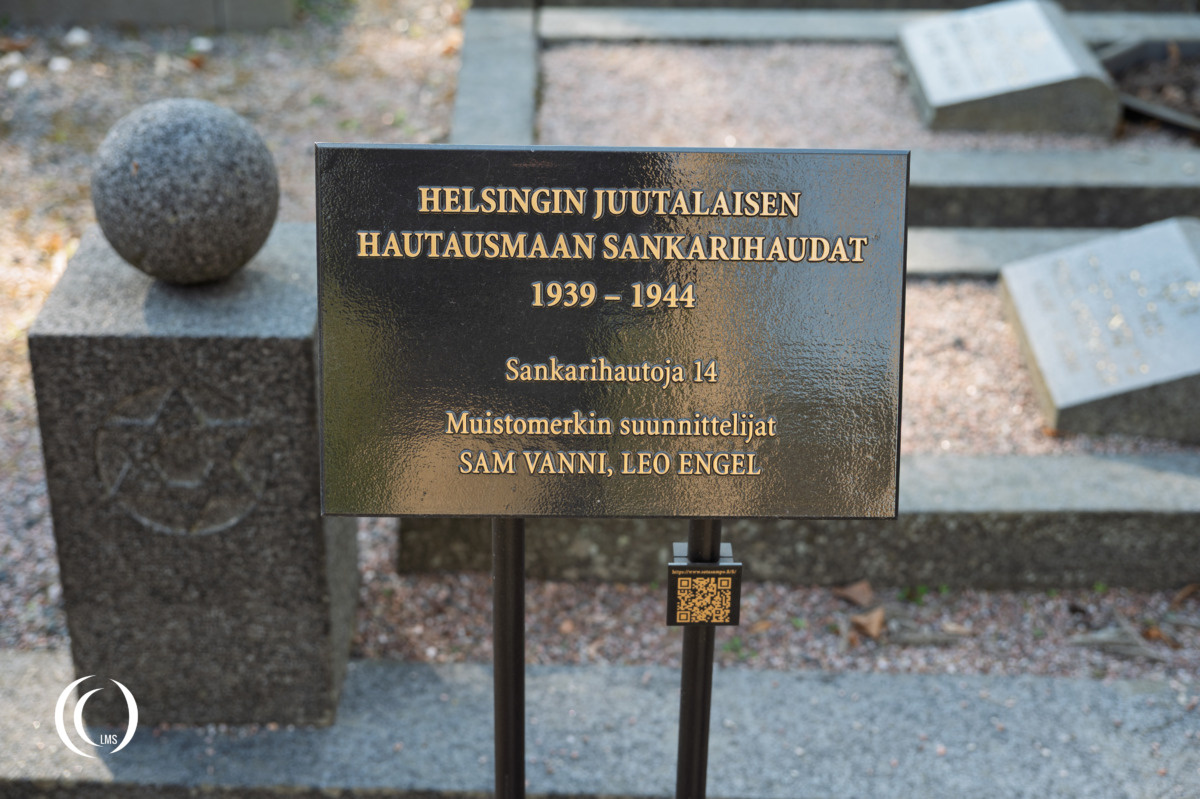
The text on the sign reads: “Helsinki Jewish Cemetery Heroes Graves 1939-1944, Hero graves 14, Monument designers Sam Vanni, Leo Engel.”
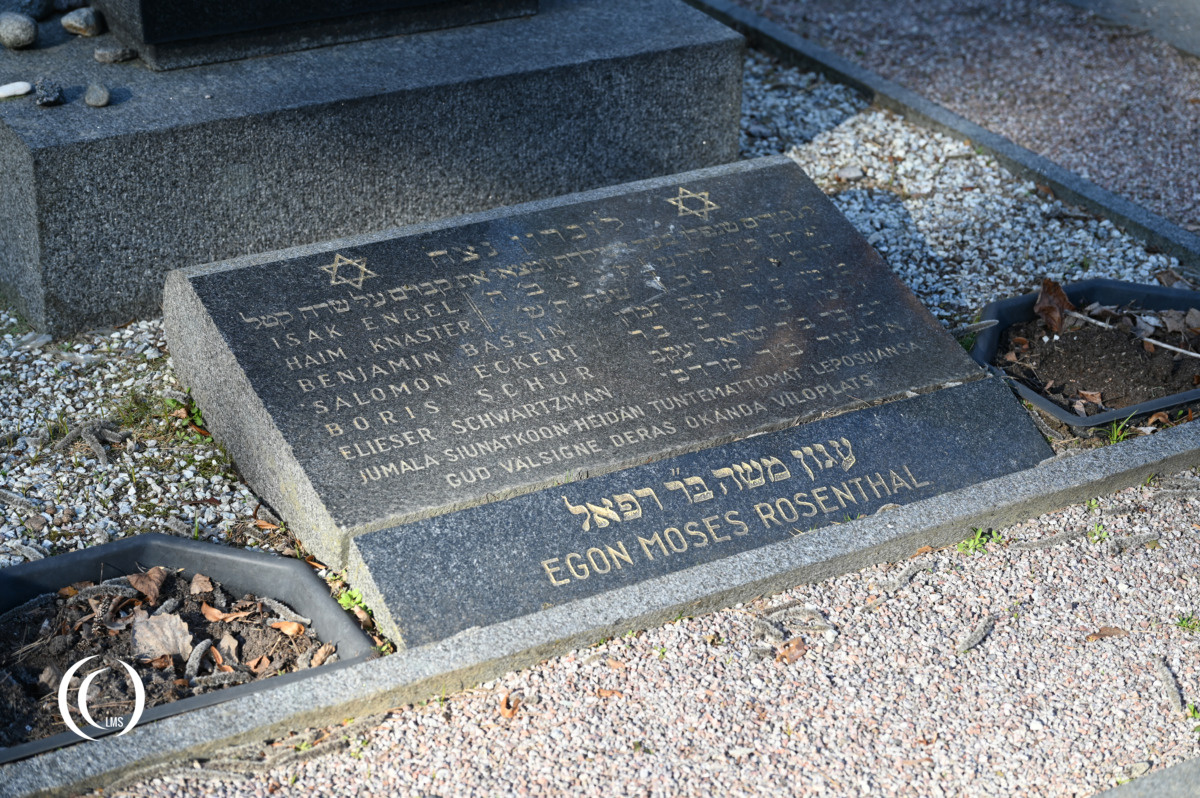
Egon Moshe Rosenthal
Egon Moshe Rosenthal’s remains were found in August 2020 on the Karelian Isthmus. Assigned as a Private to the 11th Company (11./JR 13), an Infantry Regiment stationed at the front line between Leitimojärvi and Kärstilänjärvi, Rosenthal went missing in June 1944, aged 20, during a Soviet artillery barrage and remained on the field. Together with 93 other Finnish soldiers, his remains were transported to the Finnish Institute for Health and Welfare in 2021 to be identified.
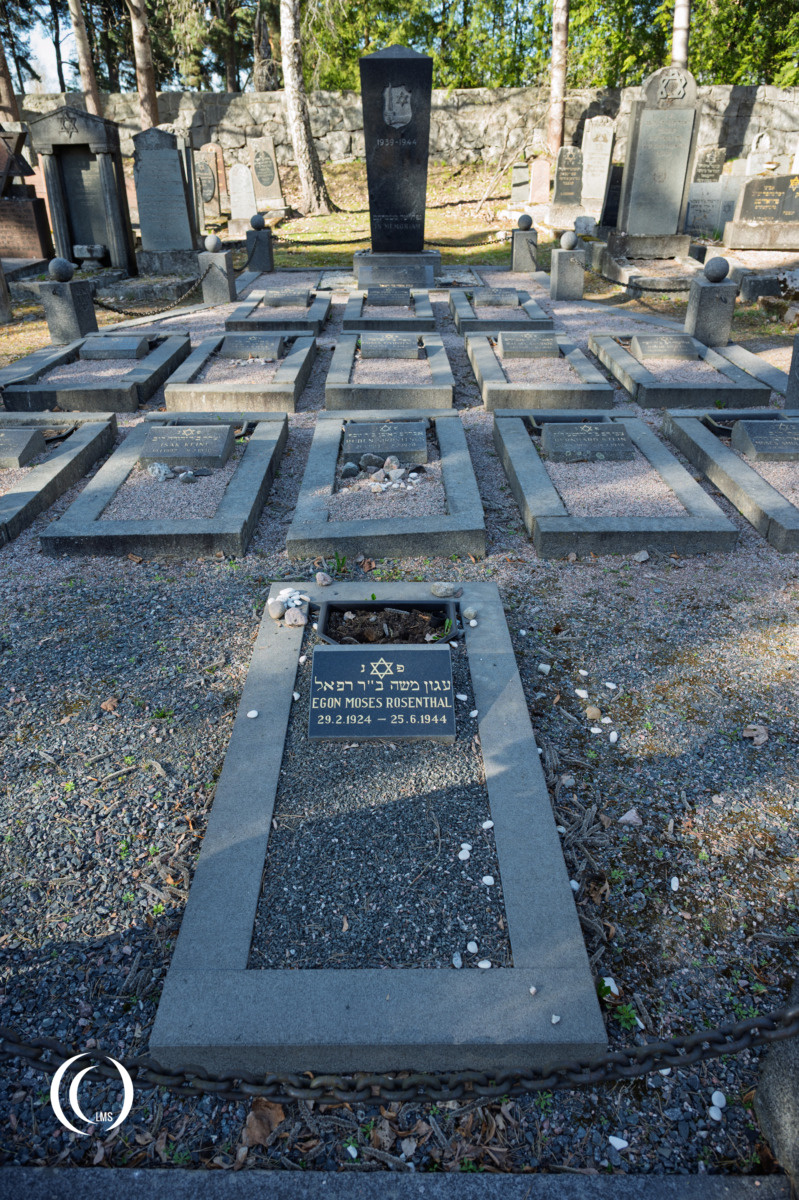
On the 30th of May 2023, Egon Moshe Rosenthal was buried with full honours in the military section of the Jewish Cemetery.
War veterans memorial
A plaque on the cemetery chapel serves as a collective memorial for the veteran soldiers of the Winter- and Continuation Wars buried at Hietaniemi. It lists the names of more than 200 persons.
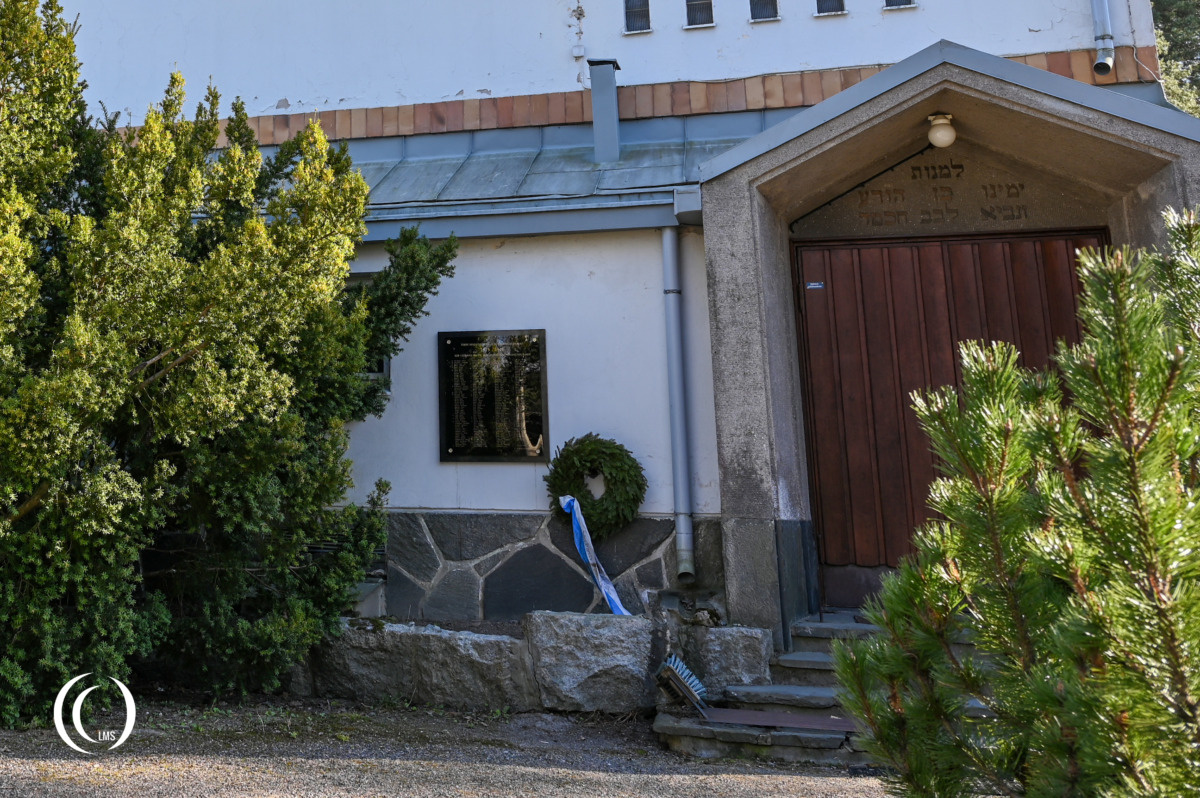
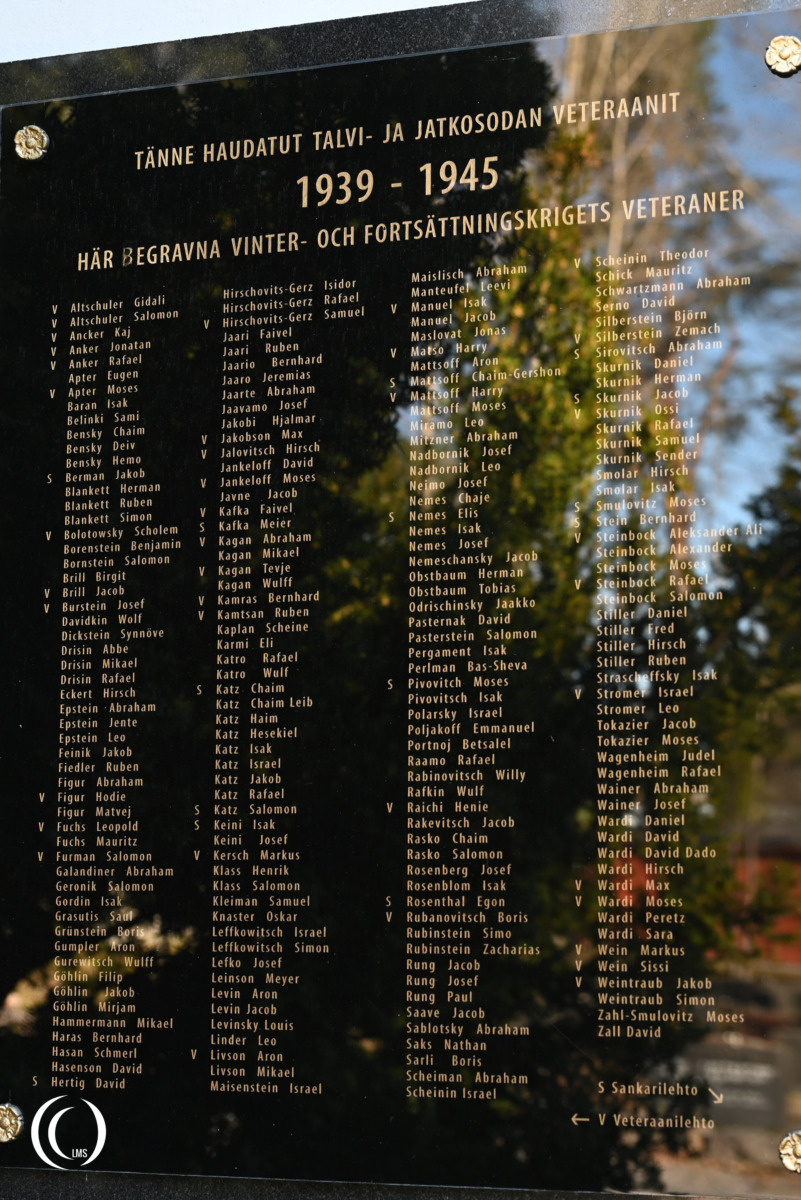
An “S” indicates the person is buried in the Heroes’ Graves section of the Jewish Cemetery. A “V” indicates the person is buried in the Veterans Garden section.
Visit
You can visit the graves at the Jewish Cemetery on the northern side of Hietaniemi Cemetery during opening hours. It is closed on Saturdays (Shabbat) and on Jewish holidays.
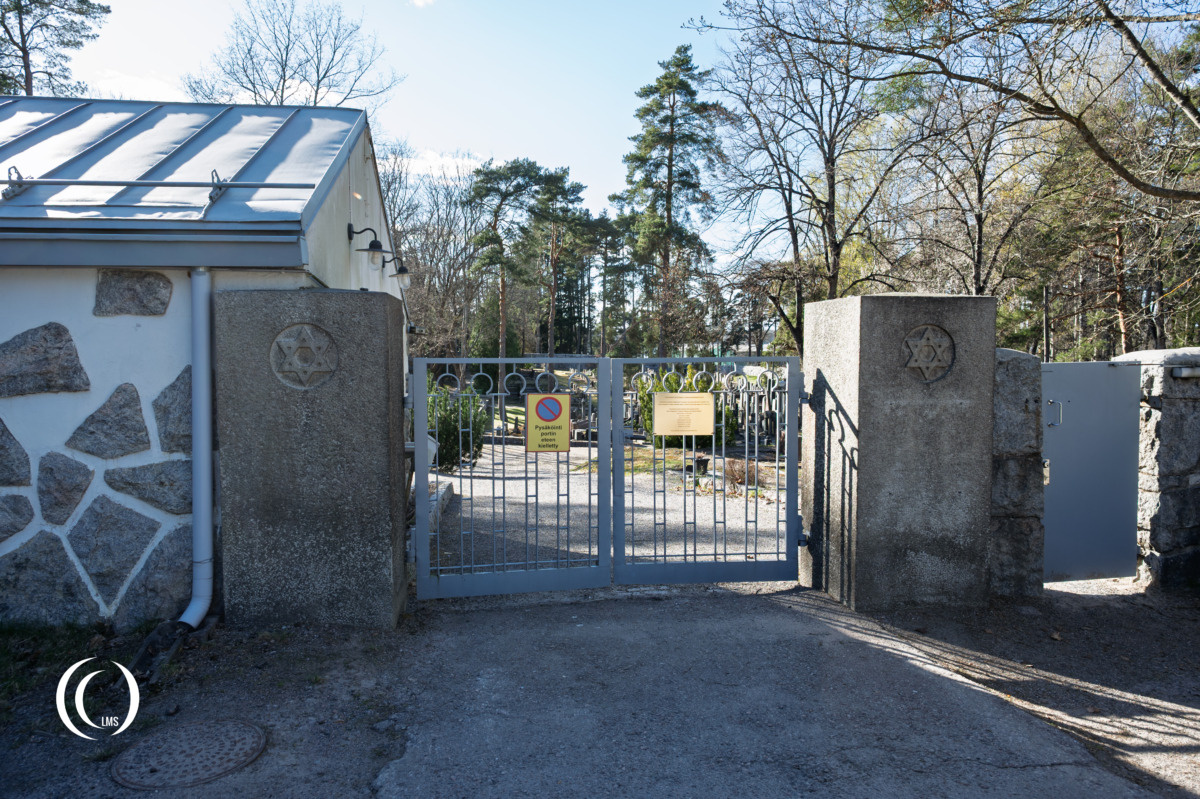
The cemetery is enclosed by a wall and only accessible through a separate entrance on the eastern side of the burial grounds, passing the Russian Orthodox Cemetery.
NOTE: Men are required to wear a hat or kippah while on cemetery grounds.
Sources
- jchelsinki.fi
- sa-kuva.fi
- vapaussoturi.fi
- wikipedia.org
