History
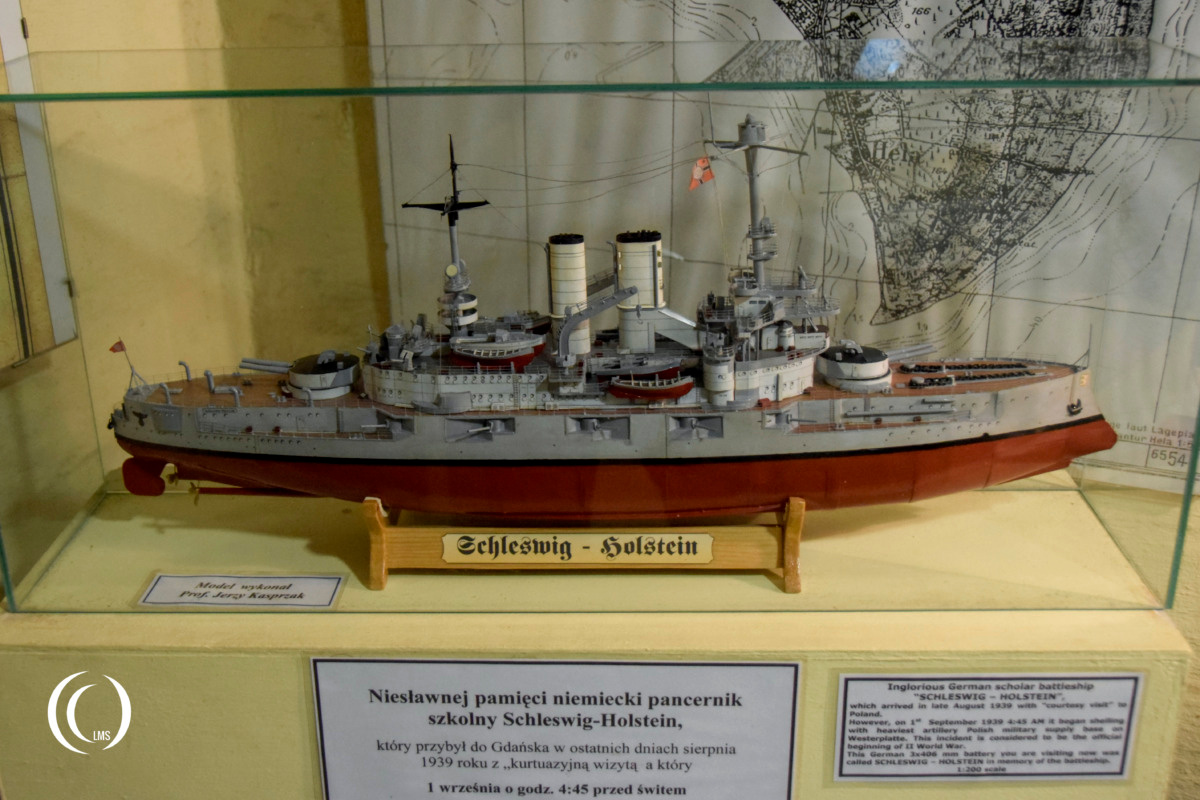
After the Battle of Hel was decided, the Hel Peninsula with its gun- and anti-aircraft batteries came under German rule. The German Navy strengthened the Peninsula with a heavy coastal battery with three huge gun emplacements and an observation – fire control tower. They named it Battery Schleswig Holstein, after the German battleship that took part in the Battle of Westerplatte and the Battle for Gdynia at the start of World War Two in Poland. The Battery was designated as MKB 2 / MAA 119. MKB is short for Marine Küstenbatterie, a Naval Coastal Battery.
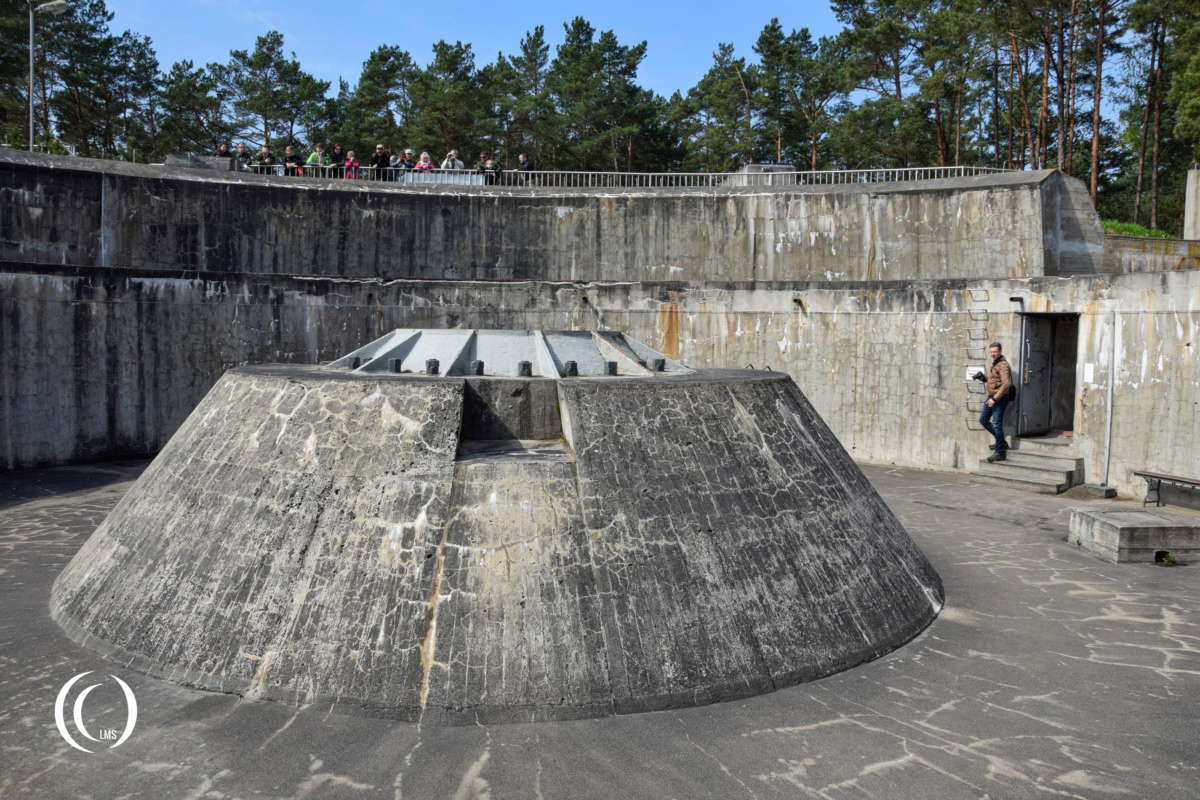
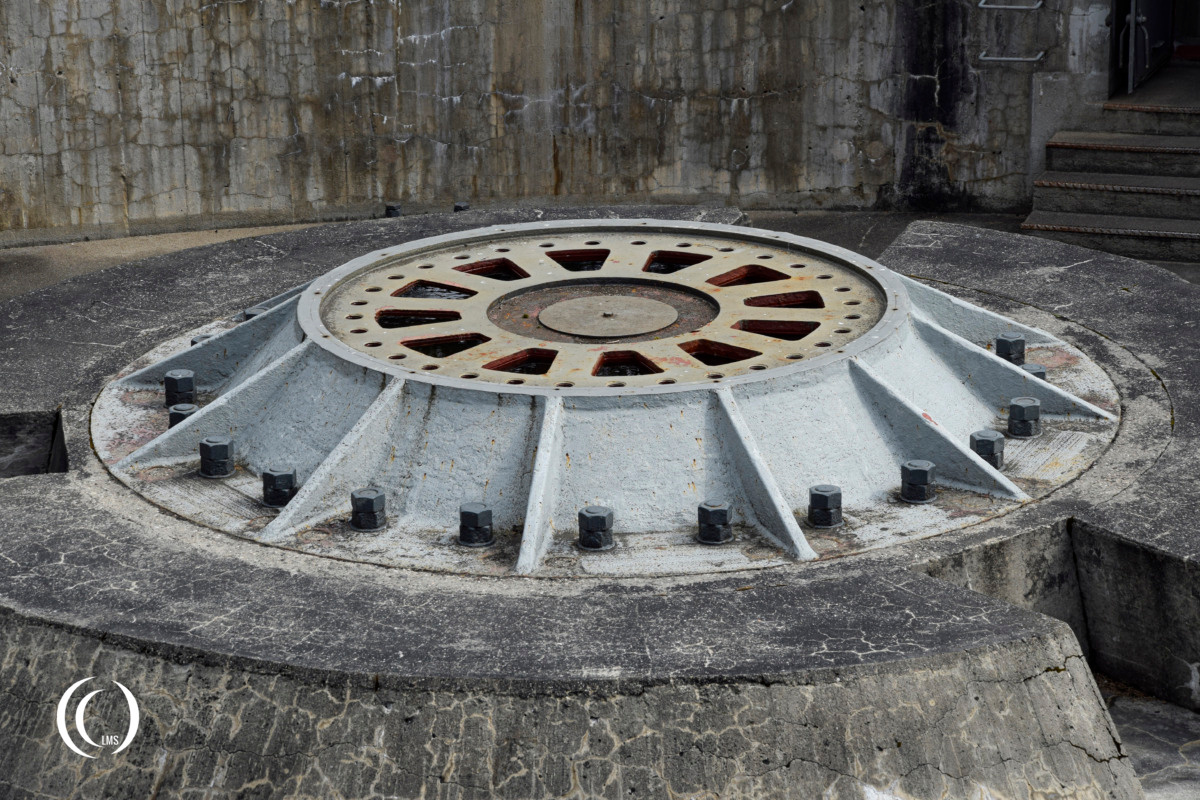
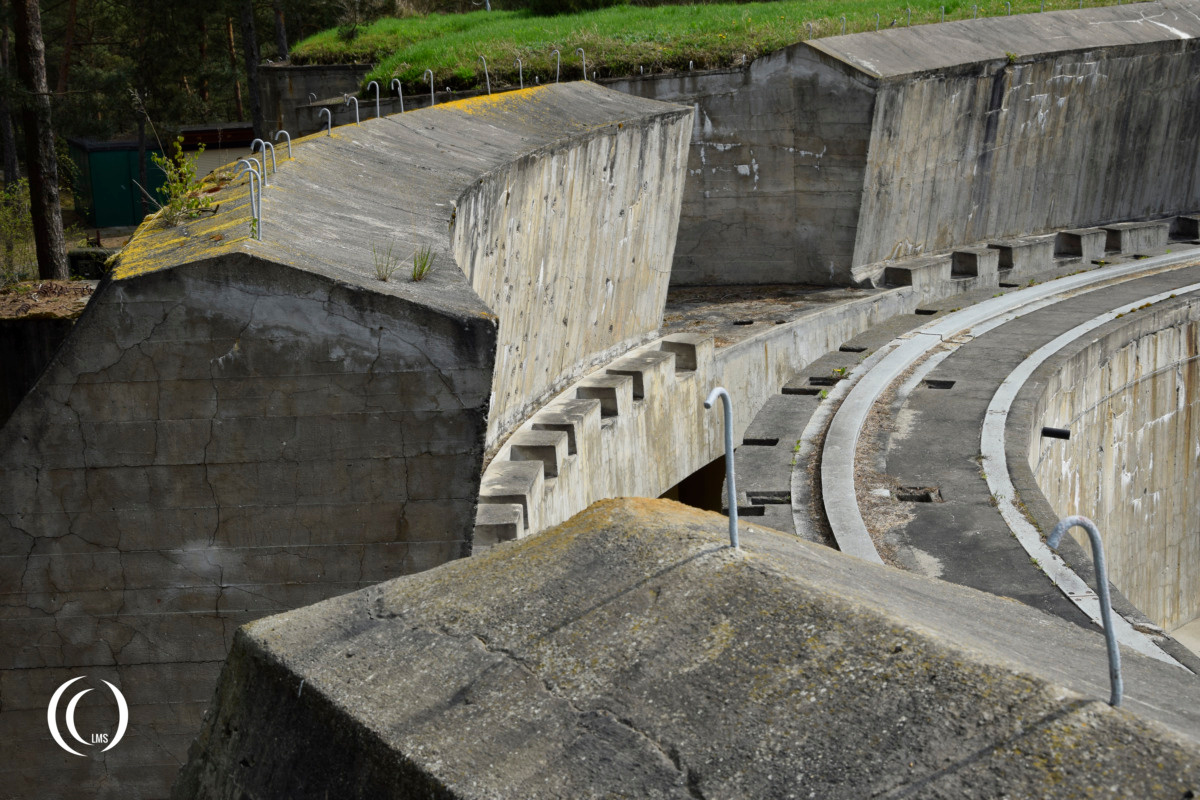
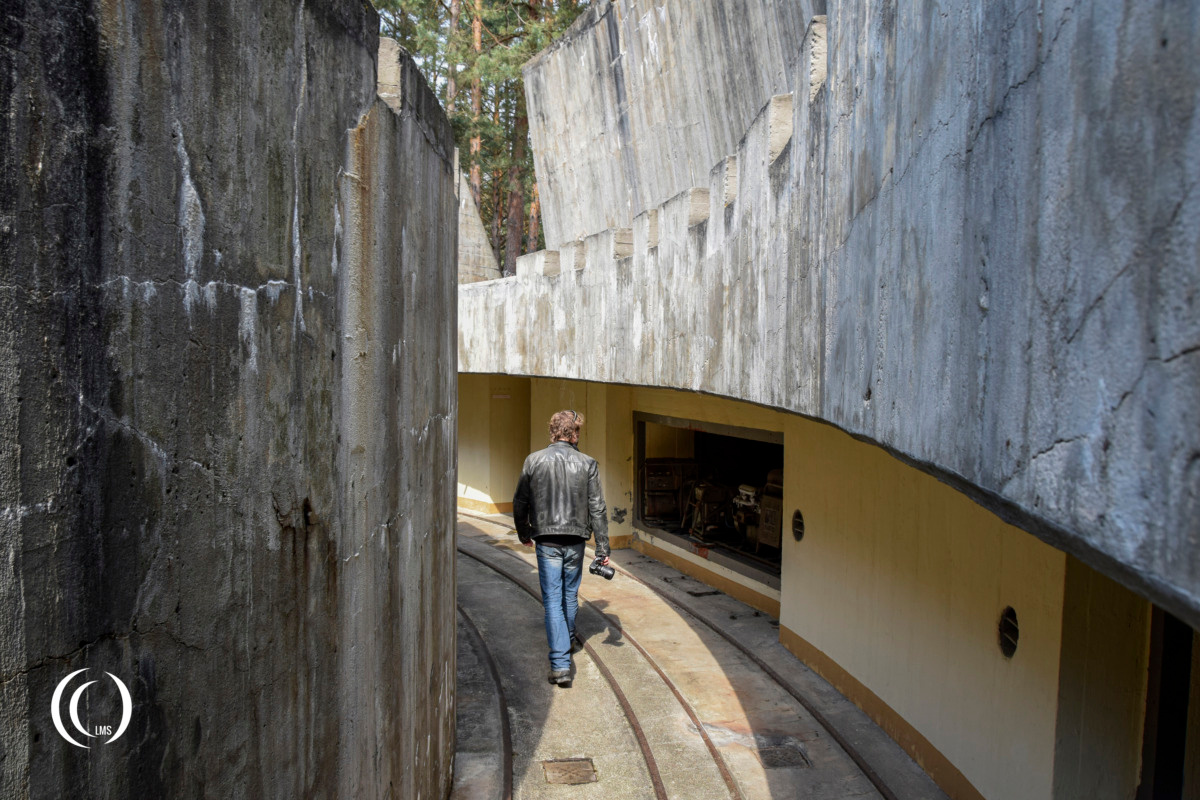
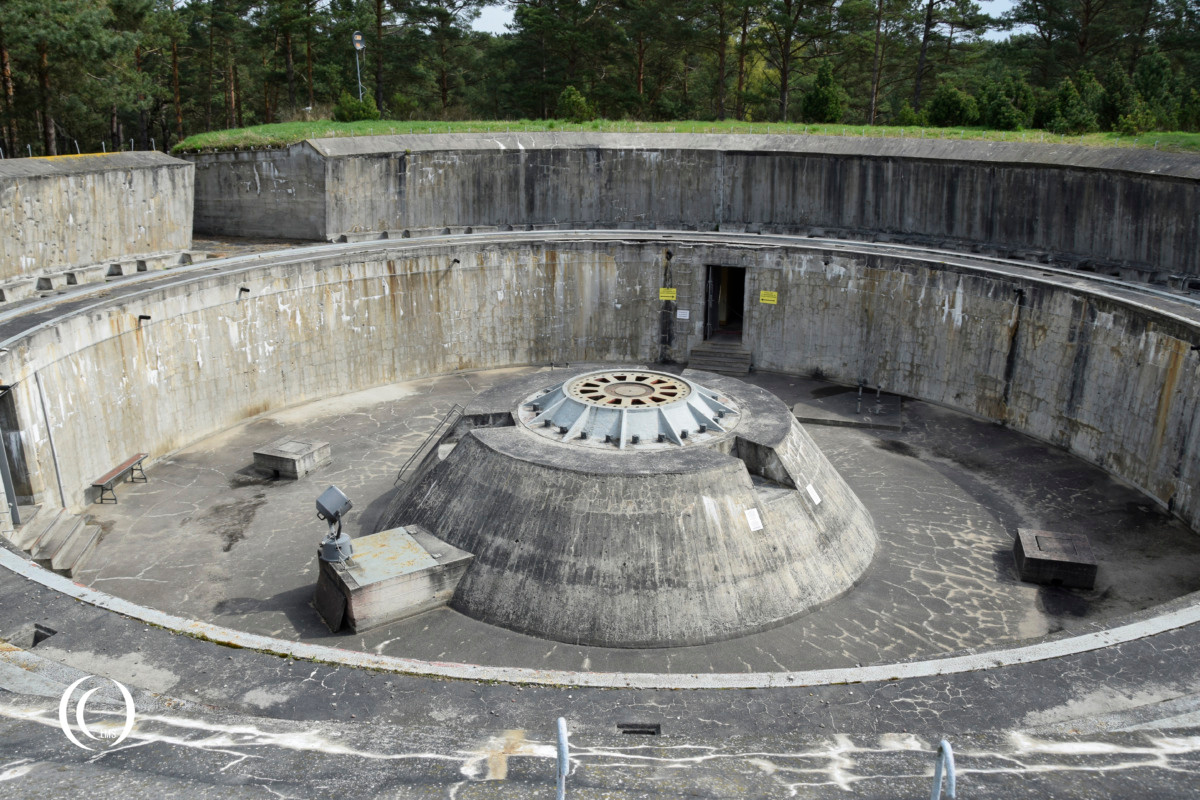
The three concrete open gun emplacements of the battery were derivatives of the S 75 and S 80 regelbau types, often designated as S 75/80. The open emplacement allowed the gun to rotate 360 degrees. The 2-story concept provided a bomb proof bunker system at the lower level with ammunition stores, machinery rooms, workshops and crew quarters, complete with latrines, washing rooms and showers. A narrow-gauge railway at the front of the bunker allowed a small train to pass through and supply shells to the ammunition stores inside. In close vicinity are two ammunition storage bunkers.
The gun crew consisted of 88 men, 20 of them handled the gun from inside the cupola. They named the three gun emplacements, Anton, Bruno and Caesar, but it is unclear if these are the original German names or post-war names.
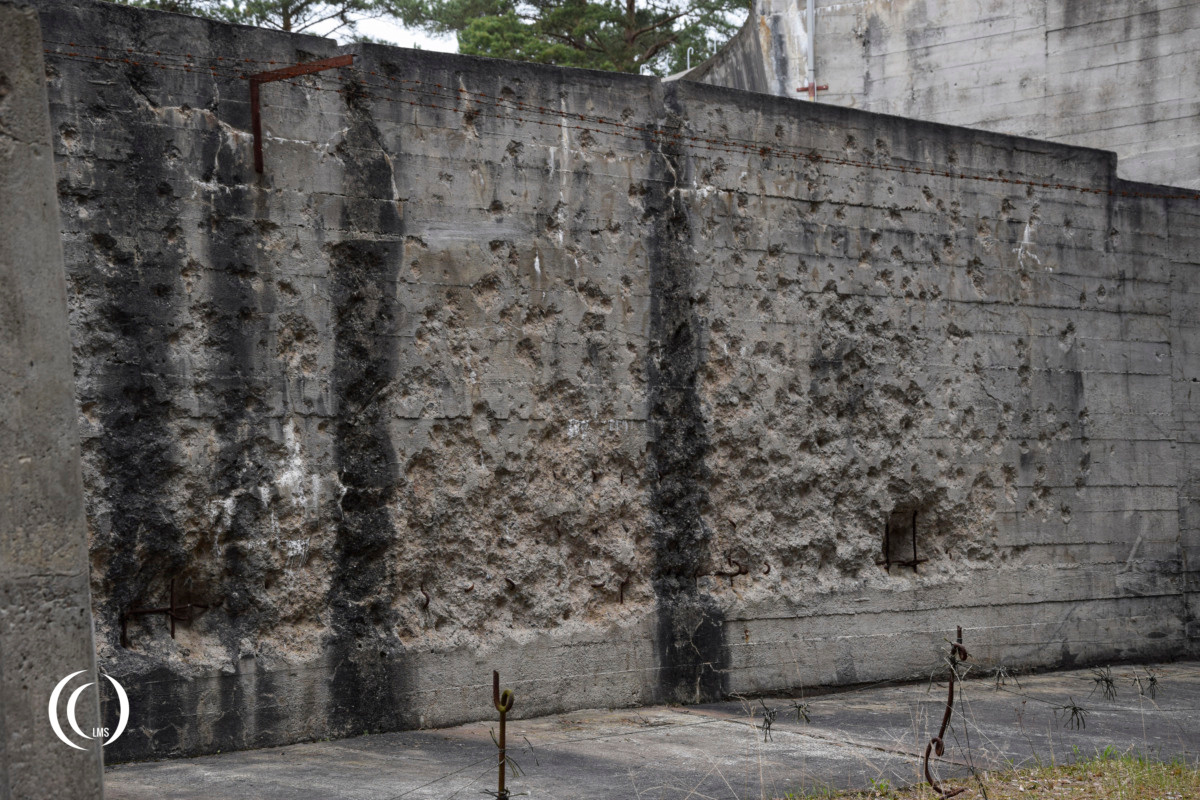
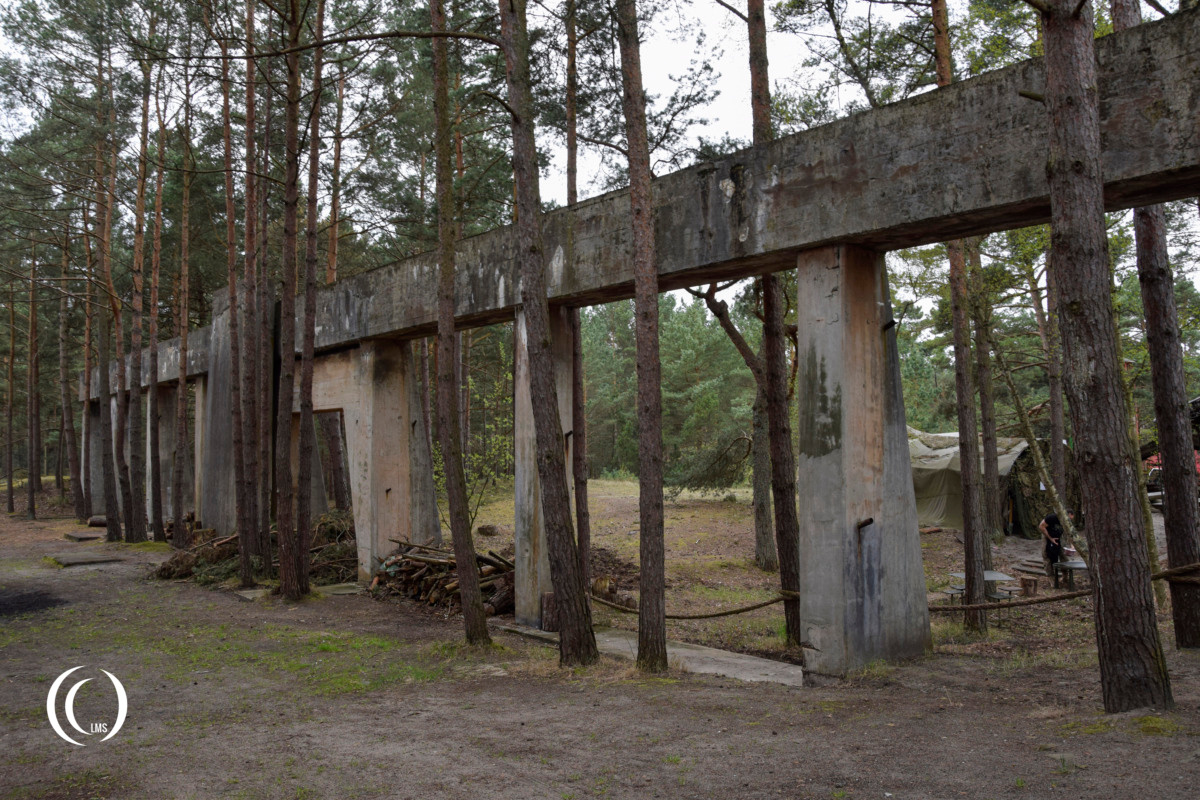
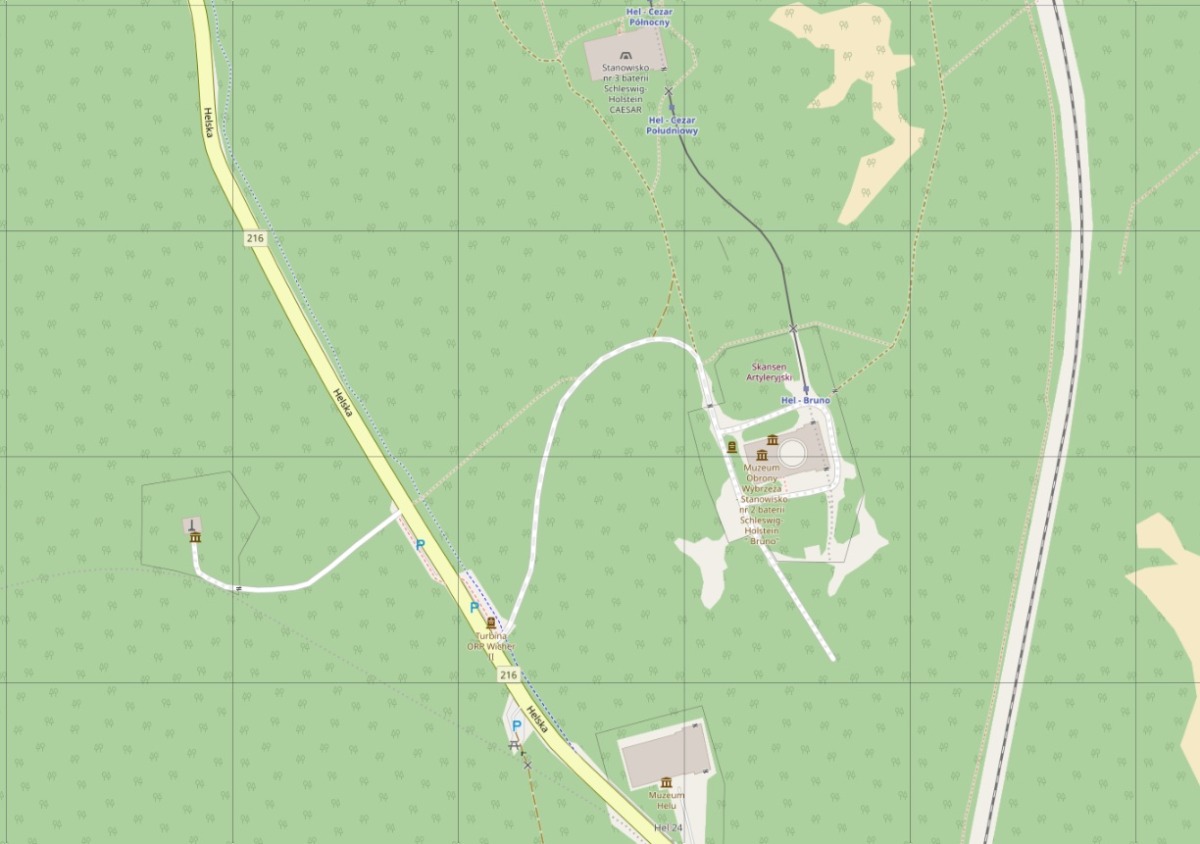
This gun emplacement has designation B2, in the immediate vicinity are two more Adolf Gun Emplacements: gun emplacement B1 to the south and gun emplacement B3 to the north of this B2 gun emplacement. Gun emplacement B3 is also a museum, and B2 was used by a paintball group in 2018.
Another four bunkers of this S 75/80 type were constructed at Marine Küstenbatterie Hanstholm II in Denmark.
The 40.6 cm SK C/34 Gun – the Adolf gun
The 40.6 cm SK C/34 naval gun was designed by Krupp for the H-Class battleships. The H-Class ships would be bigger and stronger than the Bismarck Class battleships like the Tirpitz and Bismarck, which had the 38 cm SK C/34 naval gun installed, but they were never completed. The massive guns could reach a distance of 56 km (35 miles) and a trained crew could reach a rate of 2 rounds per minute, which is quite impressive for a gun this size. The barrel length of the Adolf gun, or Adolfkanone in German, was over 21 metres with a bore of 406 mm and weighed 158 metric tons. A shell weighed 1020 to 1030 kg depending on the shell used.
The 40.6 cm SK C/34 designation means it has a bore of 406 mm, SK = Schnelladekanone which means quick loading cannon, C = Konstruktionsjahr and that is the year of design in 1934.
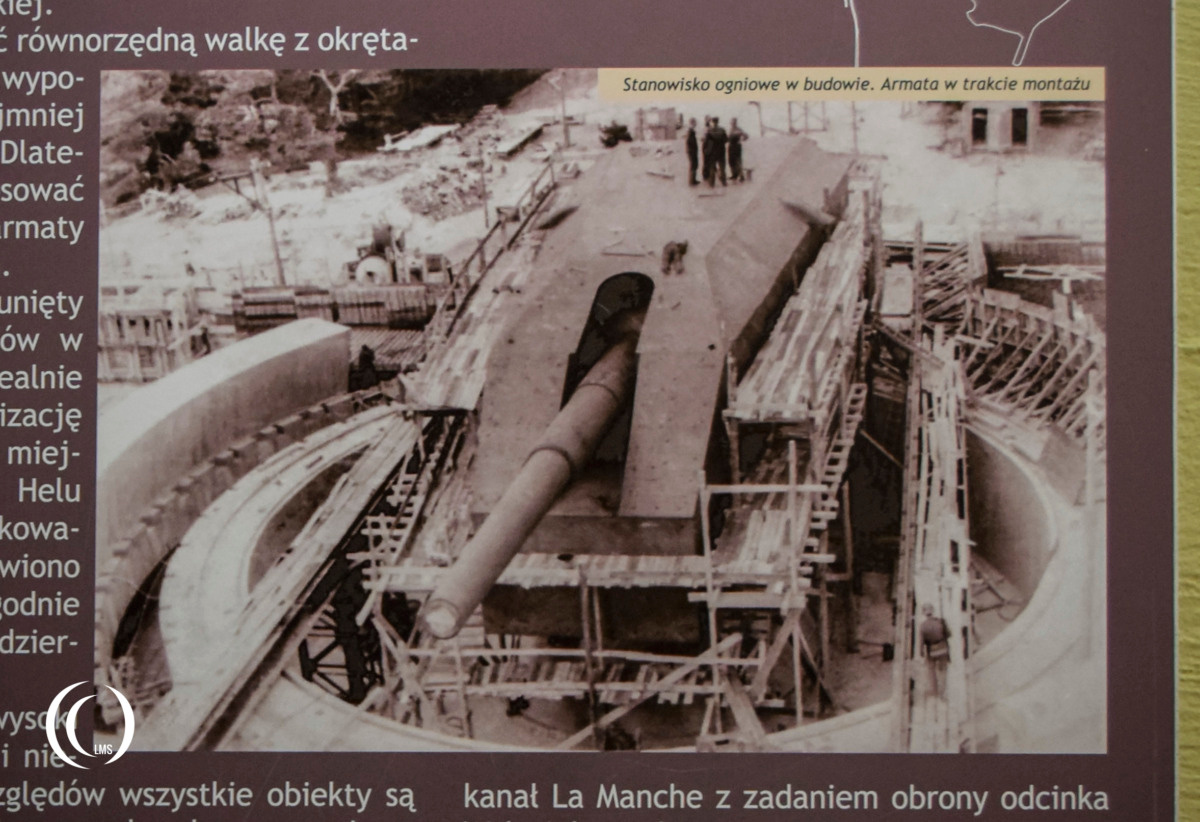
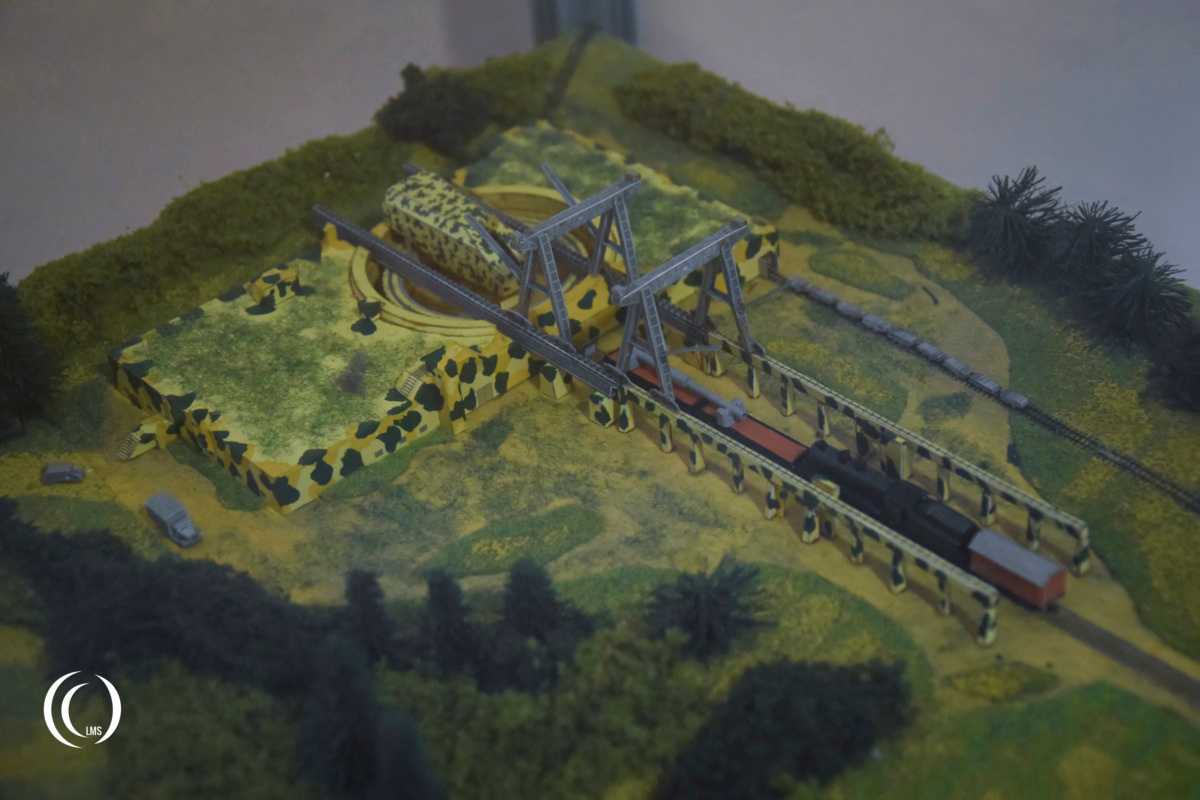
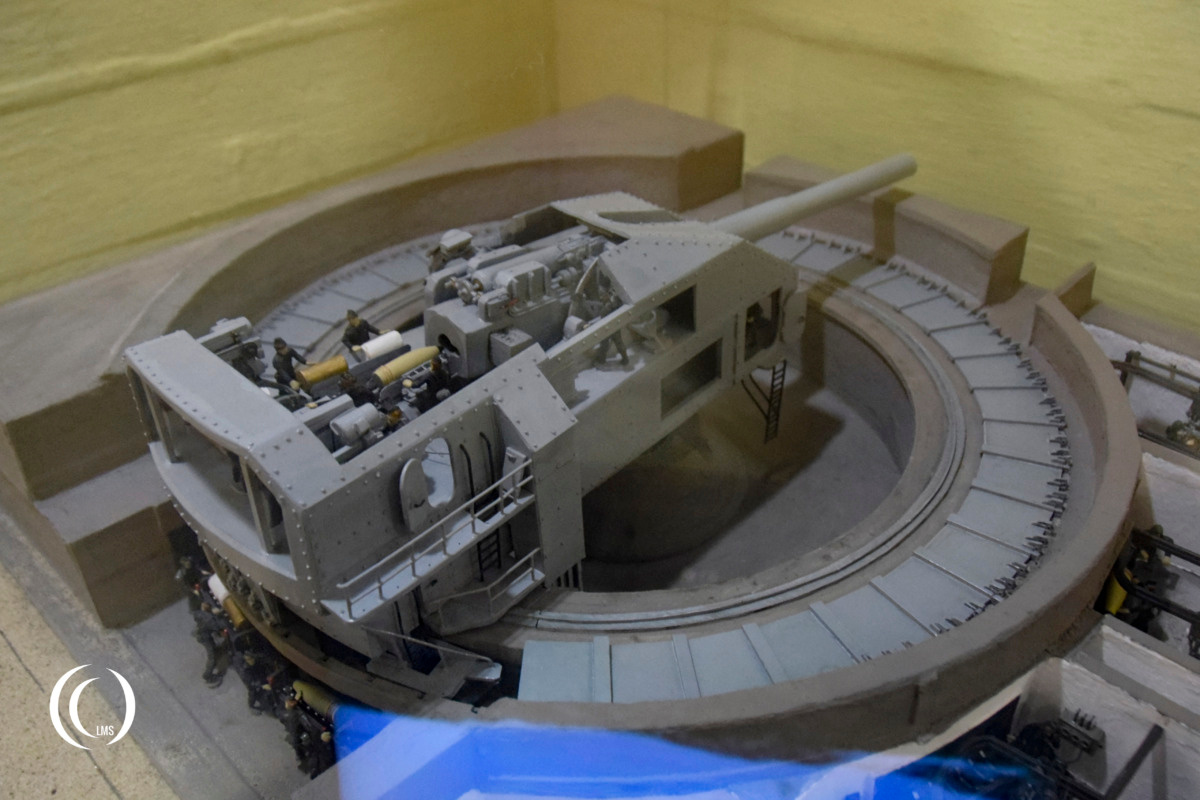
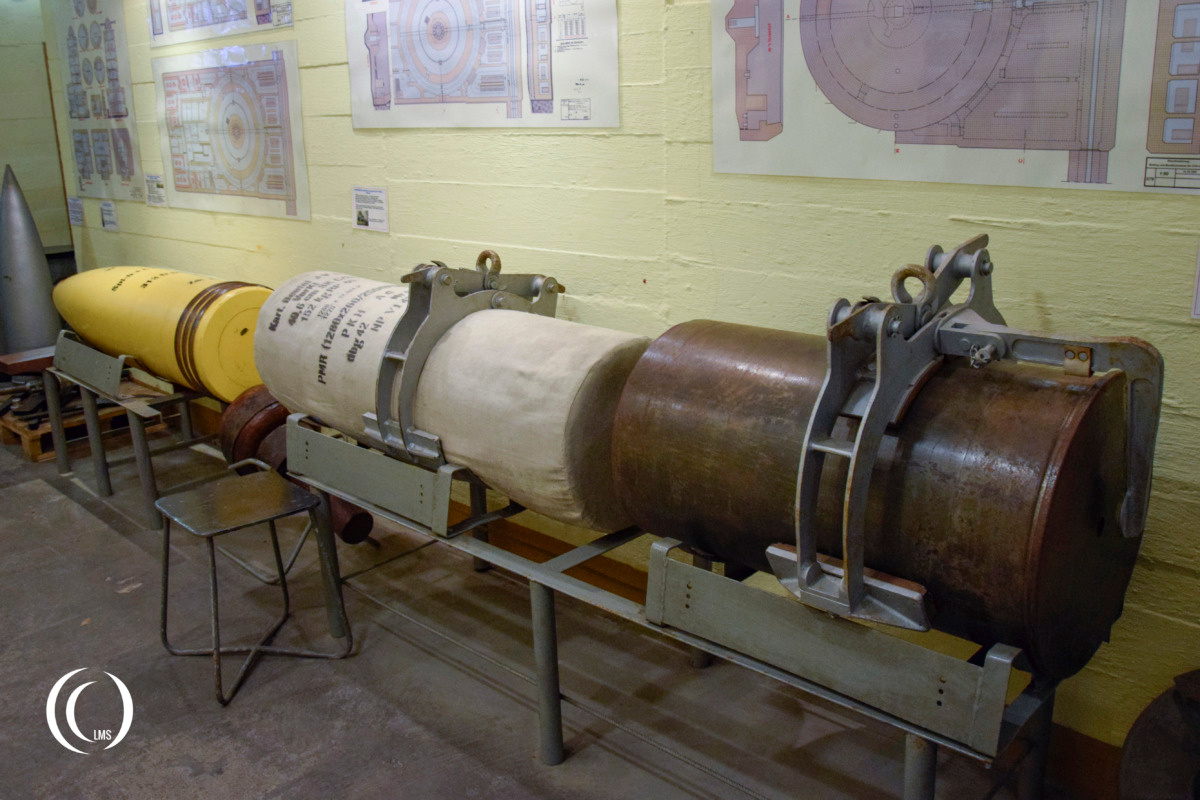
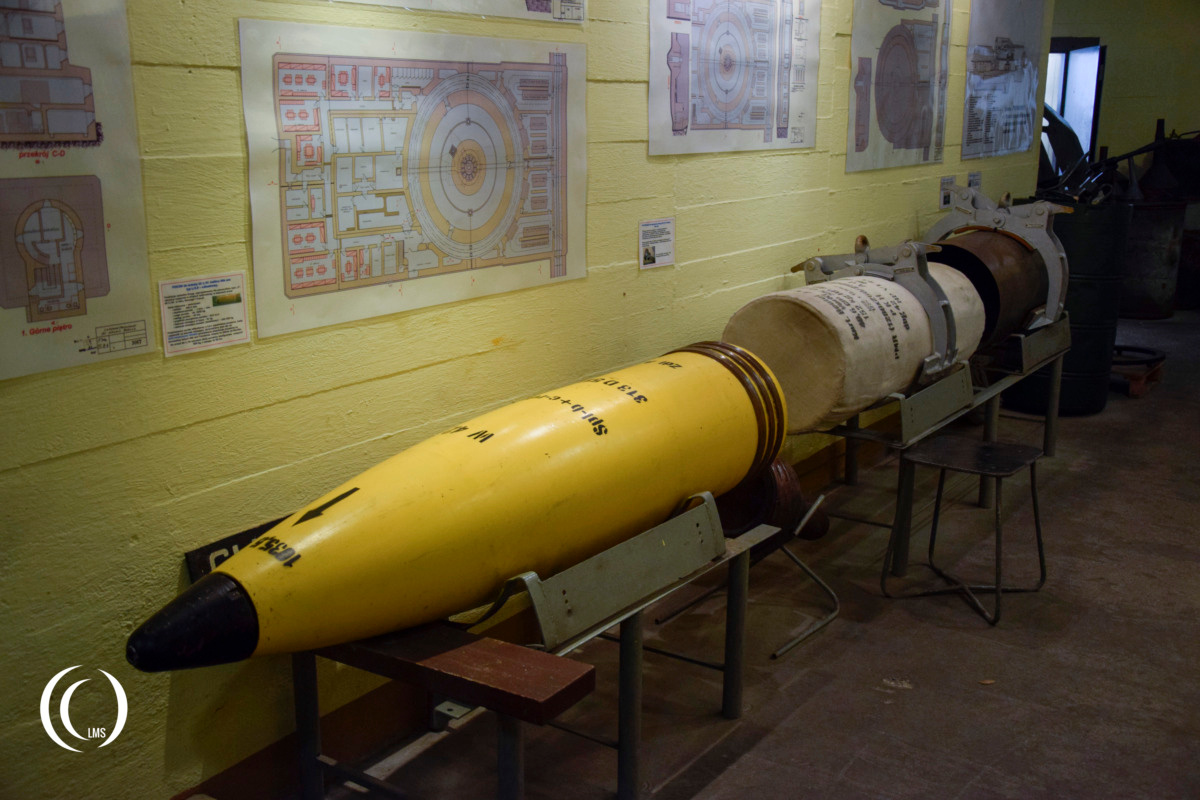
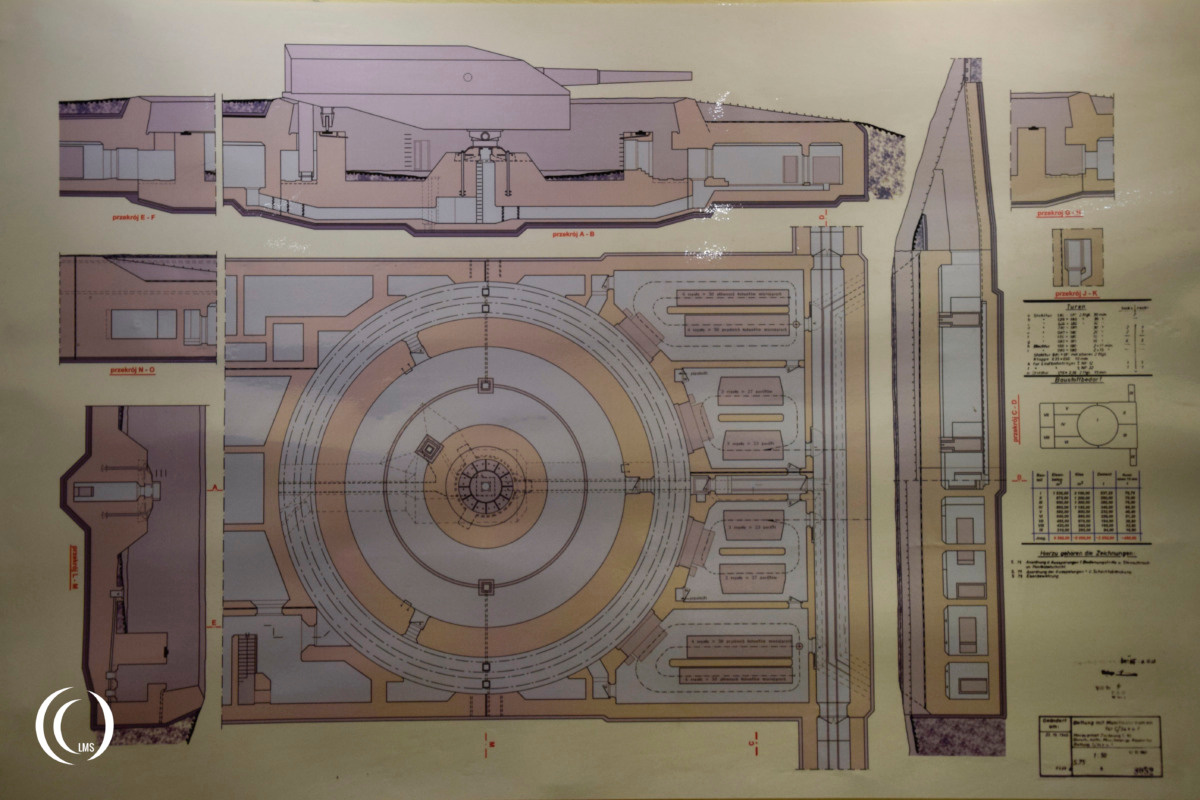
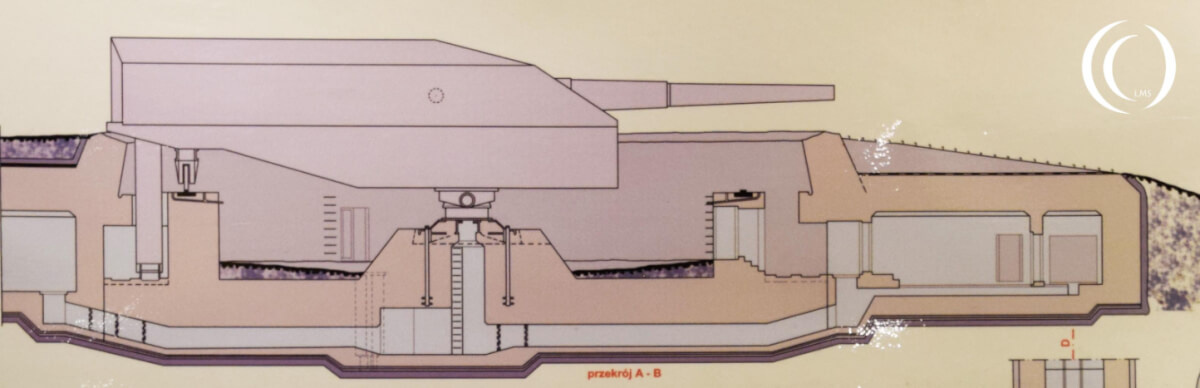
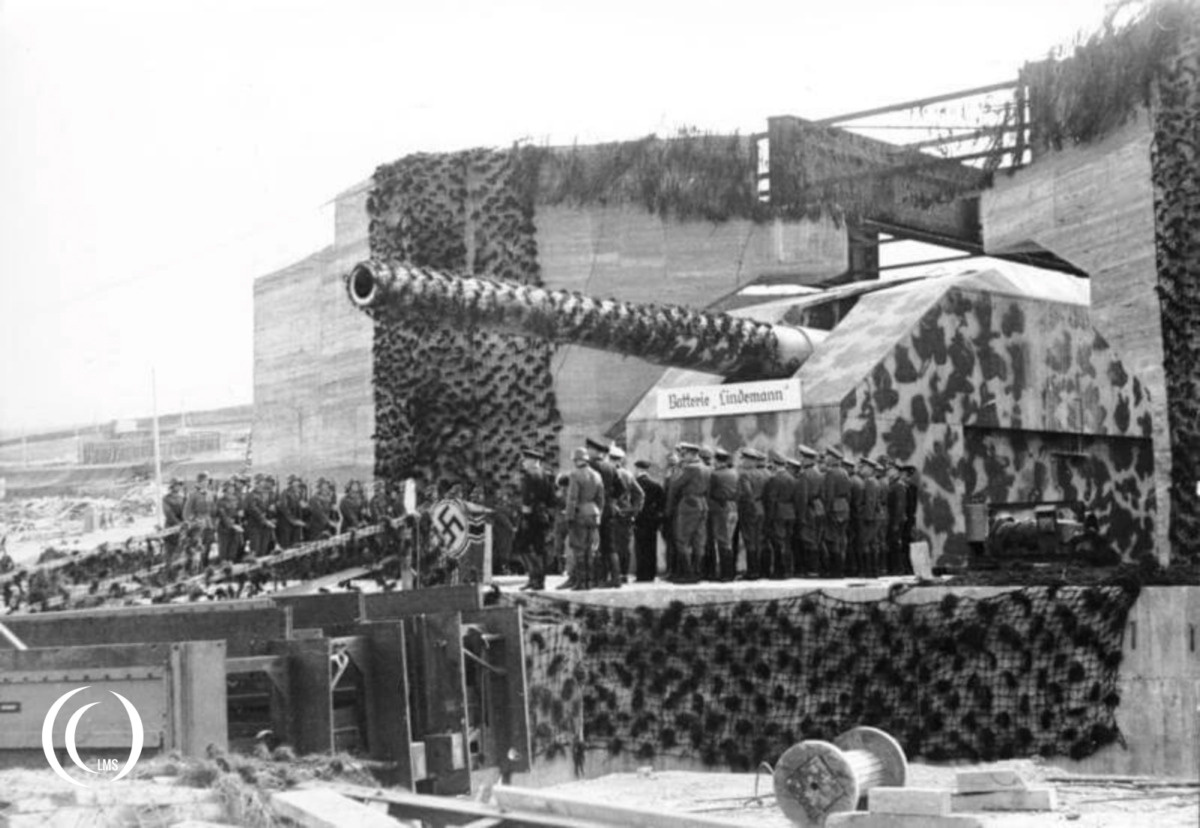
In total eleven of these 40.6 cm guns were built; seven were placed in Norway, one was lost en route and three were placed in Poland. After their training shots in May and June of 1941 the Adolfguns were dismounted and moved to Calais and placed in Battery Lindemann, which was named after the Captain of the Bismarck, Ernst Lindemann. From here they saw active service and fired at Dover in England, crossing the 34 kilometres of the English Channel. They fired 2226 times on England from 1941 until 1944. Together with Battery Todt, which had four 38 cm guns, Battery Oldenburg with two 21 cm guns, eleven K5 – 28 cm railway guns, and other batteries and railway guns along the coast they bombed England over the Strait of Dover.
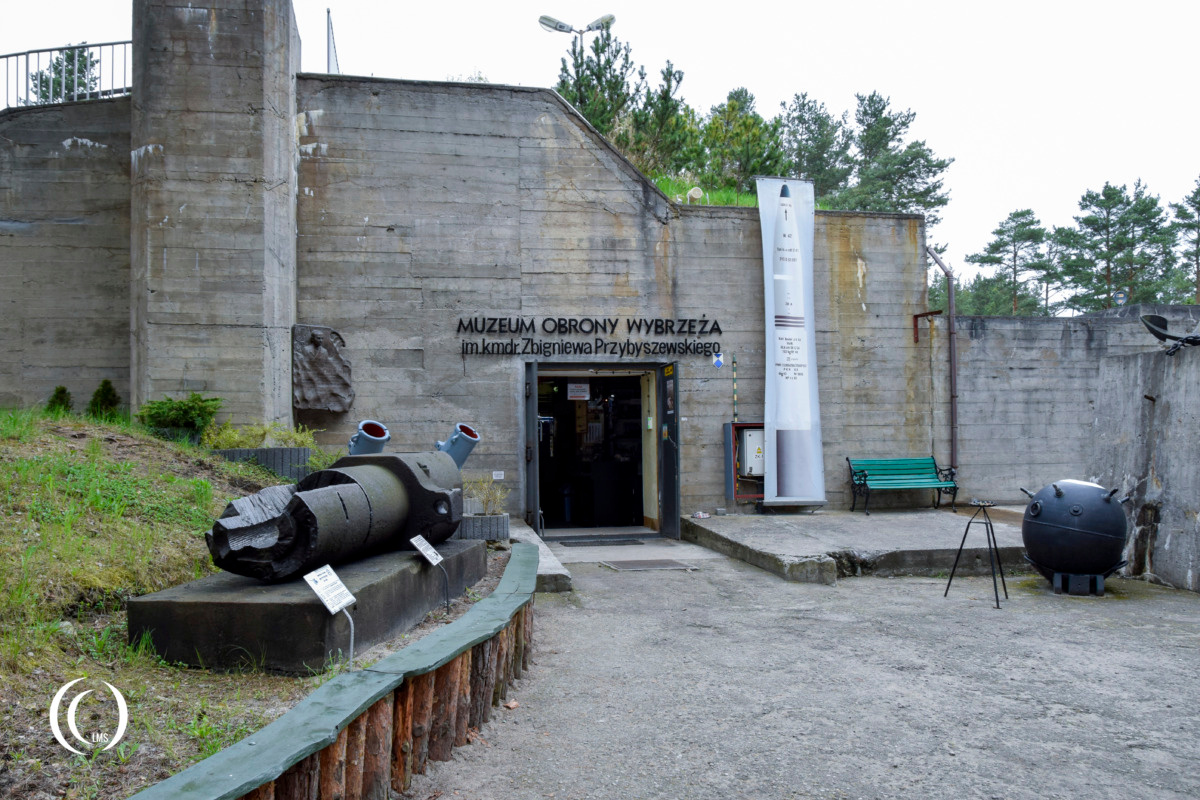
Muzeum Obrony Wybrzeża
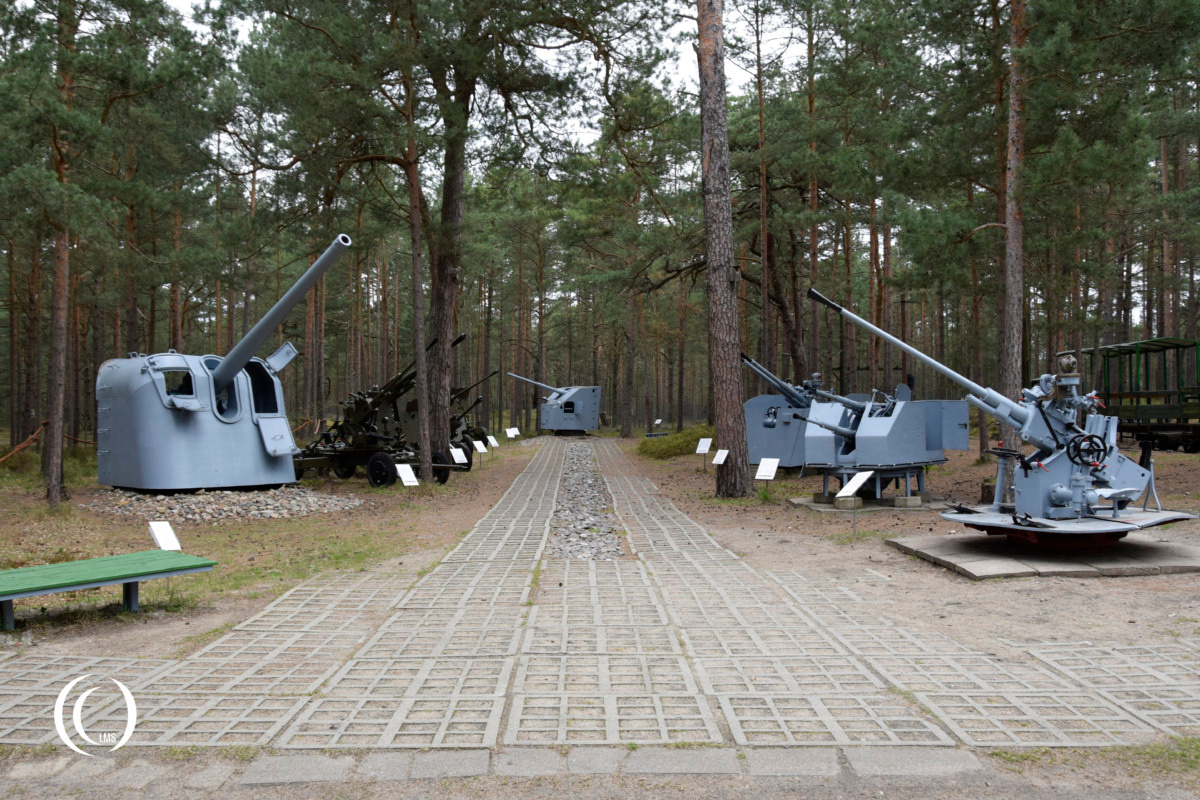
Muzeum Obrony Wybrzeża is the Polish name for the museum. In front of the museum are numerous objects related to the Second World War, like sea mines, torpedoes, anti-aircraft guns, naval guns and more.
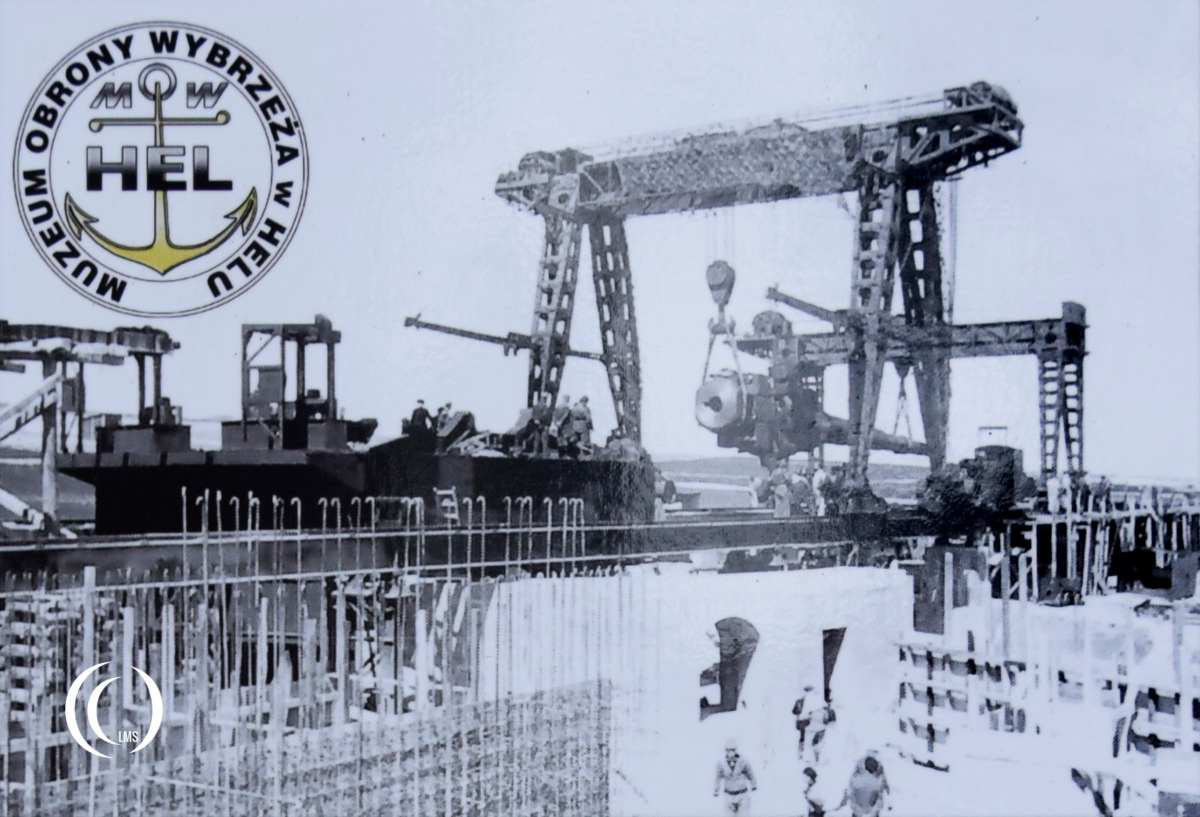
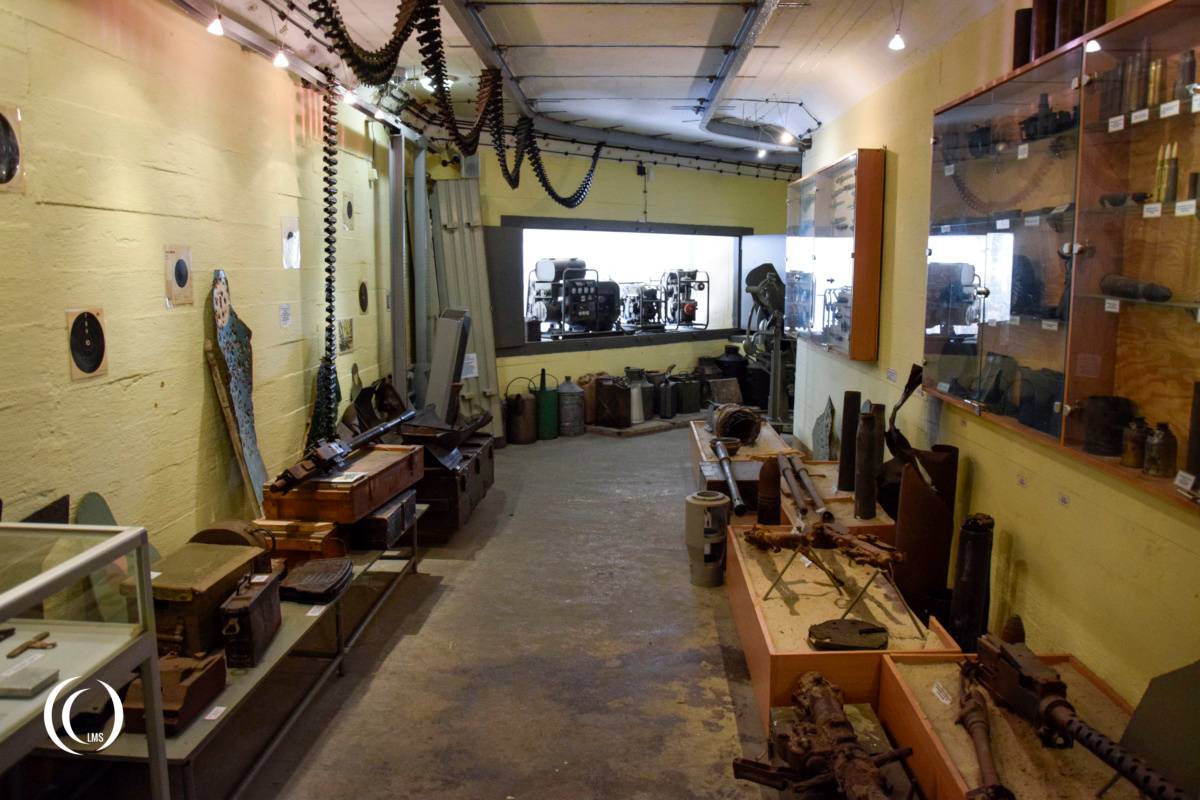
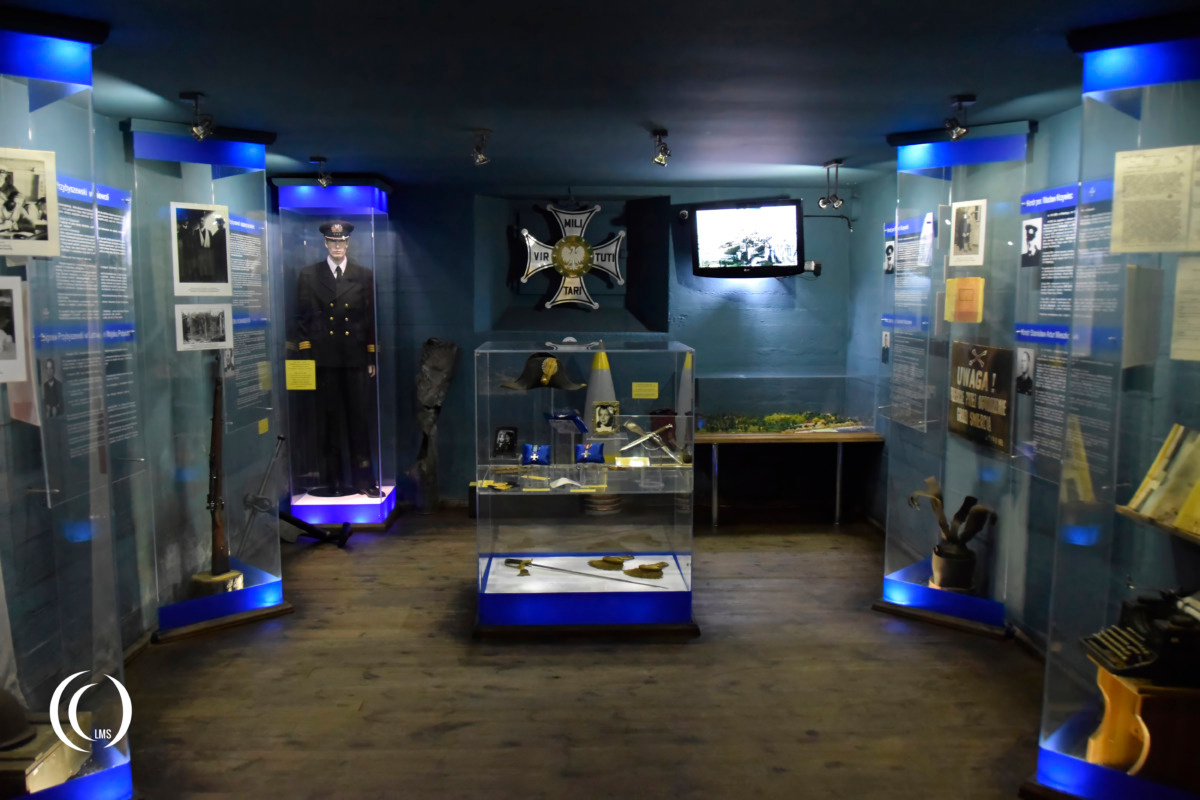
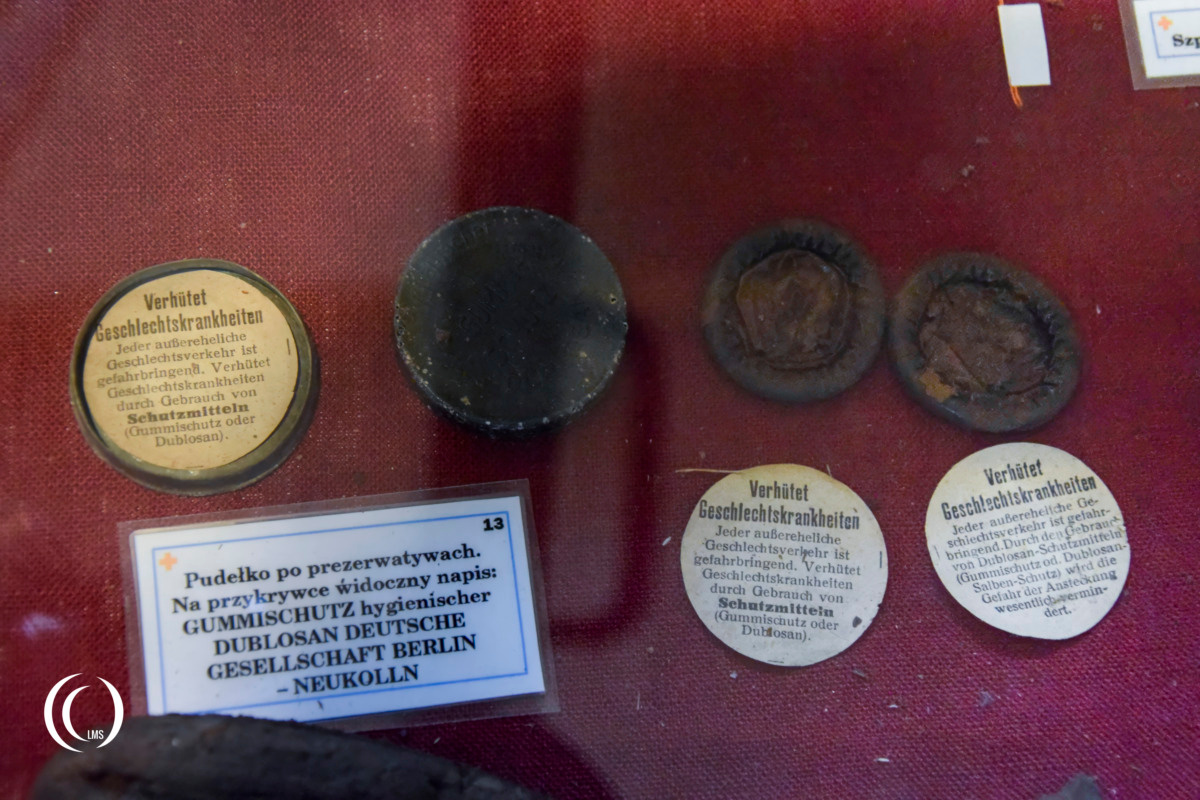
Inside the museum you can find many items on display dating back to the time the Battery was in use. The exhibition also tells a larger story about the Polish Navy and the German Kriegsmarine operating in the Gdansk Bay and the Baltic Sea.
Visit
You can visit gun emplacement B3 of Battery Schleswig-Holstein by following the main 216 road southeast across the Hel Peninsula. A carpark is just beside the road and a forest road will take you to the bunker and museum.
