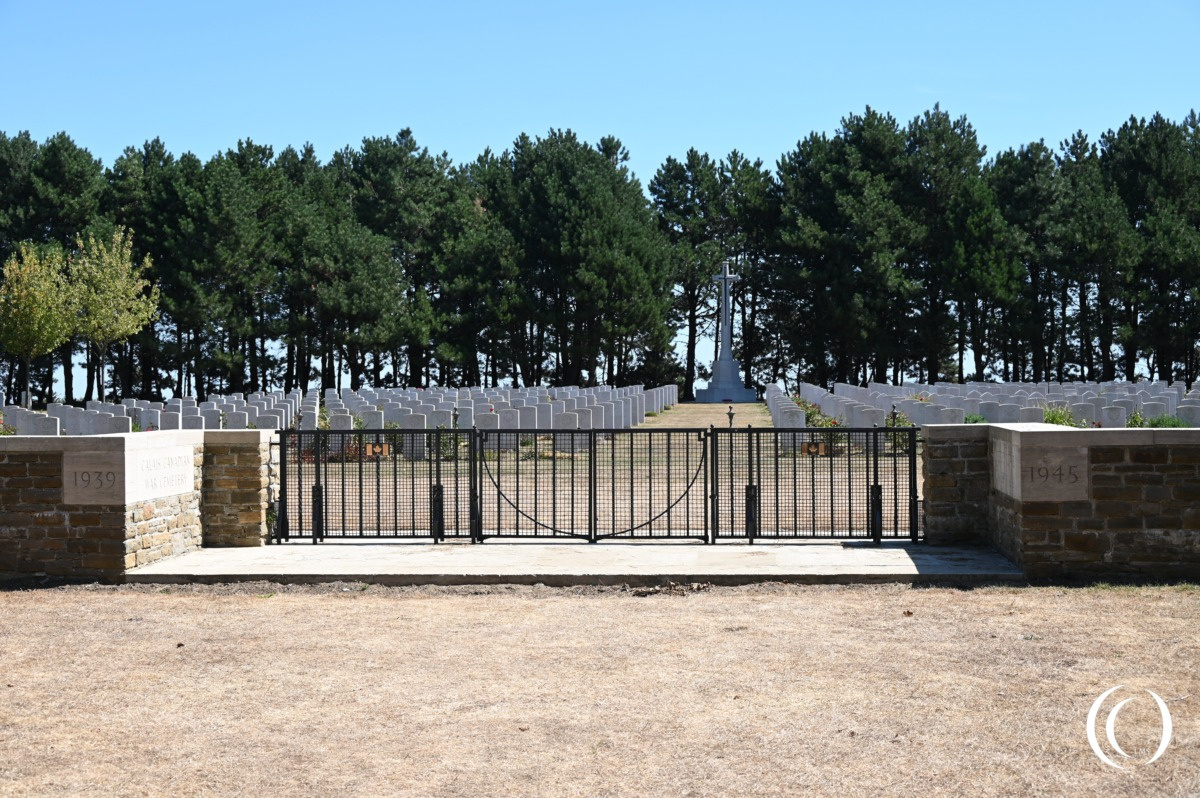
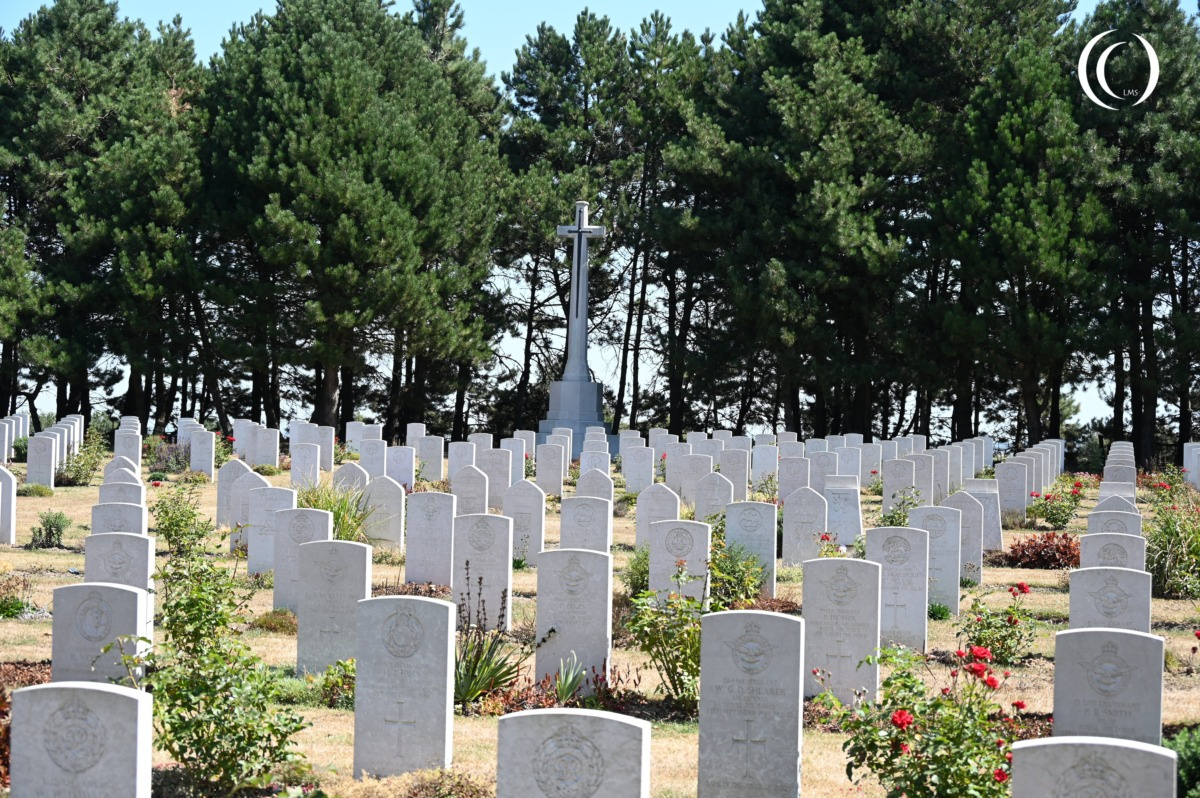
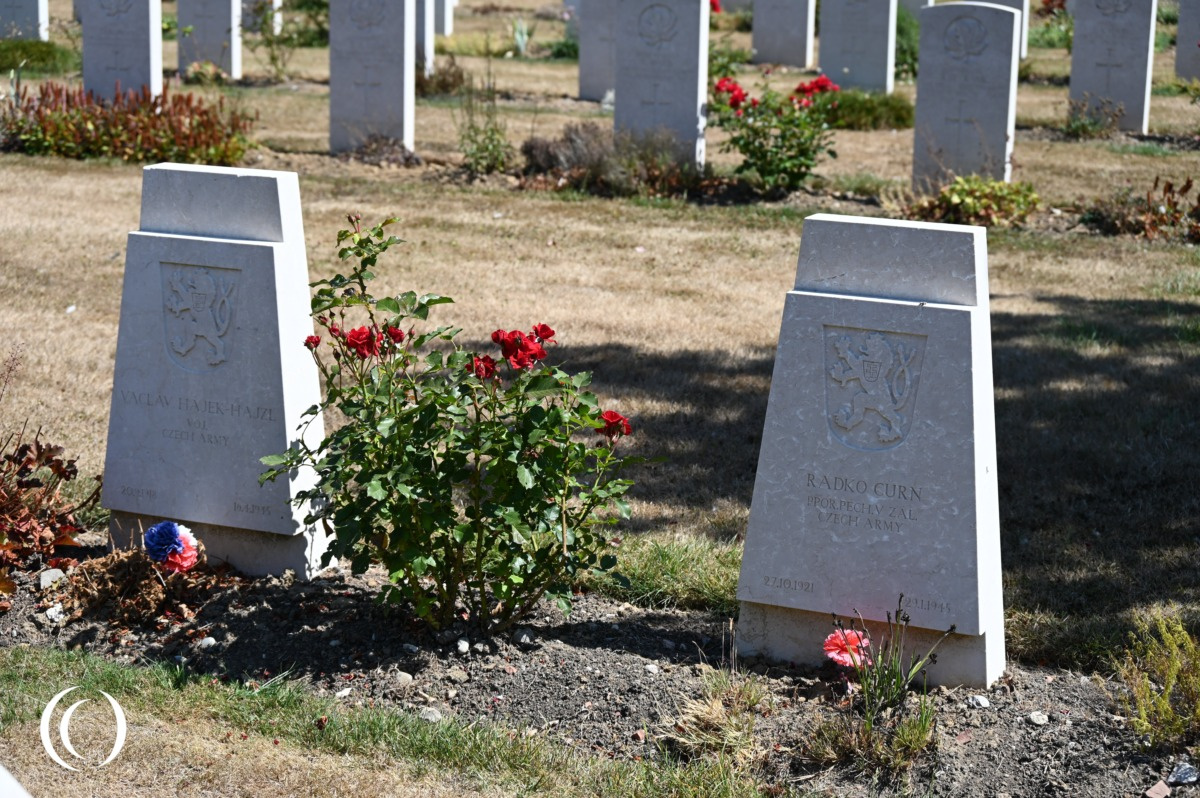
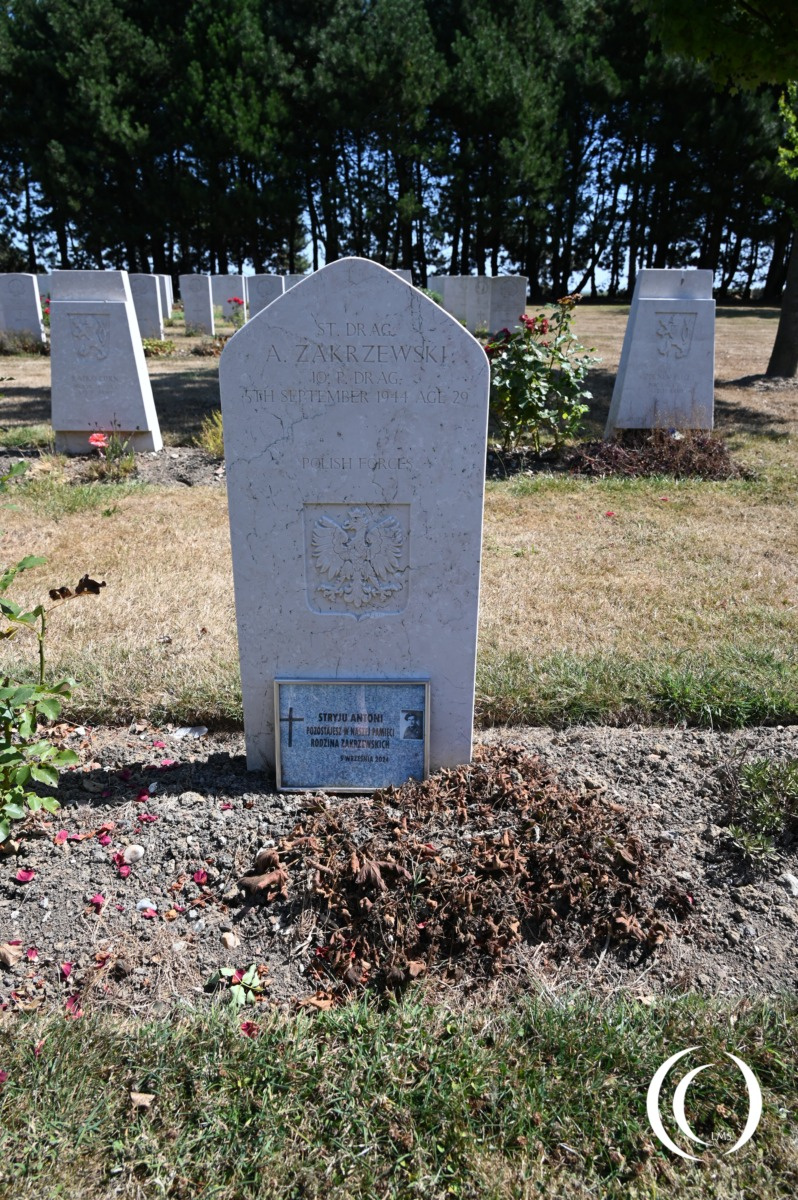
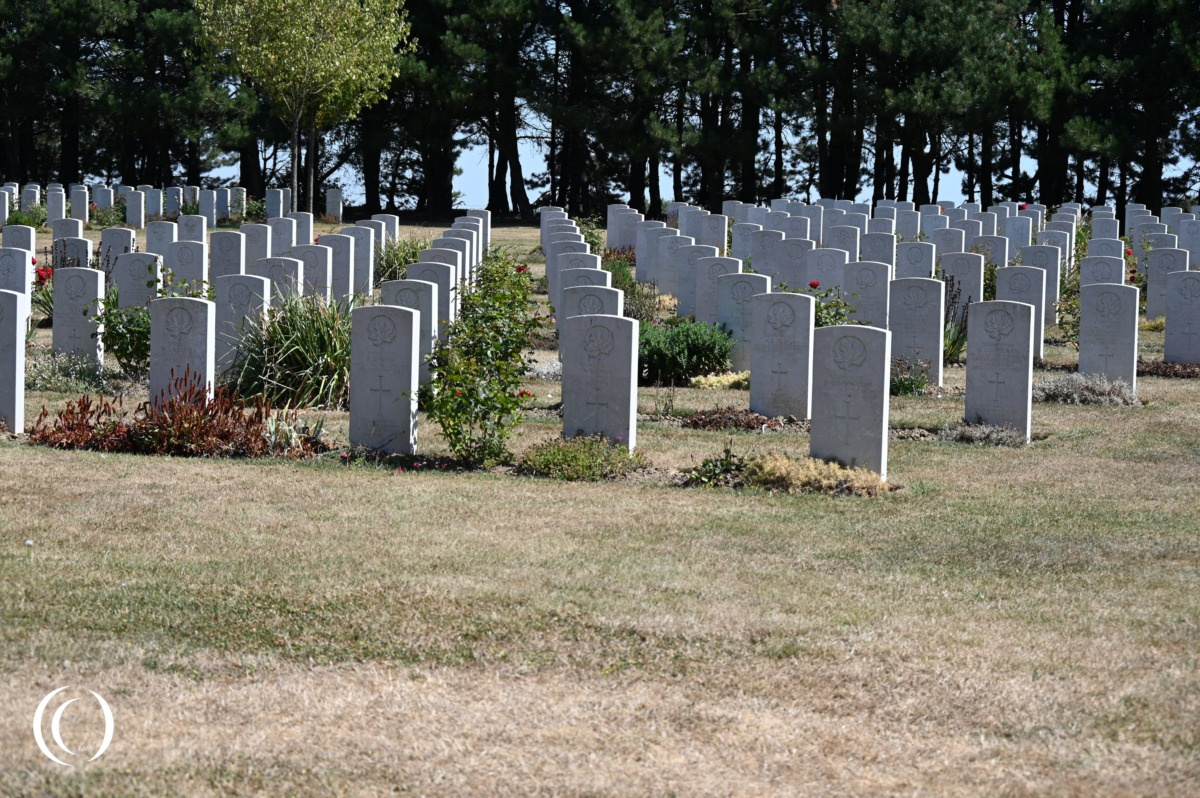
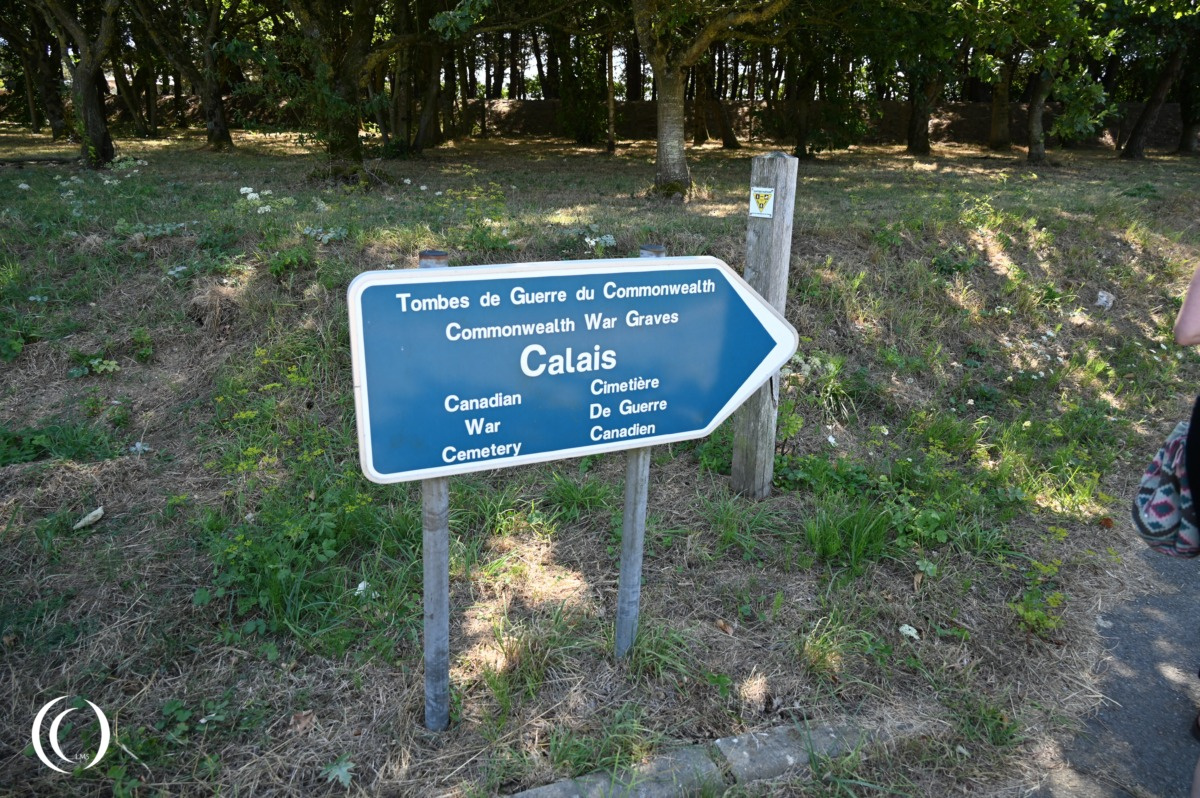
The Calais Canadian War Cemetery holds over 700 war victims of the Second World War. The Cemetery is situated halfway between Calais and Boulogne in France. There are 704 Commonwealth burials, 30 of them unidentified, six Czech and 19 Polish war graves.
It is a mix of Army and Airforce personnel. The highest rank on this cemetery belongs to Charles Palmer, ranking Wing commander of the 405 Squadron RCAF (Royal Canadian Air Force) equivalent to a Lieutenant-Colonel in the army. He perished during a Lancaster bombing operation on German coastal batteries at Cap Gris-Nez during the liberation of Calais on 26 September 1944.
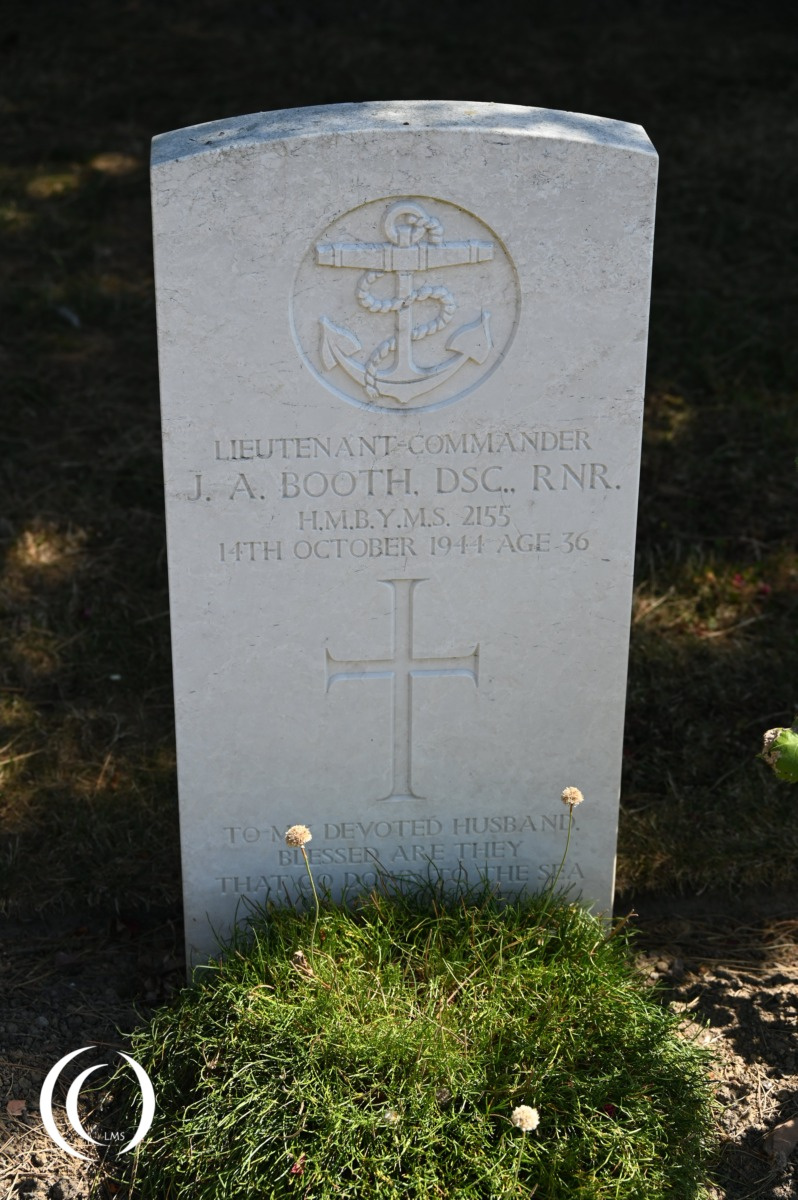
H.M.B.Y. (or HMS BYMS) refers to Her Majesty’s British Yard Mine Sweepers, which were wooden motor minesweepers built in the United States and transferred to the Royal Navy during World War II under the Lend-Lease program.
DSC: Distinguished Service Cross, a third-level military decoration awarded for gallantry during active operations against the enemy at sea.
RNR: Royal Naval Reserve, the volunteer reserve force of the United Kingdom’s Royal Navy.
Wing Commander Charles William Palmer
Wing Commander Charles William Palmer, DFC (J/15818), RCAF, was a Canadian bomber pilot who served with No. 405 (Vancouver) Squadron during the Second World War.
Born on 1 August 1914 and associated with Dundalk, Ontario, Palmer enlisted in the Royal Canadian Air Force in 1940. He underwent training in Canada before qualifying as a pilot and travelling overseas in September 1941.
Palmer joined No. 405 Squadron RCAF in June 1942. Flying operationally with Bomber Command, he completed approximately 21 sorties in four months. His courage and effectiveness earned him the Distinguished Flying Cross (DFC), which was presented to him by King George VI at Buckingham Palace on 15 December 1942.
By 1944, Palmer had risen to the rank of Wing Commander and was serving as a Lancaster captain with 405 Squadron. On 26 September 1944, he commanded Lancaster III PB129, LQ-A, on a daylight operation against the German coastal batteries at Cap Gris-Nez, France, principally associated with Batterie Todt.
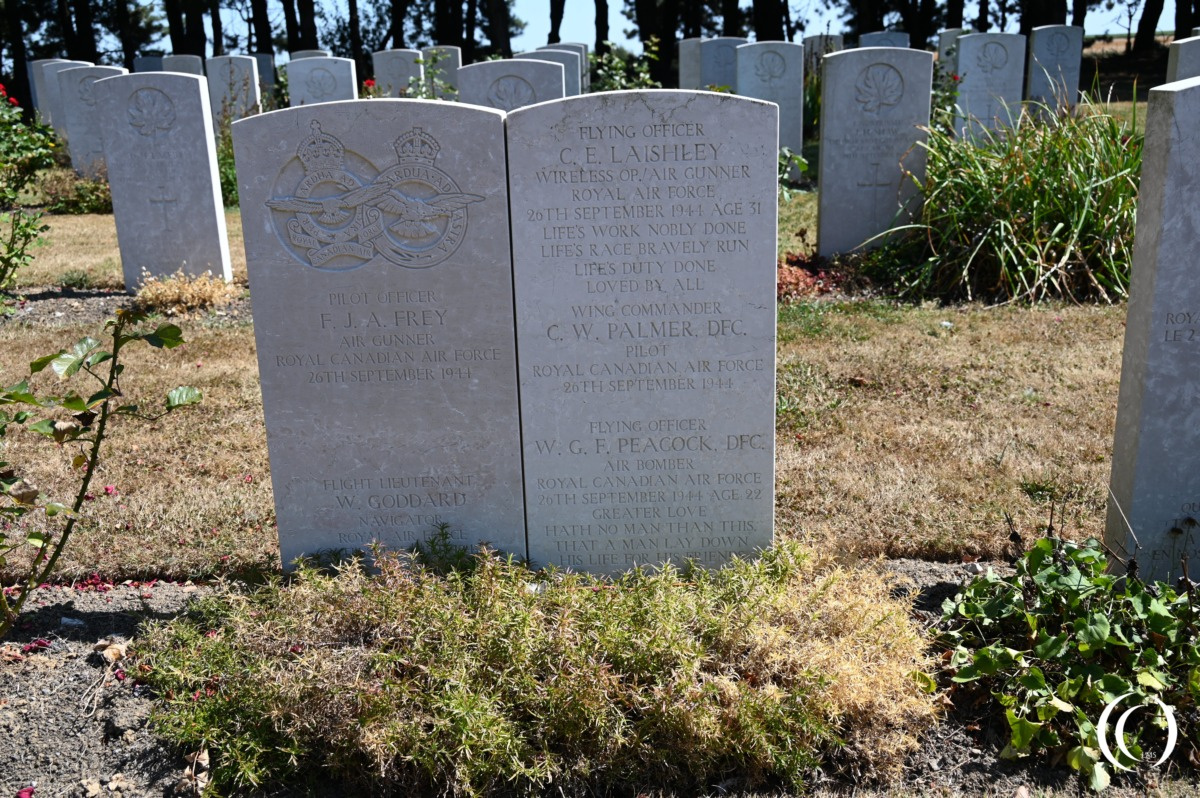
The Last Flight of Lancaster PB129
On 26 September 1944, Lancaster III PB129, coded LQ-A, of No. 405 (Vancouver) Squadron RCAF lifted off from RAF Gransden Lodge on a daylight operation over the French coast. At the controls was Wing Commander Charles William Palmer DFC, an experienced Canadian bomber pilot and the aircraft’s captain.
The target lay at Cap Gris-Nez, on the Pas-de-Calais coast, where German forces still held heavily armed coastal batteries threatening Allied shipping and the advance of Allied ground forces. The principal target associated with the raid was Batterie Todt, formerly known as the Siegfried Battery, whose four enormous 38-cm guns were capable of firing across the English Channel.
PB129 approached the target with the other Lancasters of 405 Squadron. As the formation made its bombing run, German anti-aircraft fire rose from the coastal defences. PB129 was struck by flak, setting the port inner engine ablaze. With the aircraft badly damaged and rapidly becoming uncontrollable, Palmer ordered his crew to abandon the Lancaster.
The eight-man crew fought to escape the stricken aircraft. Flight Lieutenant Hugh John Anderson DFM, Flying Officer Albert James Wilcock DFC, and Flying Officer Irvin Leroy Lauckner DFC survived, escaping by parachute. Palmer and four other crew members—Flight Lieutenant Wilfred Goddard, Flying Officer Wilfred George Peacock, Flying Officer Charles Edwin Laishley, and Pilot Officer Frederick John Alec Frey—were killed.
PB129 plunged to the ground in the Pas-de-Calais, in territory already controlled by the Allies. Palmer was buried at Calais Canadian War Cemetery, Leubringhen, alongside many Canadian airmen who died during the liberation of northern France.
Only three days later, Allied troops attacked the remaining German positions around Cap Gris-Nez. Batterie Todt was finally captured on 29 September 1944.
Visit
The peacefully situated cemetery is open to visitors during daylight hours. It is a short walk from the car park.
Sources:
- CWC.org
- Europeremembers.com
- aircrewremembered.com/palmer—charles.html
- europeremembers.com
- canadiansoldiers.com
- bombercommandmuseumarchives.ca
- liberationroute.com
- veterans.gc.ca

Much respect to those who made the ultimate sacrifice so that others may be free from tyranny.