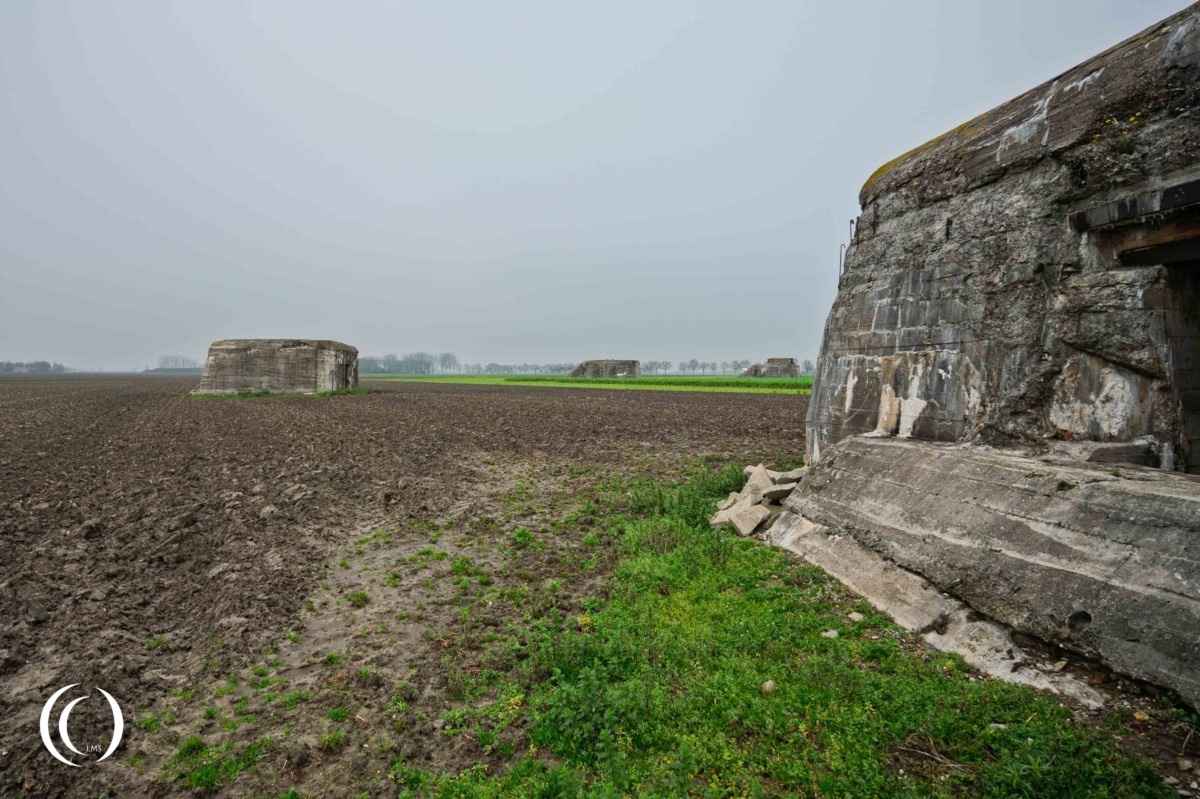
Positioned inland behind the coastal defense line of Walcheren and Schouwen-Duivenland lies the deeper German gun battery in the Eendracht Stellung (Eng. Line). Several smaller and larger defenses formed a line across Tholen and Sint-Philipsland. Construction of these positions ran from 1942 to 1943. The defense consisted of larger gun positions with Regelbau bunkers of Type 612 and 669, gun stands for field artillery, which had a clear field of fire across the flat farmlands and waterways. The name Eendracht Stelling (in German Eendracht Stellung) was a German defense line that guarded access to the Hollands Diep and the Volkerak, the mouth of the Rhine and Meuse, during the Second World War. The name is derived from the polder in which the position is located, the Eendrachtspolder.
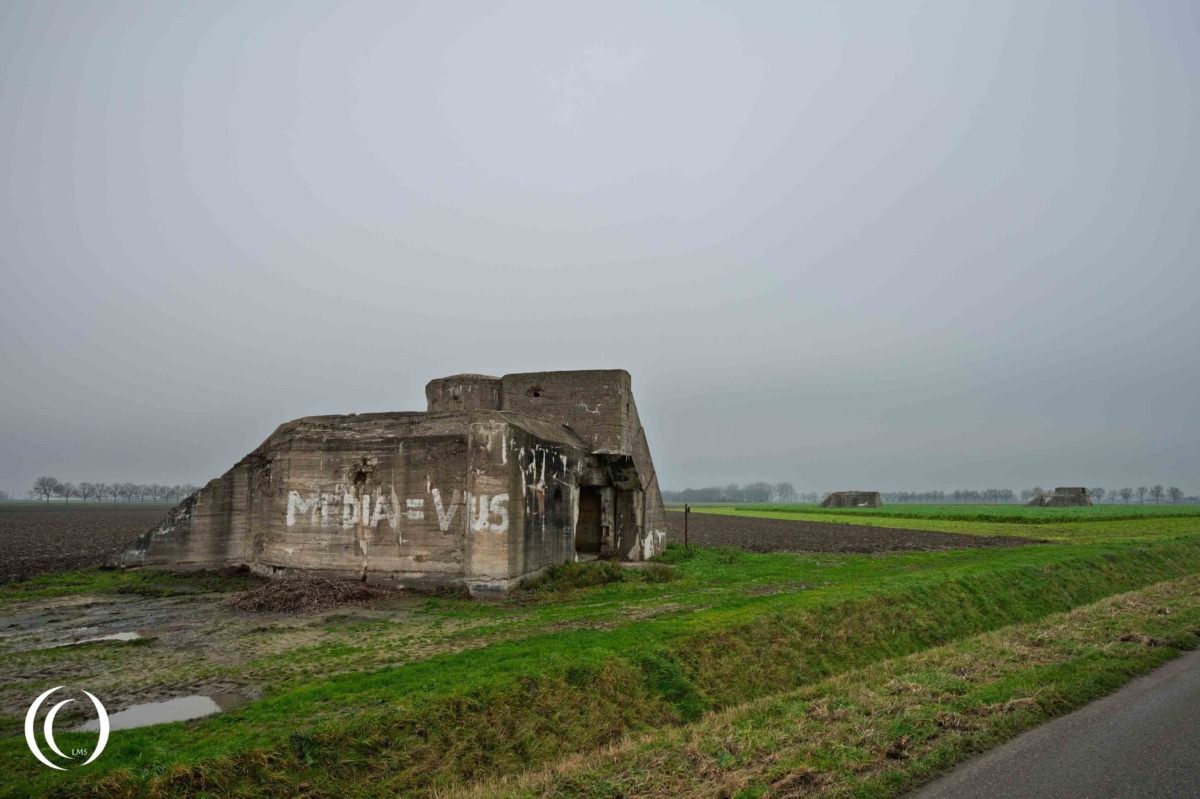
Stützpunkt XXXVIII H Organisation
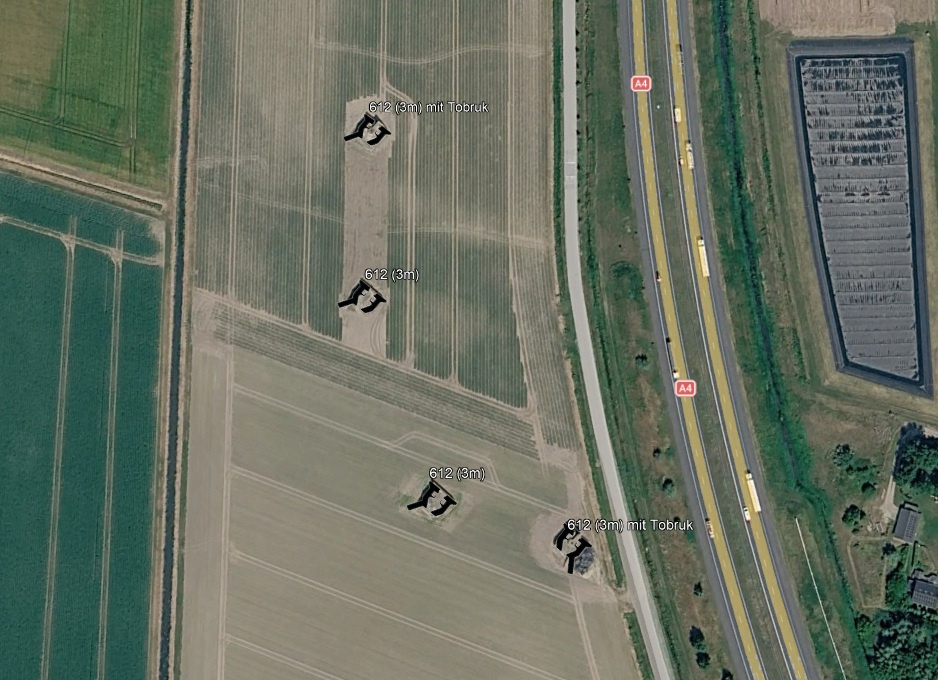
The four Regelbau 612 bunkers from Stützpunkt XXXVIII H belong to Stützpunktgruppe Lepelstraat. The group included Widerstandsnest WN 533 H – Hollaerdijk and Stützpunkt Stp XXXVIII H – HKB 6/1719 “Kledde” (Kladde). This group of defensive positions, in turn, belonged to: Absch. Zeeland / UA Steenbergen – StpGr Lepelstraat.
Meaning of the abbreviations:
- Absch. = Abschnitt (sector or defensive section)
- Zeeland = the Zeeland coastal defense sector
- UA = Unterabschnitt (subsector)
- Steenbergen = the Steenbergen subsector
- StpGr = Stützpunktgruppe (strongpoint group)
- Lepelstraat = the strongpoint group centered on Lepelstraat
- Stp = Stützpunkt (strongpoint)
- HKB 6/1719 “Kledde”= Heeresküstenbatterie (Army Coastal Battery) with a local designation (Kledde – Thyborøn etc.)
- 6/1719 = Command sector and unit designation controlling the defensive position
So the full simplified translation of Absch. Zeeland / UA Steenbergen – StpGr Lepelstraat is: Zeeland Sector → Steenbergen Subsector → Lepelstraat Strongpoint Group
German coastal defenses in the Netherlands were organized hierarchically into sectors (Abschnitte), subsectors (Unterabschnitte), and strongpoint groups (Stützpunktgruppen). The Lepelstraat group formed part of the landward defenses protecting the approaches between the islands of Zeeland and the mainland around Bergen op Zoom and Steenbergen.
Bunker types in Stützpunkt XXXVIII H
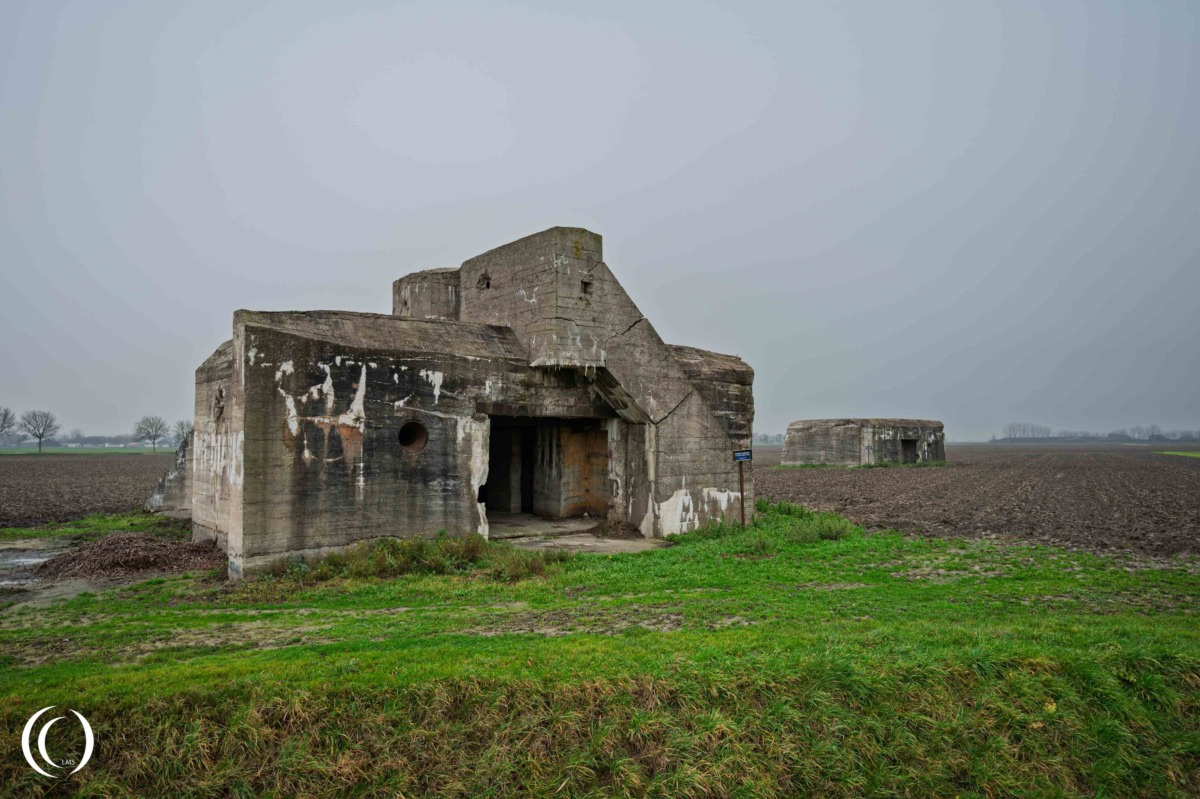
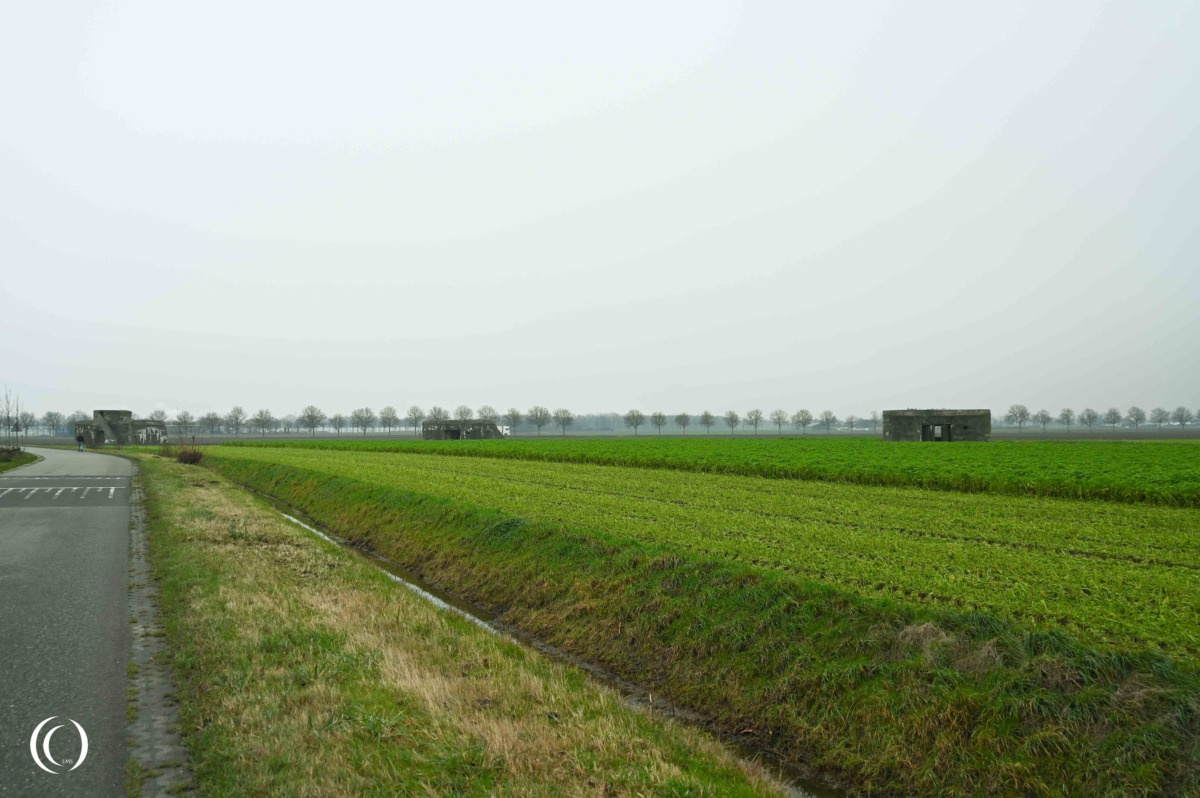
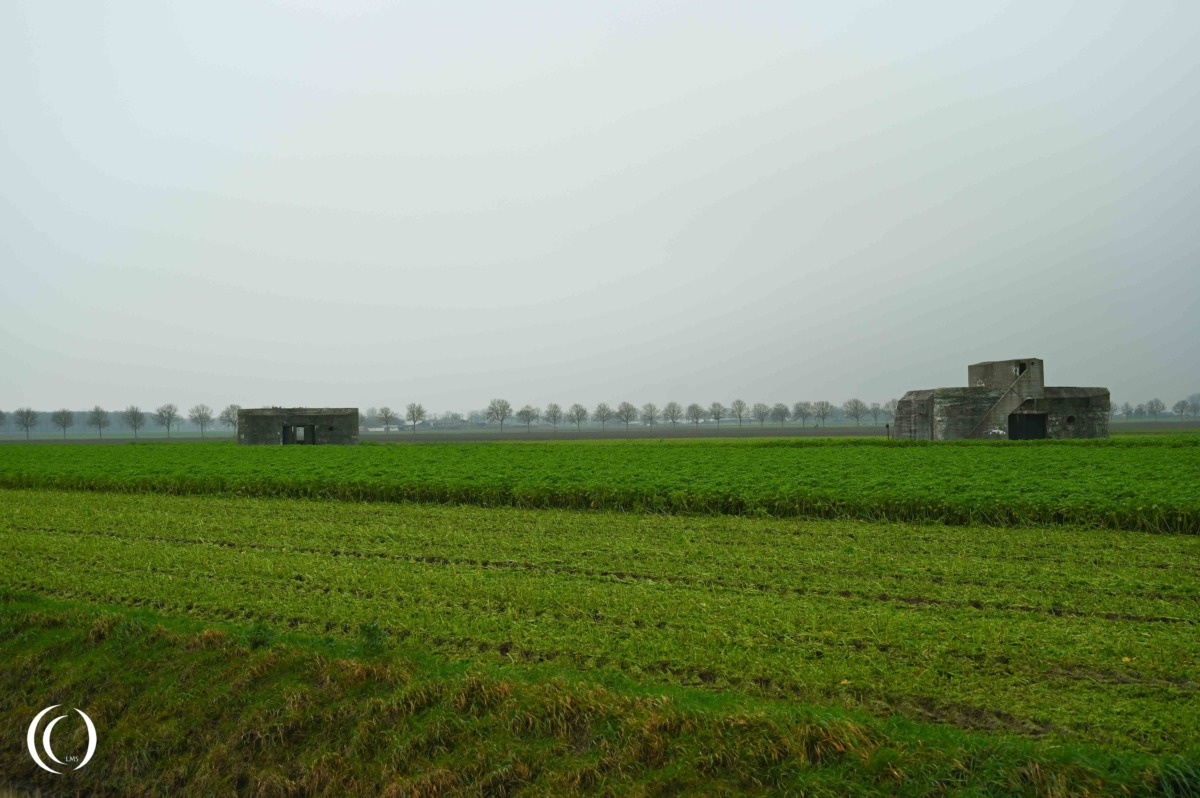
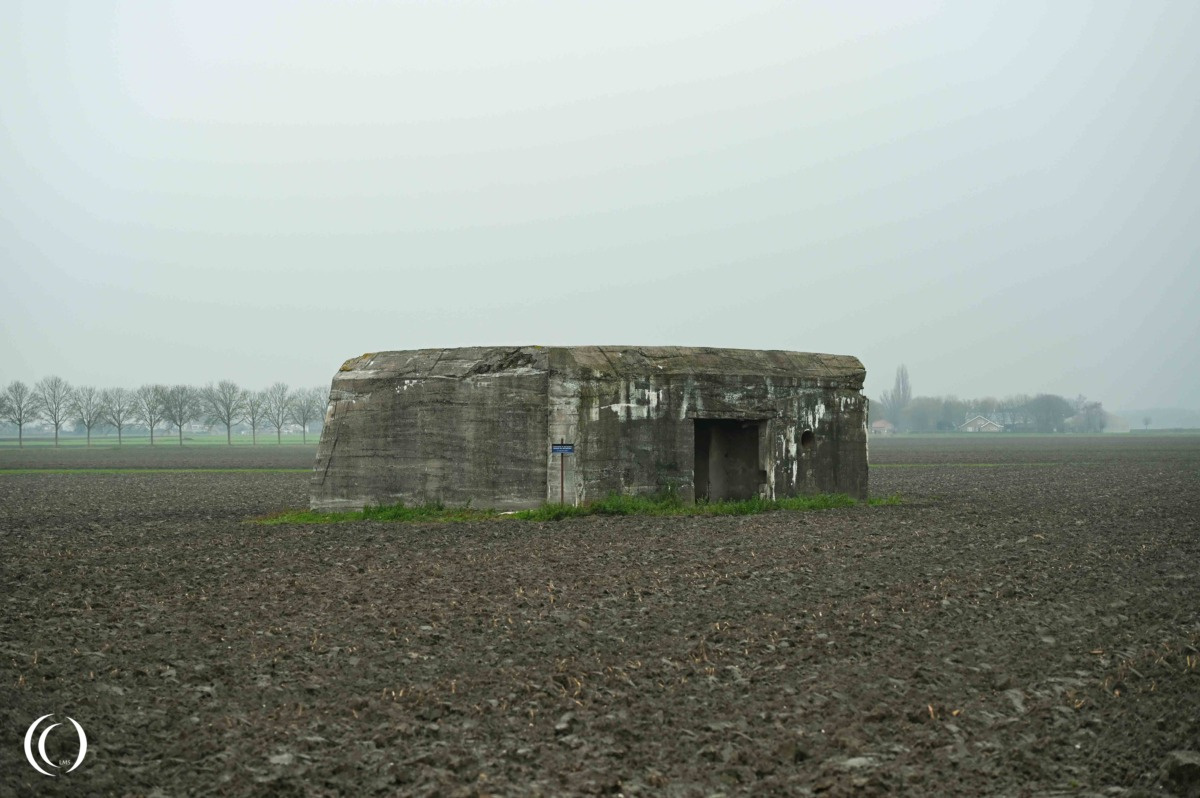
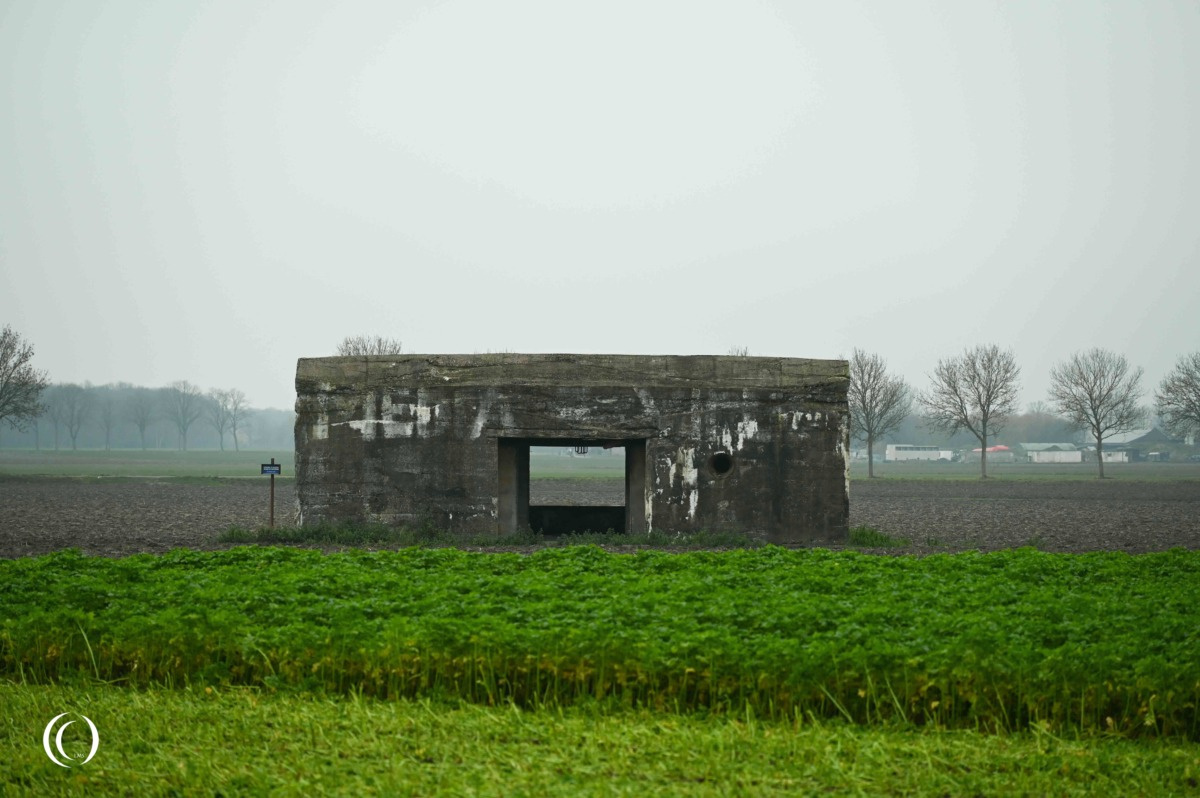
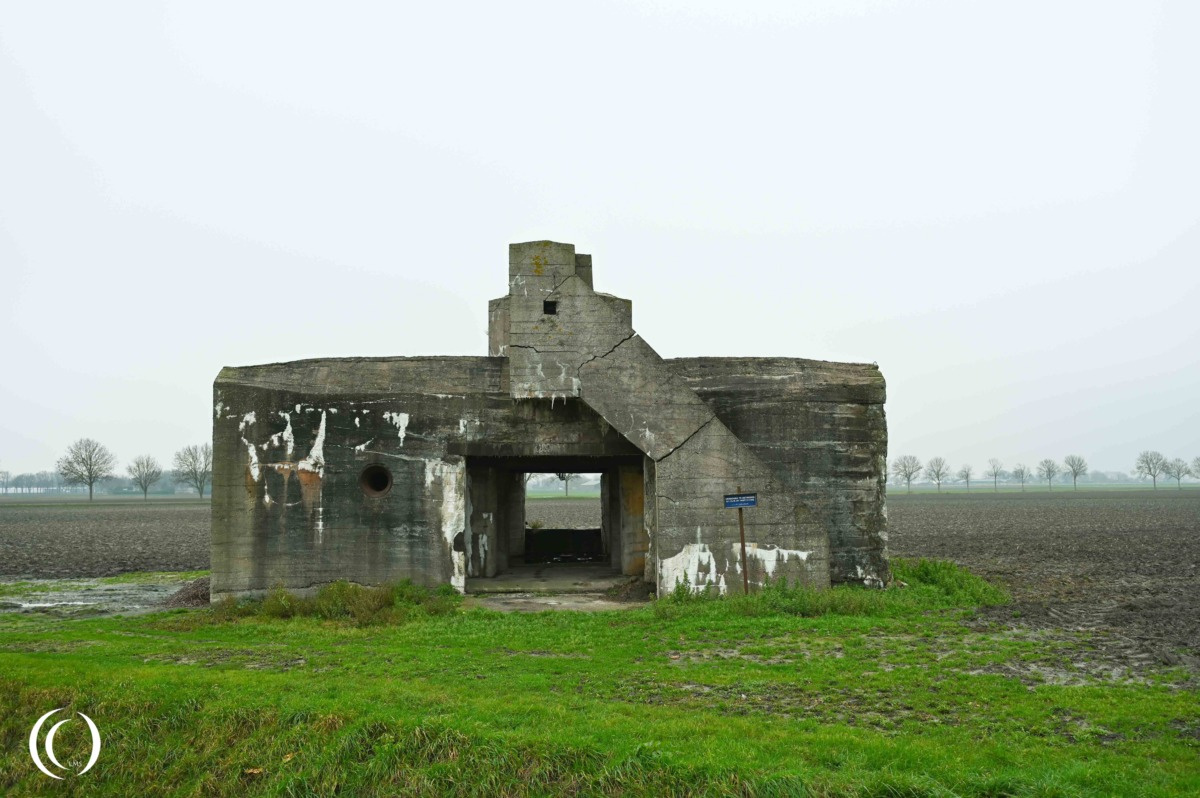
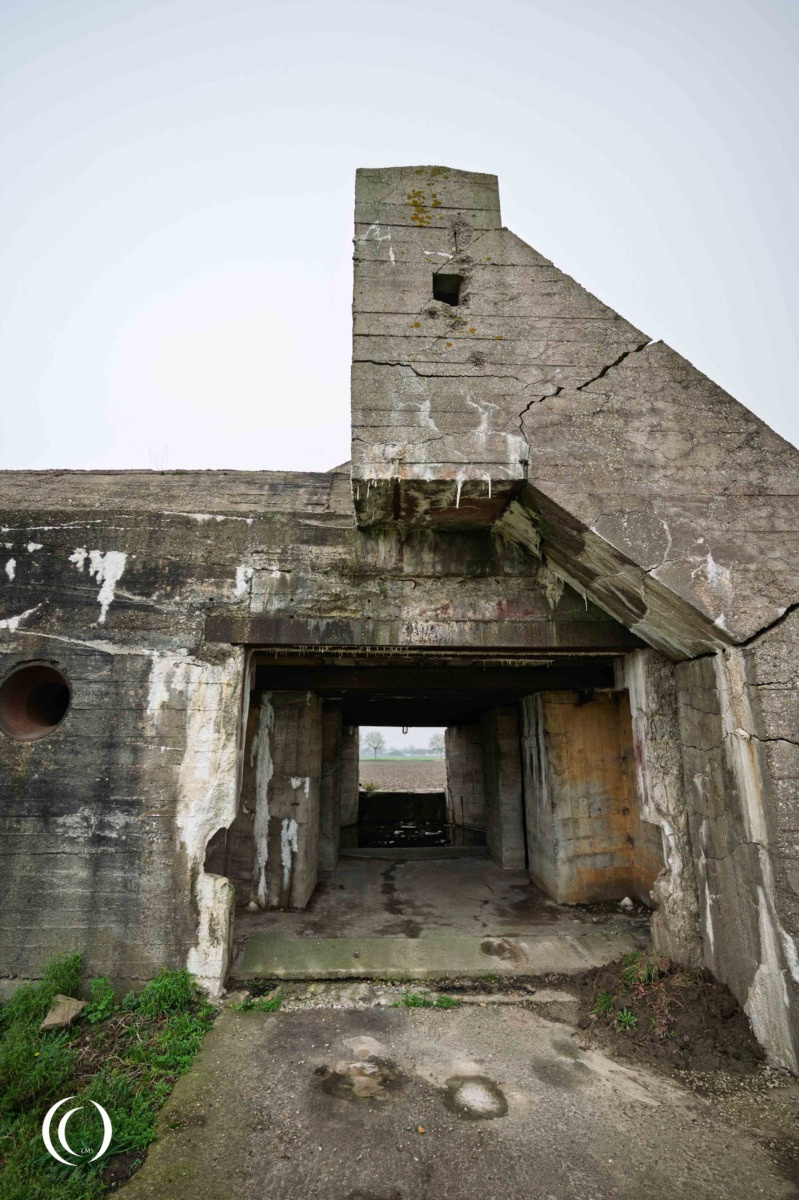
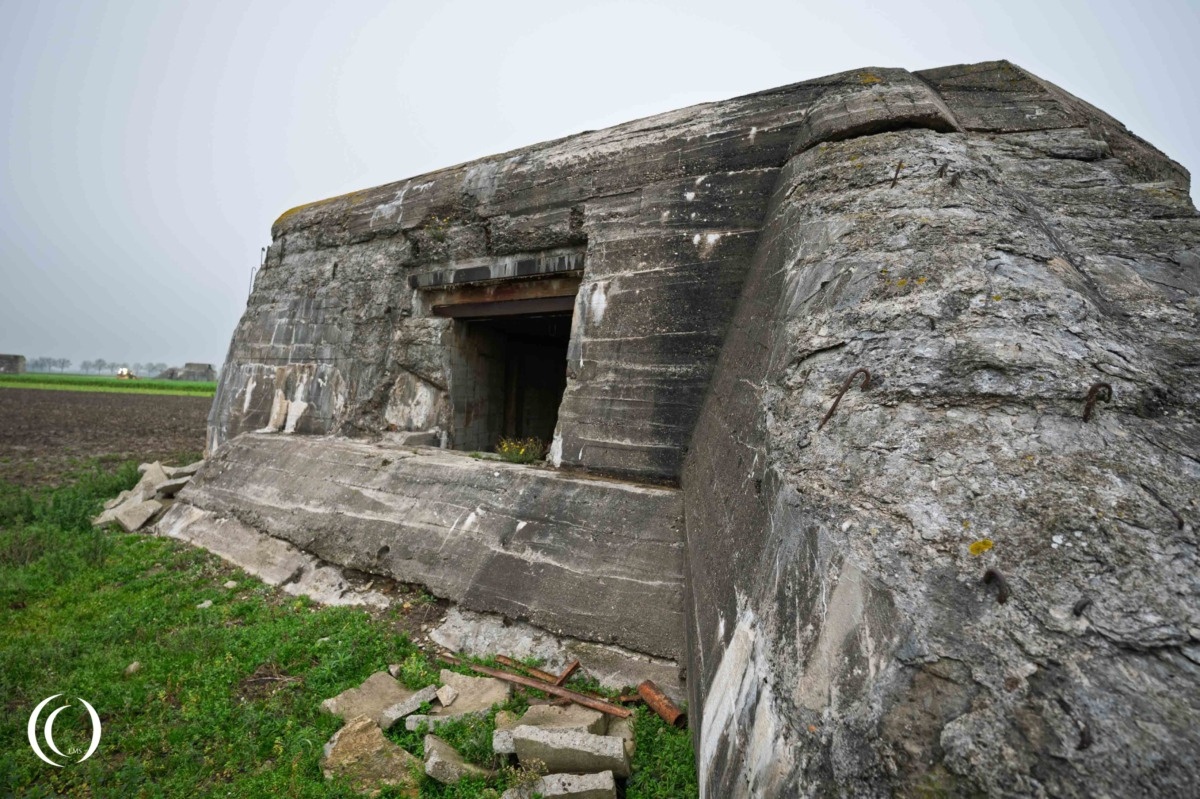
The four bunkers, clearly visible from the road, are from the Regelbau 612 types. These are a type of bunker with a so-called “Shartenstand,” an embrasure stand with a flanking wall on one side.
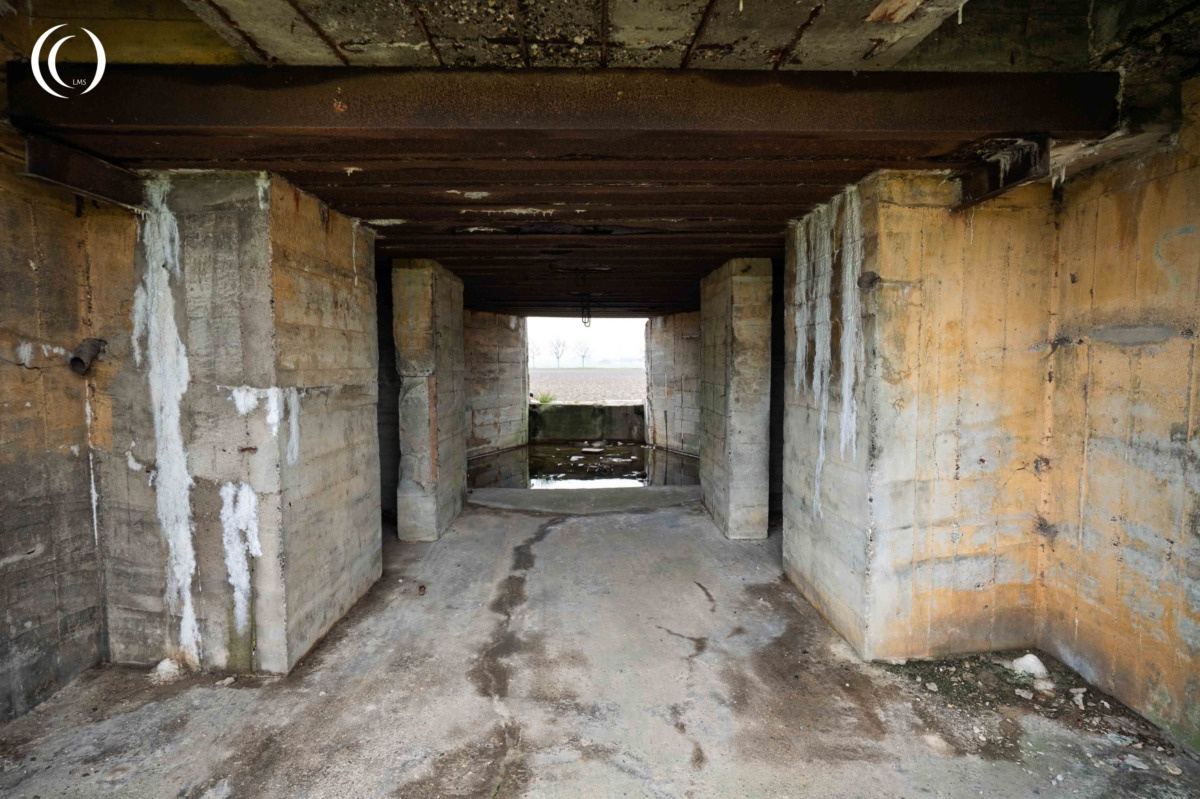
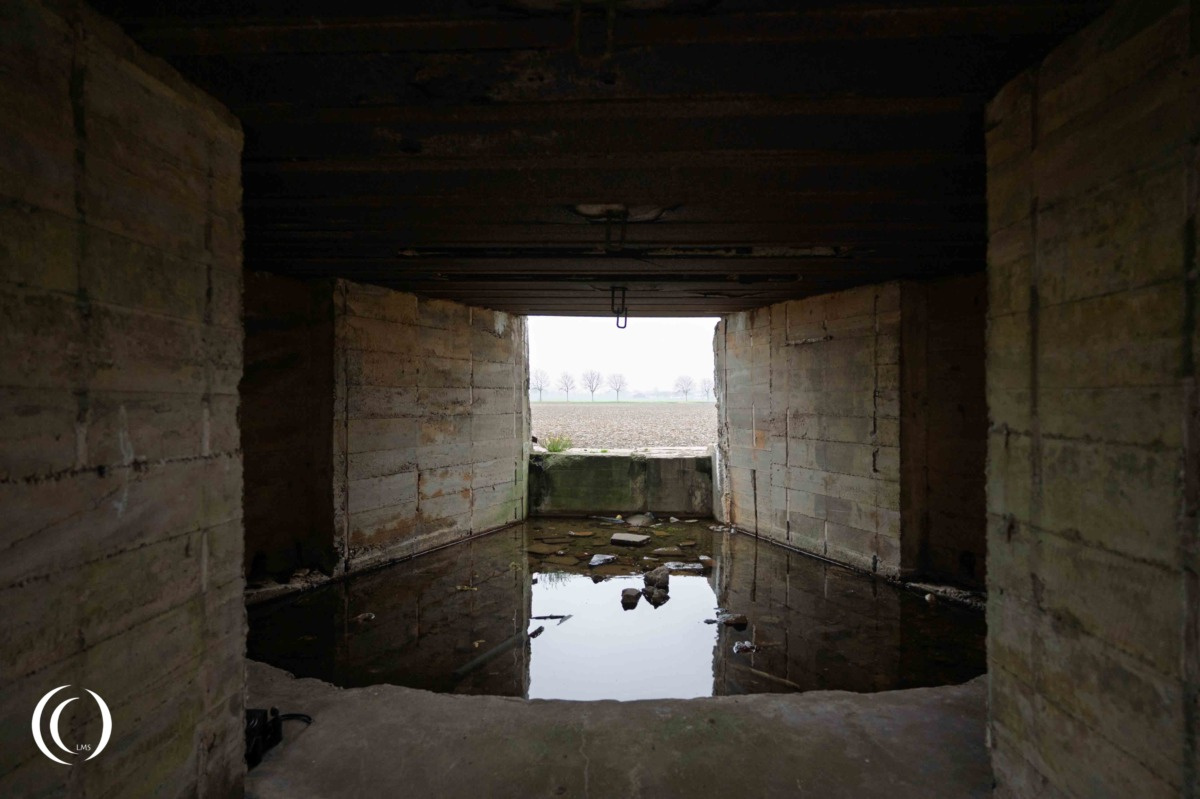
Regelbau 612 originally designated in German as: Schartenstand für Lande- und Sturmabwehrgeschütze ohne Nebenräume – Embrasure stands for landing and assault guns without ancillary rooms. These gun bunkers were about 9 by 9 meter long (15 meters including the defensive wall), 5,1 meters height and used 385 cubic meter concrete. The gun position inside was used for 7.5cm guns, 8cm FK 30(r) Russian guns, 10.5cm Howitzers and 10.5cm K 331 (f) French guns. In addition to the gun emplacement, the bunker was equipped with two ammunition rooms. Approximately 350 to 500 shells could be stored in these rooms depending on the caliber of the gun.
Regelbau 612 Modifications
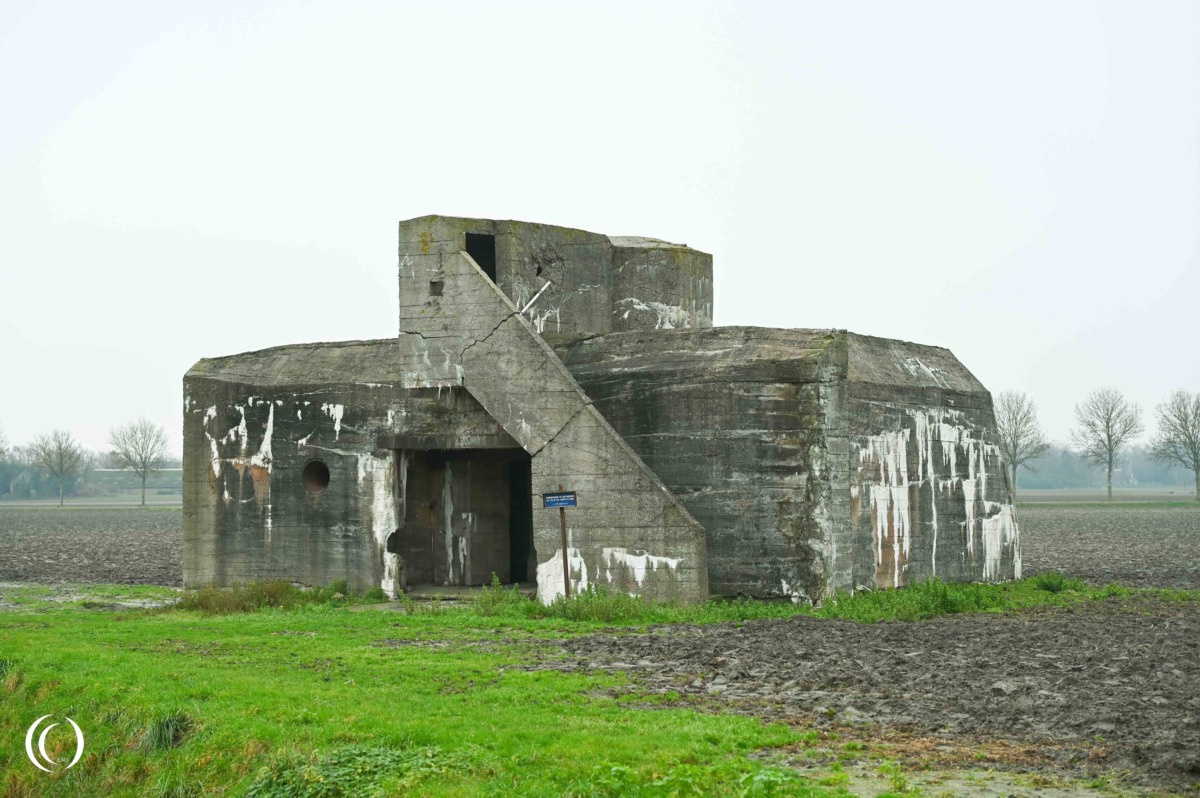
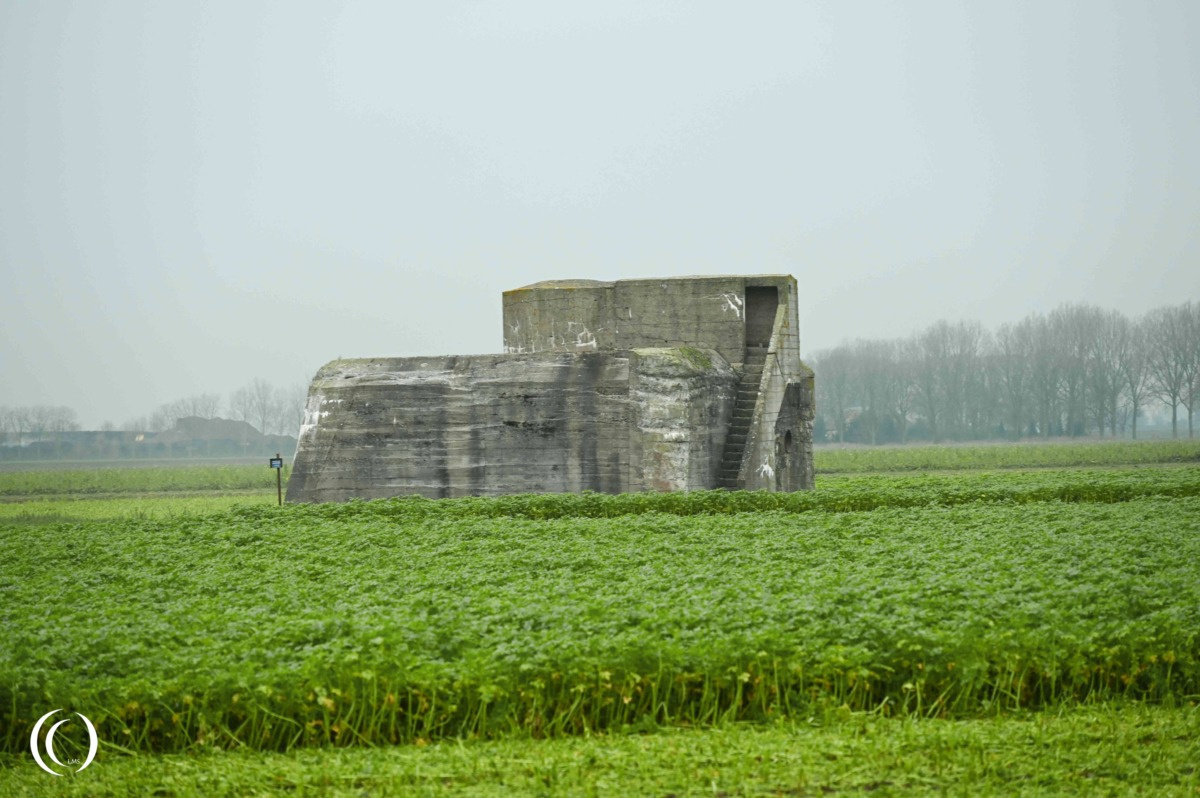
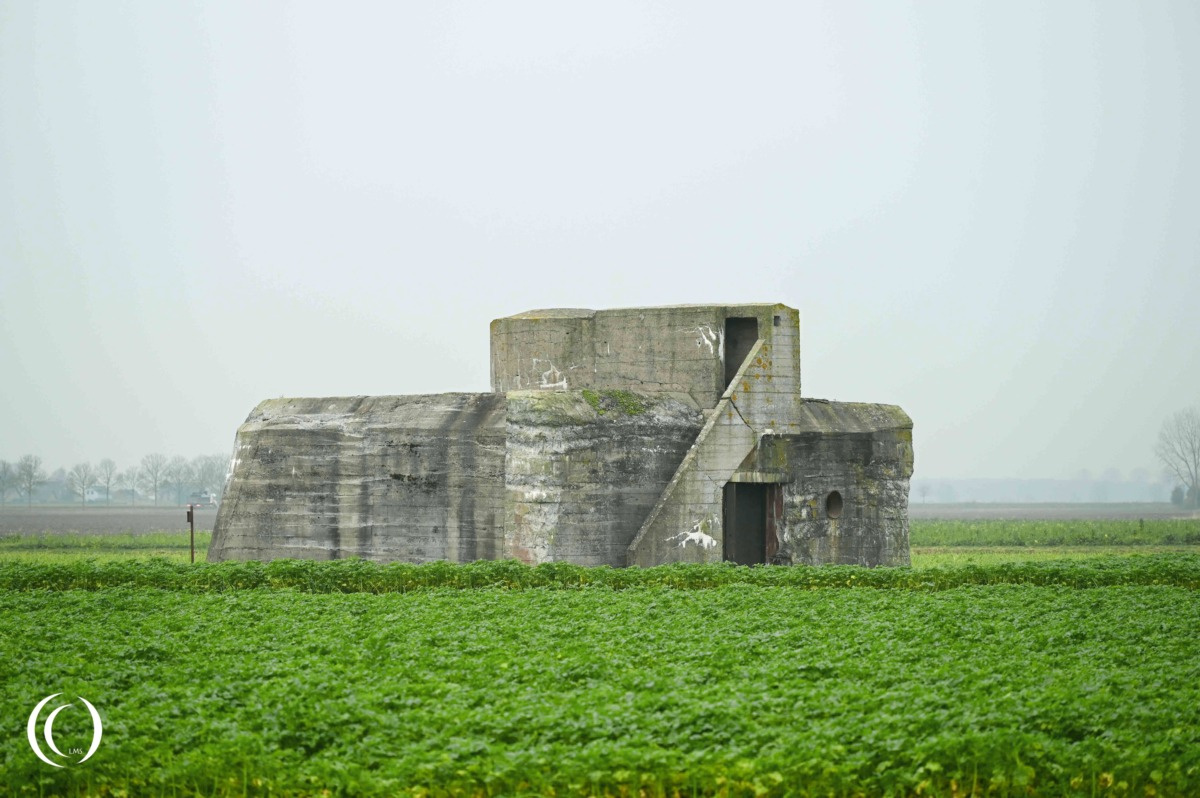
The standard Regelbau 612 bunkers in the Steenbergen area have local modifications. This is also the case for the Regelbau 669 types at Widerstandsnest Stützpunkt XXXVII H near the Heense Molen (north of Stützpunkt XXXVIII H). The modification involves a concrete Tobruk placed on top of the bunker, a machine-gun position for close-range defense. Additionally, a concrete staircase with high sides was cast to provide a sheltered ascent to the Tobruk. The two outer 612 bunkers of Stützpunkt XXXVIII H are equipped with a machine-gun/observation Tobruk.
During World War Two
The Allied forces reached the Dutch town of Steenbergen around 1944 and flanked the position, American and Canadian units simply bypassed the fortifications and the city via the Welberg, south-east of Steenbergen and created the opportunity to overrun the German positions relatively easily.
Visit
The bunkers are located in a private farmer’s field near the hamlet of Kladde, close to the A4 motorway past Steenbergen. The bunkers are not accessible but are clearly visible from the road.