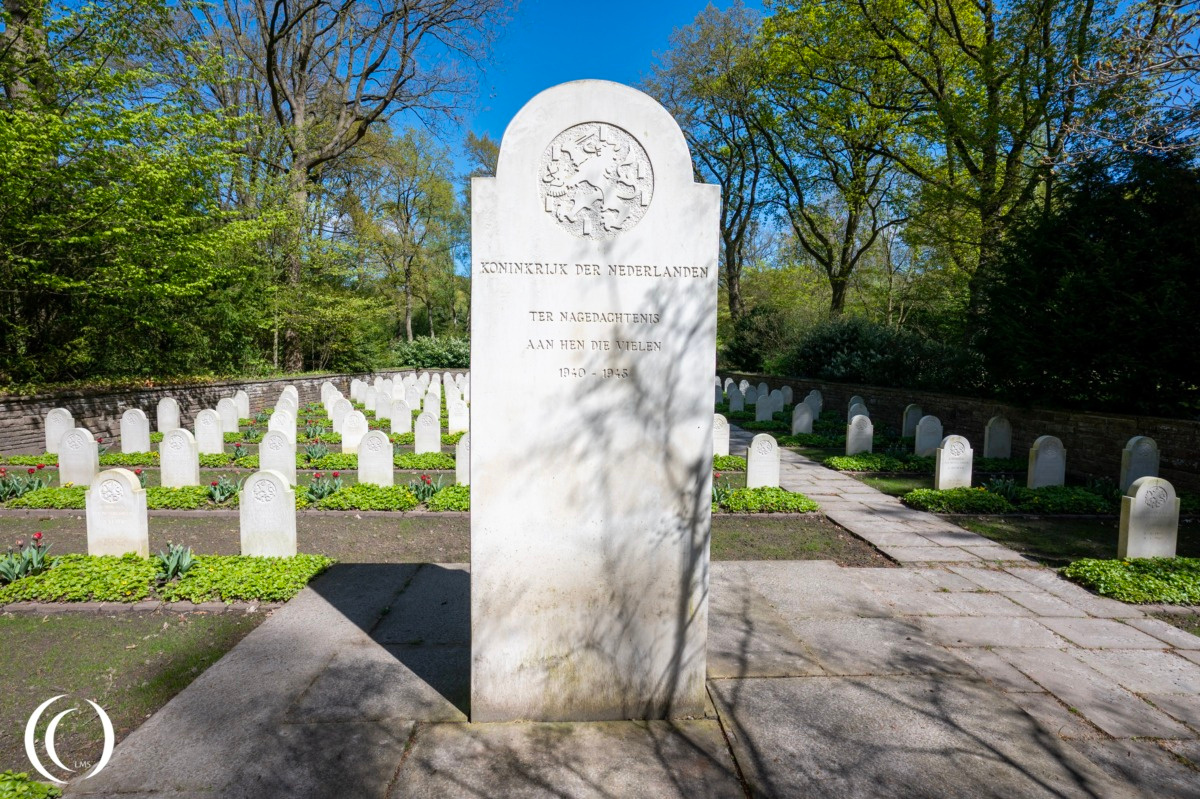
Friedhof (cemetery) Osterholz contains one of Germany’s most important burial sites for Dutch victims of the Second World War. The Dutch war graves section (Field N) is the final resting place of 169 Dutch nationals who died in Bremen and the surrounding region between 1940 and 1945. Most were civilians deported from the Netherlands as forced labourers (Zwangsarbeiter) to work in German factories, shipyards, and military construction projects. Many died from disease, exhaustion, malnutrition, bombing raids, or the harsh conditions under which they lived and worked.
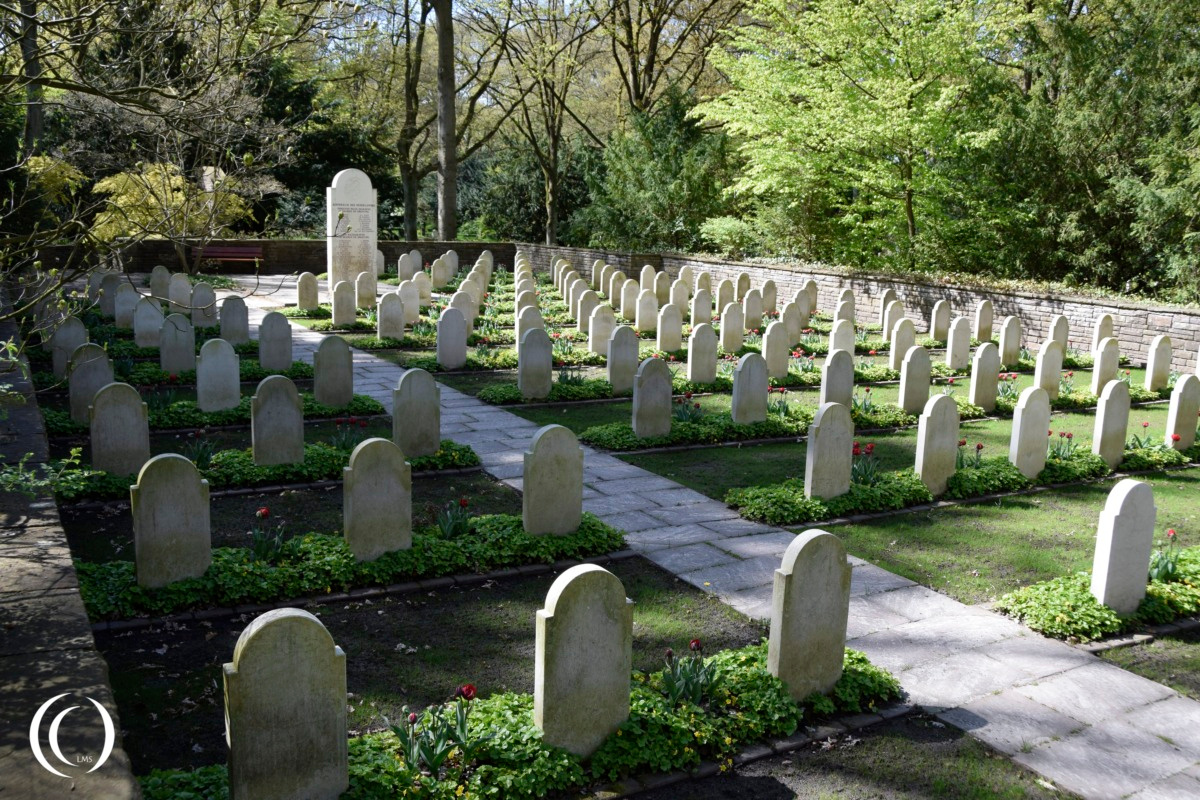
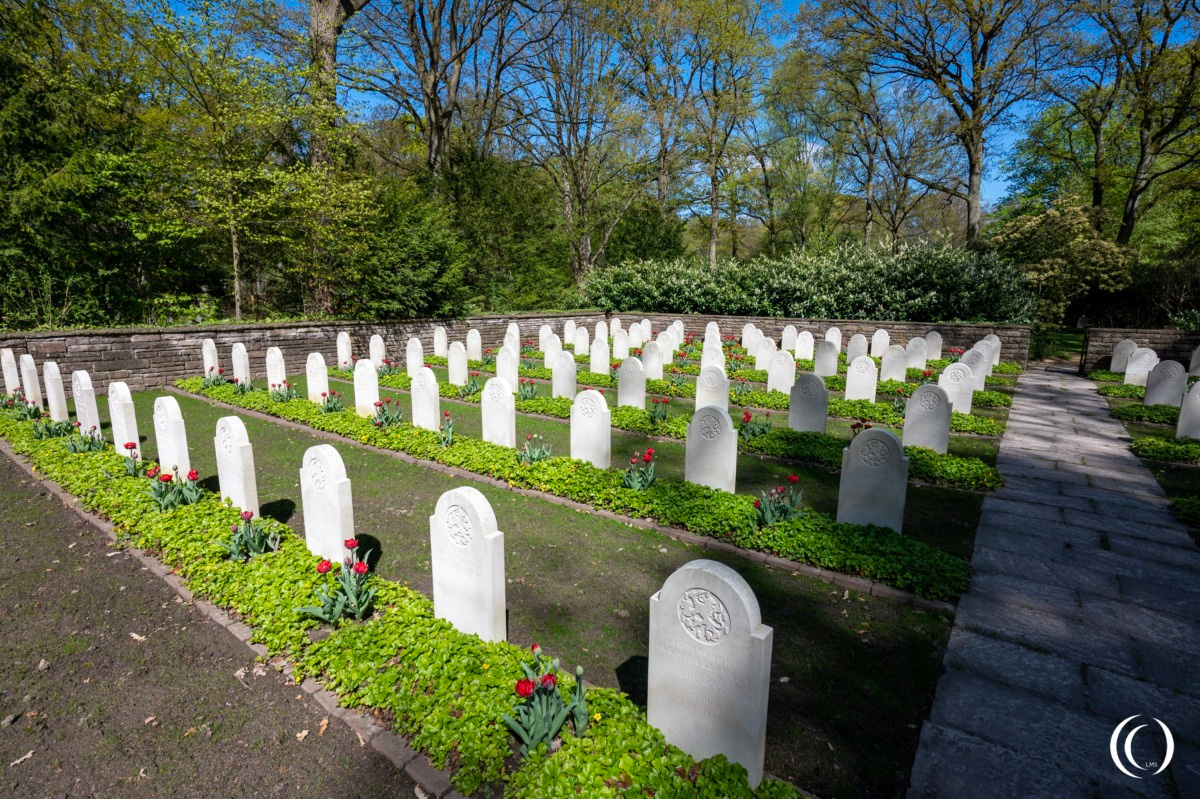
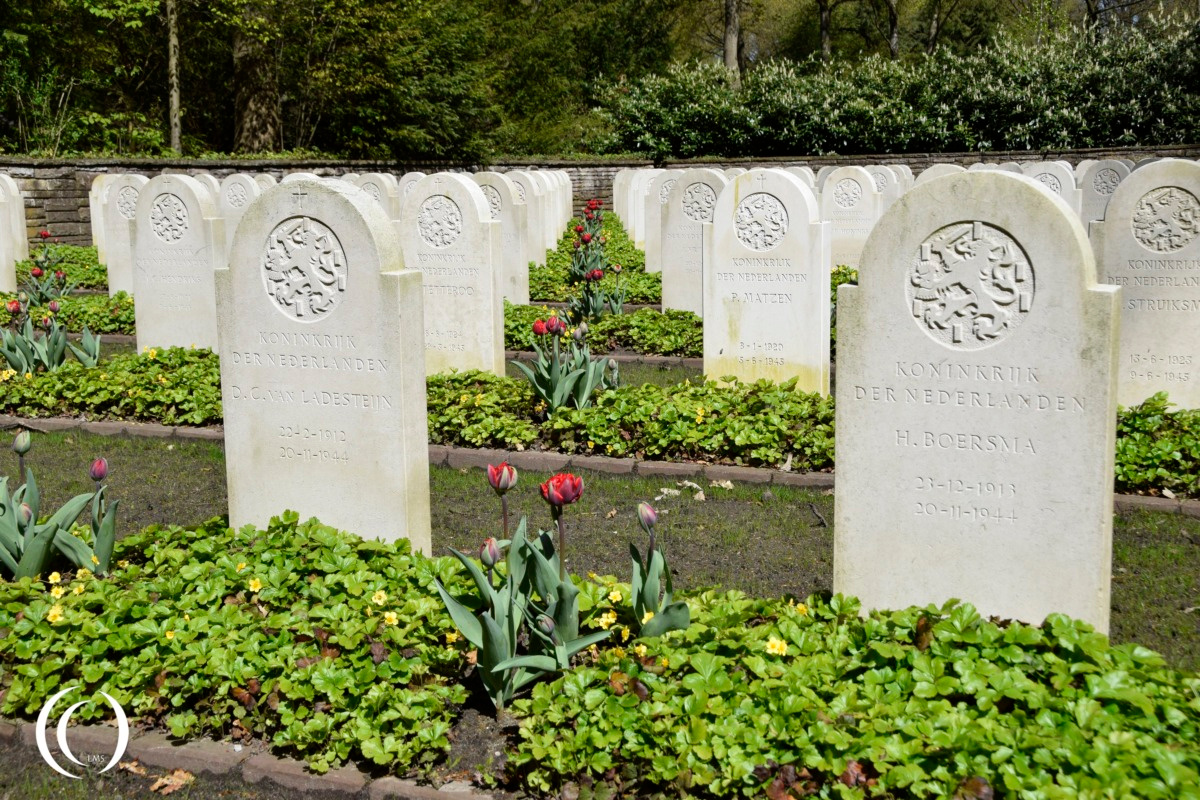
After the war, the graves were brought together into a single memorial section to ensure permanent care and remembrance. A prominent memorial cross honours the Dutch victims and symbolizes the suffering endured by those who were forced to work far from home. The graves are maintained under agreements between Germany and the Netherlands and form part of the international war cemetery at Osterholz. It was established in 1963 on the initiative of and in cooperation with the Netherlands War Graves Commission.
The Dutch war graves serve as a place of remembrance and reconciliation, preserving the memory of civilians whose lives were lost during the Nazi occupation and forced labour system.
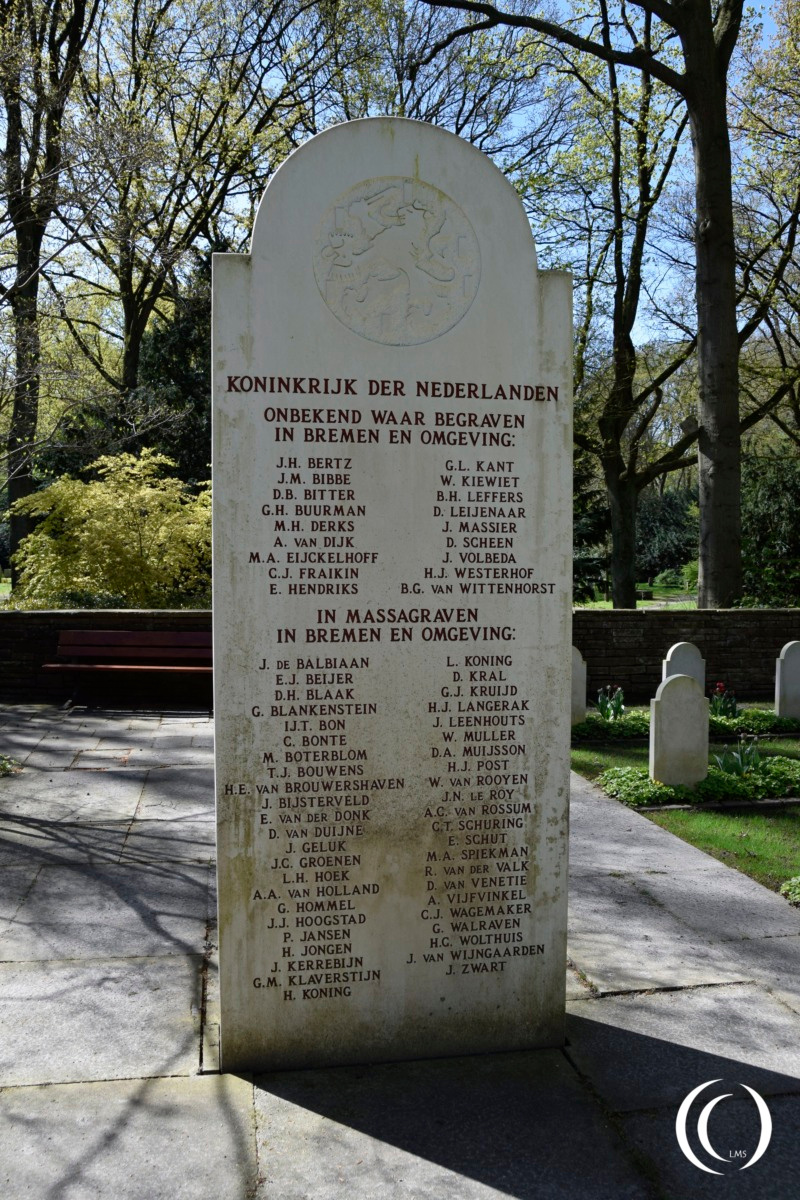
In the photo above, beneath the line “Koninkrijk der Nederlanden” (Eng. “Kingdom of the Netherlands”), appears the line: “Burial location unknown; in Bremen and surrounding area,” followed by a list of names. Below that is the section: “In mass graves in Bremen and the surrounding area,” with an even longer list of names.
Visit
You will find the Dutch war graves near the western entrance at grave field N containing 169 Dutch graves and the names of 63 additional war victims.
Sources
- Kriegsgraeberstaetten.volksbund.de
- Wikipedia
- Oorlogsgravenstichting.nl
