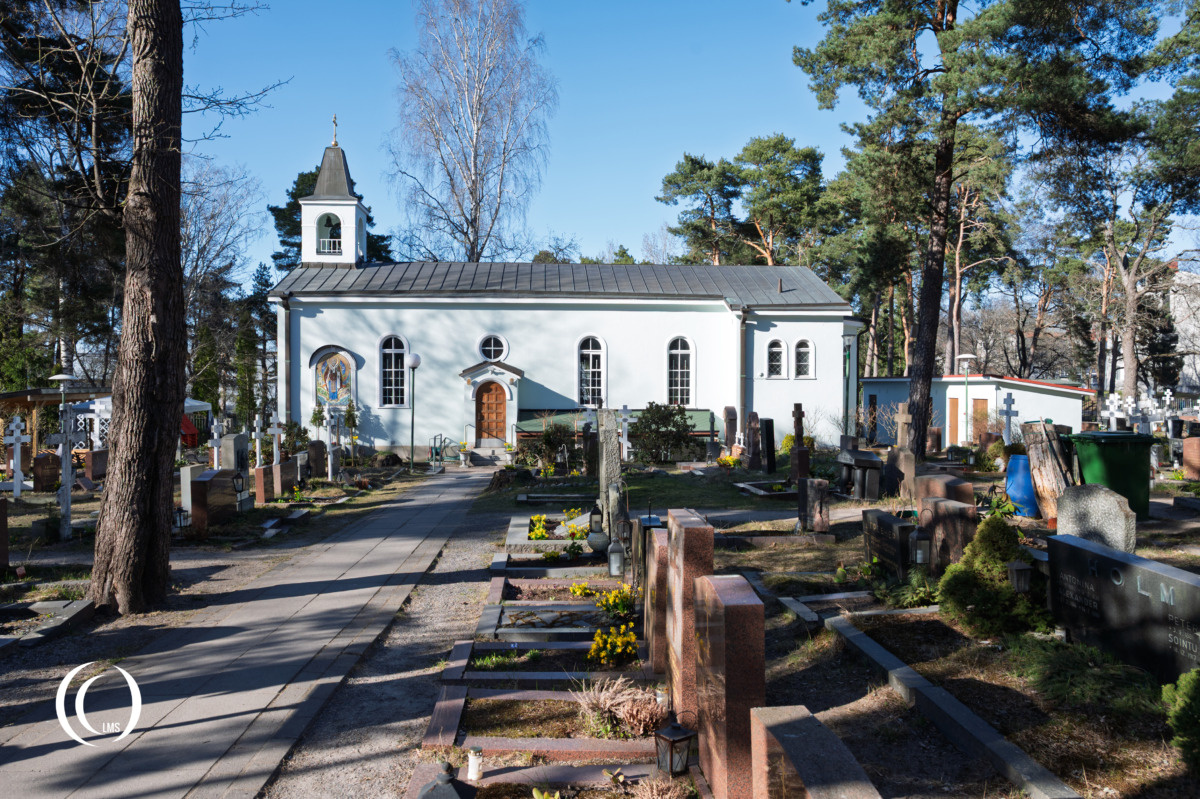
The Russian Orthodox Cemetery of St Nicholas Parish in Taivallahti, Helsinki, or Nikolskoye Cemetery, lies opposite the New Jewish Cemetery at Hietaniemi. Established in 1934, it serves Helsinki’s Russian Orthodox community and contains the graves of Orthodox clergy, Russian émigrés and other members of the community. Its location is closely connected with the history of the former Russian military presence in Finland, as the cemetery occupies land associated with an earlier Russian military burial ground.
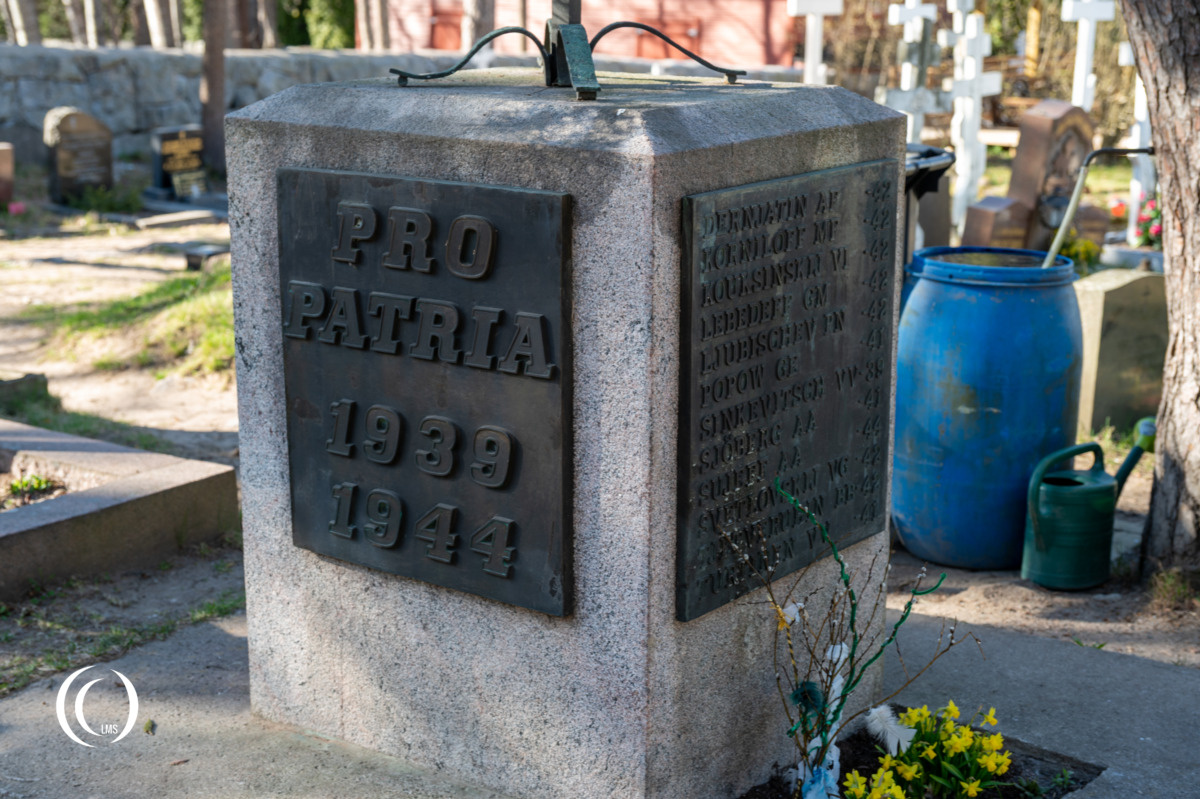
Pro Patria 1939-1944 monument
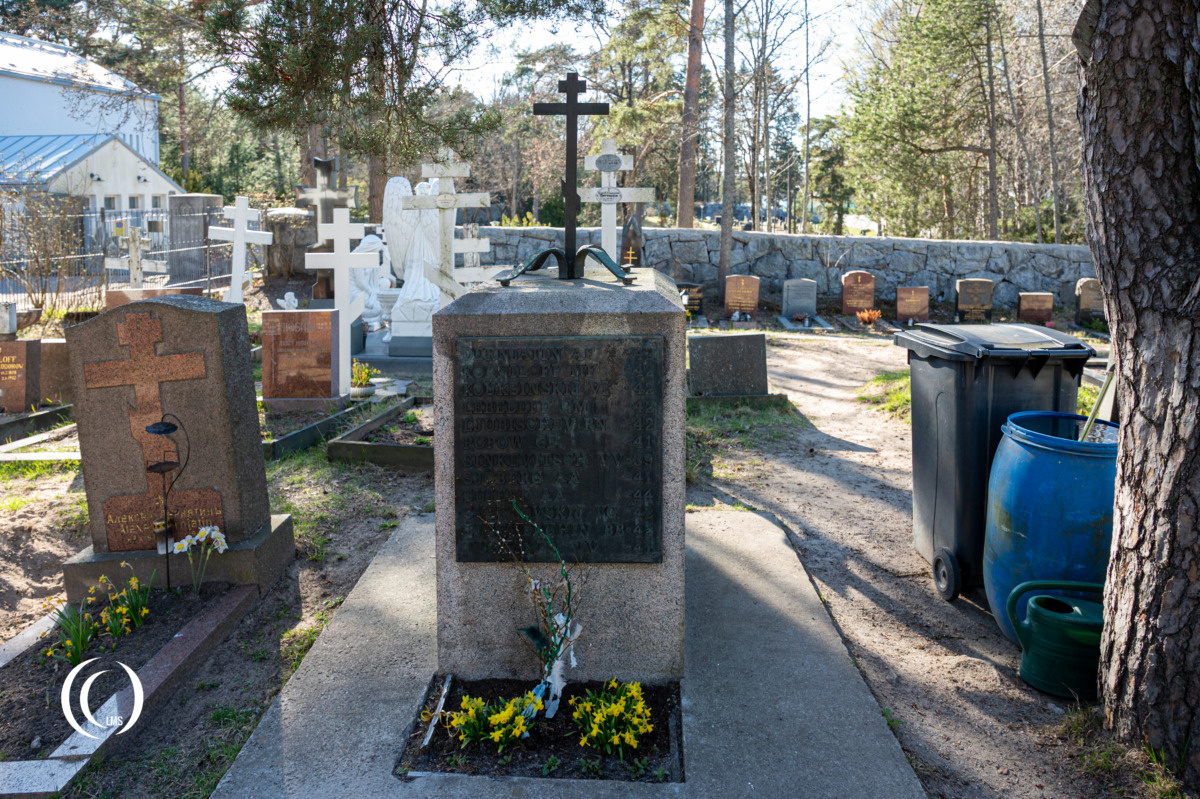
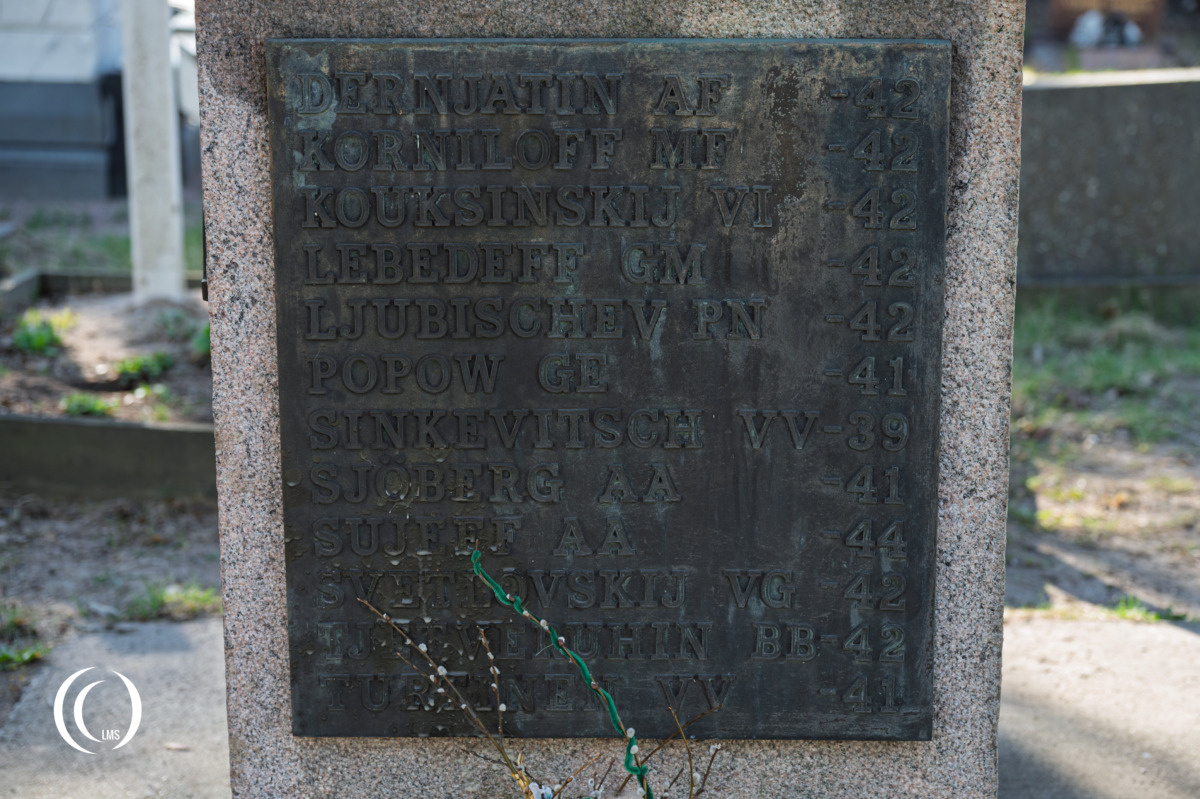
The “Pro Patria 1939 – 1944” memorial commemorates soldiers from the Nikolsky and Pokrovsky parishes who died defending Finland’s freedom and independence during the wars of 1939–1944. Funded by parishioners, the monument bears the names of the fallen on a bronze plaque.
Michail Feodorow Korniloff
The cemetery also holds the grave of Michail Feodorow Korniloff (∗ 14-02-1888, † 02-08-1942), who’s headstone bears a Cross of the Continuation War (Finnish: Jatkosodan Risti). A record in the military history database sotapolku.fi under the name “Mikael Korniloff“, with the same birth and death dates, shows he was a business owner in Helsinki and drafted into compulsory wartime labour service during the Continuation War (1941-1944). The record also states that he died in the general hospital of the region Inari (Finnish-Lapland) and the cause of his death was other than directly caused by the war (illness, accident). The place “Ivalossa” mentioned on Korniloff’s grave in Helsinki could refer to the village of “Ivalo” in the region of Inari.
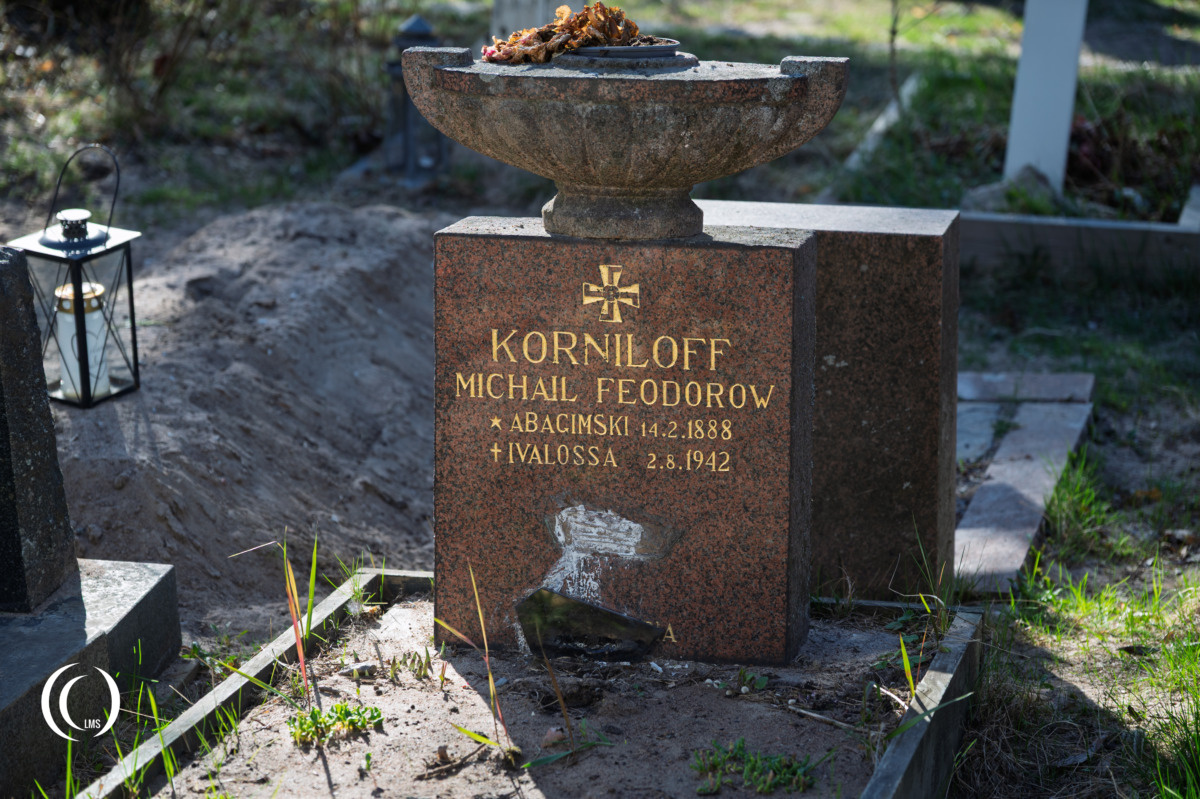
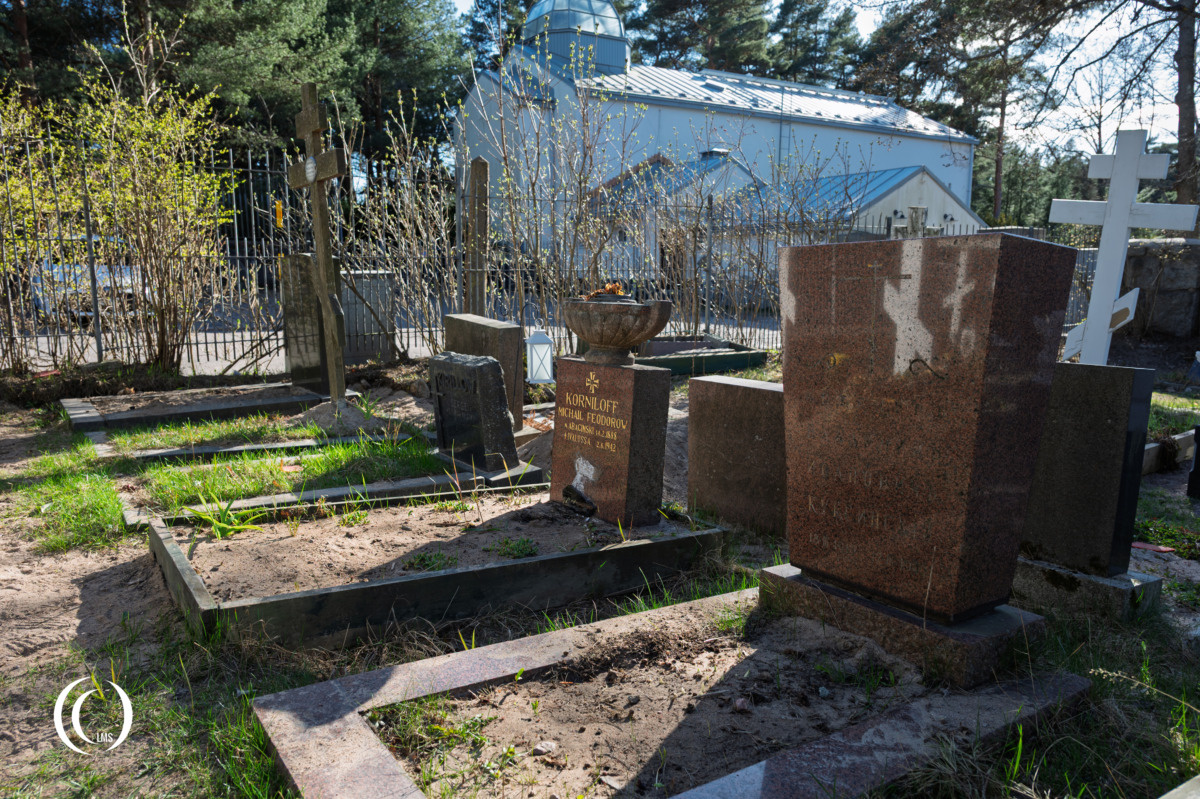
Michail Korniloff could have been a so-called työvelvollinen, which was a non-combatant labourer, a civilian in army-organised units, or in civilian labour, performing work that supported the Finnish war effort. Based on the 1939 work-obligation law, passed during the Winter War (1939-1940) and extended in 1942, Finnish civilians of working age (18-54) judged fit for labour but not for active combat, were called up for fixed periods of compulsory work. Tens of thousands were under work obligation at any time during the Continuation War.
Any information would be appreciated.
Visit
You can visit the cemetery during opening hours. The cemetery grounds is separate from the larger Hietaniemi Cemetery and has its own entrance near the Jewish Cemetery.
NOTE: This cemetery is not to be confused with the Old Orthodox Cemetery south of the Old Cemetery of Hietaniemi.
