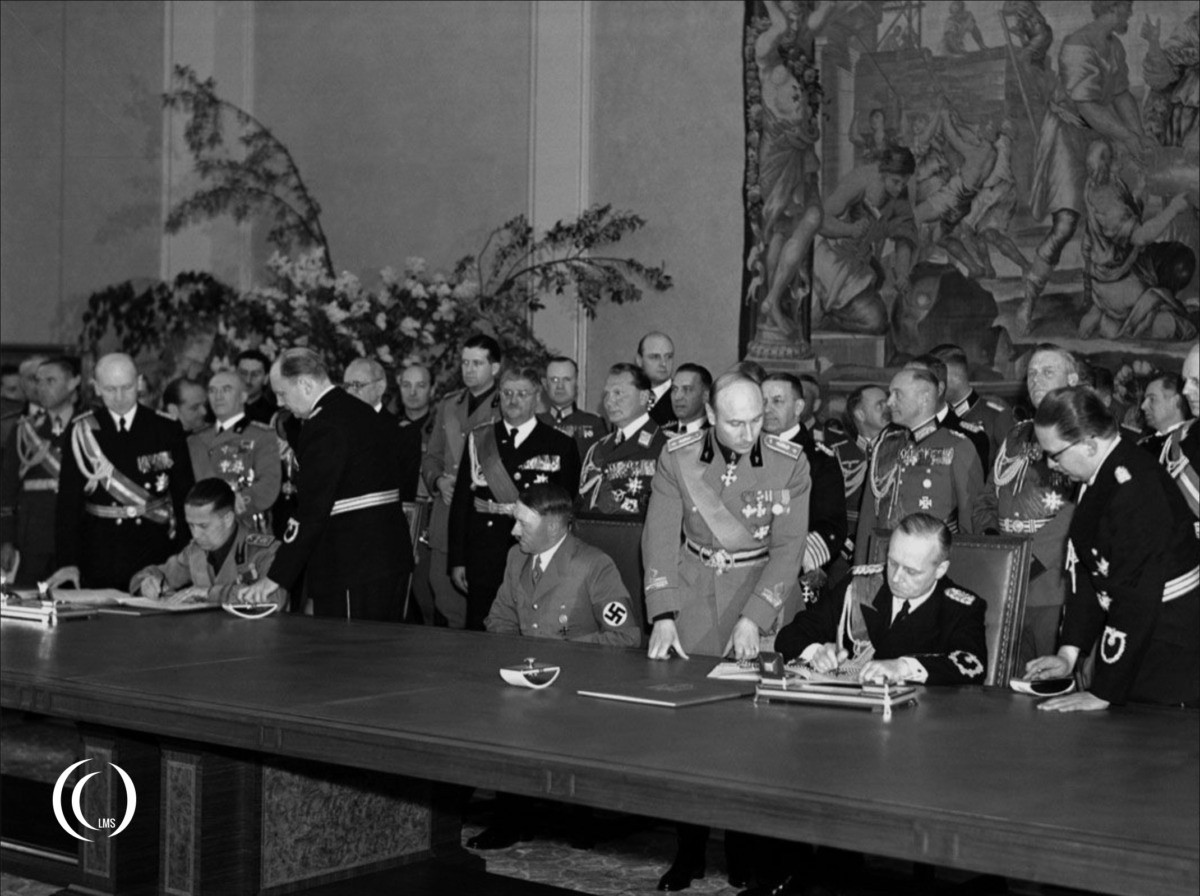
Before the outbreak of World War Two, on 22 May 1939, Fascist Italy and Nazi Germany formalised their political and military alliance by signing the Pact of Steel on 22 May 1939. The pact between both countries declared they maintain a transparent relation of continuing trust and co-operation to one another, and encouraged a joint military and economic cooperation and propaganda of the Axis powers. Should any of the contracting parties get involved in a military conflict, the other party would immediately come to their aid.
But Italian dictator Benito Mussolini knew he needed more than a formal alliance alone to secure the Italian border against his ambitious German counterpart Adolf Hitler. The latter had literally been pushing the boundaries of Germany’s eastern borders, annexing regions inhabited by a majority of ethnic Germans, like Austria on 12-13 March 1938 and Sudetenland in Czechoslovakia six months later. With the annexation of Austria, Italy and Germany had become neighbours. In Italy concerns had risen about possible German ambitions towards the province of South Tyrol (Alto Adige), which was also inhabited by a German majority.
In late August 1939, Mussolini was informed of Hitlers intentions to invade Poland. Mussolini in his turn informed Hitler that Italy was not ready for a conflict on such a scale. Yet on the morning of September 1st 1939, Mussolini, like the rest of the world, learned of the Polish invasion by its close ally through the press releases.
Vallo Alpino
In the early 1930s, Mussolini had ordered the construction of the Vallo Alpino, the Alpine Wall, along Italy’s northern border facing France, Switzerland, Austria, and Yugoslavia. In South Tyrol fortifications were erected to defend the main access routes to the Resia (Reschen) Pass, the Brenner Pass and along the Pusteria Valley.
Wary of Hitler’s unpredictability and potential, and the ink barely dry of the Pact of Steel alliance, Mussolini ordered a massive upgrade and expansion of the fortifications of the Alpine Wall in South Tyrol on 21 November 1939. The construction of fortifications continued until 15 October 1942, when they were halted by Mussolini himself under the pressure of Hitler. During this relatively short period a total of 351 bunkers were built, although many still incomplete or unequipped.
Pian dei Morti
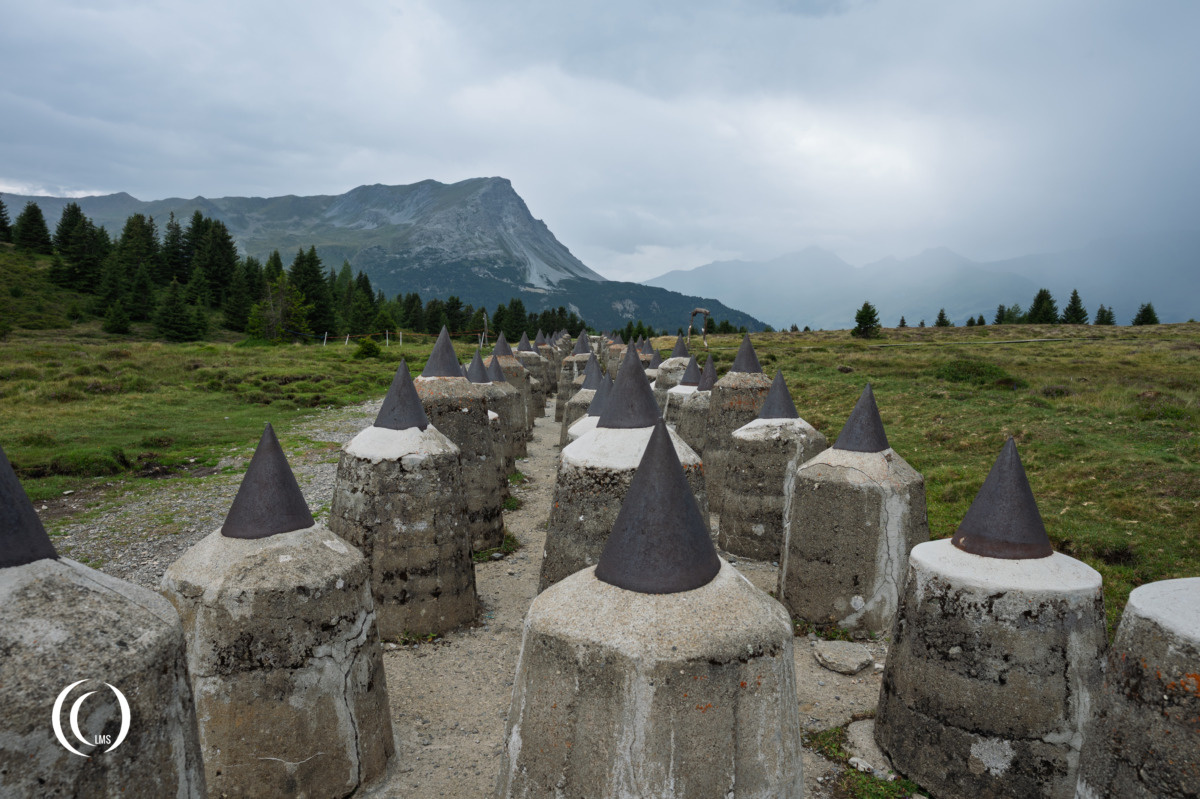
Located 2,000 metres above sea level, above Lake Resia, on the border with Austria, in the upper Venosta Valley in Alto Adige, the Pian dei Morti (German: Plamort) barrier was constructed from June 1938. The work was part of the Resia (German: Reschen) Pass barrier within the XIII Venosta coverage sector of the Alpine Wall.
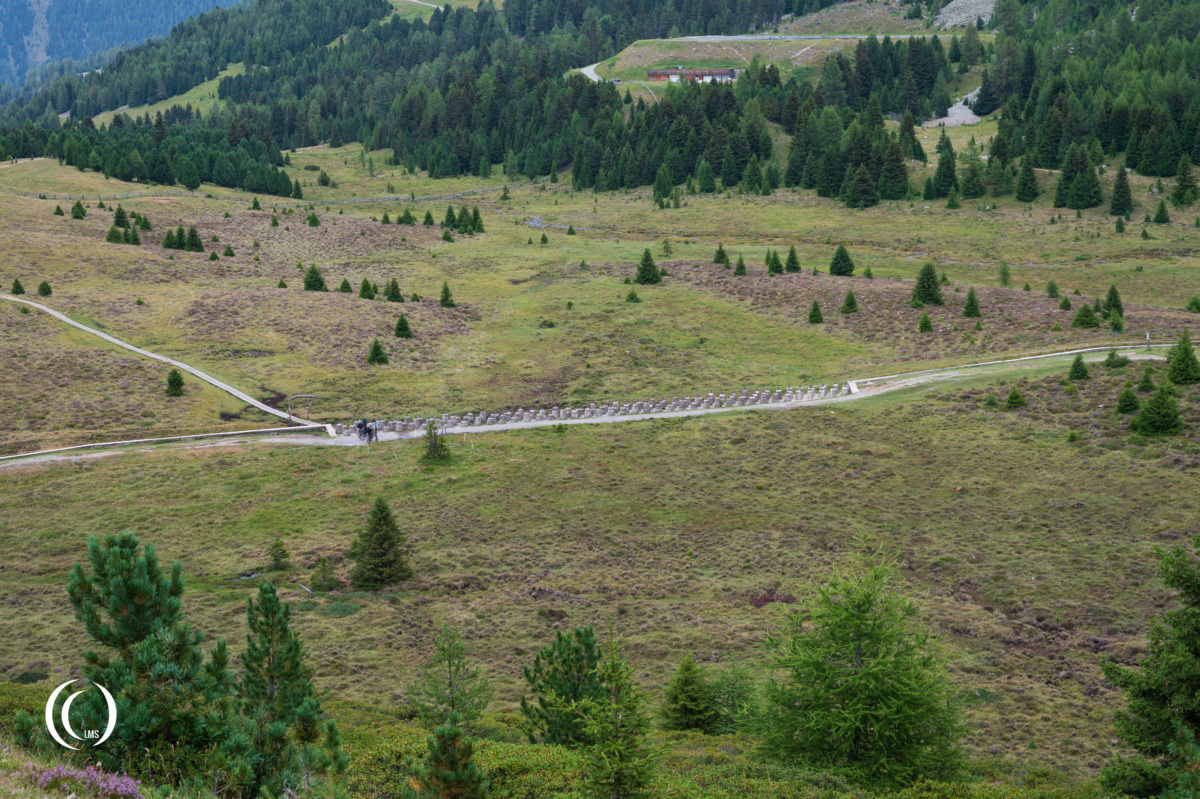
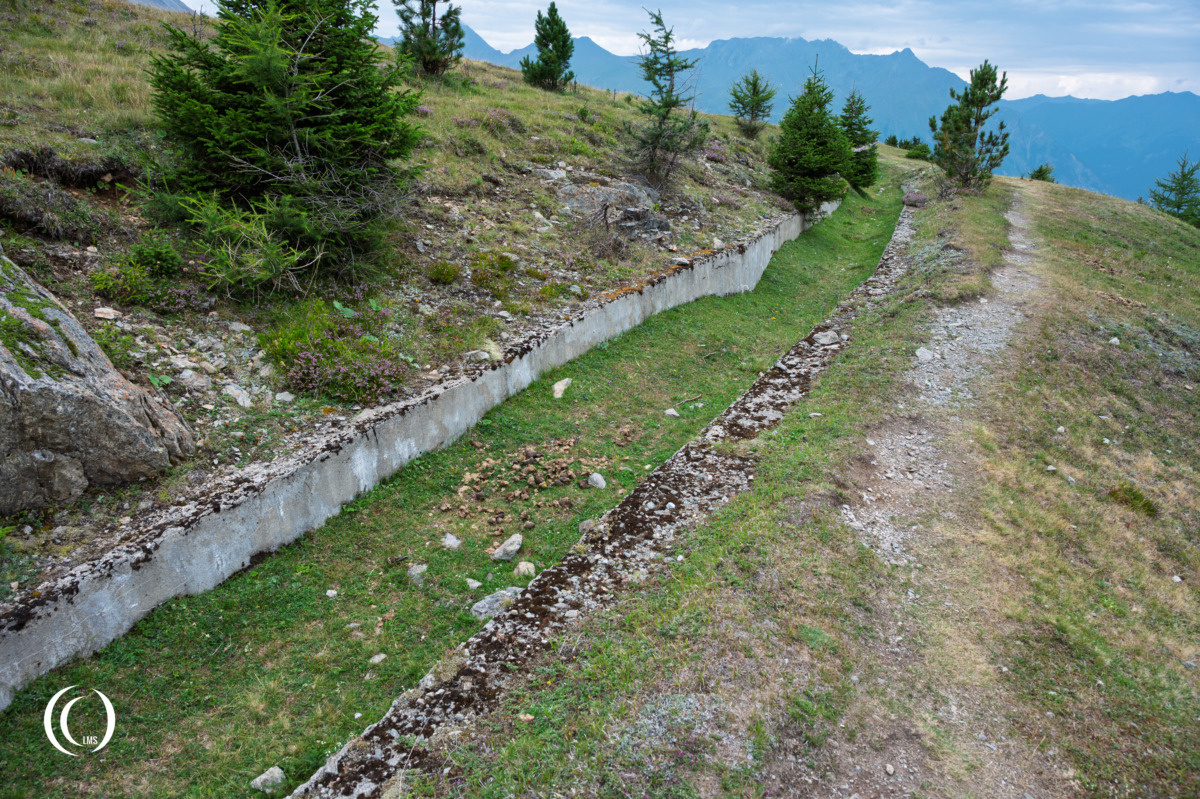
Anti-tank barrier
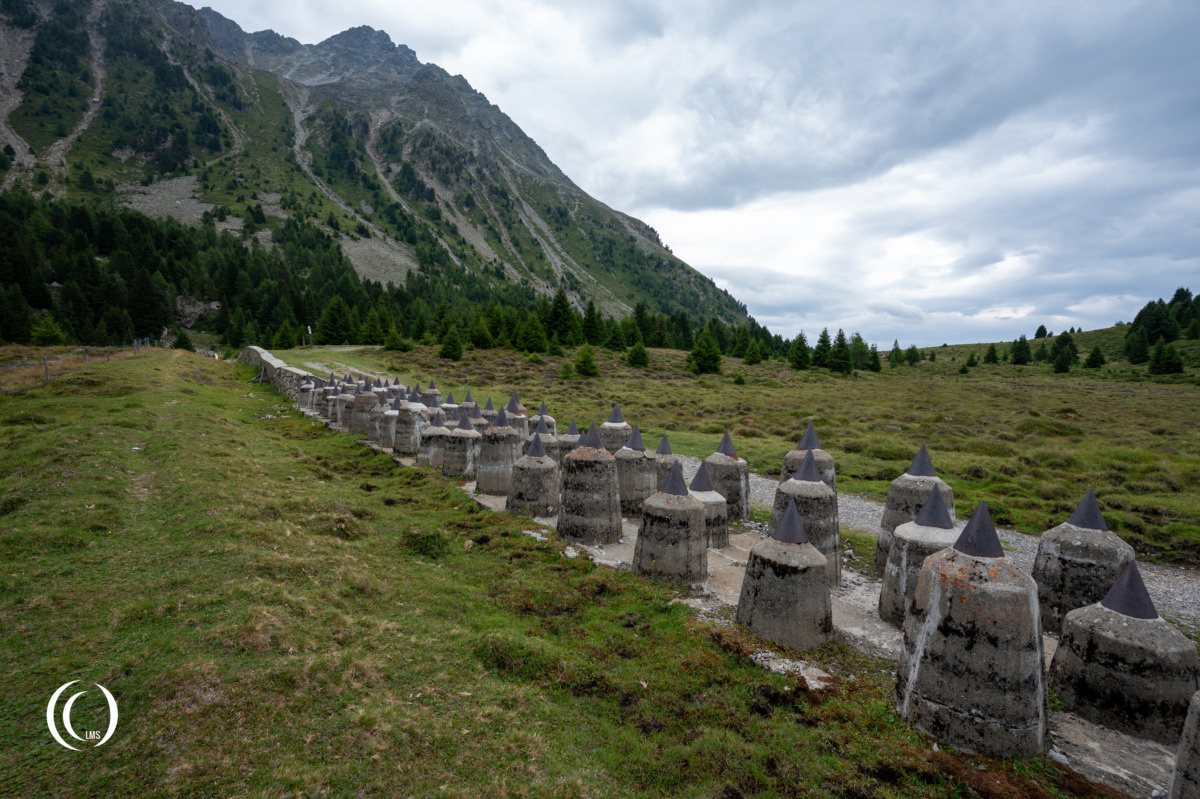
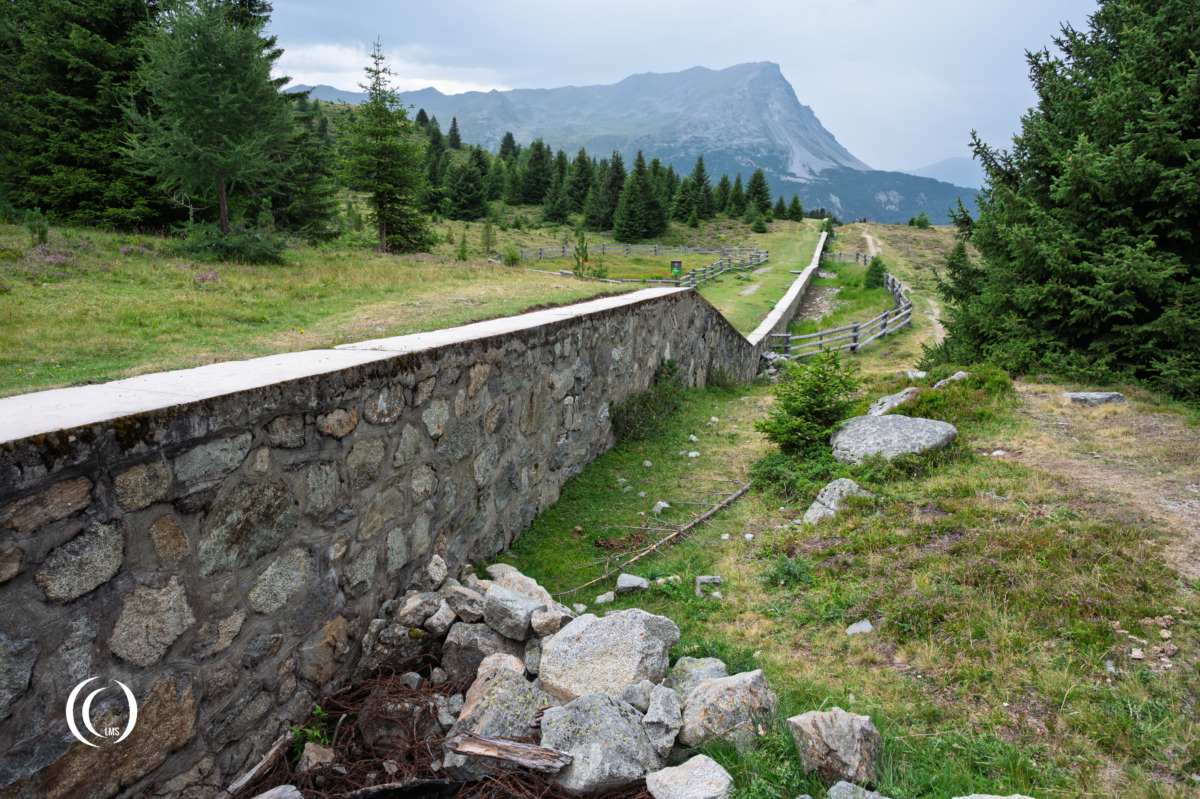
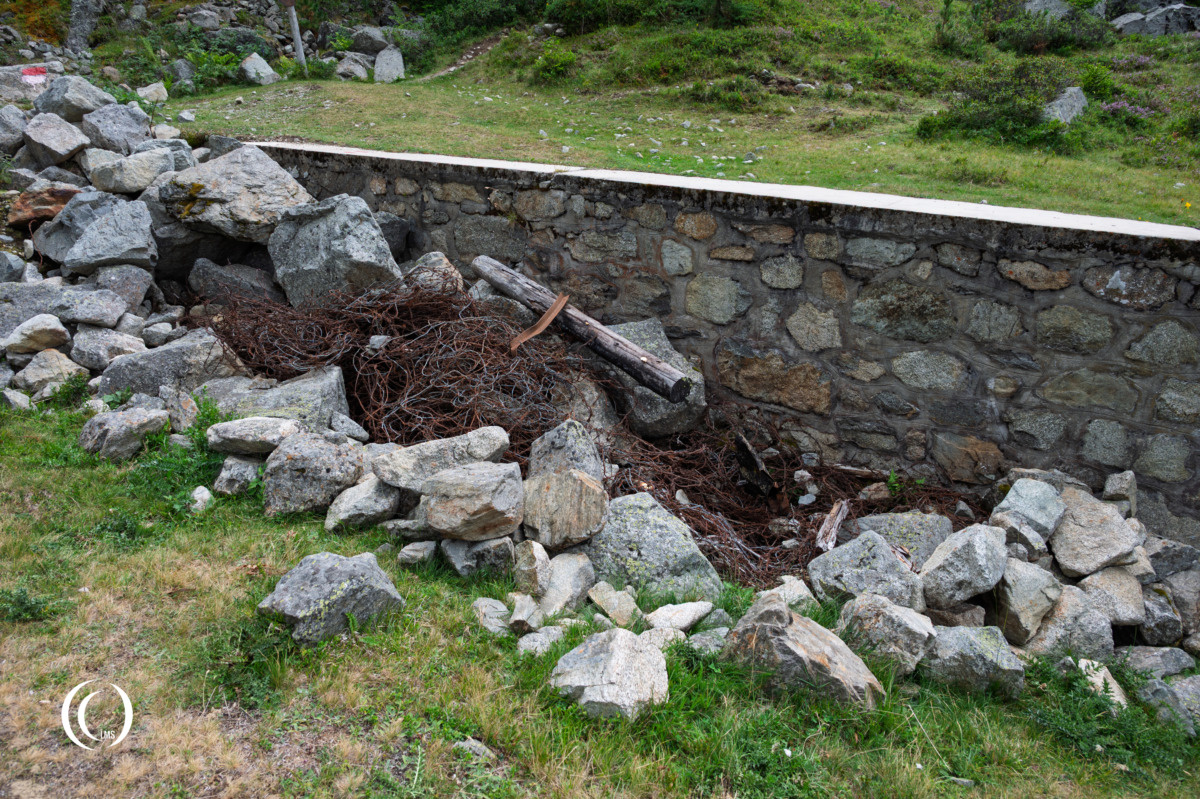
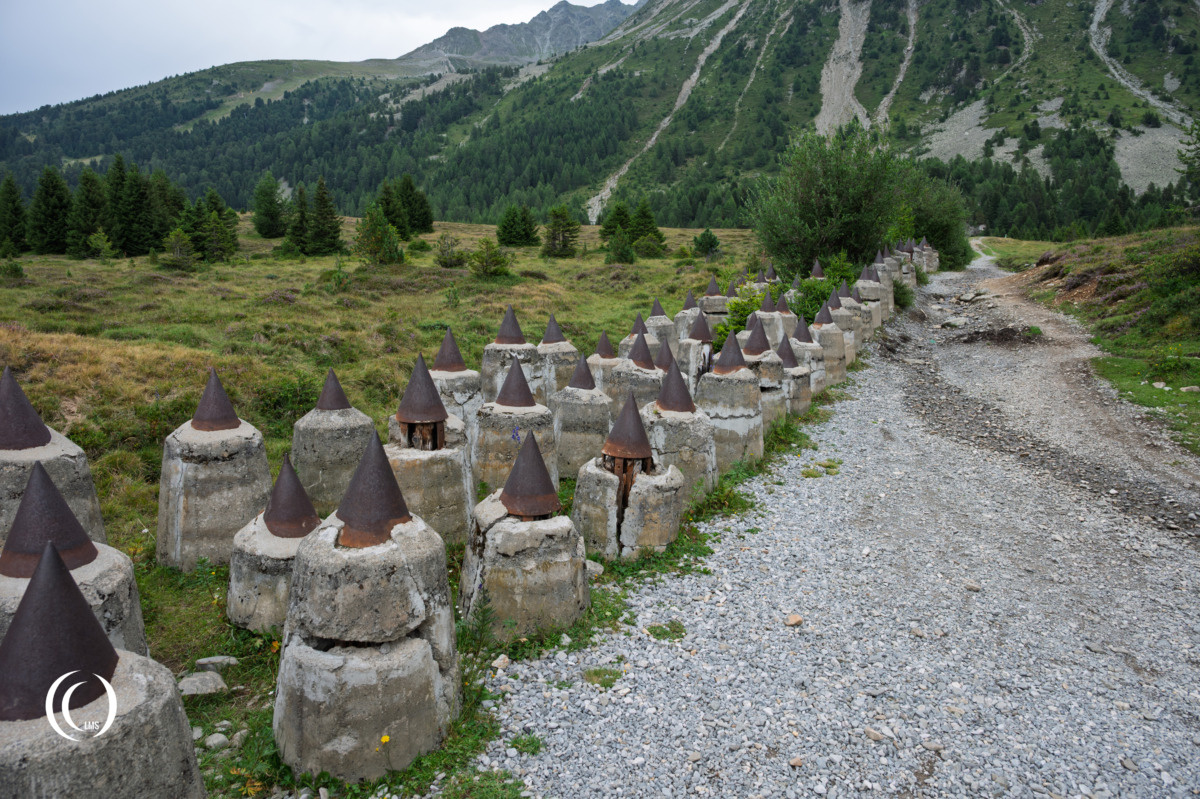
Between 1938 and 1939 the 450 meters long anti-tank barrier was built with a combination of stretches of anti-tank ditch and dragons teeth depending on the terrain. Where the ground is solid an anti-tank ditch was dug, resting against a moat wall made of large boulders. The wall is 120 cm thick at the base and 60 cm at the top and has a height of 1.5 meters.
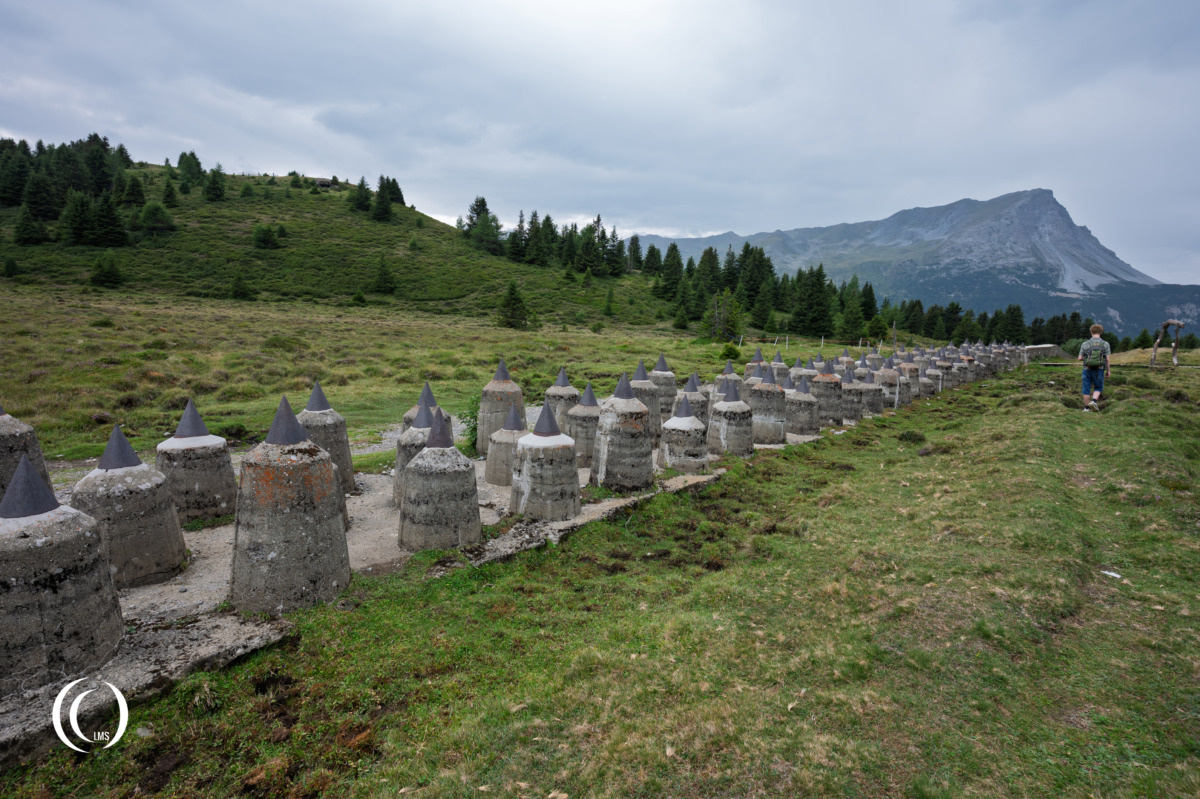
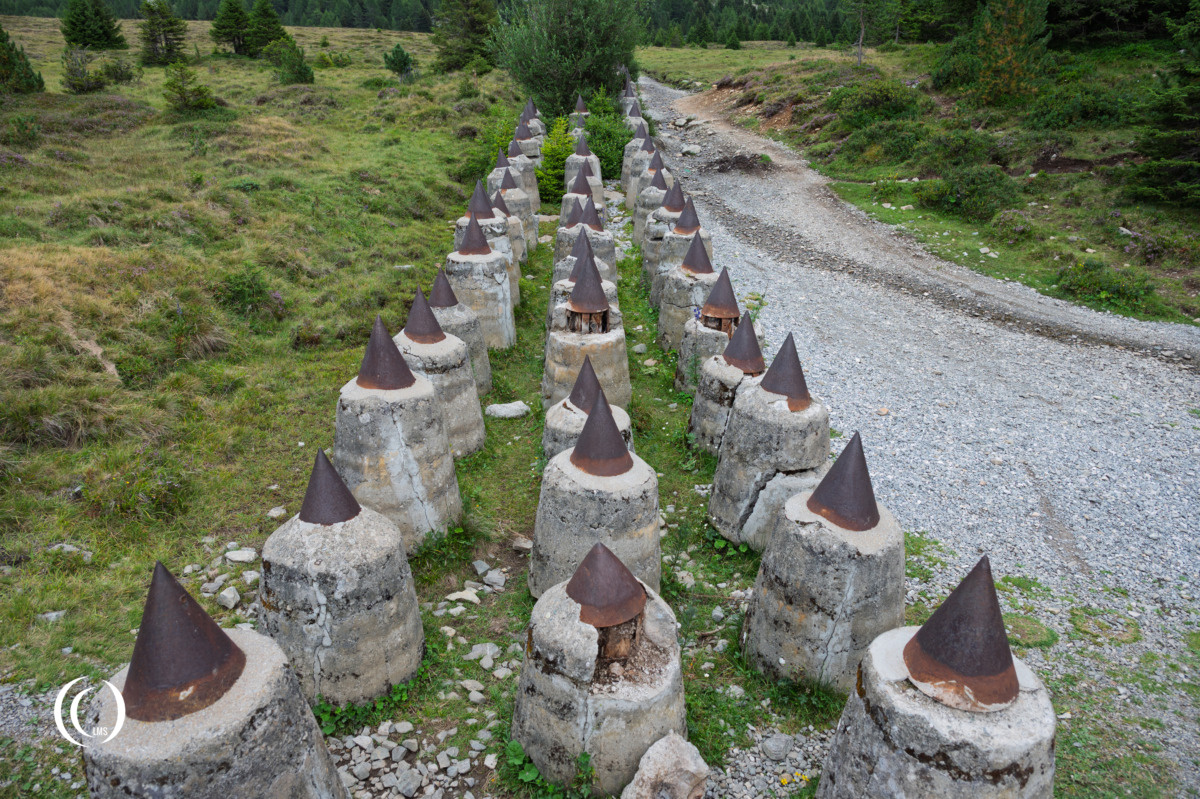
In some areas the terrain consisted of marshland, which was unsuitable for a ditch. In these cases the fortification engineers chose to construct cone shaped obstacles, which got the nickname “dragon’s teeth”. Arranged in three parallel lines, the core of the cones consist of thick wooden poles that have been driven deep into the marshy ground. At ground level the base is formed by a concrete truncated cone shape, surmounted by a thick conical steel cap which is nailed to the wooden core inside. The heights of the dragon’s teeth vary in size. On average they are around 0.6 to 1.2 meters.
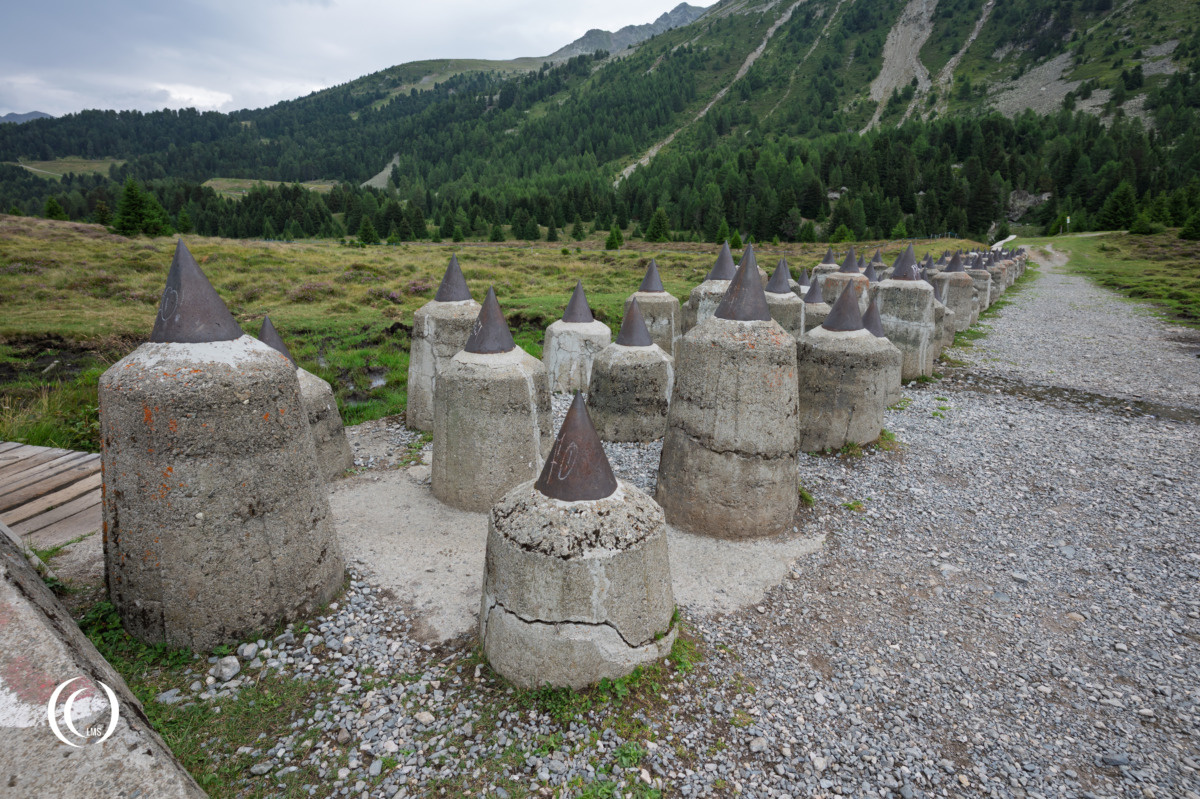
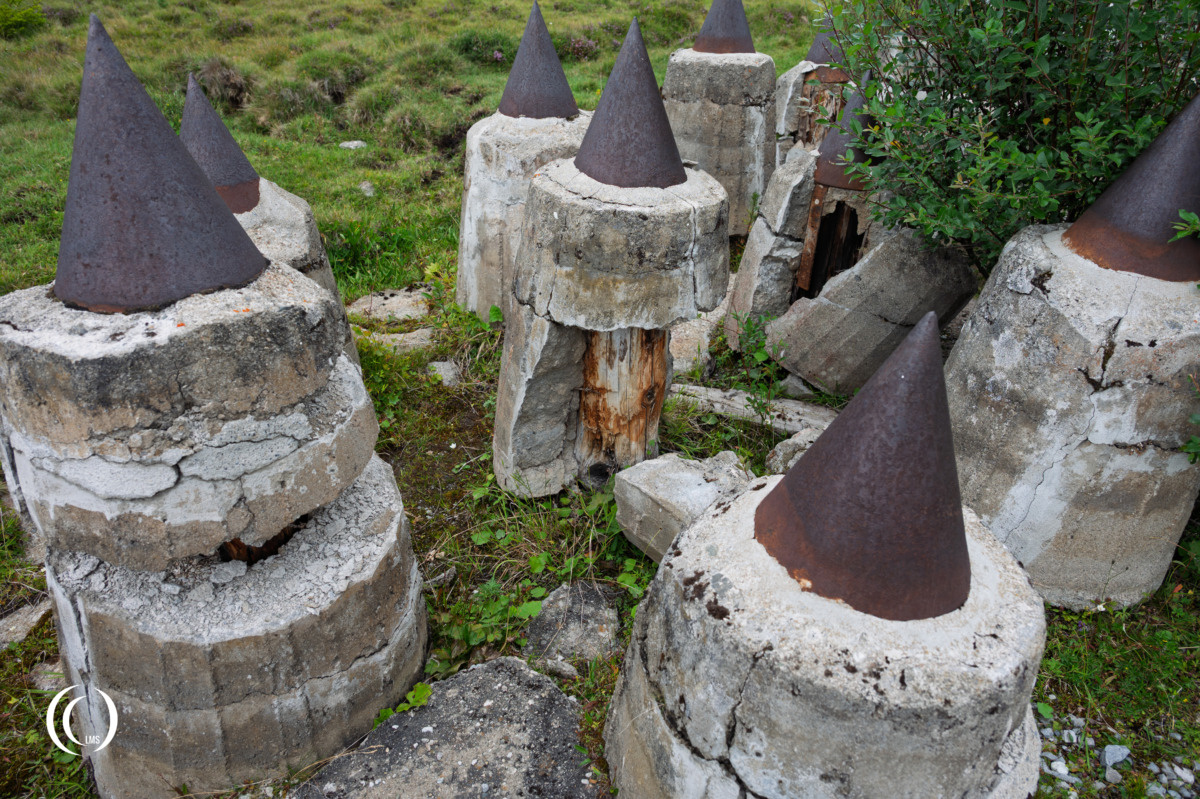
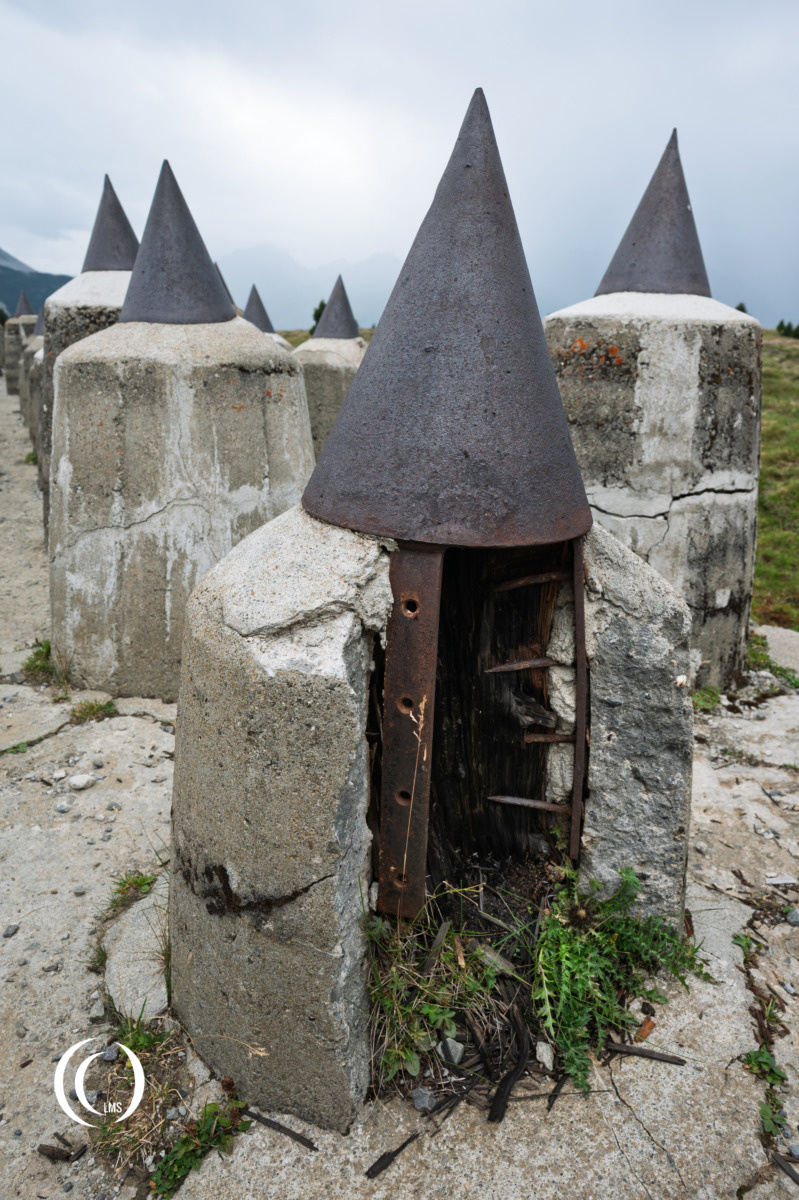
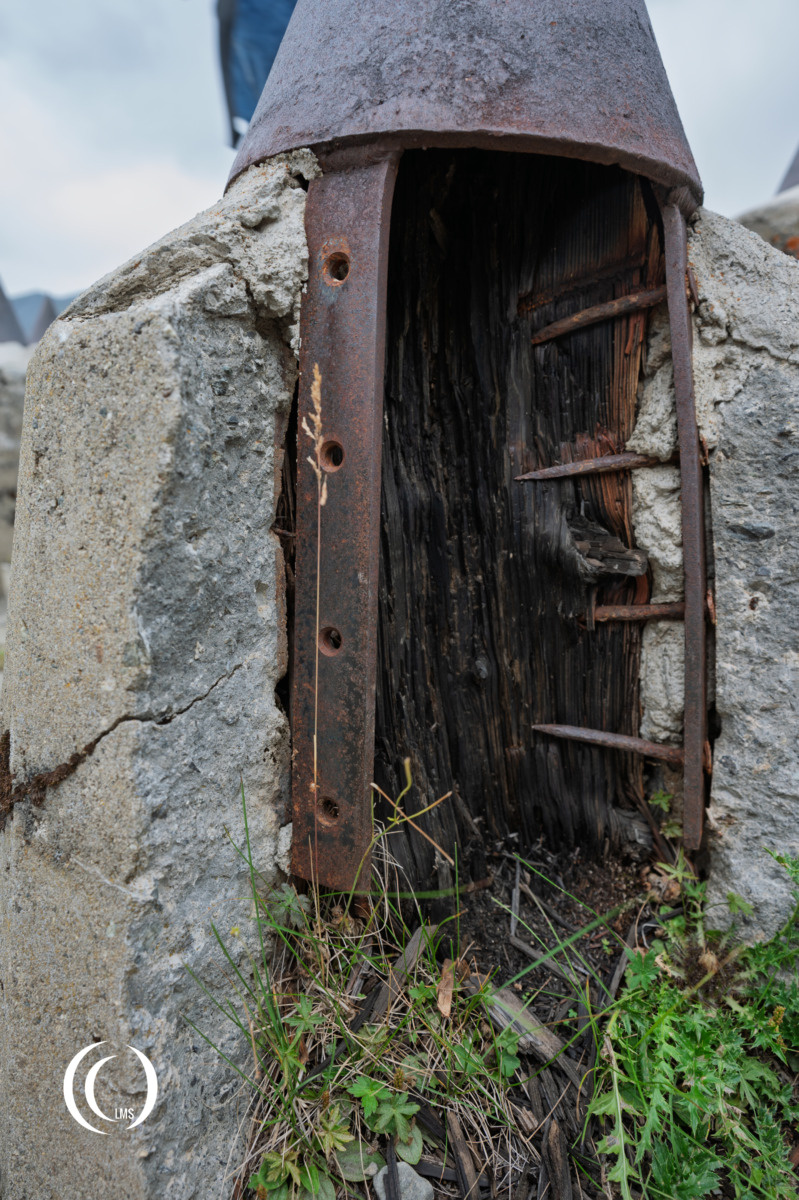
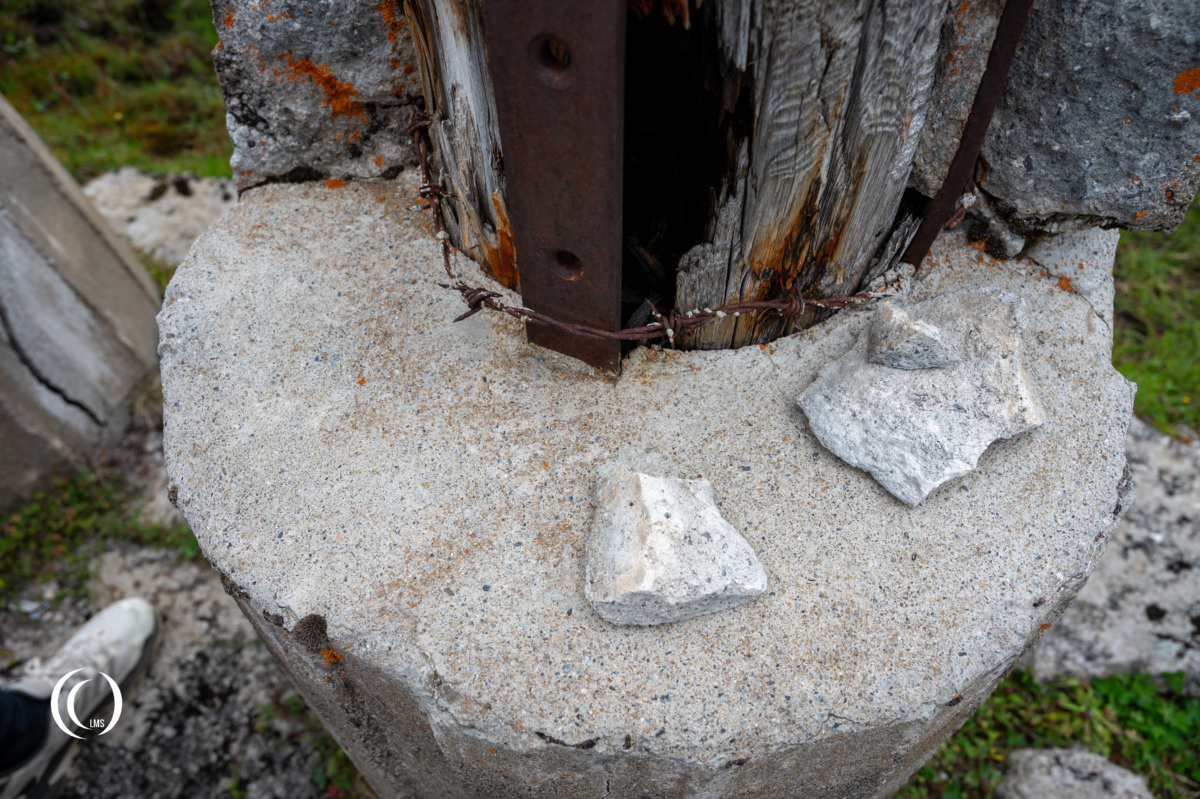
The dragon’s teeth proved ideal for the area, as they allowed the water of the marshland to flow freely, while they also posed an insurmountable obstacle for tanks and vehicles. Even in snowy winter conditions, which lasted a good part of the year on this altitude, the dragon’s teeth were impassable.
Bunkers
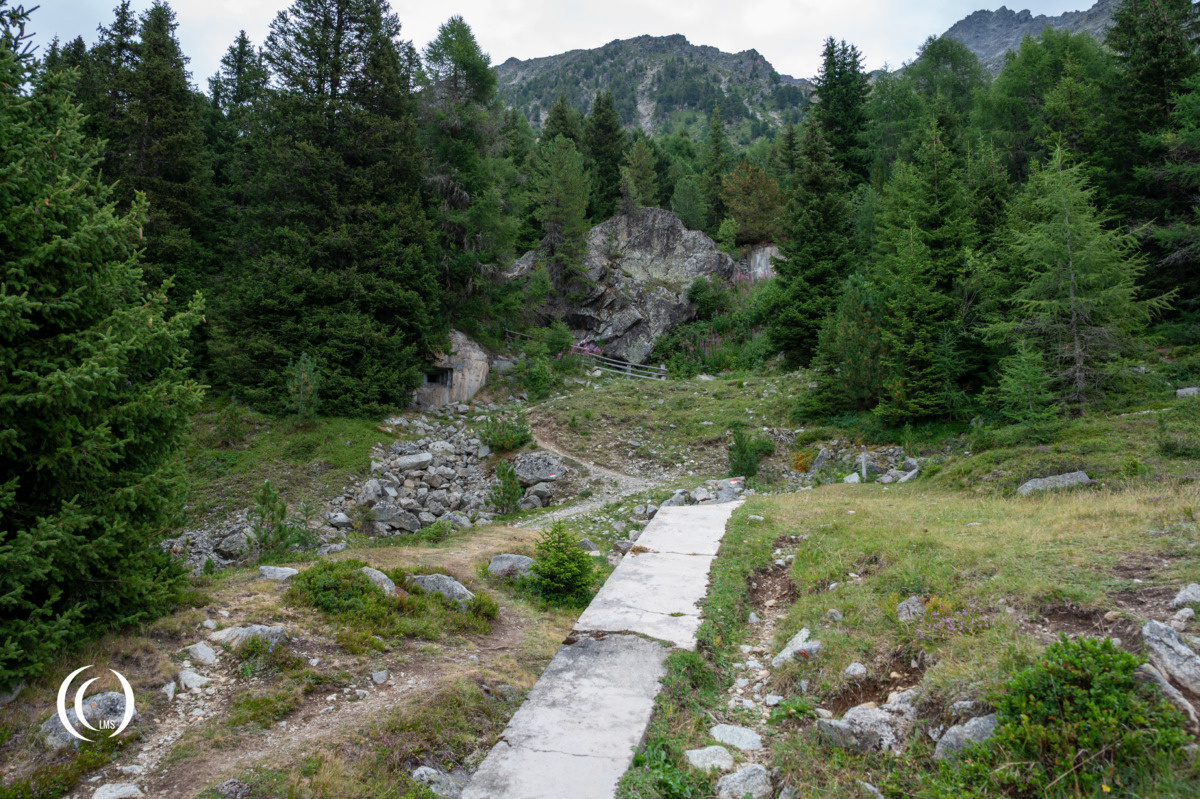
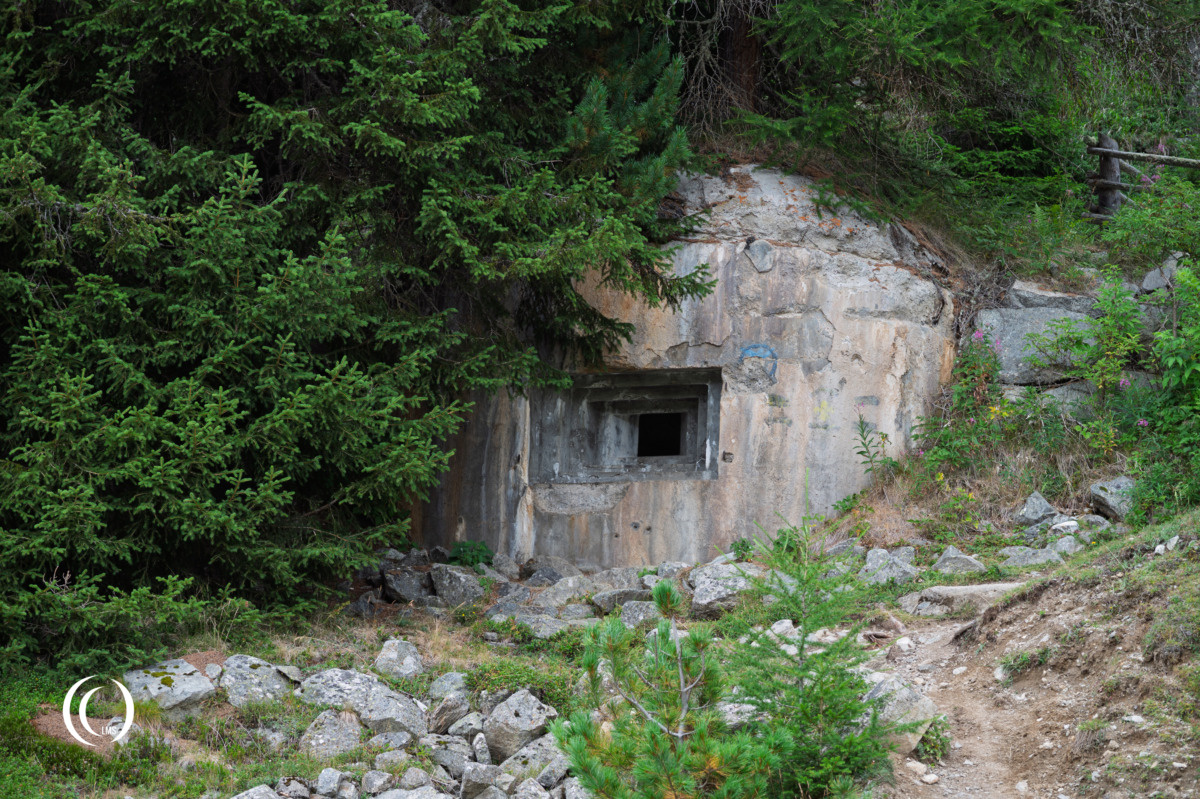
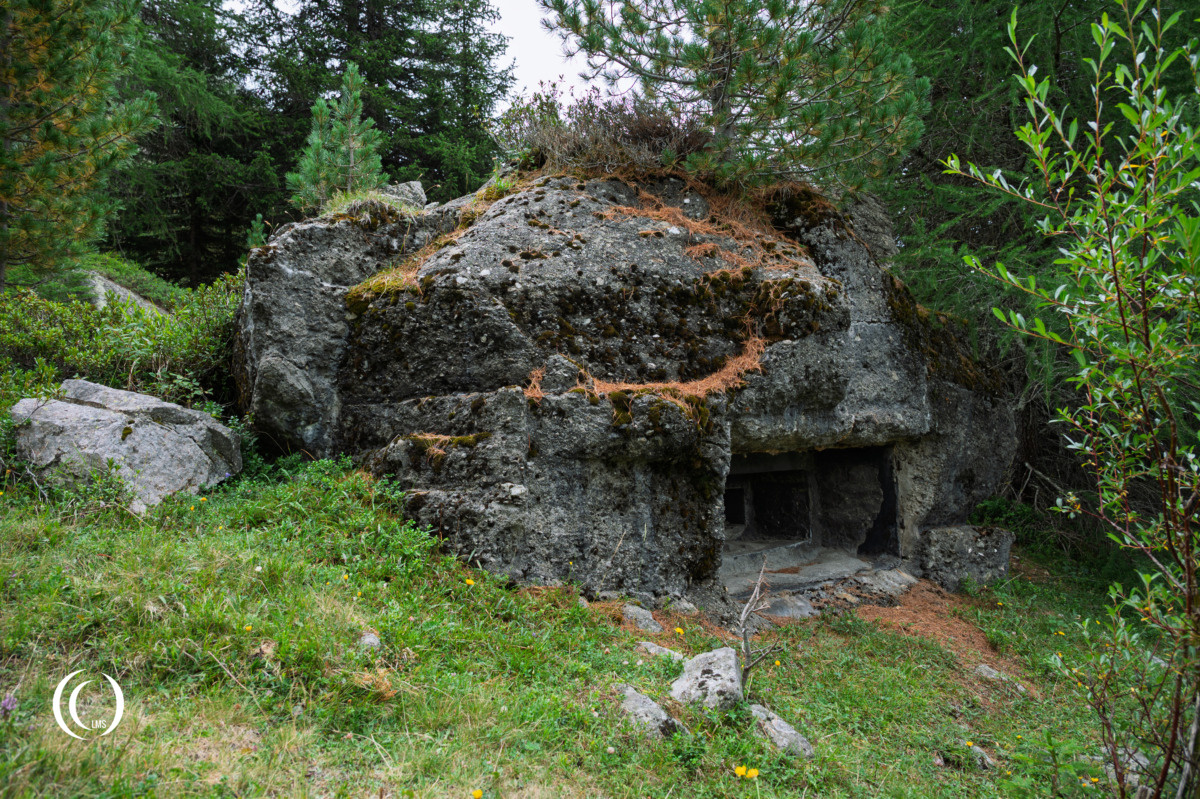
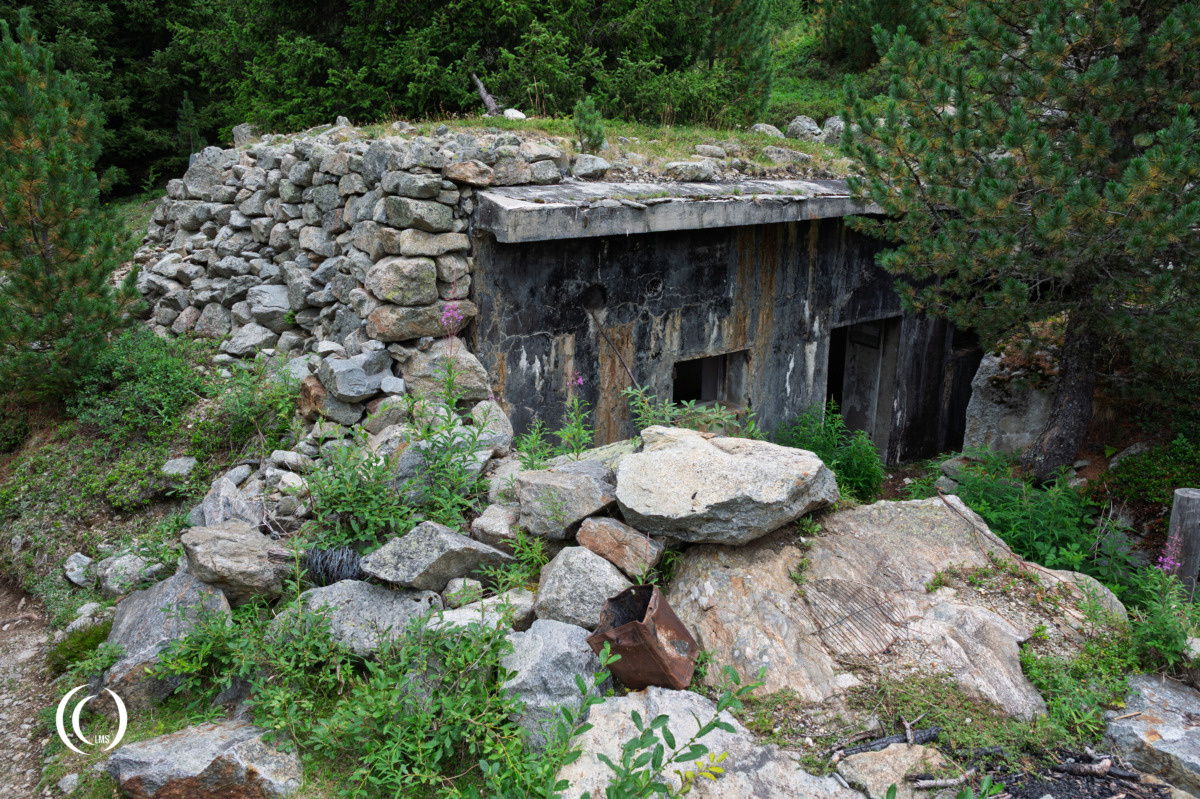
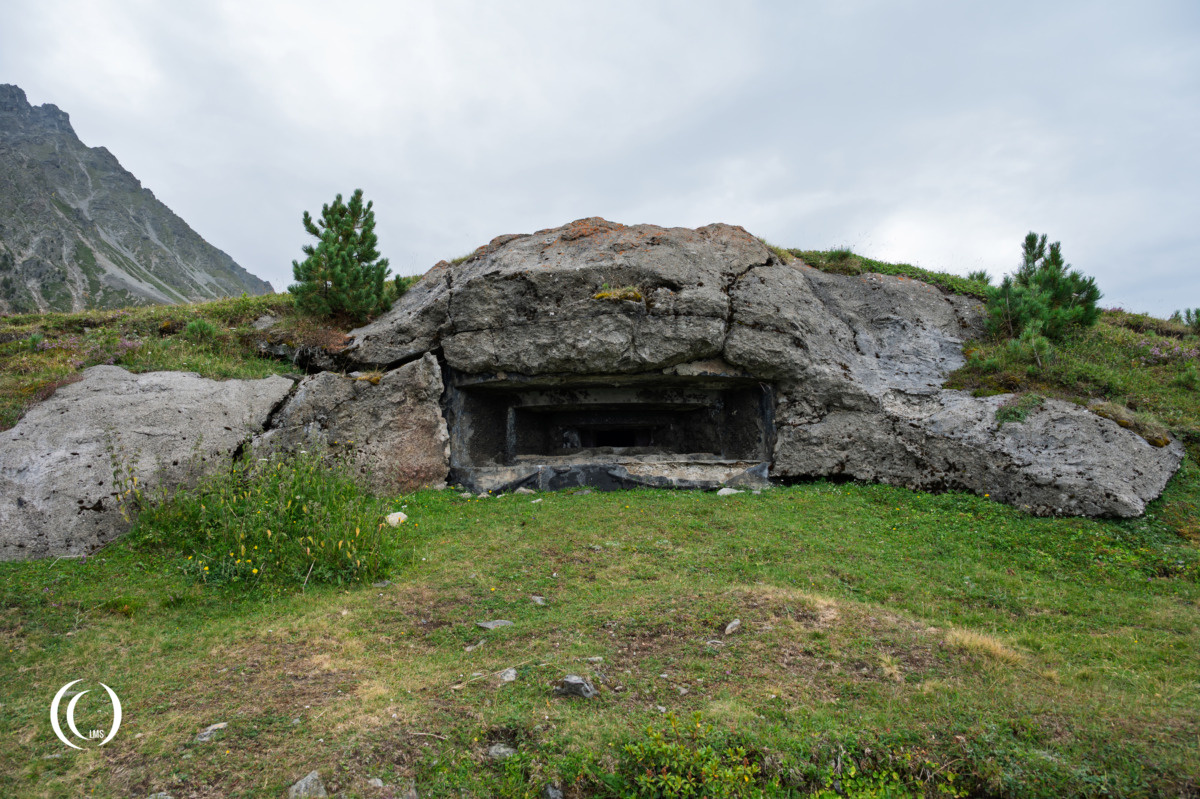
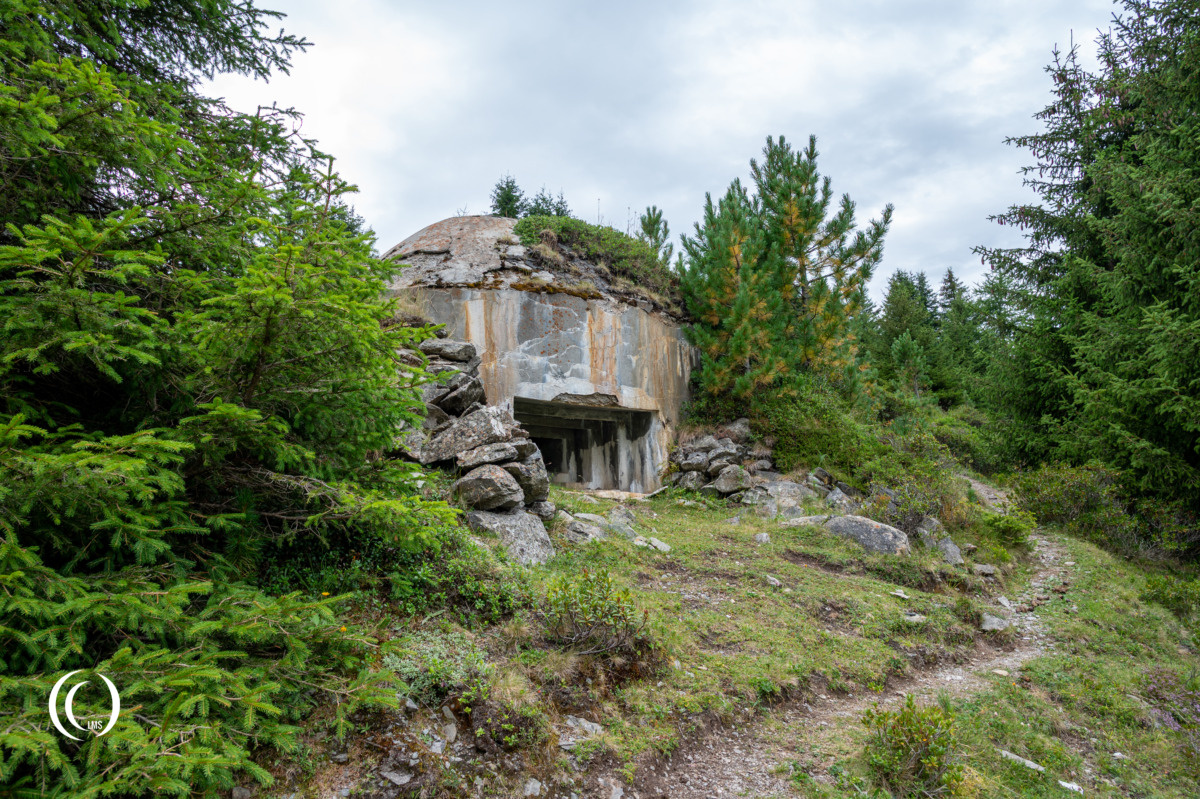
The initial construction of the barrier included three type “450” works armed with 6 machine guns. Two barbette positions were also planned, of which one MG-stand and another one east of the anti-tank ditch equipped with a 47/32 Mod. 1935 anti-tank gun. After Mussolini’s directive of the 21st November 1939, another five positions were added with MG-stands and modernised anti-tank guns. Based on yet another directive “circular 15000”, issued on 31 December 1939, works were added to further widen the barrier according to the new criteria.
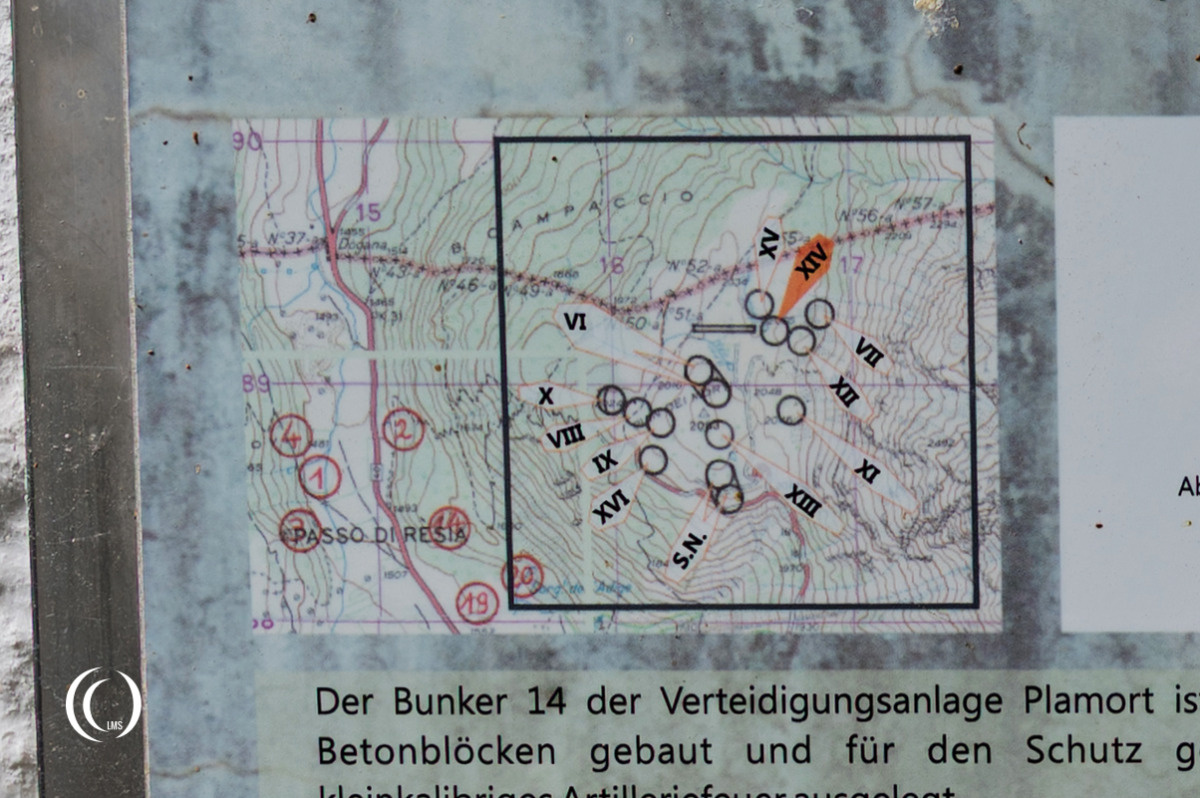
The map above marks the works of the Pian dei Morti barrier. The red circles mark the works in the Resia Pass valley below. Initially the works were designated with numbers, until after 1940, when Roman numerals were adopted. These numerals however did not correspond to the numbers that the work was priorly given, which is often the cause of some confusion regarding the correct designation of certain bunkers. On the information signs at the site a work is named a Bunker in German and an Opera in Italian.
A shortlist of the bunkers based on their numeric designation:
- Opera XII – MG-stand
- Opera VI – Triple MG-stand (partly carved into rock face)
- Opera VIII – Double MG-stand
- Opera XIII – MG-stand
- Opera VIb – MG-stand
- Opera X – MG-stand and Anti-tank gun
- Opera XV – MG-stand
- Opera XIV – MG-stand
- Opera 9 – MG-stand
World War Two
After the work was halted in 1942, the completed works of the Pian dei Morti barrier were assigned to the Border Guard troops (GaF) of the Italian Army. But the barrier, along with the other works of the Alpine Wall of South Tyrol were never really put to the test.
After Mussolini’s removal from power and Italy’s unconditional surrender to the Allies on 8 September 1943, Italian troops were ordered to react to attacks coming from its former ally. But when the German Army commenced Operation Achse (Axis), a predefined plan in anticipation of an Italian surrender to neutralise its armed forces and military installations, and crossed the border into Alto Adige on the night of 8-9 September, it encountered little resistance.
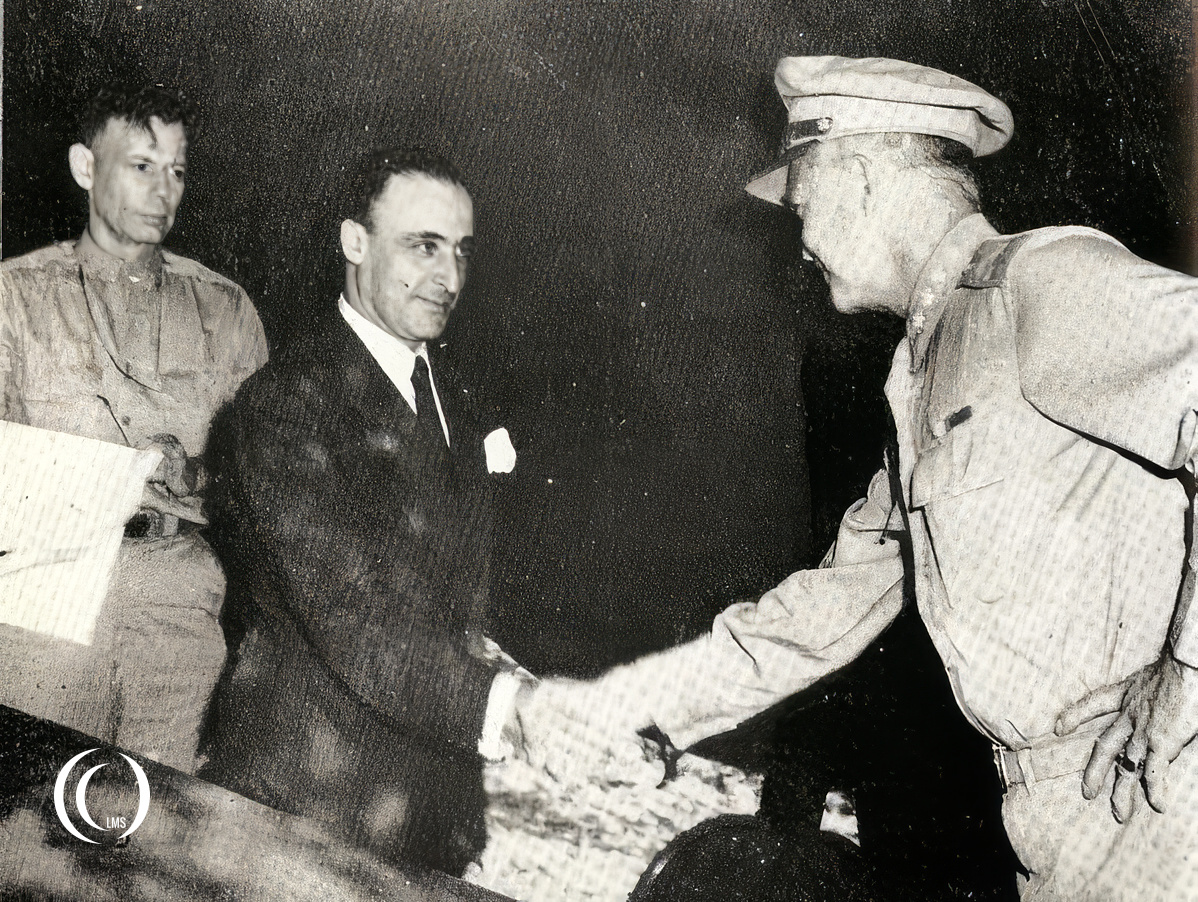
In September 1944, Generalfeldmarschall Rommel urged for the adaptation and reactivation of the Alpine Wall fortifications as a possible defensive line agains the Allied advance coming from Southern Italy. But next to a lack of manpower, the German front in southern Italy collapsed too fast for this to be realised. In the beginning of May 1945 South Tyrol was liberated by American troops, arriving from both the north and the south.
Visit
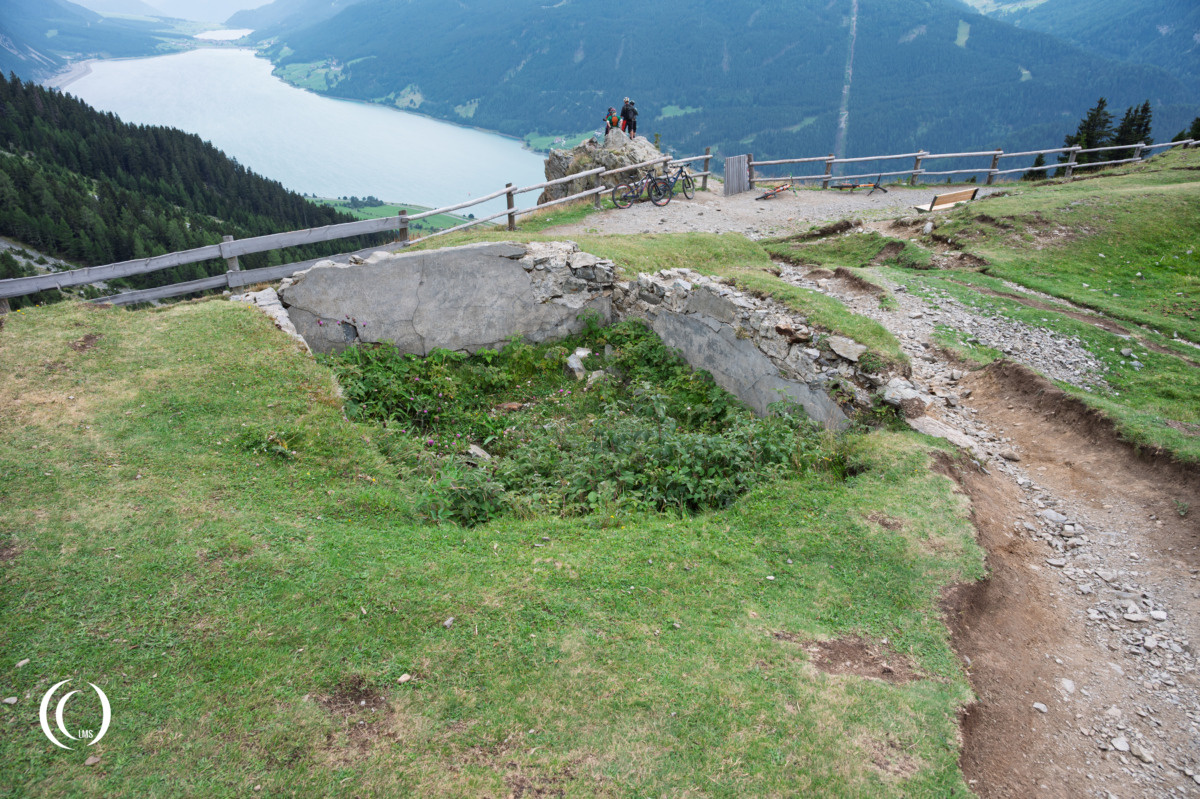
You can visit the Pian dei Morti barrier in the upper Venosta Valley, in Alto Adige (South Tyrol), right on the border between Italy and Austria. Although some mountain roads lead up the mountain from Lake Resia, you will have to change into your walking shoes or jump on a mountain bike at some point to reach the works. Make sure you bring sturdy shoes and some hiking gear, because the weather in the Alps can be ruthless.
Sources
- Wikipedia
- südtirol.com
- valloalpino.info
- mapcarta.com
