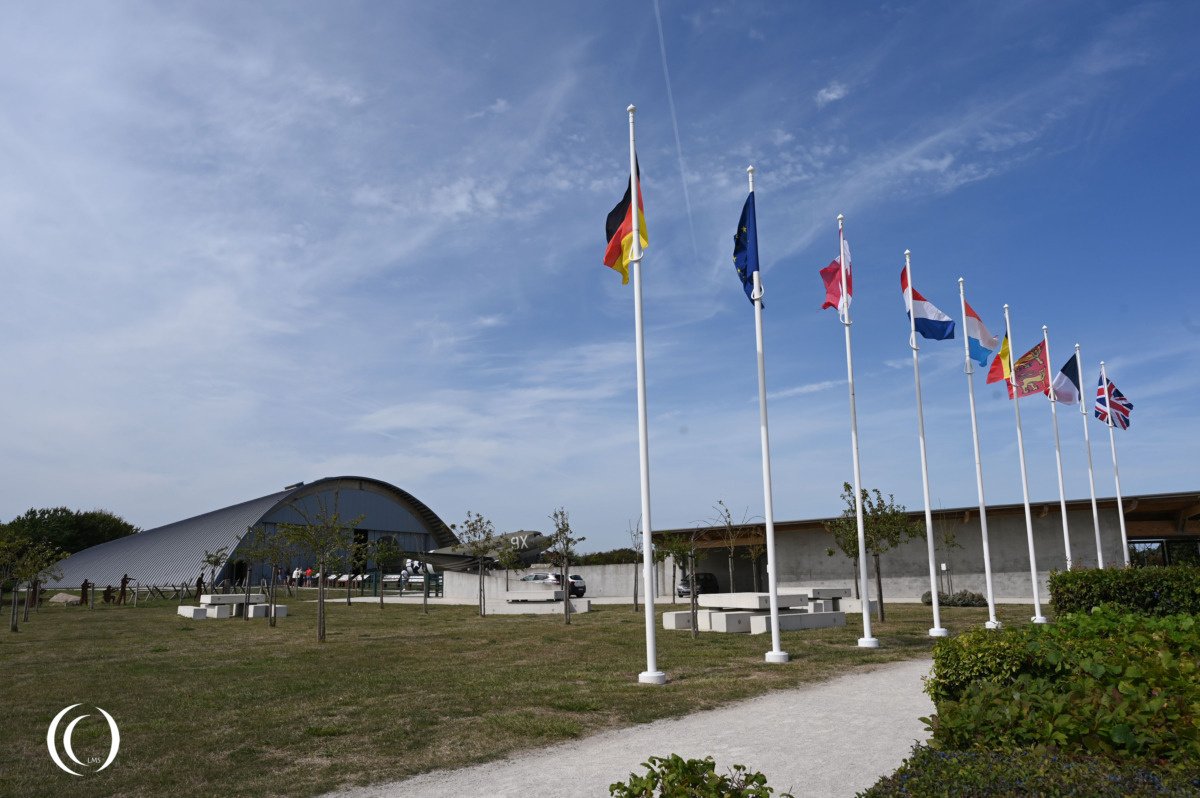
Heeresküstenbatterie Merville 1941-1944
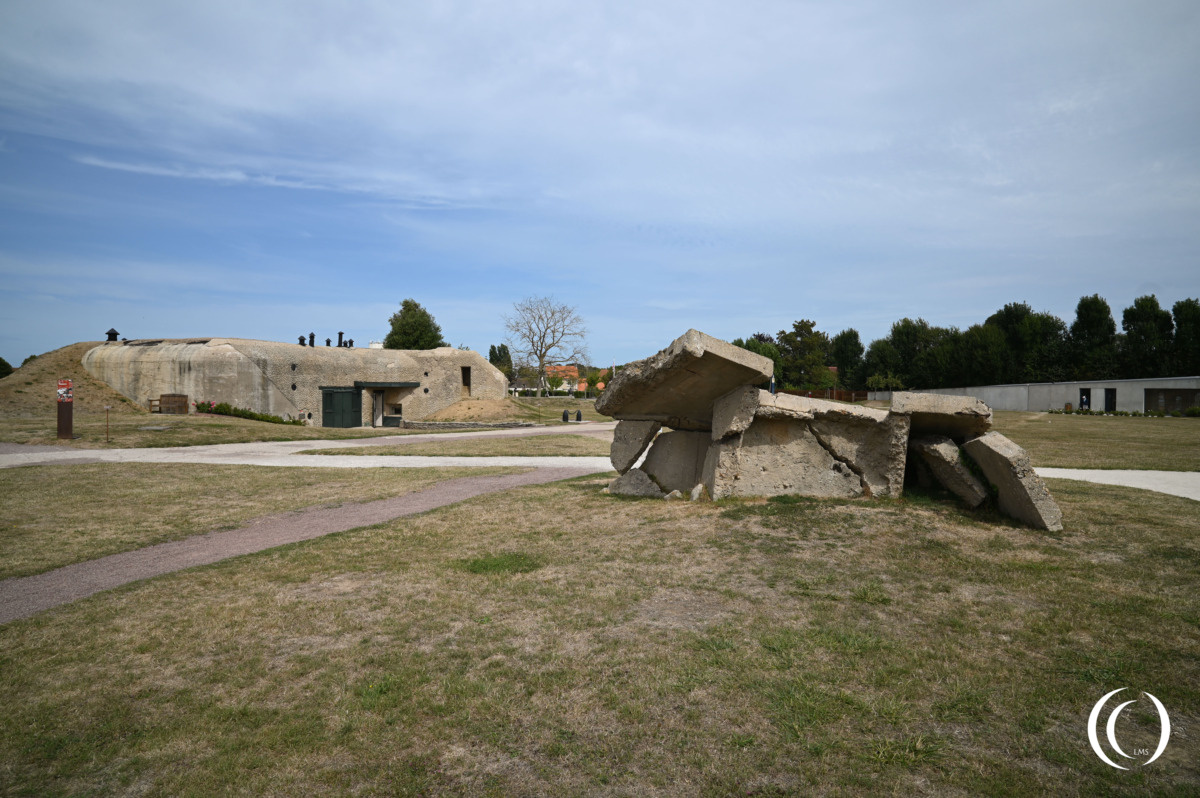
The Heeresküstenbatterie Merville was a German coastal artillery position near Merville-Franceville-Plage in Normandy, France. It formed part of the Atlantic Wall, Germany’s extensive defensive system along the occupied European coastline during the Second World War. Its strategic location near the Orne estuary placed it close to the eastern approaches to the Allied landing beaches, particularly Sword Beach. The German named the location: Widerstandsnest 01 or HKB Merville (HKB – Heeresküstenbatterie Merville). The Merville Battery is also referred to as an artillery battery or Merville Gun Battery because the 150 mm coastal guns were never installed, and it operated with 100 mm Škoda mountain guns instead.
Construction and Armament
Construction by Organisation Todt began as early as 1941 as part of the German Atlantic Wall. The coastal battery was put into service in 1942 but was not fully completed until May 1944.
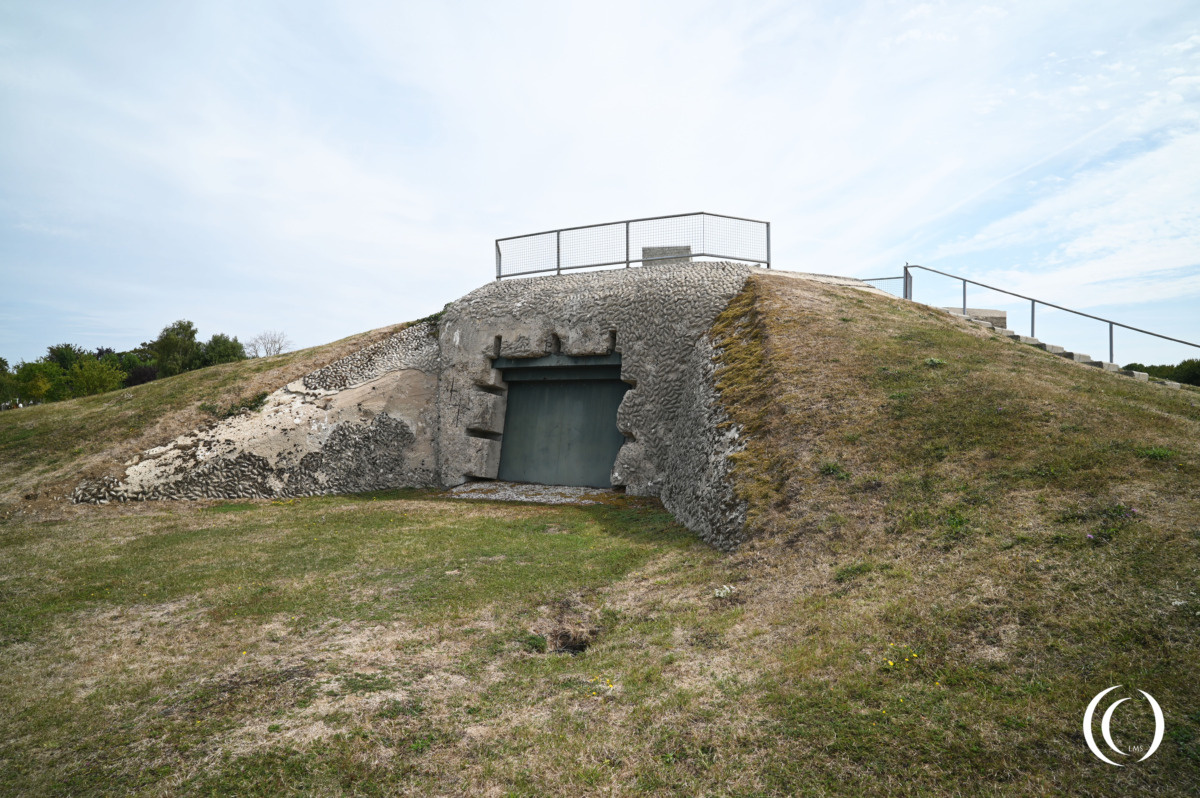
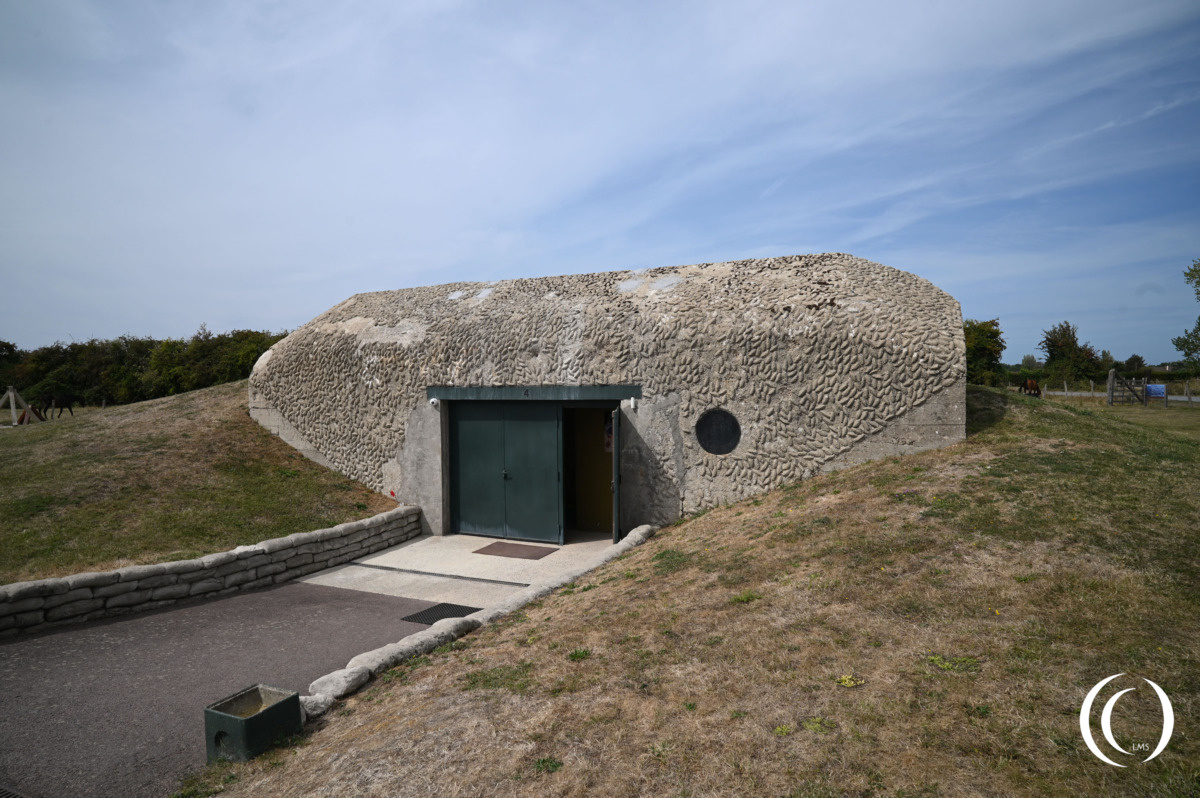
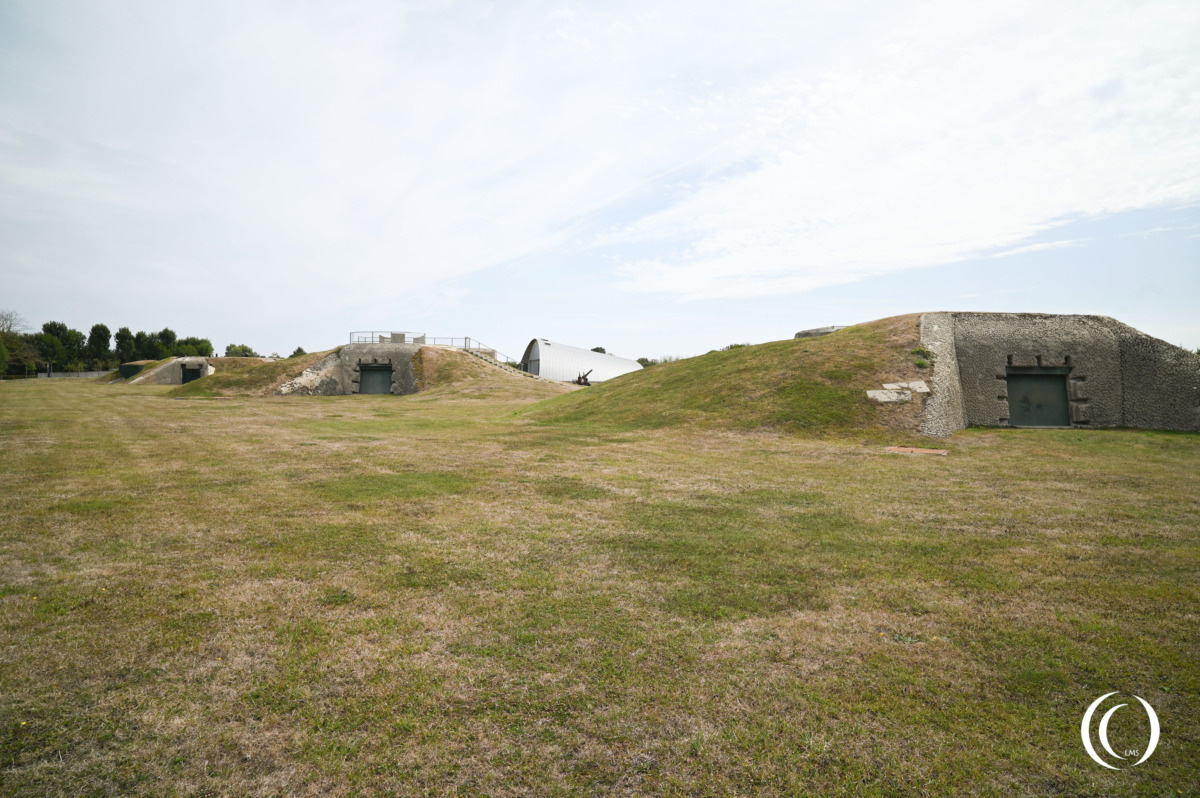
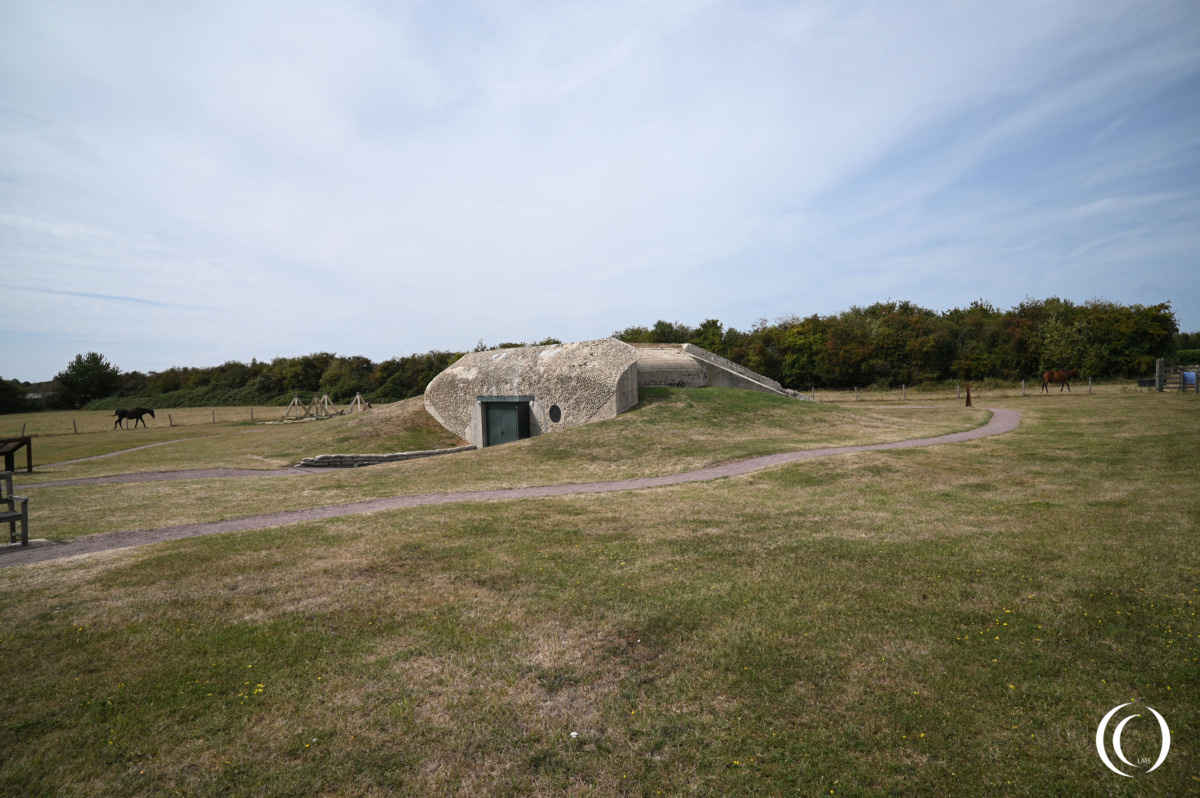
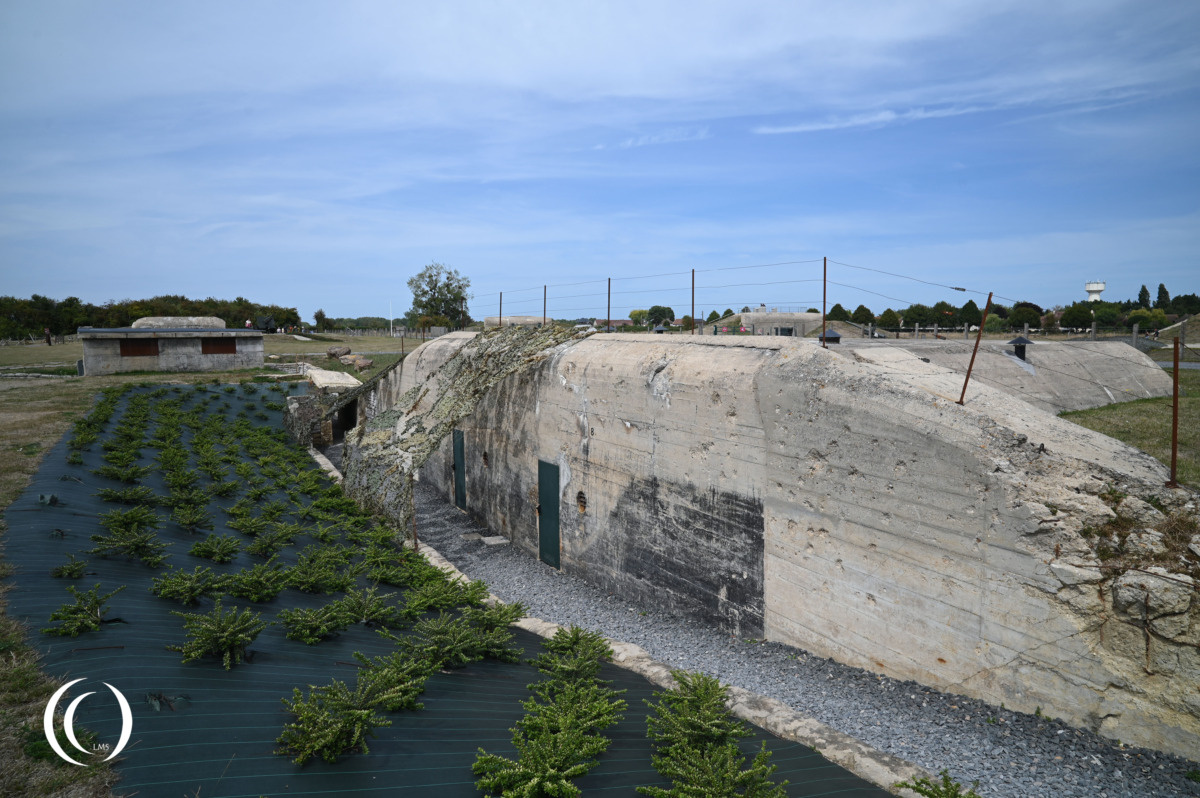
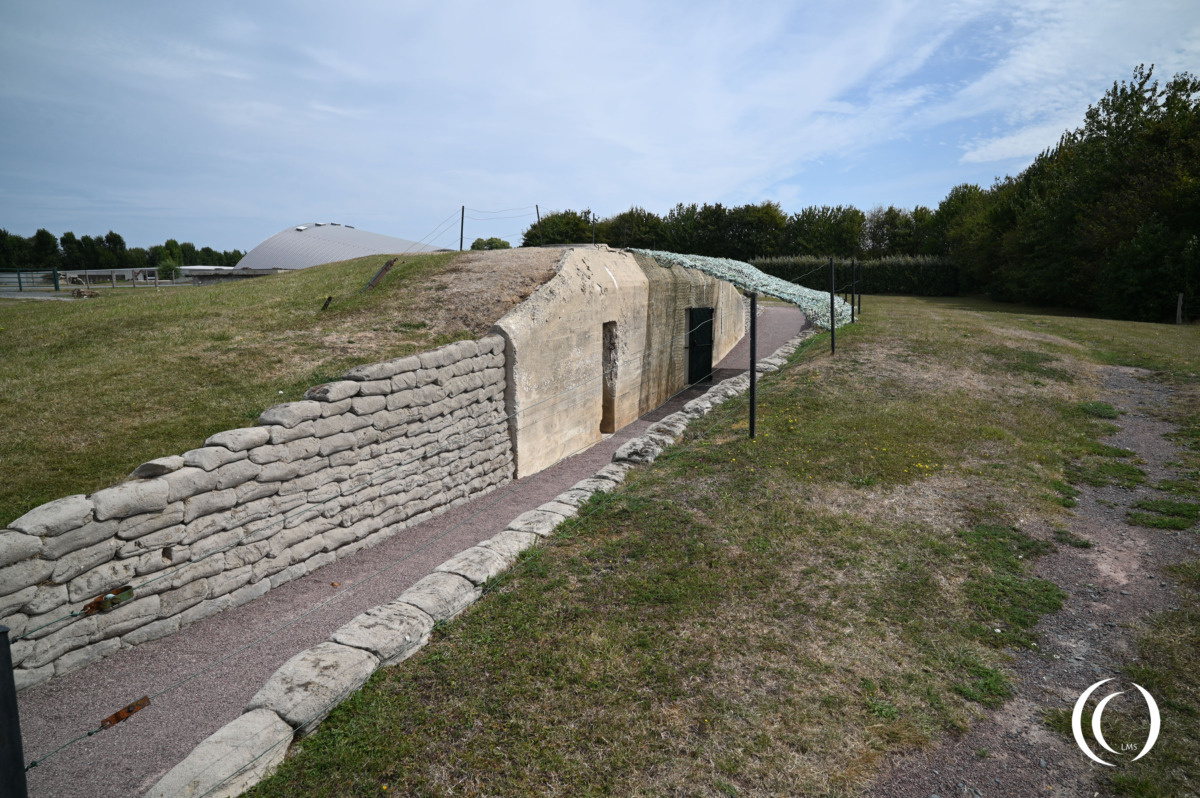
The battery was developed to prevent Allied naval forces from approaching the coast and to threaten landing operations. Its principal armament consisted of four 100 mm Czech-designed Škoda guns installed in reinforced-concrete casemates and open gun emplacements. The battery’s defences included three 20 mm anti-aircraft guns and several machine guns distributed among fifteen firing positions. The entire installation occupied an area measuring approximately 700 by 500 yards (640 by 460 metres), enclosed by two barbed-wire barriers about 15 feet (4.6 metres) deep and 5 feet (1.5 metres) high. Beyond these obstacles lay a minefield extending approximately 100 yards (91 metres) in depth. An anti-tank ditch provided an additional defensive measure, obstructing approaches from the nearby coastline.
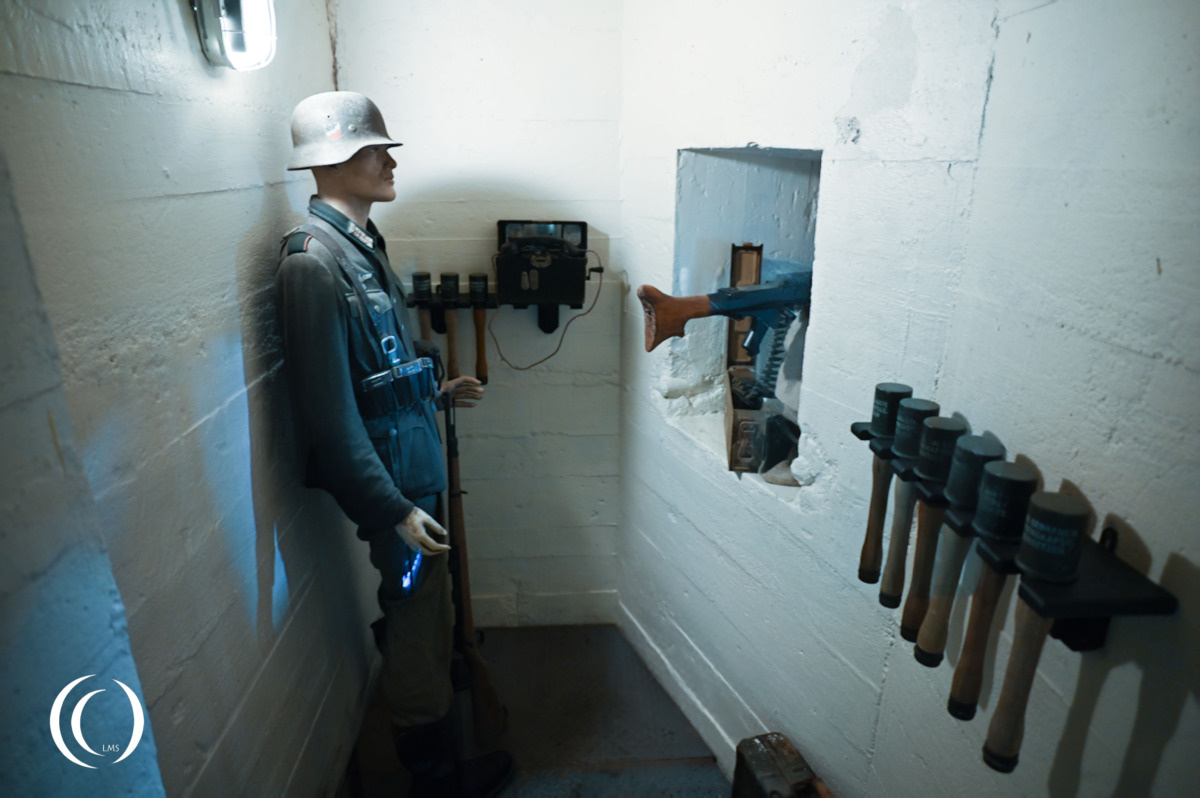
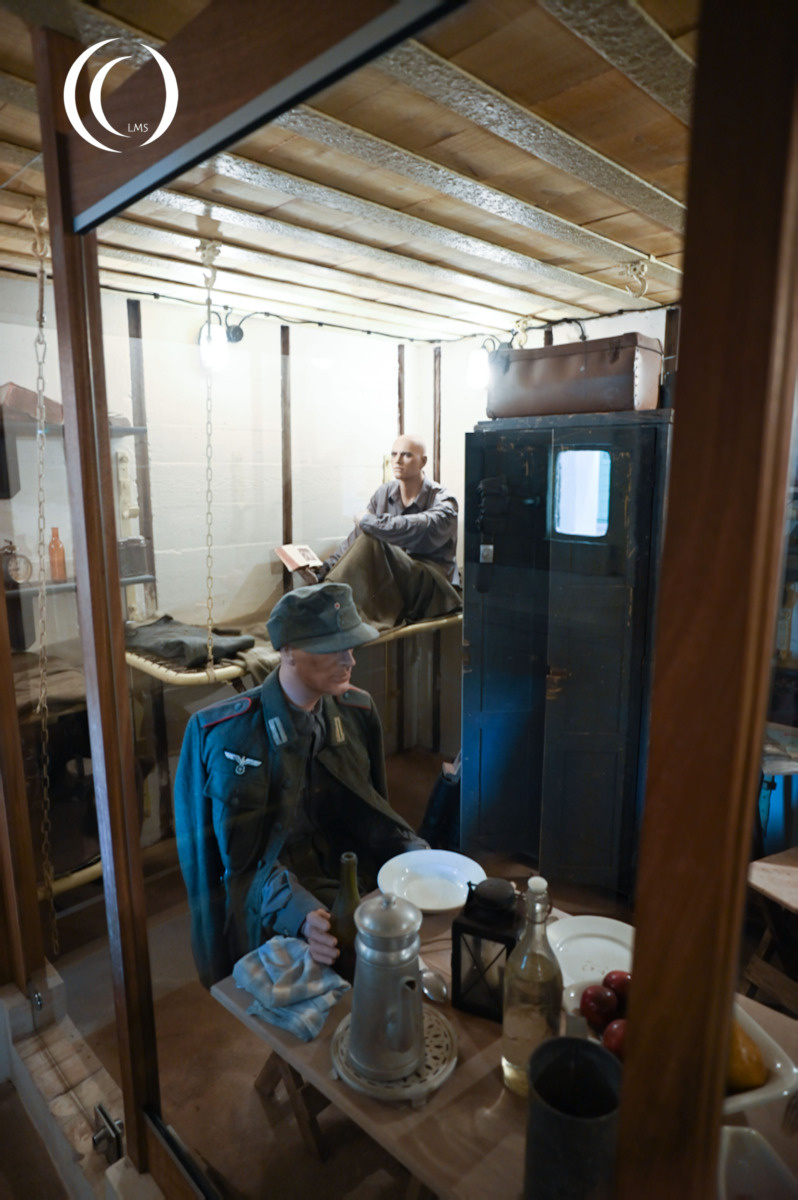
By June 1944, the battery was occupied by German Army personnel associated with Artillery Regiment 1716. Its commander was Sergeant Major Johannes Buskotte. This 1st Battery, Artillery Regiment 1716 (1./AR 1716) manned the four 100 mm Škoda howitzers housed. The garrison consisted of roughly 130 to 160 artillerymen and engineers.
The 100 mm Skoda Guns
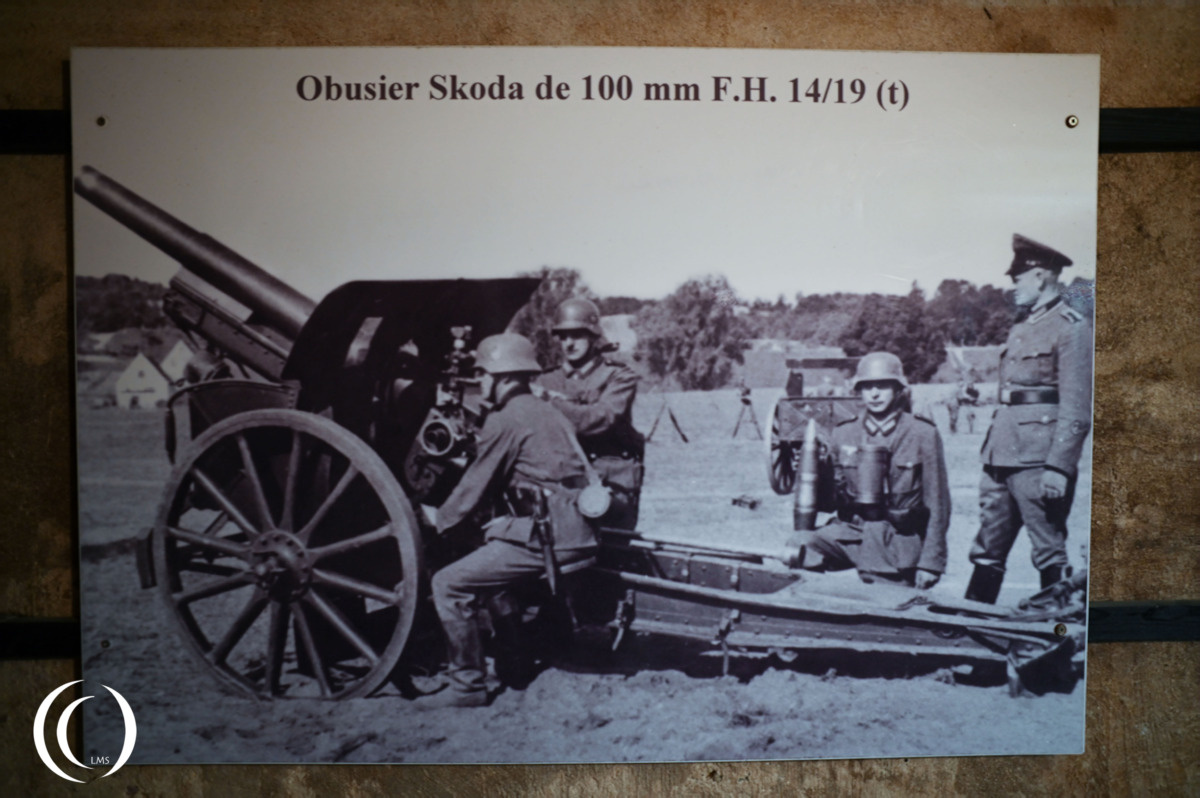
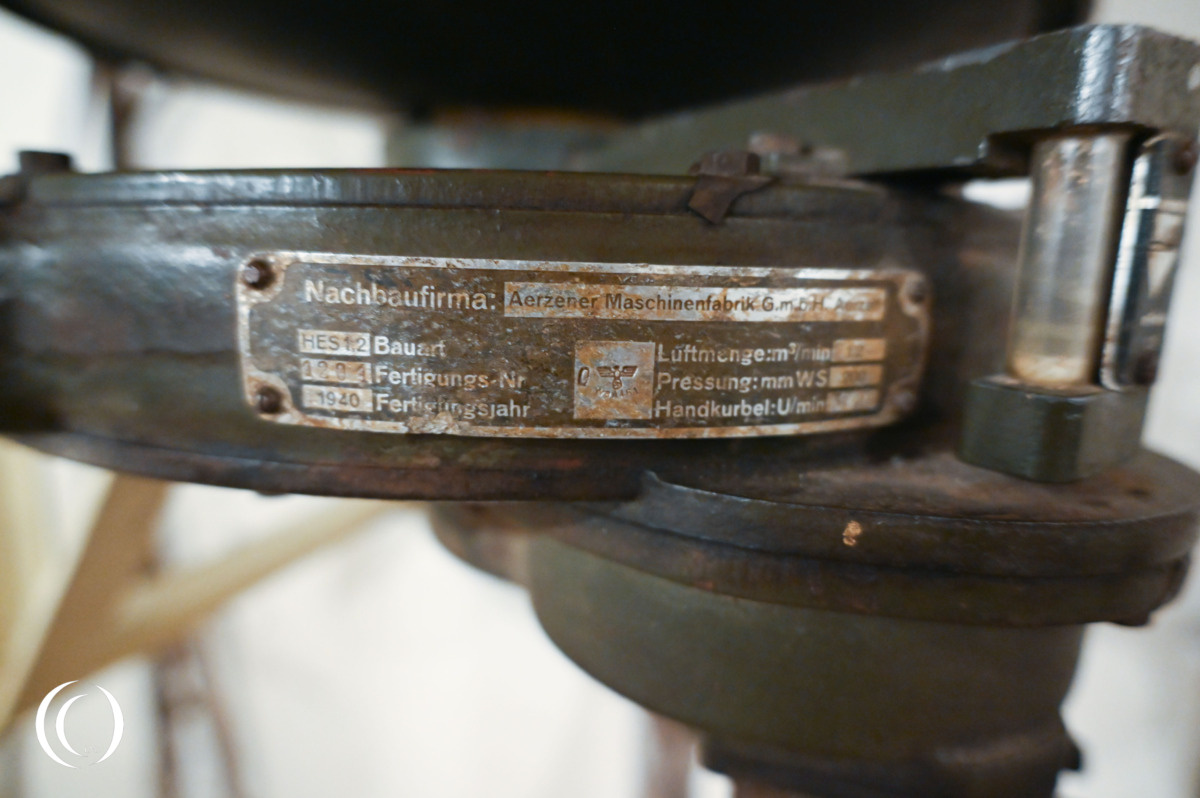
The improved version of the 1914 howitzer was created in 1919 A longer barrel was fitted which, with new vz.21 shells, increased the range from 8,100 m to 9,900 m. The German designation for the cannon was 10 cm leFH 14/19(t). The “t” refers to Tschechische (Czechoslovak) and leFH means leichte Feld-Haubitze – light field howitzer.
With its caliber of 100 mm and L/24 calibre, barrel length 2.4 m it weighed 1505 kilograms during combat. A trained crew fired 6 to 8 of the 14 kilogram shells per minute on a maximum range of 9,900 meter.
Widerstandsnest 01
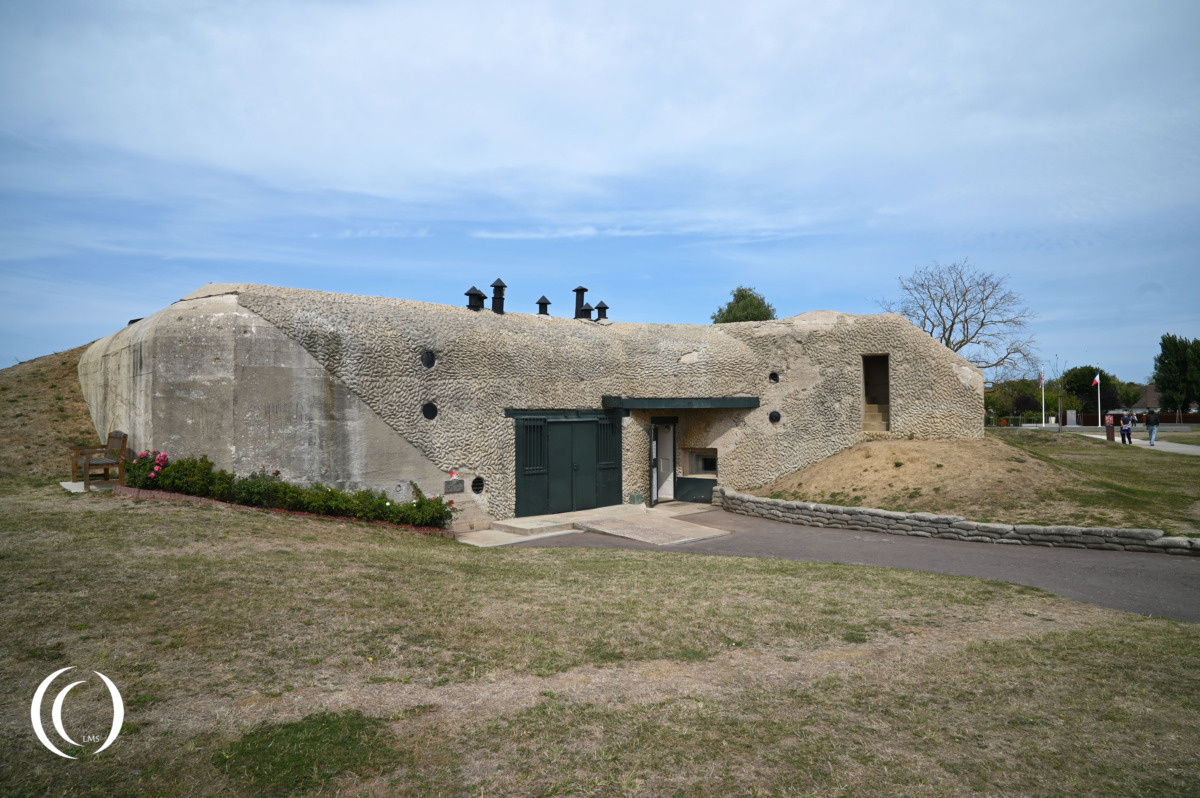
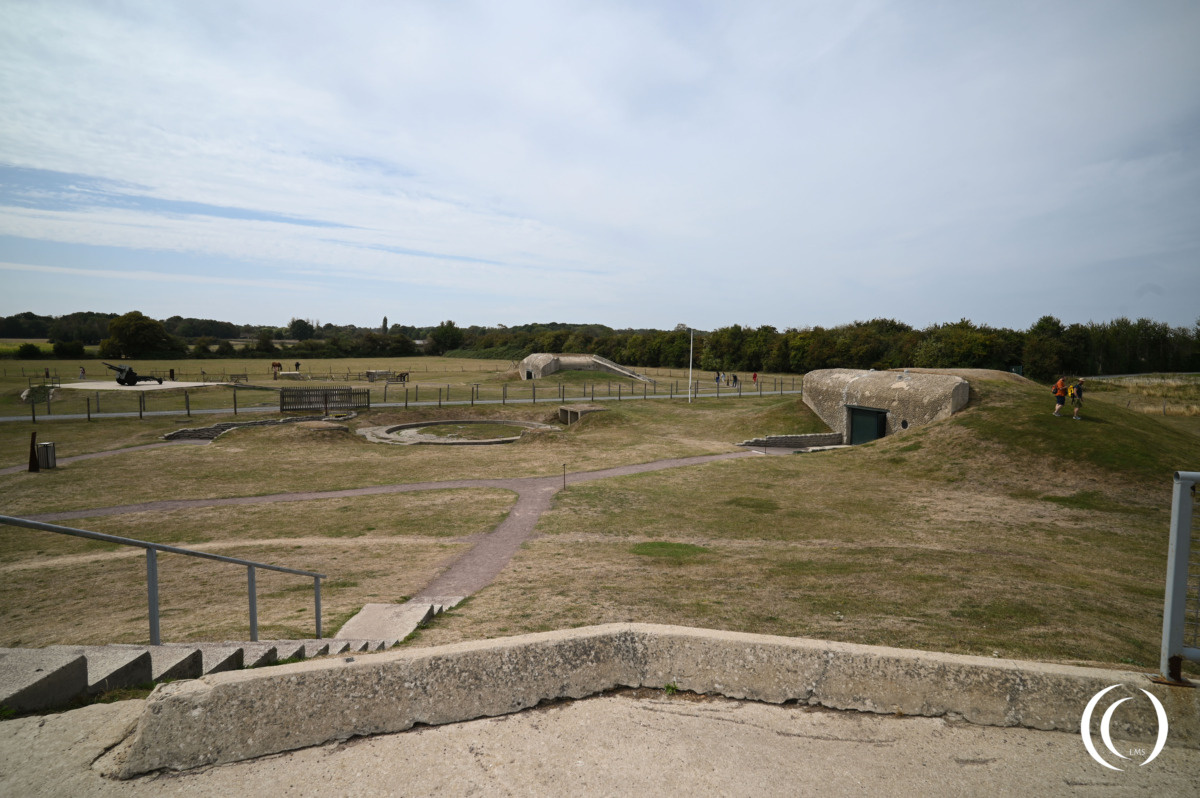
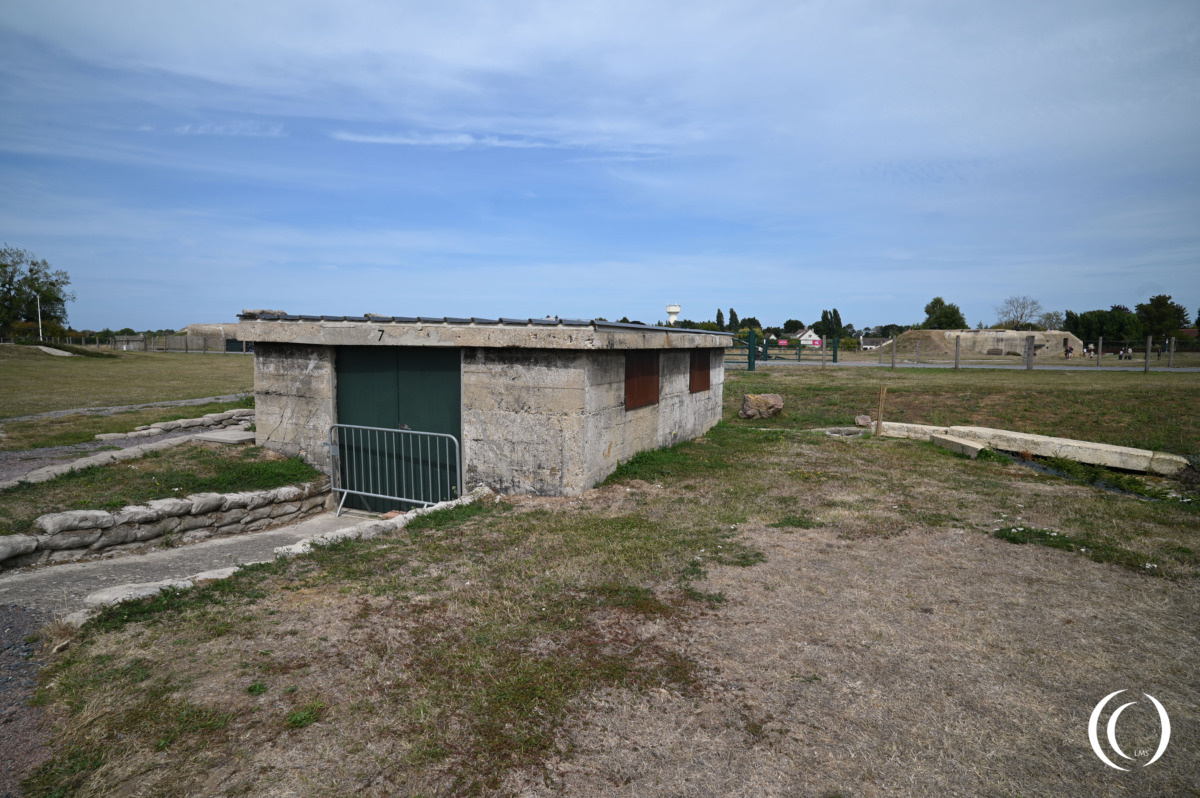
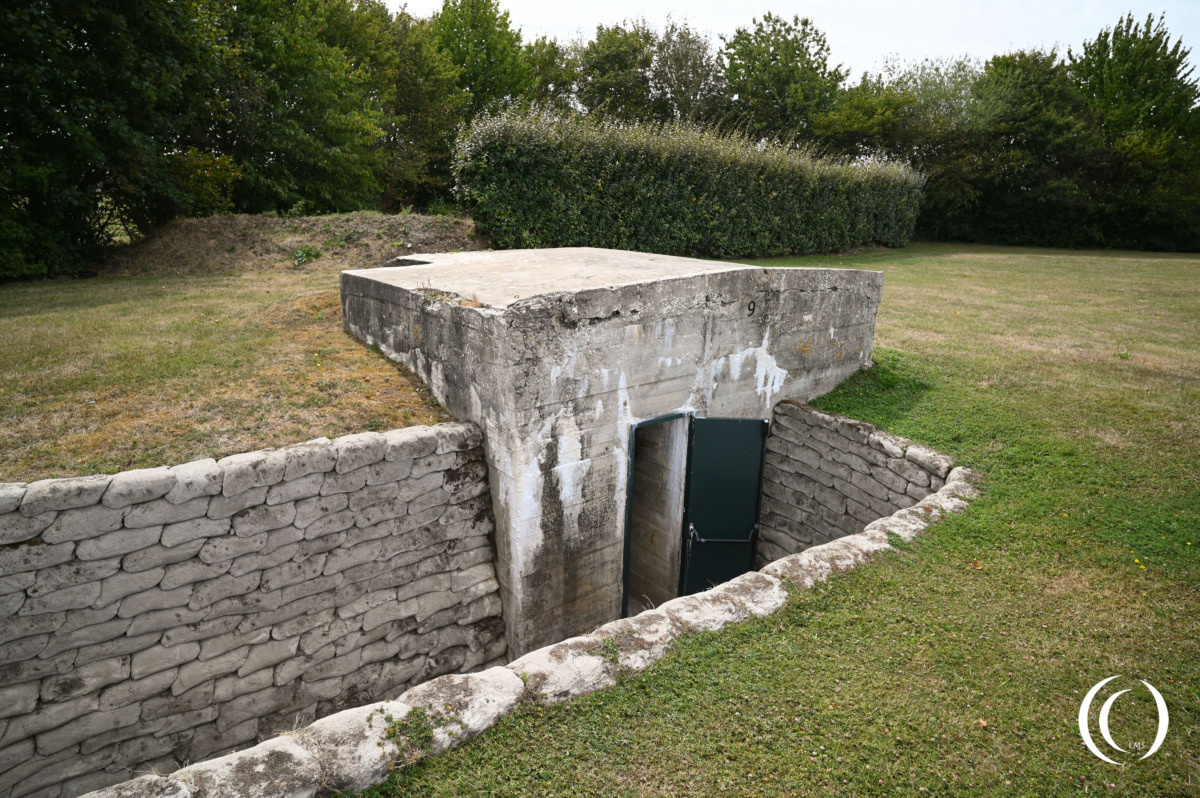
Widerstandsnest 01 is the German designation used within the Atlantic Wall system—which categorizes sites as *Widerstandsneste* (resistance nests), *Stützpunkte* (strongpoints), *Stützpunktgruppen* (strongpoint groups), fortresses, etc. Widerstandsnest 01, or HKB Merville, consisted of the following bunkers and fortified positions;
One Regelbau 611 – flanking gun bunker suitable for a 7.5 cm or 10.5 cm gun.
One Regelbau 669 – casemate with a firing aperture of approximately 60 degrees for a field gun or anti-tank gun
Two regelbau 612 – flanking gun bunker for field artillery, anti-landing guns, or anti-tank guns (usually 7.5 cm or 10.5 cm cannons) capable of firing parallel to the coastline.
Four OB 10 cm geschutz – open gun emplacement
Two Vf7bSK – ammunition bunker
One Regelbau 501 – ruppenunterstand, accommodates a group of 10 military personnel (9 enlisted personnel and 1 non-commissioned officer/corporal).
One Regelbau 502 – Doppelgruppenunterstand (double squad bunker) designed to shelter approximately 20 soldiers.
One Fa Küche – kitchen (used as a flak position after an OB was destroyed by bombs in 1944)
One Fa Brünnen – a “Brunnen” is a camouflaged or fortified water supply or well.
One Fa Munition destroyed – ammunition bunker
One Fa Lager destroyed – Feldmäßig Lage* is a field-constructed storage or supply bunker (depot).
The battery’s command post (fire control) was located about two kilometers further north, near Sword Beach in Franceville.
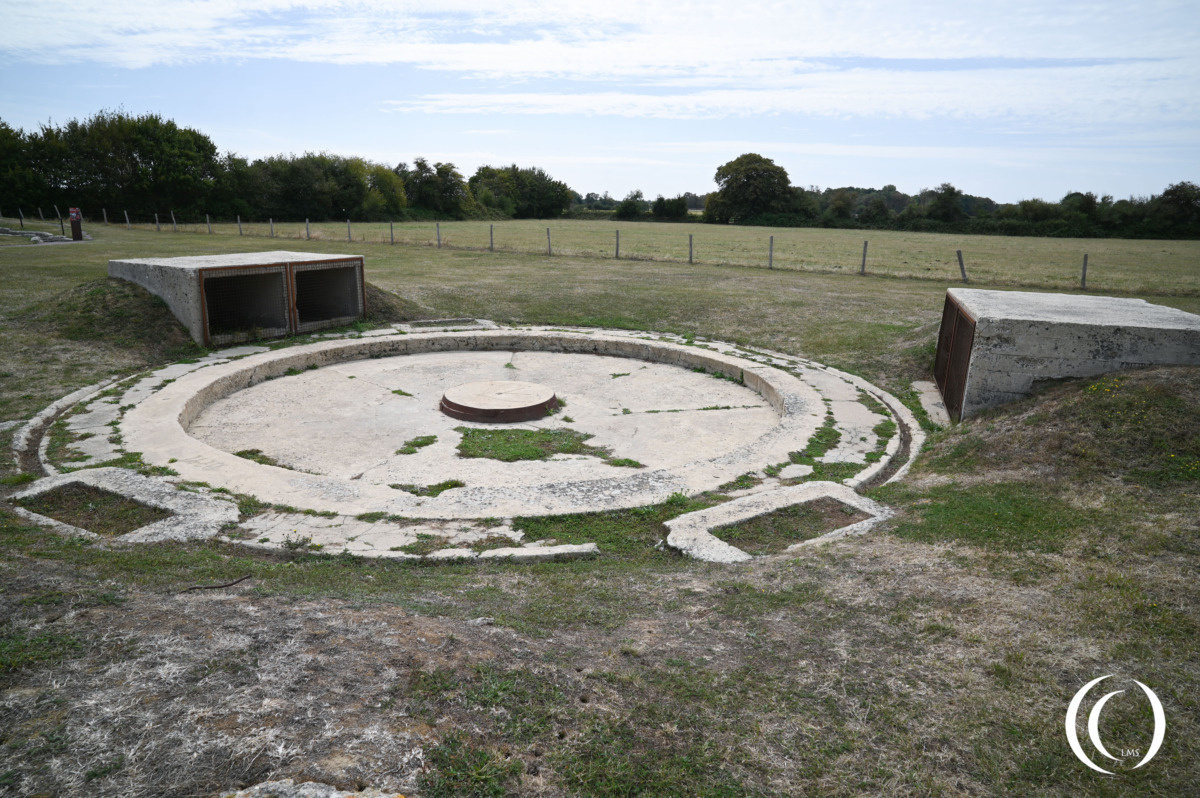
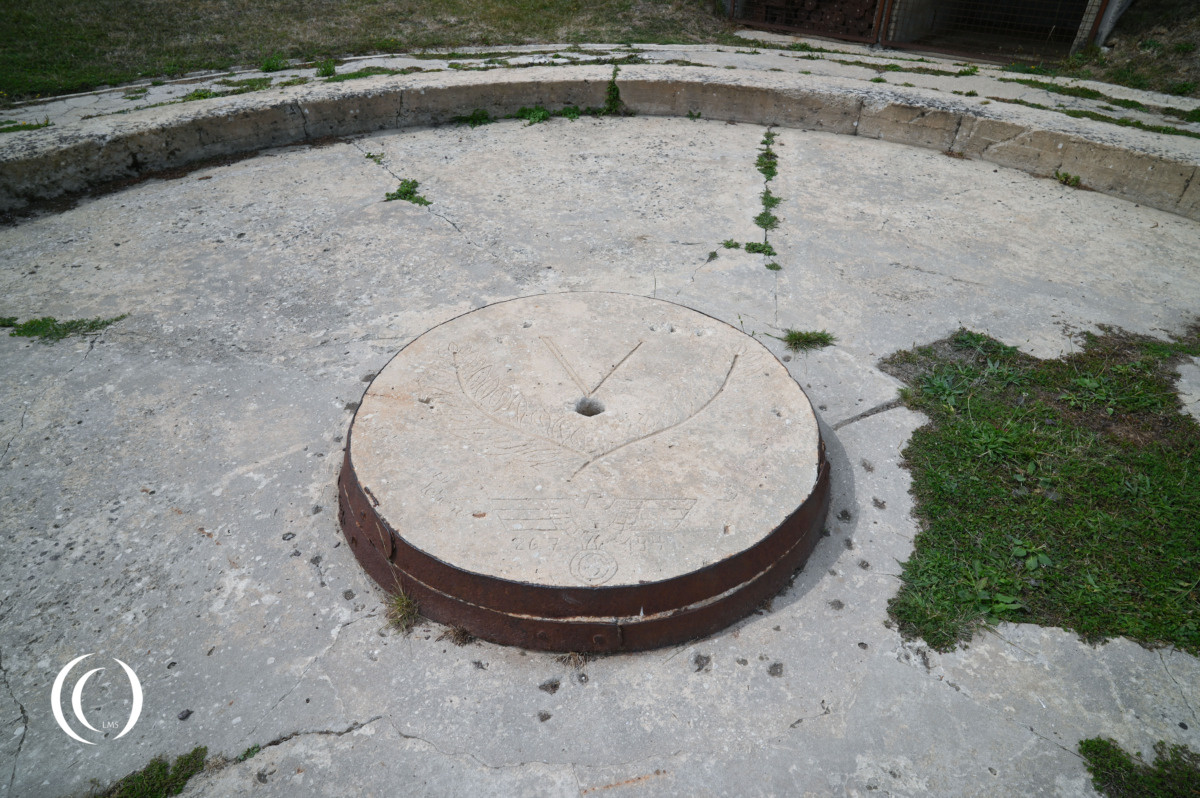
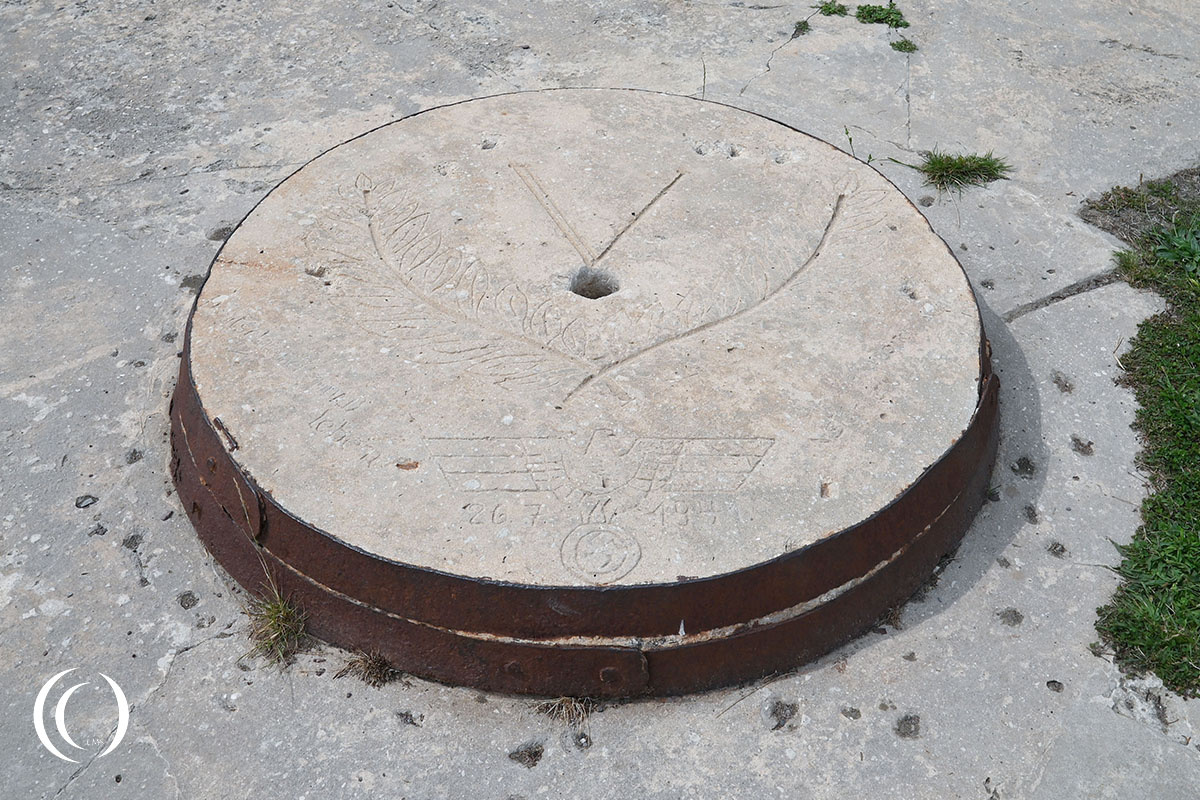
OB 10 cm geschutz
In German military terminology, the abbreviation OB stands for “Offener Bunker” or “Offene Bettung” (open emplacement). This type of position was used to house medium-calibre artillery with a calibre of 10 centimetres (often actually 10.5 cm).
Vf7bSK
• Vf: Stands for *Verstärkt Feldmäßig* (reinforced field-type). These bunkers featured roofs and walls that were thinner than those of the heavy, bomb-proof *Regelbau* bunkers. They were classified as either splinter-proof or shot-proof (*schußsicher*).
• 7b: This specific number designates a *Munitionsstand* (an ammunition shelter or bunker) constructed using so-called *Hoyerbalken* (prestressed concrete beams used to reinforce the ceiling).
• SK: Stands for *Sonderkonstruktion* (special design). This indicates that the standard design of the Vf7b bunker was locally modified or expanded to meet the specific requirements of the combat location or the terrain.
D-Day, the attack on the Merville battery
During the early hours of D-Day, 6 June 1944, the 9th Battalion of the British 6th Airborne Division, under the command of Lieutenant Colonel Terence Otway, was ordered to capture and destroy the battery. The operation formed part of Operation Tonga, the British airborne landings designed to secure important bridges and prevent German reinforcements from reaching the landing beaches. Allied intelligence considered the position a significant threat to the forthcoming Normandy landings. The Merville Battery had to be neutralized because its guns, with a range of 10 kilometers, could easily reach the French coastal town of Ouistreham. The British landing on Sword Beach was scheduled to take place at that very location, placing it within range of the 100mm Skoda guns. Furthermore, Pegasus Bridge and Horsa Bridge, along with the mouth of the Caen Canal (Orne estuary), lay within the guns’ firing range.
The parachute drops were widely scattered, and the troops encountered difficulties assembling their forces and collecting equipment. With substantial casualties and logistic challenges, the battalion organised an assault against the fortified position. British paratroopers breached the defences and captured the battery, rendering its guns unusable. They subsequently discovered that the weapons were 100 mm guns rather than the heavier 150 mm pieces anticipated by Allied planners.
No. 3 Commando fighting at the Merville battery
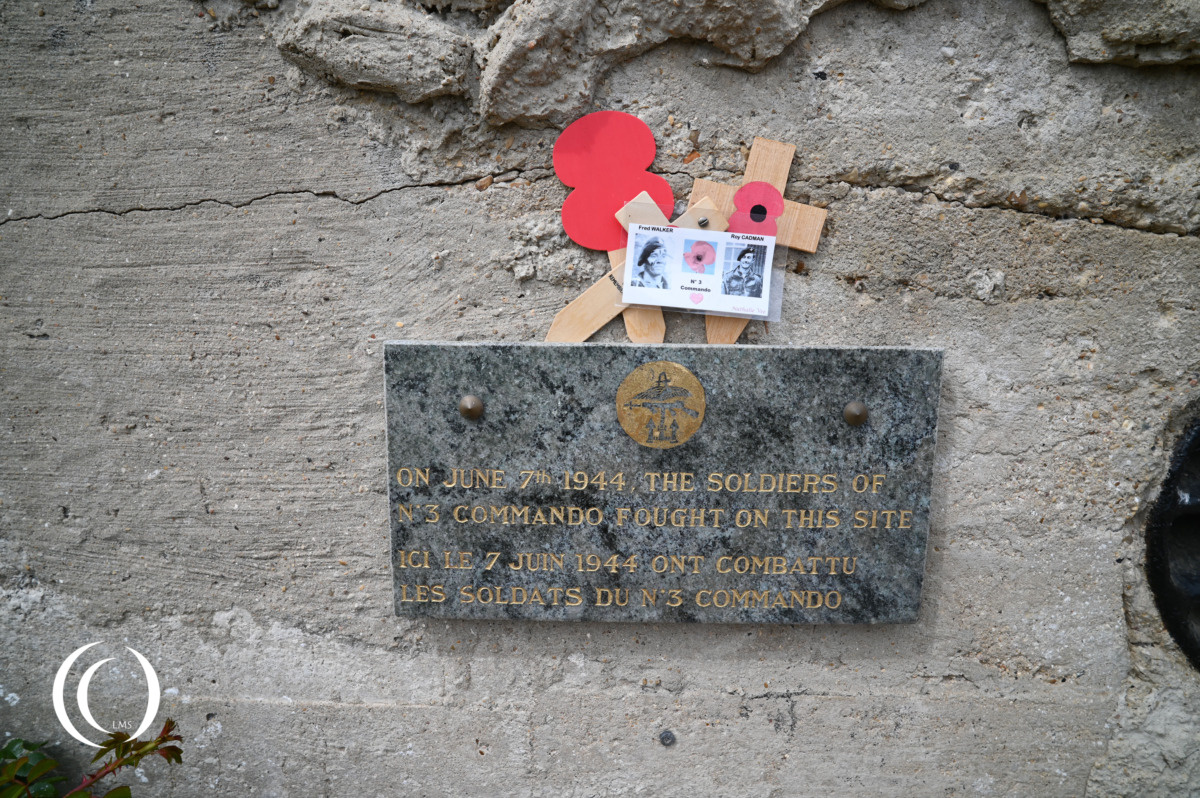
On 7 June 1944, a combined force from Nos. 4 and 5 Troops from No. 3 Commando, commanded by Major John Pooley, the second-in-command, launched an assault on the Merville coastal battery. Although the position had been captured by the 9th Parachute Battalion on 6 June, German troops had subsequently reoccupied it, and its guns continued to fire on the Allied landing beaches. The battery was heavily defended by mortars and landmines.
The attack was conducted from two directions. No. 4 Troop advanced across open ground from the south before taking cover behind hedgerows approximately 300 yards from the battery. From there, the men provided covering fire for No. 5 Troop, which approached from the east with fixed bayonets.
The Commandos encountered determined German resistance but eventually succeeded in capturing the position. However, their success was short-lived. Shortly afterwards, German forces launched a counterattack supported by self-propelled artillery. The fighting inflicted heavy casualties on the attacking force, including Major Pooley, who was killed during the engagement by an enemy sniper. Facing mounting losses and strong enemy pressure with German self-propelled artillery, the surviving Commandos were eventually compelled to withdraw towards Le Plein. The Merville Battery did not fire a single shot after the No. 3 Commando assault.
Visit
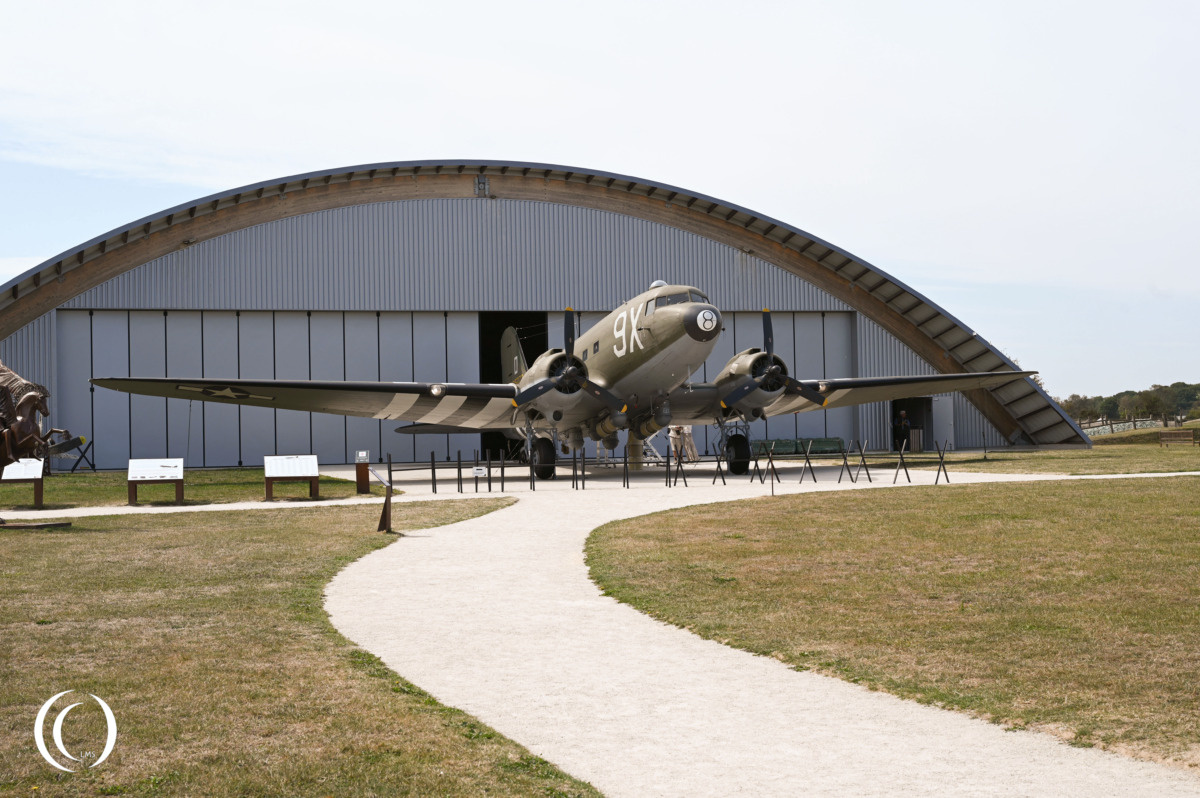
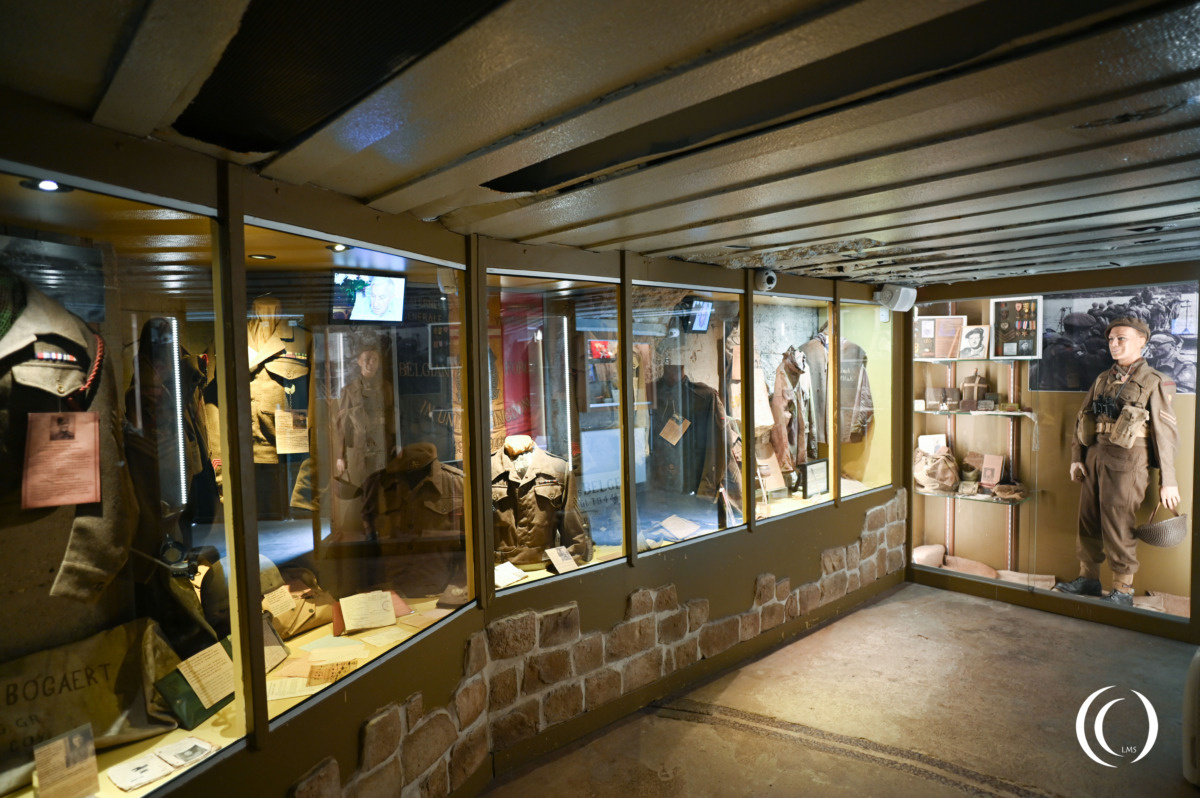
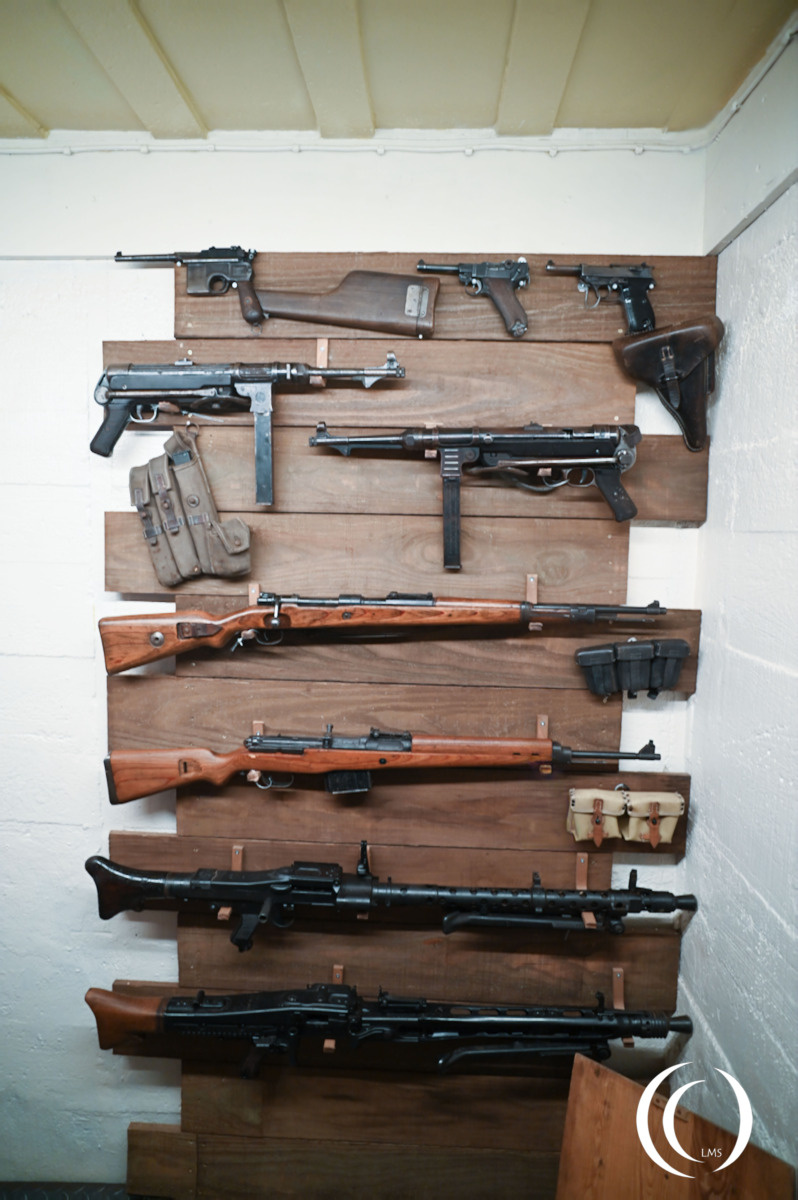
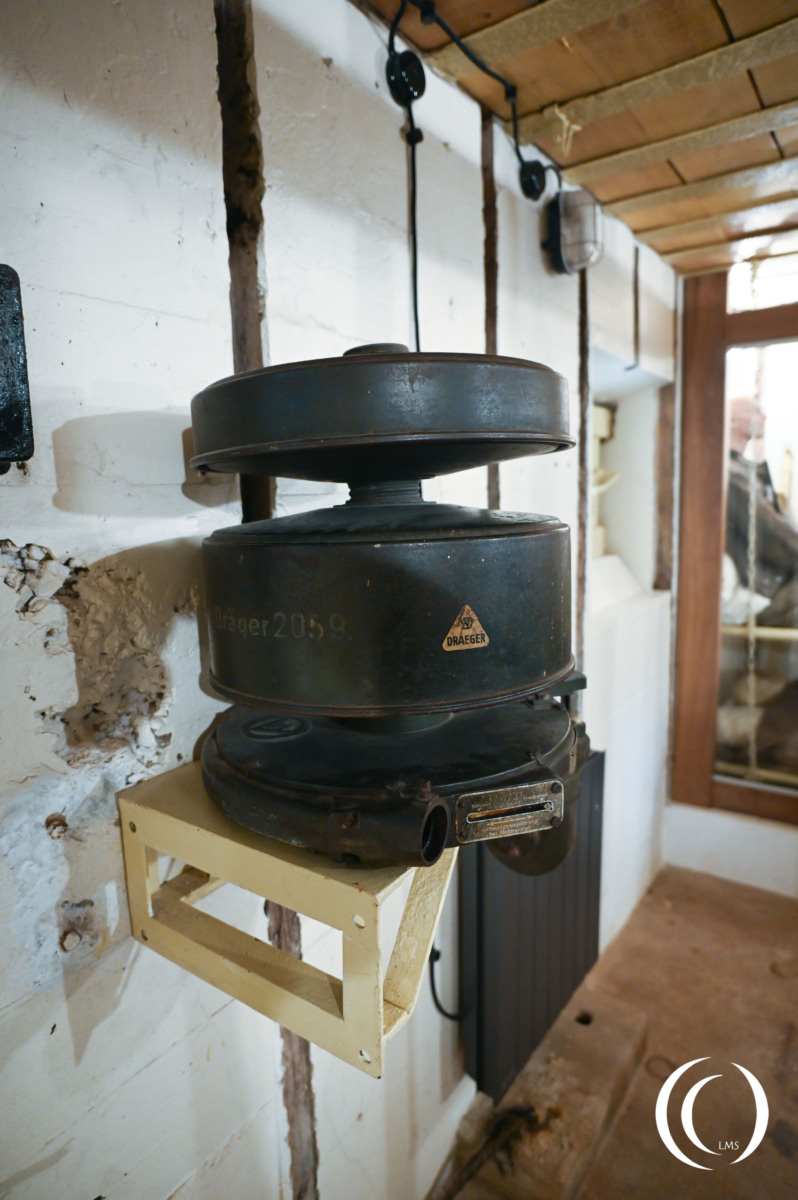
The Merville Battery is a museum featuring fitted-out bunkers that tell the story of the battery and the Battle of Normandy, starting from the very first moments of D-Day. Visitors can view a wide range of artifacts, maps, and uniforms, and there is a bunker set up to recreate the British assault using light and sound effects.
Sources
- Relikte.info
- Wikipedia (En, De, Fr, NL)
- Rudi Rolf – Atlantic Wall
- Cornelius Ryan: The Longest Day
- Batterie-merville.com
- Bunkersite.com
