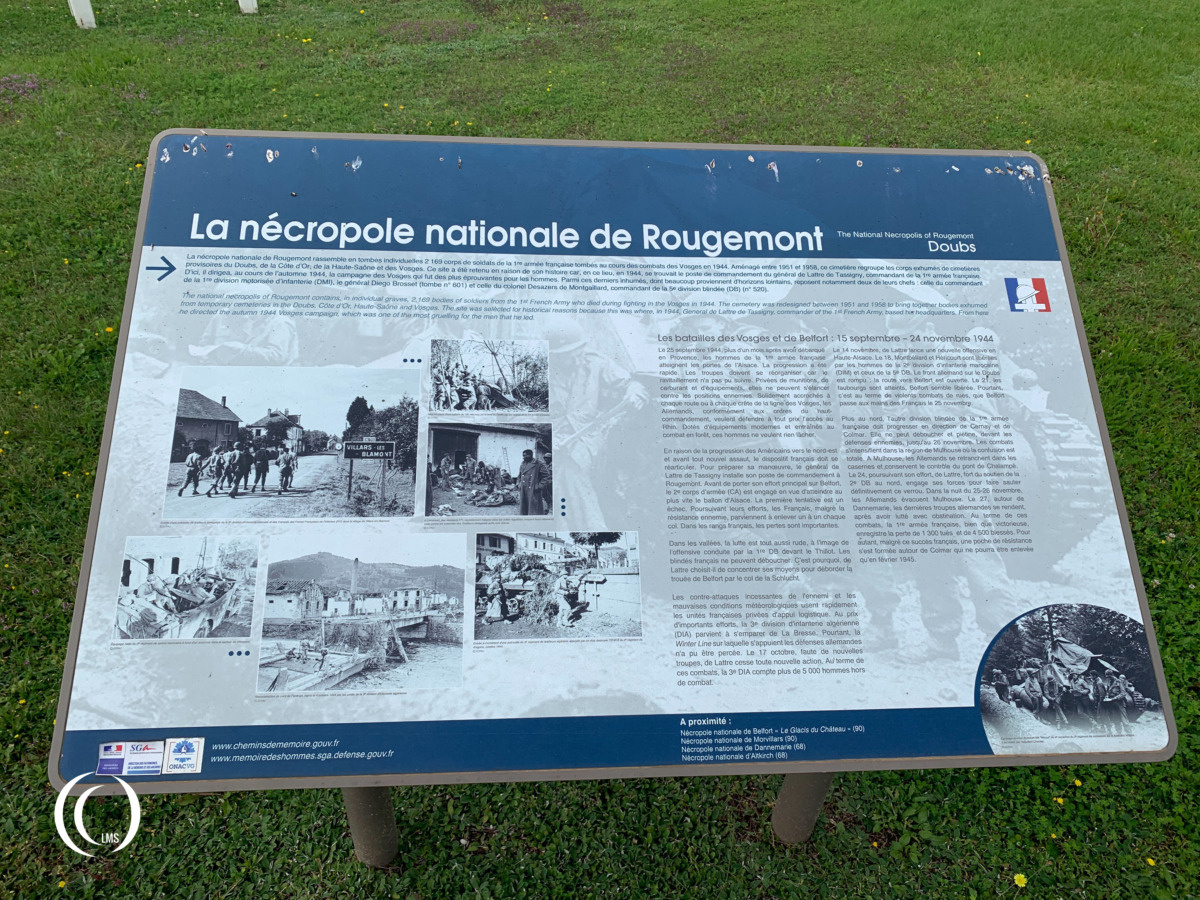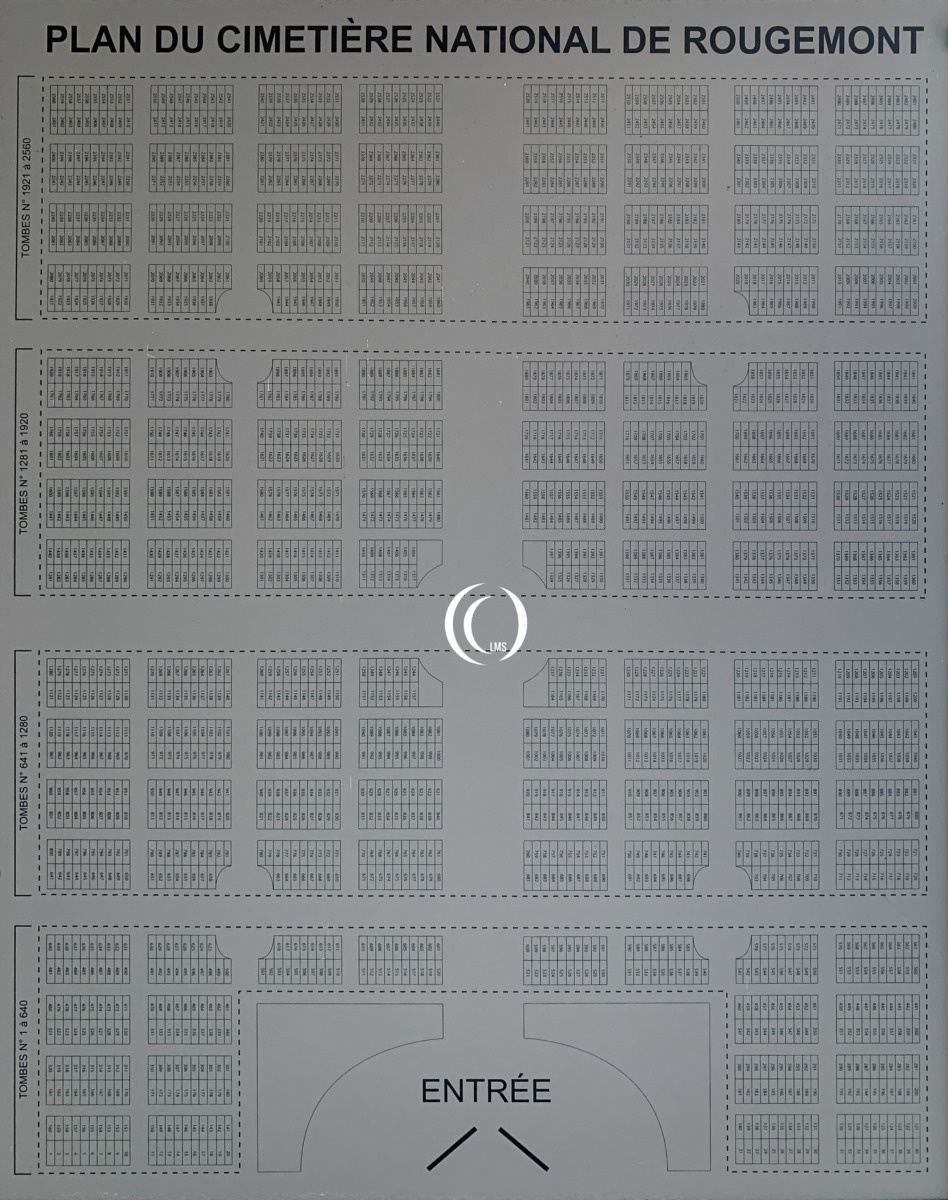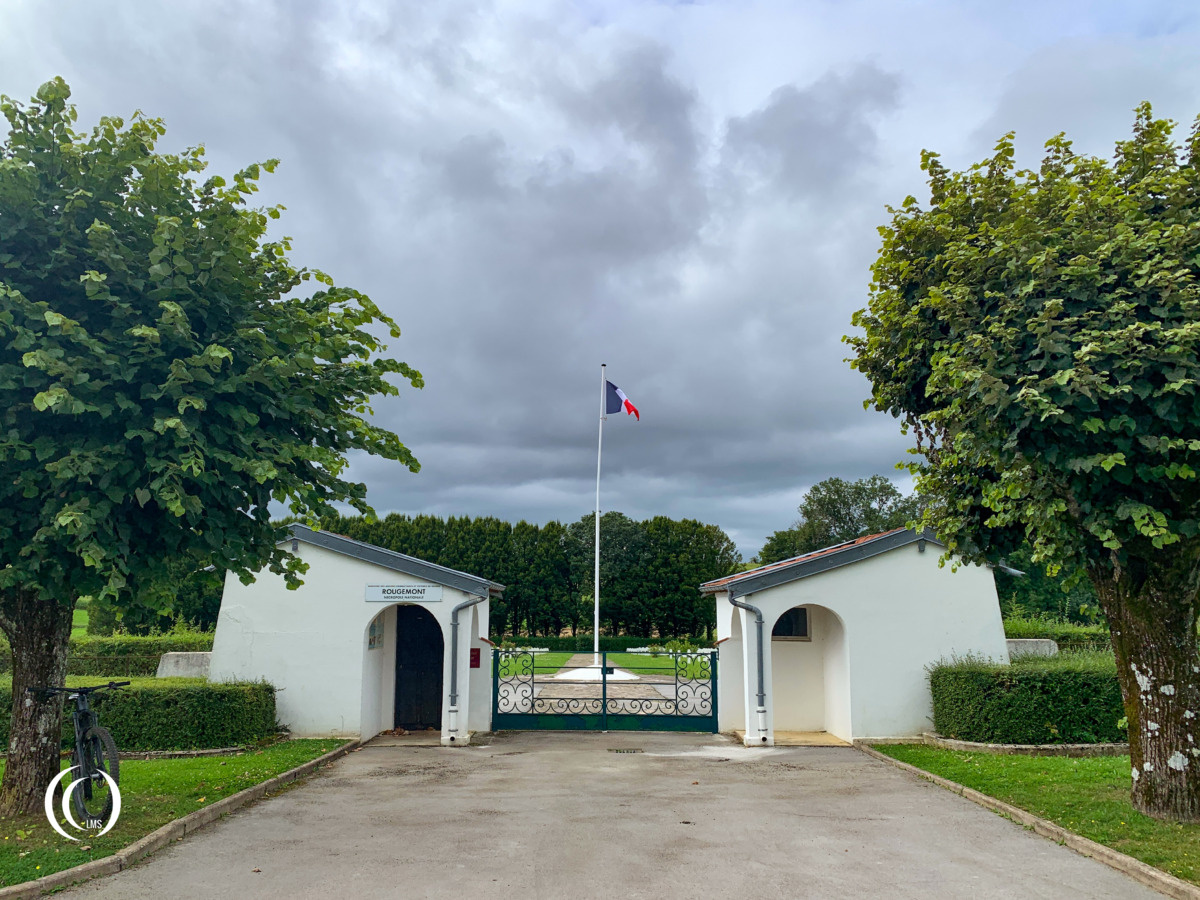
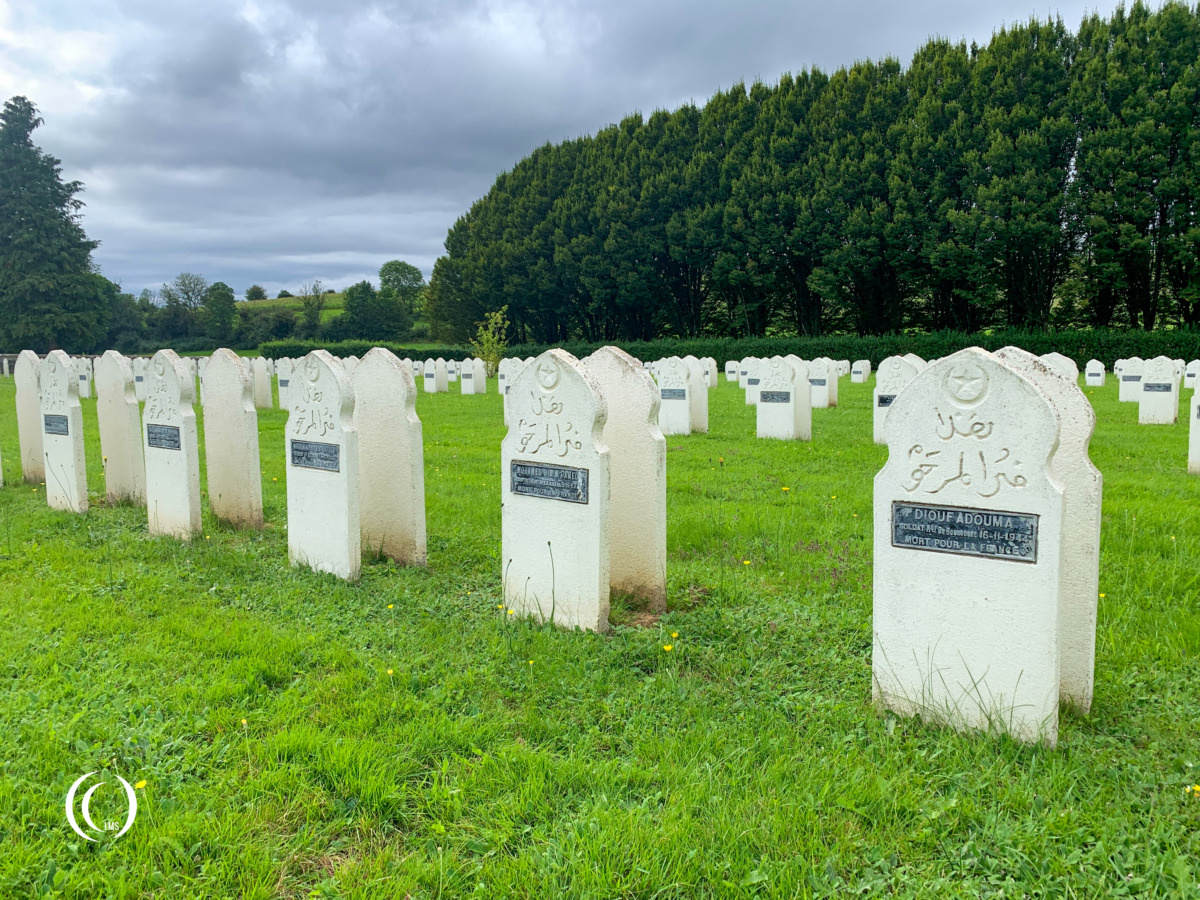
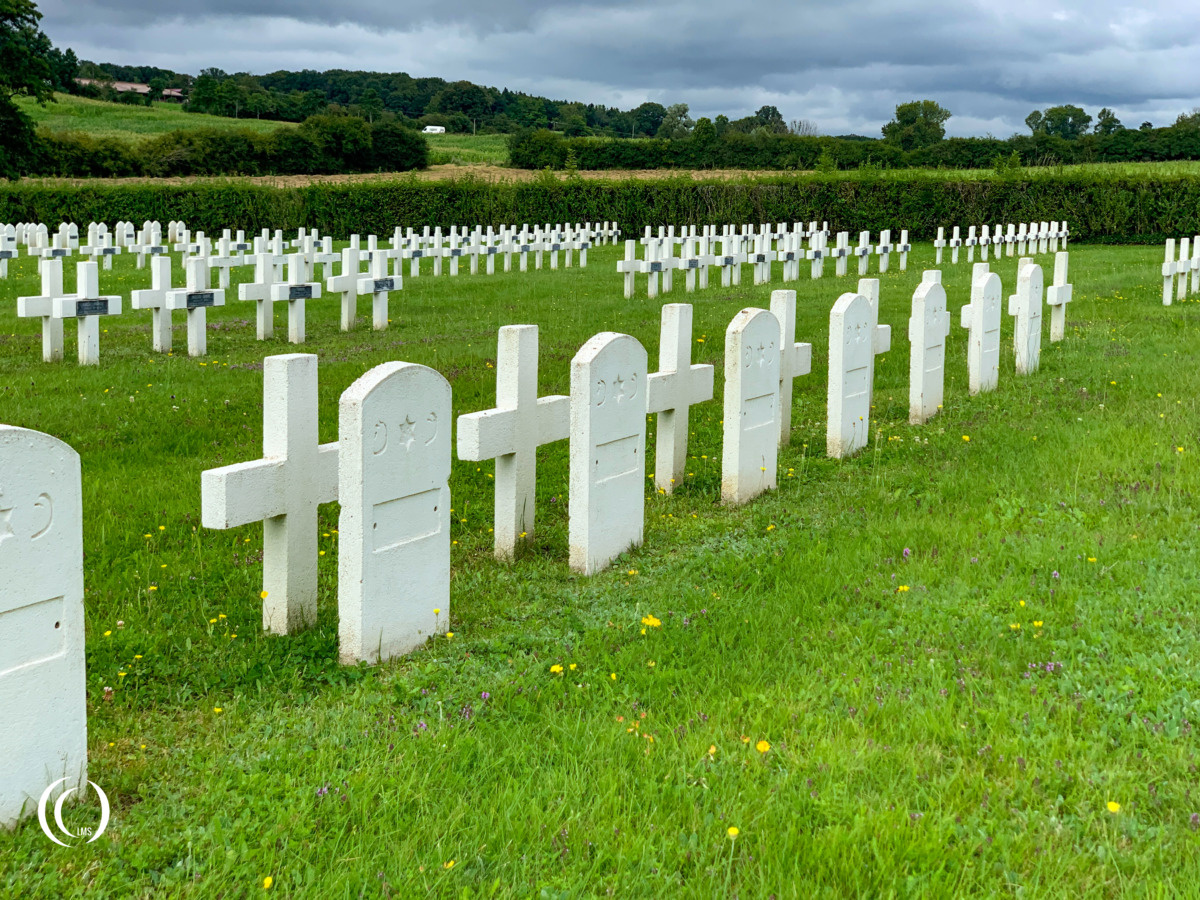
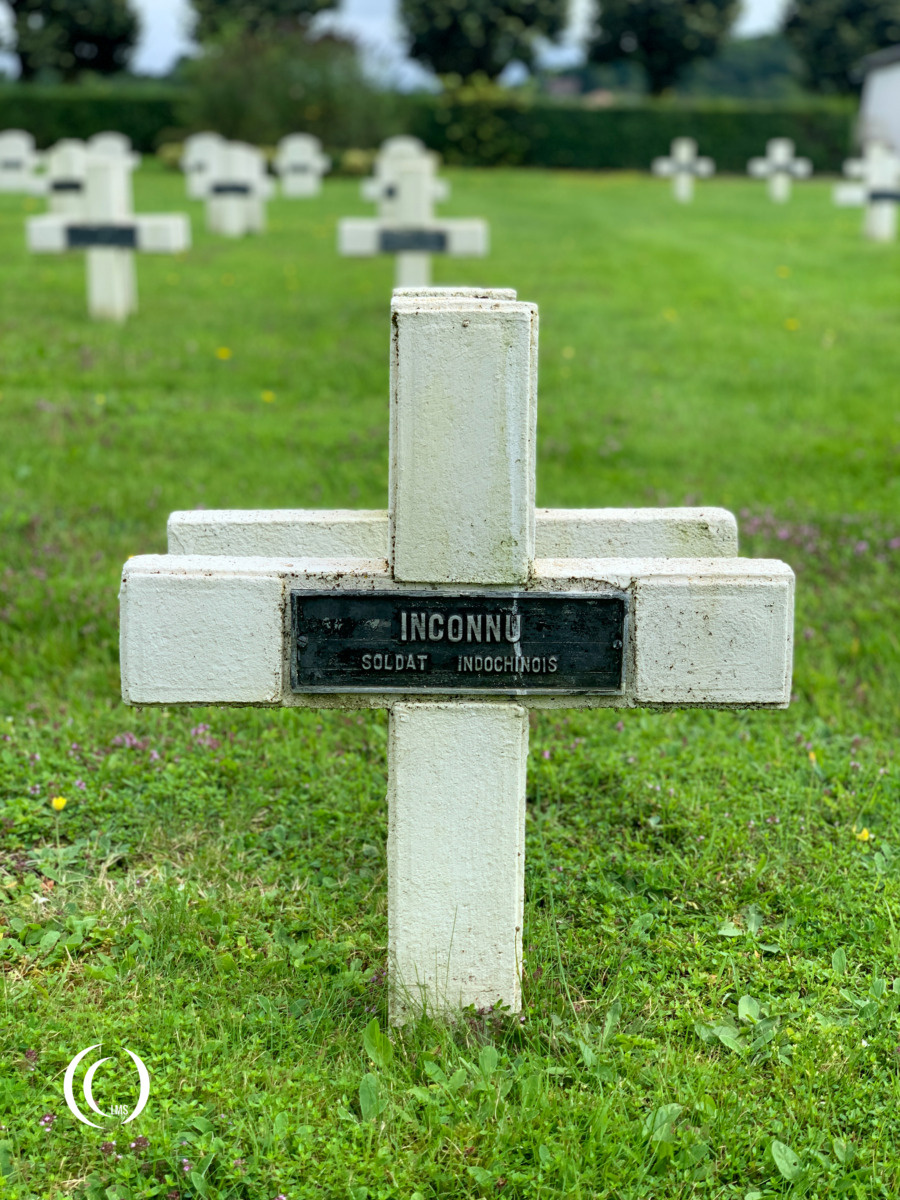
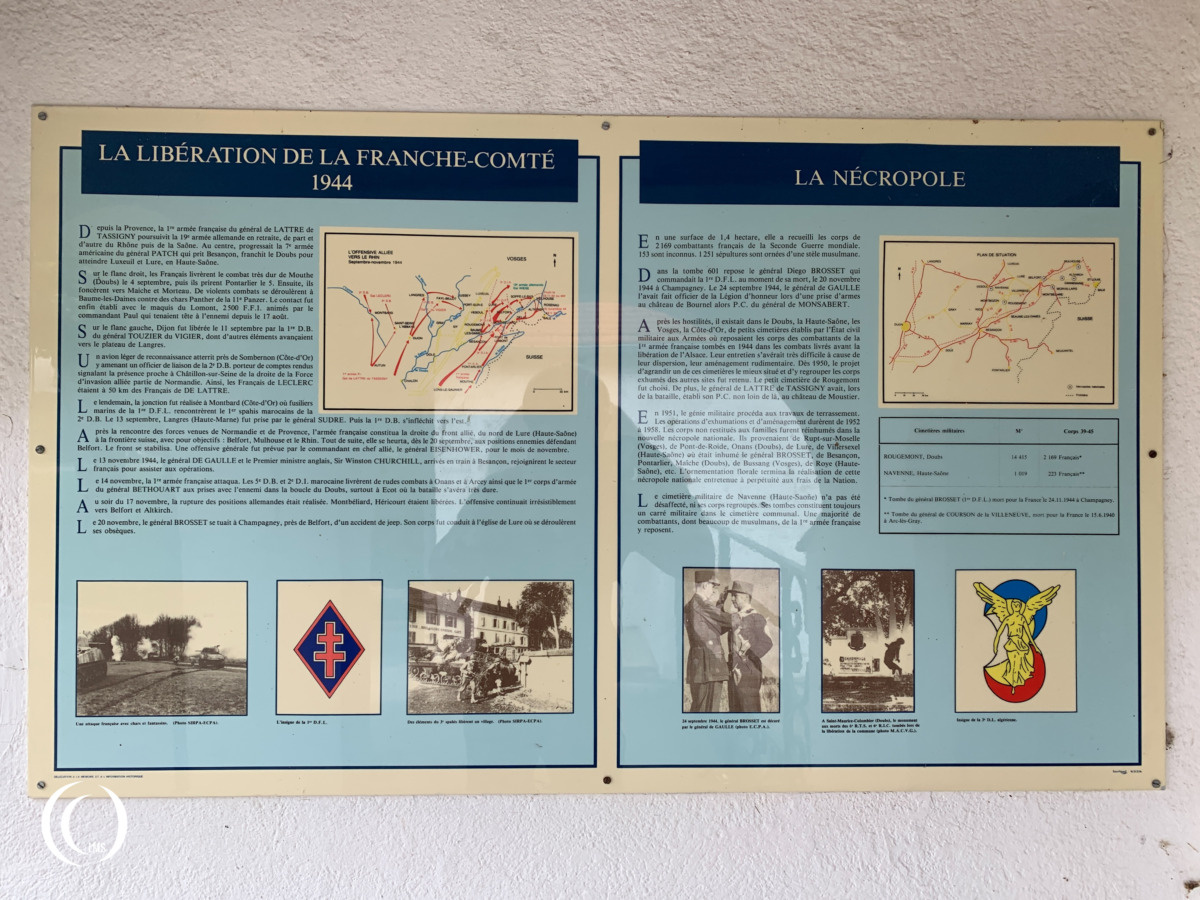
The National Necropolis of Rougemont is a military cemetery and memorial which holds the graves of 2,169 soldiers from the French 1st Army who died during the 1944 Vosges campaign in World War Two. Created between 1951 and 1958, the fallen soldiers that were originally buried in temporary cemeteries across several regions, including Doubs, Côte-d’Or, Haute-Saône, and the Vosges are now gathered here. The site serves as a place of remembrance for the heavy sacrifices made during the harsh campaign to liberate eastern France.
The cemetery’s location here at Rougemont was chosen for its historical importance, as it once hosted the headquarters of General Jean de Lattre de Tassigny, commander of the French 1st Army. In 1944 he directed operations from this location during the difficult autumn campaign.
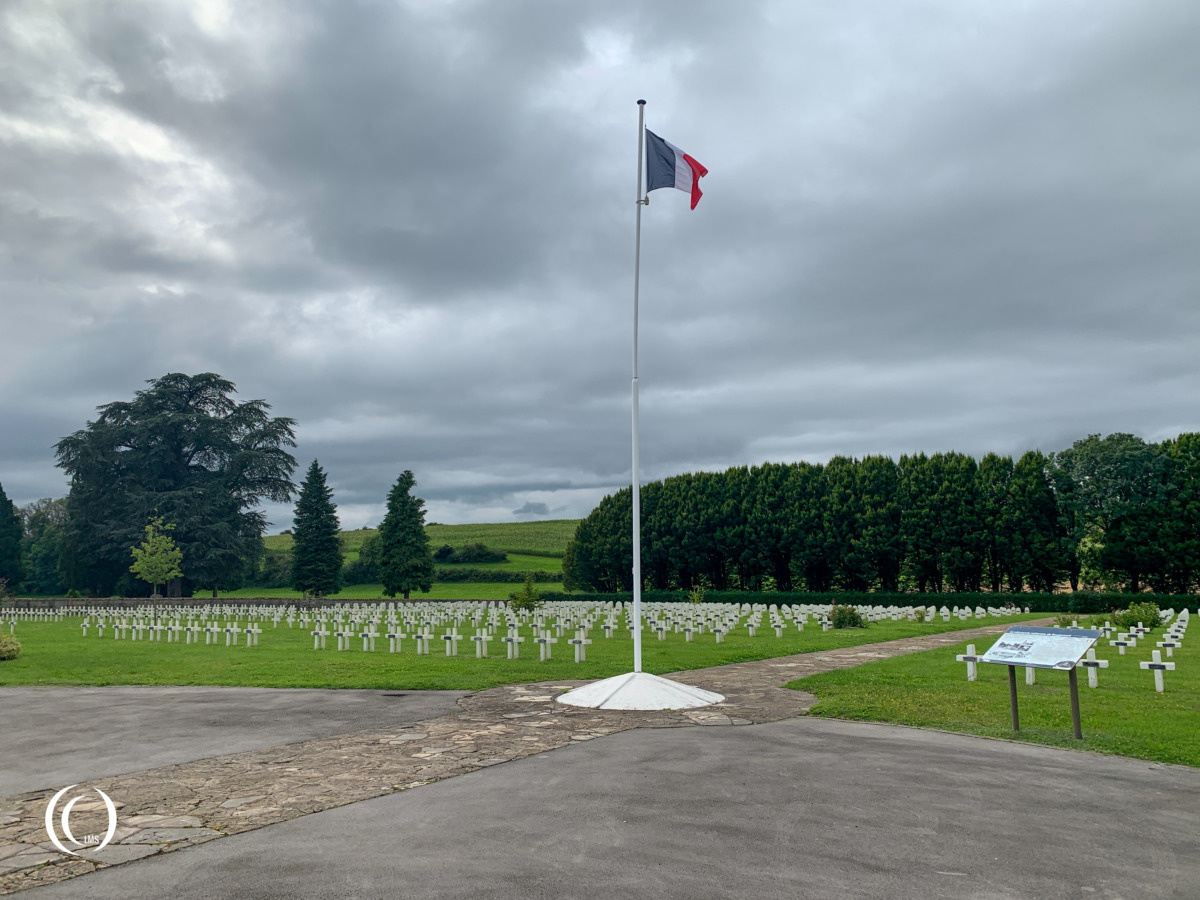
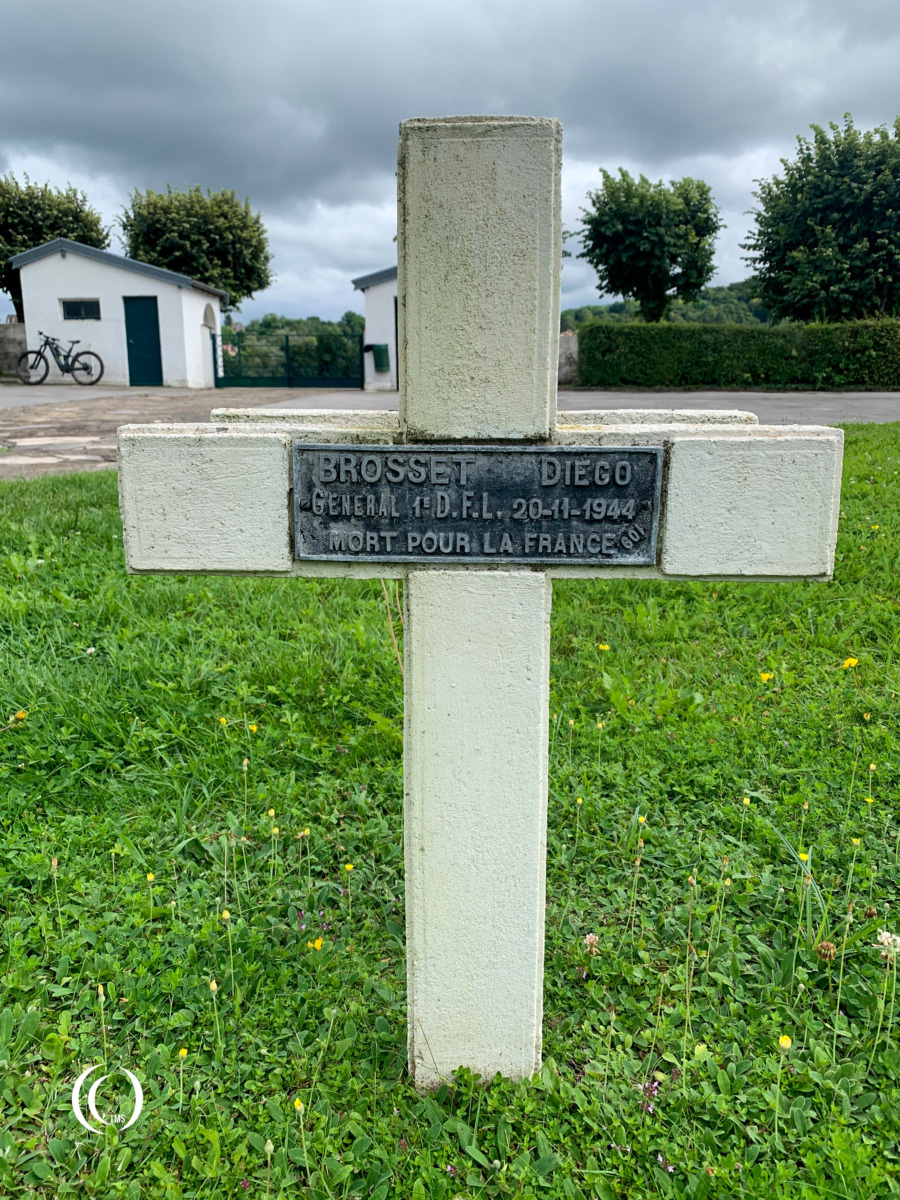
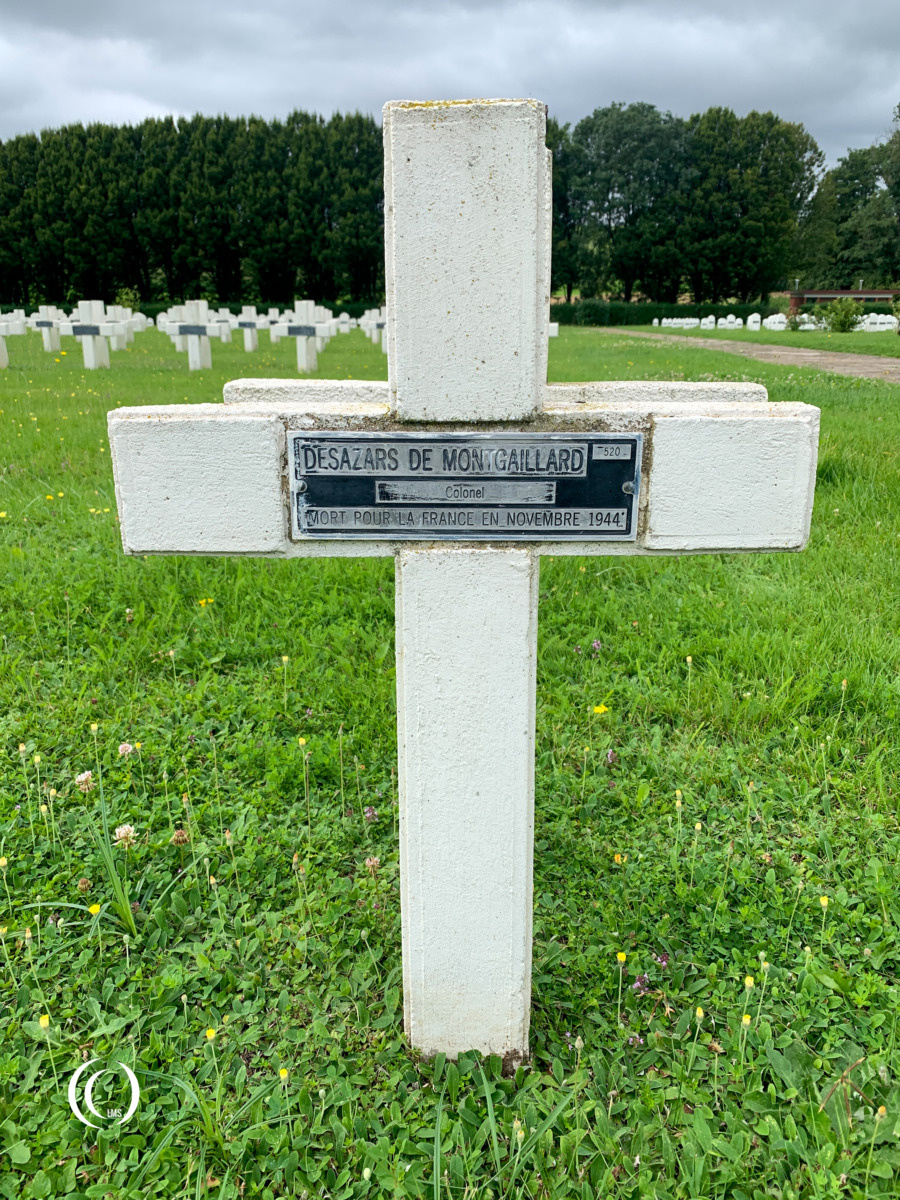
Among those buried here are senior officers such as General Diégo (Charles) Brosset and Colonel Desazers de Montgaillard, reflecting the high cost of leadership and combat in this campaign.
The Battles of the Vosges and Belfort
The Battles of the Vosges and Belfort, fought between September and November 1944, were a key phase in the Allied advance after the landings in the Provence. By late September, French forces had reached the edge of Alsace, but their rapid progress had strained its supply lines. Shortages of ammunition, fuel, and equipment slowed further advances, while German troops, firmly entrenched in the mountainous terrain, resisted fiercely to defend access to the Rhine.
French forces faced repeated setbacks as they attempted to break through the Vosges. Early offensives toward key positions such as the Ballon d’Alsace failed, and fighting in both the mountains and valleys proved extremely costly. Poor weather, difficult terrain, and constant German counterattacks added to the strain. Despite these challenges, French troops gradually captured strategic passes, though at the cost of significant casualties, particularly within units like the 3rd Algerian Infantry Division.
In mid-November, a renewed offensive shifted momentum in favor of the French. Key towns such as Montbéliard and Héricourt were liberated, opening the road to Belfort, which fell after intense street fighting on 25 November. Further advances led to the liberation of Mulhouse and surrounding areas, although fighting remained fierce. By the end of November, French forces had achieved a major breakthrough, despite suffering heavy losses, and continued operations were required to eliminate remaining German resistance in the Colmar region which lasted until Februari 1945.
Visit
The cemetery is located Northwest of the town of Rougemont. You can visit the cemetery freely during the daytime.