
Project Riese
This complex was part of Project Riese and was one of the largest tunnel complexes after Osowka. Situated in the Owl Mountains it had two levels of tunnels, huge underground halls up to 12 meters high and a total tunnel length of 3100 meters. No more than 1 percent was reinforced concrete. Four defended tunnels leading into the complex at the mountain base together with guard rooms. A huge shaft was found in the complex of 4 meters in diameter and 40 meters high up the mountain.
There is also a second level in Woldarz. Some of these higher tunnels were made right above the other and when finished the floor was collapsed to create a higher tunnel or hall. Some tunnels were probably meant as second level, but this is not certain, because the complex is unfinished like all tunnel systems in Project Riese are.


Seven tunnel complexes
The exact purpose of the complexes is not known but it is assumed that they were built for subterranean weapon facilities or shelter. There is speculation that one of the complexes was designated to become a new Hitler bunker which was written down in a document called “Geheime Reichssache 91/44”, Secret government business 91/44 from architect Siegfried Schmelcher. Beside a Führer headquarters (FHQ) it should hold space for the OKH, OKW and OKL – Oberkommando Heer, Oberkommando der Wehrmacht and Oberkommando der Luftwaffe, the Supreme Command and High Commands of the German army and airforce.
With three mineshafts Owsowka is a huge tunnel complex and the second largest of the seven known complexes of the Riese project in 2015.
A list of the 7 tunnel complexes of Project Riese:
- Saüferhohen – Osowka
- Wolfsberg – Wlodarz
- Dorfbach – Rzeczka
- Falkenberg – Sokolec
- Schloss Fürstenstein – Książ Castle
- Oberdorf – Jugowice
- Ramenberg – Soboul
None of the seven complexes above were finished, though Osowka is the most finished of these tunnel complexes. Some had part of their tunnels reinforced with concrete but most are still rough stone works. More underground complexes were made in this stage of the war like Mittelbau Dora and Weingut 1, both underground factories on German soil.


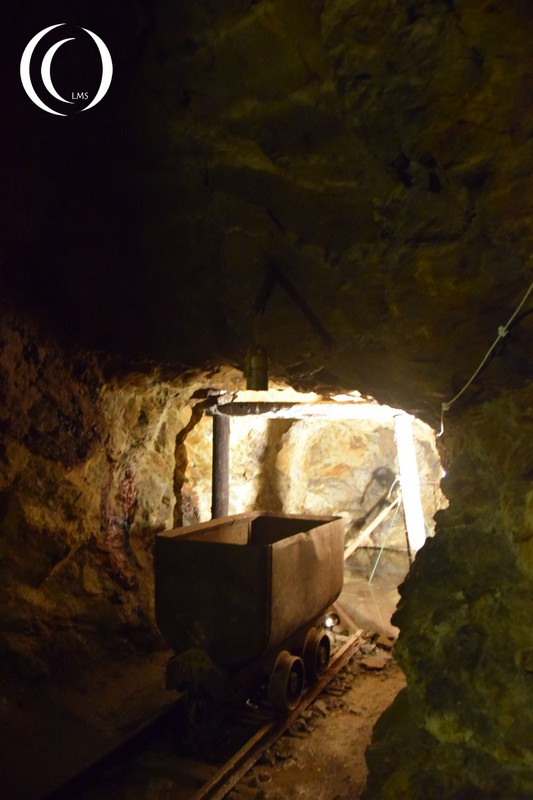

Wlodarz – Wolfsberg
Outside the complex are remains of machinery foundations, water reservoirs, a bunker and old bags of cement. The narrow gage railway, mine carts, electric pull lines can still be seen today as the concrete barracks of the SS guards in the vicinity. The tunnels were excavated by forced labourer’s, mostly Jew and most likely from the nearby concentration camp Gross Rosen. They lived in tents and barracks near the complex. Wolfsberg housed around 3000 men total.
Complex Włodarz, in Polish, Wolfsberg in German, was evacuated in February 1945 when the Soviet Armies approached the complex. From 2004 the complex is open for visitors who can take a guided tour.


Visit
Over time parts of the complex collapsed or became flooded and are inaccessible. Some parts can be seen by boat. As always check out the website for opening hours and tour times. A helmet is provided by the guide but bring sturdy shoes. You will not walk in knee deep water but the tunnels are damp and sometimes muddy.


