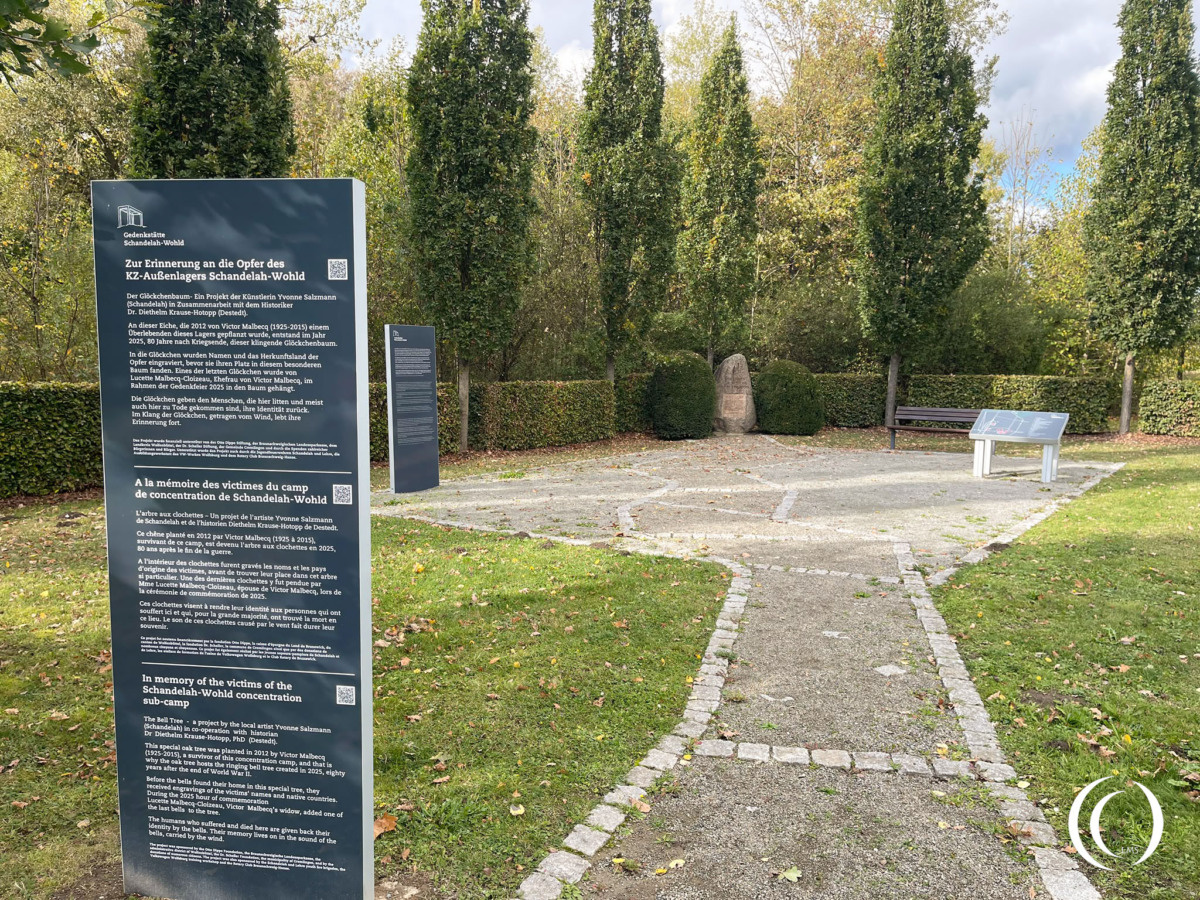
The Schandelah-Wohld concentration camp was a subcamp of Neuengamme concentration camp, located near Schandelah, east of Braunschweig in Lower Saxony, Germany. It operated from 8 May 1944 until April 1945 during the Second World War. The main camp, Nueuengamme lies roughly 150 kilometer to the north near Hamburg. The history of Schandelah-Wohld forms part of the wider history of the Neuengamme concentration camp system, which used tens of thousands of prisoners as forced labourers across northern Germany.
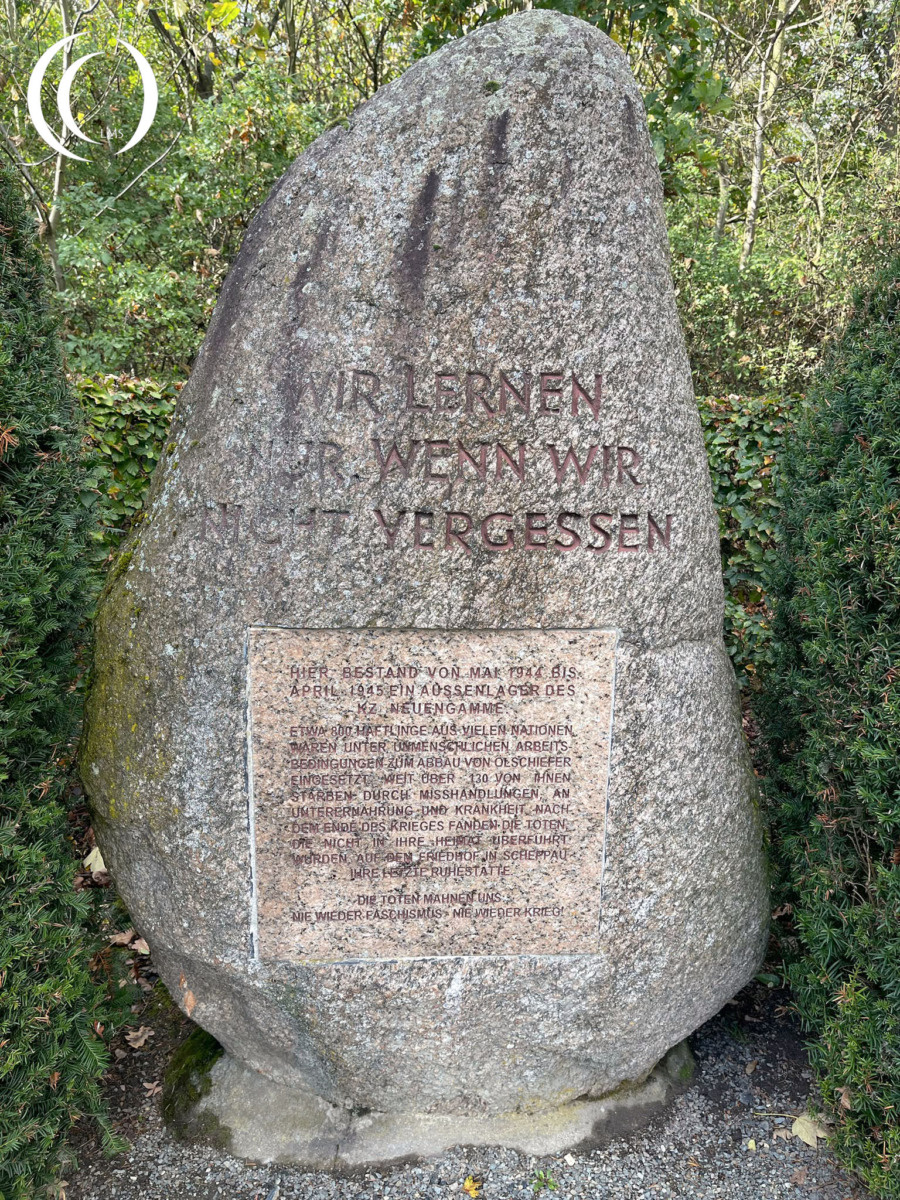
The camp was established to provide forced labour for the extraction of oil shale. Prisoners were compelled to work under brutal conditions in an attempt to produce fuel for the German war effort, which was suffering from severe shortages of petroleum. Approximately 800 male prisoners were imprisoned at the camp during its existence. These men had been transferred from Belgium, Denmark, Germany, France, Greece, the Netherlands, Italy, Lettland, Poland, Spain, the Soviet Union, and Czechoslovakia. The prisoners had resisted Nazi tyranny and the occupation of their country.
The men endured exhausting physical labour, inadequate food, poor sanitation, disease and systematic abuse. At least 200 prisoners died as a result of the inhumane conditions.
In early April 1945, as Allied forces advanced, the camp was evacuated. Prisoners were transported via Magdeburg, Stendal, and Wittenberg to Wöbbelin concentration camp near Ludwigslust. American forces liberated Wöbbelin on 2 May 1945, finding survivors in extremely poor physical condition.
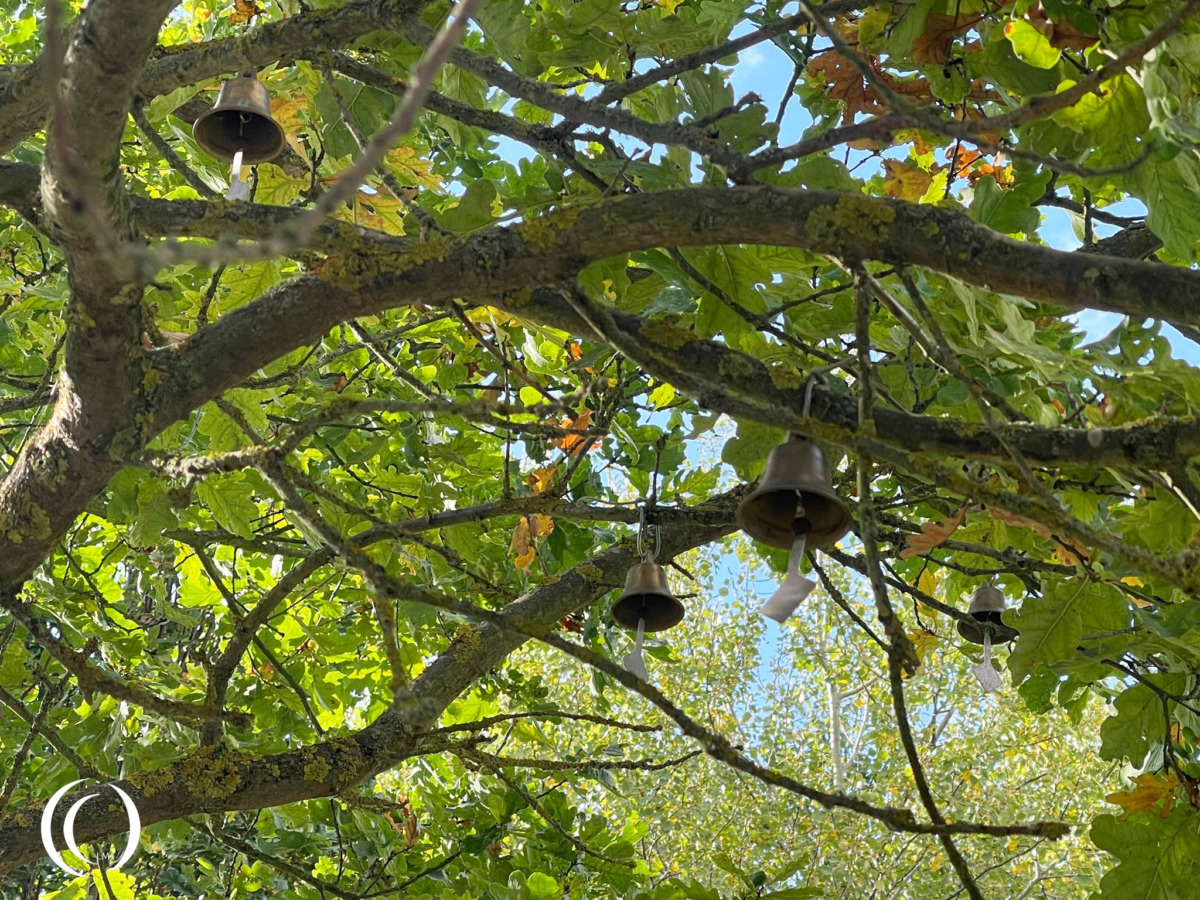
All photos provided by Phil Wood.
Visit
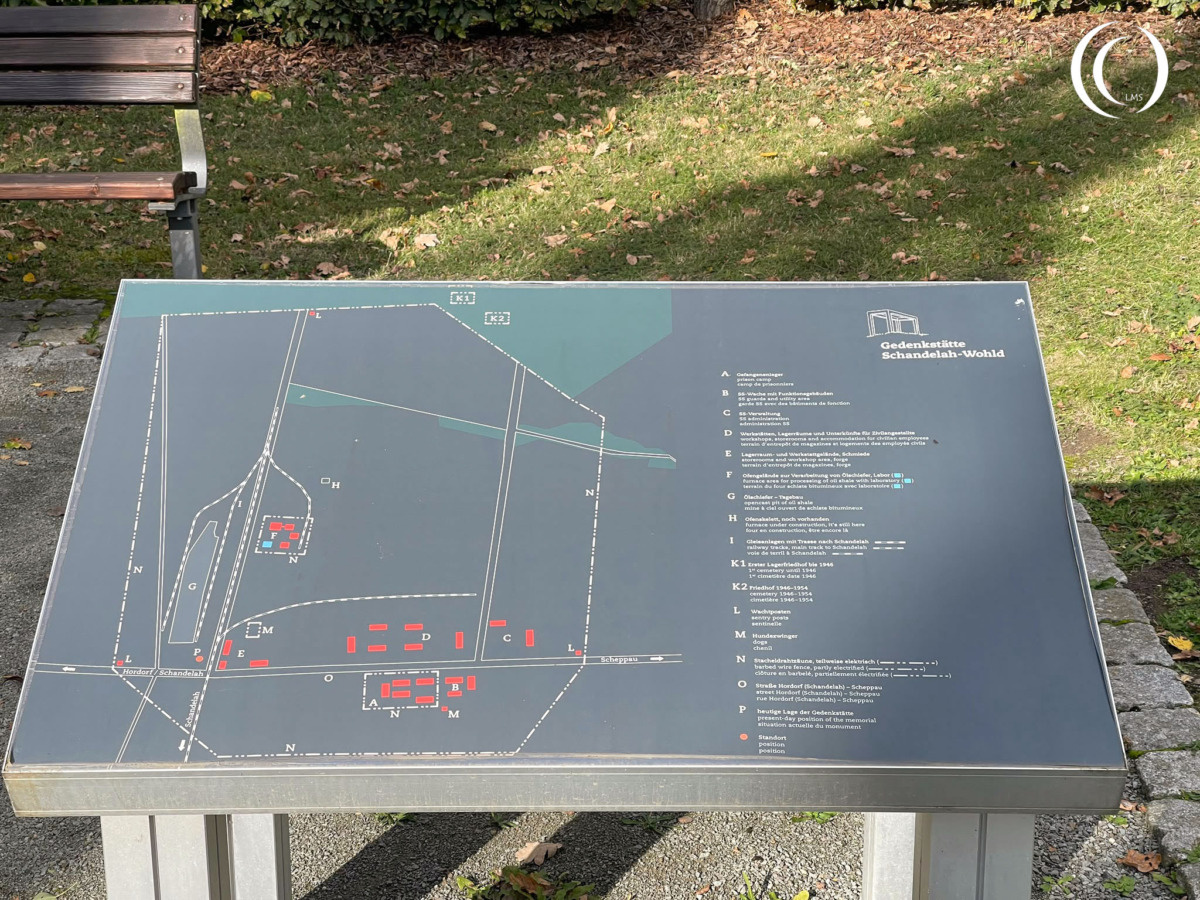
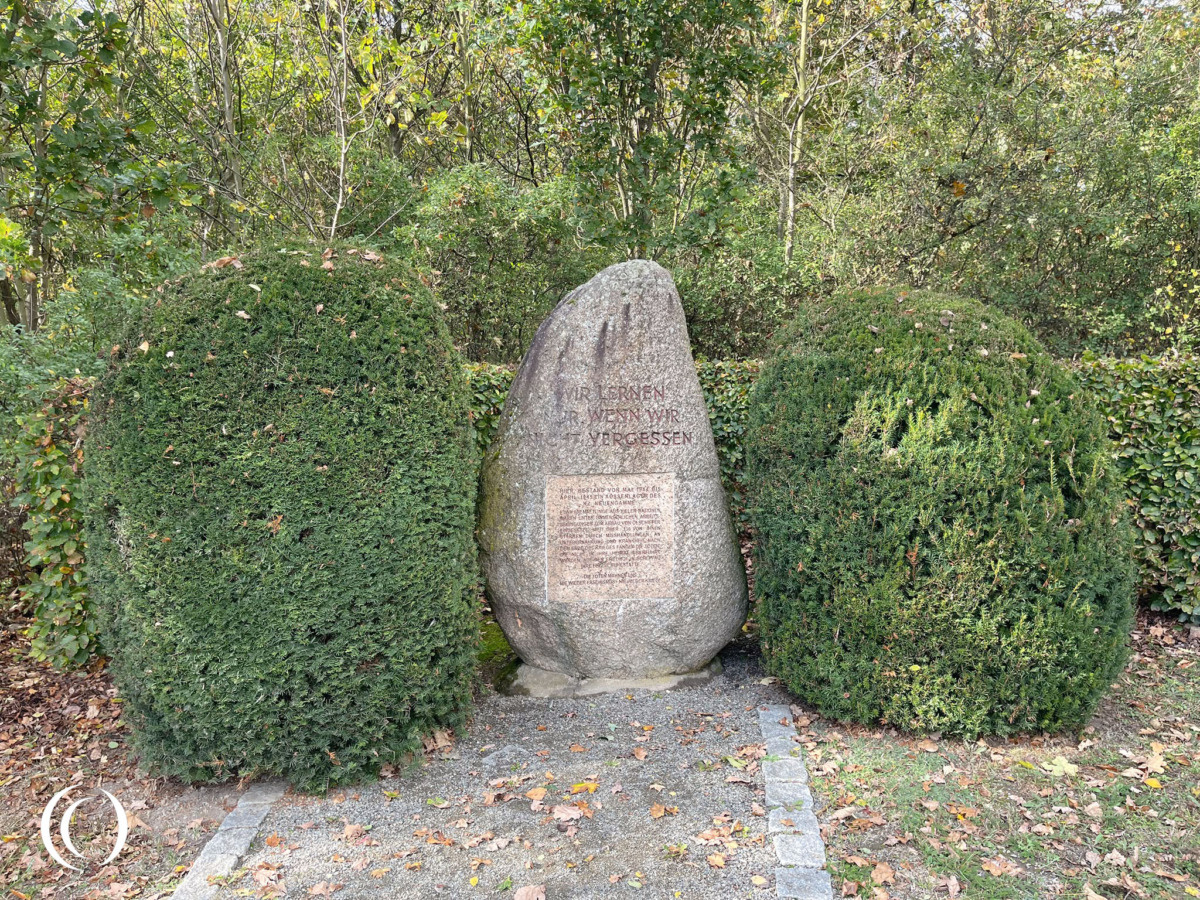
A small memorial has been set up to commemorate the camp, the hardships, and the suffering of the men. Information boards and a map of the former camp are on display. Ninety-seven of the 200 victims are buried at the Scheppau cemetery; these men were not repatriated to their home countries and were laid to rest here.
Sources
- kz-gedenkstaette-neuengamme.de
- cremlingen.de
- oorlogsbronnen.nl/thema/Schandelah.nl
- wikipedia
