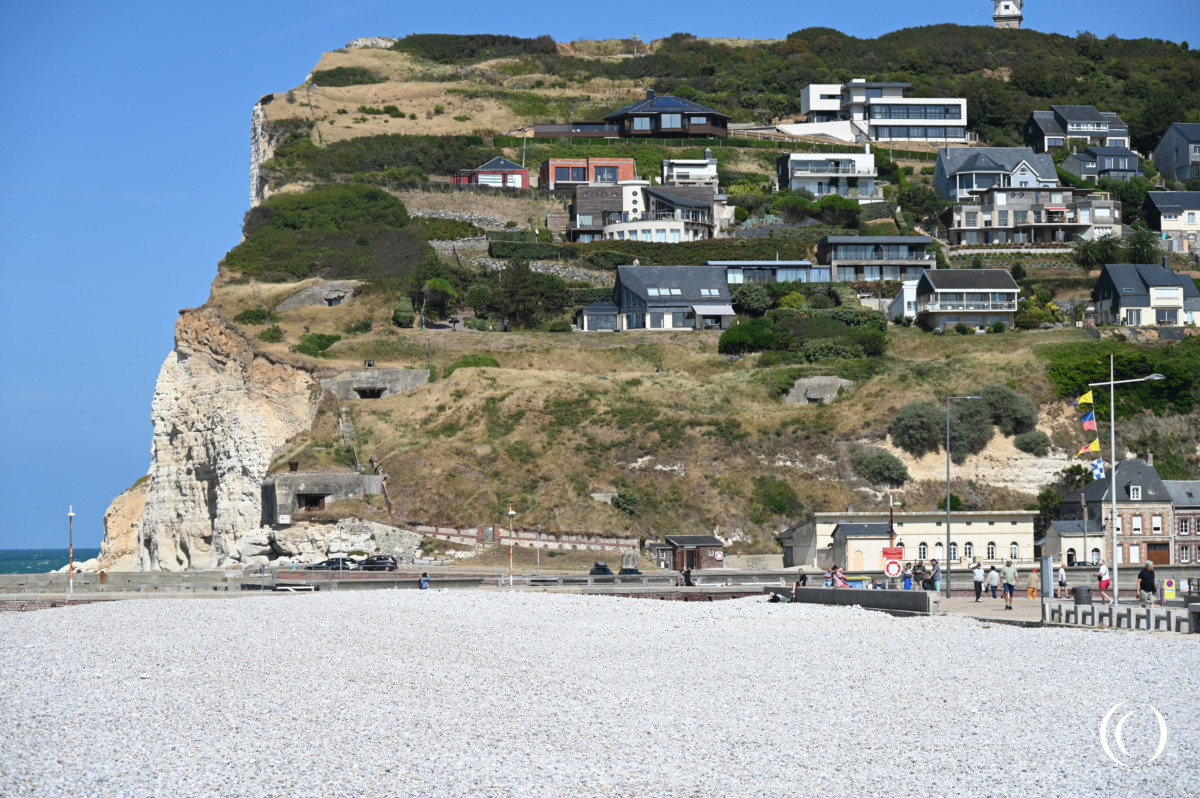
At the entrance to the harbor of Fécamp—located in the Seine-Maritime department of the Normandy region in France—the German occupiers installed defensive structures during the Second World War. This was part of the expansion of the Atlantic Wall in France. The bunkers are protected from the sides, making them difficult to identify or target with artillery fire from the sea.
Several Widerstandsnester (resistance nests/strongpoints) were built in and around Fécamp, each assigned a number. This particular Widerstandsnest is designated Fe09 and is part of the “Notre Dame du Salut” (Our Lady of Salvation) site. It is situated on a slope adjacent to the harbor entrance and lies at a lower elevation than Widerstandsnest Fe08.
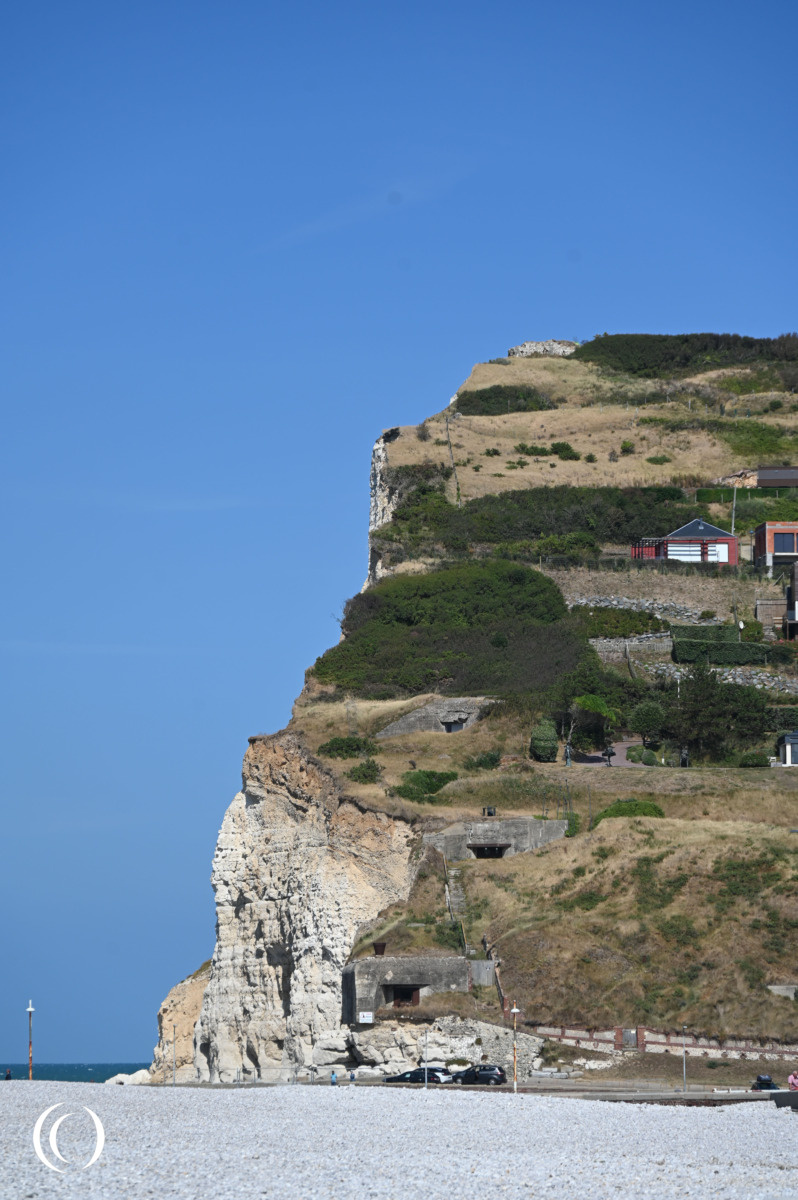
It is not possible to view the entire Widerstandsnest (resistance nest); several bunkers have ended up beneath the residential area or have been removed. It is not possible to view the entire Widerstandsnest (resistance nest); several bunkers have ended up beneath the residential area or have been removed. No longer visible are: a second Regelbau 612 bunker, a second Regelbau 630, a Regelbau 610 (a command post designed for 2 officers and 21 soldiers), and a more lightly constructed FA HWB (field-standard reinforced structure). These structures served as personnel shelters (Unterstand) or as ammunition storage (Munitionsunterstand).
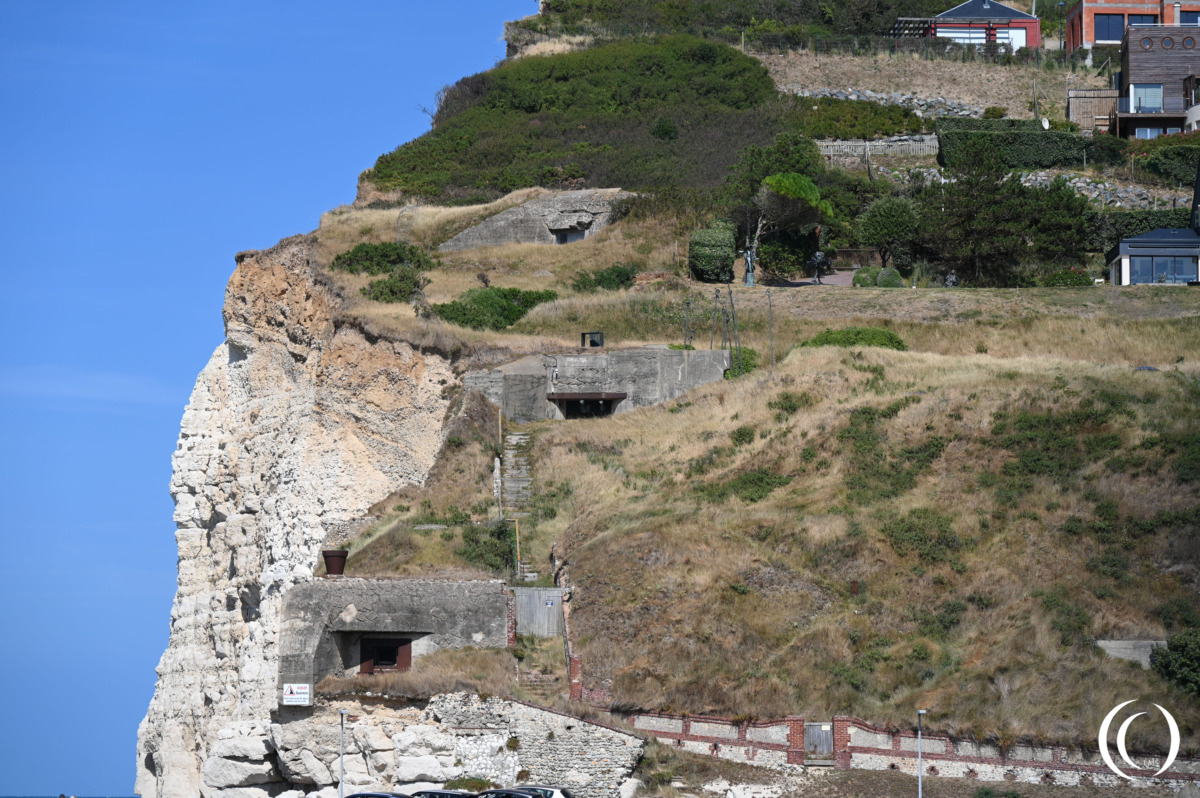
The bunkers that can still be seen—from top to bottom—are: a Regelbau 612, a Regelbau 630, and a Regelbau 676; to the right is a second Regelbau 612, and to the right of the 676 is a concrete wall—a Tobruk 58c, designed for a machine gun.
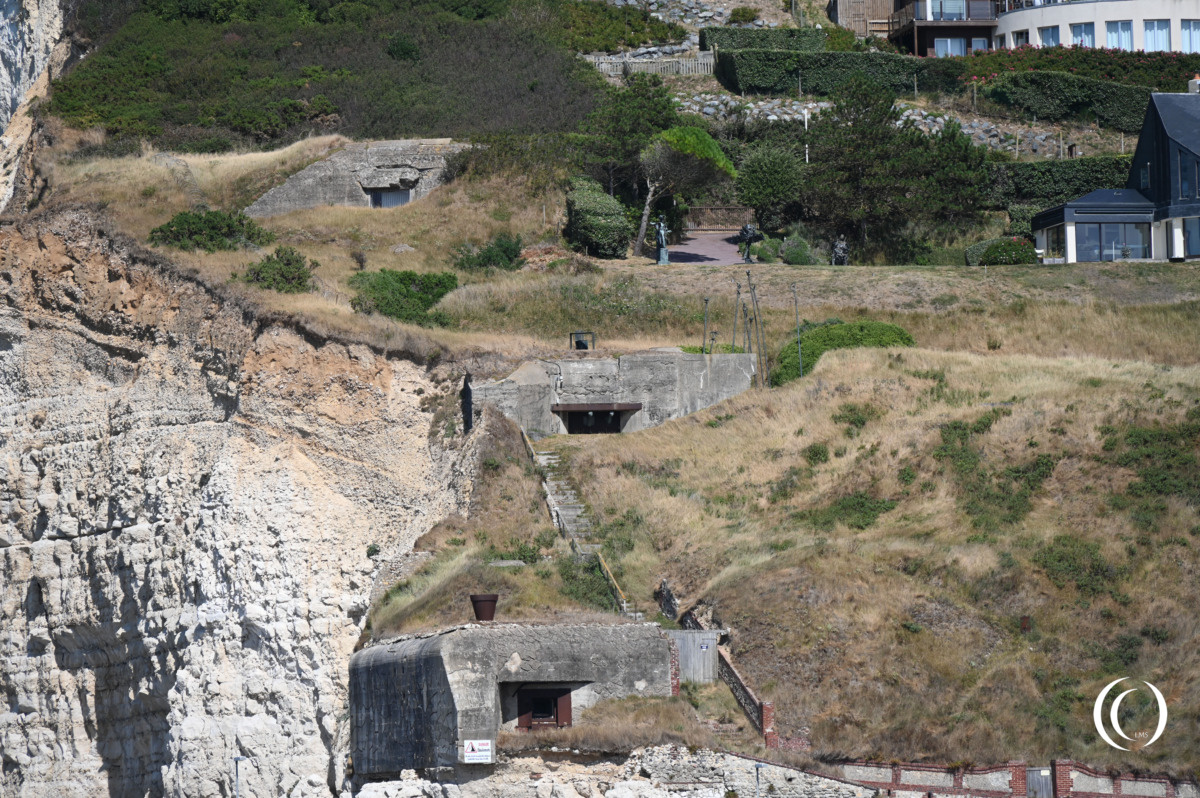
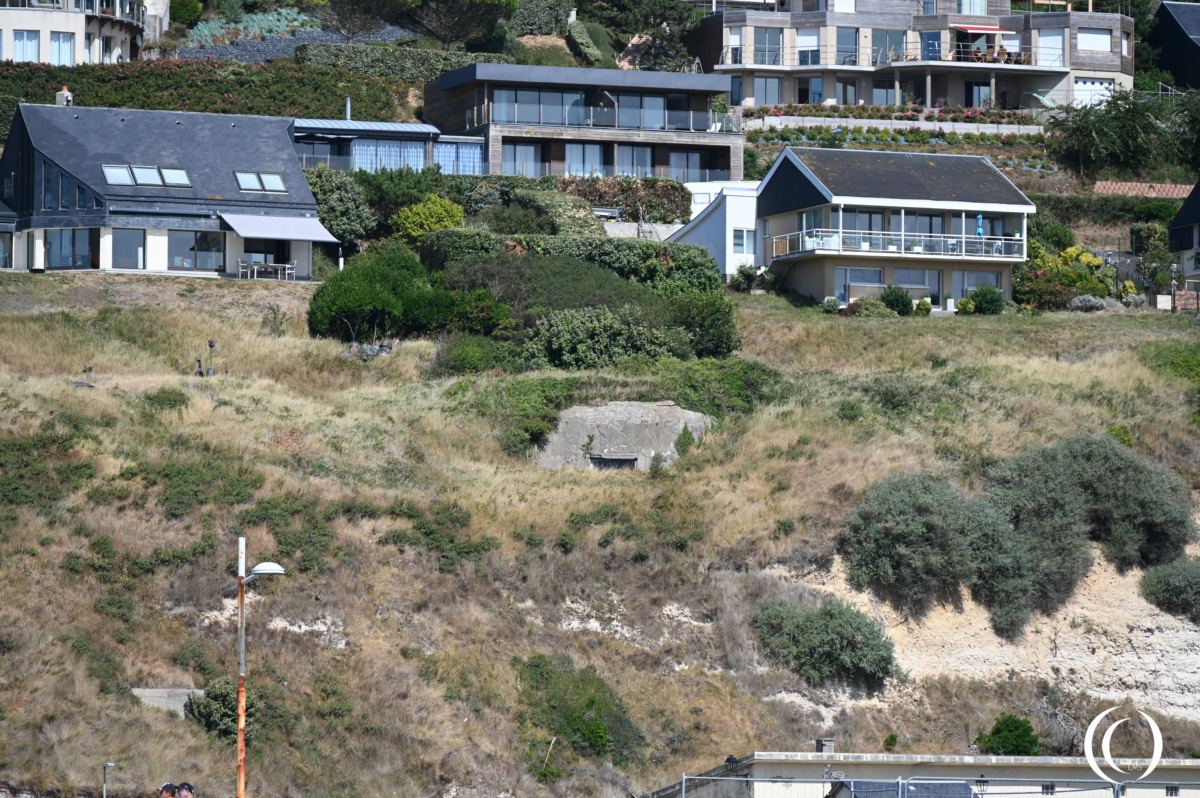
The Regelbau type 612 was a flanking gun casemate designed for both 7.5 cm and 10.5 cm artillery pieces. Measuring 9 by 9 meters, the bunker featured two ammunition storage rooms in addition to the gun chamber. These rooms could accommodate approximately 500 shells.
The Regelbau Type 630 was a combat bunker equipped with a heavy machine gun. The bunker featured a single flanking embrasure, which was protected by an armored steel plate. It also included a waiting area for the operating crew, which consisted of five men. The bunker measured 10.40 by 10.70 meters and had a height of 5.10 meters.
The Regelbau Type 676 as a flanking gun casemate designed for 4.7 cm Festungs-Pak (t), a fortress anti-tank gun of Czechoslovak origin. The anti-tank gun was installed behind heavy steel embrasure plates—frequently the 726P3 model or similar captured Czechoslovak armored plating.Measuring 9.40 by 6.60 meters, and had a height of 4.60 meters.the bunker featured an entrance corridor and a single combat room and could store 310 rounds of ammunition. The anti-tank gun was installed behind heavy steel embrasure plates—frequently the 726P3 model or similar captured Czechoslovak armored plating.
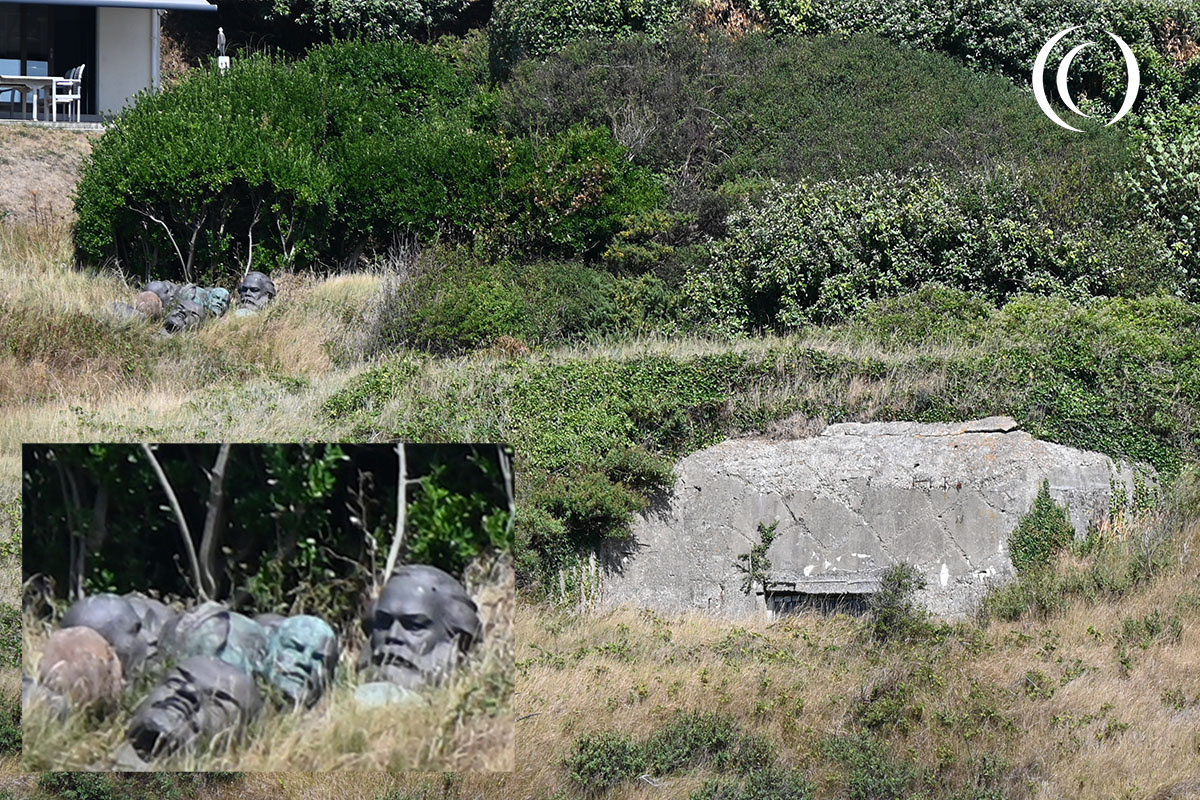
One of the Regelbau 612 bunkers—the one furthest to the right in the photos—has gone to great lengths to avoid being noticed, concealing itself alongside statues of Lenin in the hope that attention would be diverted elsewhere.
Visit
During our visit, we ended up on the wrong side of the harbor, but from a distance, we could clearly see the four large bunkers at the entrance to the port of Fécamp. Unfortunately, we also noticed that the bunkers were locked off and the path leading to them was blocked by a fence, making them inaccessible (2026).
