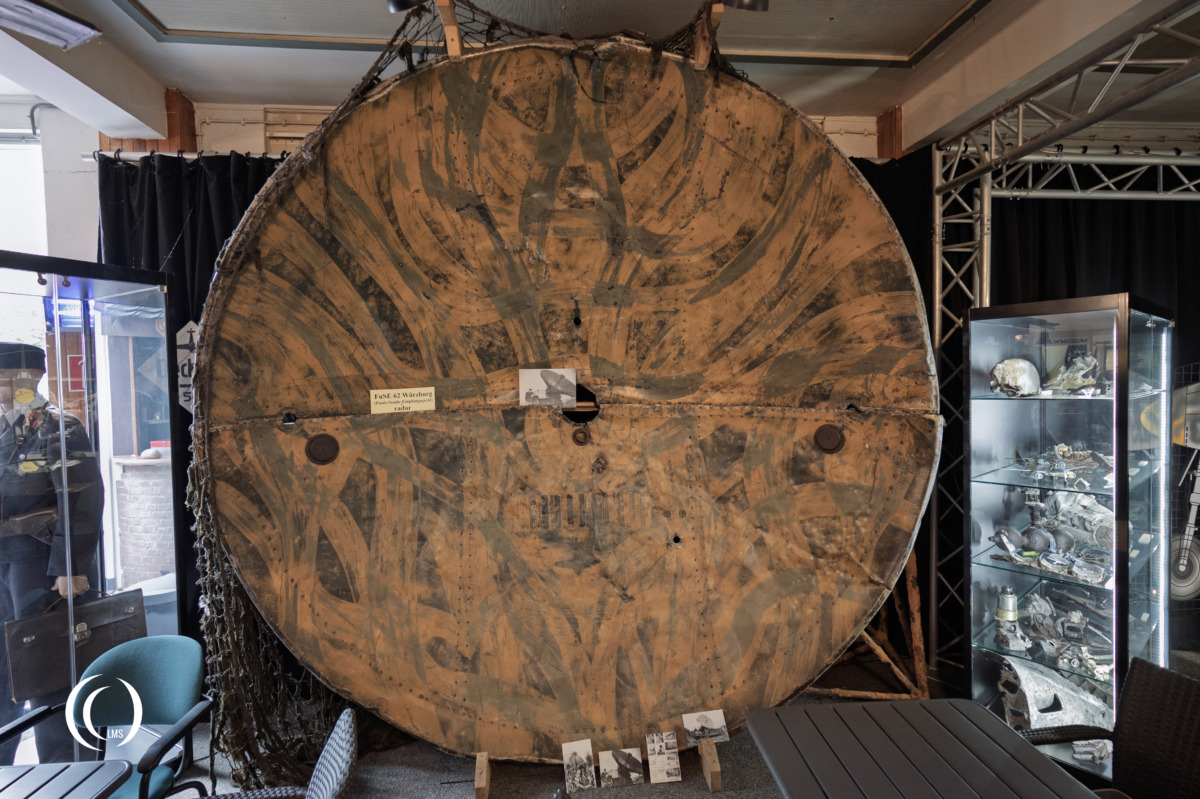
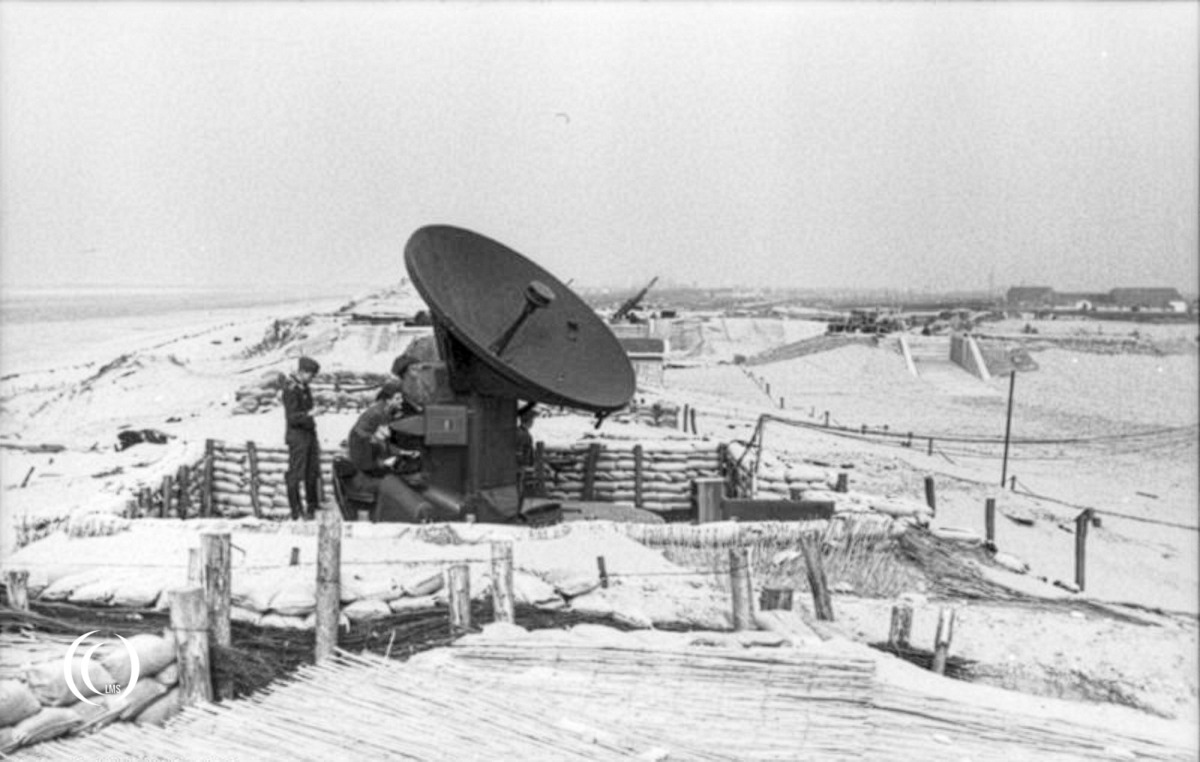
Sparked by the promising developments of the Freya and Seetakt radar systems, the German company Telefunken started the development of a short-range gun laying radar system in 1935. When the prototype system FMG (Funkmessgerät, a.k.a. FuMG) 39T Darmstadt and a pre-production system, the FuMG 62, were demonstrated to members of the German Ministry of Aviation (RLM) and even Adolf Hitler himself at the Luftwaffe testing grounds in Rechlin in July 1939, the order for its production was quickly won. The first batch of 4,000 of the “Würzburg A”-version of the radar-system were accepted into the Army in May 1940, with many improved versions to follow during the course of World War Two.
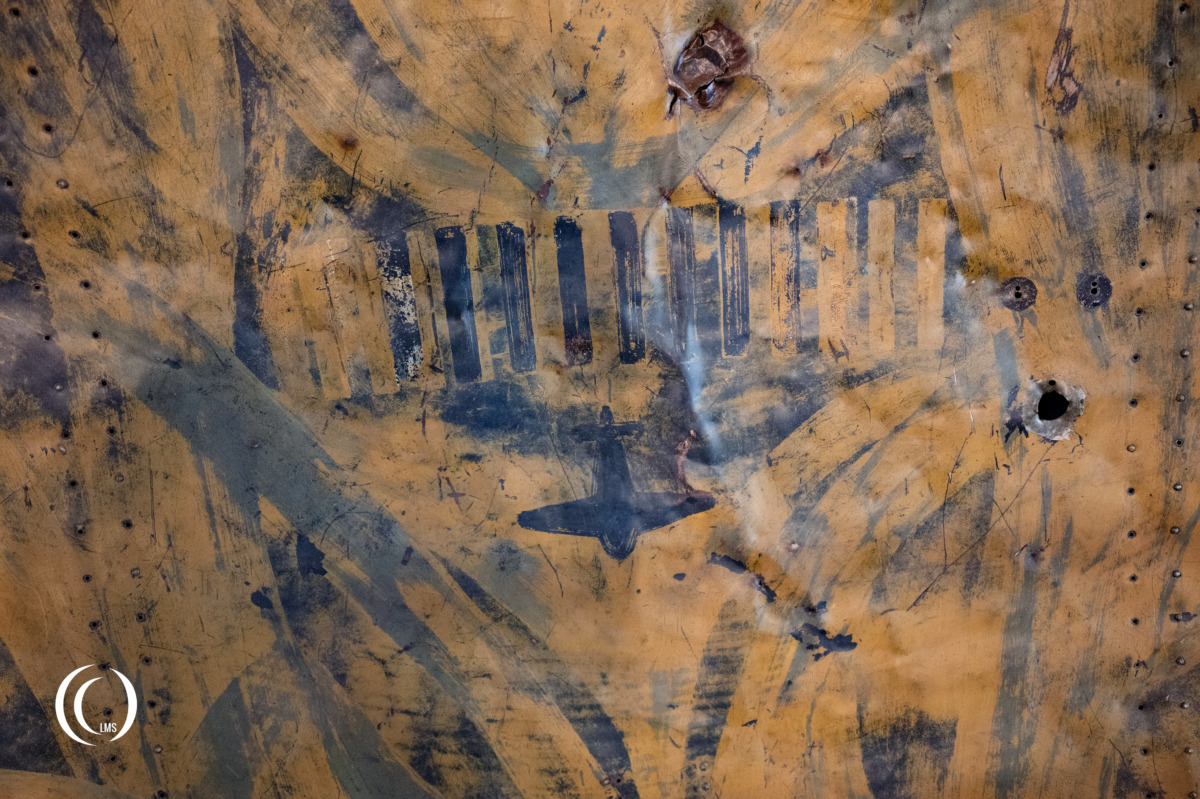
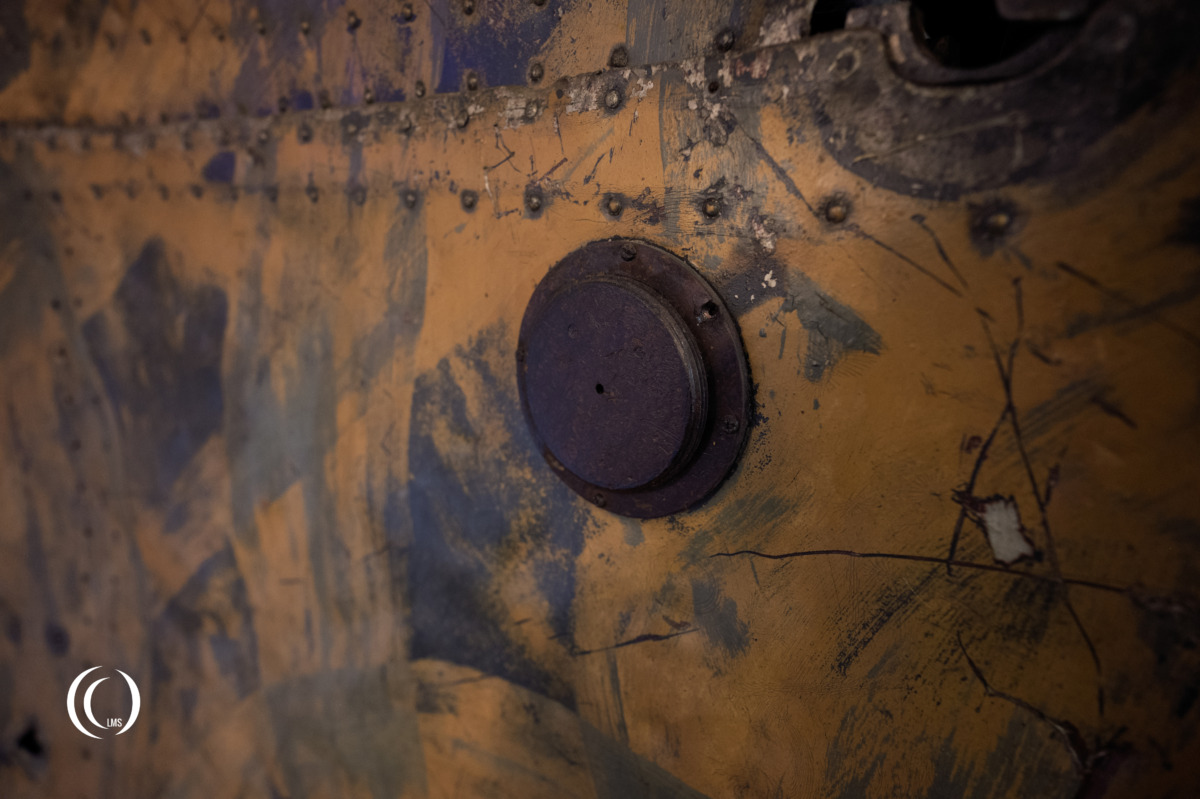
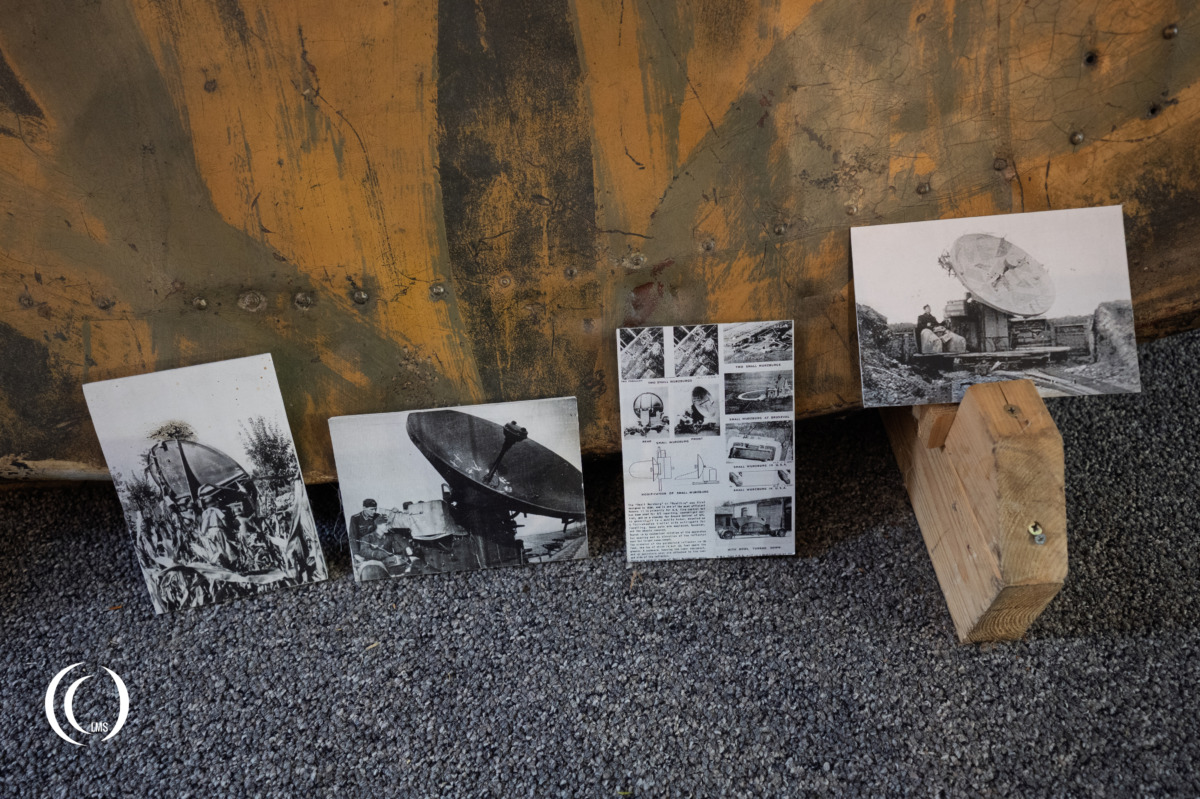
The dish antenna in the pictures was photographed in the Deelen Air Base Museum (near Arnhem) in the Netherlands. The museum claims it still has its original camo-painting and “Abschusse” markings. It is unclear which FuSE 62 version it came from.
Specifications
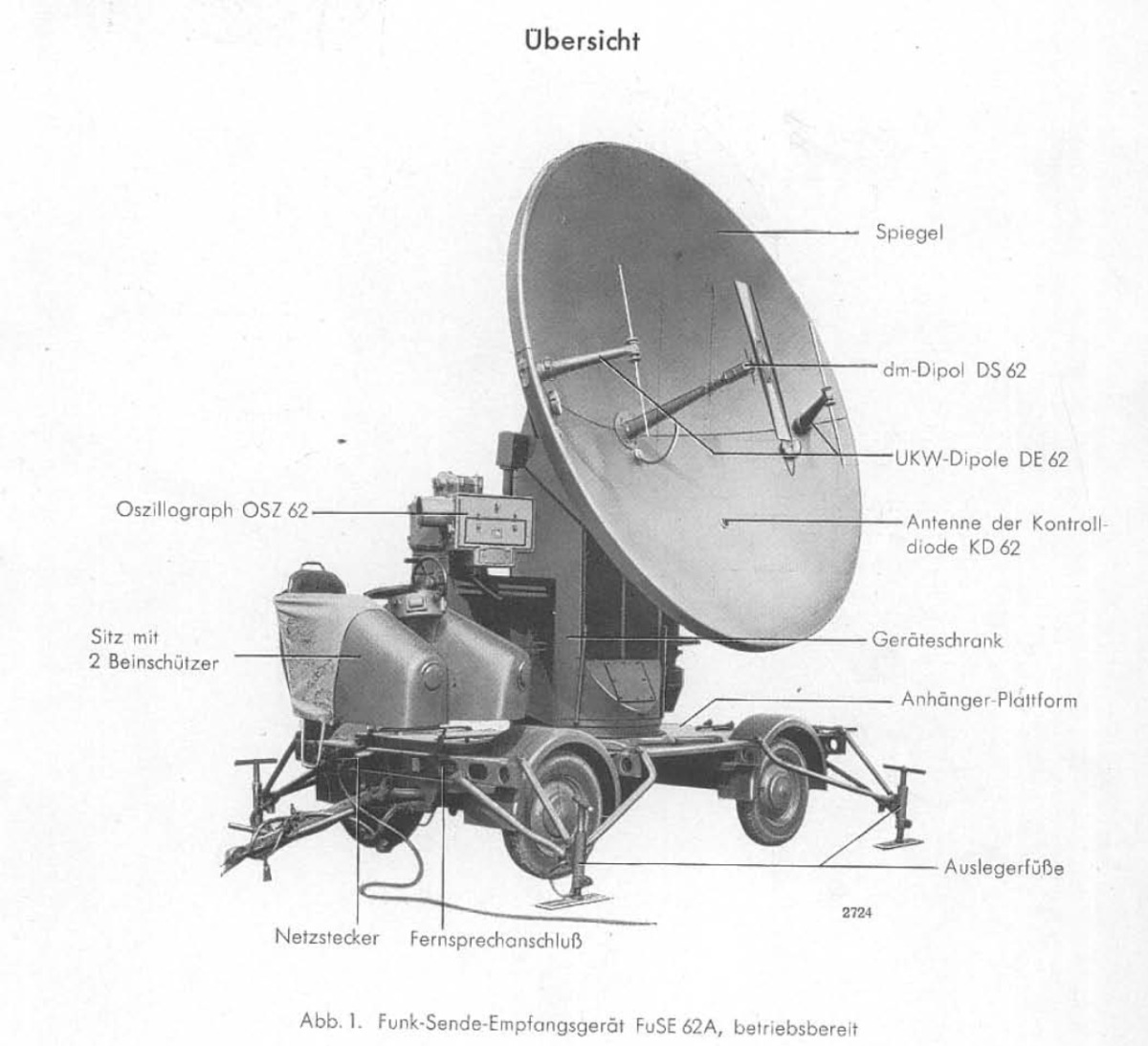
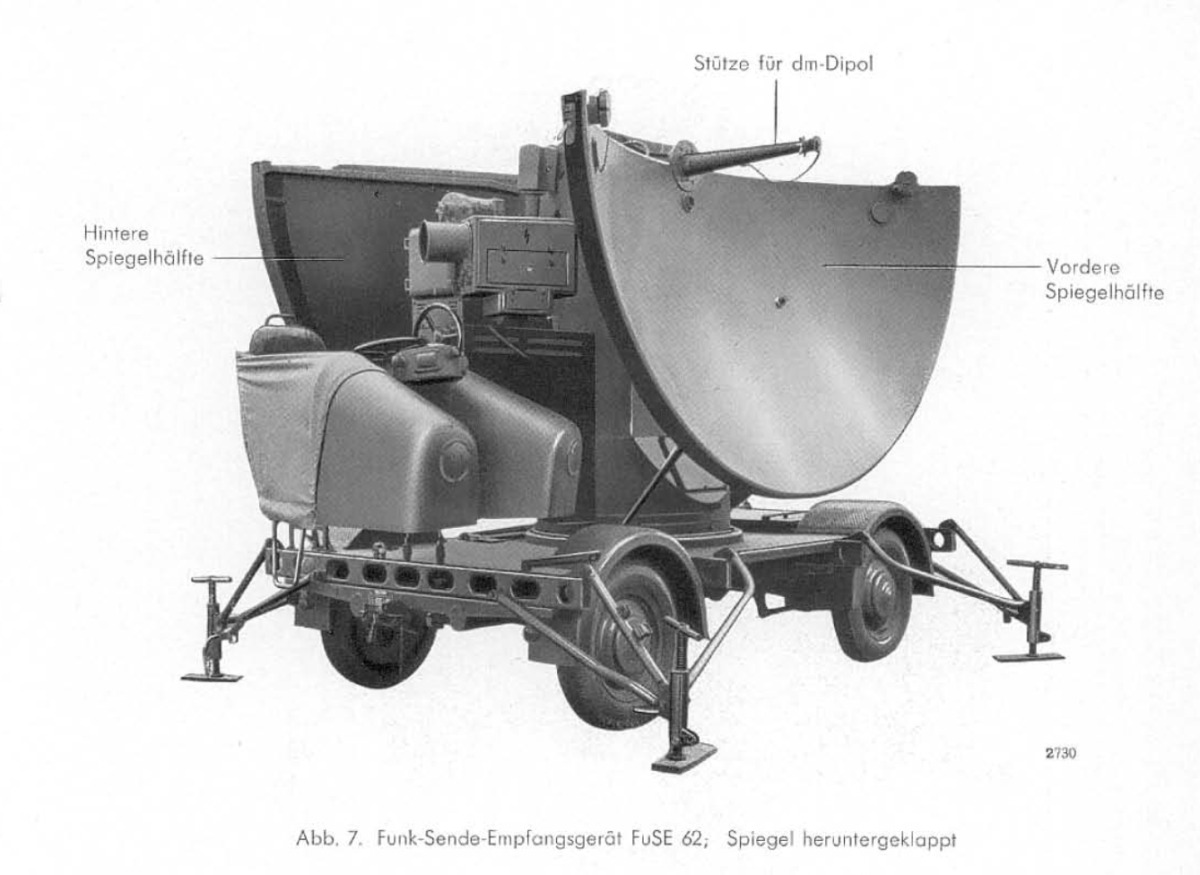
The Würzburg radar system was the most accurate gun laying system of its kind during the first three years of the war. It was based on a microwave tube operating in the range of 54–53 cm (553–566 MHz), which was an extremely short wavelength for the time, with a pulse length of 2 microseconds, a peak power of 7–11 kW and a pulse repetition frequency (PRF) of 3,750 Hz. The “Würzburg A” radar had a maximum range of about 29 km (18 mi) and was accurate to about 25 m (82 ft) in range. The 3 m (10 ft) radius paraboloid dish antenna, which could be “folded” along the horizontal midline for transport on a wheeled trailer. The system needed a crew of four or five to operate it.
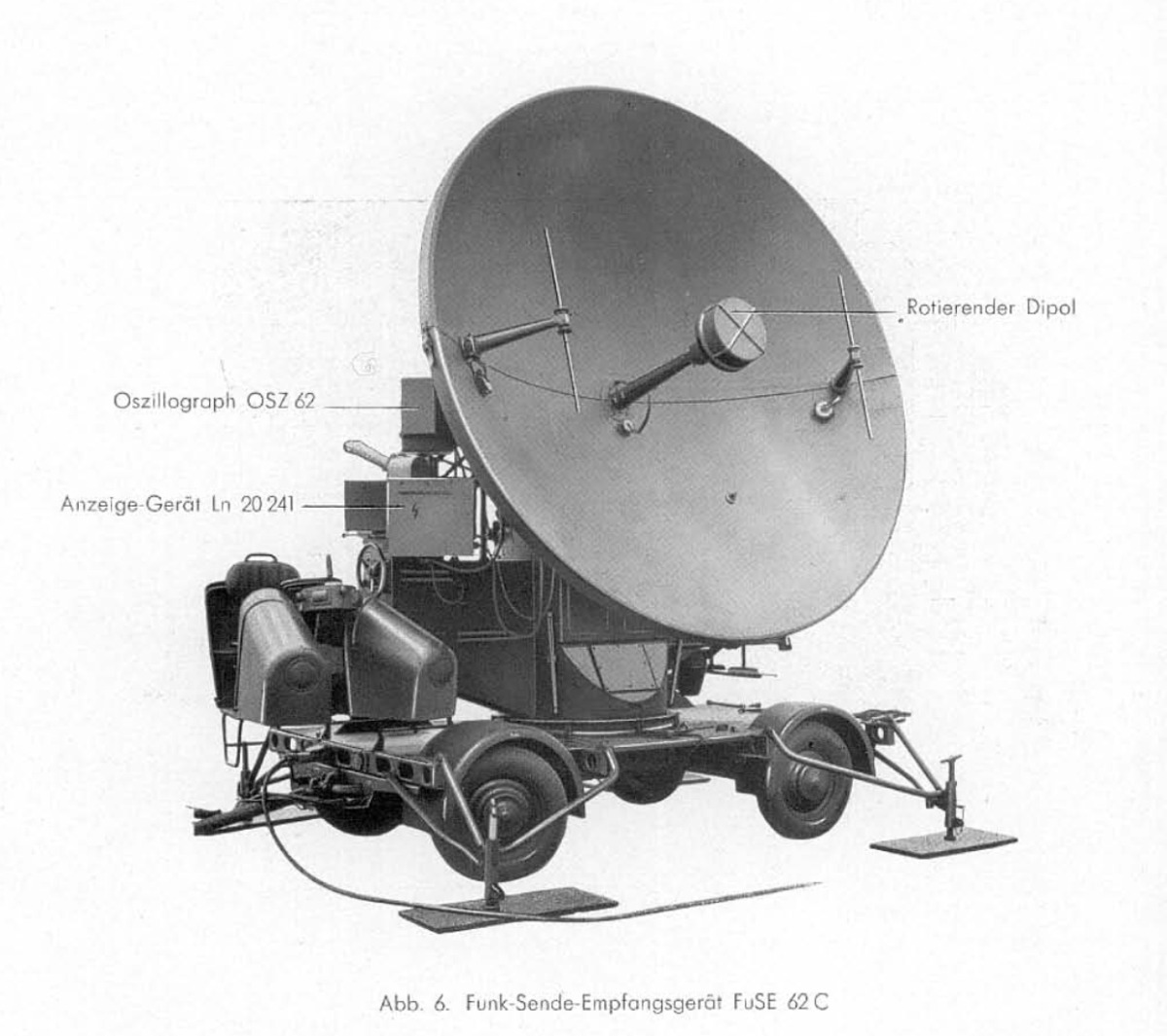
Later versions had further improvements, like the “Würzburg C” which had a better aiming accuracy, and the “Würzburg D” which had an offset receiver feed that improved its sensitivity and accuracy even further.
You can find the FMG 39T / FuSE 62 Würzburg manual and a treasure of information on the website of the CDV&T Foundation.
A “Giant” Würzburg sister
Although many improvements were made to gain greater accuracy, the FuSE 62 field radar proved just too small when used for the direct laying of FlaK guns against Allied bombers. Especially in combination with analog fire control computers like the Kommandogerät 40. For this purpose the FuMG 65 Würzburg-Riese (known as the “Giant Würzburg”) was developed, which was based on the same receiver circuitry as the FuSE 62 “Würzburg D” version. The antenna dish of the FuMG 65 measured 7.4 meters and it had a transmitter capable of ranging up to 70 kilometers. The accuracy proved enough for direct gun laying.
But its size was also its downside, which restricted its mobility. While there was a version that could operate from a railway carriage, most were placed in a fixed position.
Army designations
The Würzburg radar system was mainly used for target location, night fighter support and flak directing and adopted in all branches of the German Army. These branches however used different designations for the system; while the Luftwaffe used FuSE (Funk Sender Empfanger, Eng: Transceiver), the Kriegsmarine used FuMO (Funkmessortungsgerät, Eng: Radio Direction Finding).
