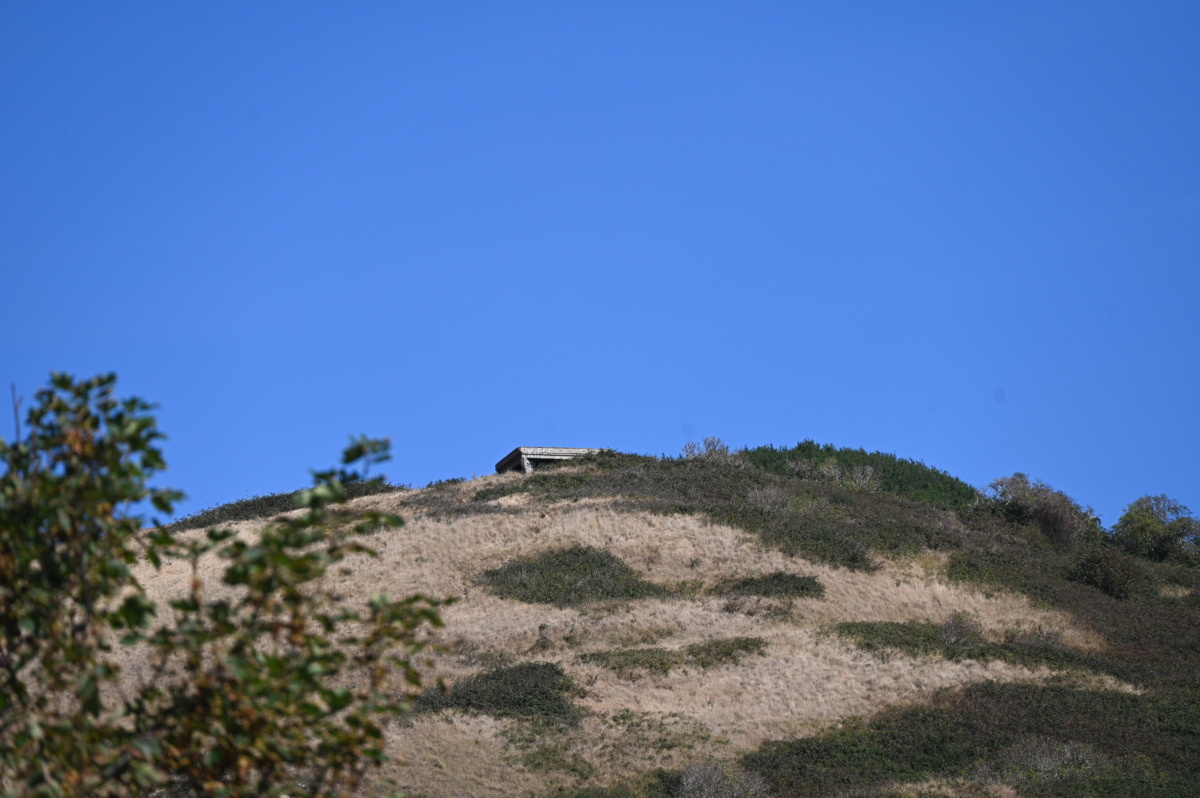
The light 360 Machine Gun Bunker
The designation Vf 3 M.g.-Rundumbunker refers to a standardized bunker type used by the German Wehrmacht during World War II. The abbreviation “Vf” stands for *Verstärkt feldmäßig* (reinforced field-expedient construction). Unlike the heavy *Regelbauten* (standardized designs)—such as those of strength class “B,” featuring walls over two meters thick—these structures were built more quickly, often using thinner concrete (typically 1 to 1.5 meters) and simpler methods, directly along defensive lines like the Atlantic Wall. Key features of the Vf 3 include: Function: It served primarily as a 360-degree machine-gun bunker. Its structure allowed the crew to deploy a machine gun flexibly, covering the surrounding terrain across a wide radius or through all-round fire (360 degrees). Construction: Often combined with an open ring emplacement (also known as a “Tobruk”) or a layout featuring a surrounding passageway and embrasures. Protection level: These bunkers were considered splinter-proof. They offered the crew protection against small arms fire, shrapnel, and light artillery fire, though they generally lacked the heavy armor or gas-proof airlocks found in later, larger bunkers. Such remains can still be seen today along many former defensive lines in Europe, for instance, in the dune areas of the Dutch, Belgian, and French coasts.
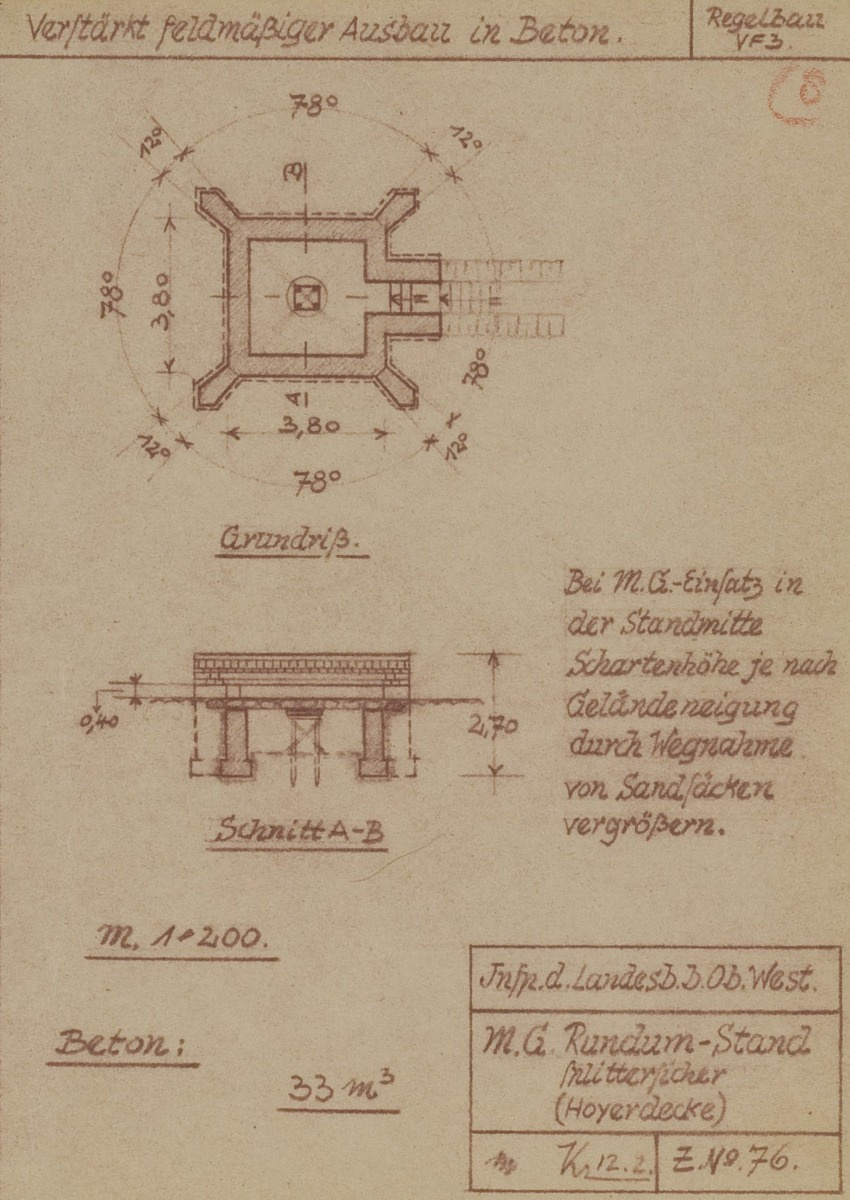
Hoyerdecke ceiling
A Hoyerdecke ceiling refers to a German WWII reinforced-concrete construction technique, rather than a single standard bunker type.
Decke means ceiling in German. The term generally refers to a reinforced-concrete roof/ceiling system using Hoyer prefabricated concrete elements or beams, which could be incorporated into German military structures.
In the Atlantic Wall and German coastal-defence context, Hoyer-Decke construction can be encountered in smaller Regelbau and field fortifications.
The significance is that the roof was constructed from prefabricated reinforced-concrete components, sometimes combined with a cast-in-place concrete layer. This allowed German engineers to construct protected structures more quickly than if everything had to be built using conventional shuttering.
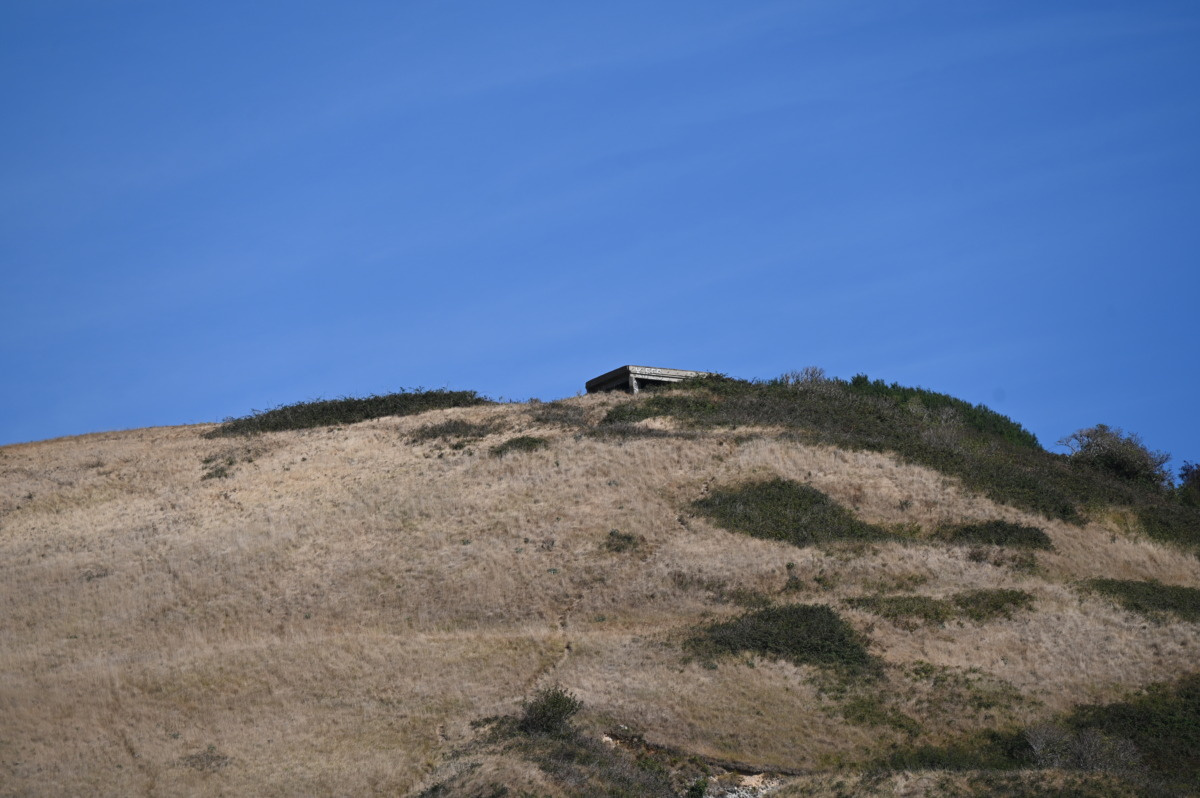
Technical details Vf 3
The small machine-gun bunker offers a 360-degree field of view, except where the corners—each consisting of a section of concrete spanning 12 degrees—obstruct the line of sight. The bunker is set into the ground, with only a portion protruding above surface level; this makes it less conspicuous and harder for enemy fire to hit.
The Vf 3 M.G.-Rundumbunker measures 3.80 by 3.80 meters and stands 2.70 meters high. Due to being embedded in the ground, just under half of the structure—approximately 1 meter—projects above the surface. Constructing the bunker requires 33 cubic meters of concrete. It has an indication of being Splittersicher (Eng. shatterproof) and has the Hoyerdecke for fast construction.
Visit
A steep slope with a small path from the road to the beach will lead you up to the bunker.
Sources:
- Wikipedia
- Lexikon der Wehrmacht
- Rudi Rolf
