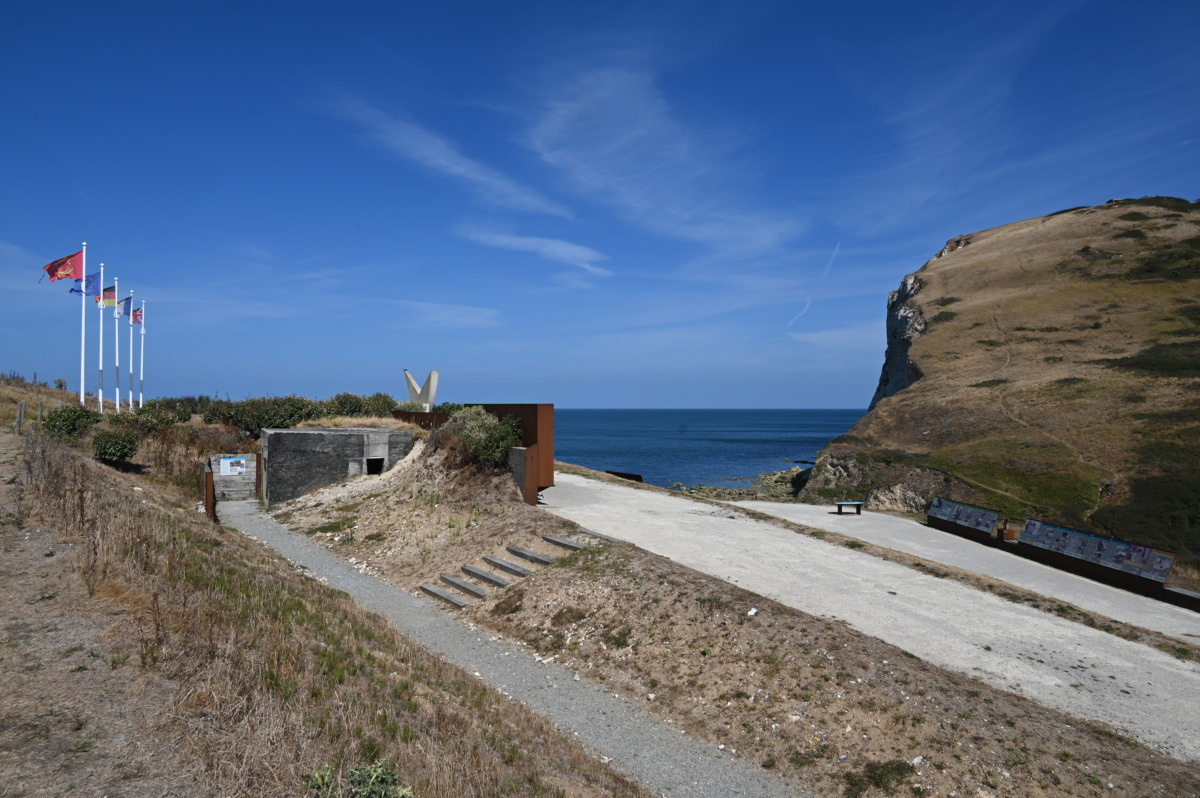
aTLANTIC WALL Vf Gruppenunterstand
A Vf Gruppenunterstand was a small German reinforced-concrete personnel shelter designed to accommodate a squad/group of soldiers. “Gruppenunterstand” literally means group shelter. The VF designation refers to a Verstärkungsfeldmäßiger type of field fortification, generally simpler and less heavily built than the major standardized Regelbau bunkers.
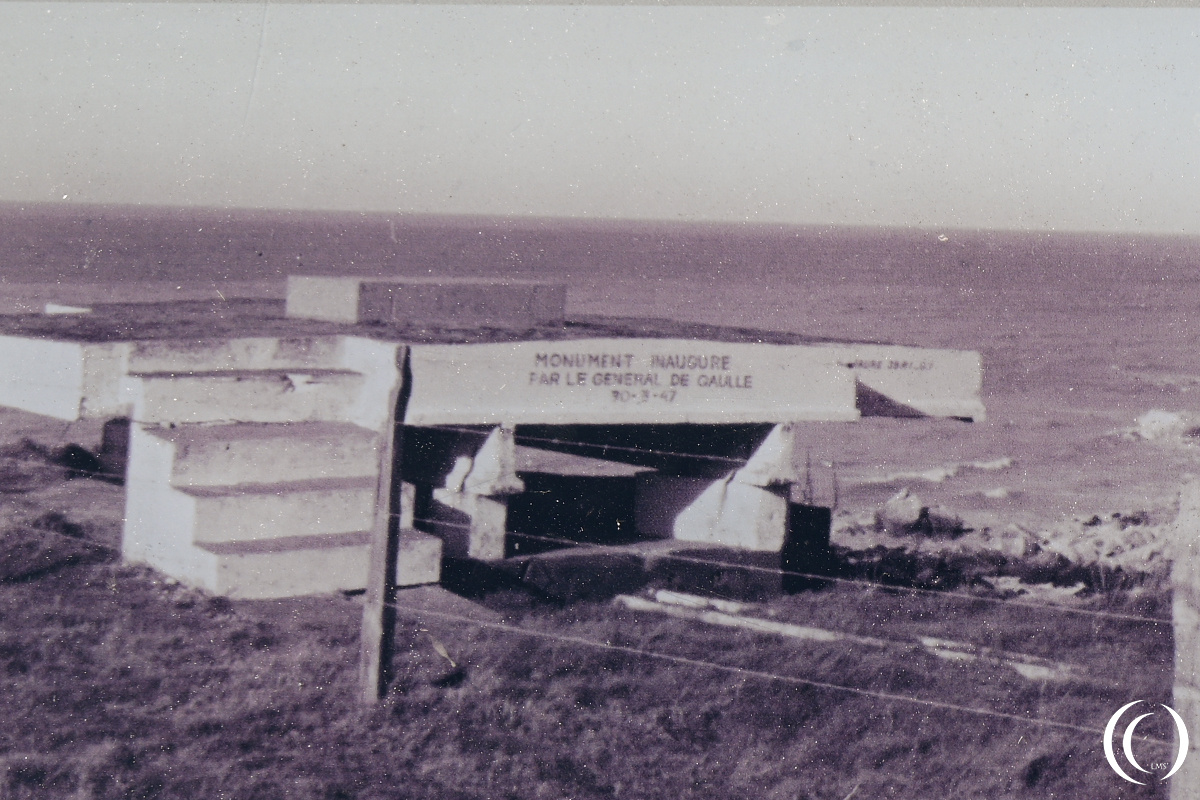
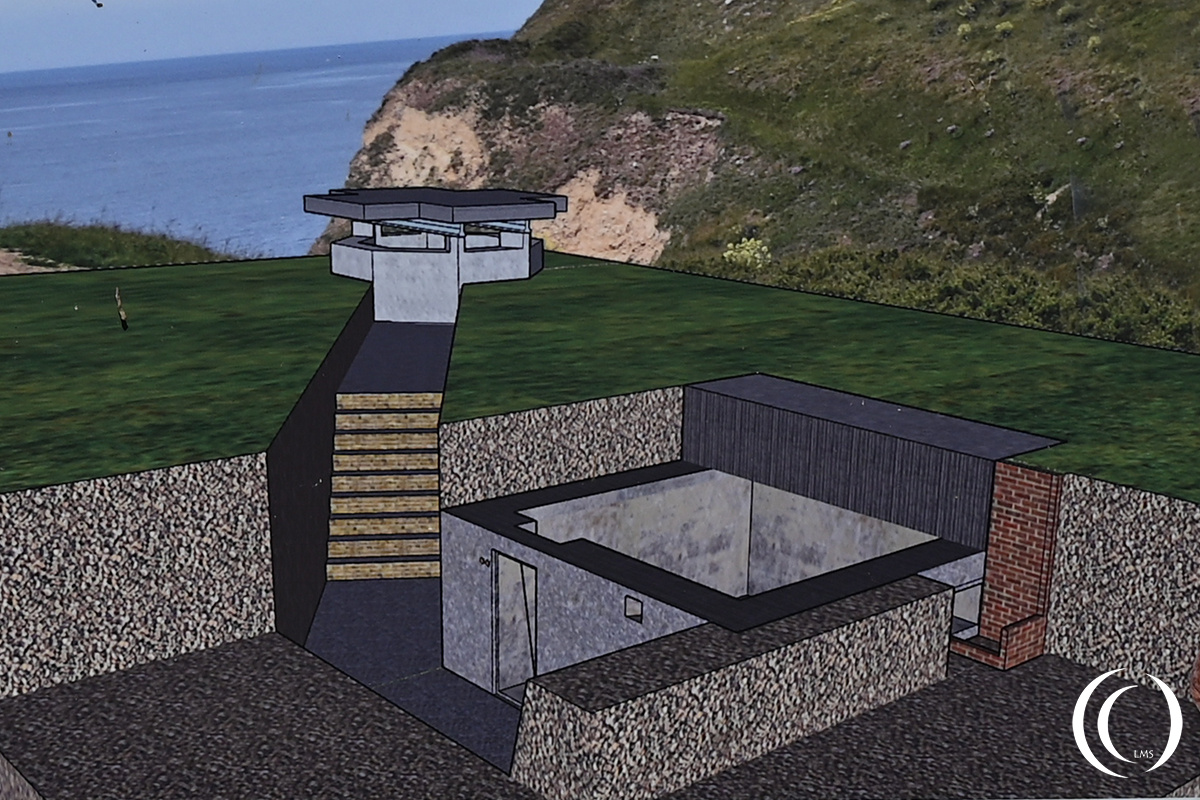
The Vf personnel bunker on the beach—referred to as “Beach Front” by the British during the operation—was designed to accommodate about six men. A small concrete observation post was built right next to it to monitor the sea. After the war, the bunker remained buried for a long time, with only the roof visible; eventually, it was excavated and became part of the memorial at Bruneval.
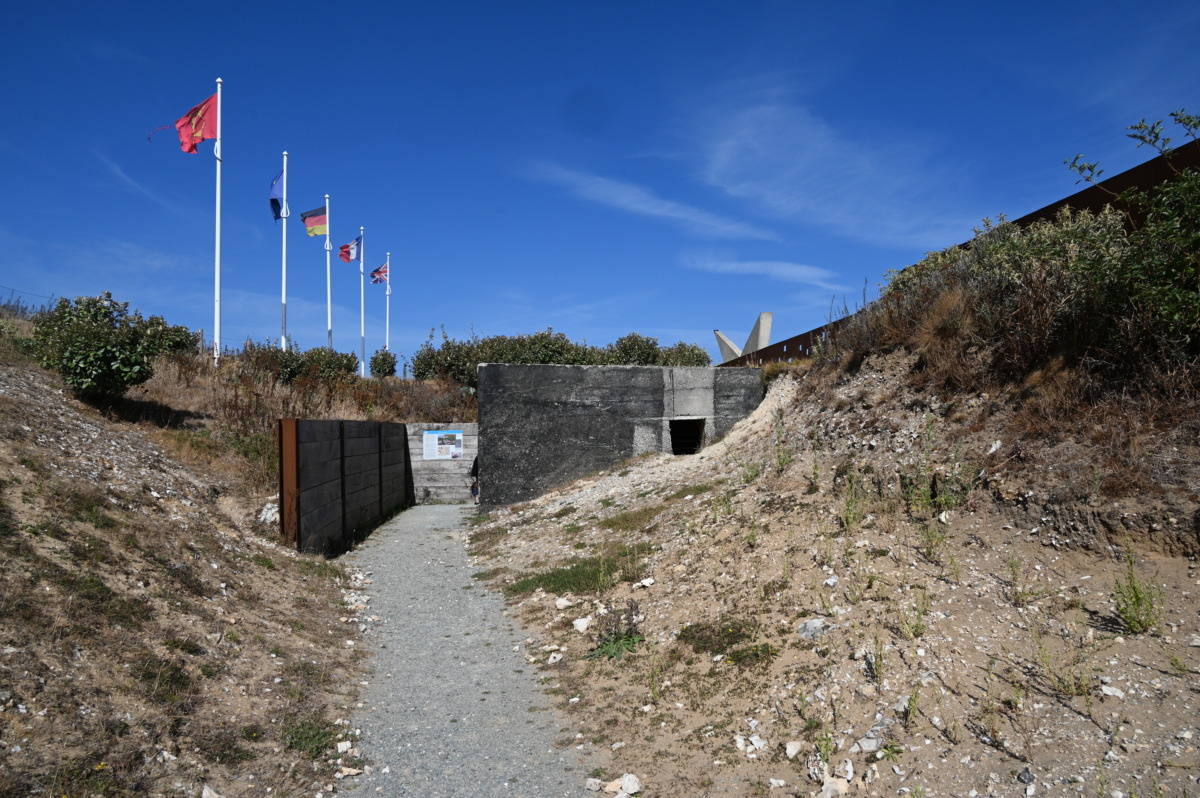
The large memorial structure was once the lookout post near the bunker, from which personnel kept watch over the sea and the beach
The French information panel at the bunker indicates that this is a special design constructed after the Bruneval raid, alongside the Vf3 M.G.-Rundumbunker atop the cliff. This implies that additional protection was installed as a result of Operation Biting.
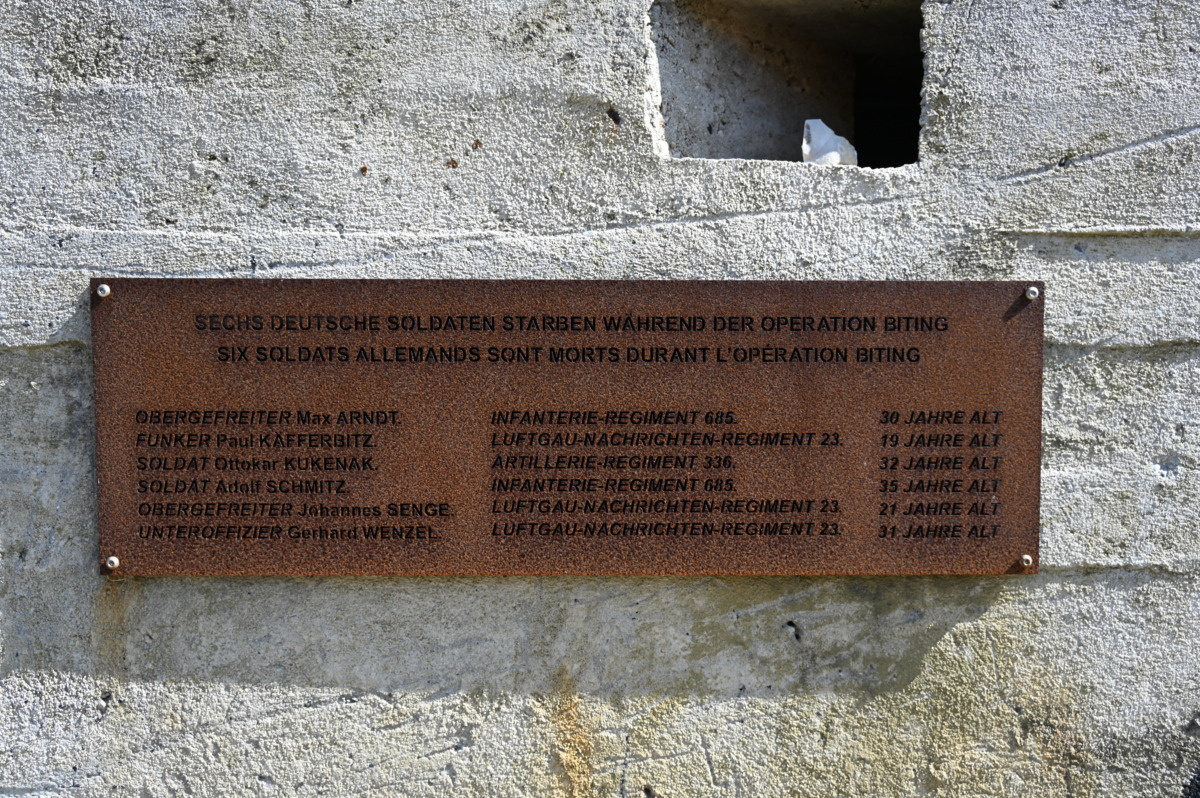
A small plaque on the bunker commemorates the six German soldiers who died during the beach battle of Operation Biting.
clearing mines
After the war, the bunker was used to dispose of unexploded mines from the beach; mines such as “Bouncing Betties” were detonated in a controlled manner inside the bunker.
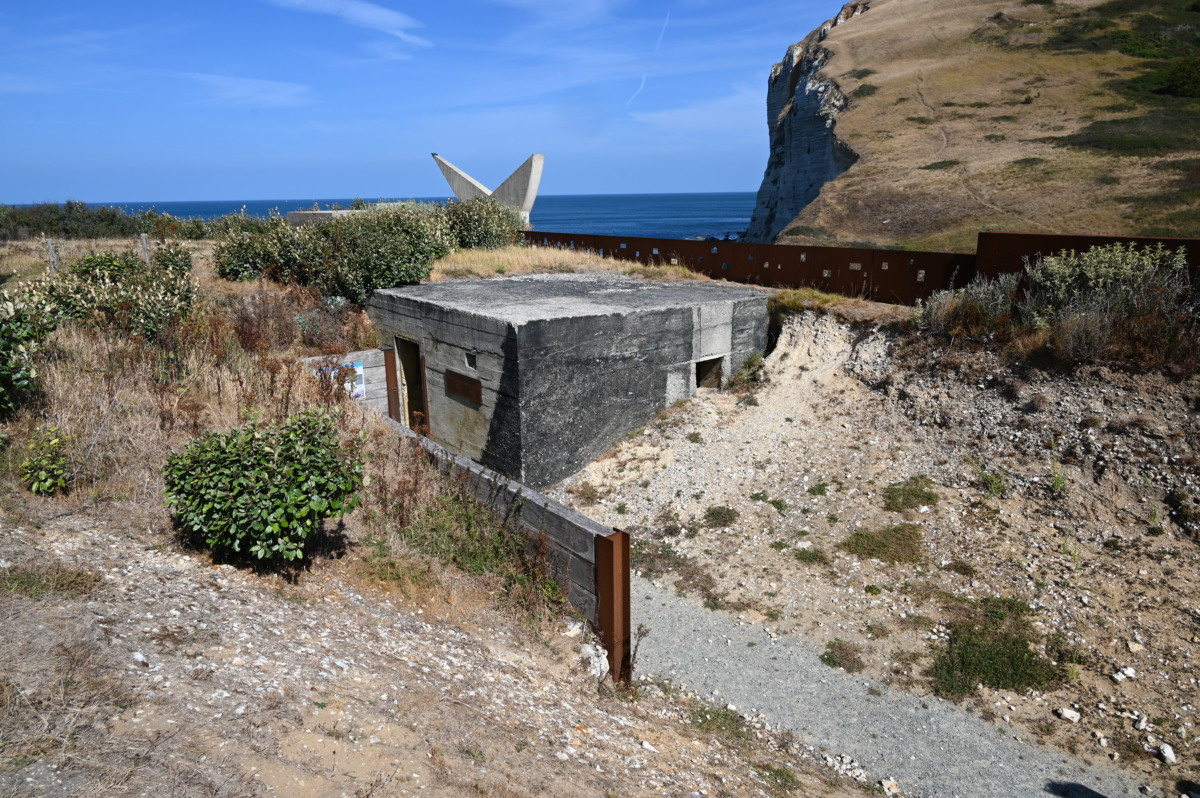
This small structure was used by the bomb-disposal teams between 1945 and 1947. Under the authority of the French Mine Clearance Service, 3,200 French volunteers, joined by 30,000 German prisoners of war, took part in mine-clearance operations throughout France. In 1946, one percent of the territory was still considered dangerous because of mines, bombs and shells.
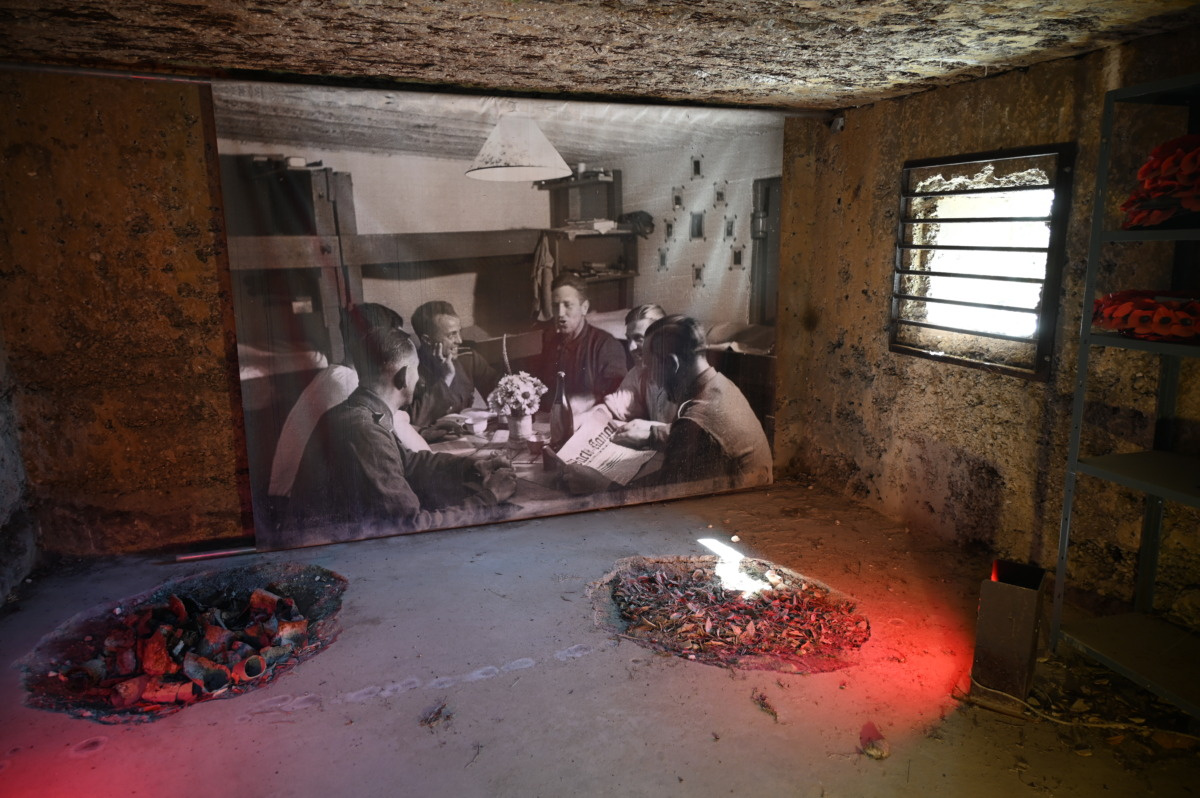
Inside this bunker, the bomb-disposal workers blew up around fifty German S-type anti-personnel mines, Schrapnellmine 35. When activated, part of the mine was projected into the air to a height of about 1.5 metres.
It exploded and scattered approximately 350 steel balls in all directions. This mine-clearance work was extremely dangerous and caused the deaths of 500 clearance workers in France and seriously injured more than 800. The civil register of Saint-Jouin-Bruneval records the death of Helmut Steingruber, a German prisoner of war who was killed during mine clearance in the hamlet of Bruneval on 25 October 1945, aged 19.
Visit
The small bunker is part of the memorial dedicated to Operation Biting on the coast near Bruneval. A small parking area is located about 300 meters before the site. The bunker itself, along with the converted observation post, is situated behind the large memorial walls.
Sources
- bunkersite.com
