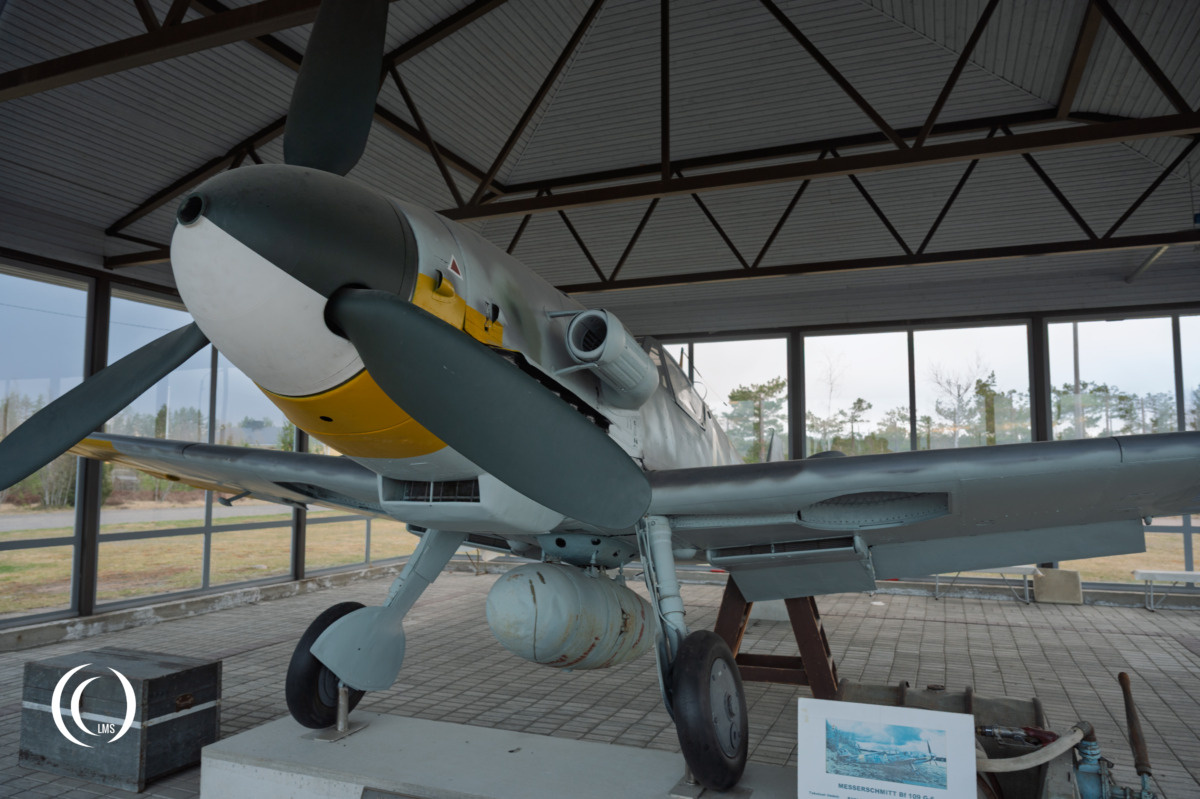
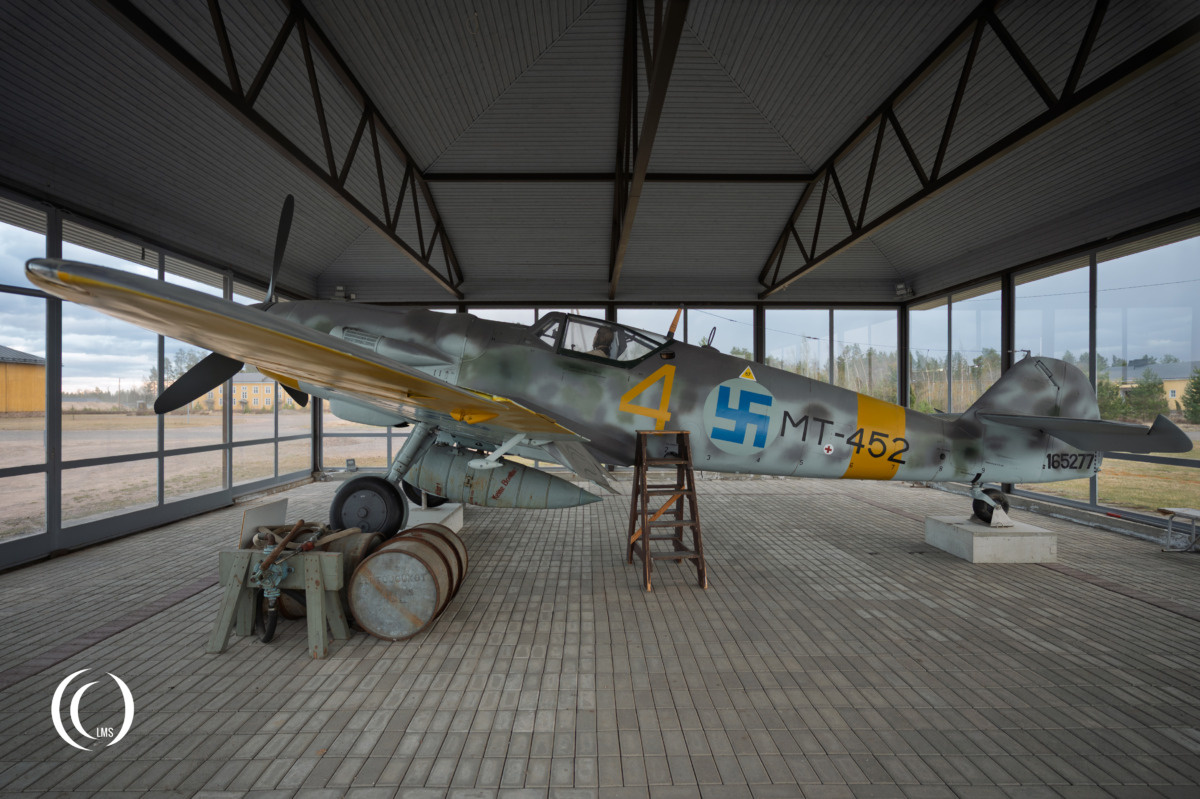
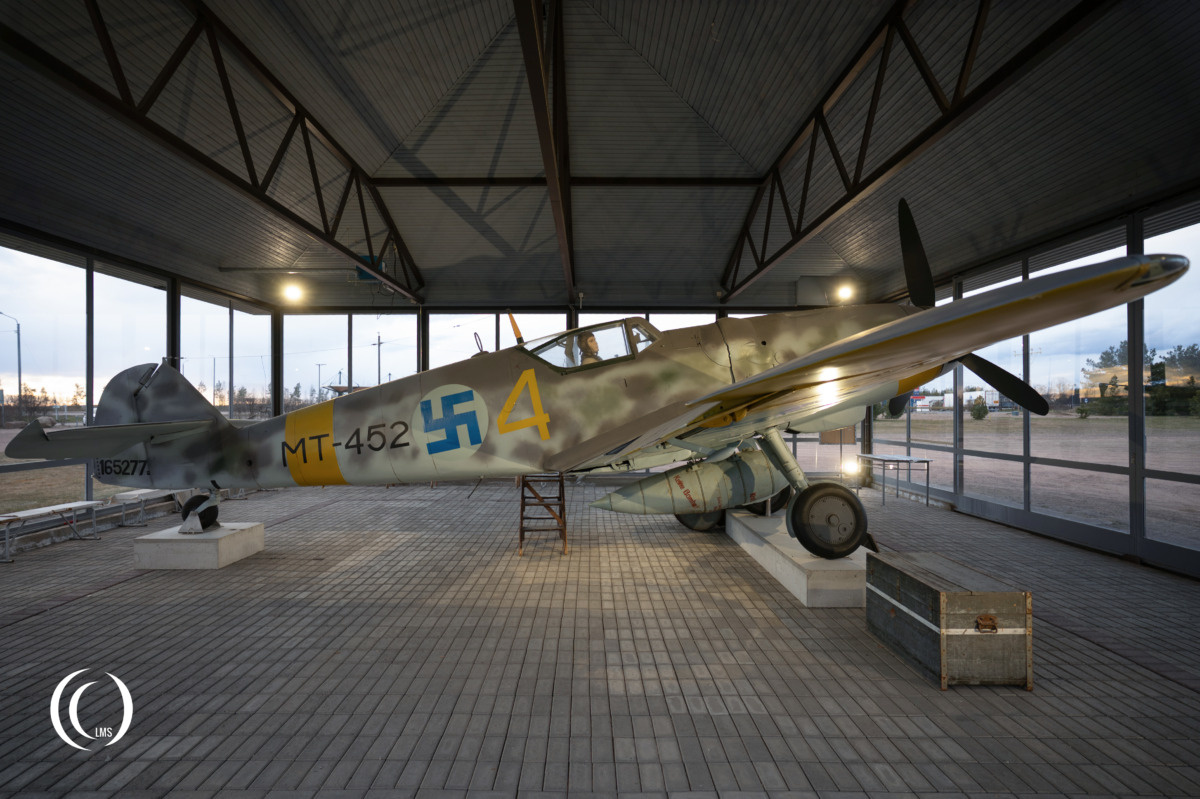
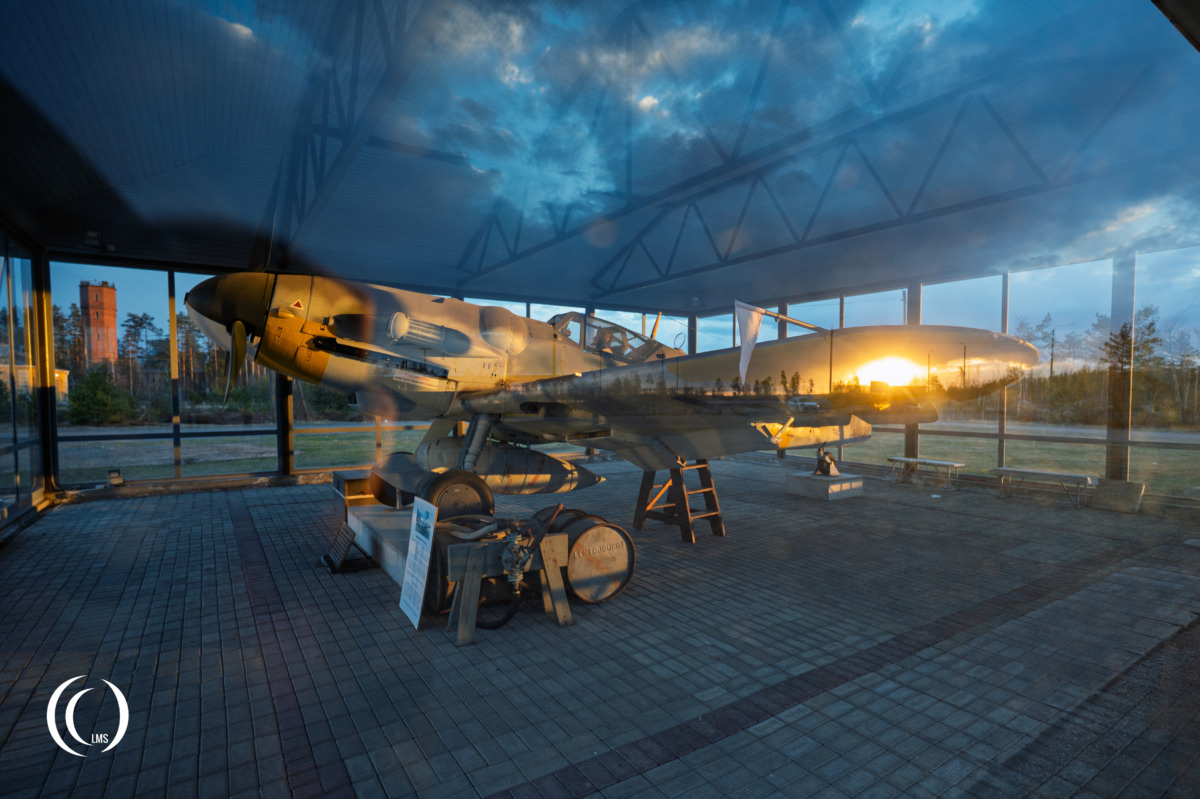
Standing inside a large glass display shelter near Utti Air Base in southeastern Finland is one of the country’s most important surviving wartime aircraft: the Messerschmitt Bf 109 G-6, MT-452. Known locally simply as the “Utin Mersu” and more widely as the “Utti Messerschmitt”, this aircraft is a rare survivor of the fighter force operated by the Finnish Air Force during World War Two.
G-6 version
The Bf 109 was developed in Germany during the 1930s and became the principal fighter of the Luftwaffe. The G-series, introduced in 1942, represented one of the major production versions.
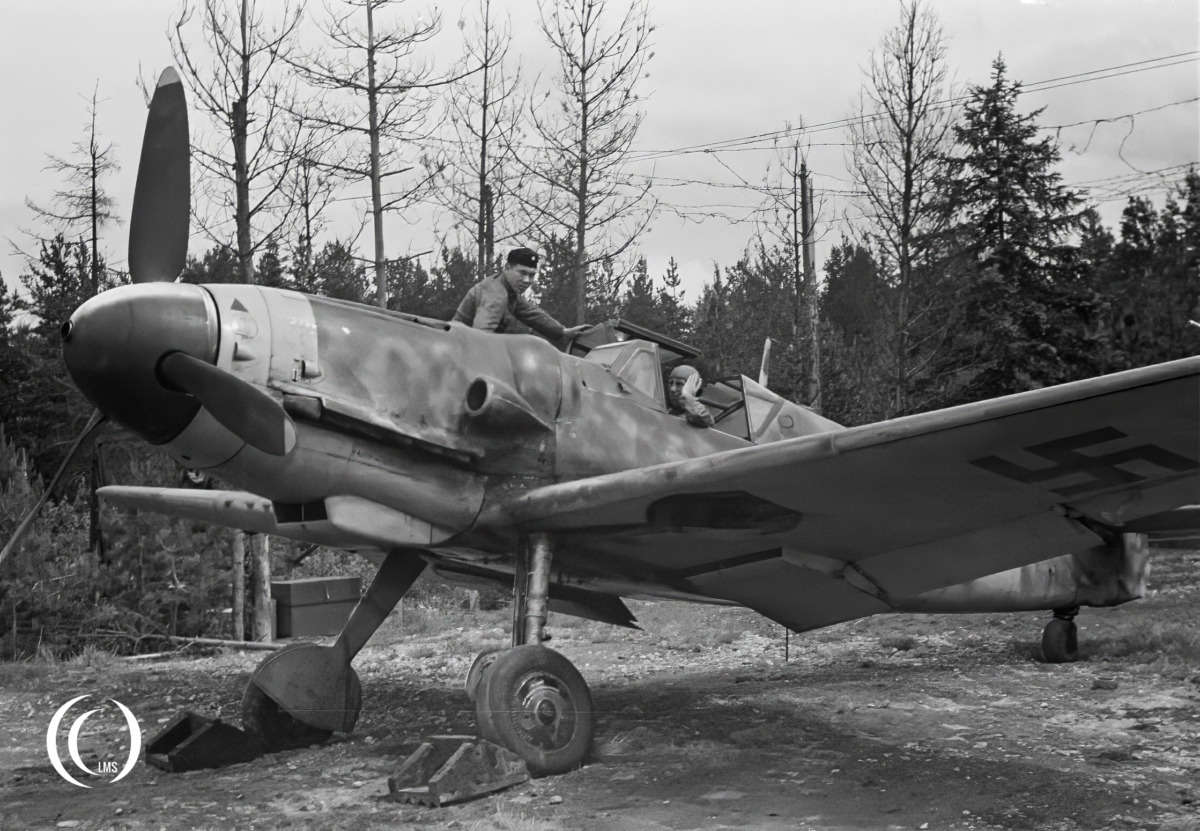
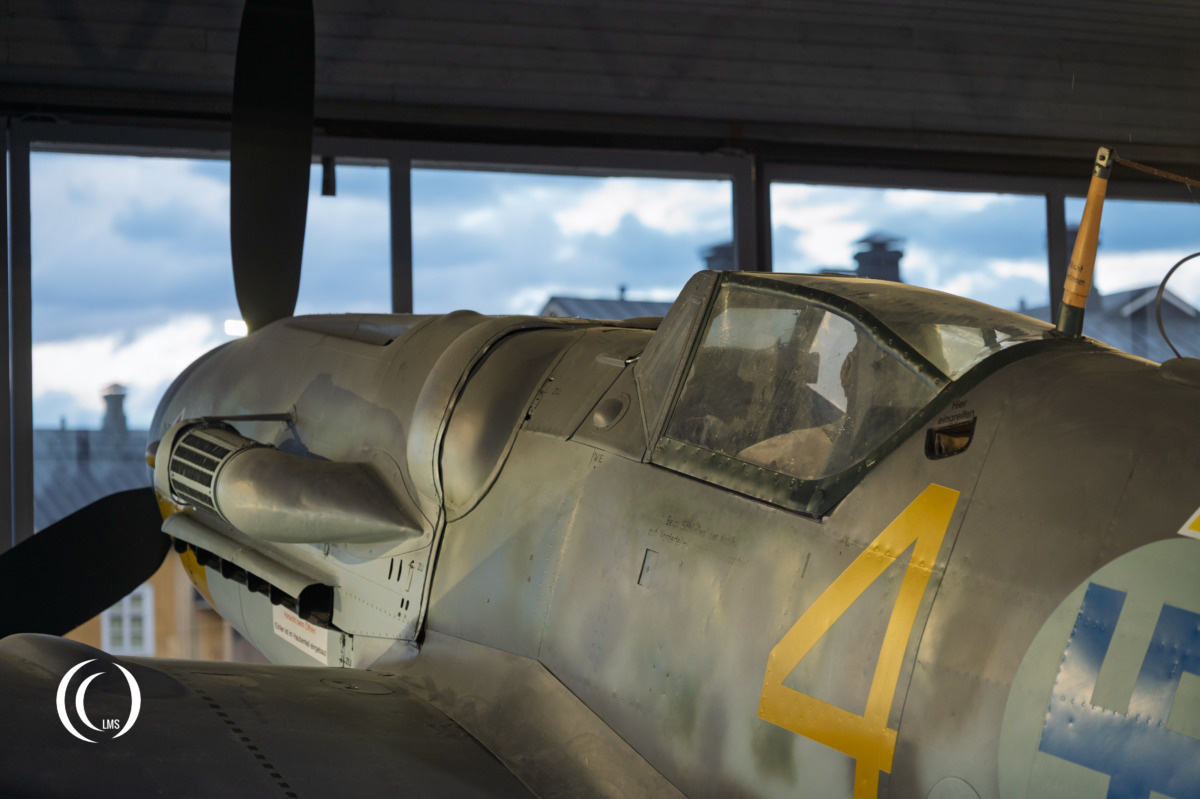
The G-6 was armed with two 13 mm MG 131 machine guns mounted above the engine and a 20 mm MG 151/20 cannon firing through the propeller hub. The MG 131s had been introduced with the earlier G-5, replacing the 7.92 mm MG 17s used on previous versions, like the E-3. Their larger breech mechanisms resulted in the characteristic bulges on the engine cowling, which became one of the most recognizable features of the later Bf 109 G-series.
Technical specifications G-6
- Role
Fighter Aircraft - Number built of the G-6 variant
Approx. 12,000 - Crew
1 pilot - Wingspan
9.925 m - Length
8.950 m - Loaded weight
3,148 kg - Engine
Daimler-Benz DB 605A-1 - Type
12-cylinder, liquid-cooled, inverted V-piston engine - Engine power
1,475 hp - Maximum speed
621 km/h at an altitude of 6.3 km - Climb to 4 km
3 min 12 sec - Range
850 km (528 mi) with a single drop tank - Service ceiling
11,550 m - Armament
1 × 20 mm MG 151/20 cannon (firing through the propeller hub – Motorkanone),
2 × 13 mm MG 131 machine guns (mounted above the engine)
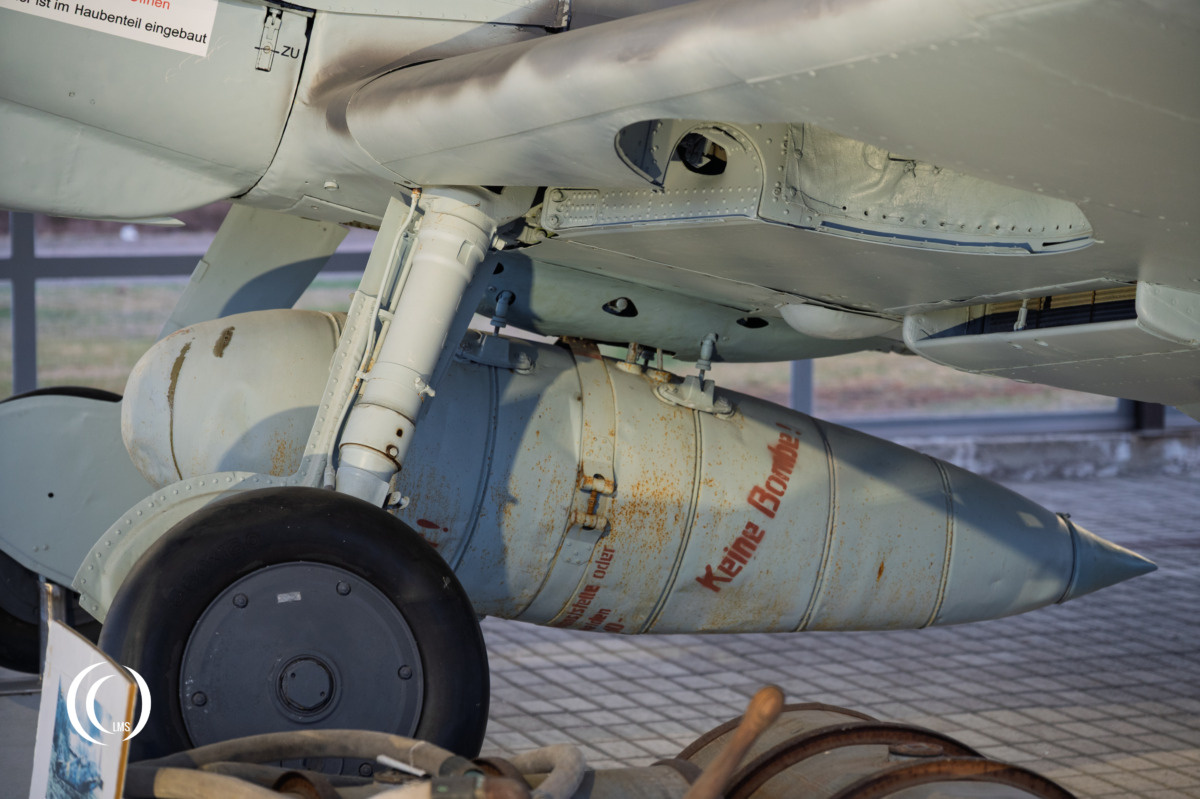
Finnish Air Force service
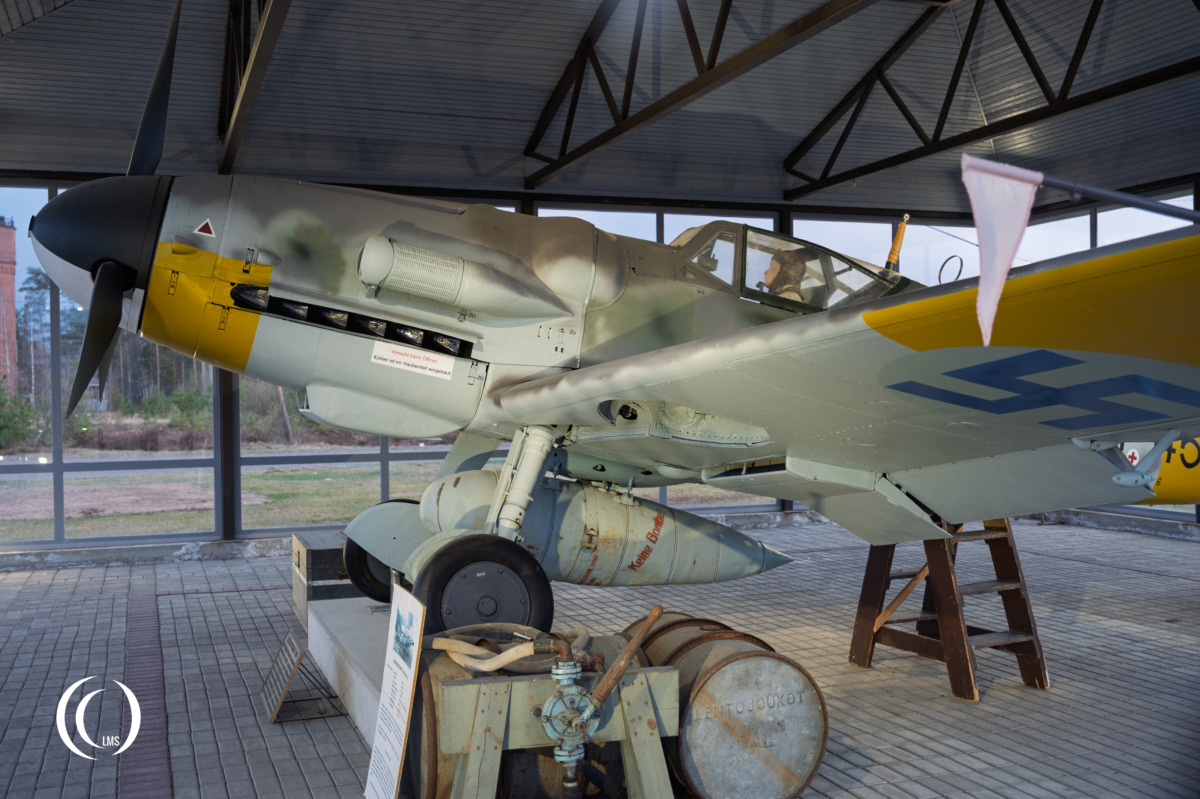
Finland acquired the Bf 109 as part of its wartime cooperation with Germany. The first 30 Finnish aircraft were G-2s, delivered in 1943. During 1944, Finland received additional G-6 fighters and three G-8 reconnaissance aircraft. In total, the Finnish Air Force operated 159 Bf 109s, making the type its most capable fighter of the Continuation War. Finnish Bf 109 pilots were credited with 651 aerial victories between 24 March 1943 to 3 September 1944.
MT-452
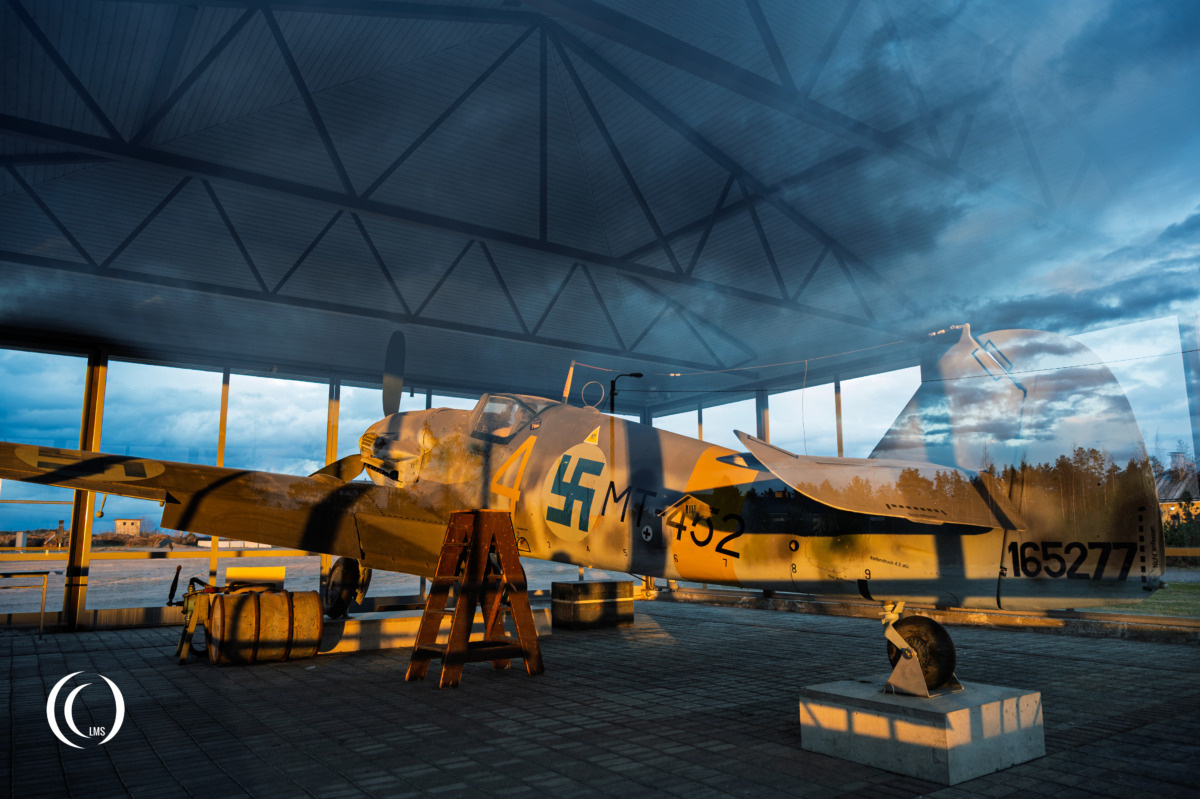
MT-452 was delivered to Finland on 23 June 1944 and assigned to 2/HLeLv 24. Its Finnish serial number was MT-452 and its manufacturer’s construction number was 165277. The aircraft served during the final phase of the Continuation War and subsequently remained in Finnish service after the war. The aircraft accumulated 311 hours and 45 minutes of flying time before being withdrawn from operational use on 17 June 1954.
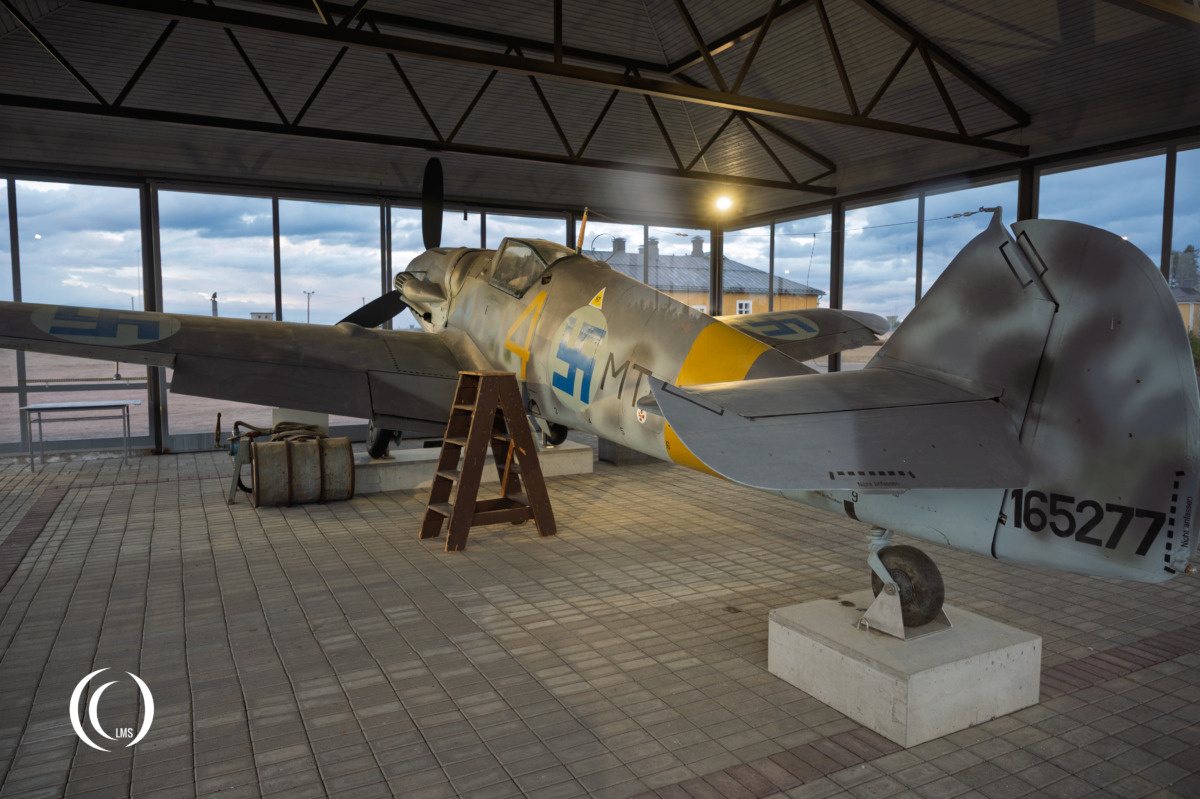
During its wartime career, MT-452 was flown by several Finnish pilots and was credited with a total of nine aerial victories:
- 4 by 2nd Lt. Jorma Saarinen
- 2 by 2nd Lt. Olavi Puro
- 2 by Ensign Johannes Brotherus
- 1 by Sergeant Tapio Järvi
After the war the aircraft was transferred to the Finnish Air Force’s training establishment for use as an instructional airframe. This decision ultimately ensured its survival.
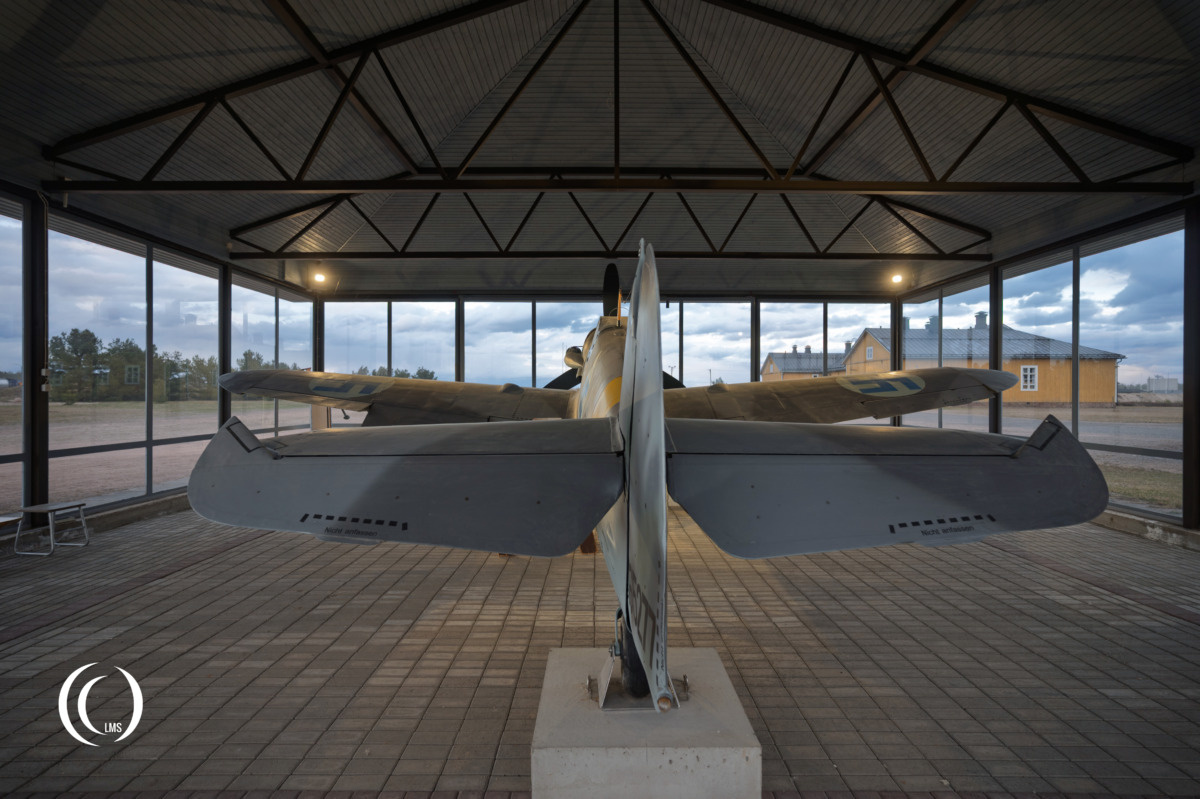
Finnish Air Force monument
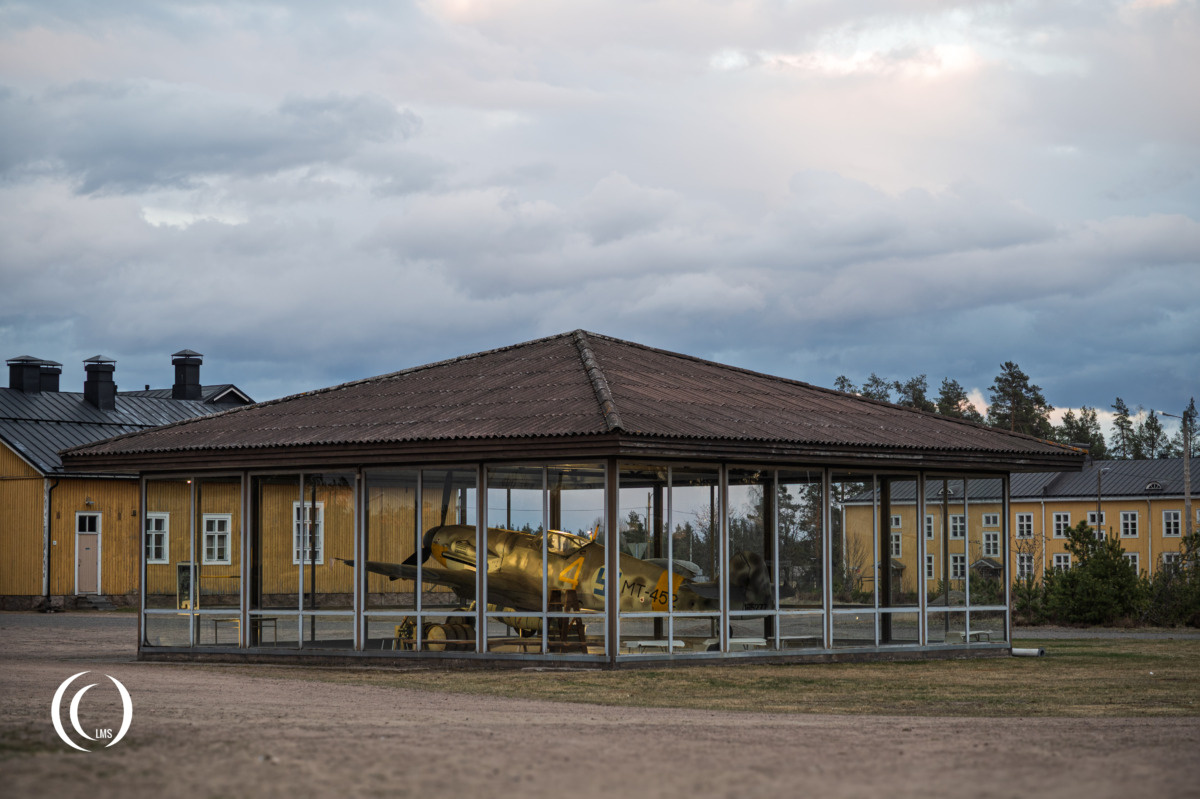
MT-452 subsequently served as a monument in Helsinki’s Santahamina area during the 1960s. It was restored towards the end of that decade and in 1970 was moved to Utti, where it replaced another Finnish Bf 109, MT-507, as the aircraft preserved at the airfield. MT-452 has remained at Utti ever since. A protective glass enclosure was constructed around the aircraft in 1982, and both the aircraft and enclosure were renovated in 1998.
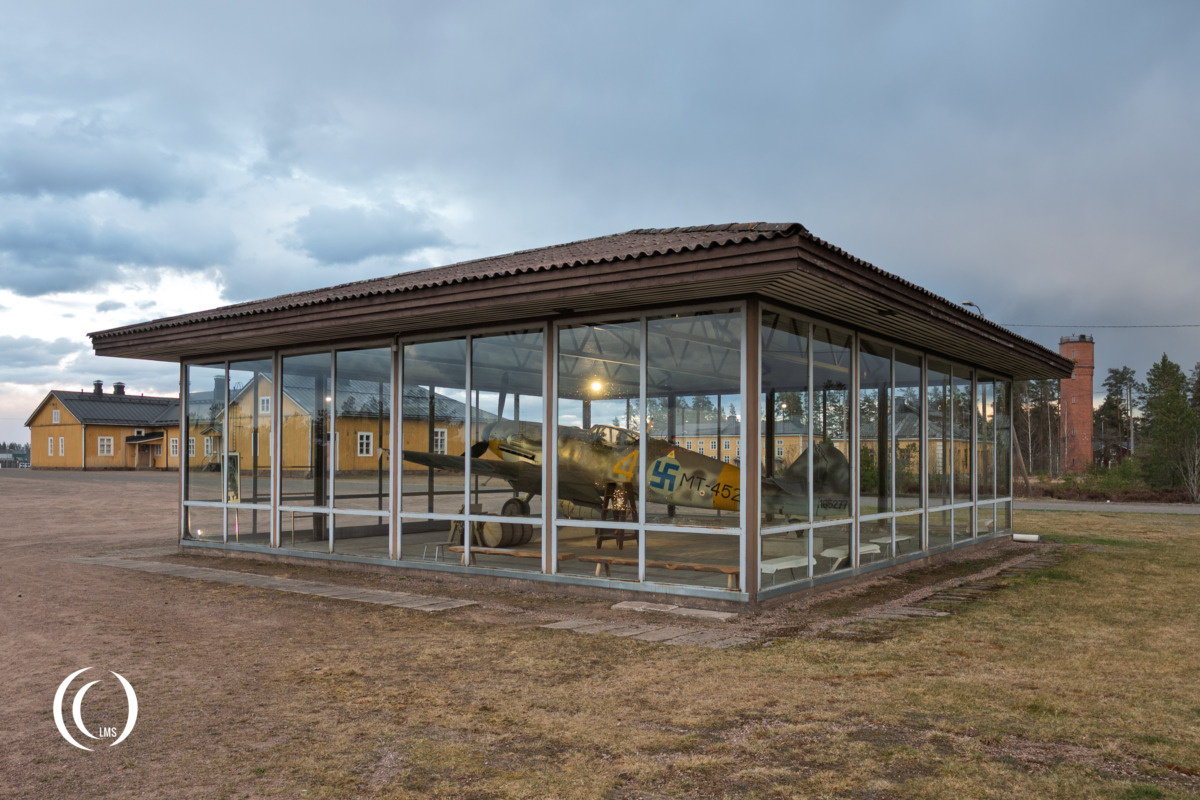
The location is particularly appropriate. Utti was an important Finnish military aviation centre during and after the war, and several Bf 109s operated from the airfield in the post-war period. Historical photographs preserved by the Finnish Aviation Museum show MT-452 among Bf 109s at Utti shortly after the war.
Finnish aviation history
Today, MT-452 is more than a preserved aircraft. It represents the final generation of piston-engine fighters operated by the Finnish Air Force and provides a tangible link to Finland’s wartime aviation history. Unlike many surviving Bf 109s that were rebuilt or restored using components from several aircraft, MT-452 is an original Finnish-operated airframe. Its continued preservation at Utti makes it a particularly significant survivor of Finland’s wartime fighter force.
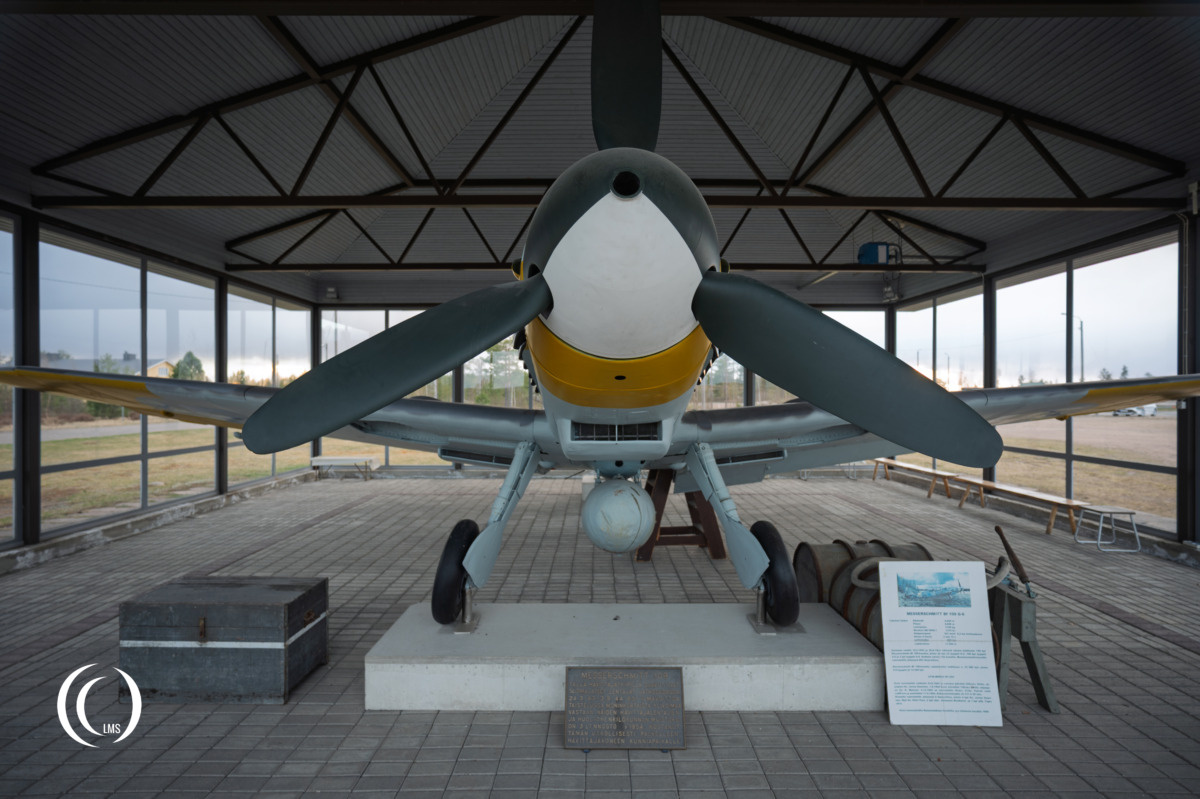
A plaque underneath the nose of the Utti Messerschmitt reads:
With this type of fighter, Finnish pilots achieved 651 aerial victories during the Continuation War, from 24 March 1943 to 3 September 1944, while fighting against numerically superior forces.
In memory of these fighter pilots and their ground crew, 3rd Flight Squadron Y [3. Lennosto Y] erected this monument in 1954, placing this faithfully serving fighter aircraft in a place of honour.
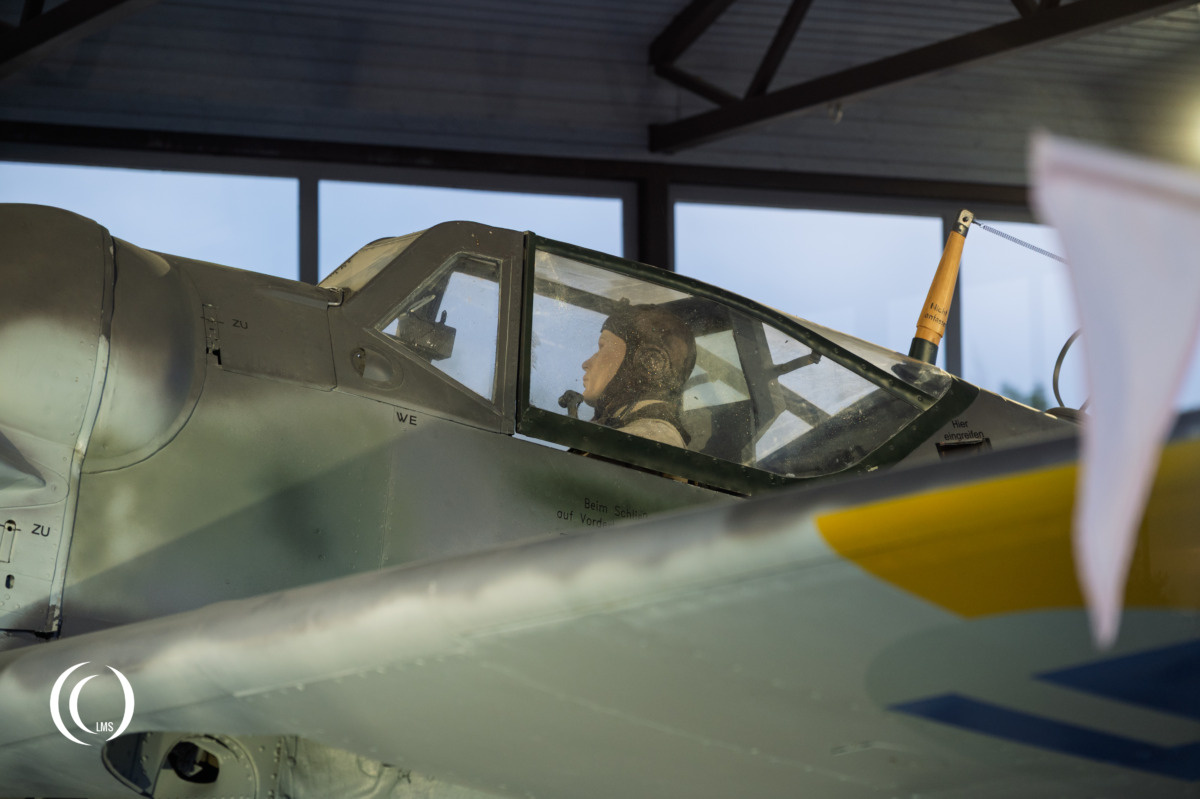
The aircraft also forms part of the remarkable story of the Finnish Bf 109s after 1945. While most wartime aircraft were eventually scrapped, a small number survived long enough to become museum pieces. MT-452 is one of those survivors—and, still standing at the airfield where Finnish military aviation continued after the war, it remains closely connected with the place and history it commemorates.
Visit
You can visit the Utti Messerschmitt Bf-109 G-6 at the Utti Air Base, along Highway 6 near Ranta-utti, Finland. Use the location marker to find the monument.
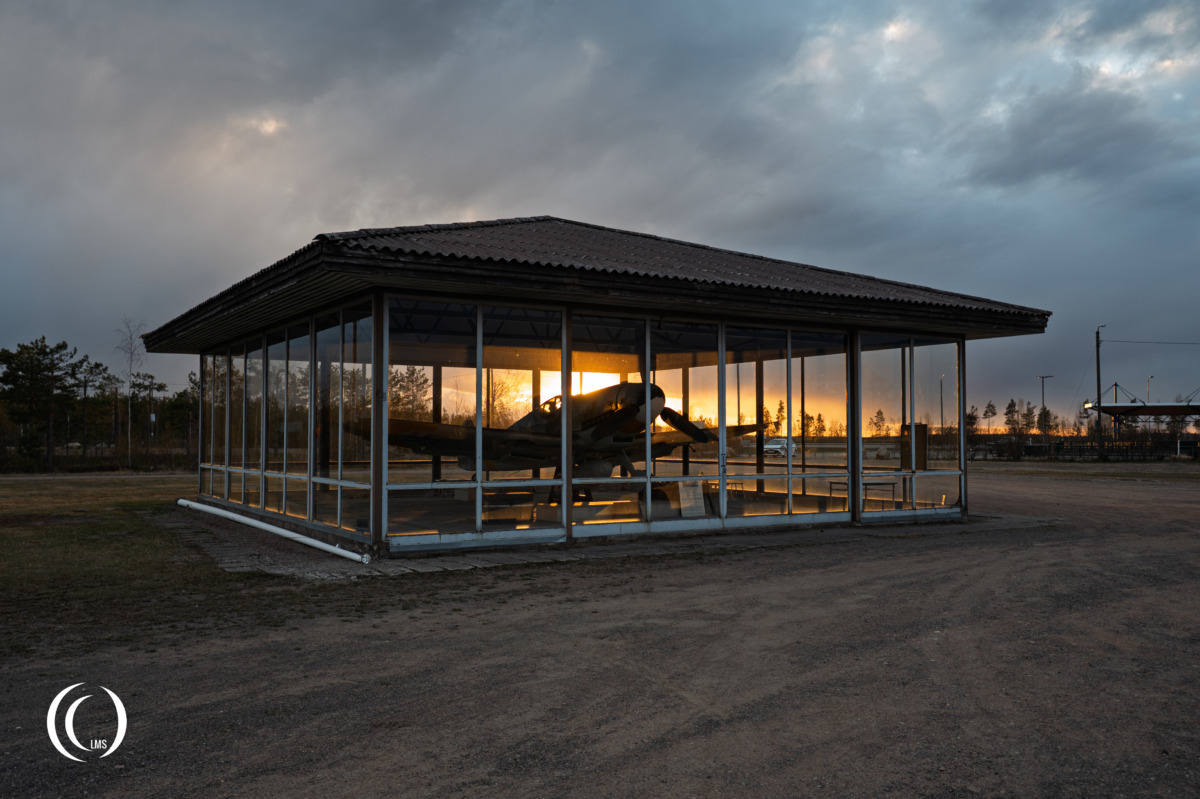
During our visit the sun was already going down, the wind grew stronger and dark clouds were gathering. We had to work hard to take our pictures. The low sun reflecting in the glass of the protective enclosure of the aircraft made it extra challenging. But the mood also added a mesmerising scene to some of the pictures.
Sources
- ilmailumuseot.fi
- airforcemuseum.fi
- wikipedia.com
- sa-kuva.fi
