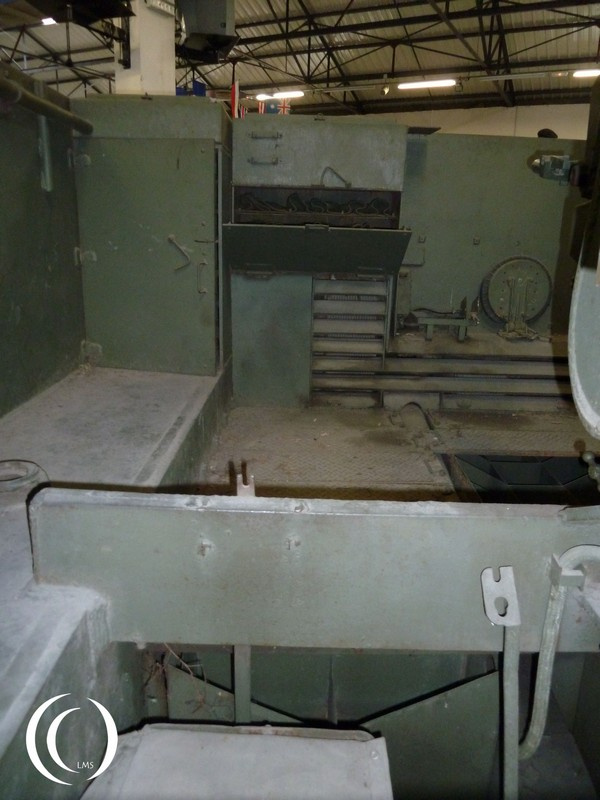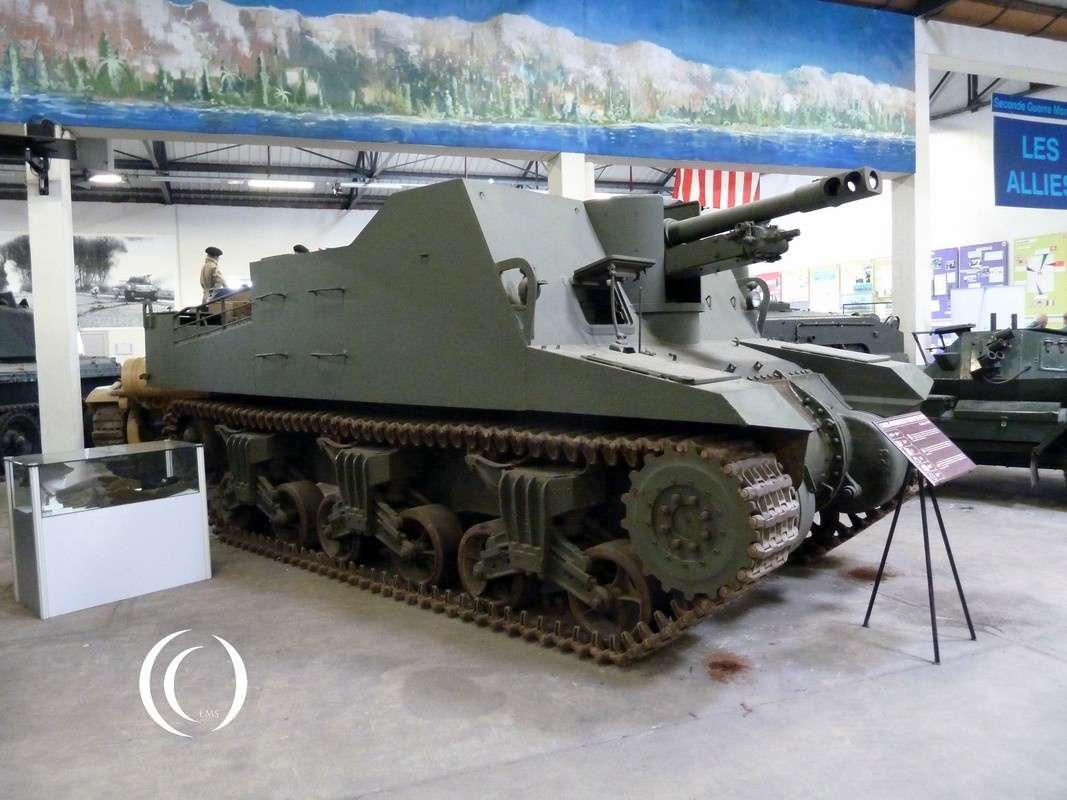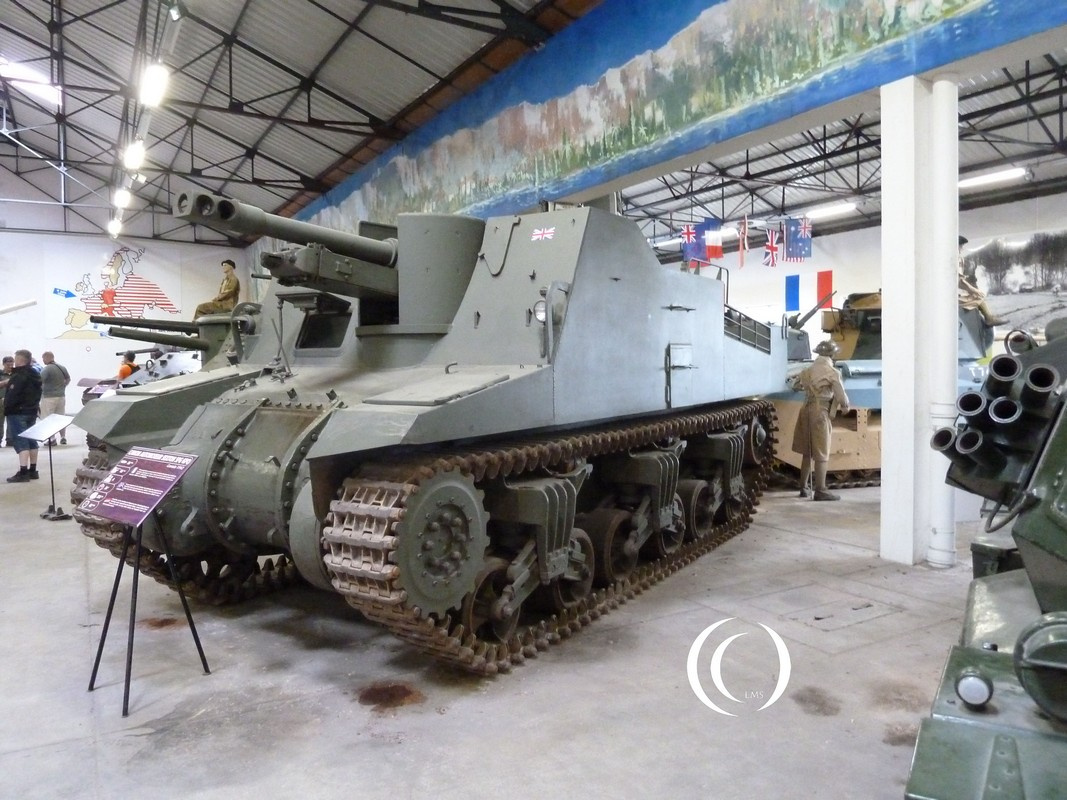
The 25pdr SP Tracked Sexton was a British self-propelled artillery vehicle used during World War II, primarily for close support and indirect fire support in combat. Based on the Canadian Ram tank chassis, the Sexton was equipped with the standard British 25-pounder field gun, one of the most effective artillery pieces of the war. It also had two Bren guns for anti-air and land based defense as secondary armament.
The Ordnance QF 25-pounder howitzer gun had an 87.6mm caliber and could fire various shells, including high-explosive, armor-piercing, and smoke rounds, with an effective range of around 13,000 yards (11,900 meters). The rate of fire was about 8-10 rounds per minute, which made it highly effective in both offensive and defensive operations.
The Sexton was powered by a Continental R-975 engine producing 400 horsepower, which enabled a top speed of 24 mph (39 km/h) and a range of approximately 150 miles (240 km) on roads. Its fully tracked chassis provided excellent cross-country mobility, allowing it to operate effectively in diverse terrains.
The vehicle was operated by a crew of 6 to 7 personnel, including a driver, commander, gunner, loader, and radio operator. The Sexton played a crucial role in the North West Europe campaign, providing critical artillery support for British and Canadian forces, contributing to its reputation as a reliable and effective self-propelled artillery piece.