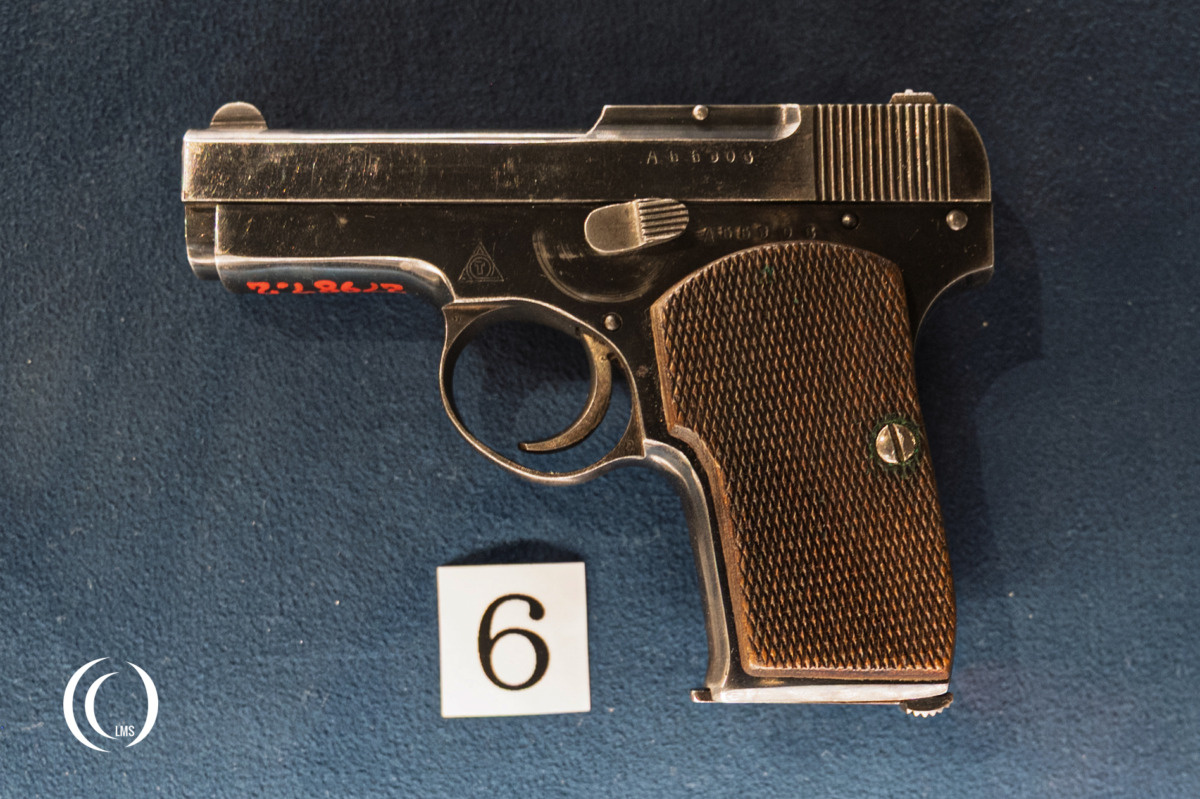
The 6.35 mm Korovin TK (short for Тульский Коровин) Model 1926 holds an important place in Soviet firearms history as the first semi-automatic pistol to be produced in series in the Soviet Union. Designed by Sergei Aleksandrovich Korovin and manufactured at the Tula Arms Plant (TOZ), the compact pistol represented an early attempt to establish a domestic tradition of modern self-loading handguns.
Design
Korovin had already designed a larger 7.65 mm pistol in the early 1920s, but that design was considered too complicated and heavy for military use. In 1925, the Soviet sports organization Dinamo commissioned Korovin to develop a smaller pistol for sporting and civilian self-defence purposes. He redesigned his earlier concept around the 6.35×15.5 mm Browning cartridge, also known as .25 ACP. The resulting pistol was completed in 1926, and production began at Tula late that year.
Construction
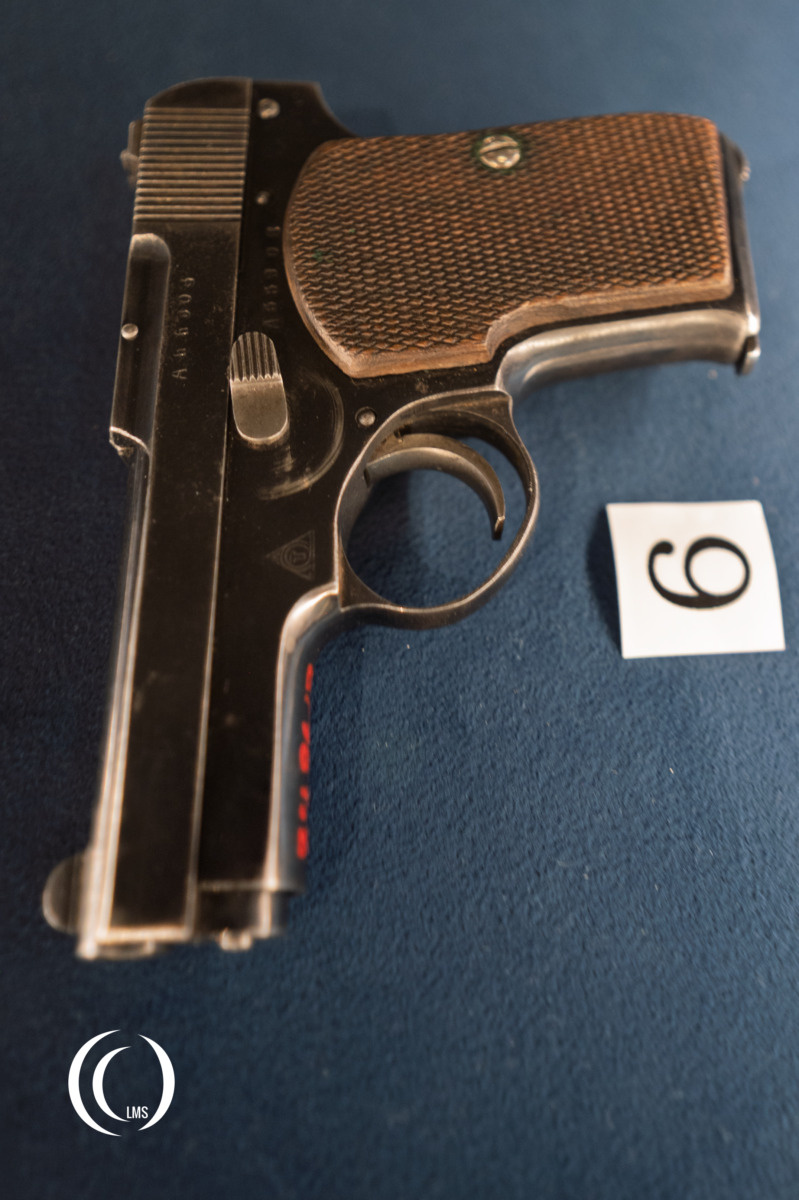
The TK was a compact blowback-operated, single-action pistol. Its fixed barrel was surrounded by the slide, while a recoil spring mounted beneath the barrel provided the return force. The pistol used a simple striker-fired mechanism and an eight-round, single-column detachable magazine. A manual safety was positioned on the left side of the frame. Its dimensions were modest: it measured 127 mm in length, with a 67.5 mm barrel, and weighed approximately 423 grams unloaded.
Specifications
The 6.35 mm Korovin TK Model 1926 displayed in the pictures is part of the collection of Military Museum in Suomenlinna, Helsinki, and has the following specifications:
- Manufacturer
Tula Arms Plant, Tula Oblast, Russia - Production period
1926–1935 - Operating system
Blowback-operated, single-action semi-automatic - Caliber
6.35 mm Browning - Barrel length
67.5 mm - Muzzle velocity
Approx. 228 m/s - Weapon length
127 mm - Magazine capacity
8 rounds - Ammunition
.25 ACP / 6.35 x 15.5 mm SR - Weight
423 g (without magazine)
Use
The choice of 6.35 mm ammunition reflected the pistol’s intended role. The .25 ACP was a popular cartridge for small European pocket pistols and offered a combination of compact dimensions and manageable recoil. Soviet ammunition for the TK was reportedly loaded with a somewhat increased propellant charge, producing a muzzle velocity of approximately 228 m/s. Nevertheless, the cartridge remained relatively weak compared with military pistol cartridges.
Although the TK was not officially adopted as the standard sidearm of the Red Army, it found a niche as a personal weapon. Pistols were issued or made available to NKVD personnel, government officials, party workers, and some Red Army officers. They could also serve as presentation or award weapons.
Production of the pistol continued until 1935. By then, the Soviet search for a more powerful military pistol had produced the Tokarev TT-30, followed by the TT-33, chambered for the considerably more powerful 7.62×25 mm cartridge. The TK therefore quickly became obsolete as a military weapon, although examples remained in use for years afterward. But as the first Soviet series-produced self-loading pistol, the TK Model 1926 became an important stepping stone toward the more powerful and famous Soviet pistols that followed.
Sources
- Wikipedia
- forgottenweapons.com
