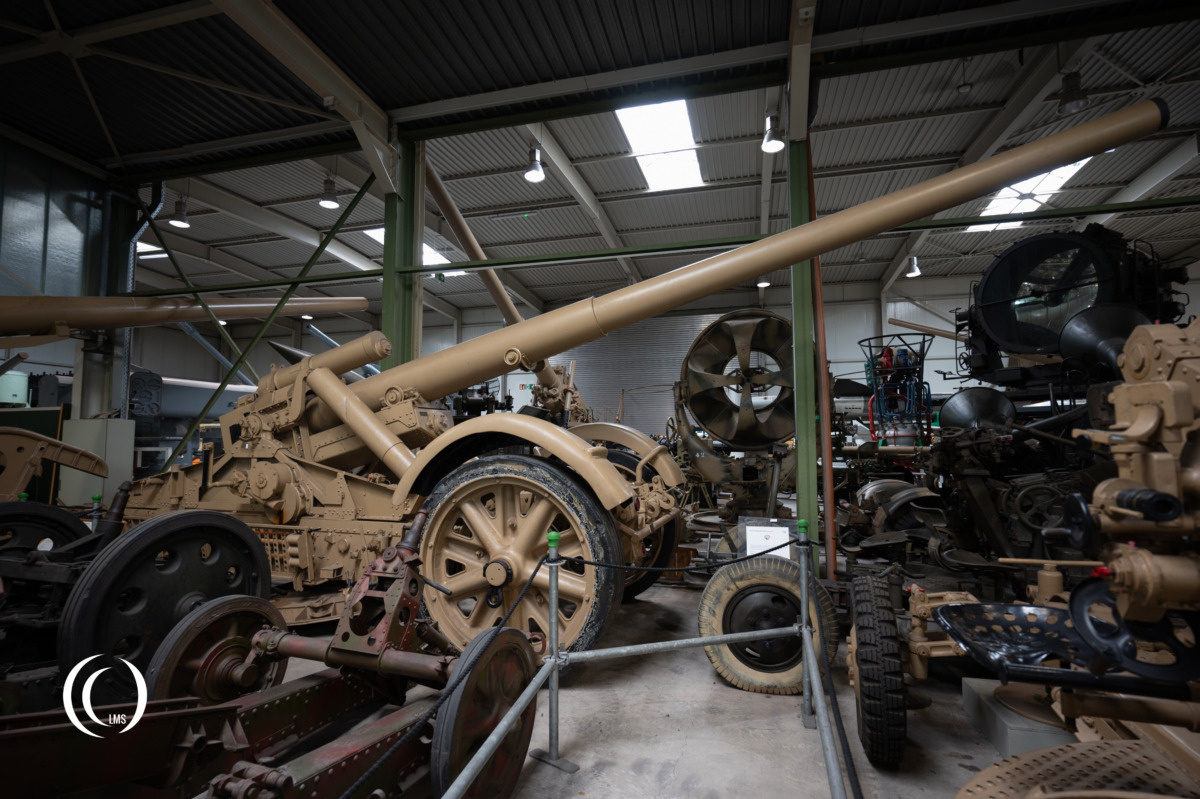
The 17 cm Kanone 18 in Mörserlafette (or short: 17 cm K 18 in Mrs.Laf) was a primary heavy gun of the German Wehrmacht, developed by Krupp in Essen. The weapon was introduced in 1941 and, despite its smaller caliber compared to the 21 cm Mortar 18 introduced earlier in 1939, proved more effective due to its superior range of 29,600 m. Together with the 21 cm Mortar 18, the gun formed the backbone of the German heavy army artillery during World War Two.
Design & development
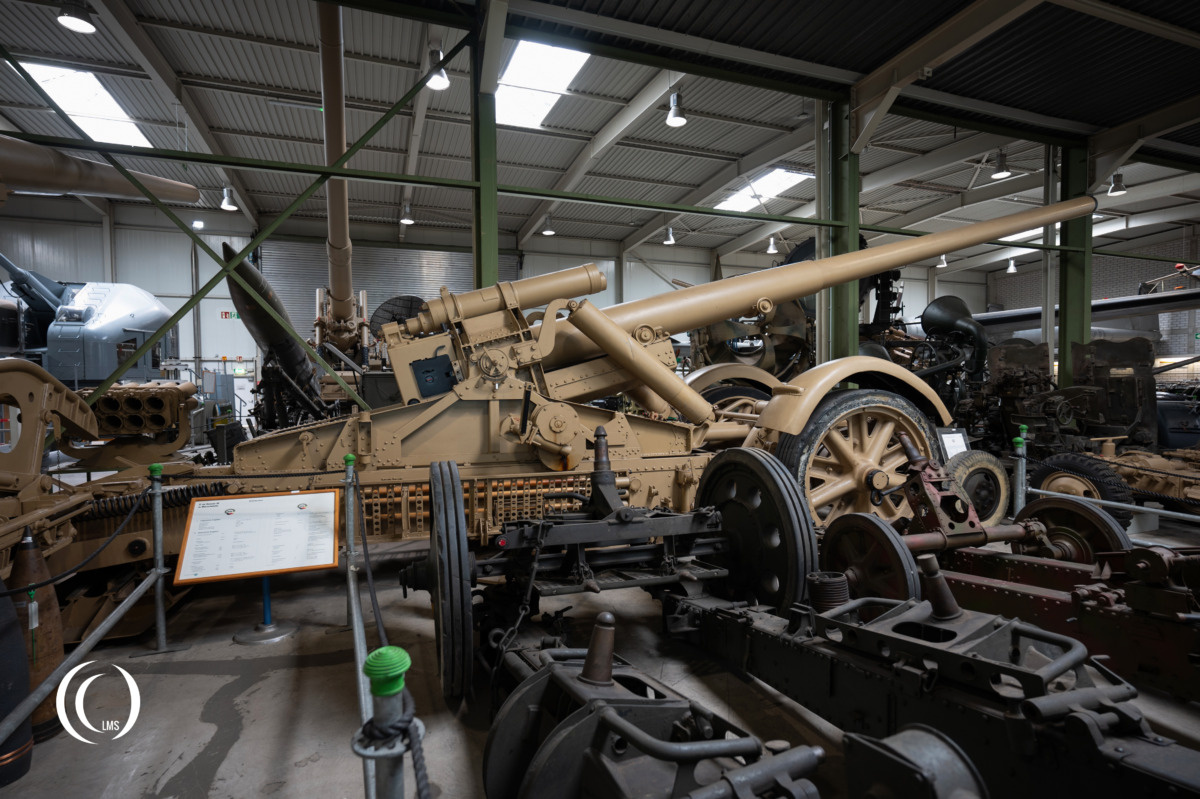
The focus of the weapon’s design was essentially to combine the range and power of a long-barreled gun with the high-angle fire and ballistic profile of a mortar, allowing it to attack enemy positions over obstacles or behind cover.
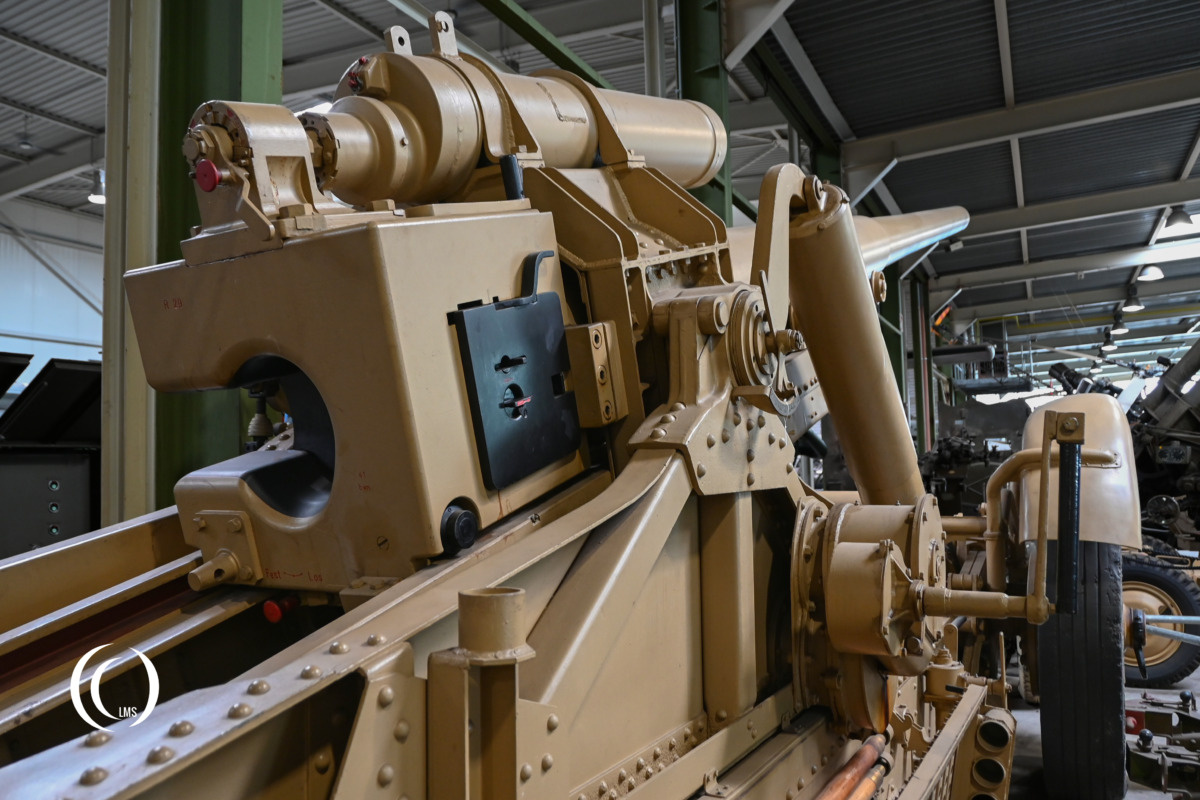
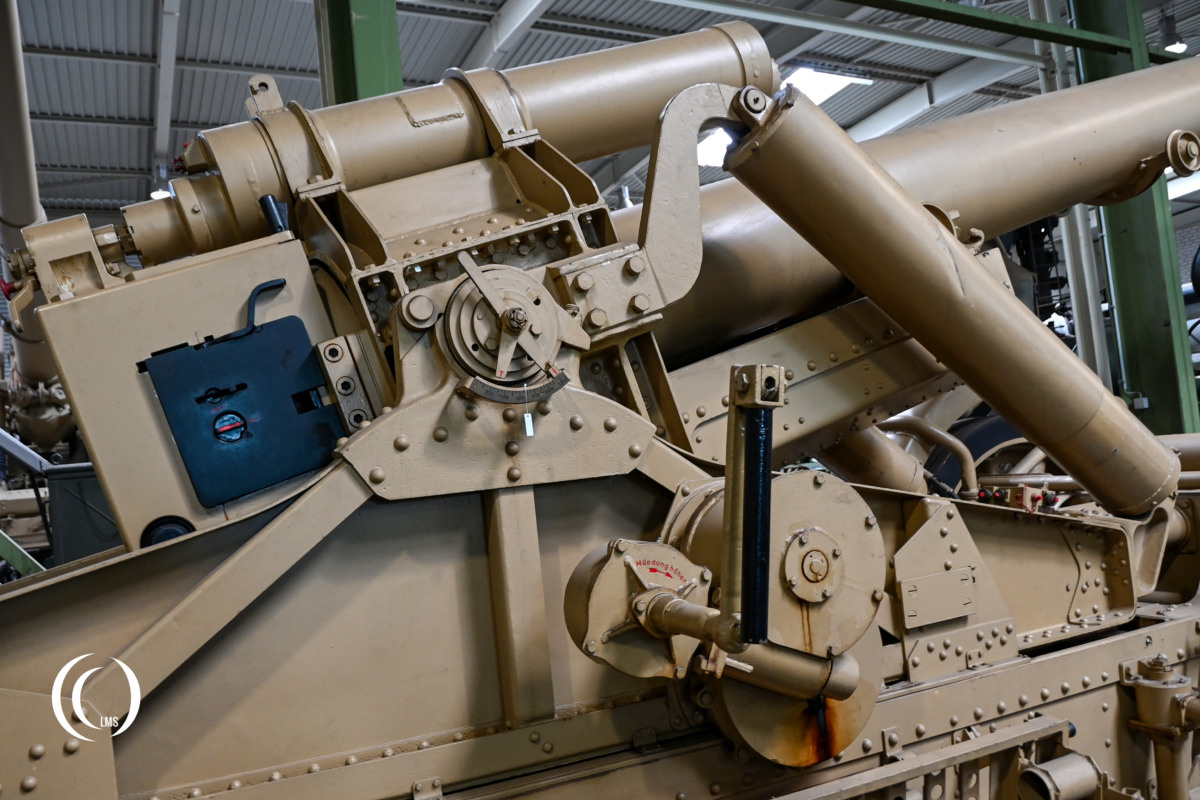
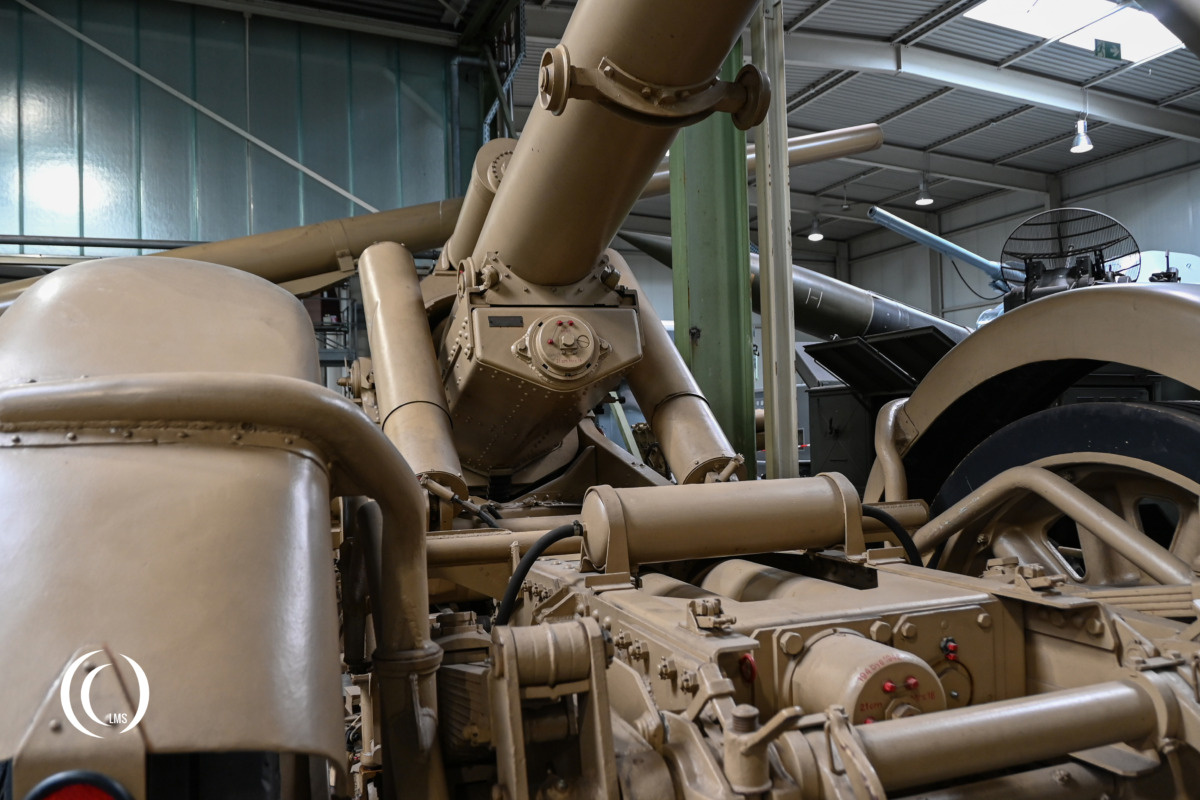
Technologically, the gun utilized a carriage identical to the 21 cm Mortar 18. A key feature was its double recoil mechanism, which used separate systems for both the barrel and the carriage to absorb recoil energy, thereby minimizing movement and enhancing accuracy. To improve mobility, the heavy carriage (23,375 kg in travel position) was transported as two separate loads and assembled on-site, where its weight reduced to 17,520 kg in the firing position. A notable advancement was the ability for two men to rotate the base plate using specialized rollers.
A notable weakness was the service-life of the barrel, which fired 68 kg to 71 kg shells, which proved to be insufficient for long-term use.
Production
Following this performance, the production of the 17 cm K 18 gun was prioritised in 1942, leading to the suspension of the 21 cm Mortar’s production. Due to high demand, production was expanded to Hanomag in Hanover, Germany. Over the course of the war, more than 330 guns were manufactured at a cost of 124,000 RM each, with the highest output in 1942 (126 pieces).
Employment
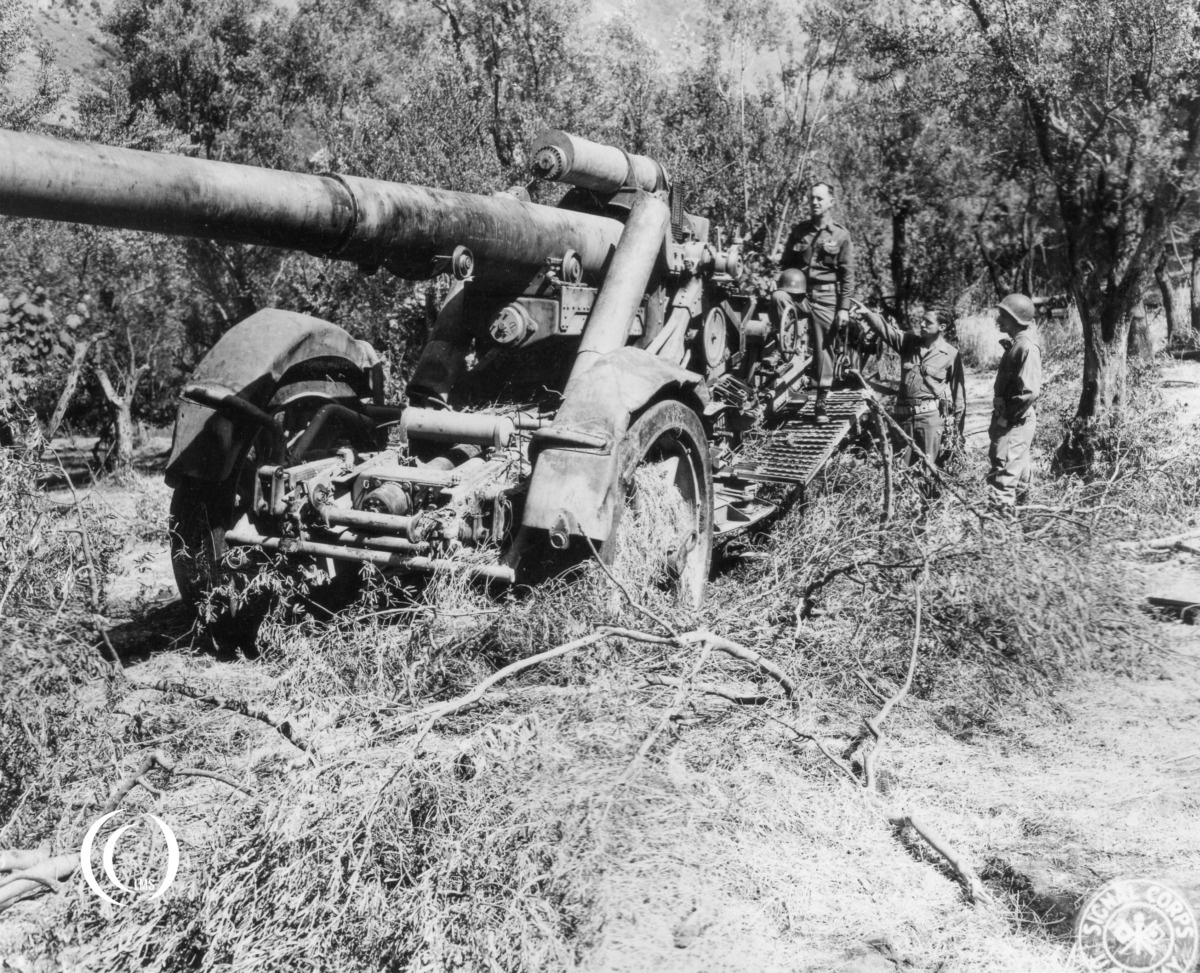
In service, the 17 cm Kanone 18 was organized into sections, each consisting of three batteries of three guns apiece. These units were strategically positioned at critical points along the front lines. While the gun was a cornerstone of German heavy artillery, several units were captured by Allied troops and utilized during their advance into Germany, extending the weapon’s service well beyond the German war effort.
Technical specifications
A listing of the technical specifications of the 17 cm Kanone 18 on mortar carriage:
- Designation
17 cm K 18 in Mrs Laf (Mortar Carriage) - Development
Krupp - Manufacturer(s)
Krupp / Hanomag - Production period
1941 – 1945 - Number manufactured
approx. 330 pieces - Maximum range
– 28,000 m with 68 kg projectile
– approx. 29,600 m with 62.8 kg projectile - Caliber
172.5 mm - Barrel length
8,529.5 mm
– Given in calibers: L/50 - Rifles, twist
48, right-hand twist - Projectile weight
– HE Projectiles: 68 kg (17 cm KGr. 39) / 62.8 kg (17 cm KGr. 38 Hb)
– AP Projectile: 71 kg (17 cm PzGr. 43) - Max. initial projectile velocity (V₀)
– HE Projectile: 860 m/s (17 cm KGr. 38) / 925 m/s (17 cm KGr. 38 Hb)
– AP Projectile: 830 m/s (17 cm PzGr. 43) - Propellant charges
Charges: Up to 4, inserted in cartridge case. 1st – 4th charge. 4th charge only with 17 cm KGr. 38 Hb. - Weight
– In firing position: 17,510 kg
– In travel position: Carriage Trail: 12,000 kg / Barrel Trail: 11,375 kg - Traversal range
– Elevation (°): 0 – 50
– Traverse (°): 16 on carriage, 360 on platform - Sighting device
Pointer aiming with independent line of aim - Rate of fire
2 round per minute - Barrel life
approx. 1,500 shots (estimated); easily replaceable barrel liner - Breech
Slide-block wedge breech (Schubkurbel-Flachkeilverschluss) - Recoil system
– Recoil and Carriage Brake: Mechanical (Note: The image likely lists specific types, though “mechanisch” is next to Abfeuerung).
– Barrel and Carriage Rebound: Hydraulic
– Compensator: 2, Pneumatic - Traversing gear
Mechanical via rack with coarse and fine drive - Carriage
Carriage body and legs connected by slide bars, with built-in carriage brakes and -rebound cylinders - Carriage trailer
– Suspension: Leaf spring
– Brake: Hand or air-operated - Barrel trailer
– Suspension: Leaf spring
– Brake: Hand or air-operated - Prime movers
2, for Carriage Trailer and Barrel Trailer
– Axle Lock: up to 30°
– Steering Angle: 90° to each side
– Brake: Air-operated
Surviving 17 cm K 18 in Mrs.Laf
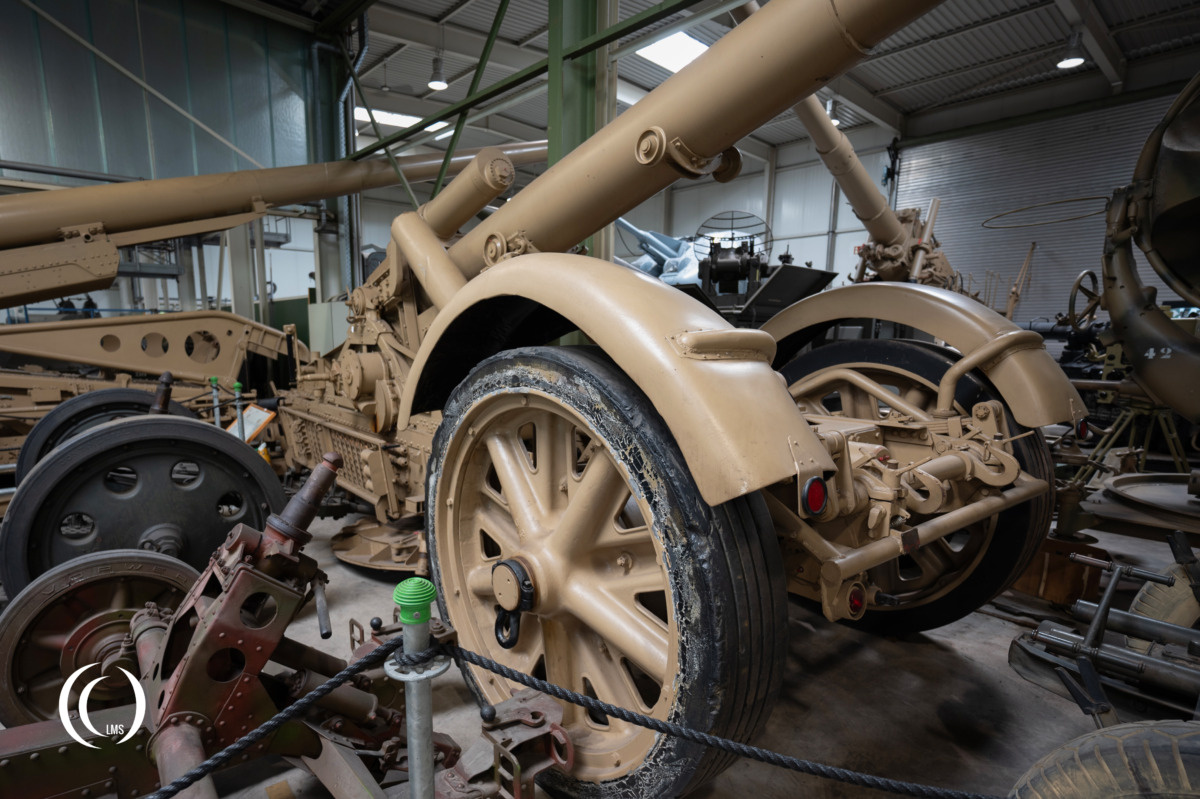
The 17 cm Kanone 18 in Mörserlafette on the photographs is part of the collection of the Wehrtechnische Studiensammlung in Koblenz, Germany. The information of WTS Koblenz states that the gun was manufactured in 1941.
Sources
- WTS Koblenz documentation
- lexikon-wehrmacht.de
- wikipedia.org
