The British Universal Carrier, also known as the Bren Gun Carrier, was a multi-purpose armored vehicle. Originally developed by Vickers-Armstrong, it was deployed as a light reconnaissance vehicle or for transporting personnel and equipment under fire. Furthermore, it served as a platform for support weapons, such as machine guns (including the Bren), mortars, and other armaments.
The Conger Device
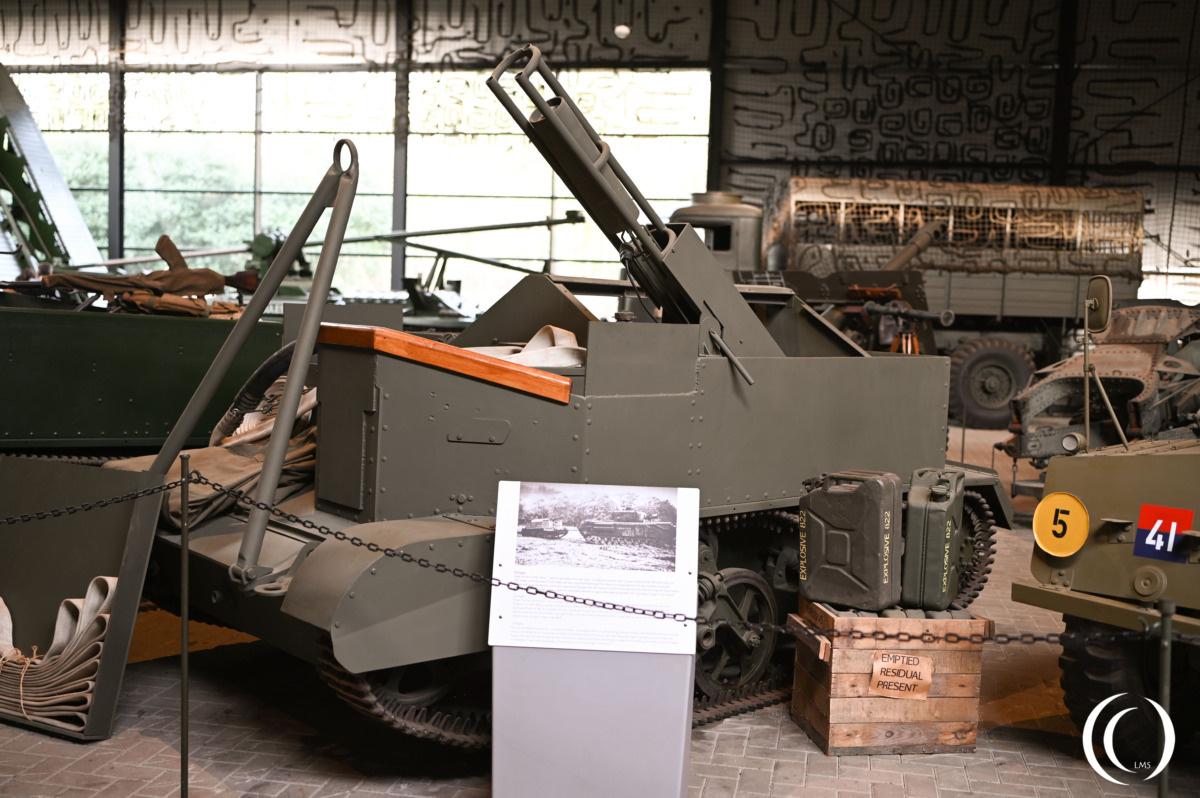
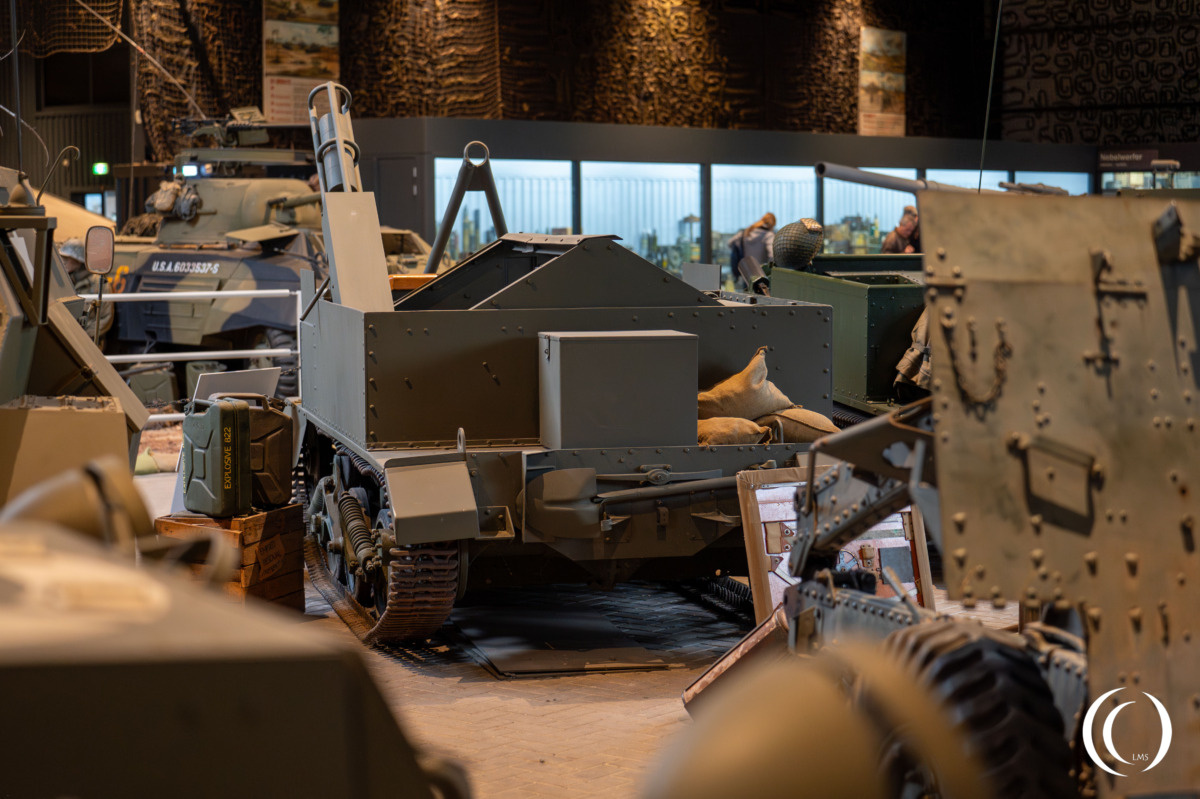
The variants could also carry flamethrowers, anti-tank weapons (2-pounders and 6-pounders—40mm and 57mm), or even a lifting mechanism—such as that of the ‘Praying Mantis’—that allowed machine guns to fire over obstacles.One of these variants was the Conger. This variant—also based on the Universal Carrier—had no engine, and therefore no propulsion of its own.
This vehicle was specially developed to clear a path through a minefield—a very specific task. This was not unusual among the British armed forces; consider, for example, the “Hobart’s Funnies”—such as the Sherman Crab, the Centaur Dozer, and the Canal Defence Light (CDL)—as well as the better-known deep-wading Sherman DD tank. They created tank variants with a very specific mission that were intended specifically for a single task; outside of this mission, the tanks and vehicles were often no longer deployable on the battlefield.
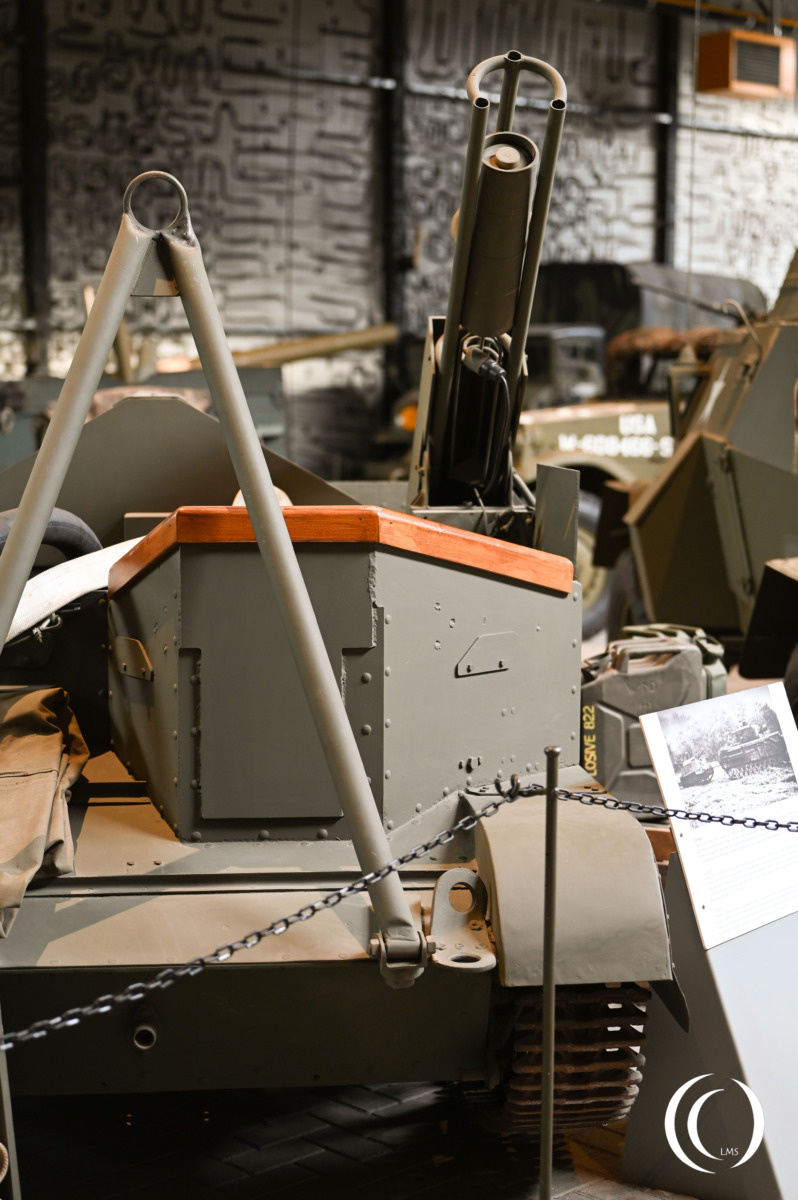
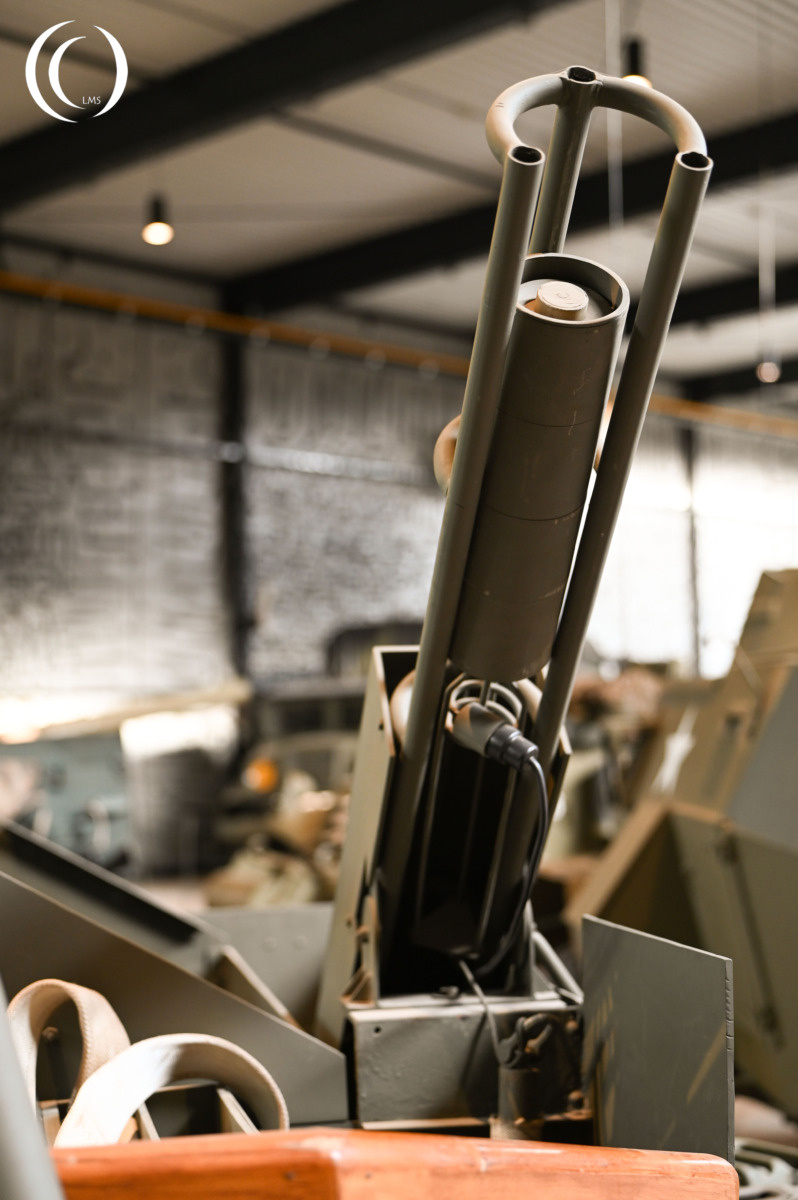
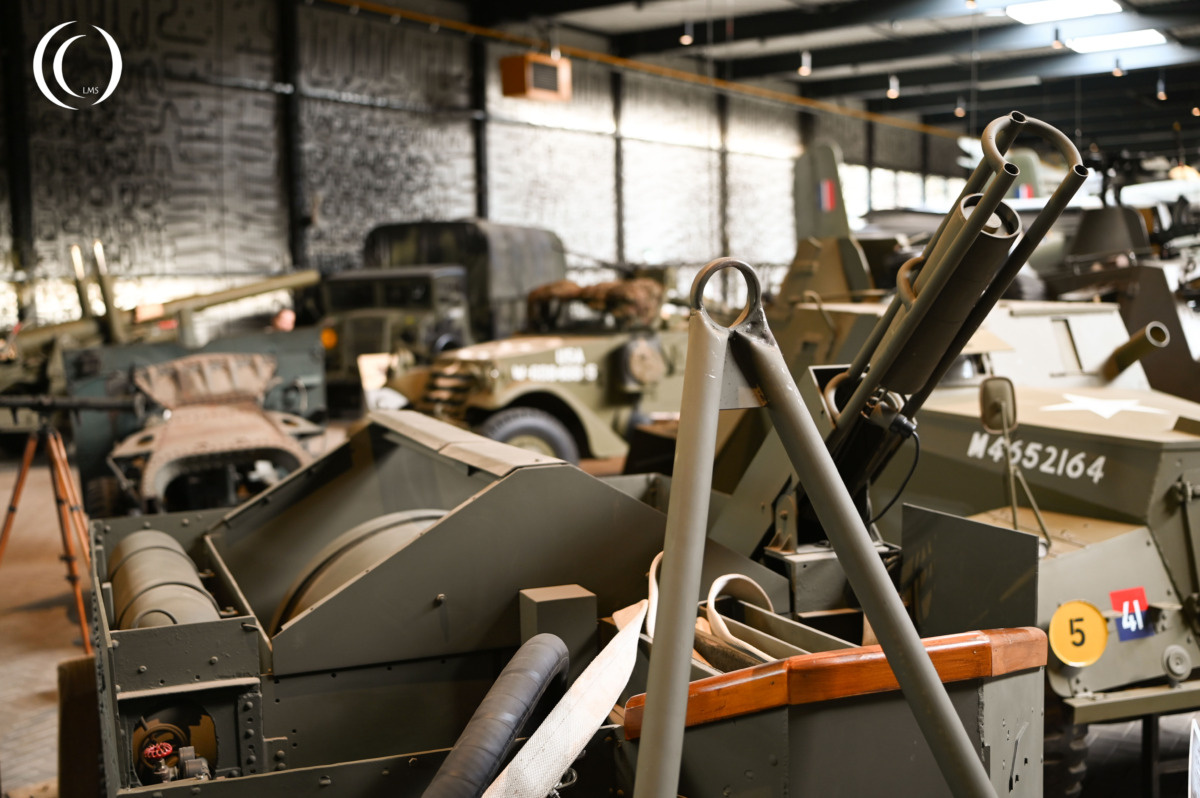
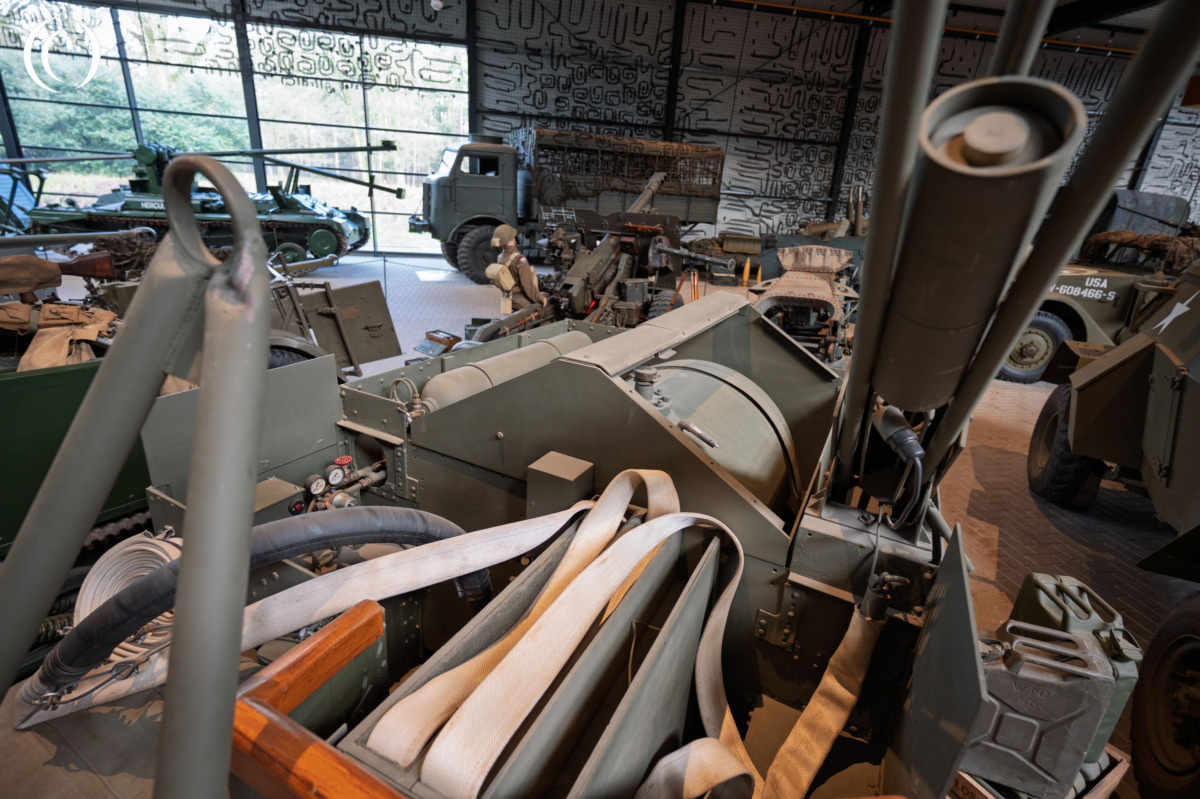
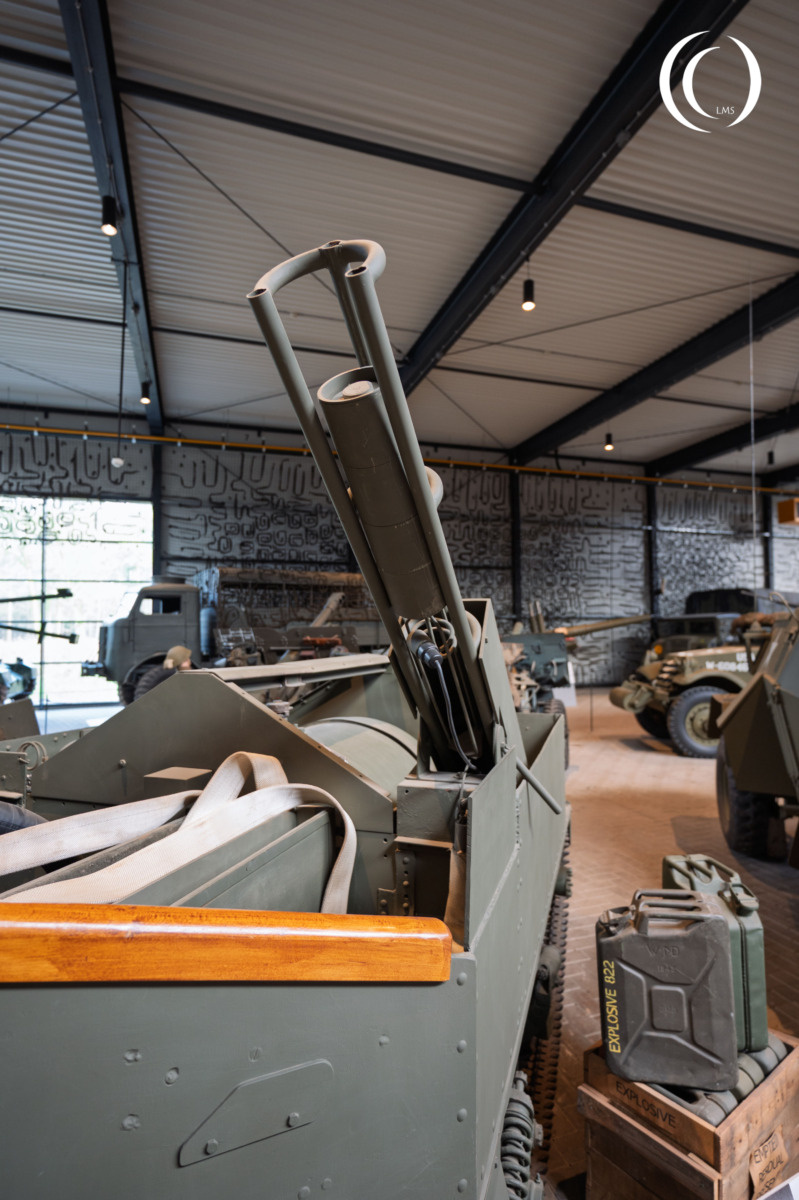
The same was true for the Conger. The Conger was a vehicle towed—often by a Churchill AVRE—to its target: a minefield. Once there, it was positioned, and the crew would fire a 5-inch (12.7 cm) rocket from the Conger trailer. This rocket pulled out a coil of empty hose, measuring at least 100 meters in length.
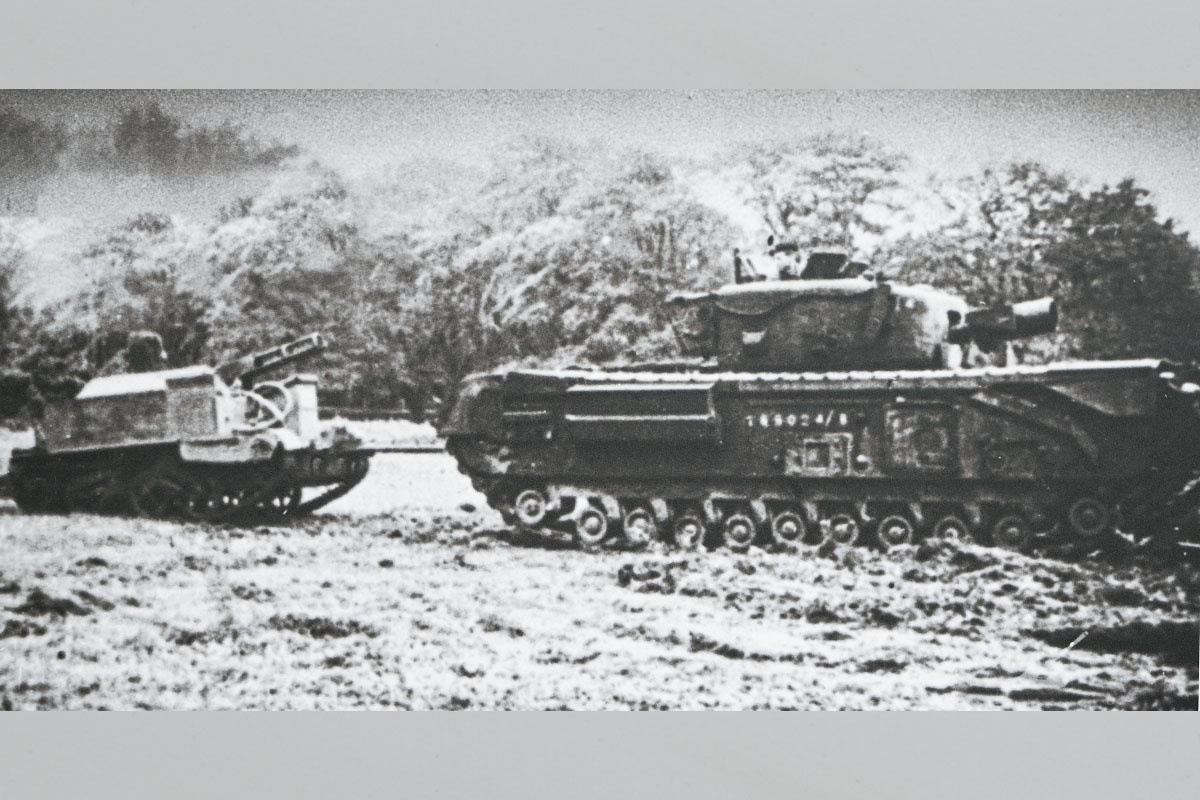
As soon as the hose lay across the minefield, a highly explosive, more than a ton of nitroglycerine-based liquid mixture (known as 822C) was pumped into it at high speed using compressed air. The highly explosive substance 822C was delivered by two trucks; these were part of a complete unit consisting of one AVRE (or similar prime mover), one Conger, two trucks, and several personnel. From the safety of their heavily armored tank, the crew would then detonate the hose. The massive pressure wave caused all surrounding landmines to detonate spontaneously through “sympathetic detonation” (triggered by the shockwave). This instantly created a narrow, mine-free path.
The Conger mine-clearing device was deployed during the invasion of Normandy (D-Day), at IJzendijke in the Netherlands (during the Battle of the Scheldt), and at the Battle of Overloon. In the Battle of Overloon, the Conger was deployed too late; by that time, the tanks had already made their way through the minefield.
Disaster during Operation Switchback
During the Battle of the Scheldt (Operation “Switchback”), Congers were used to clear minefields in the Breskens Pocket. Although the concept was effective, the Conger proved to be lethally dangerous to one’s own troops in practice. The liquid nitroglycerin was extremely unstable, and premature detonations occurred regularly. On 20 October 1944, the British 79th Armoured Division was in IJzendijke in the Netherlands. For reasons unknown, probably during the filling of the Congers, more than a ton of the liquid exploded. The blast was so immense that two trucks vanished completely, four Churchill tanks were destroyed, and British and Canadian soldiers lost their lives. The human toll was high: 40+ dead and 40+ wounded, including six unidentified individuals and sixteen missing persons. In the days that followed, five more of the wounded would succumb to their injuries, bringing the final toll of the disaster to 47 dead and 37 wounded¹. The 284th Armoured Engineer Company—one of the twelve assault tank units of the 79th Armoured Division—was particularly hard hit, losing more than half of its personnel.
Following this, the British Army decided to scrap the Conger immediately. The system was permanently withdrawn from service following a catastrophic disaster on October 20, 1944.
After an initial temporary burial in Maldegem, the victims were relocated in 1945 to the permanent Canadian war cemetery in Adegem. Three soldiers are laid to rest at the Schoonselhof cemetery in Antwerp, and one at the Canadian war cemetery near Bergen op Zoom. The names of the sixteen missing soldiers are inscribed on the memorial for the missing at the Canadian War Cemetery in Groesbeek.
The Conger—a Universal Carrier-based mine-clearing vehicle—seen in the photos is the only survivor from the Second World War.
¹ Depending on the website, the reported number of fatalities from the unfortunate explosion ranges from 42 to 47; the figures for the number of wounded soldiers vary similarly. On October 20, 1997, a memorial was erected on Isabellaweg in IJzendijke, Netherlands. The monument itself bears 37 names, with an additional 4 names included on a plaque, bringing the total to 41 names.
Sources
- K. Margry, Het gebeurde hier: De explosie bij IJzendijke – Then and now”, no. 99, Uitgeverij Quo Vadis, Soest, 1999
- tanks-encyclopedia.com
- Wikipedia
- pzc.nl/zeeuws-vlaanderen
